
The Ridge Historical Society
The Ridge Connection to the Rose Bowl
By Carol Flynn
On January 1, 1890, the Valley Hunt Club, a private social club in Pasadena, California, held a parade. The purpose was to showcase the wonderful climate and living opportunities in Pasadena while cities in the north – like Chicago and New York – were buried in snow. Many of the residents of Pasadena had relocated from the Midwest and East coast.
The parade featured horse-drawn carriages covered in flowers, followed by foot races, polo matches, and a tug of war in the “town lot.” About 2000 people attended. Because of the abundance of flowers, it was decided to call the parade the “Tournament of Roses.”
The parade became an annual event and grew in size. Marching bands and ostrich races, automobile floats and bronco busting all became part of the festivities. The town lot was renamed “Tournament Park.”
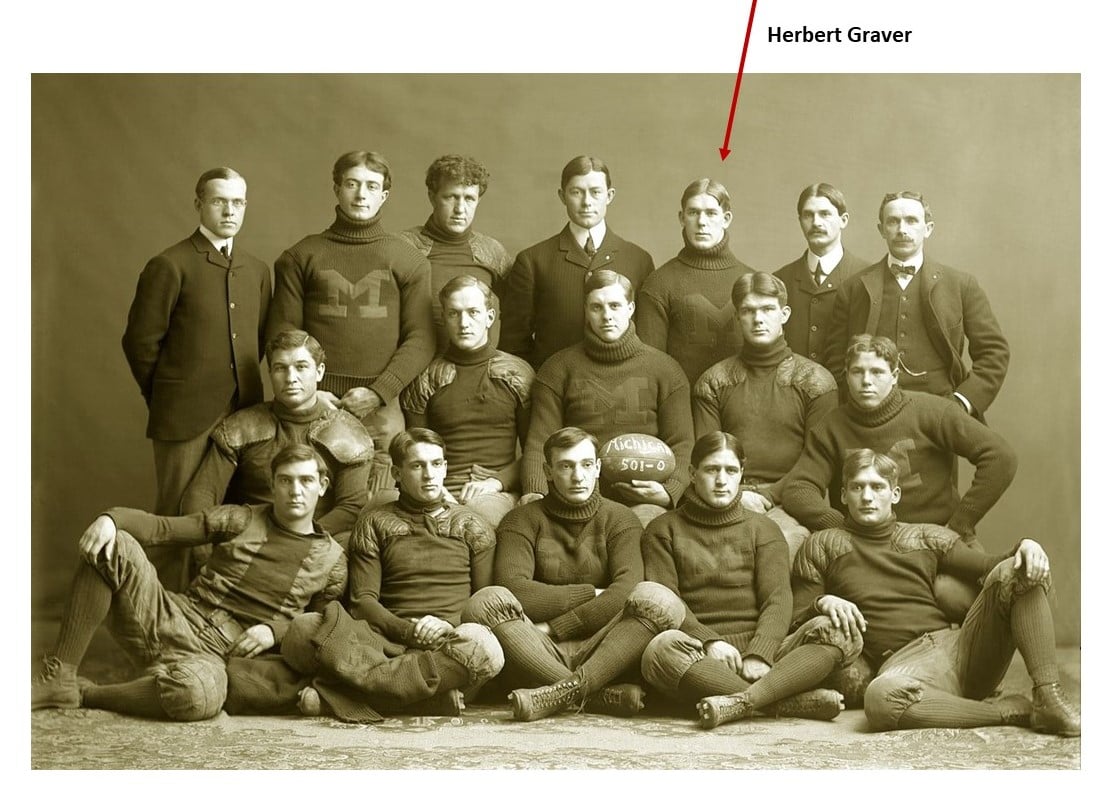
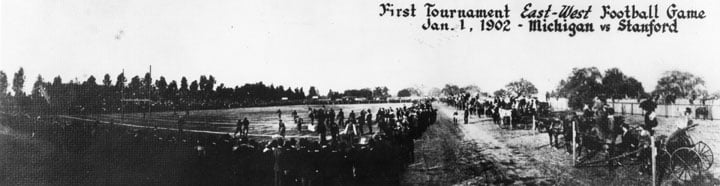
In 1902, to offset the costs of the parade, a special football game was held following the parade. By then, the parade was attracting national attention. The University of Michigan football team was having a stellar year with a record of 11 – 0, scoring a total of 501 – 0 points, and was invited for an all-expenses-paid trip to Pasadena to play against Stanford University of Stanford, California.
The game was billed as the Tournament East-West Football Game. Admission was $.50 to $1.00. About 8,500 people attended the game. Stanford was no match for Michigan and even asked to end the game early. Michigan won 49-0. This was the first Rose Bowl game, the first post-season “bowl” game ever.
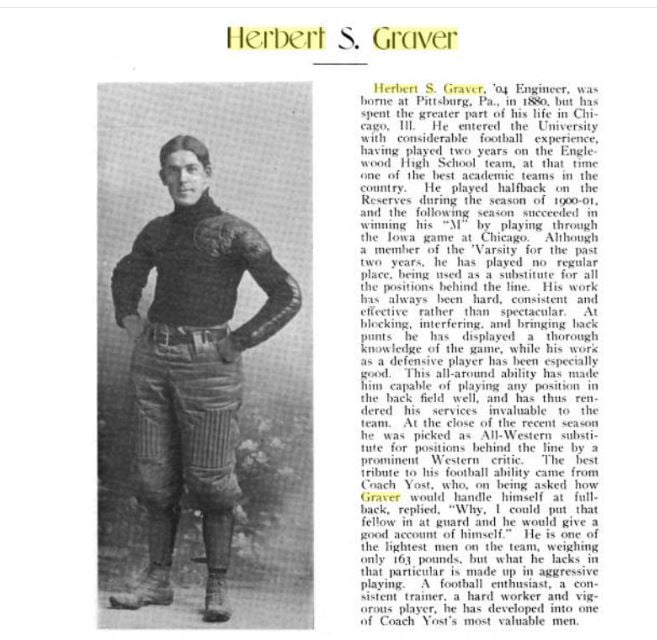
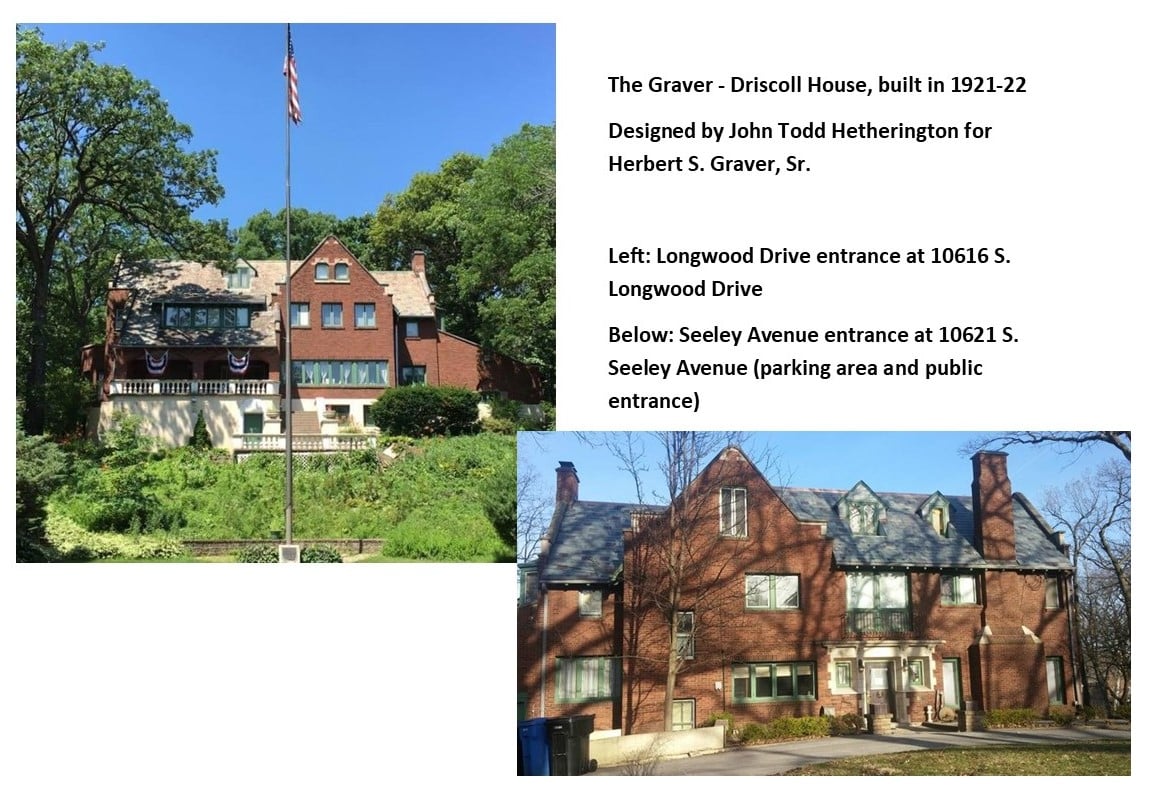
And the connection to the Ridge: On that Michigan team was Herbert Graver, the man who would build the Graver-Driscoll House at 10621 S. Seeley Avenue that is now owned by and serves as headquarters for the Ridge Historical Society.
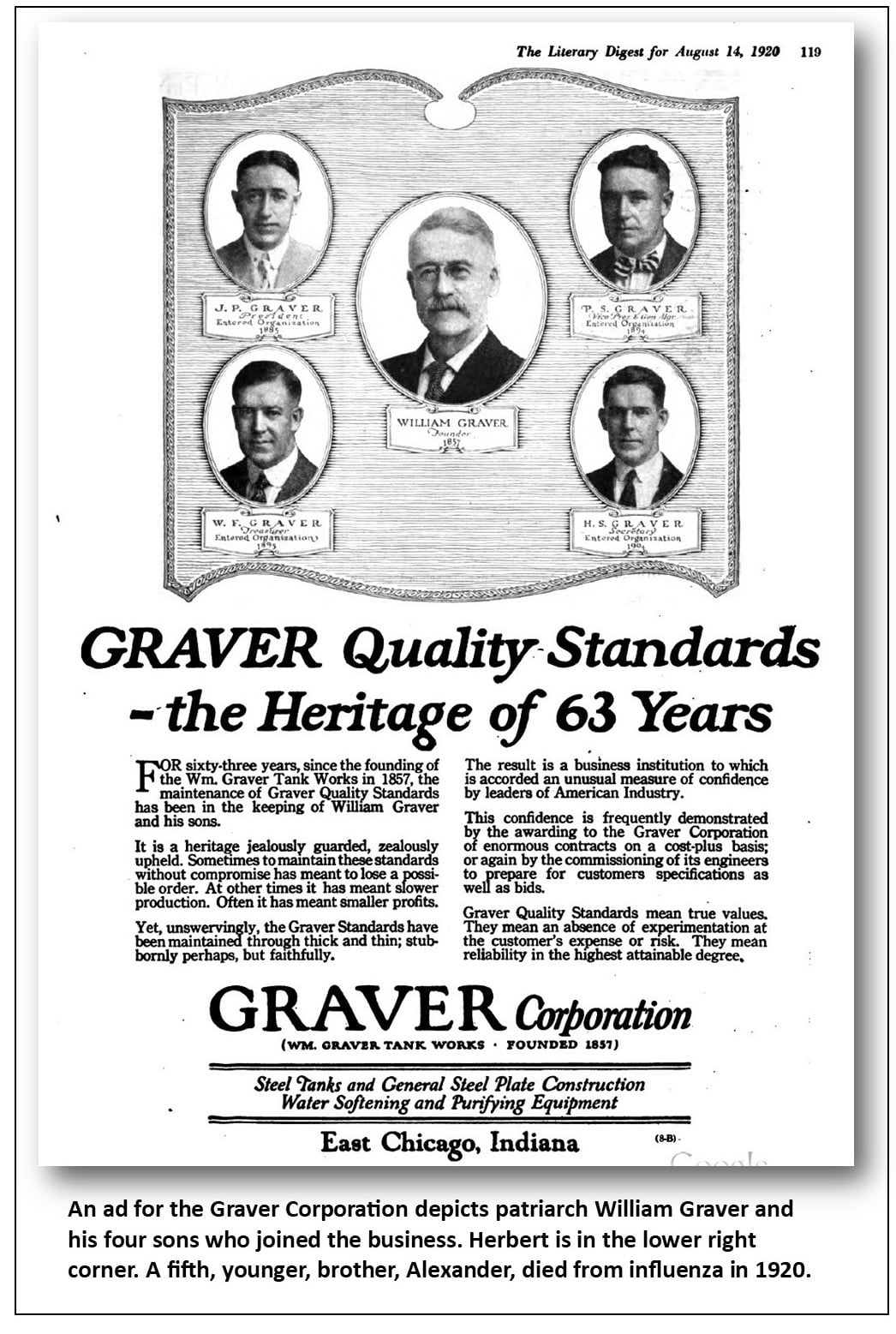
Herbert Spencer Graver, Sr., was born in 1880 in Pennsylvania, the sixth of seven children of William and Christina Penman Graver. William Graver started the Graver Tank Works in 1858 to craft metal tanks to store oil. The business relocated to East Chicago in the 1880s.
After graduation, Herbert worked for one year as a college coach but then joined the family business. All five Graver sons were employed with the Graver Tank and Manufacturing Company and held officer positions. Herbert served as corporate secretary.
Herbert married Anna T. Thorne in 1910 and they had one son, Herbert S., Jr.
In the early 1900s, the five Graver sons all moved to the Beverly/Morgan Park area. Herbert built his house on the Ridge with entrances on Longwood Drive and Seeley Avenue in 1921-22. The Tudor Revival-style manor house was designed by the noted architect, John Todd Hetherington.
Herbert was a sports celebrity and occasionally made public appearances as one of the original Rose Bowl players. He enjoyed sports his entire life, and in fact, in 1954, he suffered a fatal heart attack while watching wrestling matches at the International Amphitheater. At the time of his death, he was still the sales manager for the family company. He was buried in Mount Hope Cemetery.
The Ridge Historical Society was founded in 1971. The plans for the 100th anniversary of the Graver-Driscoll House and the 50th anniversary of RHS were put on hold last year because of the COVID pandemic. The plan is to celebrate this year so stay tuned for further announcements and more historical information on the Gravers, the house, Hetherington, and RHS.