
The Ridge Historical Society
Daylight Savings Time
By Carol Flynn
Daylight savings time (DST) ends tonight – technically, at 2:00 a.m. on Sunday, November 7, 2021. Clocks should be turned back to 1:00 a.m. to gain an hour (“Spring forward, Fall back”).
DST is not part of nature’s plan – it is a manmade contrivance, and the artificiality starts in the Spring when an extra hour of daylight is added. Winter time is actually “standard time.”
The idea of adjusting time to coincide with the changing amount of available sunlight due to the rotation of the Earth goes back to ancient times. The Romans used water clocks that had different scales for different months. Daylight was always divided into 12 hours, but the hours varied in length from 75 minutes in the summer to 44 minutes in the winter.
Benjamin Franklin wrote a satirical letter to a Parisian newspaper in 1784 when he was Ambassador to France that indirectly touched on DST. He reported how surprised he was to discover the sun shining at 6:00 a.m. one day when he was accidentally awakened. He, like most people, did not rise until noon and go to bed until 3 or 4:00 a.m. He commented on how much candle wax and lamp oil could be saved if people adjusted their schedules to the sun’s schedule.
Instead, people adjusted the sun’s schedule to their own.
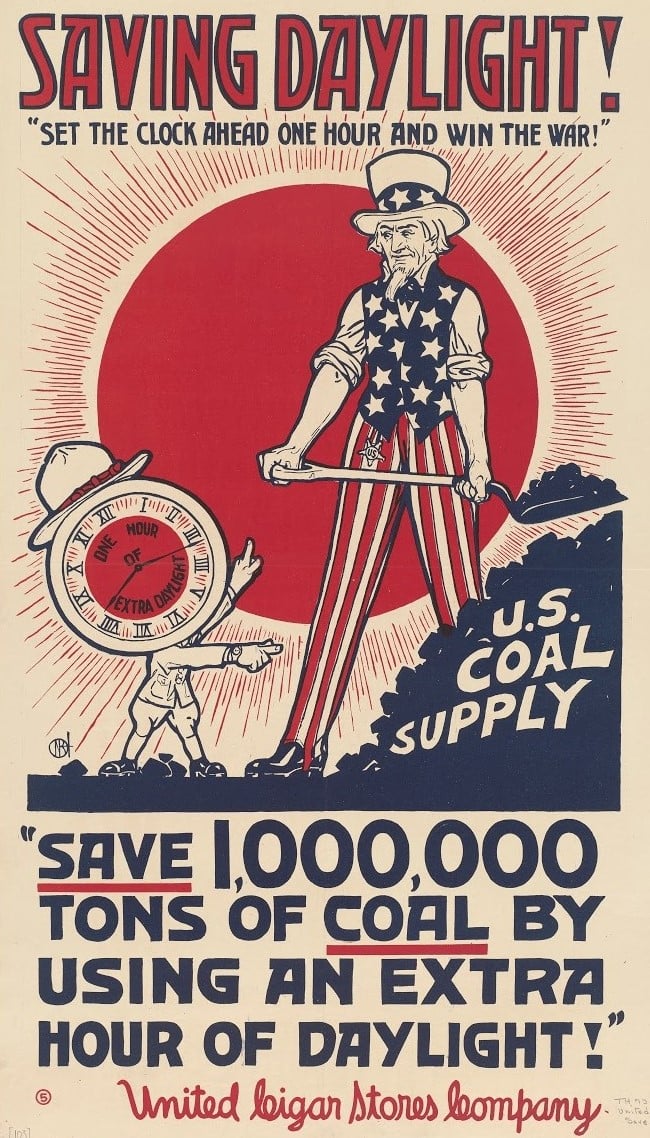
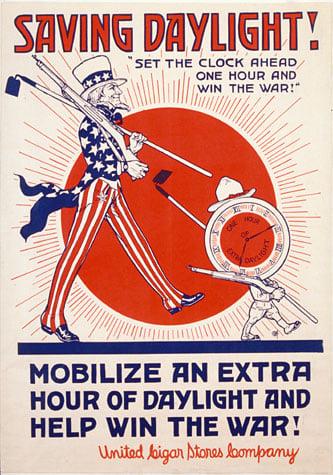
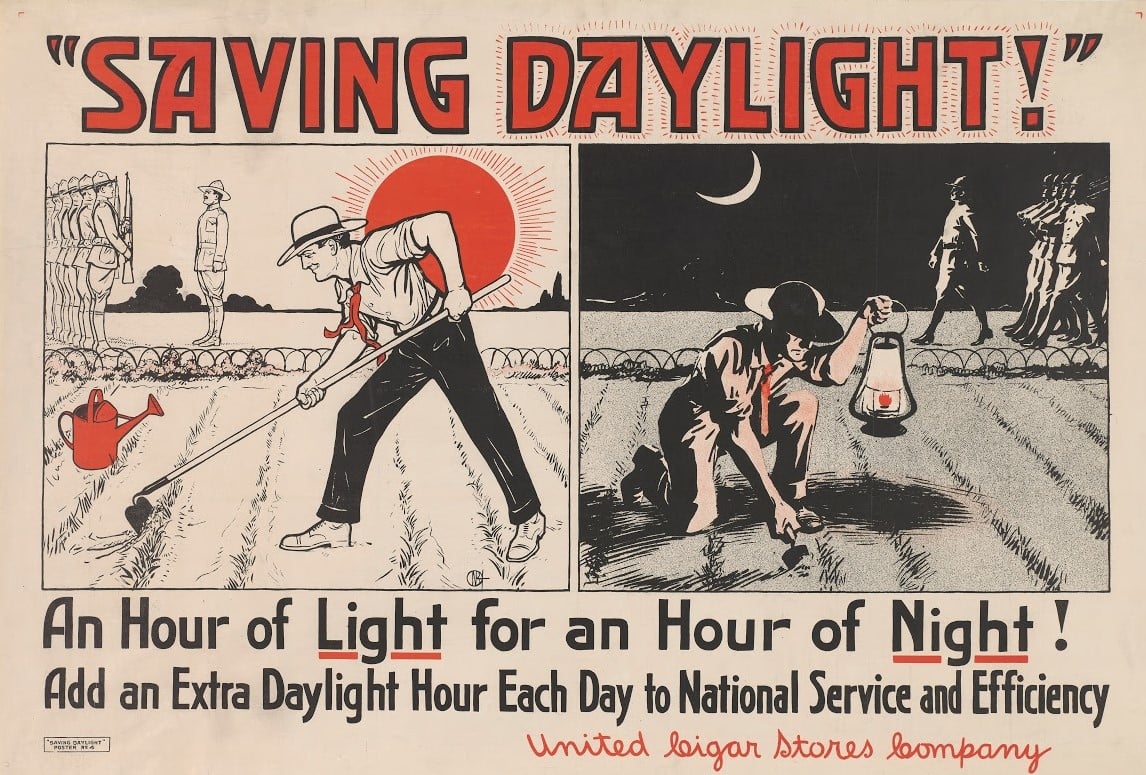
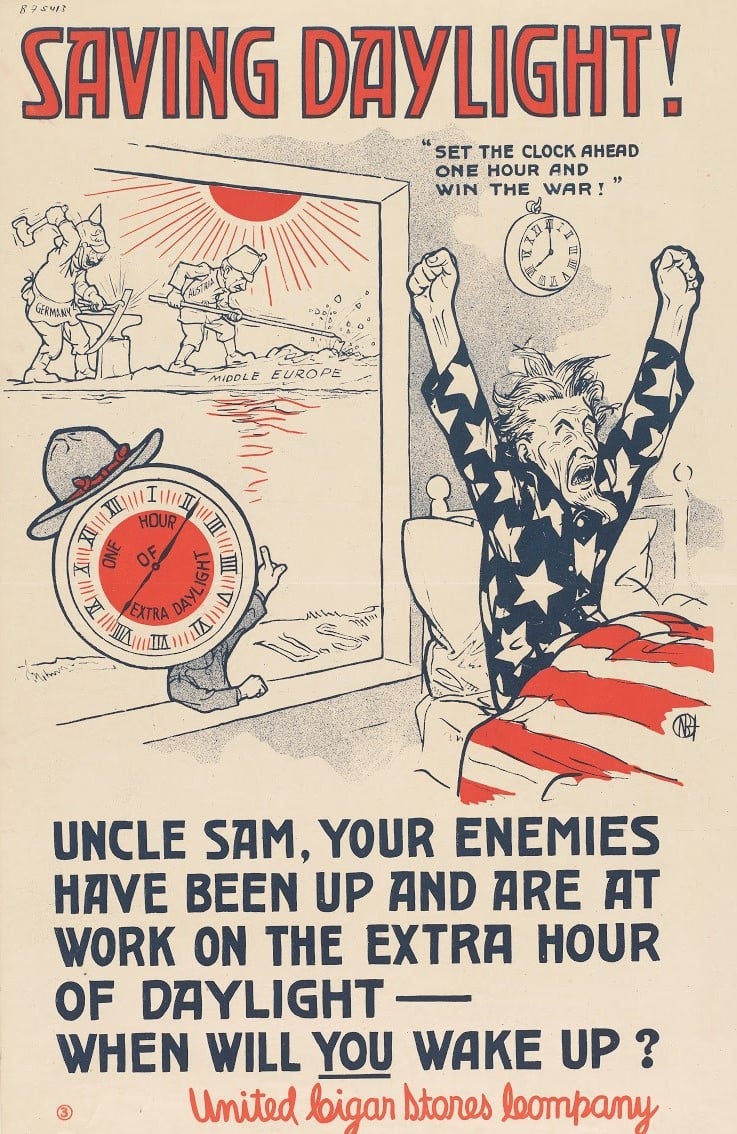
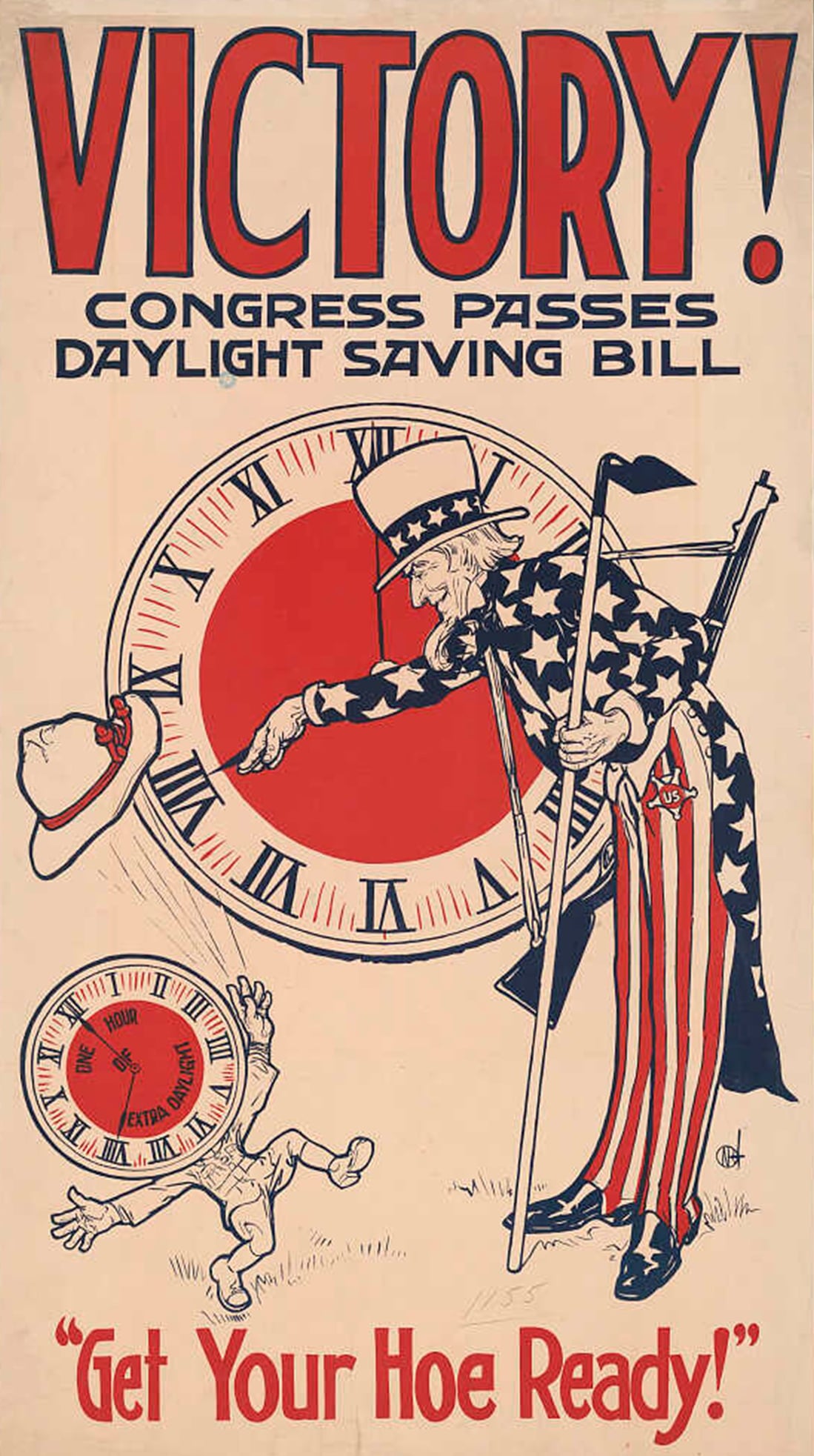
Although there was some experimentation with DST in other countries, it was the German Empire and Austria-Hungary that began the first national DST system in 1916 during World War I to conserve coal. Britain and its allies soon followed. The United States began DST in 1918.
In the years after the war, DST was discontinued in many countries, then restarted again. It was popular again during World War II, and came strongly into use in the 1970s with the renewed emphasis on conserving energy.
In the U.S., DST has been in use since 1918, with changes during the years to arrive at the schedule we use now. There is no uniform system throughout the world; there are even variations within the U.S.
Although the initial emphasis was on saving fuel, there are other outcomes of DST. The “plus column” includes increased economic activity like shopping during the extra daylight time, more outdoor recreation and leisure activities, and even some reduction in crime. Retail stores and the golfing and gardening industries are examples of pro-DST supporters.
The “minus column” includes the disruption in human circadian rhythms affecting sleep and other patterns, an increase in car accidents with the return to standard time, and a loss for indoor entertainment activities. More gas is used for cars during the additional daylight. Movie theaters and the T.V. and cable industry, and indoor dining and recreation places prefer standard time. Farmers don’t care for DST because cows don’t watch the clock to adjust their milking patterns. And of course, there is always confusion when the clocks are changed.
Public health officials recommend the best option would be to return to year-round standard time. However, many supporters want to change to permanent daylight savings time.
It takes an act of Congress to make any changes to the schedule. States cannot implement permanent DST. They can opt out of DST, but they cannot opt out of standard time.