
The Ridge Historical Society
Living History: Brick Streets of Yesteryear
By Carol Flynn
"Seizing the educable moment:" For a wonderful opportunity to see what the brick streets were like, back in the late 1800s – early 1900s, visit our neighbor to the south, the City of Blue Island.
Blue Island, in its continuing efforts for revitalization, which are proving to be very successful, is redoing streets, curbs, and sidewalks.
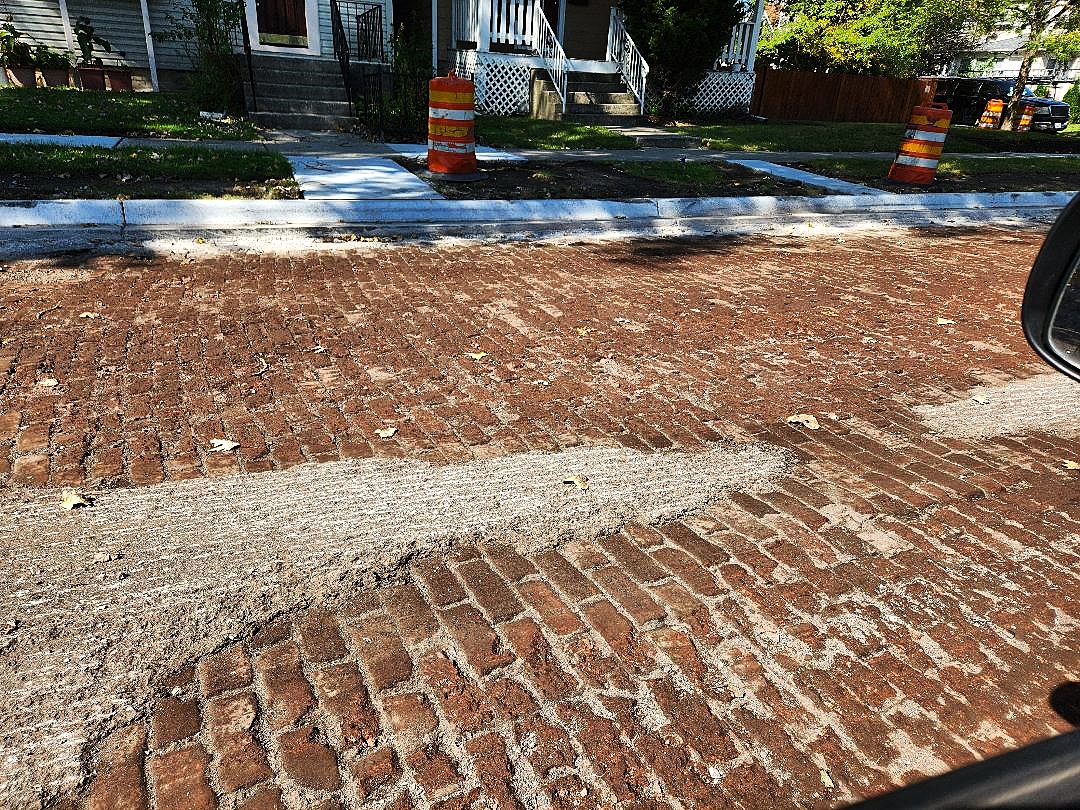
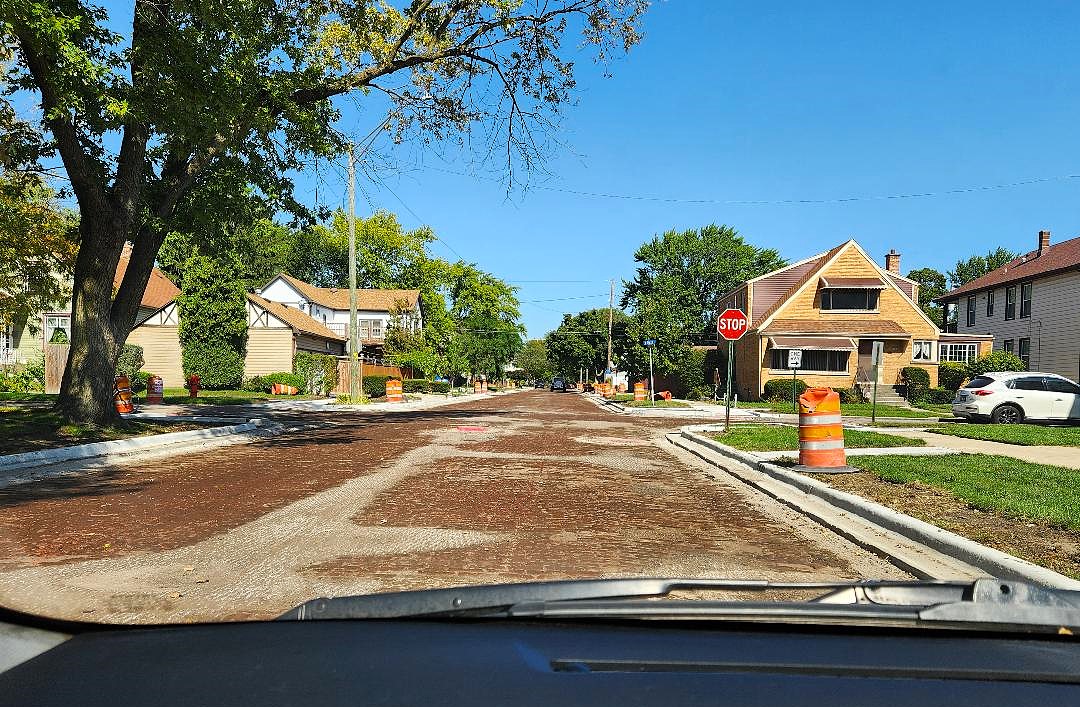
Right now, Greenwood Avenue, which is one block west of Western Avenue, between 123rd and 127th Streets, has been excavated down to the original brick street. Here are some views of the street.
In the next few days, the streets will be covered with concrete and blacktop, so if you want to see the old streets, do it now.
There are several isolated blocks of brick streets in Morgan Park, on 110th Place, but not a half mile stretch like this.
According to Preservation Chicago: "Originally, Chicago streets were packed dirt, which turned to thick mud when wet and were a constant source of frustration for
early Chicagoans. Dirt roads were initially paved with inexpensive wooden planks and later with wooden blocks; however, this
practice was largely phased out after the Chicago Fire of 1871. Between the 1880s and the 1910s, brick pavers were widely
used throughout Chicago’s highly traveled streets, as they were much stronger, highly durable, fire-proof, and remained functional when wet or snow-covered. These new brick paved streets proved up to the challenge of the wear and tear from steel
rimmed wagon wheels of pre-automobile street traffic.
Chicago’s street pavers were typically fired-clay bricks made from the tough clay abundant under the prairie grass."
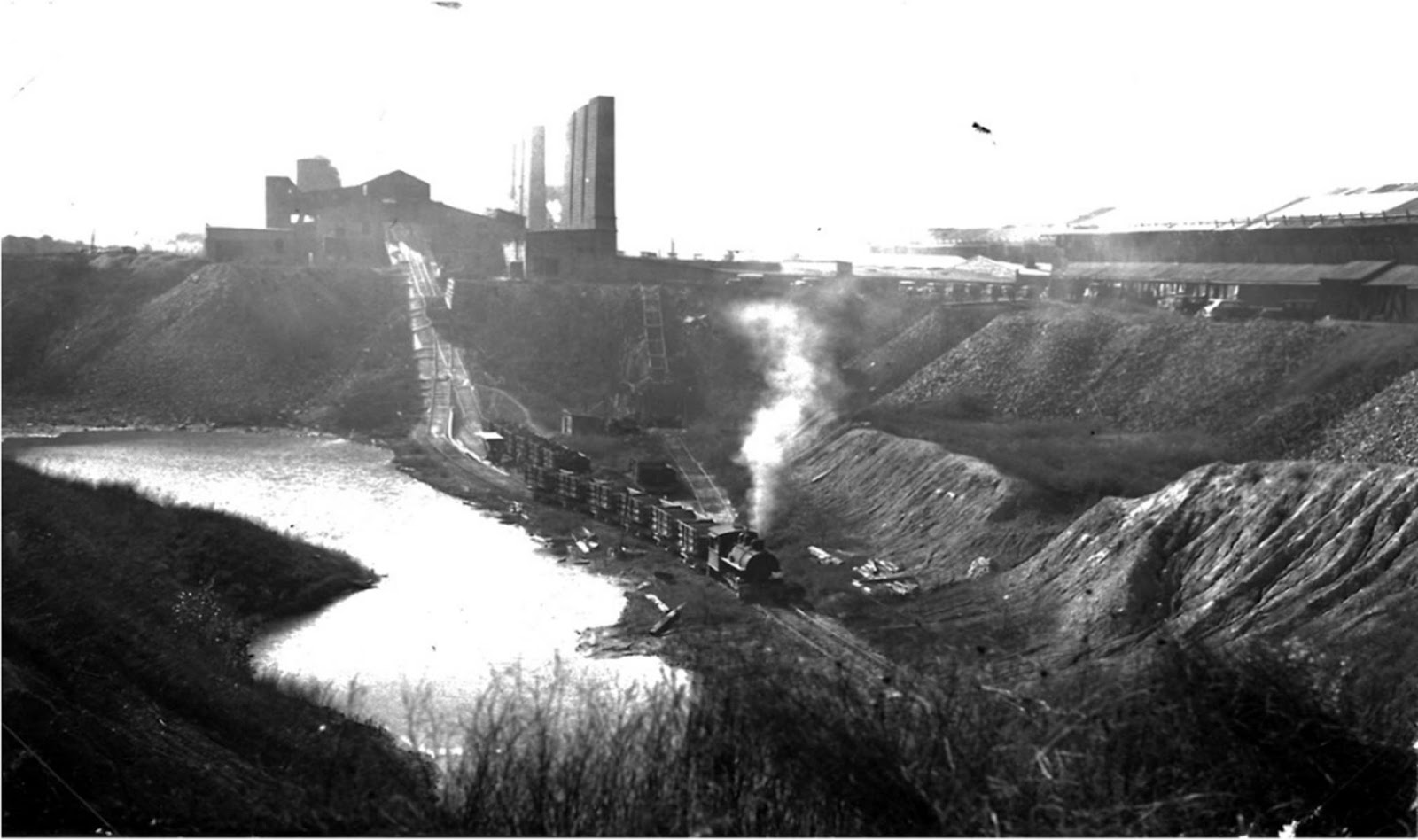
There were massive clay deposits around Blue Island, and brick making was an early industry here. From a history of Blue Island:
"After it was discovered in the early 1850s that rich deposits of clay surrounded the ridge, Blue Island became the center of a significant brick-making industry that lasted for over a century. In the early years, these efforts were small, with the bricks being made by hand and the turnout created mostly for local use, but by 1886 the Illinois Pressed Brick Company (organized in 1884) was employing about 80 men and using “steam power and the most approved machinery”, which allowed them to produce 50,000 bricks per day.] By 1900, the Clifton Brickyard alone—which had opened in 1883 under the name of Purington at the far northeast corner of the village was producing 150,000,000 bricks a year. In 1886, the Chicago architectural firm of Adler and Sullivan designed a large complex for the Wahl Brothers brickyard (the main building of which was 250 by 350 feet on the west side of the Grand Trunk tracks between 119th and 123rd streets. These buildings had been demolished by 1935, and all of Blue Island’s brickyards were re-purposed by the latter part of the mid-20th century. The larger ones for a while become landfills, and the Wahl Brothers location is now the site of the Meadows Golf Club."
There are still families in the area that worked at the brick yards. They are welcome to share their stories and pictures here.