
The Ridge Historical Society
Get Behind the Vest
By Carol Flynn
The pancake breakfast in the 19th Ward to raise funds for the “Get Behind the Vest” initiative which provides protective clothing to Chicago police officers will be held on Saturday, February 18.
According to the Chicago Police Memorial Foundation (CPMF) website, 595 Chicago police officers have lost their lives in the line of duty.
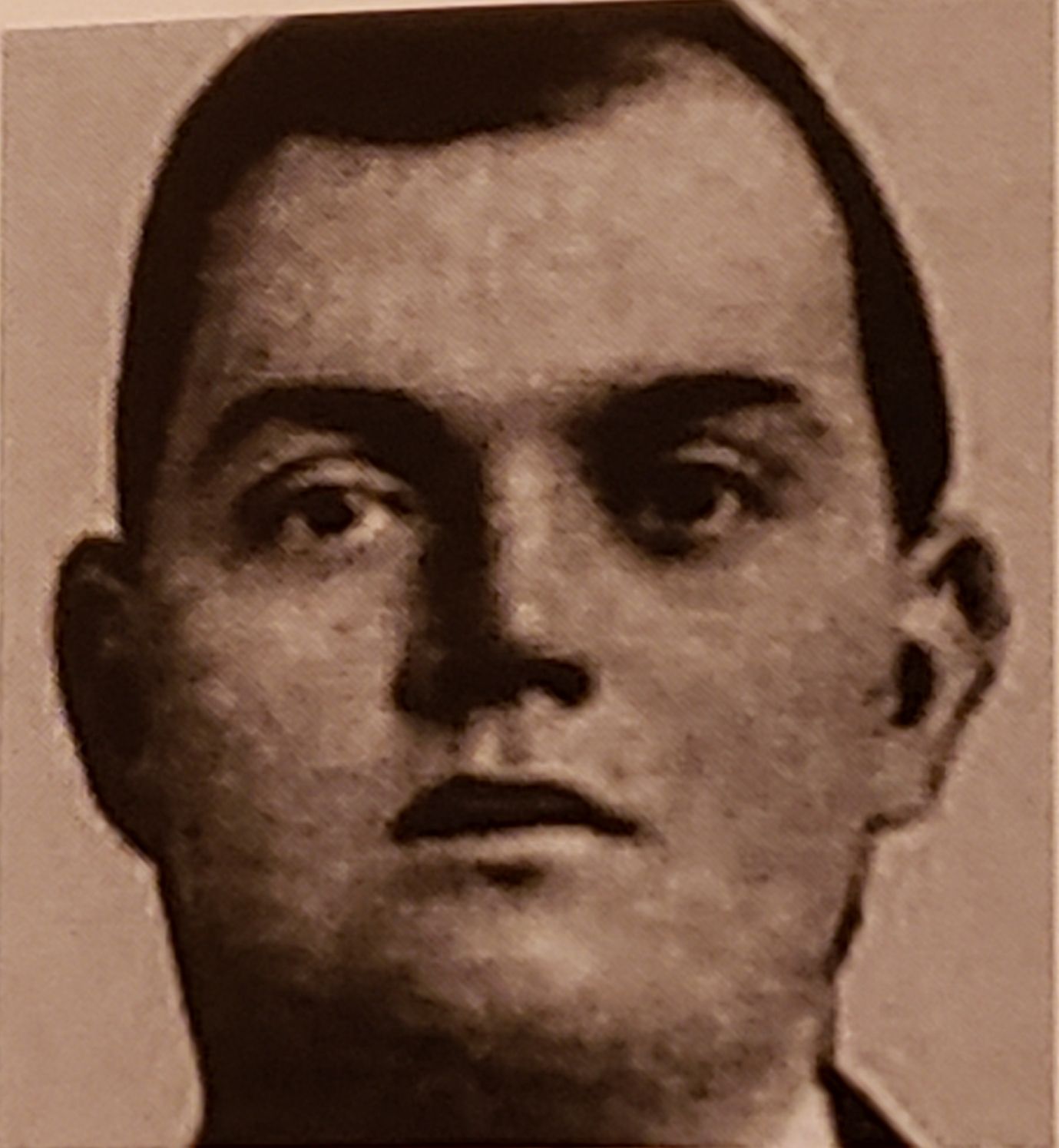
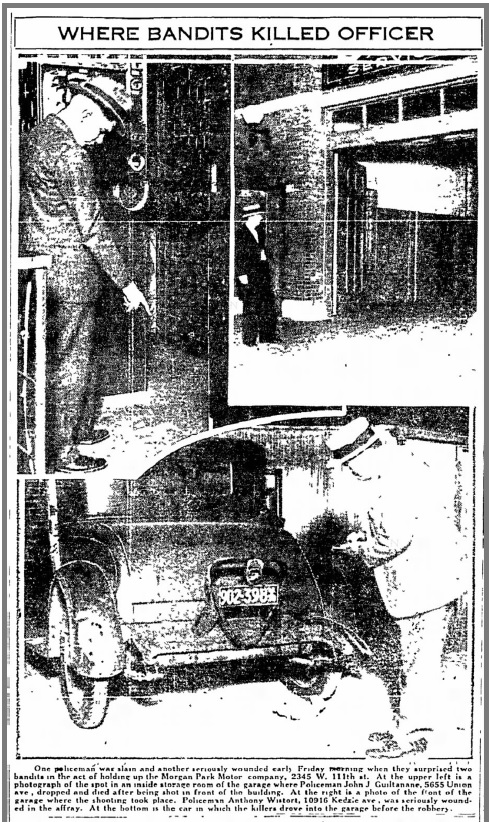
On July 18, 1930, the name of Morgan Park police officer John J. Guiltanane was added to that list.
He was killed by a bullet fired by an armed robber that went through his heart.
Fellow officer Antony P. Wistort was also critically injured. A bullet went through his upper abdomen, injuring his spine.
Guiltanane and Wistort had walked in on an armed robbery in progress at an auto sales shop on 111th Street just east of Western Avenue, where Fairplay food store now stands. The robbers tried to flee, but the police shot one of them, and the robbers surrendered. A gun was found on one of the robbers, and another in the car they were driving.
While a patrolman ran to a police box to call in for assistance, Guiltanane and Wistort guarded the robbers. One of the robbers pulled out a hidden gun and shot Guiltanane and Wistort, and then the robbers escaped on foot.
Guiltanane died on the spot, and Wistort was taken to Little Company of Mary Hospital, where he was not expected to survive.
The police arrested one of the robbers later that day. The second robber eluded the police for almost six years, finally being arrested for another robbery in Minnesota in 1936. Both robbers were found guilty of murder and sentenced to long prison terms. They were both paroled and died in the early 1970s.
John J. Guiltanane was 35 years old when he was shot through the heart and died on 111th Street almost one hundred years ago. He was born in Chicago of Irish descent, and he was a veteran of World War I, a resident of Englewood, and the main support of his widowed mother. His funeral services were held at Visitation Church, and he was buried in Mt. Olivet Cemetery.
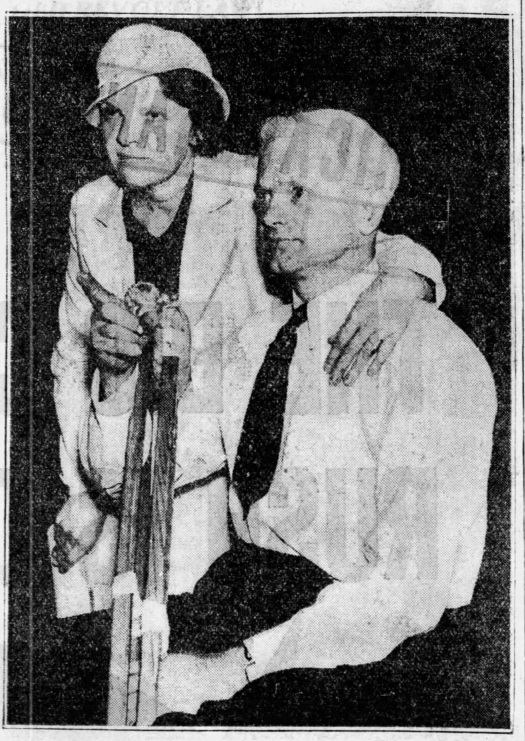
Anthony P. Wistort was born in Illinois of Lithuanian descent, and he was a World War I veteran. At the time of the shooting, he, his wife Pauline, and their one-year-old son Robert lived on 109th and Kedzie Avenue. Wistort survived the shooting but was permanently disabled, using a wheelchair for his remaining life. He died in 1941 at the age of 42 and was buried in Mount Greenwood Cemetery.
Both men might have had a better chance of survival if they had been wearing “bullet-proof” vests. However, only limited, expensive body armor was available to police forces in 1930.
The concept of protective clothing goes back to the beginning of mankind when humans donned animal skins, scales, shells, and quills, some of the toughest items in nature, when hunting and fighting. This was then replaced by wood and metal.
In medieval times, the Japanese discovered that tightly woven silk was largely impenetrable to projectiles, and made clothing of multiple layers of this fabric.
In the U.S, it wasn’t until the 1800s that metal body armor was first used, and the impenetrable nature of silk and other natural fibers like cotton and wool was re-discovered. It wasn’t until World War I, however, that bullet-proof vests were made, in Europe.
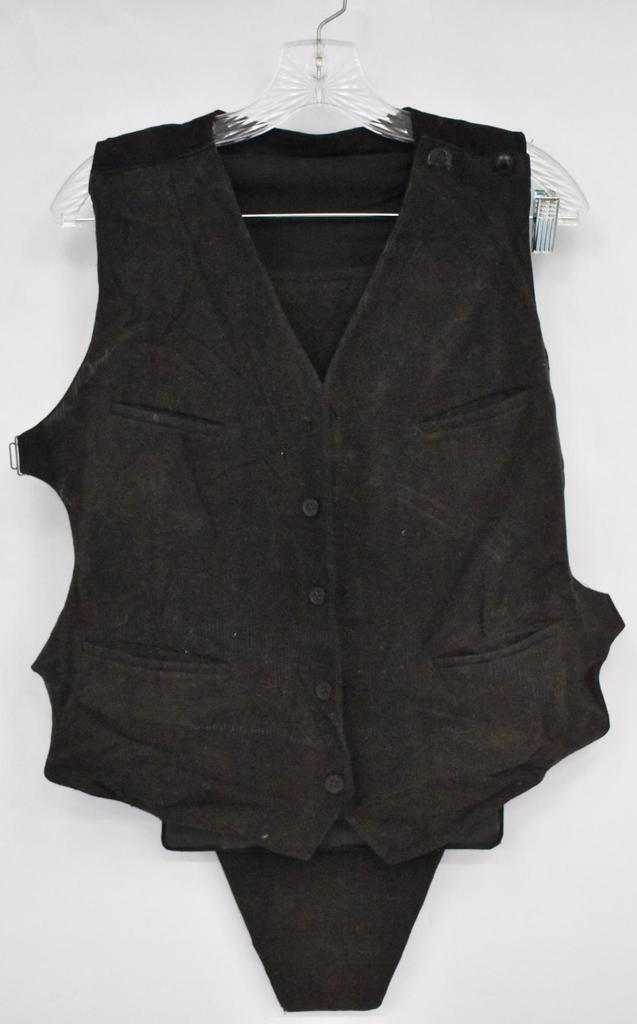
A company in Chicago, the Detective Publishing Co., sold inconspicuous wool vests lined with metal plates. These vests were too expensive for policemen to buy, but they became a favorite item for Prohibition-era gangsters.
As the gangsters started to wear better protective clothing, law enforcement started to use more powerful guns, which in turn led to enhancements in protective clothing and again to stronger guns – it became a cycle.
“Flak jackets” which combined fabric with metal plates were created during World War II. Surplus jackets became available to the police in the late 1940s and early 1950s. These vests were not intended to be bulletproof, but could stop some light caliber ammunition.
In the 1960s, DuPont introduced Kevlar, a lighter weight, plastic-based artificial fabric that has led to the modern vests of today.