
The Ridge Historical Society
The History of the Graver-Driscoll House – Part 3: Architect John Todd Hetherington
By Carol Flynn, research contributors Linda Lamberty, RHS Historian, and Tim Blackburn
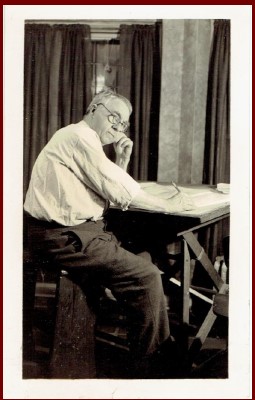
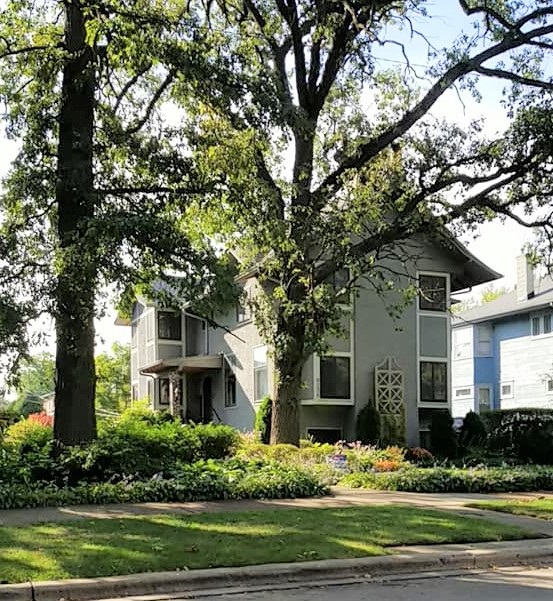
Herbert and Anna Graver purchased the land at 10616 Longwood on February 14, 1921, and chose architect John Todd Hetherington, a Beverly resident, to design their home. Hetherington had designed many fine homes in the Beverly/Morgan Park community by this time, as well as Ridge Park at 96th Street and Longwood.
Hetherington was born in Ontario, Canada, in 1858 where his parents, Henry Duncan Hetherington and Jessie Todd Hetherington, both from Scotland, owned a drug store. When his father died in 1862, his mother returned to Scotland with John and his three brothers.
Hetherington received his architectural training in Scotland and worked for a short time in Edinburgh. He came to the U.S. in 1881 and began his career in Chicago as a draftsman with Treat and Foltz architectural firm.
He became a naturalized U.S. citizen in 1886. In 1888, he and Jane C. Welsh, from the same village in Scotland where Hetherington spent his youth, were married in Chicago. Their children were Grace, who died in infancy, Alec, Murray, and Jean.
After eight years with Treat and Foltz, Hetherington started practice as an architect. He partnered with other architects for several years and eventually started an independent practice around 1910. He was involved in projects for hotels, apartment buildings, churches, and banks in addition to many fine residences in many locales.
Hetherington moved to Beverly around 1901. The family lived in an existing house at 9616 S. Prospect Avenue. In 1906, he designed and built a home for the family at 9236 S. Winchester Avenue. Around 1920, he bought an existing house at 9122 S. Longwood and converted it into a three-flat apartment building and the family lived in one of the apartments.
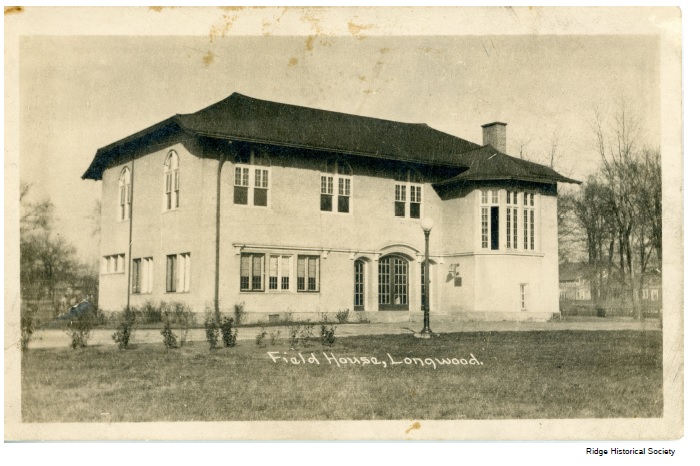
Hetherington served as a member of the Ridge Park Board of Commissioners from 1911 to 1913. Although he recommended another local architect for the project, in 1912 the other board members asked Hetherington to design Ridge Park. Hetherington created an original plan including a small field house, outdoor swimming pool, wading pool, and a running track, which was implemented in 1913.
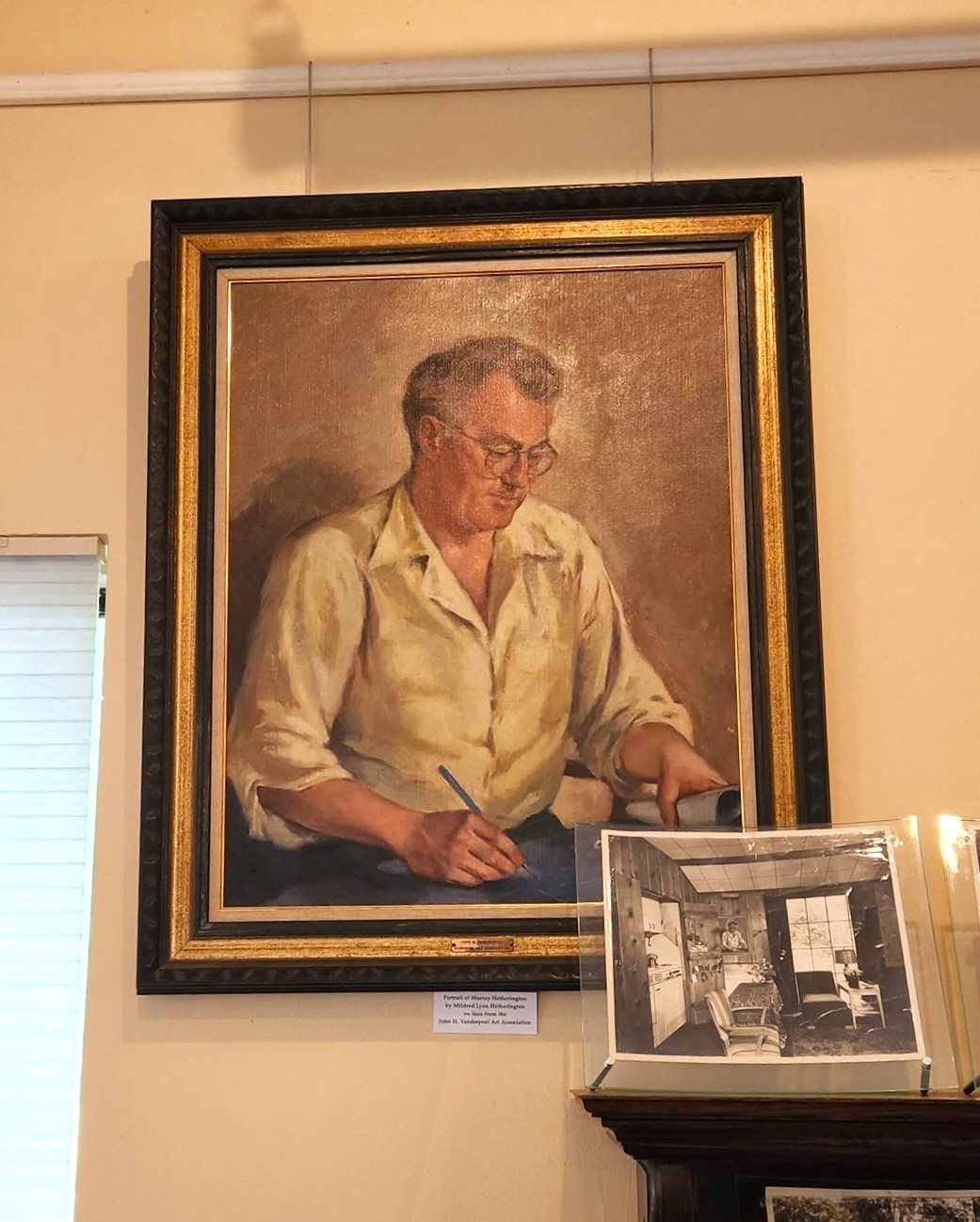
In 1919, his son Murray Douglas joined him as Hetherington and Son. Murray was a 1914 graduate of the Chicago School of Architecture, a joint program of the Art Institute and the Armour Institute of Technology.
Daughter Jean graduated from the Art Institute Normal Program in 1917 and began a career as a “draftswoman.” Considered a “man’s field,” there were only two women architects in the city at the time. Jean created actual miniature models of buildings, which were likely valuable marketing tools for her father's business.
Son Alec started as an electrician, then served in the U.S. Army during World War I. After the war, he went into farming, then eventually into airplane mechanics.
John Todd and Murray Hetherington are credited with designing over sixty buildings in the Ridge communities. They were known for the quality of their designs and solidly constructed buildings. Neither of them developed a totally unique or distinctive style of his own. They showed versatility by designing in several different architecture styles.
By 1929, the community had outgrown the Ridge Park field house. John Todd and Murray Hetherington were commissioned to design a larger one. Part of the old fieldhouse became the auditorium, and an addition was built around the outdoor swimming pool. A gymnasium and club rooms were added, as well as a wing to house the John H. Vanderpoel Art Gallery.
John Todd Hetherington died in 1936, attributed to injuries from an auto accident the year before. He was buried in Oakwood Cemetery.
Murray Hetherington continued the family dynasty of architects. He and Mildred Lyon, a local artist, married in 1924. Their daughter Mary died young, and their son John “Jack” Murray also became an architect. Murray designed the house at 8918 S. Hamilton Avenue for his family, but they lost that house during the Great Depression, and moved into Mildred’s family’s house at 10153 S. Prospect Avenue. Today, fourth generation John Lawrence Hetherington practices as an architect.
Next: The design of the Graver-Driscoll House