
The Ridge Historical Society
History of the Chicago Wards – Post 5: Washington Heights Joins the Chicago Ward Structure
By Carol Flynn
In November of 1890, the annexation of the Village of Washington Heights to the City of Chicago became official. At the same time, the Village of West Roseland to the southeast of Washington Heights was also annexed.
The next step was for the Chicago city council to pass an ordinance approving the annexation and adding the land to the ward system.
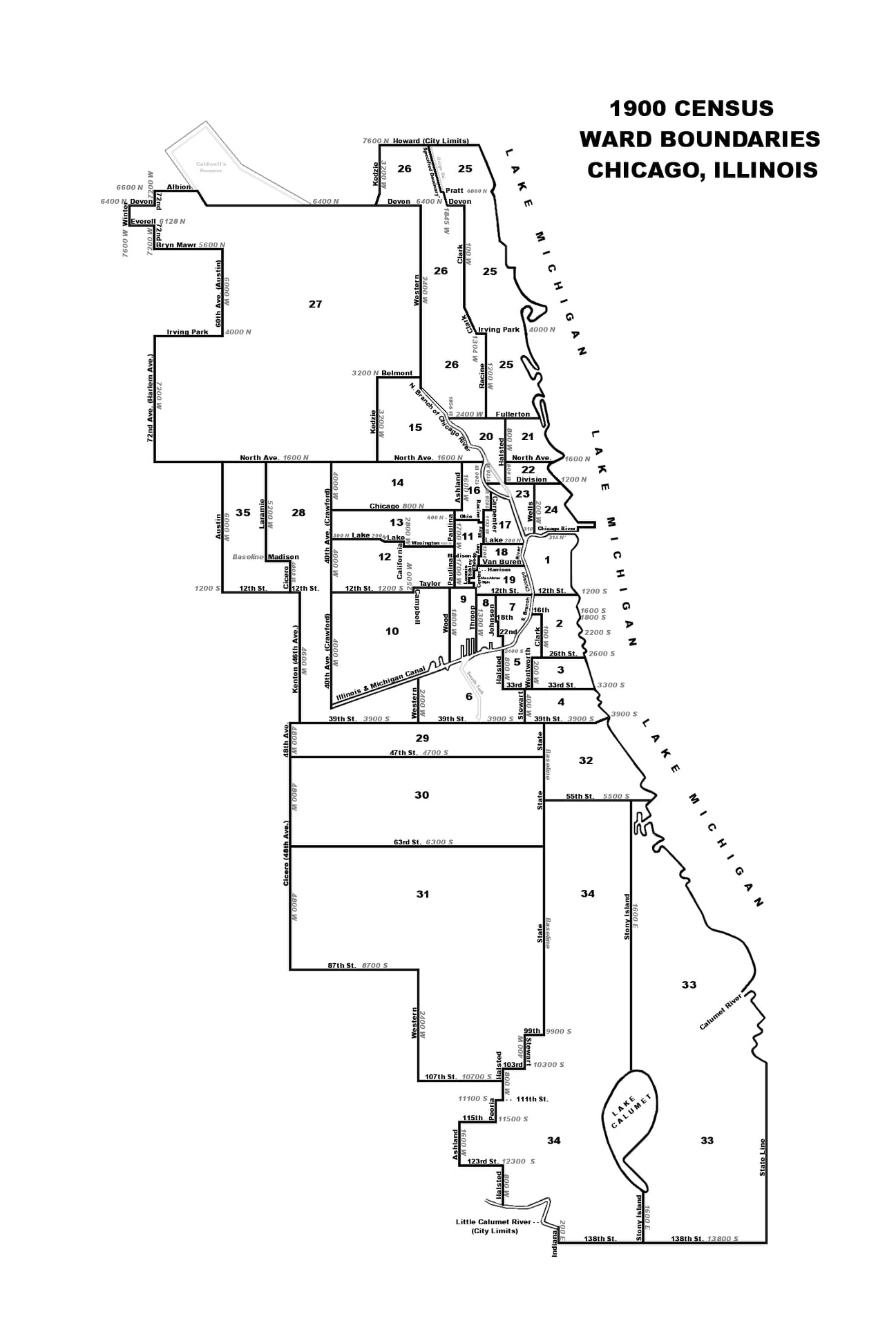
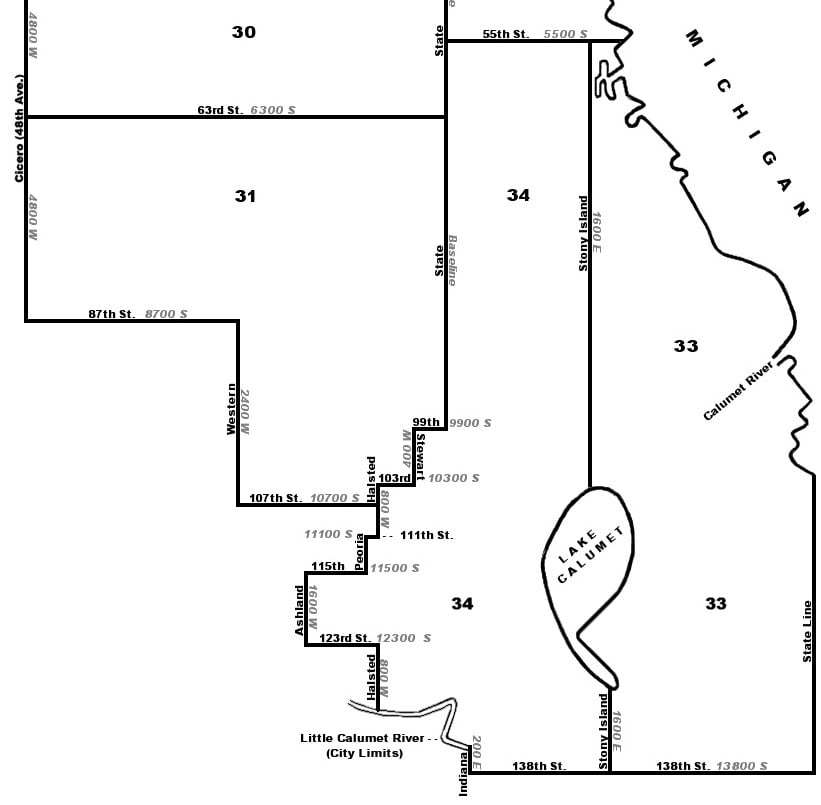
In 1889, with the annexation of 125 square miles of land into the city, the wards had been reconfigured and new ones created. The total number of wards had increased from twenty-four to thirty-four. When the area now known as North Beverly between 87th Street and 95th Street was annexed earlier in 1890, it was added to the thirty-first ward.
The determination of wards and their boundaries was a constant battle between the Democrats and Republicans on the city council to influence the election of aldermen according to political party affiliation. In 1890, Mayor DeWitt Clinton Cregier and the majority of the city council were Democrats, but that had gone back and forth through the early history of the city.
By 1890, Cregier was the fifteenth Democratic mayor. There had been five Whig mayors, and after this party merged to create the Republican Party in the 1850s, nine more Republican mayors. There had been five mayors with other or no political party affiliations.
It was generally assumed that Washington Heights would become its own ward – the thirty-fifth ward – when it was annexed. This new ward might also include West Roseland, or that area would be incorporated into an existing ward.
However, Washington Heights was strongly Republican, and establishing it as a new ward would almost certainly result in the election of two new Republican aldermen, something the Democrats did not want. Mayor Cregier was in favor of adding Washington Heights and West Roseland to existing wards.
An ordinance was drafted calling for the creation of a new ward for Washington Heights, and submitted to the Judiciary Committee of the city council. At the same time, two other ordinances were also submitted, calling for Washington Heights to be assigned to the thirty-first ward, and West Roseland to the thirty-fourth ward.
Establishing the new ward was a contentious issue in the city council. One alderman was quoted as saying about the ordinance before the Judiciary Committee, “It will sleep the sleep that knows no waking.” This proved so. That ordinance died in committee, and the ordinances to assign the areas to existing wards were presented to the city council, and approved.
Washington Heights became part of the thirty-first ward on February 25, 1891. West Roseland became part of the thirty-fourth ward.
Election precincts had already been established in the interim. In addition to the regularly scheduled voter registration day for the entire city, a second day was arranged for the new Chicago residents to register to vote. The annual aldermanic election was scheduled for the first Tuesday in April.
The two aldermen of the thirty-first ward were Captain George F. McKnight and Edwin J. Noble. Both had just been elected the previous year when the ward was established. Both were Republicans and ran unopposed.
As reported in Post 4, Noble was a grain merchant and stock trader on the Chicago Board of Trade. McKnight had a wide background in business and founded the Lake Gas Company in Chicago.
On the city council, Noble was a member of the Licenses, Streets and Alleys South, and Elections committees. McKnight sat on the Wharfing Privileges, Local Assessments, and Health and County Relations committees.
Each new ward had elected two aldermen in 1890, and to fit the positions into the election cycle, one was elected for a two-year term, and the other for a one-year term. McKnight was elected for one-year, so he was up for re-election in 1891, but he decided not to run for a second term.
The first election as residents of Chicago that the Washington Heights/Beverly voters participated in was to elect a new alderman to replace McKnight. The regular Republican “machine,” and that term was used back then for both parties, nominated Edwin A. Plowman for the position. Plowman was chief of the abstracts department of the Cook County Recorder’s office. He had sought the alderman position in 1889 but lost the nomination to McKnight.
However, a faction of Republicans in the ward nominated A. C. Clarke, an insurance adjustor, known for taking stances that differed from the official Republican stances. Clarke insisted he was the official nominee from the Republican Party. Despite some very heated debates, the Republican party leadership prevailed, and Plowman was listed on the ballot as the Republican candidate. Clarke ran as an Independent. They were joined on the ballot by nominees from the Democratic and Socialist parties.
Plowman won the election, becoming the new alderman for the thirty-first ward, and he served for one term. The position of mayor was also on the ballot that year, and Cregier lost to the Republican candidate Hempstead Washburne.
Noble was elected several more times, and served as alderman for the thirty-first ward until 1896.
Next: The Thirty-first Ward up to 1914