The Ridge Historical Society
Lost or Found? – Building #1: FOUND – Part 1 on the Iglehart House
By Carol Flynn
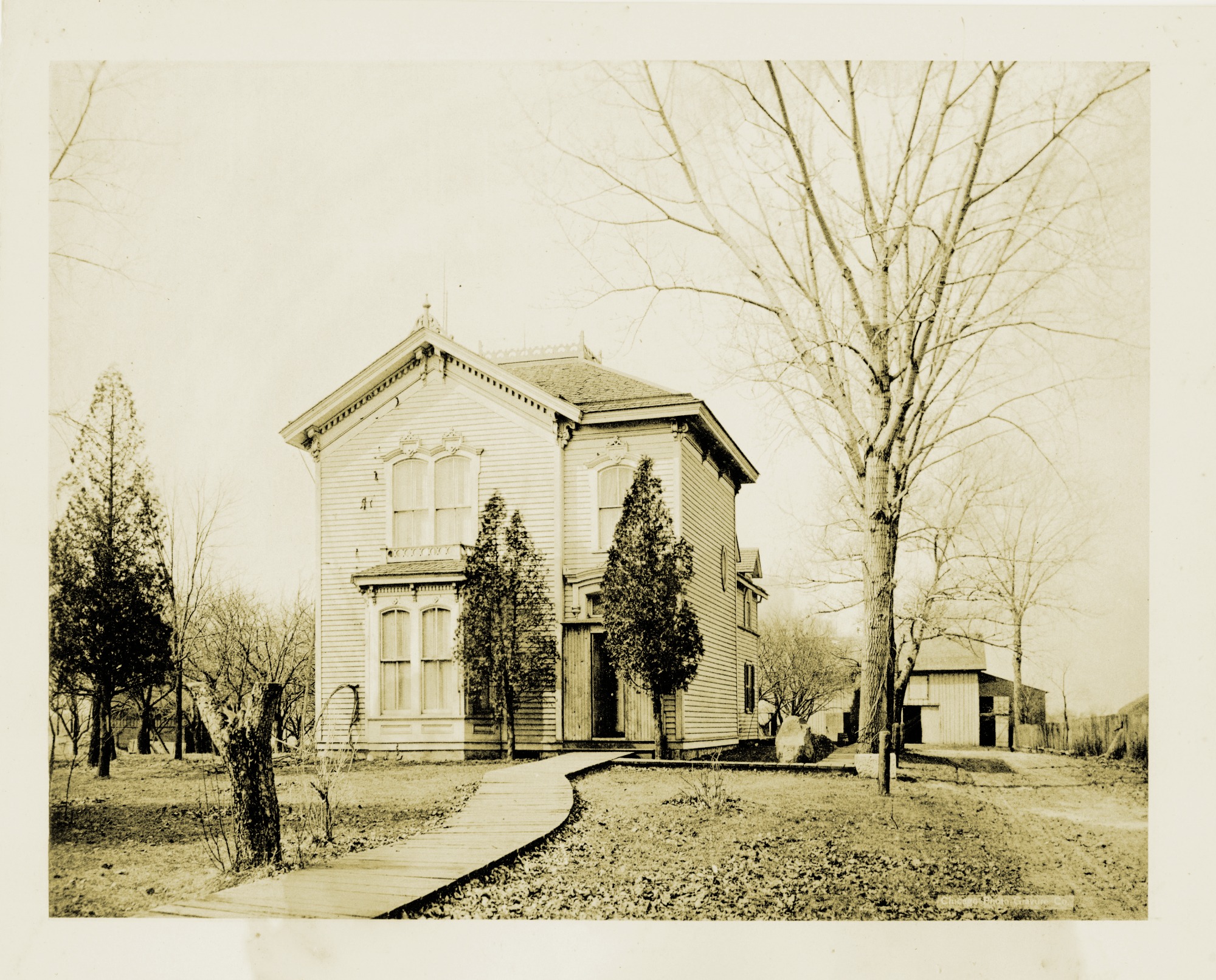
This new Facebook series from the Ridge Historical Society, “Lost or Found?”, presents photos of buildings in Morgan Park from an 1889 publication, and invites the reader to comment if the building is still standing, and if so, where it is located.
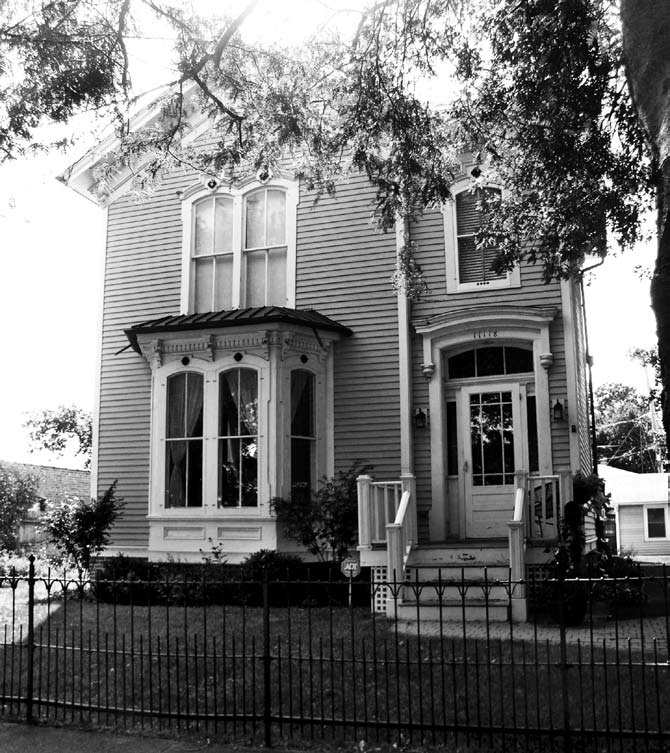
The first building was correctly “found” and identified by several people as the Charles D. Iglehart House at 11118 S. Artesian Avenue. Several people guessed it was a house on Prospect Avenue, and that was a reasonable guess that will be addressed a little later in this post.
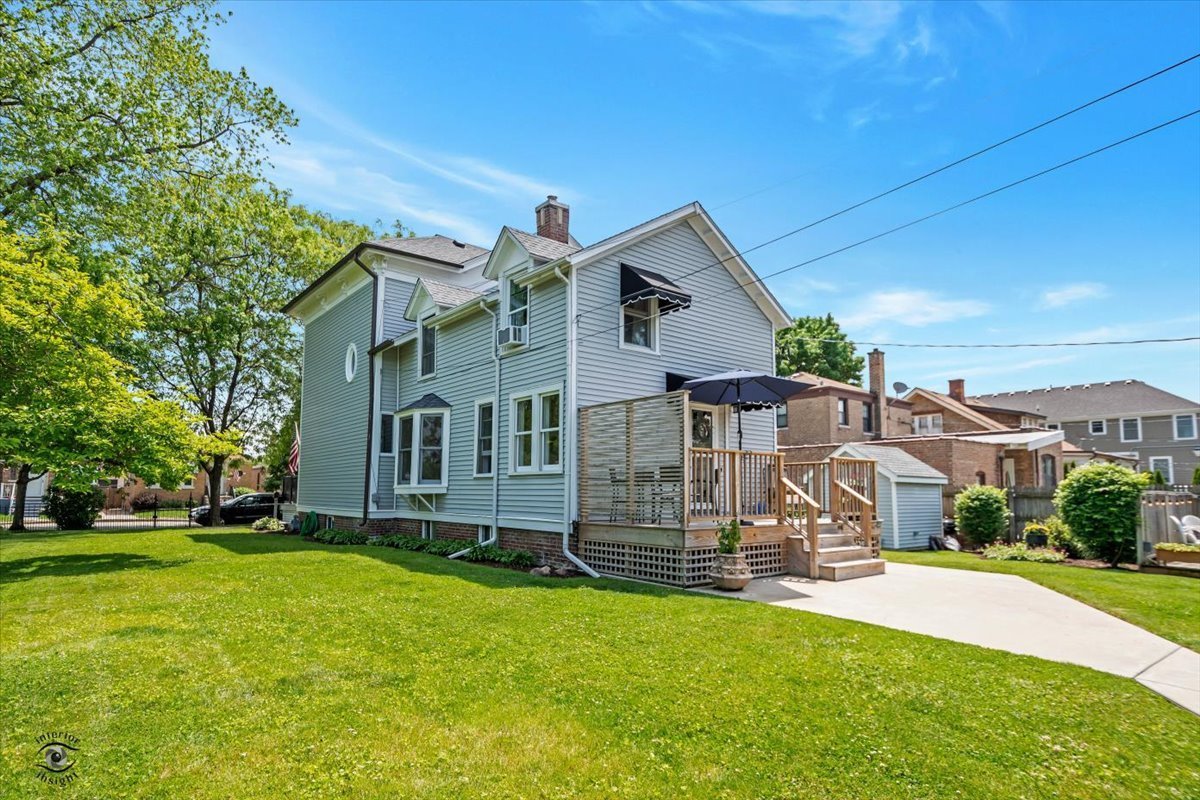
The Iglehart House is the oldest identified house in the community, and one of the oldest houses in Chicago. It was designated a Chicago Landmark by the Commission on Chicago Landmarks in 1994. The house has two parts, a farmhouse/cottage in the rear that was built in 1857, and an addition with an Italianate façade in the front that dates to the 1870s.
It is that old farmhouse in the back that gives the house enough historical significance to be worthy of landmark status. The Preliminary Staff Summary of information on this house submitted to the Commission stated that: “While its Italianate style is not uncommon for the mid-nineteenth century, it is certainly unusual to find an authentic farm house still extant within the city limits. Few Chicago buildings can claim the age and degree of preservation of this venerable residence.”
The original farmhouse was built by Charles D. Iglehart, a farmer who moved to Cook County from Maryland with his wife Elizabeth and young children in 1856. More information on the Iglehart family will be covered in the next post.
They took up residence and farming on the Ridge, at the corner of what is now 111th Street and Western Avenue. The land then was known as North Blue Island, or Worth township in Cook County. Popularly, the area was also known as “Horse Thief Hollow” from the horse thieves who hid out in the ravines in the 1830s – 40s but were gone by the 1850s (except for folklore). The section that would become known as “Morgan Park” wouldn’t be founded until 1874.
The Iglehart House was built when just a few houses were scattered around a very rural farming community. However, Western Avenue was already a “thoroughfare,” that is, a public road connecting places along its route. From 1851 to 1869, the road marked the western border of the city of Chicago. Western Avenue was also known as the “Blue Island Plank Road” for many years, because in 1854, it had been lined with wooden planks and connected to a system of roads which took people all the way to “downtown” Chicago.
The original Iglehart farmstead extended from 111th Street to 115th Street, and Western Avenue to Rockwell.
There was nothing around the house but prairie. Eye-witness accounts of the time describe the land as a natural paradise. The Barnards, another early family, related stories of abundant prairie flowers in the spring and summer – ladies’ slippers, violets, phlox – and in autumn, wild sunflowers that grew taller than the tallest men. Wild fruits were also abundant – huckleberries, strawberries, blackberries, plums – as was wild game like turkeys and rabbits, and seasonal waterfowl.
The early settlers could hear wolves howling at night. The wolves killed livestock, and there was one story of a Mrs. Smith dying while trying to walk home in winter from Chicago to her house on the Ridge with provisions for her children. Her remains were found partially eaten by wolves.
Eventually, wolves and humans could not share the habitat of the Ridge, resulting in the decimation of the wolves. Hunting down the wolves became a local pastime, engaged in by people like Thomas Morgan, with the hunting dogs he brought with him from England.
One story that was passed down was of Thomas Iglehart, one of the sons born on the Ridge, riding on horseback, chasing down and killing a wolf. It was claimed that the wolf was displayed for many years in the Iglehart home.
The Iglehart House started with the cottage-style farmhouse. Kerosene lamps provided light, cooking was done on a wood-burning iron range, a pot-bellied stove provided heat for the living spaces, and water came from a well in the back yard. Supplies were brought in by horse or oxen-drawn wagons.
The Iglehart family added the Italianate front part in the 1870s, but the architect, if there was one, is unknown. It was not unusual for homeowners to design and build their own houses, with help from the neighbors. The Italianate style was very popular in the 1870s, as evidenced by the number of houses built in that style during that time, including some very nice examples on Prospect Avenue. Hence, it was a good guess that this house could be found on that street.
Few internal features of the house remain today, but two impressive pieces are reported. One is a marble fireplace, and the story is that the marble was imported from Italy and then brought to the Ridge by ox cart. The other is a hand-tooled walnut banister and newel post on the interior staircase.
The Iglehart family was gone from the house by 1930, moving to other locations on the Ridge. During the 1920s, the land the Iglehart family owned was subdivided and sold.
Also, sometime in the 1920s, likely when Western Avenue was graded, widened, and repaved beginning in 1922, the house was moved about 40 feet to the west, allowing for a street to be added in front of the house, and today that is Artesian Avenue.
After the Iglehart family, the house was owned by members of the Arthur R. Ayers family, and then by the Paul A. Parenti family. These owners are truly commended for preserving the house so well for 100 years.
“Lost or Found?” is based on the current exhibit at the Ridge Historical Society (RHS), “Louise Barwick’s Lost Ridge,” which explores the Beverly/Morgan Park neighborhood as it existed in times past. Barwick was an artist and teacher who lived at 10330 S. Seeley Avenue in another notable Italianate-style house. Her watercolors of the Ridge depict scenes from around 1900.
The exhibit is open to the public for free on Tuesday and Sunday afternoons from 1:00 to 4:00 p.m. or by appointment. RHS is located at 10621 S. Seeley Avenue in Chicago. The email is ridgehistory@hotmail.com and the phone number is 773/881-1675.
The next post in this series will share more information on the Iglehart family, and then we will move on to building #2 in the “Lost or Found?” series.