The Ridge Historical Society
Louise Barwick – Part 1
By Carol Flynn
The Ridge Historical Society (RHS) has opened a new exhibit – “Louise Barwick’s Lost Ridge.”
The exhibit may be viewed on Tuesdays and Sundays from 1:00 p.m. to 4:00 p.m. or by appointment. RHS is located at 10621 S. Seeley Avenue in Chicago. The exhibit is free.
This exhibit focuses on life on the Ridge from 1893 to 1905 as seen through the watercolor paintings of Louise Barwick, an artist and educator who lived on the Ridge.
Other components of the exhibit include a section on aerial photography taken by cameras attached to kites, and “lost and found” architecture – historic photos of buildings, some of which remain and some of which are gone from the Ridge.
This post will begin a look at Louise Barwick.
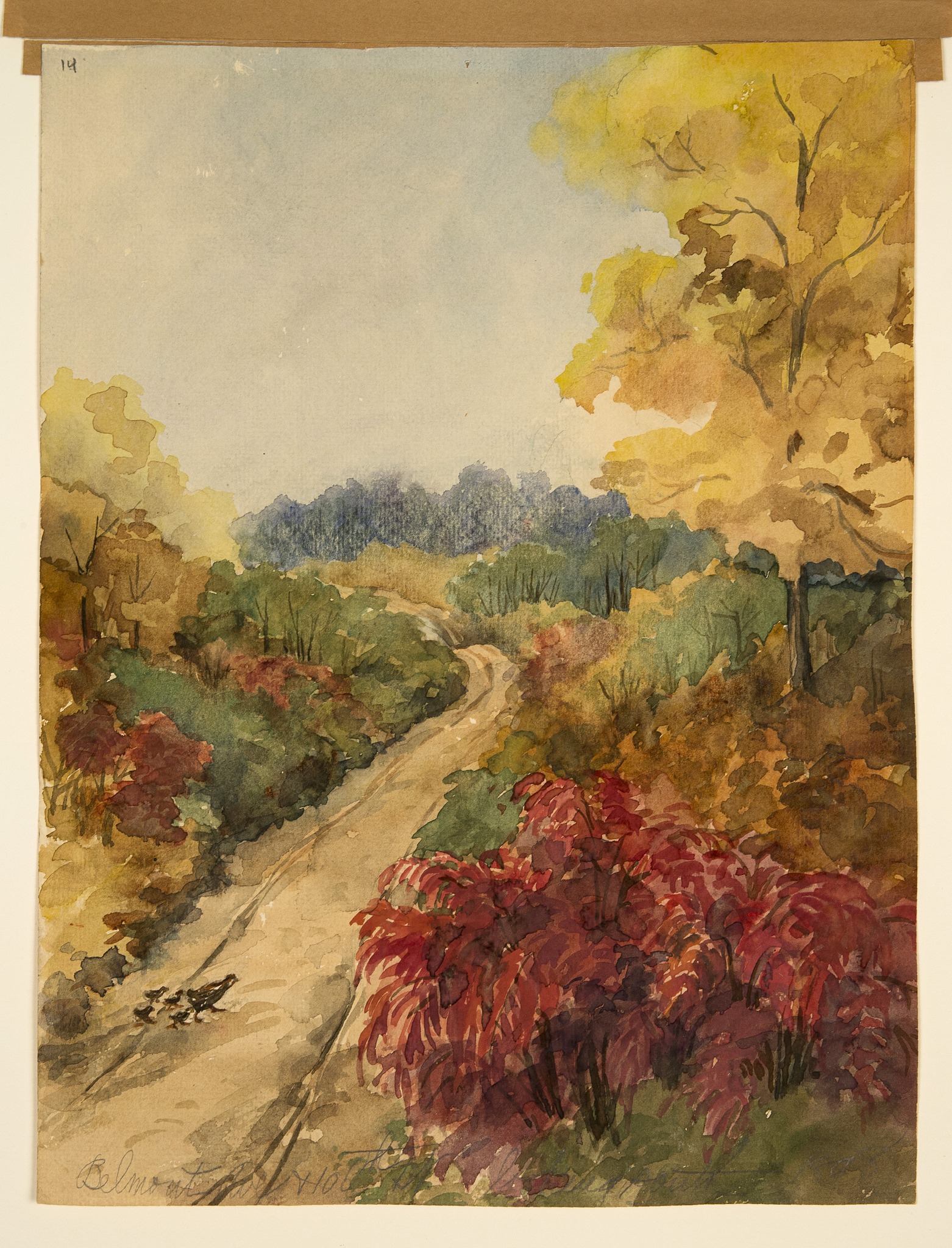
The watercolor paintings by the late Louise Barwick are among the gems of the RHS collection. Miss Barwick (1871 – 1957) was a long-time resident and art teacher in the Ridge community.
It is said that a picture is worth a thousand words. Miss Barwick’s paintings are not only interesting from an artistic perspective, but also because the subject matter depicts life on the Ridge circa 1895-1905.
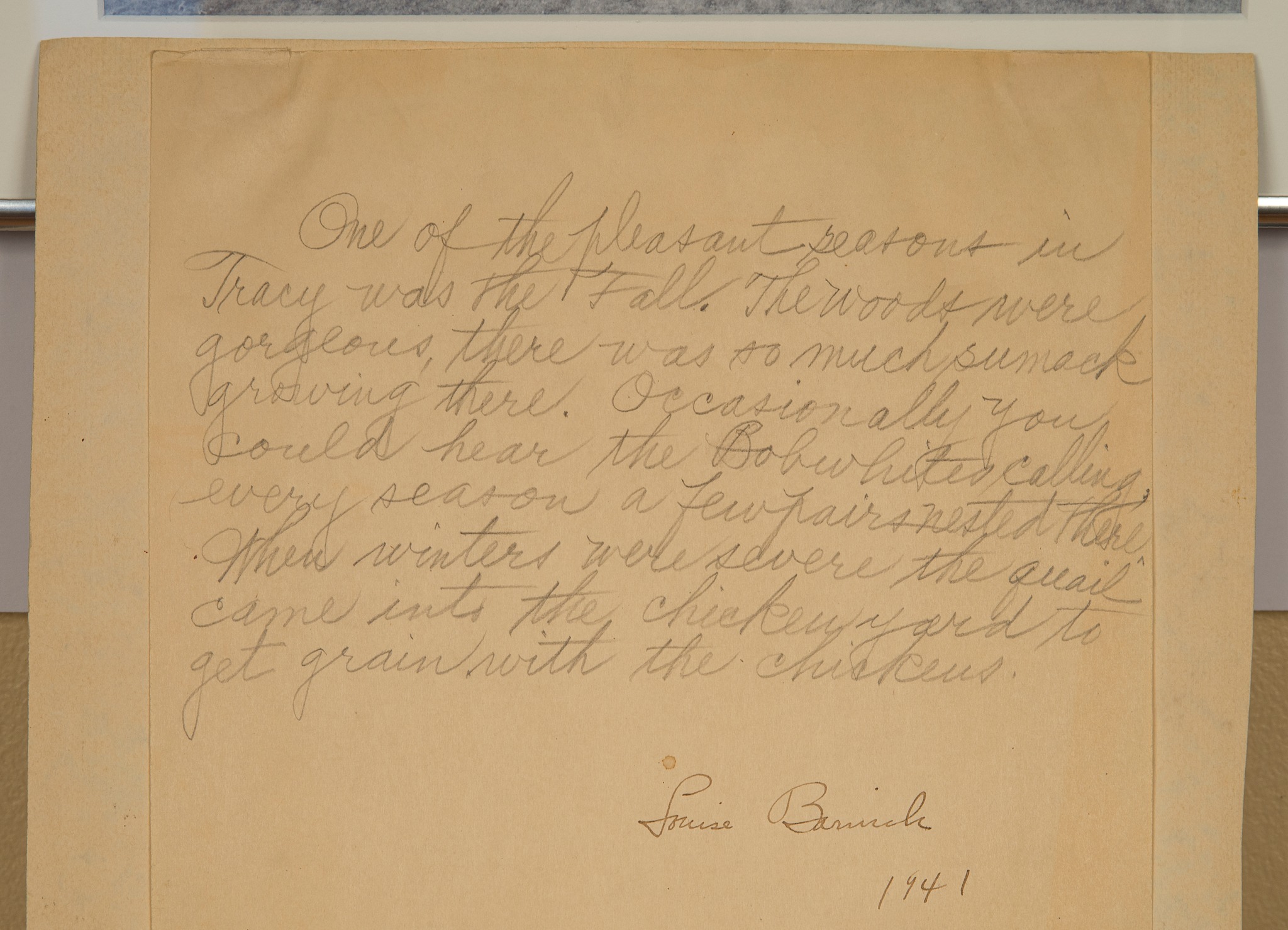
Completed sometime in the 1940s or before, the paintings represent memories of everyday scenes as well as special events. They offer a unique visual interpretation of local history based on the experiences of a young woman of the time. Louise also included stories and descriptions that enrich viewers’ understanding of the images.
One example of her paintings and the notes with it are attached. To see more of her paintings, viewers are encouraged to visit RHS for the actual exhibit.
However, her watercolor paintings and teaching career are only part of Miss Barwick’s legacy. It was actually her geographical maps that won her fame.
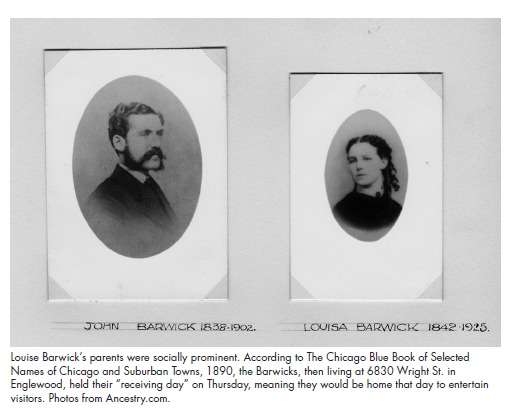
And Miss Barwick’s family history is also of note. She was a descendent of Chicago pioneers whose stories are part of the earliest days of the city.
Let's start with her genealogy.
The Barwick Family
Louise’s paternal grandfather, John Barwick (1806-1881) was a successful businessman and farmer in Canada.
He arrived in the Toronto area in 1832, having served in the British army, reaching the rank of lieutenant colonel. He established a saw mill, and was also a farmer and had a tavern license to sell beer and ale. From 1843-1847 he was partners with Benjamin Thorne, a leading merchant in Toronto and Montreal, who ran gristmill, sawmill, and tannery businesses. Barwick ran the Red Mills at Holland Landing as part of Thorne’s holdings.
Barwick was very active in local politics and improvements. In the 1860s, he served as president of the Provincial Agricultural Association of Upper Canada and on the Canada’s Board of Agriculture, and was involved in an exhibit that took place in London.
He was active in the formation and funding of the Canada Emigration Society, which encouraged people from the British Isles to immigrate to Canada. The businessmen considered this an investment – immigration brought more people to farm their vast land holdings, work in their industries, and buy their products.
John Barwick married Mary Ready Lee, the second daughter of Captain Simon Lee, who was wealthy from years with the East India Company. Mary’s hand had actually been asked for by another suitor, but Mrs. Lee insisted that by tradition the daughters had to marry in order. The first suitor was obliged to either marry the elder daughter or no Lee daughter at all.
John and Mary Barwick had a successful marriage, or at least a fruitful one. They had 18 children, including son John Lee Barwick, who came to Chicago at the age of 26, and took up with the Cleaver family.
The next post will look at the Cleaver family, and “Cleaverville,” a “company town” in Chicago that predated the Pullman area by three decades.