
Morgan Park Days – Part 2
By Carol Flynn
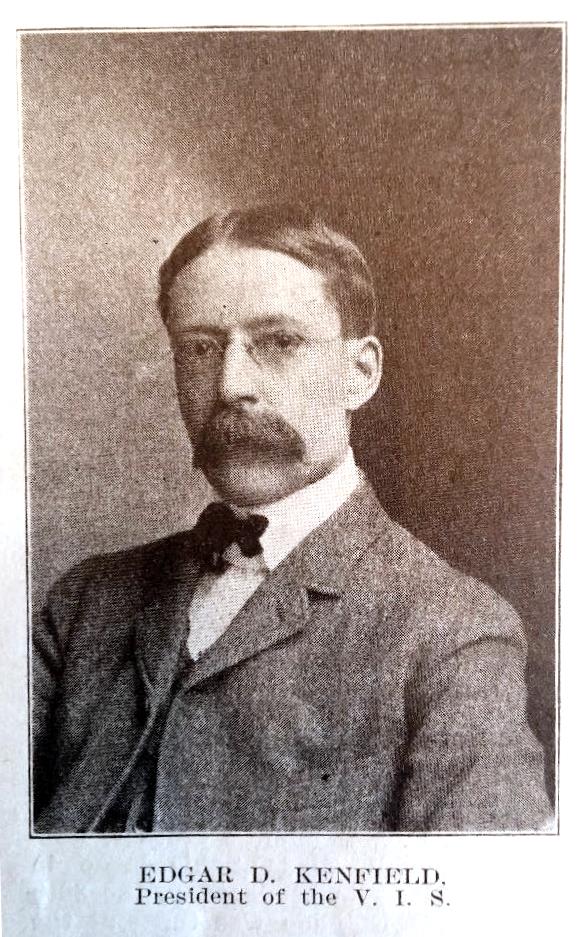
Edgar D. Kenfield became the next president of the Morgan Park Improvement Association (MPIA) in 1900. He was an executive with Eastman and Brothers Company which manufactured and sold perfumed soaps. He lived on Morgan Street, which became 111th Street when Morgan Park annexed to Chicago. His house was near the Walker Library, but is no longer standing.
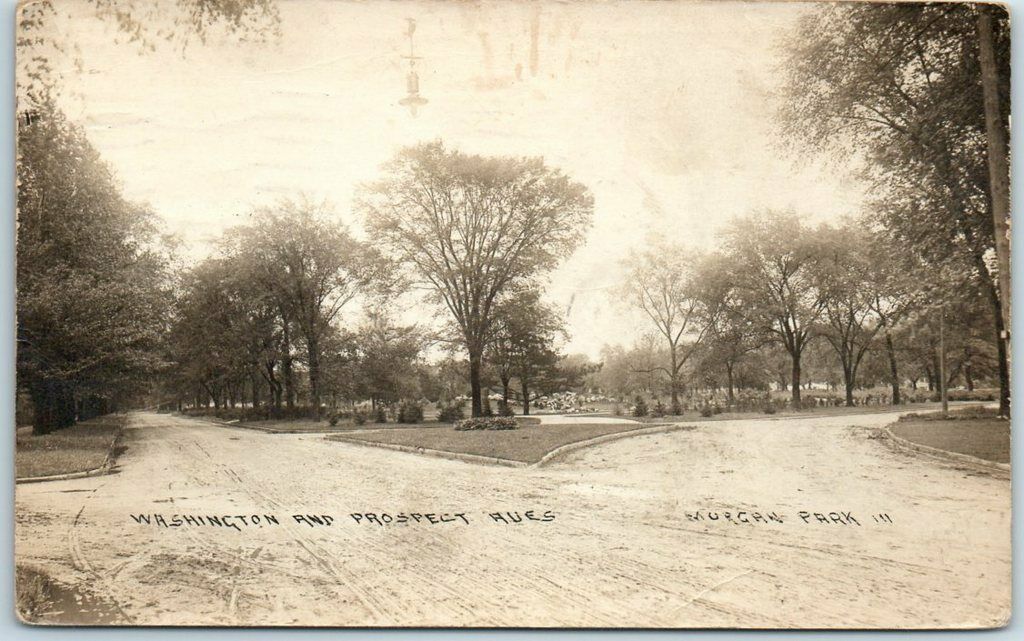
In August of 1900, the Chicago Tribune reported that MPIA members, “armed with scythes, rakes, and other implements, attacked Canada thistles and other weeds in the park and along the streets.” Some of the most prominent citizens were out there, including Isaac Blackwelder and his son Paul, and Henry Bohn. Blackwelder was an insurance executive living at 10910 S. Prospect Ave., and Bohn was a publisher living at 10980 S. Prospect Ave. Both of their houses are still standing. “After blistering their hands and wrenching their backs a few hours” they called it a day. They intended to plan a “Morgan Park day” at their next meeting. And they did exactly that.
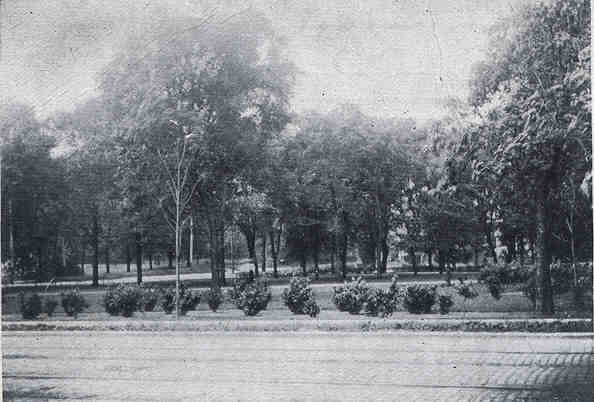
The first official Village of Morgan Park holiday was held on September 15, 1900. The Inter-Ocean newspaper covered the event in detail. The stores closed and the children were given a half-holiday from school. The Morgan Park village band, “with its gold-laced uniforms, marched through the clean and well-shaded streets to a stand erected for it on the sloping hillside near the village park, and played a lively march, to which the villagers kept step.” The children begged their parents for pennies to buy confections at the tables that were set up, while they all wandered under the cherry trees at the “grove” that was at Longwood Drive between 110th and 111th Streets.
The afternoon was allocated to speakers, who all had the theme of the improvement of Morgan Park. One of the most interesting speeches, according to the paper, was that of Mrs. N. O. Freeman of the Morgan Park Woman’s Club, who urged that cherry and apple trees and blackberry bushes be cultivated in unoccupied places so that the children might have fresh fruit.
Mr. Bohn said that Morgan Park should have “one day in the year devoted solely to the village, where the people could meet on common ground, their only creed being universal brotherhood.” Part of the land this first event was held on, at the time called the “common,” would become Depot Park, which would be designed by famous landscape architect Jens Jensen in 1906. It would then be renamed Bohn Park in 1933, the name it has today. Bohn served as president of the Calumet Park District when it formed in 1903. In 1934, Calumet Park District merged with the Chicago Park District.
President Kenfield said, “Our object is to beautify the village, create civic interest, and make happier as well as more ornamental homes.” He listed the successes of the year – the park was beautified; waste paper, garbage and weeds on the streets and in vacant lots were lessened; and unsightly sign-boards had been removed.
Mrs. Frances Copley Seavey said, “A village with the many natural advantages found here should have vines and flowers and trees. And there should be birds and squirrels, and laws and police to protect them.” Frances Copley Seavey was an artist and horticulturalist, and a prolific writer on landscape gardening as part of civic improvement. She lived in the South Shore section of Chicago and was an early user of audio-visual aids, incorporating stereo opticons into her presentations.
Reverend George C. Williams said it was easy to tell where Chicago left off and Morgan Park commenced by the appearance of the streets and the surroundings. The beautifying of the village was a laudable undertaking, and bore a close relationship to theology.
The speeches were interspersed with music by the band and songs by a quartet. At the end of the speeches, the band led the way to tables under the shade trees where “neatly-dressed women” served lemonade.
Morgan Park always aimed to be a model suburb, from its founding in the 1870s. The MPIA worked to establish and promote that image. The Chicago Tribune reported of this event that since the founding of MPIA much had been done to beautify the town. Trees had been planted and other municipal improvements made. The article said “it is intended by the society to make everything in Morgan Park artistic.” The day had been set aside for “jubilation by the residents of the suburb” after a year’s hard work.
Next: Labor Day becomes Morgan Park Day