Morgan Park Days – Part 4
By Carol Flynn
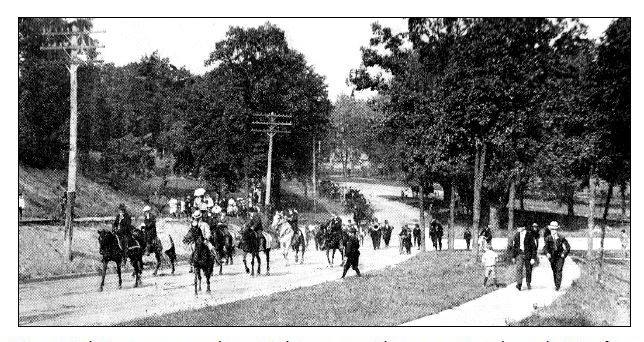
From the first Morgan Park Days in 1900 and 1901, the event grew in size and popularity over the next few years. In 1904, 5000 people attended. Morgan Park residents invited out-of-town guests to spend the day and make house parties out of the event. The official programming ran from 9 a.m. to 9 p.m. and were followed by dances.
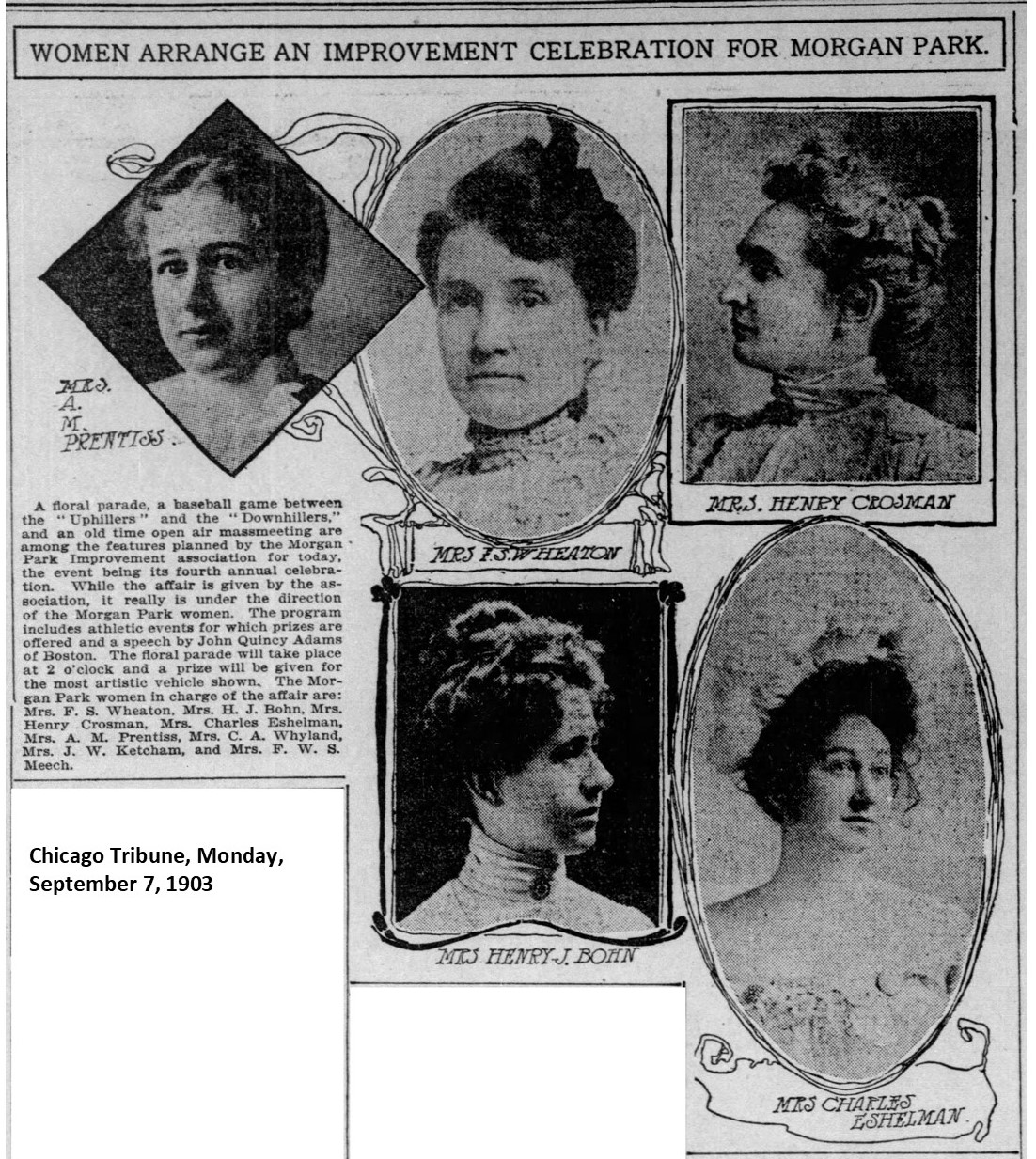
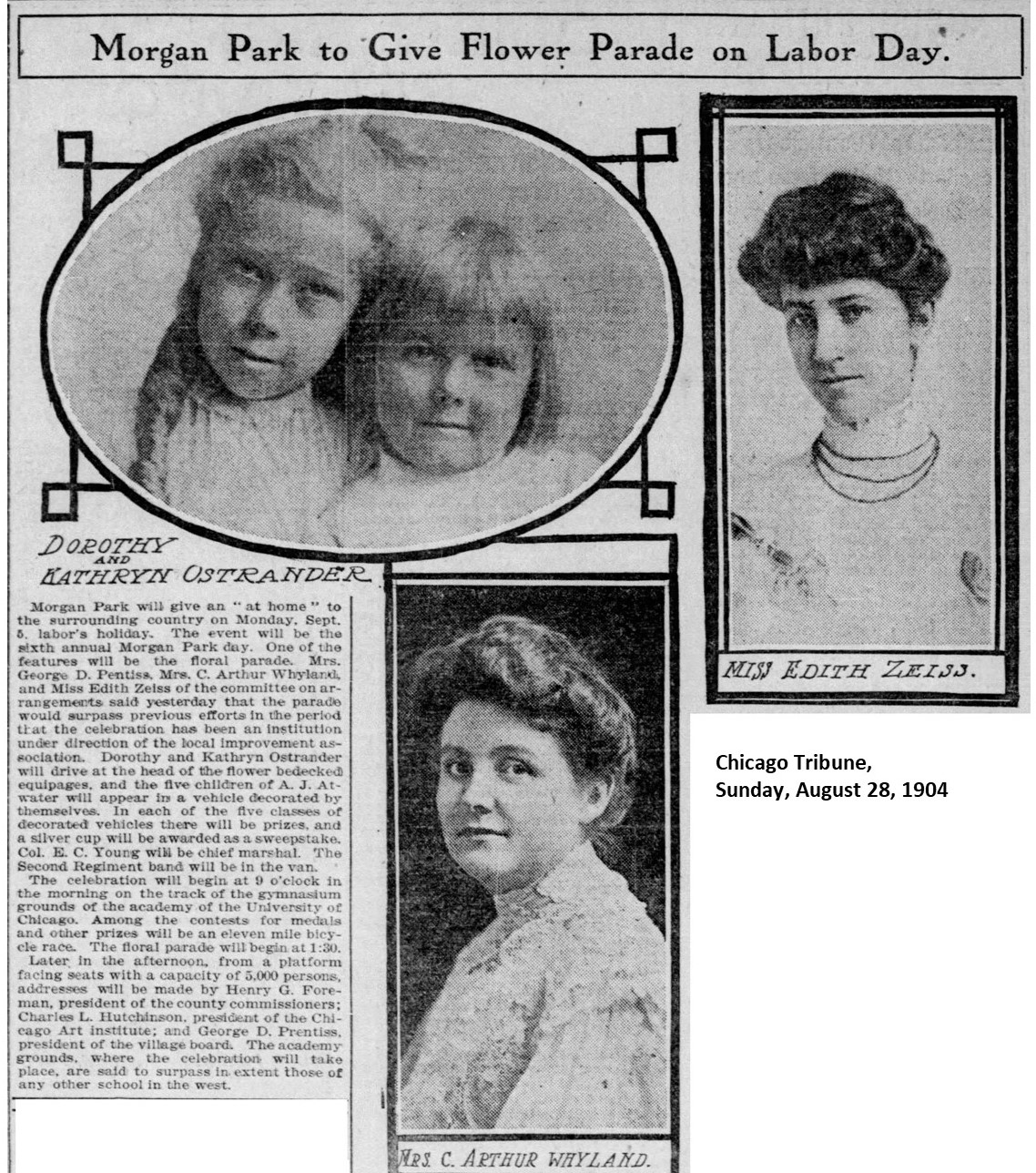
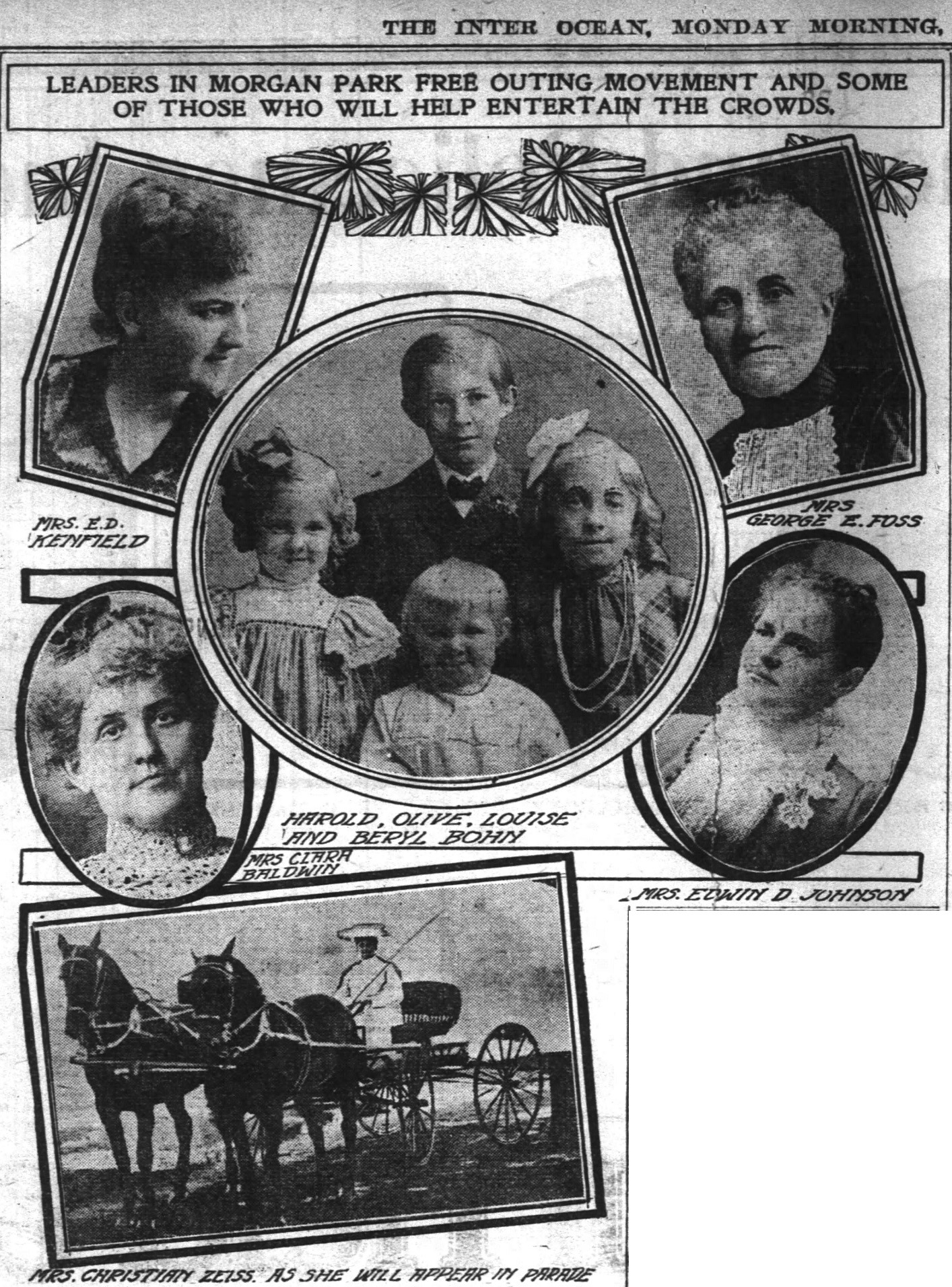
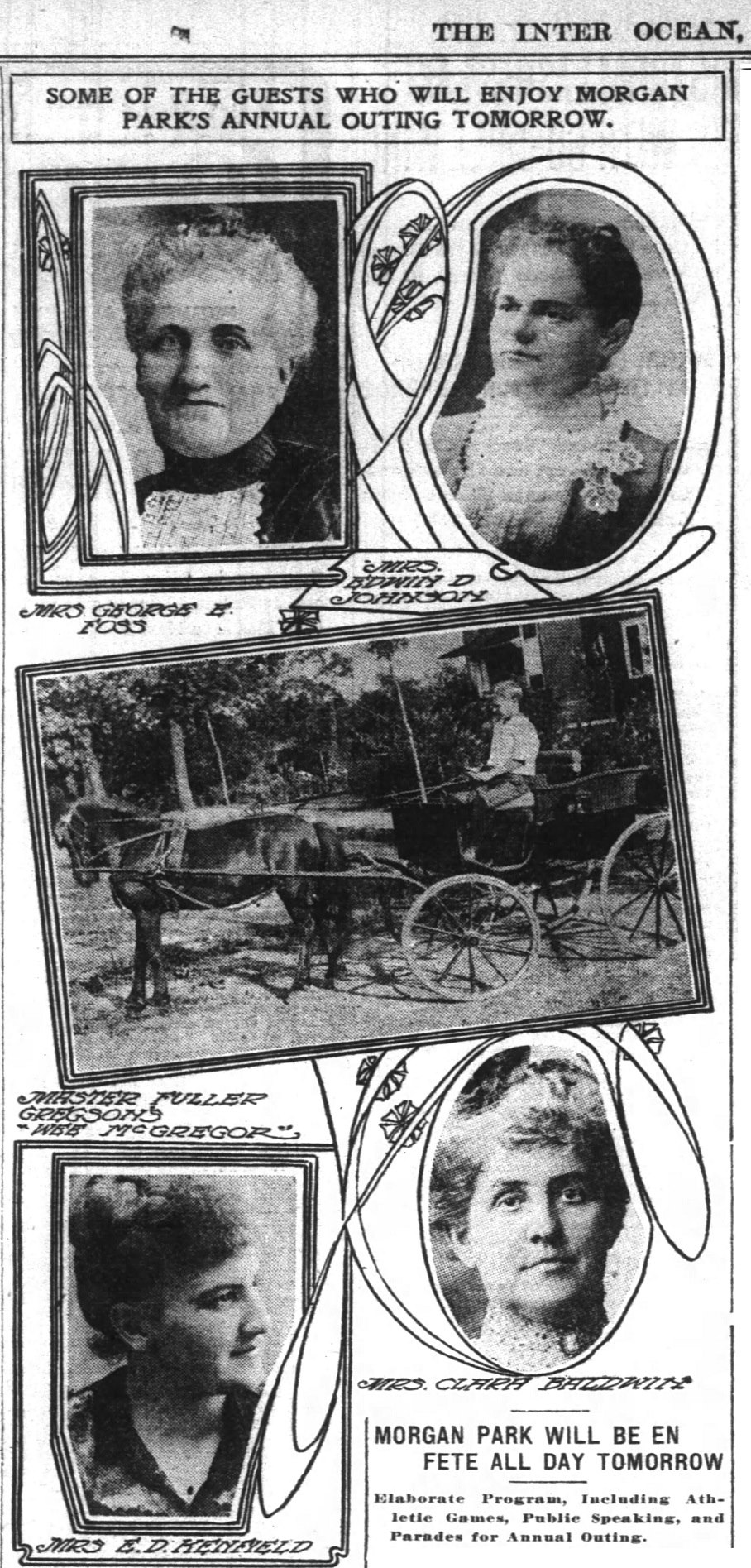
Although the day was attributed to the Morgan Park Improvement Association (MPIA), and chaired by prominent businessmen, it was readily acknowledged that the major part of the work was done by the Morgan Park Woman’s Club. The newspapers carried illustrations and pictures of the women who volunteered their time to make the day a success.
The athletic events held on the grounds of the Morgan Park Academy became significant competitions, attracting the best athletes from all around the Chicago area. Sports included bicycle races as well as track and field events like footraces, hurdles, high jumps, and pole vaults.
Fun events were added for children and adults. In 1905, a relay race was held between the various churches. The Baptists, Methodists, Congregationalists, and Presbyterians participated. According to one newspaper, “the Baptists won easily and the Methodists finished far in the rear.”
Continuing in major importance for Morgan Park Days were the afternoon speeches that concentrated on civic improvement topics. Morgan Park brought in prominent and influential people to be keynote speakers. These speakers included Congressman Henry S. Boutell from Chicago; Dr. John Quincy Adams from Philadelphia (no relation to the U.S. President); Charles L. Hutchinson, president of the Art Institute of Chicago; Henry G. Foremen, president of the Cook County Board; Dwight E. Perkins, architect and city planner; and Judge Orrin N. Carter, who would become chief justice of the Illinois Supreme Court.
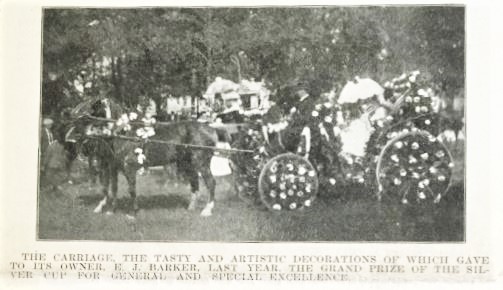
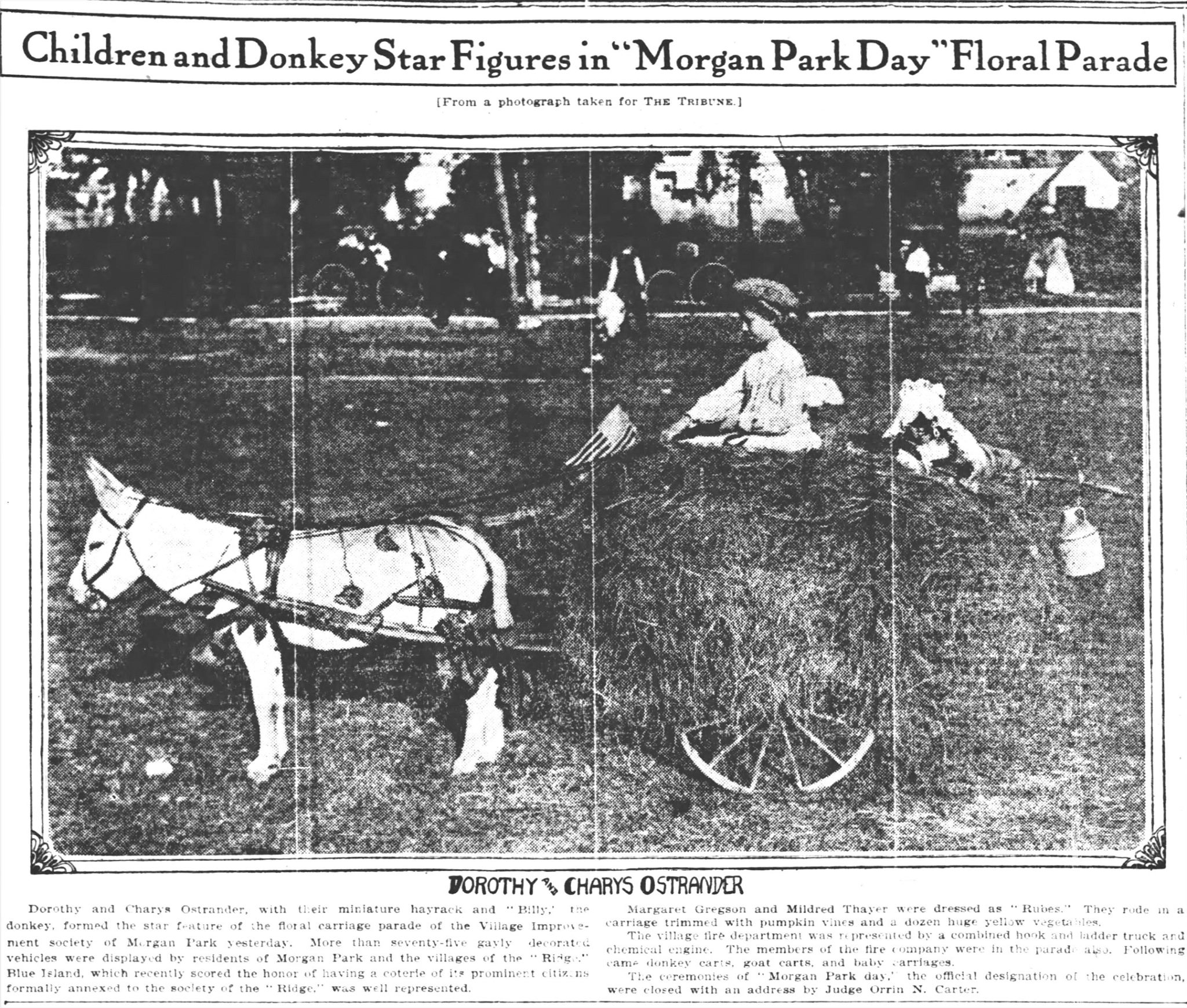
In 1902 or 1903, Morgan Park Day started what probably became its most popular feature for direct participation by the residents of the community – a parade of floral-decorated conveyances pulled by horses, ponies, and donkeys. The parade started at Prospect Park and wound its way through the streets of Morgan Park. Within a few years, over 1000 entries took part in the parade, and one newspaper described the event as: “… floats, pony carts, and carriages all of which were partly concealed beneath huge bouquets of flowers, fancy floral wreaths, and large ornamental horse shoes.” Children loved to participate, decorating their carts drawn by goats and burros.
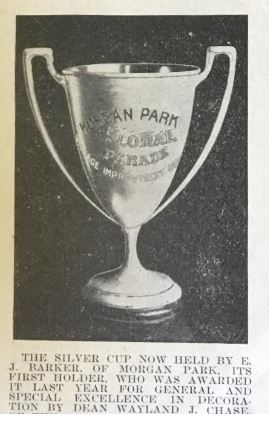
In 1904, the parade had become important enough that a silver loving cup was made to be handed out as the first-place award. The cup was kept by the winner for a year, then passed to the next year’s winner.
The first winner of the cup was England J. Barker, the founder of UARCO, the company that made automatic registers that issued multiple carbon copies of receipts, who lived at 108th and Western Avenue at the time. He would build his house at 107th and Longwood Drive, which became the Beacon School, a few years later. Runners up that first year included other prominent citizens – Austin Wiswall, U.S. Civil War hero and real estate businessman; W. W. Barnard, from one of the first families and the owner of the Barnard seed company at 103rd and Longwood Drive; and William L. Gregson, meat packer and member of the board of trade. One of the judges was William French, executive director of the Art Institute of Chicago, who lived in Beverly.
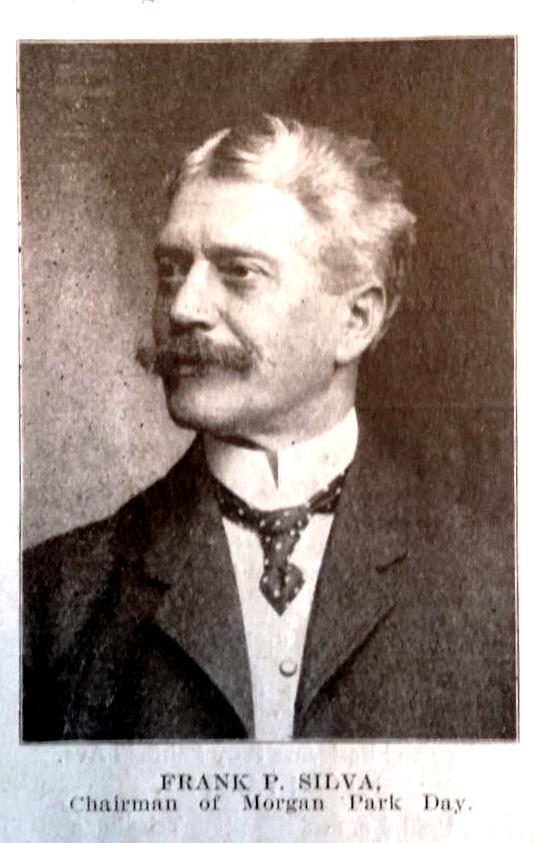
In 1905, the first-place winner was Cornelia Silva, who drove a spider phaeton decorated with purple asters. Cornelia’s husband was Frank Silva, who, with his brother, was very successful in the real estate business. Frank was the chairman for the 1905 Morgan Park Day.
Fuller Gregson, son of William L. Gregson, who lived at 116th and Longwood Drive, took first prize in the pony carriage competition. The Ostrander children took first place in the donkey cart competition, “with a peaceful looking burro that received great applause.” The donkey cart was decorated with pumpkins and pumpkins vines. James H. Ostrander, the father, was an optician who provided eyeglasses for two U.S. Presidents, William McKinley and Theodore Roosevelt.
Food and refreshments were always an important part of any group event. Beginning in 1904, the churches set up tables to sell and serve food all day, and dinner into the evening. It became highly competitive between the churches as to which made the most money from their members’ home cooking.
Entertainment throughout the day and evening came from the local brass band and guest bands, and glee clubs and choral groups. In 1904, the evening offered two dances, one at the new Ridge Park Country Club which had been founded in 1902; and one at the Morgan Park Academy gymnasium sponsored by the Morgan Park Athletic Club.
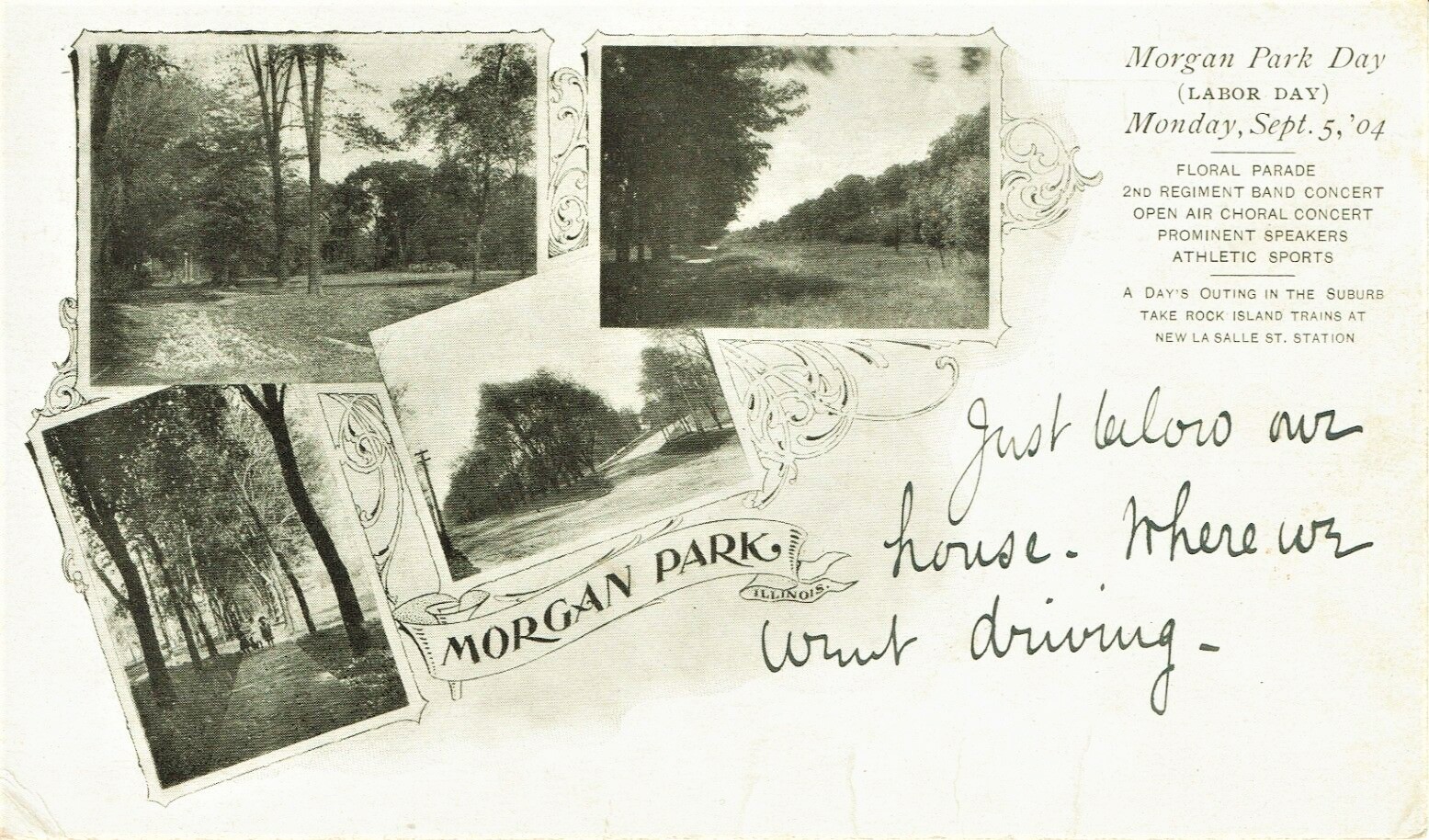
In 1904, souvenir postcards with scenes from Morgan Park were sent out by the thousands as invitations. Special trains ran on the Rock Island line to accommodate the extra crowd.
The funding for Morgan Park Day was raised through volunteer donations, and everything but the food was free. The Chicago Tribune noted that “the promoters assert that [Morgan Park Day] is entirely free from any mercenary aims, the purpose being to bring about, foster, and develop a closer acquaintance with and local pride in the beautifying of the suburb.”
In 1904, magazines and newspapers published as far away as San Francisco declared “Morgan Park one of the most desirable suburban residence districts around Chicago.” This was based on the success of the fifth annual Morgan Park Day which had taken place on Labor Day, September 5.
Enthusiasm for Morgan Park Day started to wan in 1906 and 1907, but then there was a campaign to revive the day, and 1908 saw the best Morgan Park Day ever.
Next: The 1908 Morgan Park Day