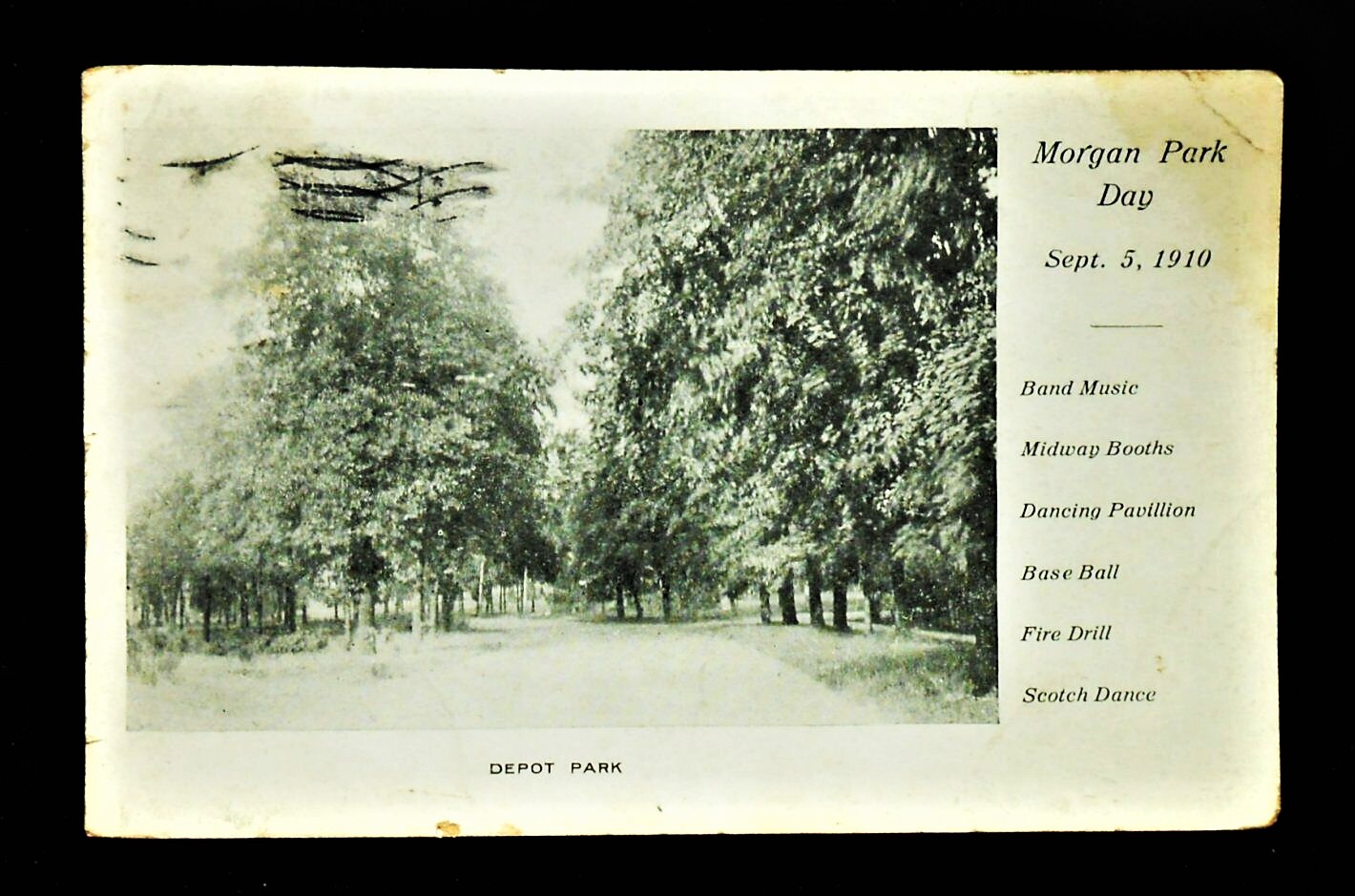
Morgan Park Days – Part 5
By Carol Flynn
The Chicago Tribune wrote on Labor Day, Monday, September 7, 1908: “Morgan Park will pat itself on the back today.” That was the peak year for Morgan Park Days, and what a grand event it was.
David Herriott, the local postmaster, published the Morgan Park Post newspaper from 1905 to 1917. Herriott was a prolific and eloquent writer who gave detailed and accurate accounts of local history. He covered the 1908 Morgan Park Day in great detail.
Herriott wrote that after two years of “innocuous desuetude,” which essentially translates to mean the day had simply run out of steam, the Village struggled with whether to hold the event at all. A group of businessmen came forward to plan, raise money for, and manage the day. They formed the Morgan Park Day Committee (MPDC), independent of the Morgan Park Improvement Association. The committee members who inspired the community to revive the event for a few more years were H. Clay Russell, who was in publishing; England J. Barker (business machines); Charles E. Lackore (undertaker); William. S. Kiskaddon (grocer); Luther S. Dickey (grain merchant); and Franklyn Hobbs (advertising).
Like the other years, the planners encouraged residents to invite their friends and relatives from all over to come for the day, and to decorate all houses, not just those along the parade route. House parties were held throughout the Village. The population of Morgan Park at the time was about 5,000, and 10,000 people were expected to attend. The Chicago Tribune reported that 20,000 people showed up.
Most of the events took place on the Morgan Park Academy grounds. The athletic events and contests were numerous. Footraces, pole vaulting, and broad jumps, as well as bicycle races, were included as in previous years. In addition to the serious events, three-legged races, potato and sack races, and races for burro carts and roller skaters were held. Monetary prizes, which came largely from donations, were awarded to the winners. There were baseball games between Morgan Avenue (111th Street) and Commercial Avenue (Hale Avenue) businessmen, and between the members of several of the churches.
The church women, as always, were in charge of the food. According to the Post, booths were set up to sell “peanuts, popcorn, crackerjack, pork and beans, chop suey, pop, lemonade and orange cider, coffee, doughnuts and milk, candy, pies, fruit, sandwiches and red-hots.”
Other booths sold postcards and souvenirs. Adults strolled around with decorated canes and children with red balloons. Adults and children alike waved pennants and banners.
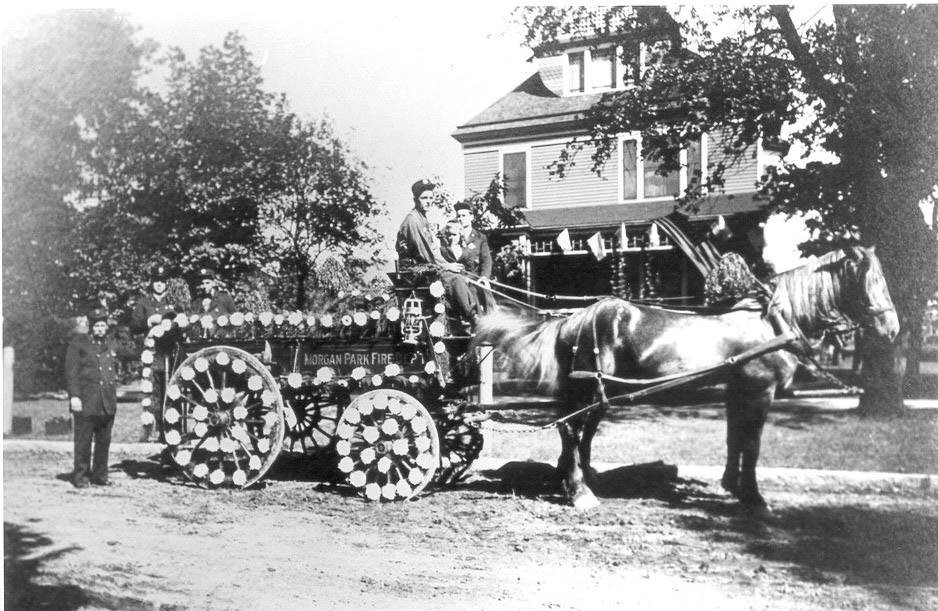
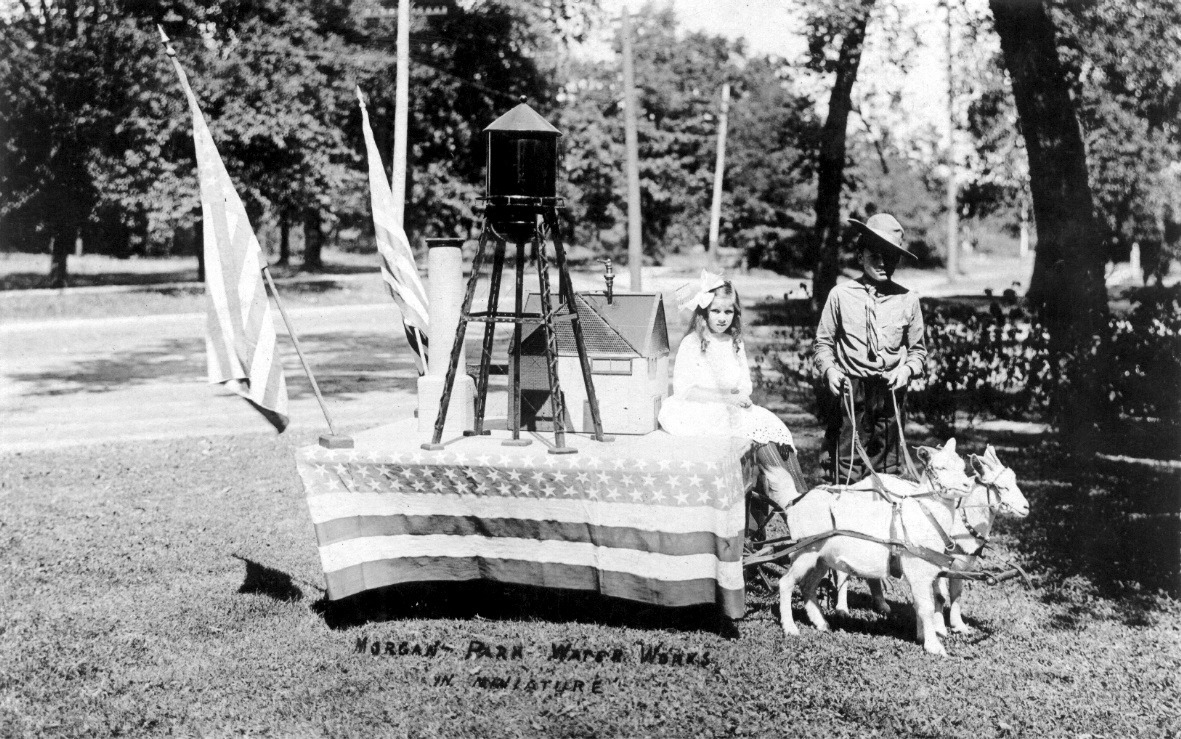
The parade was the longest ever, stretching for two miles. For the first time, in addition to private carriages, police and fire department wagons, and floats entered by organizations, an invitation was extended to business and industry for floats, and for trade and farm wagons to enter. The Post described the entries as “tandems and singles, roadsters and gigs, autos and cowboys, horses and ponies, drug store floats and grocery store floats.”
That year’s major speech was on “Morgan Park, Past and Present,” delivered by Henry B. Baldwin, a prominent Chicago lawyer who lived in Morgan Park.
Evening entertainment included a chorus of 50 members, led by Edward T. Clissold. Clissold was the son of Henry Clissold (for whom Clissold School is named) and part of the family publishing business, and he was known for his beautiful voice and leadership of fine choral groups. Leading up to the day, public practice sessions were held so residents would be ready to sing along. Musical entertainment was supplied by the 25-member First Calvary Band, I. N. G. (Illinois National Guard), considered “one of the best in the land and worth the money,” which was $200, according to The Post.
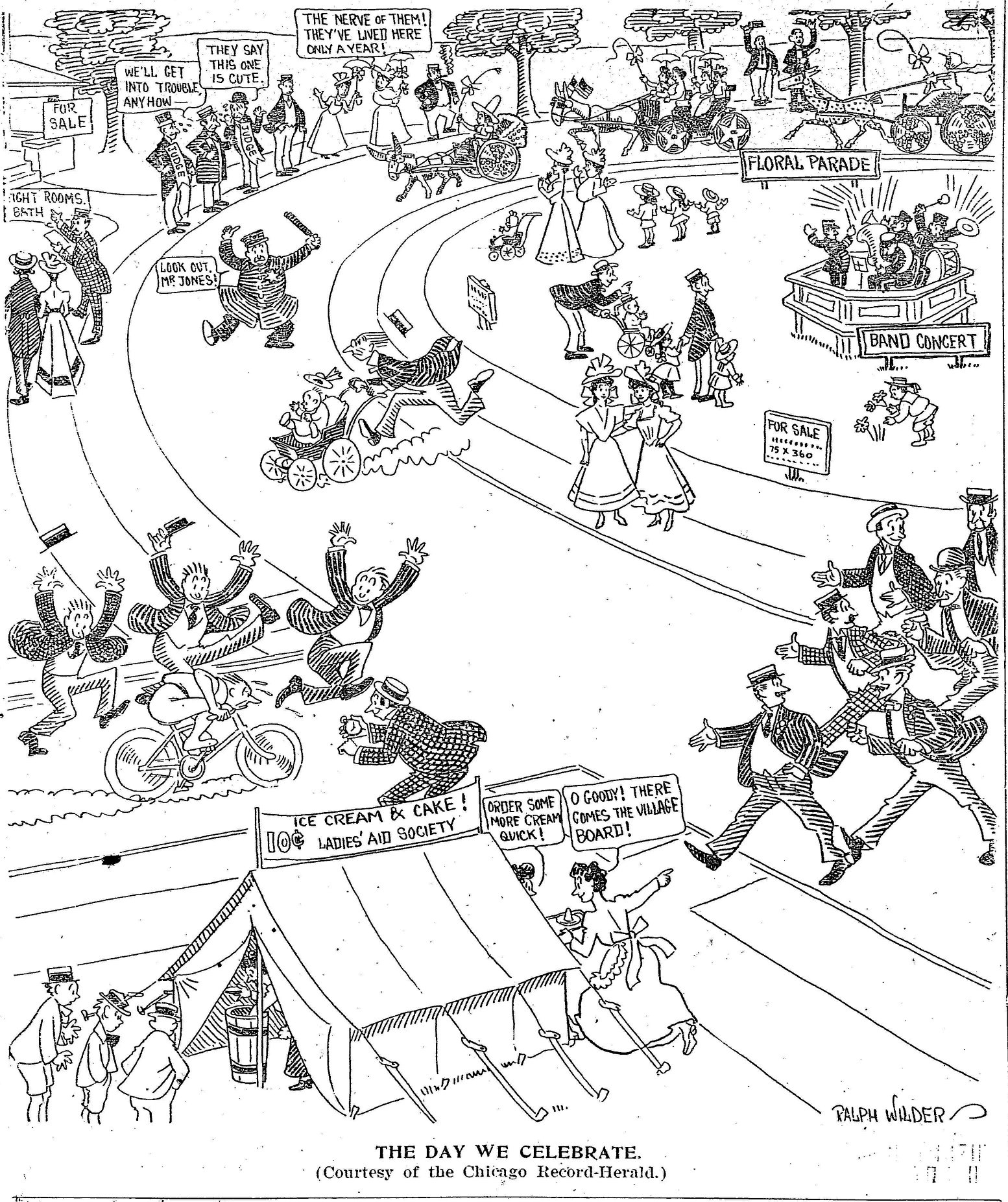
Ralph Wilder, a cartoonist for the Chicago Record-Herald newspaper who lived in the Village, served on the Morgan Park Day publicity committee. A cartoon he drew that captured the spirit of the day was reprinted in the Post. Wrote Herriott, “Ralph Wilder’s cartoon is not at all overdrawn. This is just how we all feel about it, regardless of who, which and what we are. It is our day – the people’s day – ‘of, for and by’ them, with nobody to say them nay.” The cartoon is included in the attachments.
A few weeks before the event, Herriott had written these prophetic words about that year’s Morgan Park Day: “We are not boastful, but all indications point to the fact that the Village of Morgan Park, beautiful as even the Garden of Eden, will on that day give a reason for the faith that is in it. Local patriotism is in the saddle for sure and all that it needs is a fair day, for it already has a clear course.”
It appears the last official Morgan Park Day took place in 1911. The Village actually voted to annex to the City of Chicago that year, but some residents blocked that with legal action. The next vote took place in 1914, and finally went through – Morgan Park became part of Chicago. In 1917, Labor Day events focused on honoring men joining the “new national army,” as the country had joined World War I efforts in April of that year.
Happy Labor Day and Happy Morgan Park Day!