
The Ridge Historical Society
Native Americans and the Blue Island Ridge – Part 6: More Wars and More Treaties
By Carol Flynn
The War of 1812 saw the beginning of the end of the Native American presence in Chicago. After U.S. military and settlers were killed, and Fort Dearborn was burned down, by Potawatomi warriors in the Battle of Fort Dearborn, the U.S. government became determined to remove Indians from the area to allow further settlement to go on unimpeded. “Chicago” was strategically located for transportation and trade, and the land surrounding it was rich for farmland.
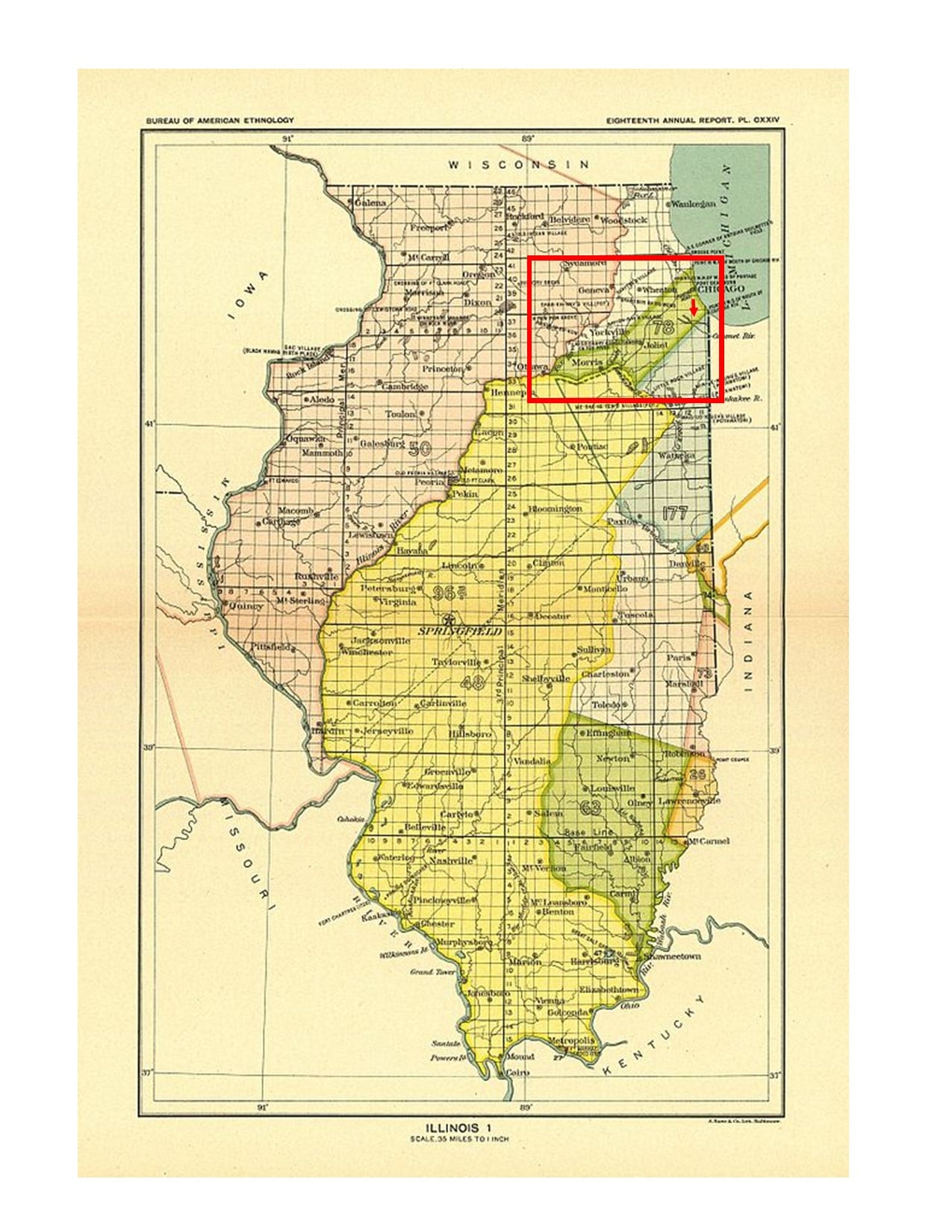
Fort Dearborn was rebuilt in 1816. In the Treaty of St. Louis signed in 1816, the Council of Three Fires (the Ojibwa, Odawa, and Potawatomi, although only the Potawatomi were living in the Chicago area) gave up all claims to a 20-mile strip of land that included the Chicago Portage connecting Lake Michigan to the Illinois River. The Chicago Sanitary and Ship Canal is on this land now.
“Indian boundary lines” which started at the lake and ran southwest were established on either side of this strip of land. The deal with the Indians was that white settlers were permitted to settle safely within the lines. The southern line ran just below the southern tip of the Blue Island Ridge, placing the lands of the Ridge communities, that is, today’s communities of Beverly Hills, Morgan Park, Washington Heights, and Mount Greenwood, and the City of Blue Island, within the settlers’ territory.
Although the “Illinois Territory” was first claimed for the developing U.S. during the Revolutionary War, this made it official that the Blue Island Ridge was under the control of the U.S. government, slated for settlement by U.S. citizens, and was no longer under the control of Native Americans.
In 1821, the first Treaty of Chicago was signed by the U.S. government and the Council of Three Fires. This affected the Chicago area because among the land turned over to the U.S. government was an easement between Detroit and Chicago around the southern coast of Lake Michigan.
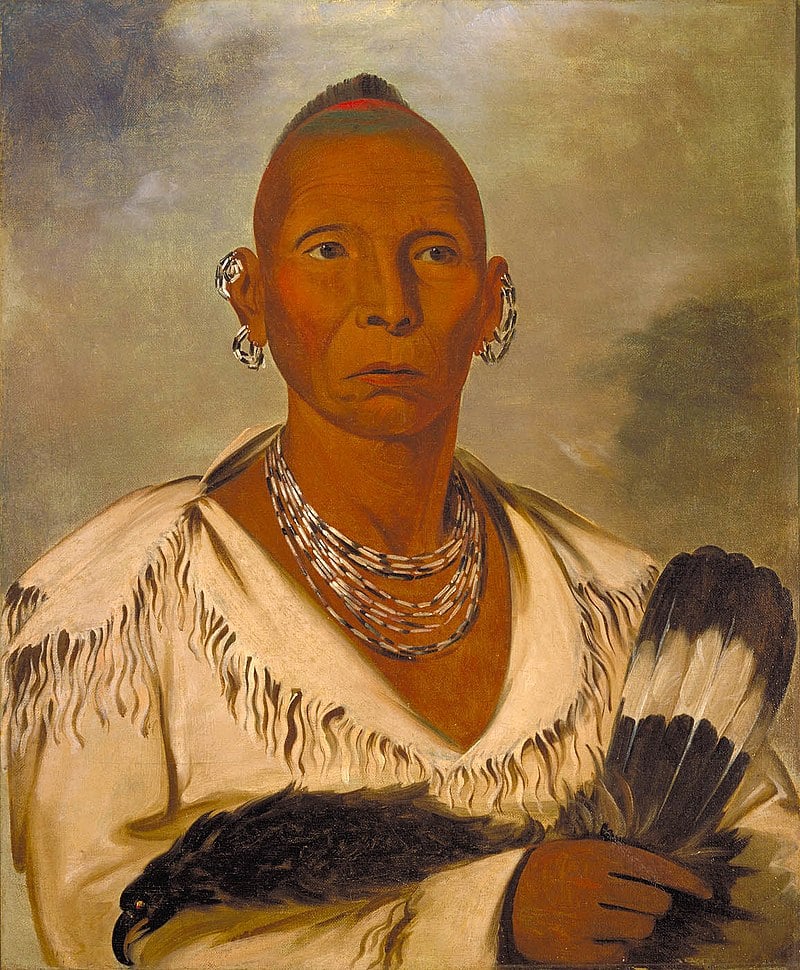
The Black Hawk War occurred in 1832. Black Hawk, a leader of the Sauk people, led a group of Sauk, Fox and Kickapoo into the Illinois Territory from Iowa. Their motives were assumed to be hostile, and the U.S. military opened fire on a delegation of the group, inciting the “war.” Most of the Potawatomi people did their best to avoid the conflict. Some other tribes took sides for or against the U.S. The Native Americans were defeated.
One notable fact from the Black Hawk War was that Abraham Lincoln served in the U.S. military at this time, stationed in Wisconsin, but he never saw combat.
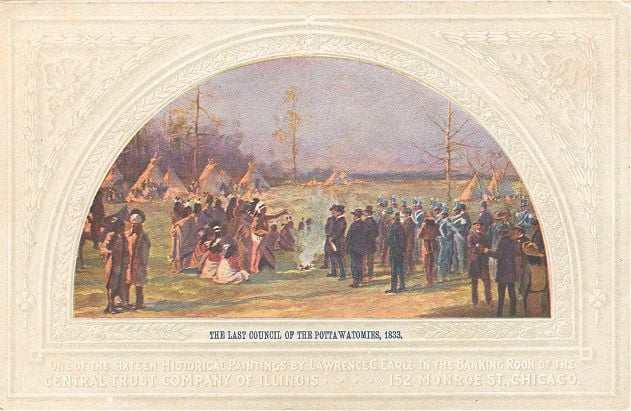
The Black Hawk War culminated in the 1833 Treaty of Chicago, in which the U.S. government took over total control of certain Native American lands west of Lake Michigan, including the Chicago area. The Potawatomi received promises of cash payments and tracts of land west of the Mississippi River.
In 1835, five-hundred Potawatomi warriors gathered in full dress and danced the last recorded war dance in the Chicago area. The majority of the Indians left the area after that. Chicago was incorporated as a city in 1837.
The purpose of these first six installments of this series was to give a very brief historical background as context for the history of Native Americans on the Ridge. We will now turn our attention to the Native Americans who lived on and around the Blue Island Ridge up to the 1830s.