
The Ridge Historical Society
Native Americans and the Blue Island Ridge – Part 5: The Battle of Fort Dearborn
By Carol Flynn
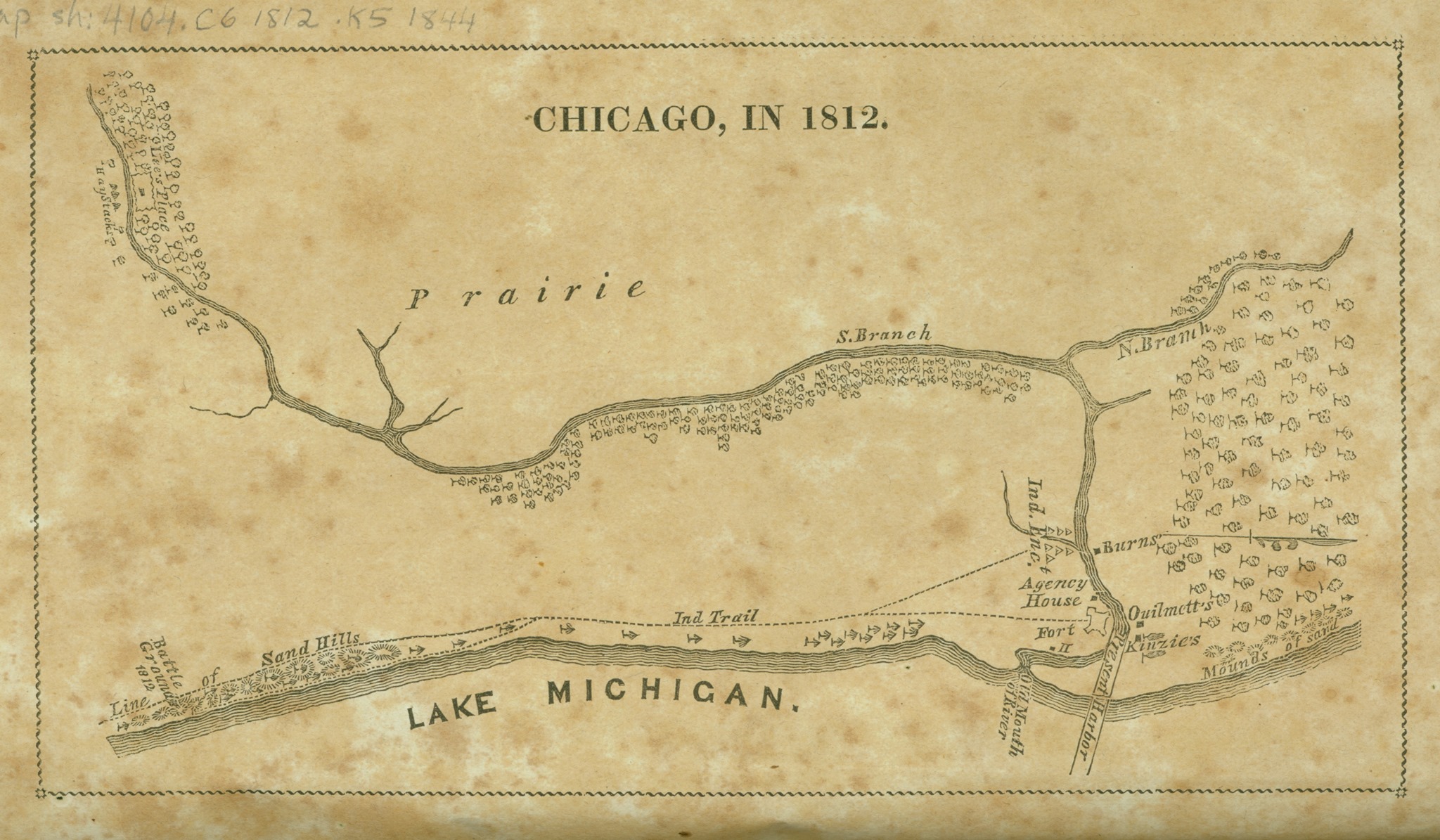
Fort Dearborn was built at the junction of the Chicago River and Lake Michigan in 1803 on land that Native Americans turned over to the new U.S. government by treaty after defeat in the Northwest Territory Indian Wars. The British, who had been allies of the Native Americans, also gave up their military presence in the Northwest Territory at that time.
However, even though the newly formed United States had won that war and claimed the Northwest Territory for its expanding borders, tensions between all the parties remained high.
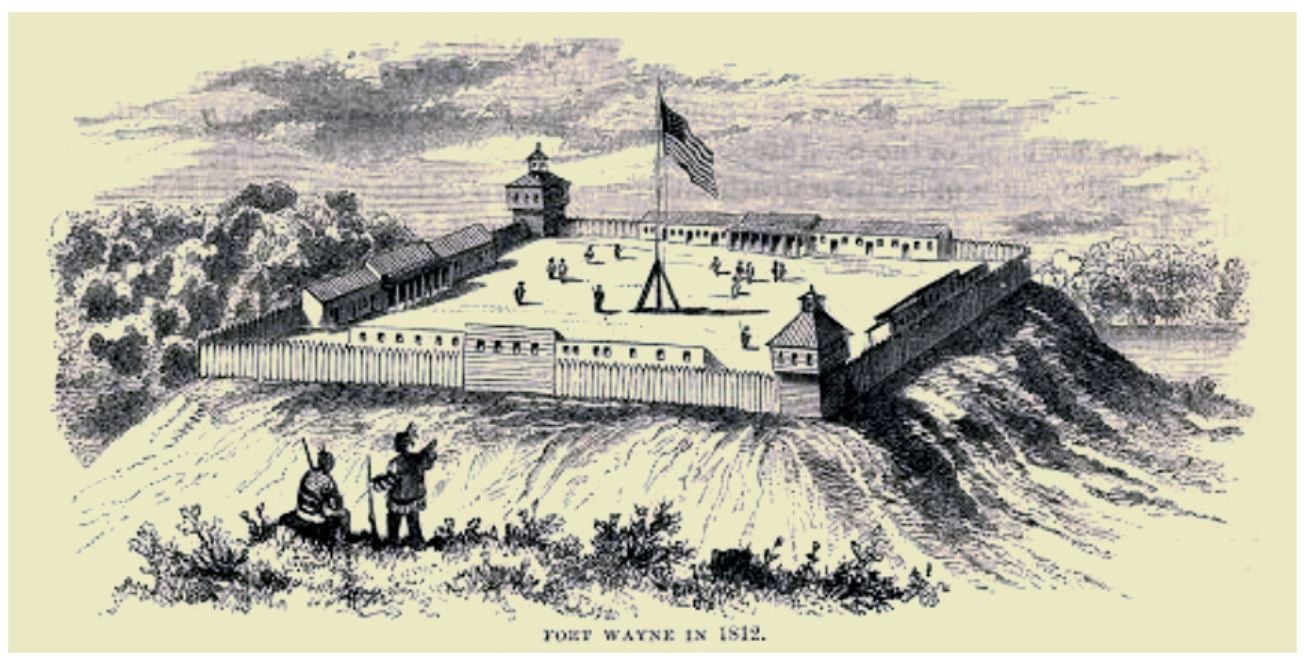
The “Chicago” area had over 40 Potawatomi villages in the early 1800s. Many Indian trails intersected just south of the Blue Island Ridge. It was a hub for the fur trade. As far as white settlement was concerned, it was remote wilderness at the time. Other U.S. forts were hundreds of miles away, such as Fort Wayne, located 200 miles to the east, where Fort Wayne, Indiana, is today.
U.S. settlers continued to expand into land designated by treaties for Native Americans, destroying the Indians’ ancestral lands and sacred sites in order to establish farmland and settlements. The U.S. government did not abide by the treaties it signed with the Native Americans. Great Britain saw the growing friction between the new U.S. government/settlers and the Indigenous People as an opportunity to further buffer their Canadian colonies from possible U.S. infringement, and possibly to try to win back some of the Great Lakes territories.
In 1811, British emissaries began enlisting Native Americans in the Fort Dearborn area against the U.S. settlers. The British told the Native Americans they would help protect their land from further encroachment. A U.S. citizen and a French-Canadian man were killed by a band of Winnebago Indians in what is now the Bridgeport section of Chicago. This inflamed tensions between the settlers and the Indians in the area, causing some settlers to move into Fort Dearborn and an armed militia from the fort to be formed.
In 1812, the U.S. declared war on the British empire and the War of 1812 began. In addition to conflicts over the land in North America, there were also continuing economic and trade disputes involving the U.S., Britain, and France. The British Royal Navy was seizing U.S. ships on the open sea and forcing people who claimed to be citizens of the new U.S. into service for Britain (called “impressment”).
The British, moving south from their Canadian colonies, captured Fort Mackinac in Michigan. Worried that Fort Dearborn in “Chicago” could not be sustained, evacuation of the fort was ordered. Captain Nathan Heald, in command of Fort Dearborn, was ordered to destroy arms and ammunition and give remaining goods to friendly Indians to attain an escort to Fort Wayne. A group of 30 Miami tribesmen came from Fort Wayne to Fort Dearborn with a U.S. agent to provide an escort.
Heald met with local Potawatomi leaders to let them know he was evacuating the fort. The Indians understood Heald to say he would distribute the firearms, ammunition, provisions, and whiskey among them, and that, if they would send a band of Potawatomi to escort them safely to Fort Wayne, he would pay them a large sum of money. However, Heald destroyed the firearms, ammunition, and liquor.
Potawatomi Chief Black Partridge warned Heald that the young men of the tribe planned to attack the evacuating party and he could not restrain them. Despite the warning, Heald went ahead with the evacuation as ordered.
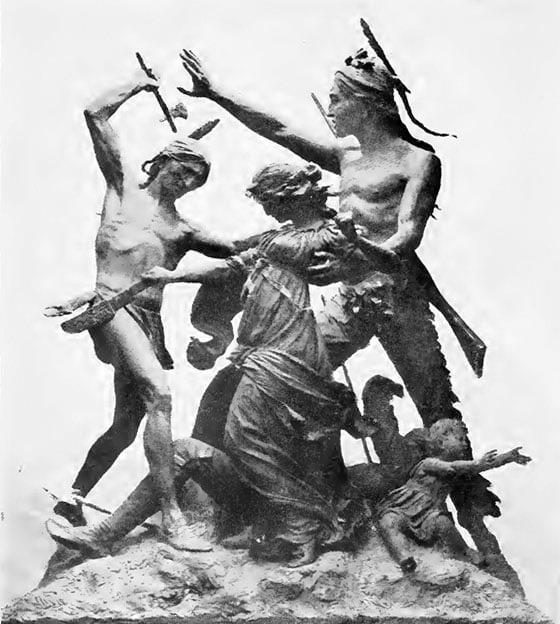
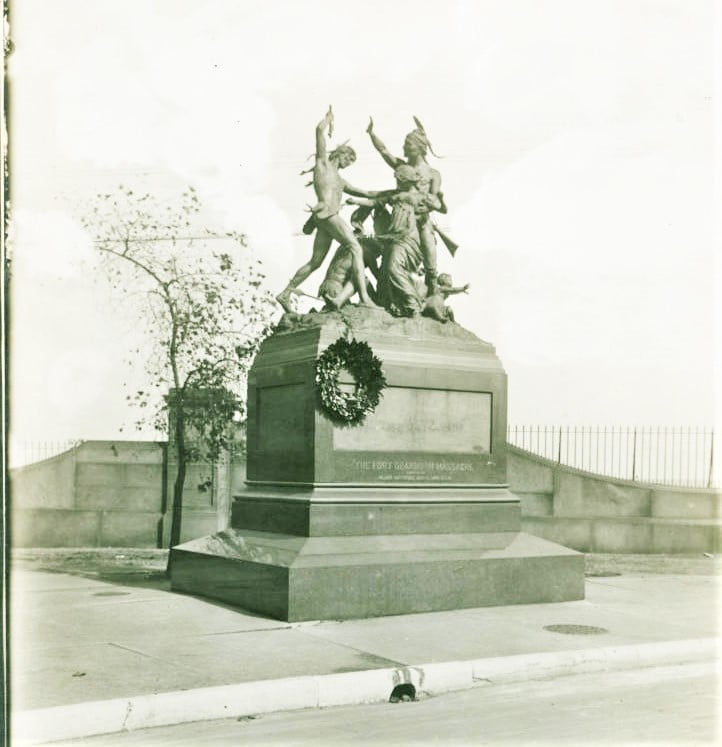
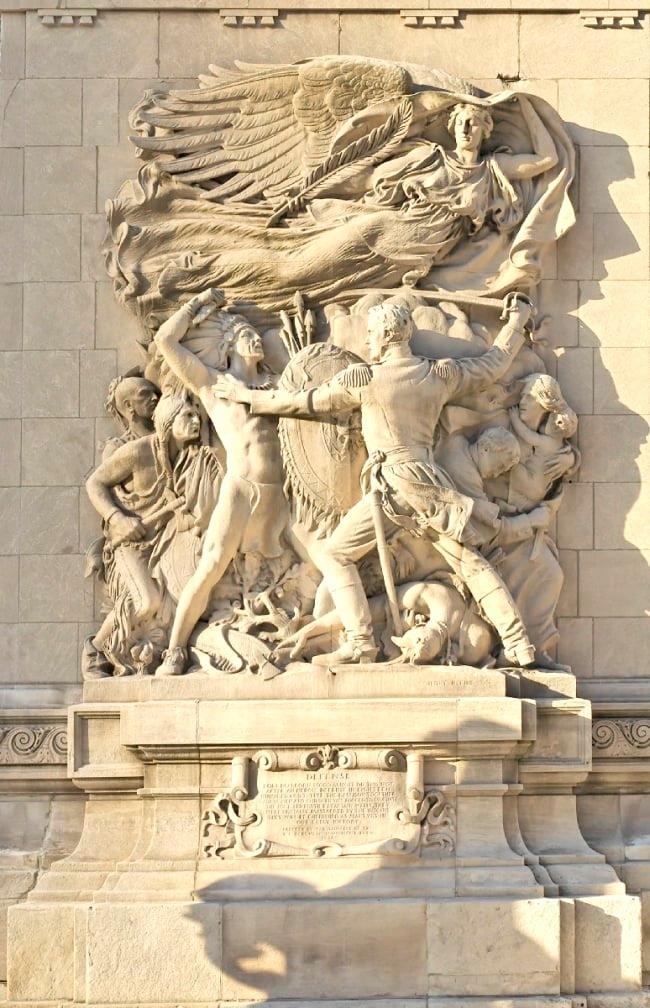
On August 15, 1812, the garrison left Fort Dearborn for Fort Wayne. There were 66 military men, nine women, 18 children, and the Miami escorts. They were attacked by 400 to 500 Potawatomi. Thirty-eight of the military, two women and twelve children were killed, and the rest were taken as prisoners. Fifteen Potawatomi were killed. Fort Dearborn was burned down.
Potawatomi Chief Black Partridge (sometimes translated as Black Pheasant) and his brother Waubonsie were not successful in stopping the attacks, but they and other Native American leaders in the area did what they could to aid the evacuees from Fort Dearborn. Black Partridge advocated for peaceful relations with the U.S. He was credited with saving the life of Mrs. Margaret Helm during the attack, and helping to free her husband, Lt. Lenai Helm. [However, when he returned to his village, he discovered that it had been burned by U.S. troops and among the massacre victims were his daughter and grandchild. He then joined in opposition to the U.S. A later battle included a young warrior named Black Hawk, a member of the Sauk, who will be discussed in a later post.]
The prisoners were sold to the British, who ransomed them back to the U.S. or set them free. Heald and his wife, both injured, escaped to Fort Detroit, controlled by the British, where they surrendered and were ransomed back to the U.S.
There were many discrepancies in the reports and stories of the battle. Even the exact location is disputed – Heald reported that it occurred at what is now Michigan Avenue and Roosevelt Road, but 18th Street and Prairie Avenue has become traditionally associated with the battle based on stories by the Kinzie family.
Some reports said the Miami fought on the side of the U.S. citizens, some said they sided with the Potawatomi, and some said they did not fight at all. The U.S. used this battle as an excuse to attack Miami villages, and kill all the inhabitants including women and children, causing the Miami to end its neutrality and to side with the British for the rest of the war.
This one skirmish in Chicago was not considered a major event in the War of 1812. However, locally, it had larger consequences. Fort Dearborn was rebuilt in 1816. The strategic importance of the Chicago location grew as settlers expanded farther and farther west, and the U.S. government decided that the Native Americans had to be forced from the area so that expansion, settlement, and development could go on unimpeded.
In a later post we will cover more on the Potawatomi viewpoint of the Fort Dearborn battle.
Next: More Wars and More Treaties