
The Ridge Historical Society
Native Americans and the Blue Island Ridge – Part 9: Lifestyle of Calumet Region Indians
By Carol Flynn
There are many sources available for information on the history of Native Americans, and anyone interested in the topic is encouraged to never stop seeking out additional information and new viewpoints.
The actual lifestyles of the Native Americans who lived in the Calumet Region, of which the Blue Island Ridge formed the western boundary, from the 1600s to the 1800s will be the focus of the next few RHS posts. The major references for this are a resource from the University of Chicago titled “Historic Native Americans of the Calumet Region,” which was produced in 2014, and resources from current Native American websites and writings.
The Calumet region long served as the home for tribes that were part of the Algonquian language group and were connected through their heritage and interactions which each other.
The Algonquian are one of the largest and most widespread of the Indigenous groups, prominent along the Atlantic coast, the Saint Lawrence River, the Great Lakes, the Mississippi River, and the Great Plains.
The Algonquian languages included about thirty related languages, presumedly descended from an unknown common language spoken about 3,000 years ago. The term “algonquin” is derived from an Indian term meaning “they are our relatives and allies.” Many of the Algonquian languages are extinct now, or severely endangered.
The primary inhabitants of the Calumet region area were the Miami and Potawatomi. Within the Algonquian language family, the Potawatomi are part of the Anishinaabe group, which includes the Ojibwe and the Odawa. By the late 1700s, most of the Miami had moved into the Indiana area and out of the Chicago area, leaving the Potawatomi as the prominent inhabitants.
Through trade and seasonal migration, other tribes that had a presence included the Illinois Confederation, a group of more than a dozen tribes that included the Peoria, Kaskaskia, and Cahokia tribes.
Other tribes with a presence in the area included the Ojibwa and Ottawa, which formed the Council of Three Fires with the Potawatomi; and the Mascouten, Sauk, Winnebago, Kickapoo, Shawnee, and Wyandot, all with lands around the Great Lakes and northern Illinois areas, and all considered “neighbors” of the Indians who lived in the Blue Island Ridge area.
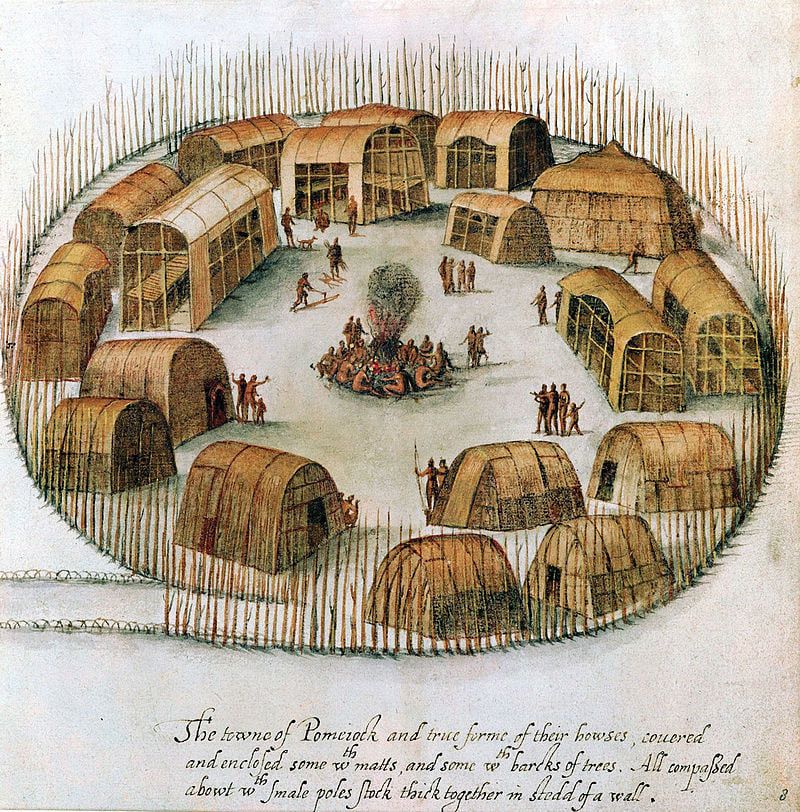
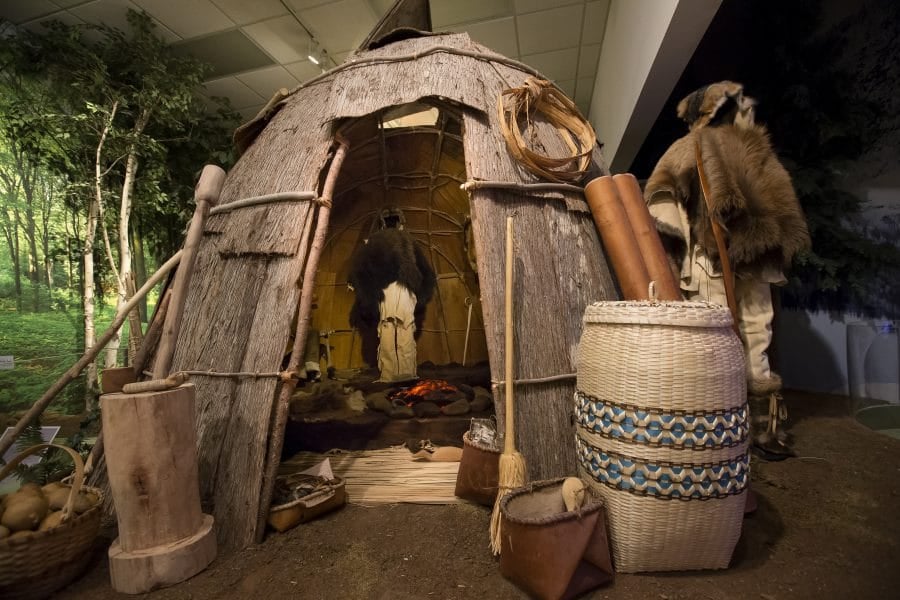
The Native Americans of the Calumet region lived in villages ranging from a dozen to hundreds of lodgings. Specific structures included longhouses and wigwams, and eventually log cabins. Although architecture was not uniform, buildings were constructed of a pole frame covered by large sheets of elm or birch bark or rush mats. A longhouse could accommodate multiple families, while a wigwam or log cabin was usually used for a single family.
Villages served as the home base for the tribe, but they were not fully occupied all year round. Summer was the time the villages were most full, during the agriculture season of cultivating and harvesting crops and native plants. By fall, the village would split into smaller groups for winter hunting, spring sugar making, and fishing, before returning to the village the next summer.
The different tribes had different government structures. Some were largely centralized under one chief, but even that chief might not have actually had that much decision-making power. The chiefdom was not passed down as a birthright. The chief was usually selected based on battlefield success and ability.
The Potawatomi practiced a more decentralized, localized government organization than other Algonquian tribes. There were many groups largely autonomous throughout the tribal territory, and the chief of each of these groups had considerably more political power than chiefs of local groups of other tribes. Leaders were chosen from among the tribe members, based on success during hunting or warfare. The leader of the group had the ultimate say in the group, and was responsible for quick decisions in hunting or raids, and paying reparations or seeking revenge for any deaths that occurred. He would lose his leadership position with lack of success with hunting or war, or with losing members during expeditions.
Within tribes, the “medicine” men and women were feared and respected, and influenced decision-making. These were the traditional healers and spiritual leaders of the group. This created a power hierarchy in which age brought respect and influence into the daily life of the group. As with most groups of people, religious and spiritual beliefs of the tribes greatly affected how they perceived the world around them.
In the next posts, we will look at spiritual beliefs, clothing, food, pastimes, and gender roles of the Indian groups in the Calumet region.