
From the Ridge Historical Society: Rain, rain go away. The folks in Beverly want to play … and clean up their flooded basements.
Water comes with the geology of the area. Chicago is built on the bed of an ancient inland sea. Think of Chicago as sitting in a natural basin, sloping up on three sides to the rims of the basin. Lake Michigan is the fourth side. When water is poured into the basin, the basin fills, until it drains off to the lake or it evaporates. Chicago is above sea-level, but not by much, only 575 feet at its lowest point downtown by Lake Michigan. This, of course, is an overly simplistic description of the “water situation” of Chicago and there are many resources available to learn more about this fascinating topic.
Here on the South Side, about 12,000 years ago, an ancient island rose out of prehistoric Lake Chicago, called the Blue Island. The hilly ridge that runs along Longwood Drive was formed by the waves that lapped against the east side of the island. Lake Chicago eventually receded to the east, forming Lake Michigan, leaving behind the table of land known as the Blue Island Ridge or “the Ridge,” which is the highest elevation in the city, about 675 feet.
To the east of the Ridge, before development, the land was a vast system of wetlands and prairies all the way to the lake, punctuated by some forested areas where the land was higher in elevation – some smaller ridges. The animals – deer, wolves – knew by instinct to stick to the higher ground and wore trails into the terrain. The Native Americans used these trails, and then white trappers and traders, and finally settlers. These became the early “roads” – like the Vincennes Trail that ran from Chicago south through the Ridge before turning east into Indiana.
Early histories of the area gave vivid descriptions of what the natural land was like when settlers first arrived. One of the most poetic descriptions came from personal accounts of the Barnard family, which settled on the Ridge in the 1840s.
Here are some excerpts from that writing:
Looking south from what is now 101st and Longwood, “the view between the hill and the ridge where the Dummy Track now runs [today’s Metra line], was a slough in which the waters seldom dried up even in midsummer, and the greater part of the season was difficult to cross. Conclusive of this fact it is stated, a sandhill crane, as late as in the [1860s], built her nest for several years between Uncle Erastus’ house [104th and Wood] and the site of the Tracy depot [103rd and Wood], unmolested. No one would wade out after the eggs. Also, when he fenced his farm, the corner of Wood and Belmont Avenue [107th Street] was left without fencing, the water there being so deep that the cattle would not cross…. This slough was covered with a growth of coarse grass edged by high weeds. The weeds were thickest for two or three rods [a rod is 16.5 U.S. survey feet] just under the bluff, especially where the ravines poured their waters into the lowlands. Here, in autumn, wild artichokes, wild sunflowers, and iron weed waved their yellow flowers high above the heads of the tallest men. The ravine opposite Mr. Hauke’s was known as Horse Thief Hollow. Here horse thieves utilized their friendly shade as a hiding place.”
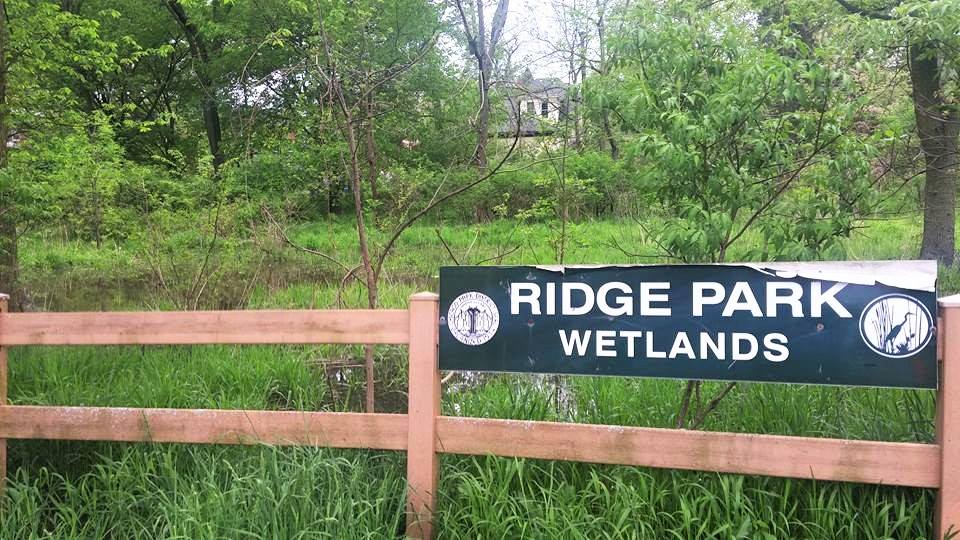
What this is telling us is that about 150 years ago, all that land from Longwood Drive east and south from about 101st Street was a vast slough, or wetland, that never dried up. The prairie and wetlands extended to the north and east of the Ridge also, but were less dramatic. The Ridge Park Wetlands between 95th and 96th Streets just west of the Metra tracks give a tiny inkling of what the area looked like back then. Right now, they are swollen with water from the recent heavy rains.
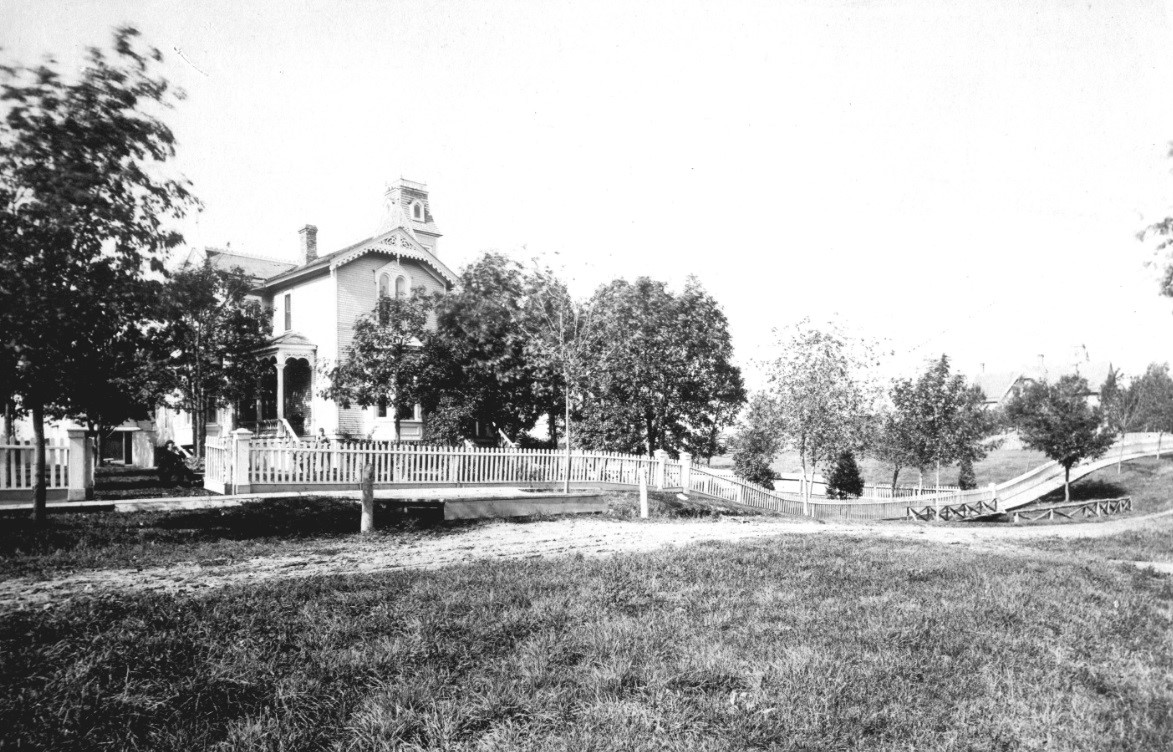
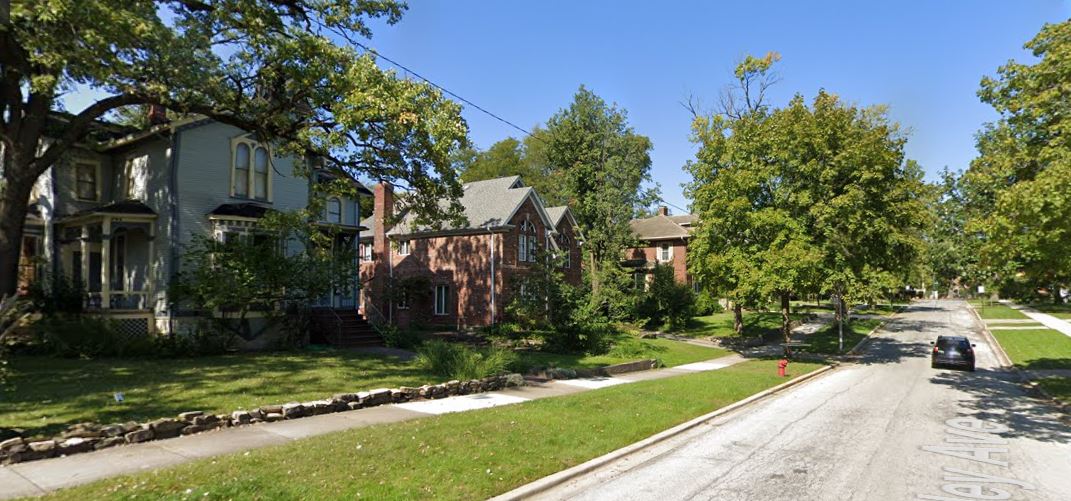
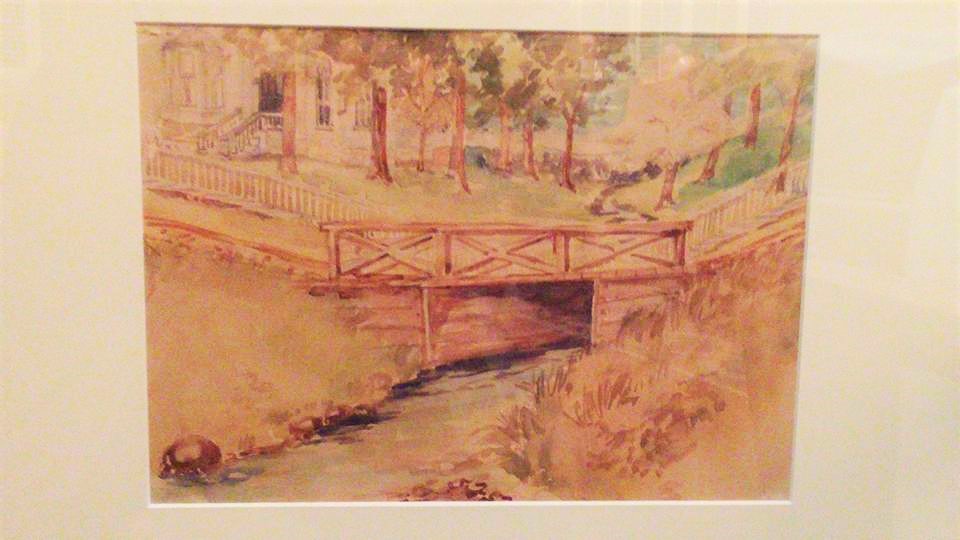
Streams that cut through the Ridge poured their waters into this land to the east. An early photo shows the charming George Chambers House, built in 1874, at 10330 S. Seeley Ave. In the picture, there is a bridge over a substantial stream that flowed down into the wetlands.
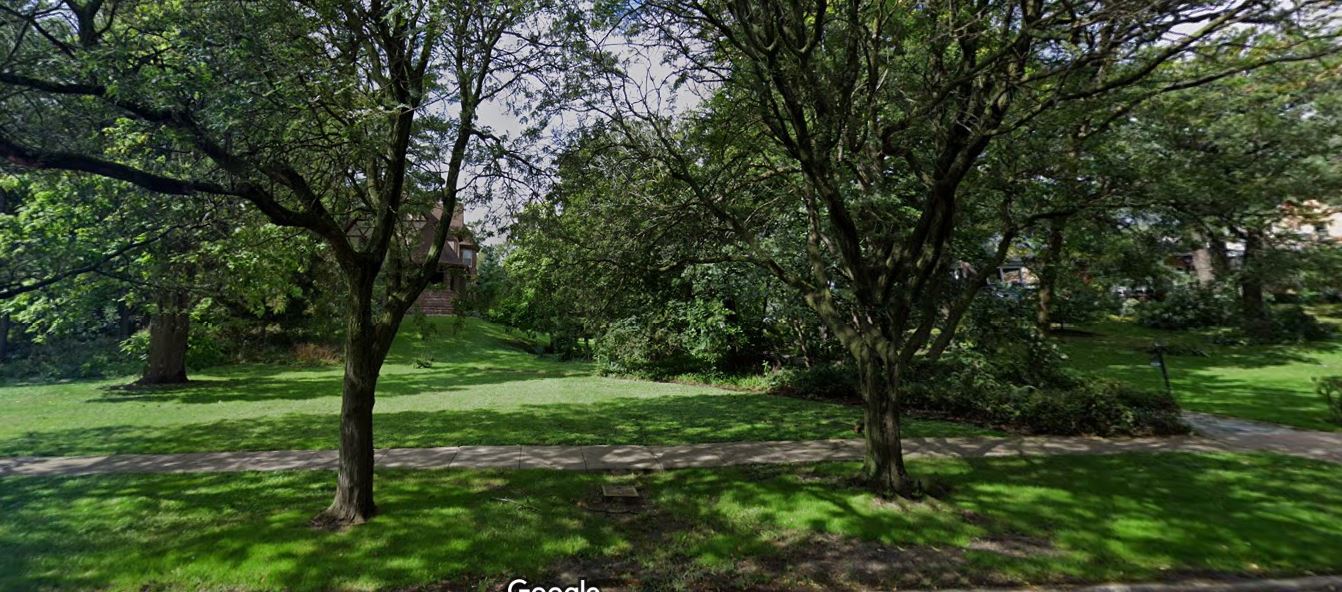
This house still stands, and there is a steep dip in the street where this stream was. You can see this ravine between the houses on Longwood Drive. This stream is likely still there, underground, heading southeast.
Louise Barwick, an artist who lived in that house around 1900, painted a watercolor of that stream and bridge, and the painting is in the RHS collection.
The bottom line of this story: Houses built to the east of the Ridge are built on natural wetlands. With heavy rainfall, this becomes all too evident.
As far as the reference to Horse Thief Hollow, the exact location of Mr. Hauke’s house has not been identified, but it was likely around 108th Place. There was a very deep ravine here, and early histories that identified a certain ravine as the place where evidence of horse thieves hiding out was found are likely referring to this location. The entire area was known as Horse Thief Hollow in the 1830s -1840s, but that is a topic for another day.
Part II will share more of the Barnards’ descriptions of the natural environment of the Ridge areas. Stay tuned.