
From the Ridge Historical Society
Part V on the “natural Ridge”
-Carol Flynn, RHS Communucations
As a follow up to the posts on the early history of the Ridge as told to us by W. W. Barnard, we received some interesting questions and comments. Here are a few, plus responses.
Q: What is the oldest home in area? Chambers home seems likely.
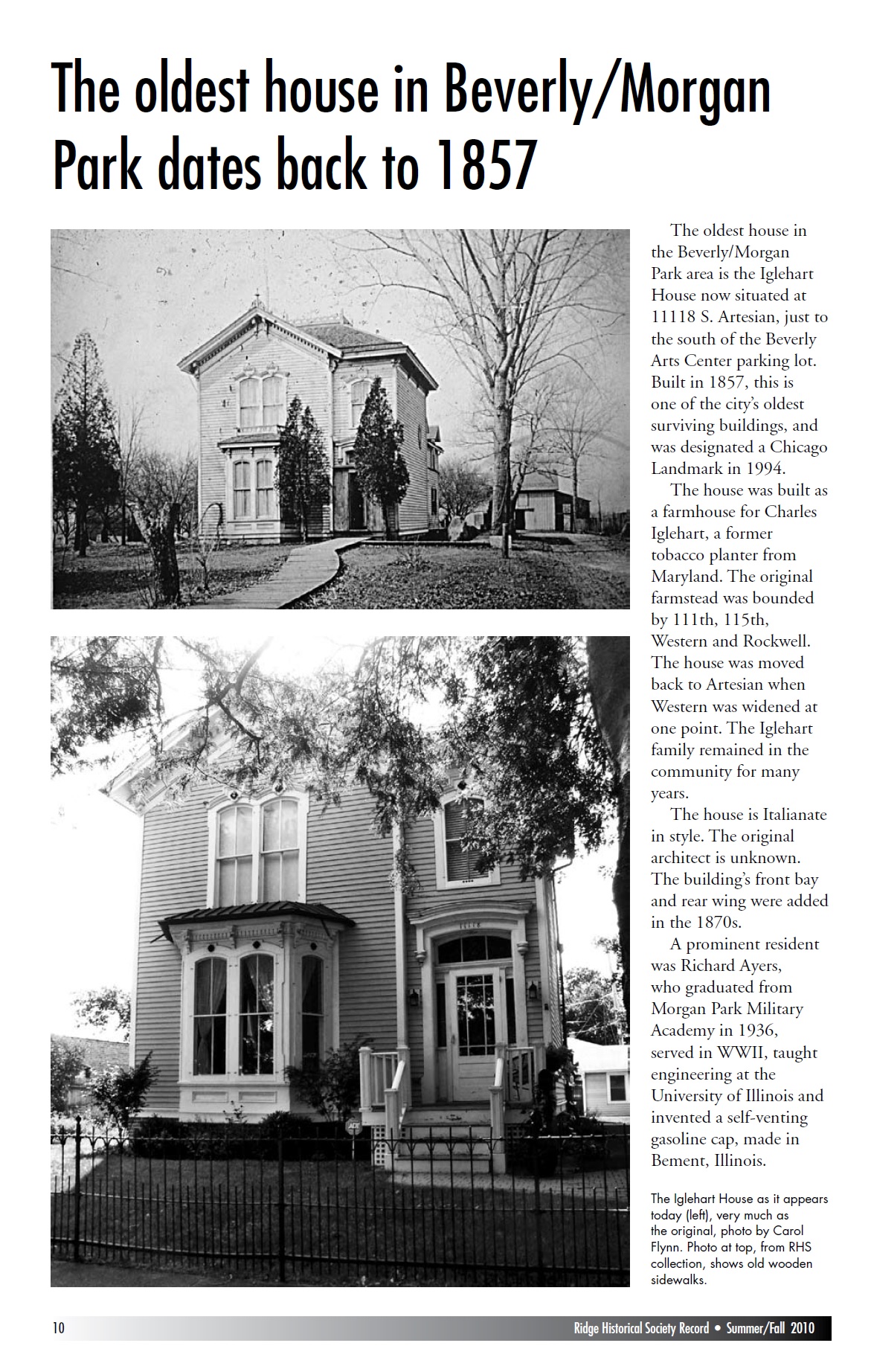
A: The Chambers House at 10330 S. Seeley Ave. was built in 1873, making it one of the oldest houses still standing. But the oldest house in the area on record is the Charles D. Iglehart House at 11118 S. Artesian Ave. Built in 1857, it is one of the oldest houses in Chicago. It originally was on Western Ave., surrounded by orchards, but was moved back when Western was graded and widened and paved. A photo of a newsletter article from RHS is attached.
Q: We live at 96th Winchester and have wondered if Lake Chicago basically lapped up to Longwood drive. Was that the shore?
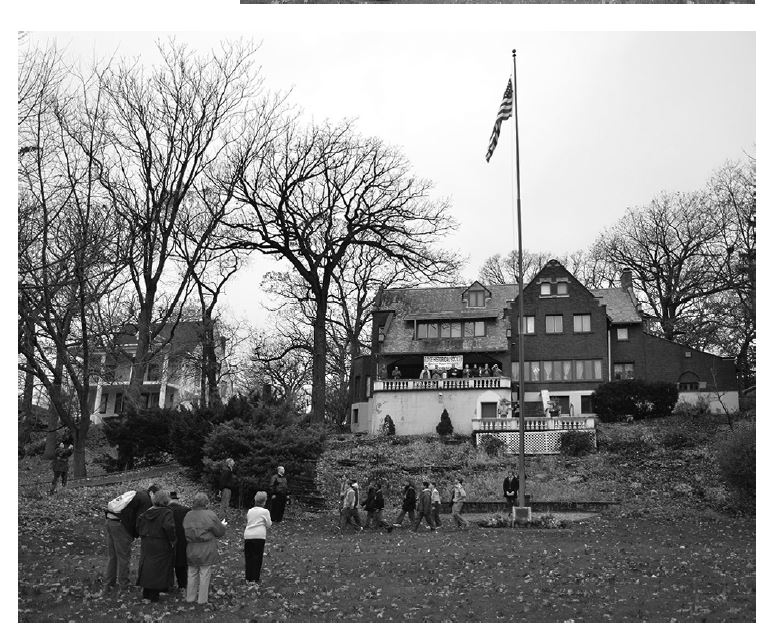
A: Yes, Longwood Drive runs along the base of the Ridge, the east side of the prehistoric Blue Island. The “ridge” was cut by waves lapping against that shore. The Longwood Drive lawn of the Ridge Historical Society (see picture), the Graver-Driscoll House at 10616 S. Longwood Drive (entrance at 10621 S. Seeley Ave.), gives a good example of the ridge. The lawn starts out with a gradual slope, then increases greatly in steepness until the top of the ridge. The architect who designed this house, John Todd Hetherington, built the terraces down the ridge, making great use of the natural terrain, nestling the house right into the ridge. Many of the early houses had entrances on both Longwood and the street to the west, Seeley, Lothair, etc. The driveways became too treacherous especially in winter for horse and buggy to use.
Q: [Are the natural wetlands] the reason I have so much clay in my soil?
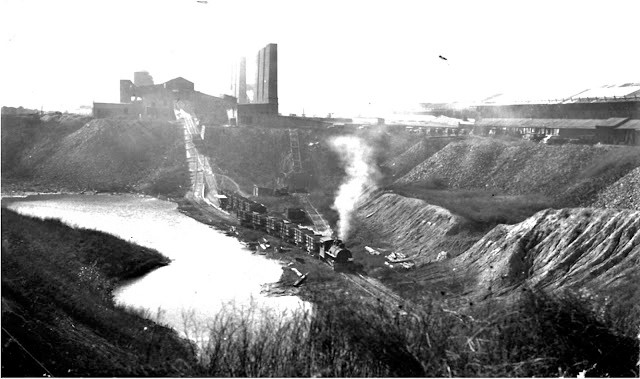
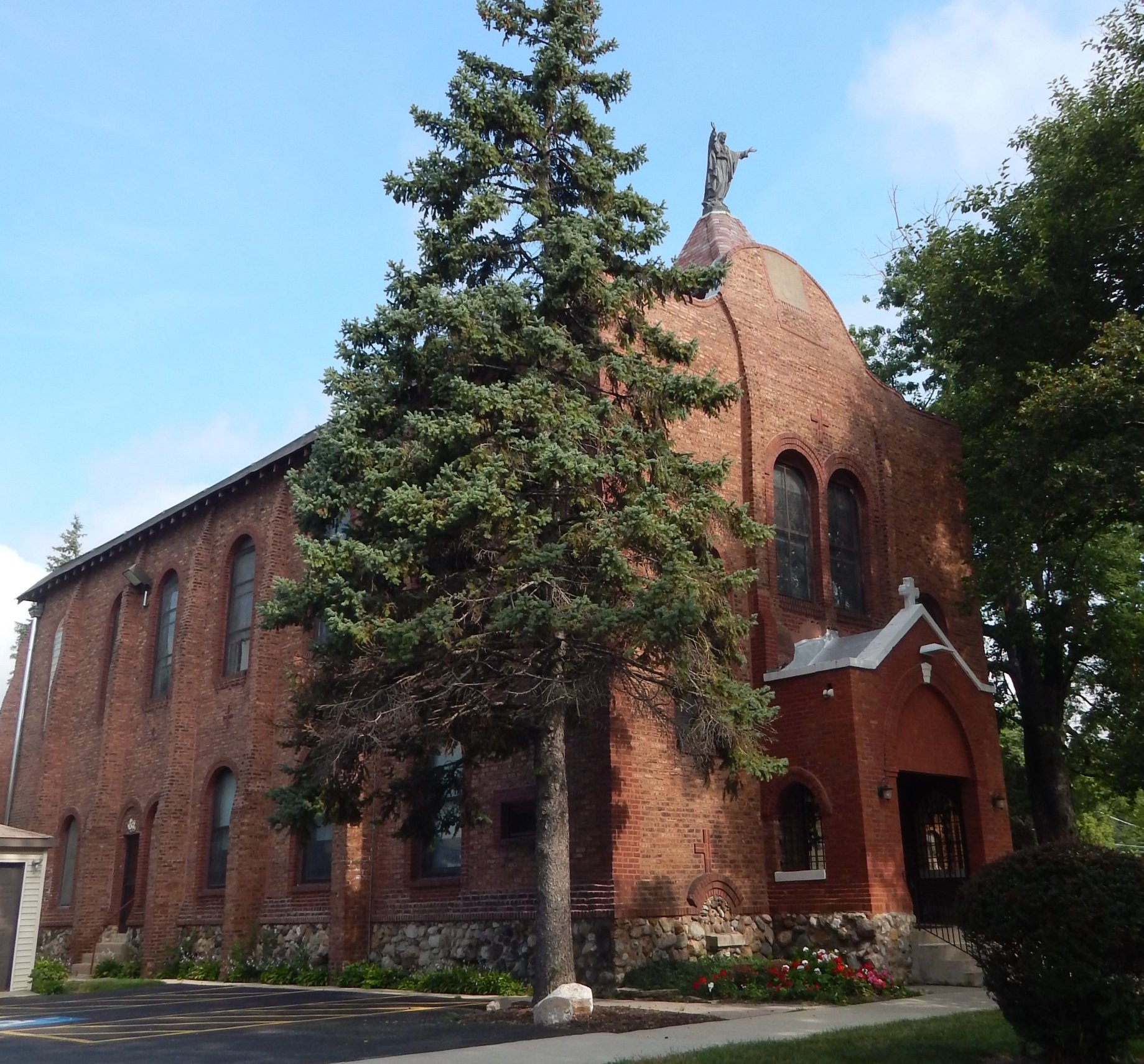
A: Yes, according to the Encyclopedia of Chicago, "The glacial lakebed soils have a clayey subsoil with a thick, rich, dark topsoil, the product of wet prairies." There were vast clay deposits just to the south of us, and brick making was a very big industry in early Blue Island. The Purington Brick yards were at 119th and Vincennes. The Meadows Golf Club, on 123rd Street, owned by the City of Blue Island, is built on top of old clay pits. Sacred Heart Church at 116th and Church Street in Morgan Park is covered with Purington bricks. The early French settlers who worked at the brickyards were allowed to take brick “seconds” to use for the church. Eventually they had enough to clad the frame building with bricks. Today, the original frame church is still under the bricks. See pictures.
Comment: I had a very old neighbor who said she saw Indians in the park, many wild goats and even cows.
A: This is completely believable. Native Americans had a very strong presence in this area. There were many Indian villages along the Calumet River and Stony Creek, and throughout the entire southwestern suburbs. The Treaty of Chicago in 1833 led to the Potowatomi Tribe leaving the area to move west of the Mississippi. Of course, it took a number of years for all of them to relocate, and not all of them left. Erastus Barnard, the uncle of W.W. Barnard, whose remembrances we are sharing, watched a wagon train of Indians leave in 1847. For decades afterwards, the settlers still saw and interacted with Indians in the area. One settler reported in his old age that as a youth he rode his pony with Indians across the prairie.
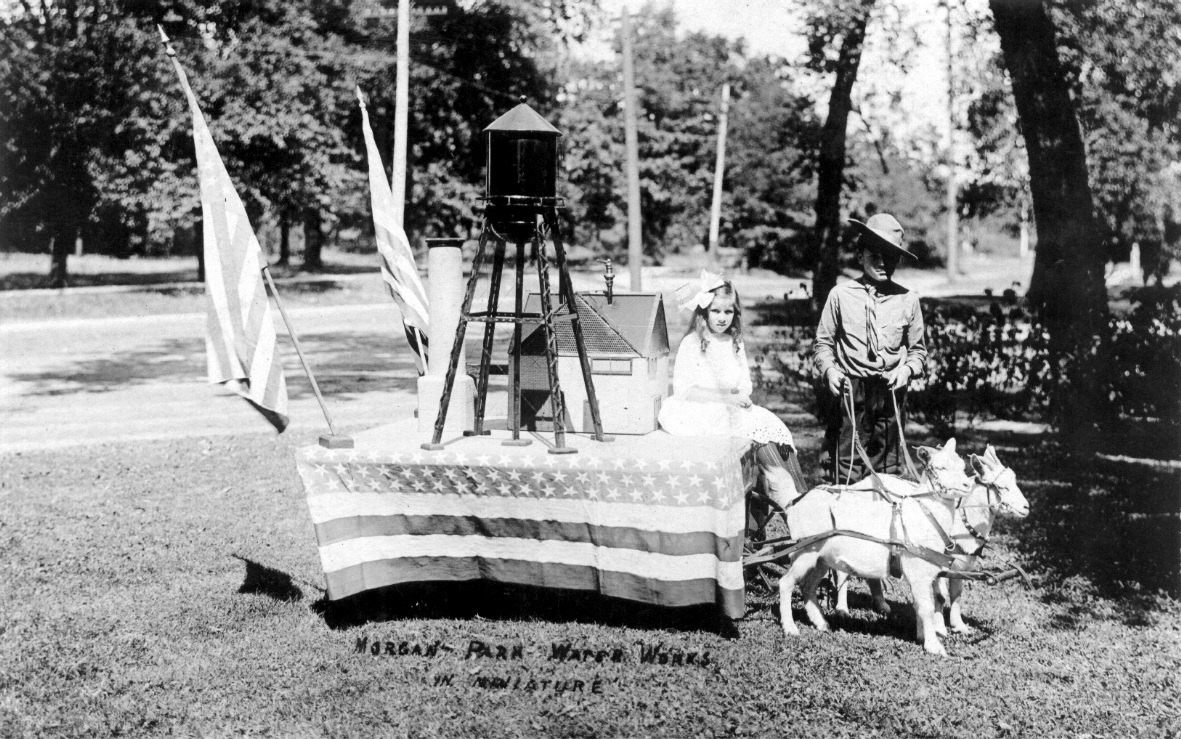
As far as sighting goats and cows, in the early years, cattle and other livestock grazed the prairie. The Morgans let their neighbors use their land on the top of the Ridge for grazing. Also, W. W. Barnard reported that cattle, hogs, sheep and even turkeys drifted across the prairie by the thousands, being driven to the stockyards in Chicago. There certainly were escapees. Even later, when the land was fenced and farms were well established, there were stories of escaped family cows having to be rounded up and brought home. Goats were popular for milk, meat, and as pets to pull carts. See picture.
Next up, for Memorial Day: Civil War soldiers and the Ridge.