
The Ridge Historical Society
March 2021 – Oscar Wilde’s Visit to Chicago – Part 2
By Carol Flynn
Oscar Wilde is one of Ireland’s most regarded writers. Before his literary career took off, however, he was already a celebrity and media star.
During his years at Oxford University (1874-78), he became a follower of the aesthetic movement, which promoted pleasing the senses and emotions through “beauty.” Primarily an art movement, aestheticism advocated “art for art’s sake,” that is, the arts – fine art, decorative art, literature, music – should exist and be enjoyed and appreciated for the pure beauty of the works, not for other purposes like political statements or moral lessons.
After graduating from Oxford, Wilde first returned to Dublin, where he reconnected with a childhood sweetheart, Florence Balcombe. She married another Irish writer, Bram Stoker, who twenty years later would publish a masterpiece that gave the world one of its most famous characters – Dracula.
Wilde wrote that his time with Balcombe was “the sweetest years of all my youth.” He announced he was returning to England probably for good, and he only returned to Ireland for two brief visits after that.
Moving to London, he set himself up in a bachelor flat and “entered society.” He soon became known for his charming wit, biting sarcasm, and brilliant conversational skills. He was mentioned and quoted frequently in the newspapers and society journals.
He had published poetry and lyrics during his college years, and now produced a book of poems, “Poems,” which sold out, although it was panned by the critics.
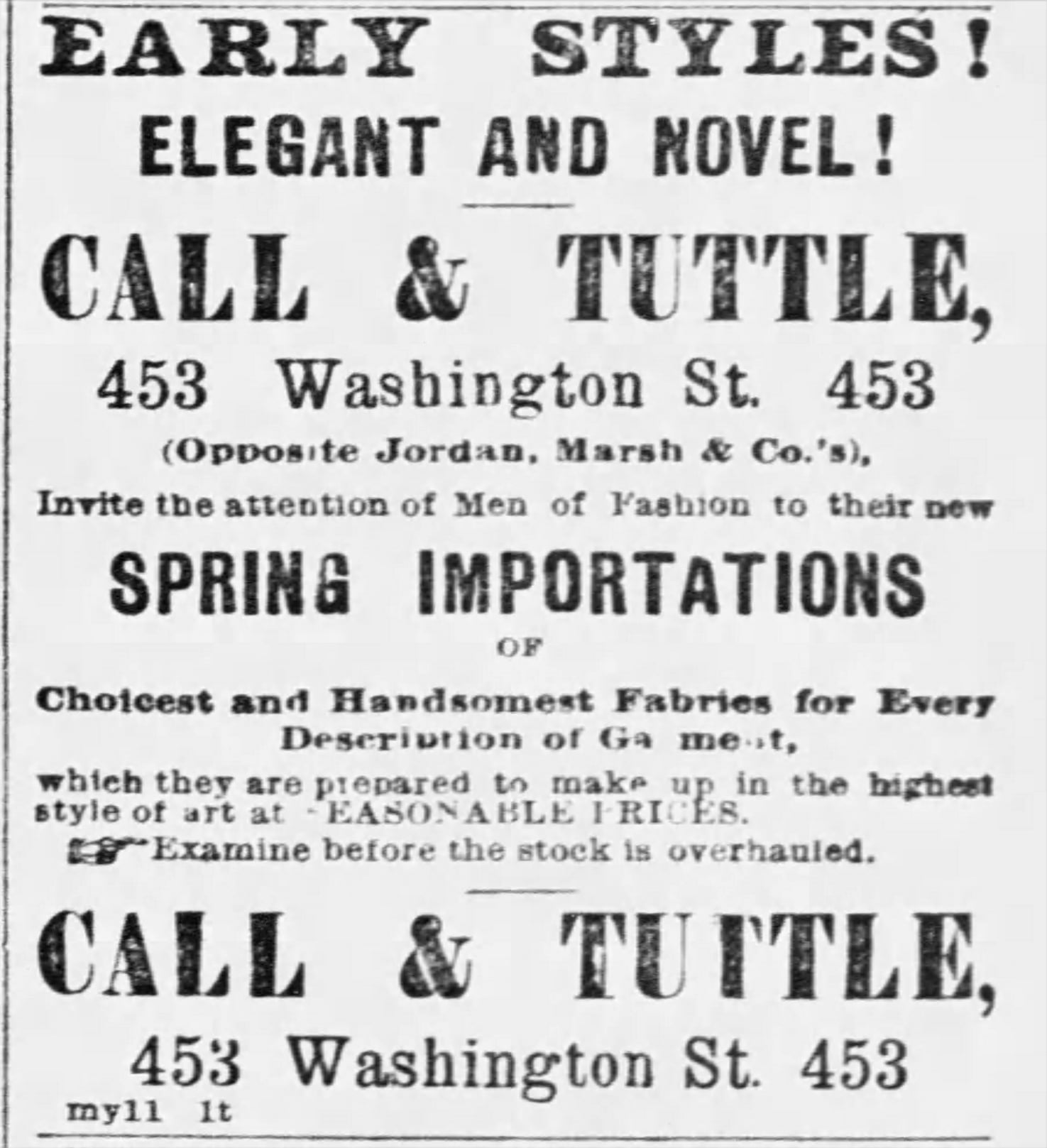
He continued his aesthetic lifestyle, and tailors began producing “high-art clothing” for men based on Wilde’s outfits – britches that ended at the knees tied with bows; silk, satin, and velvet jackets and pants; colorful neckties, handkerchiefs, and stockings; fur coats; outsized hats; and fancy shoes.
Soon Wilde was setting, not following, aesthetic trends. The newspapers called him the “apostle of the aesthetic school.” He began lecturing and writing on aestheticism with topics such as philosophy, fine and decorative arts, architecture, and fashion.
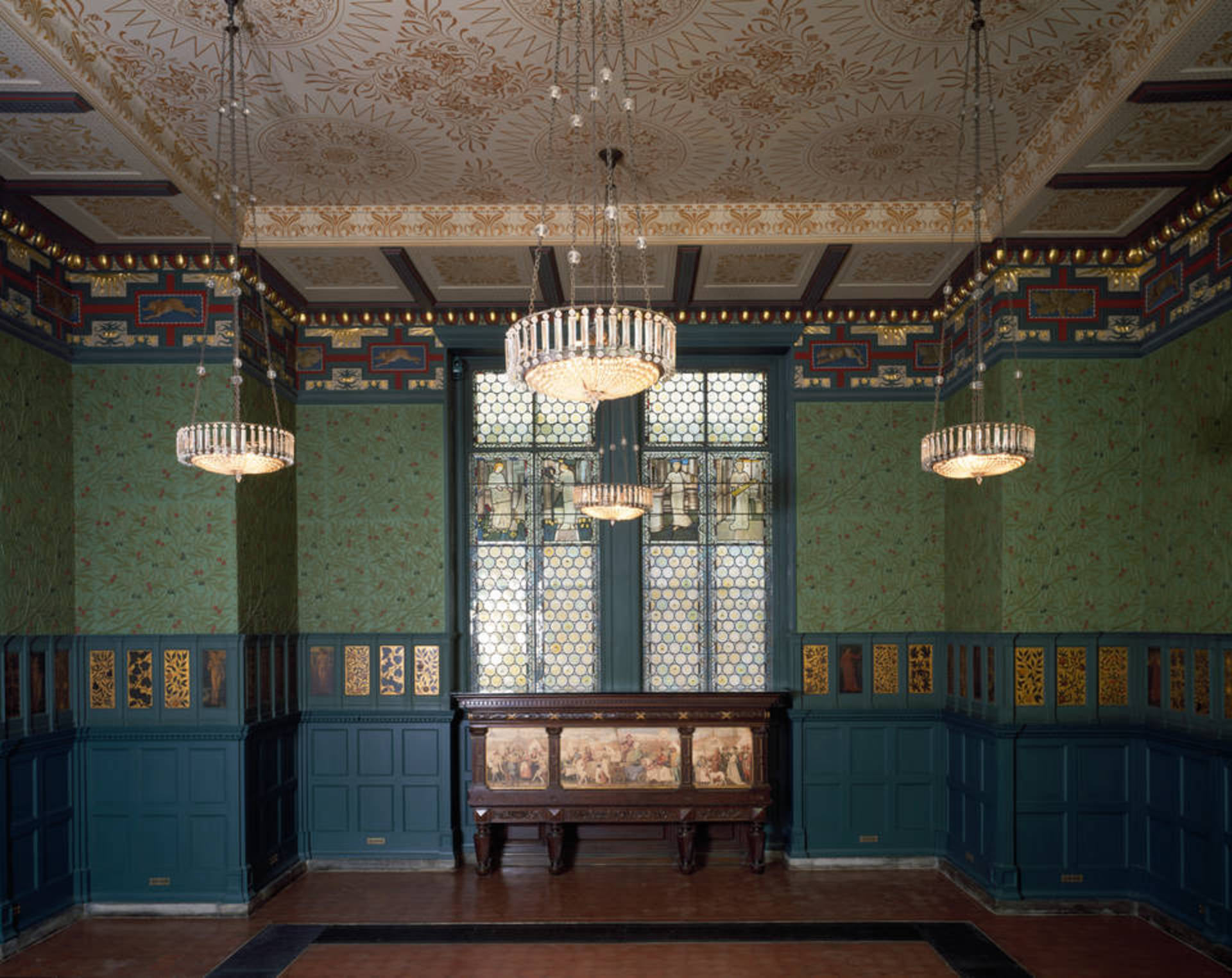
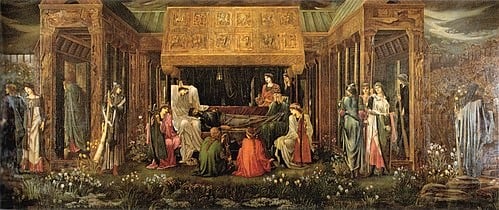
Wilde was not the only aesthete in London society – there were many, including the artist Edward Burne-Jones, whose artwork included stained glass, oil painting, ceramic tiles, jewelry, tapestries, and mosaics. Burne-Jones had worked with William Morris to create the tearoom at the Victoria and Albert Museum in the 1860s which remains famous today as a design from the early days of the aesthetic movement.
Said Burne-Jones about his art, which captures the essence of the aesthetic movement: “I mean by a picture a beautiful, romantic dream of something that never was, never will be – in a light better than any light that ever shone – in a land no one can define or remember, only desire – and the forms divinely beautiful.”
Wilde was the most flamboyant and outspoken of the aesthetes, however. As one newspaper said in 1881, “Two years and a half ago he came to London, and on being told to not say anything unconventional he did exactly the opposite; the consequence was that he became the fashion.”
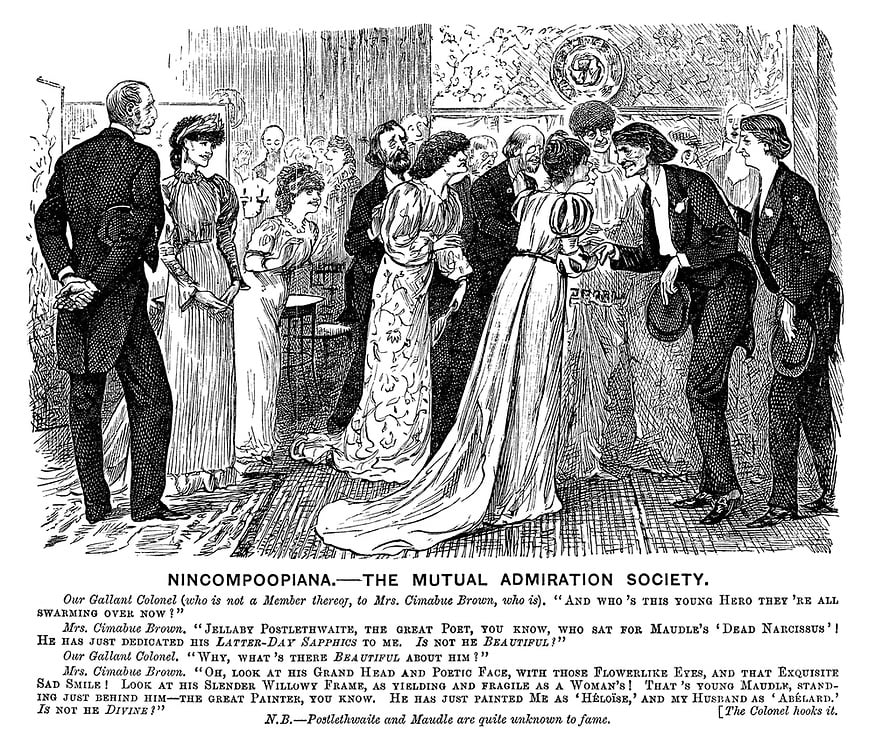
Wilde, as well as all aesthetes, were controversial figures, with as many critics as fans. Their beliefs and behaviors contradicted the traditional moral values of the Victorian era. The term “decadent” became associated with the aesthetic lifestyle.
George Du Maurier, a cartoonist and writer for Punch and Harper’s, leading magazines that helped bring the aesthetic movement to the U.S., often caricatured Wilde.
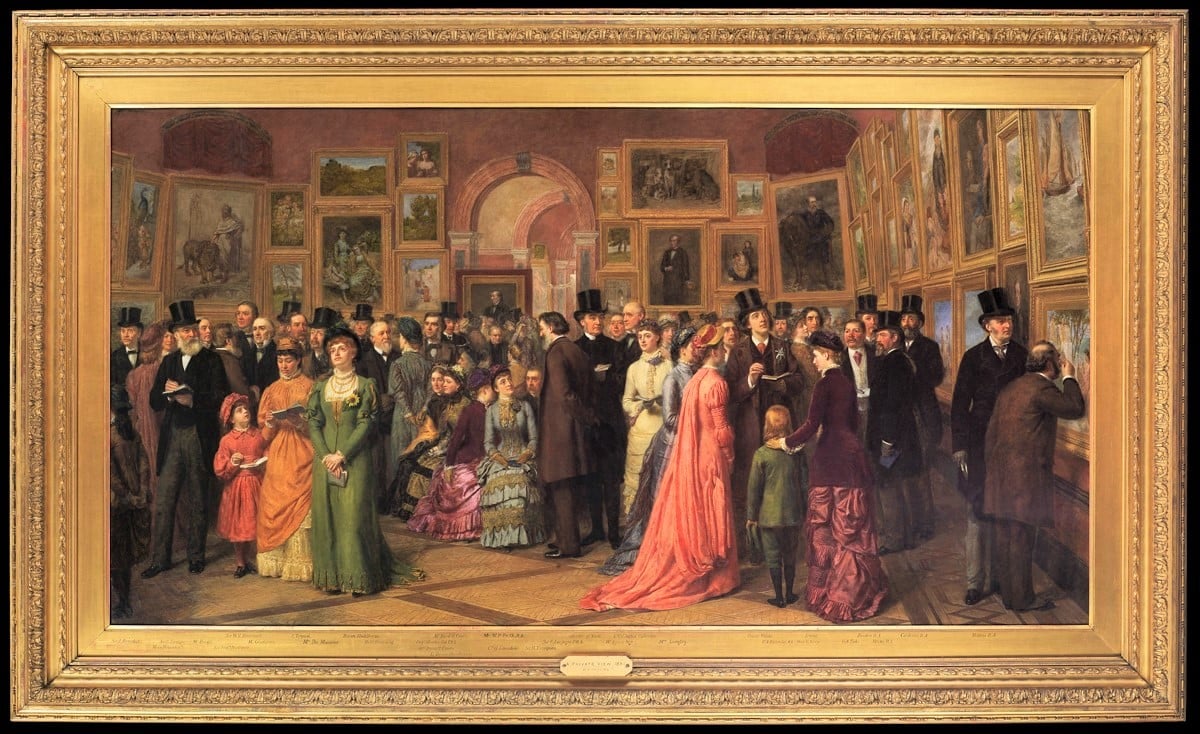
Artist William Powell Frith produced a painting titled “The Private View at the Royal Academy, 1881,” depicting Wilde with his followers viewing artwork, while his critics stand behind him, observing him. Aesthetic women’s fashions, with their bright colors and softer, flowing lines, contrast with traditional attire, which used somber colors and features like bustles.
Dramatist W. S. Gilbert and composer Arthur Sullivan, the creators of comic operas such as the “Pirates of Penzance,” parodied the aesthetic movement in a new play, “Patience.” They modeled one of the characters on Wilde.
To promote the play in the U.S., their theatrical producer Richard D'Oyly Carte talked Wilde into a trip to America to lecture about aestheticism.
It was in this context, the role of ambassador for aestheticism, that Oscar Wilde visited the United States in 1882 on a lecture tour. Soon, the Gilbert and Sullivan play stopped being the focal point, and Wilde’s visit in and of itself became the noteworthy historical phenomenon. The trip was originally planned for four months but was extended to almost a year because it was so commercially successful.
The tour included two visits to Chicago, which made a memorable impact on the city.
Next post: Oscar Wilde’s visit to Chicago.