
The Ridge Historical Society
March 2021 – Oscar Wilde’s Visit to Chicago – Part 4
By Carol Flynn
At the age of 27, Oscar Wilde was a trend-setter in the aesthetic movement, which emphasized the appreciation of beauty in life in general, and the arts in particular. He was outspoken about his ideas for art and architecture, which led to a lecture tour of the United States in 1882.
There were many critics of aestheticism because it went against the moral values of Victorian times. The term “decadent” became associated with the aesthetic lifestyle.
Wilde started on the east coast with a prepared lecture on the “English Renaissance” which covered the art movement in England. However, his audience in the U.S. found this too lengthy and theoretical, so he revised it into a lecture on “The Decorative Arts,” which he premiered in Chicago on February 13, 1882.
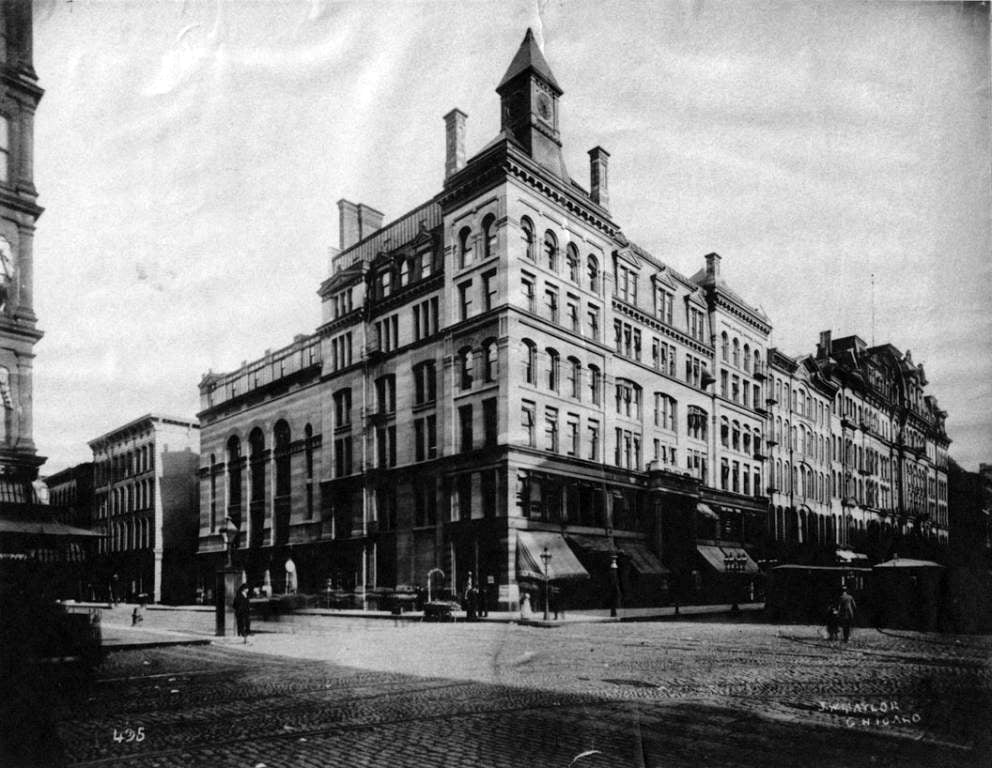
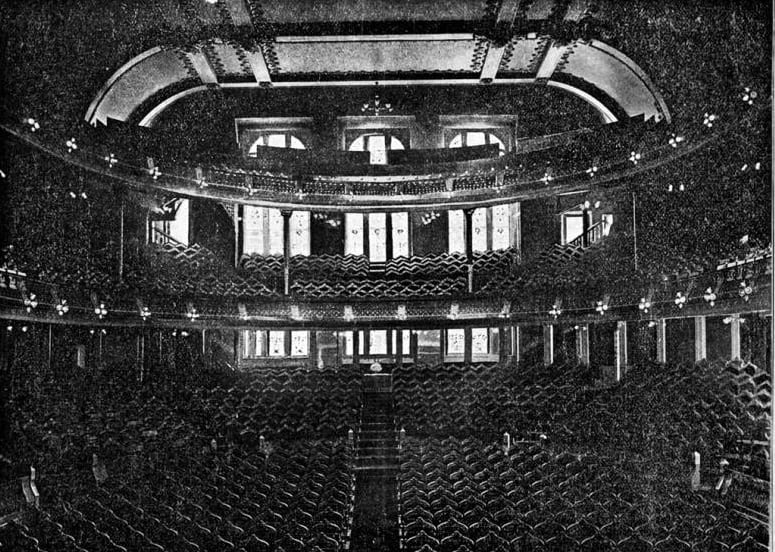
He appeared to a standing-room-only crowd at the Central Music Hall, a commercial building and theater designed by the architect Dankmar Adler (of Adler and Sullivan fame) which was located at State and Randolph. The theater, which sat 2000, was known for its excellent acoustics design, which Adler would further refine for the Auditorium Theater. The Central Music Hall was torn down in 1900 to make way for the Marshall Field building.
The newspapers, forever wanting to be critical of Wilde, dismissed the large attendance. Wrote the Chicago Tribune, “Actuated probably more by motives of curiosity than any expectation of learning very much that was new, a large crowd of fashionable people gathered at Central Music Hall last evening to greet the much-advertised Oscar Wilde.” However, the newspaper still had to admit that for the 2000+ in attendance, “there was not the slightest suggestion of rowdyism or ridicule.”
The newspapers carried the entire text of Wilde’s lecture the next day. He started by praising the handicraftsmen who brought art to decorative items, and he was intolerant of machine-made items. His themes included developing “local schools of art” that would encourage and support young and emerging artists and craftsmen, and would foster an appreciation of art in all of the population, rich and poor alike. He was not opposed to commercialism in art, as “commercial men” had built the most artistic cities of the world. He believed that the nation which absorbed the artistic spirit into its heart would create such treasures as had never been seen before.
Wilde usually brought in local references based on his tours and observations of the host city. He did that in Chicago.
His first local reference, met by loud applause, was to the relief efforts from other cities after the Great Chicago Fire: “The swift legion of fiery-footed engines that bore to the ruins of your burning city the love, health and generous treasures of the world – that was as noble and as beautiful as any golden troop of angels that had ever fed the hungry or clothed the naked in the antique time.”
The second local reference made a more lasting impression on Chicagoans. To this day, Oscar Wilde has not been forgiven or forgotten for these comments.
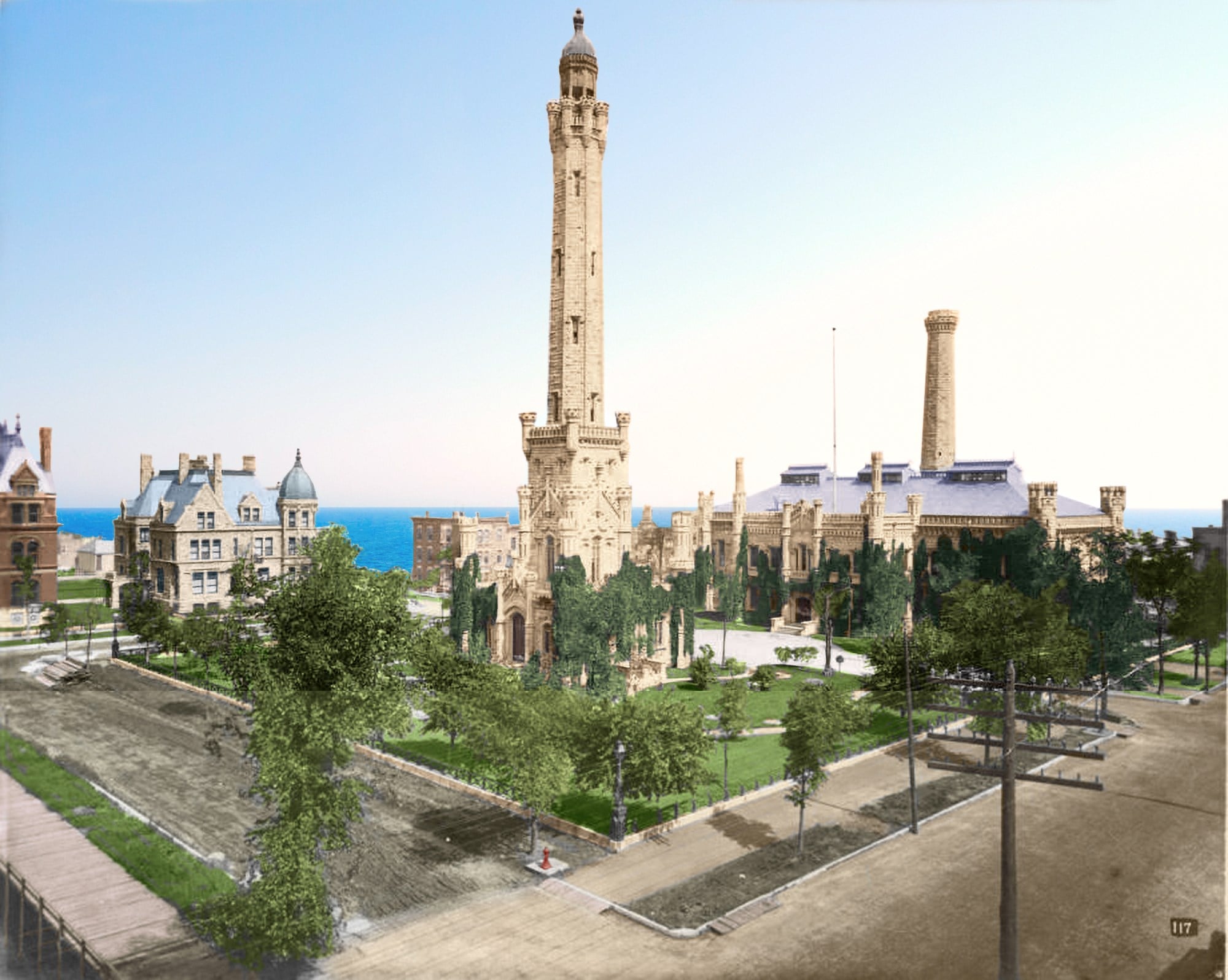
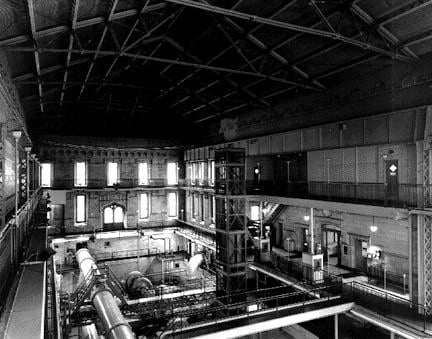
Wilde praised the mechanics of the Chicago Avenue Pumping Station, then he said, “but when I came out and saw your water tower, that castellated monstrosity, with pepper-boxes stuck all over it, I felt amazed and grieved that you should so misuse gothic art, and that when you built a water tower you should try to make it as unlike a water tower as possible, and make it look like a medieval fortress.”
He was, of course, speaking about the structure that has become one of Chicago’s most famous and most loved landmarks, the Chicago Water Tower at 806 N. Michigan Avenue. Built in 1869, today it is listed on the National Register of Historic Places.
The audience laughed and applauded his comments at the time, but the next day, a Chicago Tribune reporter took to task the “prophet of the beautiful” for his remarks that “wounded the pride of Chicago’s best citizens.”
“I can’t help that,” replied Wilde. “It’s really too absurd. If you build a water tower, why don’t you build it for water and make a simple structure of it, instead of building it like a castle, where one expects to see mailed knights peering out of every part?”
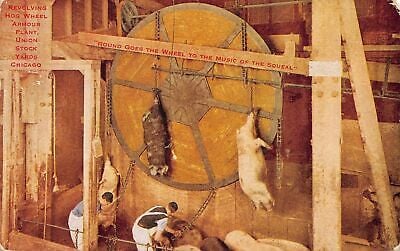
The conversation wrapped up when a horrified Wilde declined a visit to the Chicago stockyards to view the slaughter of pigs, one of Chicago’s popular tourist attractions of the day. As scheduled, he left the next afternoon to tour other cities.
In later notes that he wrote on his “Impressions of America,” he went into more detail about the pumping works. He said, “There is no country in the world where machinery is so lovely as in America. I have always wished to believe that the line of strength and the line of beauty are one. It was not until I had seen the waterworks at Chicago that I realized the wonders of machinery; the rise and fall of the steel rods, the symmetrical motion of the great wheels is the most beautifully rhythmic thing I have ever seen.”
Wilde spoke in other Midwest cities before returning to Chicago on March 11 for a few more days.
Next post: Wilde’s second visit to Chicago.