
Happy Fourth of July from the Ridge Historical Society
By Carol Flynn
The Ridge 100 Years Ago
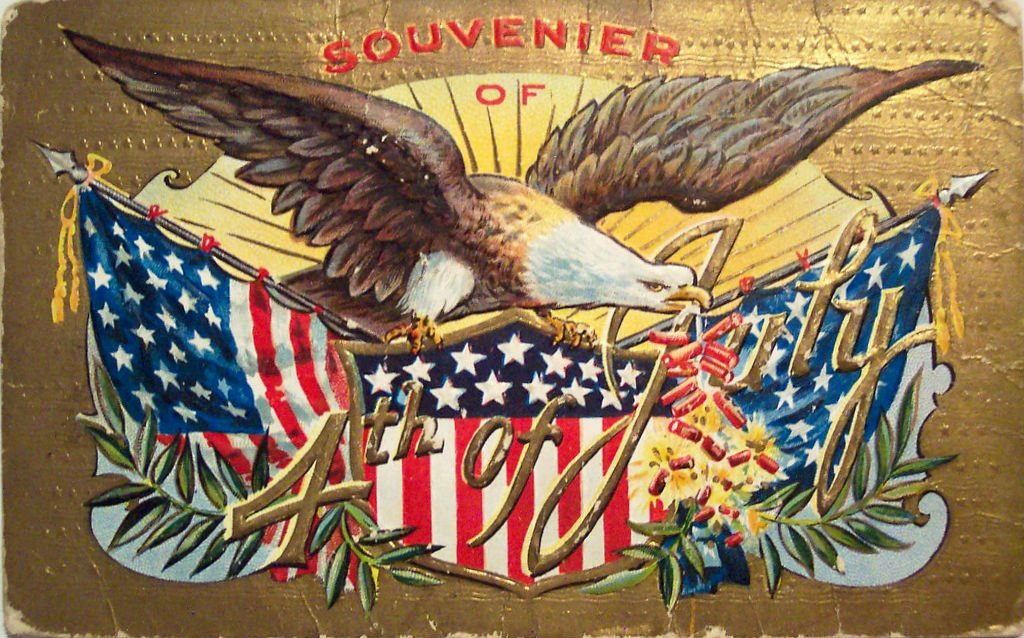
As this year’s Fourth of July activities wrap up, let’s look back at the holiday 100 years ago. The Ridge communities were known for their festive celebrations.
On June 27, 1924, Sullivan’s Englewood Times, a south side Chicago newspaper, reported that “big doings” were being planned for the annual community Fourth of July event to be held in Ridge Park.
“The community has a reputation to provide a good time and it surely will be a successful day if balmy summer weather prevails,” stated the paper.
The Boy Scouts assisted the Beverly Hills Post of the American Legion in going house-to-house to help the event’s finance committee raise funds.
A busy day from 9:30 a.m. to 10 p.m. was planned. A “delightful time” was promised, with pink lemonade, dancing, a public speaker, athletic and swimming events, baseball, a band concert, and “booths galore.” Not to be forgotten was the “beautiful” fireworks display scheduled for the evening.
“The park is big and a spirit of welcoming” would be extended to everyone, promised the event planners.
The weather did cooperate that day. July 4th fell on a Friday in 1924. It was a clear day, but cool, in the low- to mid-sixty degrees. That proved to be fine with the community, and the event proved to be everything promised.
“The Ridge’s Community Fourth was one of the best ever. The whole town was there from Morgan Park to Beverly and 91st st., not counting the visitors from other places,” wrote the paper the following week, on July 11, 1924.
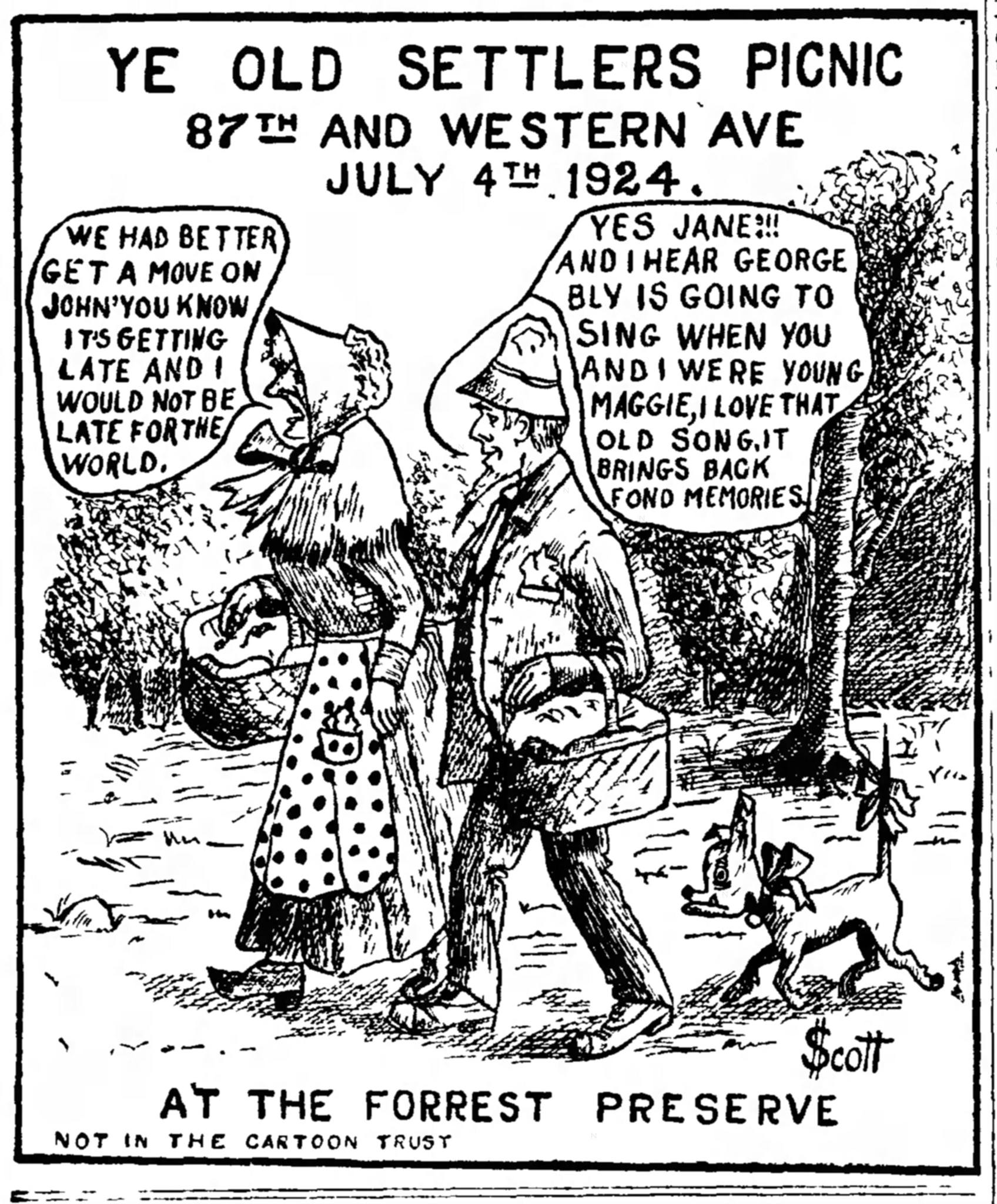
About a mile to the north, in the Beverly Woods (now Dan Ryan Woods) at 87th Street and Western Avenue, another group also held a big Fourth of July event in 1924.
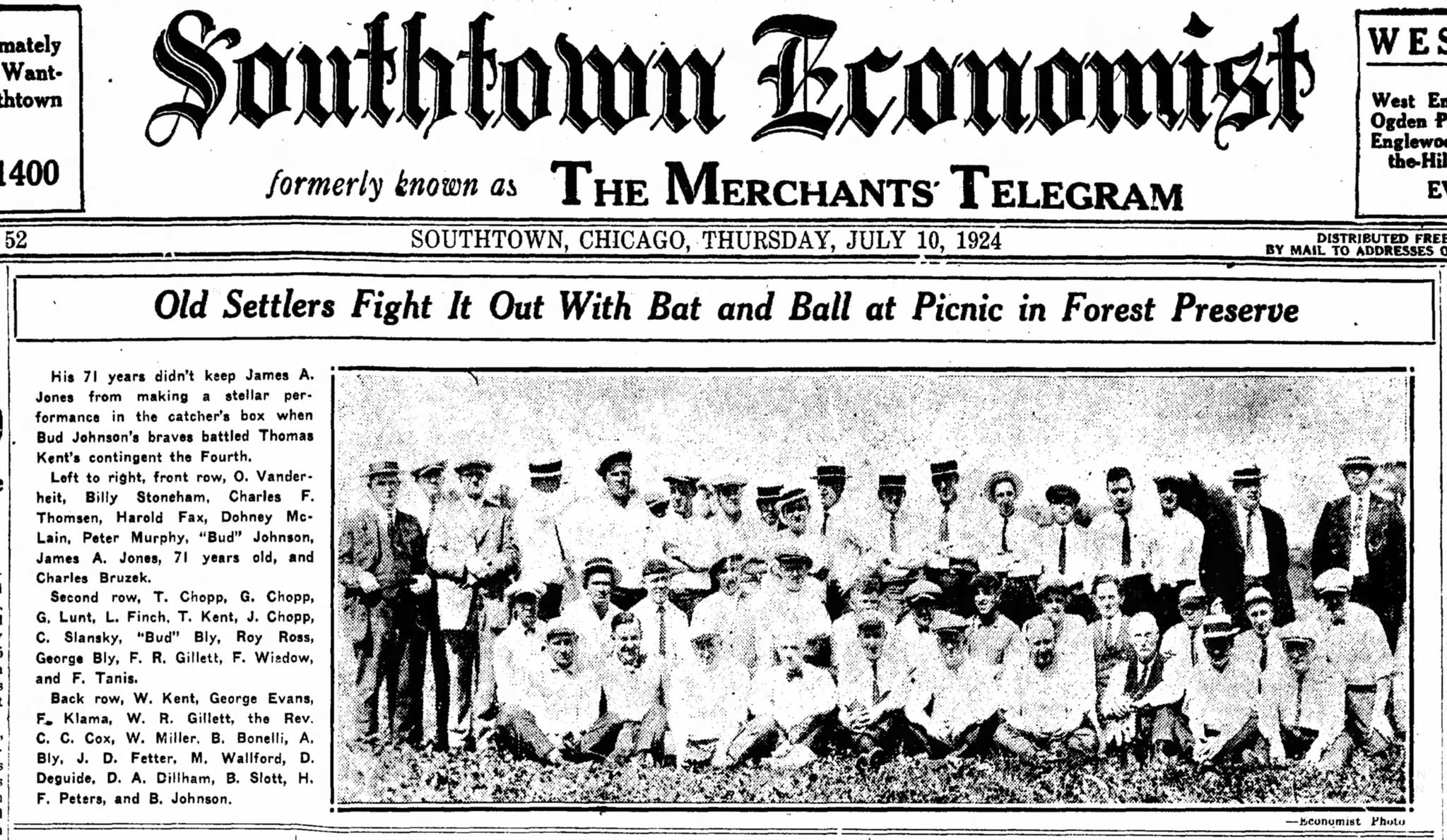
According to the Southtown Economist, another southside paper that had previously been known as The Merchants Telegram, the Englewood Old Settlers Association invited their community to join them for a day of picnicking, music, and games.
“Old settlers,” or “pioneer,” societies were once very popular. People who had lived in a community for a specified amount of time got together to share stories and memories. Today, in some ways, the “nostalgia” pages of Facebook fill some of this function, although there is no comparison to getting together in person for reminiscing.
A person had to have lived in Englewood for at least 20 years to qualify for membership in the Englewood Old Settlers Association. The membership of the club numbered 600 in 1924.
For the Fourth of July outing, the attendees gathered at 63rd Street and Ashland Avenue at 10:00 a.m. Transportation to the woods would be by automobile, something still new and exciting for many people. Anyone who needed a ride would be able to find one.
The newspaper reported, “In striking contrast to the days when lanterns furnished their only illumination to guide them to neighborhood gatherings, automobiles will carry the Old Settlers to their picnic.”
The cars were decorated with flags, and horns were provided to create noise for the procession.
The day was filled with activities. Charles S. Deneen, the past Governor of Illinois, gave a speech in the morning. (The next year Deneen would become the U.S. Senator from Illinois.)
A piano had been brought along, and next, the attendees, some in wheelchairs, sang patriotic and old time songs.
A five-inning baseball game was played by two teams of Old Settlers. The oldest player was 71 years old. The prize of a straw hat went to the first man to hit a home run, which happened in the third inning and was the only home run in the game.
Additional competitions went on, with prizes supplied by the local businessmen.
For men, there was horseshoe pitching. Women’s events included wood sawing and nail driving.
There were potato races and sack races, races for “fat men” and “fat ladies,” and for married men and married women. There were also races for boys and girls.
A prize was awarded for the best decorated auto.
Tables and chairs were brought over to the woods for people to set up their “basket” lunches and dinners. Ice cream, pop, and peanuts were sold.
Later in the day there was dancing.
About 2,000 people attended and the event was deemed a social and financial success.
The paper reported that moving pictures of various events would be taken. Those movies may still exist somewhere and would be wonderful to watch.
Because July fourth was on a Friday, many businesses also gave their employees Saturday off. It was the norm back then for people to work a half day on Saturday in addition to full days Monday through Friday. The average work week was 50 hours.