Chicago – indeed, the entire world – has been here before.
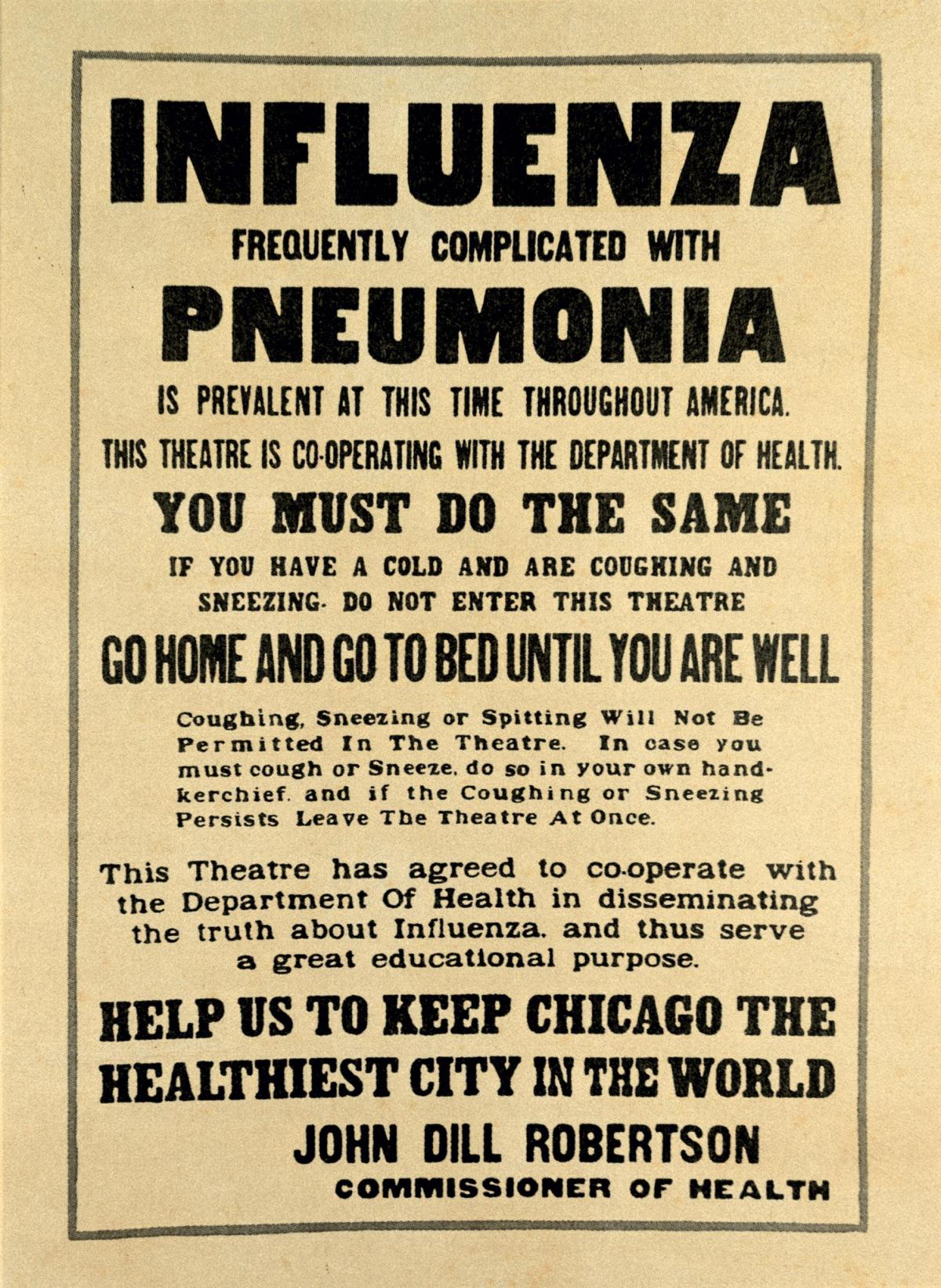
From Dr. W. A. Evans of the Chicago Daily Tribune: “Persons should avoid crowded assemblages, street cars and the like. Promiscuous coughing and spitting must not be tolerated. When a person comes down with the disease he should be cared for in well-ventilated, warm rooms as far as possible from other family members. The [disease] is spread by the nose and mouth secretions. These secretions are spread by coughing, spitting, sneezing, by the use of soiled handkerchiefs, towels, cups, spoons, and so forth. The folly of disregarding warnings [will be paid for].”
Sound familiar? Evans wrote these words about the Influenza pandemic in his Tribune column called “How to Keep Well” in the Fall of 1918.
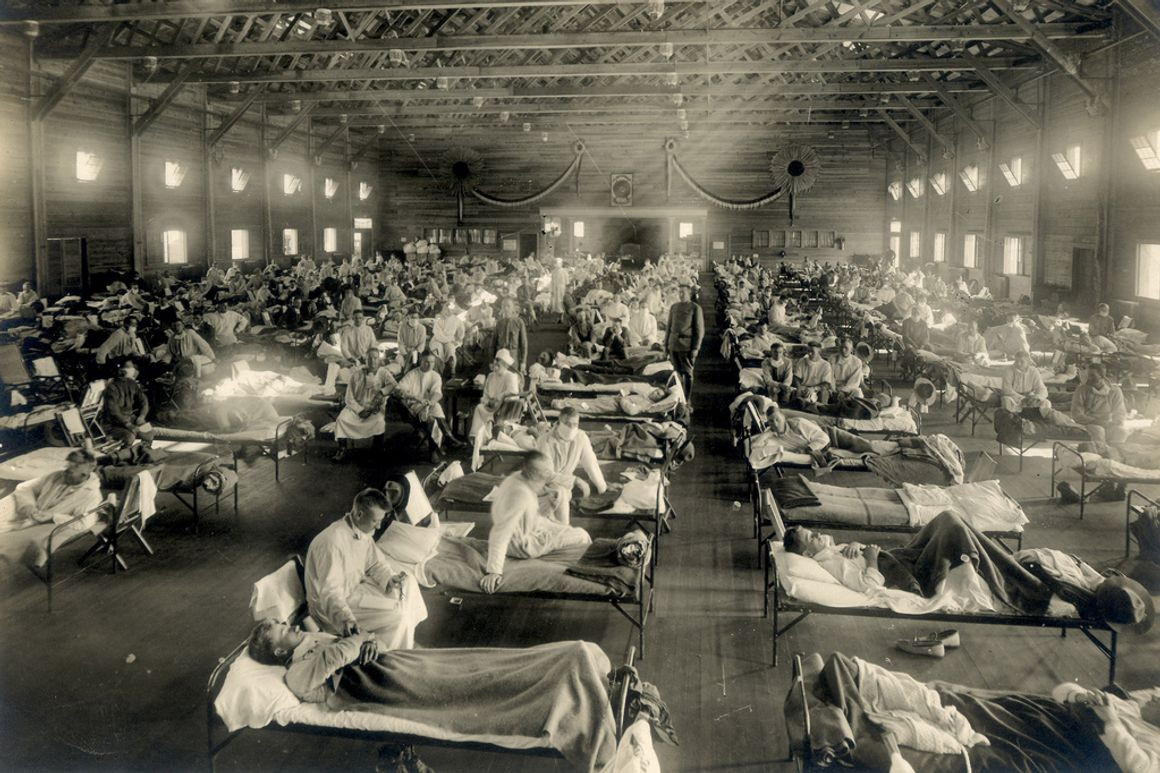
The influenza outbreak that would eventually result in millions of deaths worldwide started in the military population of World War I and quickly spread to the civilian population. It was called the “Spanish Flu” but in fact, to this day, experts do not really know where this strain originated – some theorize it could even have started in the U.S. They also cannot agree on the total number of victims with estimates ranging from 17 million to 100 million. The world population at the time was about 1.9 billion. In the U.S., about 28% of the population of 105 million became infected, and 500,000 to 675,000 people died. These numbers are from the U.S. Department of Health & Human Services.
Increased travel for military personnel and civilians spread the disease. The disease was downplayed in the beginning to maintain the troops’ morale. It was first noted in Kansas in January 1918 when a Fort Riley cook reported sick, and within days, over 500 other men reported sick. The virus spread to New York City by March. Failure to take preventive measures then has been criticized.
By summer, the flu was in Chicago. Dr. Evans, among others, at first dismissed it as just routine annual “grippe,” the term they used then for influenza. Politicians and health authorities said it was all under control and would soon be over.
But it really started to explode in September and October. Strict quarantines were instituted at area military camps, including Great Lakes Naval and Fort Sheridan. Public funerals were stopped, in the belief people could become infected from the corpse; family members could only view the deceased though glass windows in the coffins.
In Chicago, on October 3, 1918, there were 767 new cases of influenza and 355 cases of pneumonia reported, and a total of 119 deaths. The numbers were watched daily. On October 8, there were 1.342 new cases and 135 deaths. On October 15, there were 2,221 new cases and 317 deaths. There was a critical shortage of doctors, nurses and hospital beds.
A Catholic school was closed after a nun died of influenza. Chicago suspended public dancing in cabarets. The street cars were cleaned and smoking was forbidden. Conventions started cancelling.
A special “emergency commission” was put together to oversee Illinois efforts to combat the flu. On October 16, the commission announced that all theaters, lodges, night schools and skating rinks would temporarily close. The commission members could not reach agreement on churches, saloons, museums and other gathering places.
On October 17, the commission closed “nonessential-public gatherings” including athletic events, conventions, banquets and similar social affairs, parades, labor union meetings, political gatherings and cafes and cabarets.
Churches, saloons, pool halls and bowling alleys were exempt but were asked to exclude “sneezers, coughers and spitters” and avoid crowded situations. Some churches closed voluntarily. Later more activities and places were closed, including public playgrounds and swimming pools. Parents were instructed to keep their children home after school.
The Chief of Police ordered all violators of these rules be arrested. Arrests and busts were made, from smoking on street cars to “health raids” on overcrowded saloons.
Other suburbs took more drastic action. Oak Park closed schools and libraries. Evanston closed all churches.
Emergency kitchens were set up around the city to feed people affected by the pandemic.
Next installment: The flu continues ….