
Part 2 – The influenza pandemic of 1918 continues in Chicago
In a Chicago Daily Tribune article on October 20, 1918, the business market was described as having “lapsed into a state of partial coma” due to the flu and news of the war.
Two treatments were being lauded for this influenza.
The first was a "preventive" vaccine developed by Dr. E. C. Rosenow of Mayo Clinic in Rochester, Minnesota. The initial group inoculated were doctors, nurses, police and other essential staff. Hundreds of thousands of Chicagoans were vaccinated, believing this would prevent them from getting the disease. In reality, this vaccine was useless against the viral influenza strain, which had not even been identified yet. There is some evidence this vaccine might have helped with secondary bacterial infections, such as pneumonia.
The second treatment, touted as a "cure," was a series of transfusions of blood from someone who had recovered from the influenza. Physicians bought blood to transfuse into their patients, believing in the immune properties of the anti-bodies built up by flu survivors. A modern review of this practice showed that it did seem to have some benefits in reducing mortality, but studies were not controlled by today’s standards for clinical trials. Blood transfusions are not considered practical in pandemics because of the number of infected people.
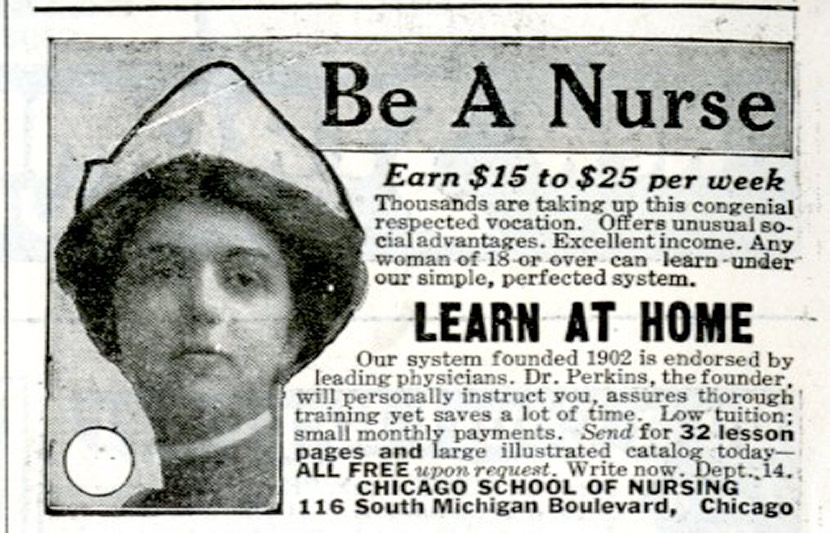
The city hired 100 women aged 50 to 60 to help with home nursing visits. It was believed that this population group was “an age practically immune to the disease.” People donated money to pay these women $15 per week.
Businesses and services suffered. Over 600 employees of the public transportation system were out sick and street cars and el trains went out of service with no repairs and maintenance, leading to even more crowding in the remaining cars. Businesses were not asked to close but to stagger their starting and ending times. Shopping was not curtailed.
The fiftieth annual (that’s right, FIFTY years) convention of the Illinois Equal Suffrage association went on as planned at the Congress Hotel. They followed the rules of the State Council of Defense and health authorities. They limited attendance to 100 delegates, the general public and the press were barred, and chairs were spaced four feet apart. The were criticized for not wearing masks.
As numbers of new cases and deaths decreased, restrictions were lifted. On November 10, the public health commissioner declared the epidemic in Chicago over, and lifted bans except for smoking on public transportation and refusing admittance of sneezers, coughers and spitters. Dr. Evans told the public in his column that they should expect several years of outbreaks as the flu is a “lingering disease.”
In early December, the commissioner reversed his course of action, claiming he never said the epidemic was over. New cases and deaths were once again on the rise. Restrictions were put back in place. He blamed the pharmacists for selling cough medicine with opiates that deadened the symptoms, and theaters for allowing in sneezers, coughers and spitters.
The American Public Health Association met in Chicago and formed committees to study and make recommendations for combating a recurrence of the flu. The three-day meeting ended without any consensus being formed and a group of five doctors including Dr. Evans were appointed to continue to work on the problem.
On December 15 it was recommended that people wash their hands frequently and stop shaking hands.
Christmas came and went quietly, overshadowed by the war and the flu pandemic.
Next installment: 1919 starts off with the flu