

The Ridge Historical Society
March 2021 – Oscar Wilde’s visit to Chicago – part 1
By Carol Flynn
St. Patrick’s Day is over but it’s still National Irish American Heritage Month, so we can fit in one more Irish story.
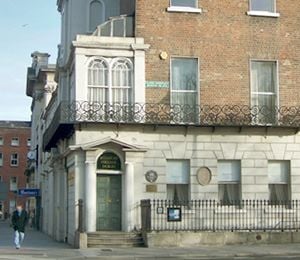
Oscar Fingal O'Flahertie Wills Wilde was born in Dublin, Ireland, in 1854. He is considered one of the greatest Irish writers. He wrote poetry, essays, and articles. His plays, such as The Importance of Being Earnest, considered his masterpiece, continue to be performed today. He also wrote fiction, mainly short stories, and his novel, The Picture of Dorian Gray, is a classic.
Many people know him for his epigrams, or brief statements that are memorable and interesting. There are hundreds of great Wilde quotes, and some good ones include:
“Always forgive your enemies; nothing annoys them so much.”
“The truth is rarely pure and never simple.”
“Some cause happiness wherever they go; others whenever they go.”
“The nicest feeling in the world is to do a good deed anonymously – and have somebody find out.”
“They've promised that dreams can come true – but forgot to mention that nightmares are dreams, too.”
“No man is rich enough to buy back his past.”
“I can resist anything except temptation.”
“A man who does not think for himself does not think at all.”
This could go on for pages.
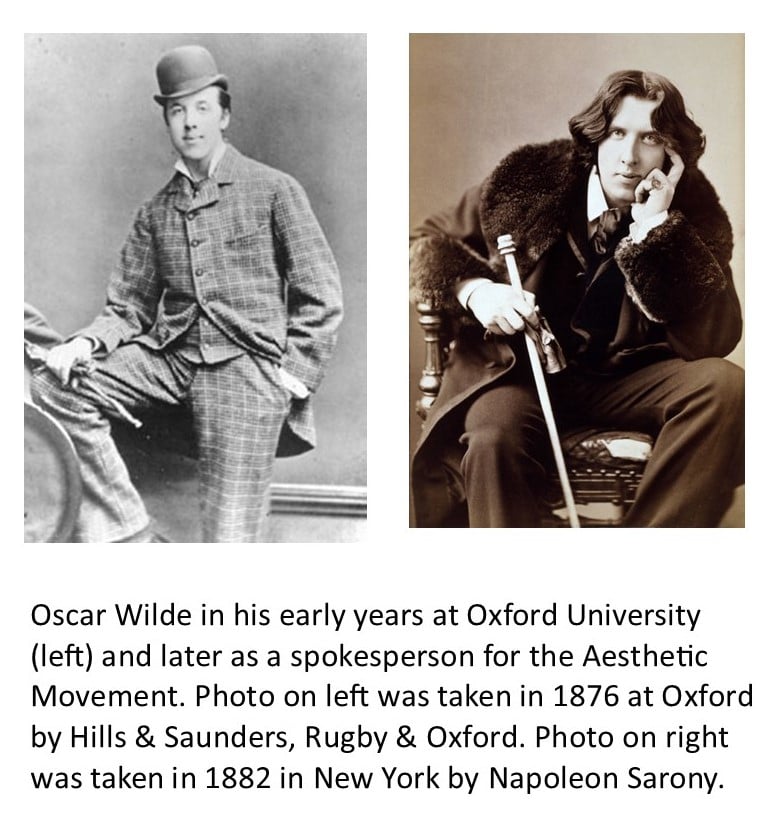
Before Wilde became famous for his literary career, however, he was already a celebrity and media sensation. As a young man, only in his 20s, he became the embodiment of, and spokesperson for, the Aesthetic Movement.
Aestheticism as a philosophy emphasized pleasing the senses and emotions through beauty and good taste as more important than moral, political, or societal concerns. It was primarily an art movement although it influenced other phases of life. It grew out of the Pre-Raphaelite Brotherhood of the mid-1800s through people like artist/poet Dante Gabriel Rosetti, and influenced such artists and designers as William Morris and Edward Burne-Jones. Aestheticism advocated “art for art’s sake” rather than art for any other purpose such as a moral lesson or political statement.
Oscar Wilde was raised by parents who were considered intellectuals. His father was Ireland’s top eye-and-ear surgeon, running his own hospital. He was knighted in 1864. Sir William Wilde also wrote on Irish archeology and folklore. He was known for his philanthropy, treating the poor for free at the back of Trinity College in Dublin.
Wilde’s mother was an Irish nationalist, strongly supporting freedom from English rule. Lady Jane Wilde was an early advocate for women’s rights and education for women. She spoke ten languages fluently. She was a poet, she wrote for fashionable magazines, and she collected and wrote about Irish folklore.
Oscar had an older brother, and a younger sister who died at age 9 from meningitis. Oscar and his brother were baptized in both the Church of Ireland (Protestant) and the Roman Catholic Church, according to his biographers. He had a lifelong fascination with Catholicism, and even traveled to Italy as a young man to meet the Pope, but he did not really practice in either church.
When Oscar was young, the Wilde home was a site for cultural and social life in Dublin, and he met many of the leading writers, artists, politicians, scientists, and “influencers” of the day. He learned to speak German and French fluently. He excelled as a student at Trinity College and Oxford University in England.
When Sir Wilde died in 1876, it was discovered he was practically bankrupt. Lady Wilde lived with her older son Willie and relied upon her writing to make a living. Willie studied law but never practiced. He earned a meager income as a journalist, drama critic, lead newspaper writer, and editor. Willie was considered witty and humorous, but he was plagued by alcoholism and living in his younger brother’s shadow. The brothers lived together during college years, but were estranged for most of their adult lives.
While a student at Oxford University from 1874 to 1878, Oscar Wilde became an advocate of the Aesthetic Movement, influenced by writers/mentors Walter Pater and John Ruskin. Wilde adopted aesthetic mannerisms. He grew his hair long, wore showy outfits, and affected languid dramatic poses. He scorned sports but he occasionally boxed, a sport the Irish love, and famously drove off four fellow students who attacked him.
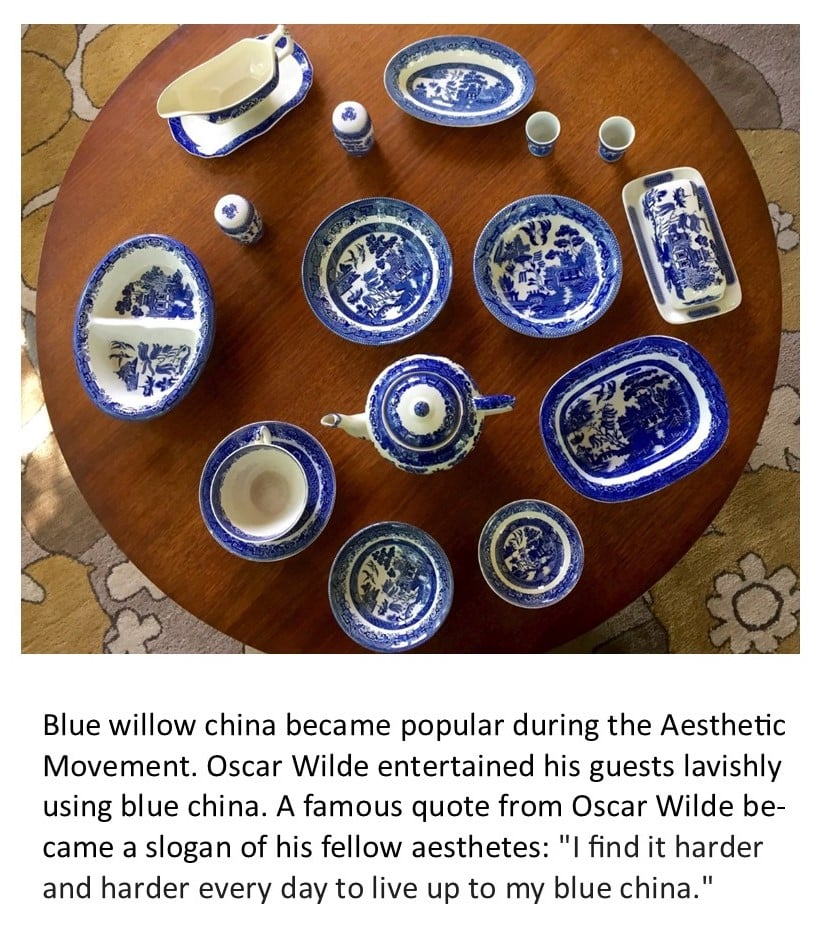
He decorated his room with symbols of the movement like peacock feathers, lilies, sunflowers, and art objects. Wilde entertained guests extravagantly, serving them on popular blue china. He famously said, "I find it harder and harder every day to live up to my blue china." This became a slogan for his fellow aesthetes.
Next post: Oscar Wilde moved to London and entered society, which led to a trip to the U.S., including Chicago.