
The Ridge Historical Society
March – Irish American Heritage Month – Post 3: More on the Sheepfold/Icehouse
By Carol Flynn
The post on St. Patrick’s Day about the sheepfold and icehouse built on Thomas Morgan’s estate in North Beverly by John Lynch was well received – almost 4,000 people have been reached so far. However, that post only covered part of the story. Since the topic proved to be a hit, here are more details about that structure.
John Lynch was seventeen years old when he arrived in New York from Ireland in 1842. Although his individual story is not known, it’s likely that he joined the many thousands of his fellow Catholic countrymen driven by hardship to leave their native country and seek out new opportunities.
Lynch encountered wealthy English Protestant Thomas Morgan who had purchased thousands of acres of land on and surrounding the Ridge. In 1844, according to Andreas’ History of Cook County (1884), Lynch arrived on the Ridge, and worked for Morgan for seven years, until Morgan’s death in 1851. Lynch then bought his own land around 105th and Throop Streets, which he farmed.
It appears that young Lynch helped Morgan build and manage his estate. Morgan brought some livestock with him from England on his private ship, and probably purchased more once in the U.S. Enclosures to protect the livestock from wolves and the harsh Chicago winters were necessities. Also, ice cut in winter could be stored in subterranean rooms for a supply in summer. This helped with food preservation.
The Andreas book includes the following information on the sheepfold and icehouse that Lynch built, in true Irish fashion, on the Morgan estate. The information was shared by Isaiah T. Greenacre, an attorney who grew up in Washington Heights.
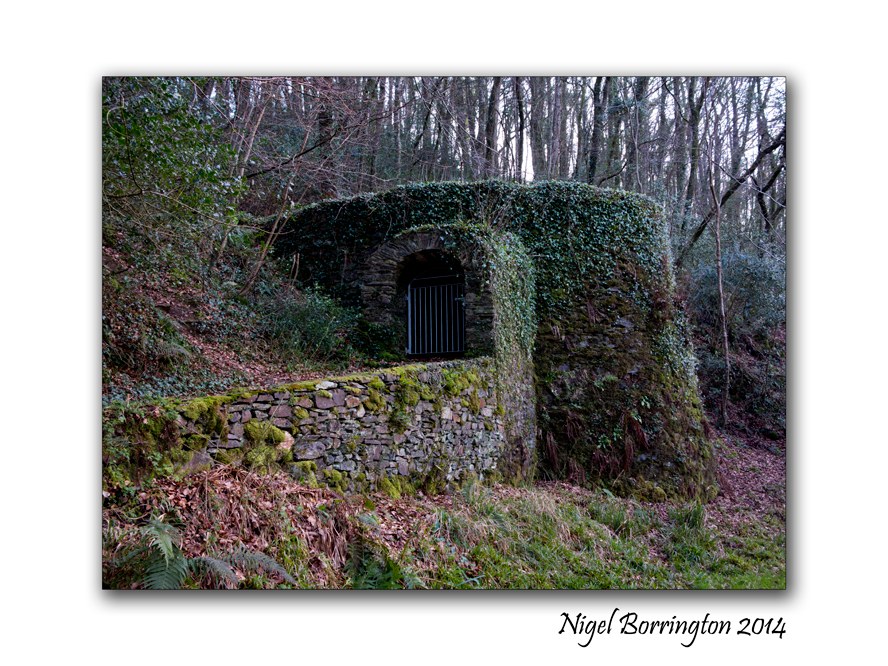
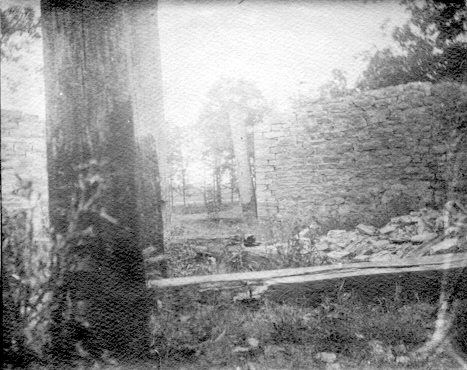
“Directly in front of the dwelling [the remains of Morgan’s house, Upwood] and on the slope of the hill is a stone structure, or rather a large pit, lined with a stone wall, which wall extends, or once did, far above the top of the hill, but of late years, time has reduced it nearly to a parallel with the hillside. At the east side of the wall and at the base of the hill, is an immense opening, once composed of two tremendous oak doors (now broken and probably used for kindling wood) fastened to the wall by enormous iron hinges that reached across each door. The walls are built of very rough stone. Mr. J. Lynch, Sr., the contractor of this wall, quarried the stone of Blue Island, and did the hauling of the stone and all; he alone having to play the part of stone quarrier, teamster and stone mason. It must have been a very tedious job. On entering this pit, which seems to have answered the purpose of a sheepfold, you find its floors to be composed of bits of stones, in all probability fragments of the wall, and other rubbish, likely the accumulation of years. On the west side and leading in toward the hill is an opening in the wall. On crossing the threshold of what was once a doorway, you imagine yourself about to descend into the depths of darkness by a subterranean passage. But ‘ere you have walked within the distance of about thirty-six inches, you presently find yourself in a round turret shaped cell, with an oval ceiling. In the ceiling is an opening which leads to the surface of the ground. This opening is covered by an immense stone placed over the hole where it makes its appearance on the hill. This cell is built of brick, and unlike the sheep-fold it has a good stone floor. It seems that at one time there was a door dividing the cell from the fold. It seems the cell answered the purpose of an icehouse, and the opening a mere ventilator. The place seems to have stamped on its surface everywhere antiquity.”
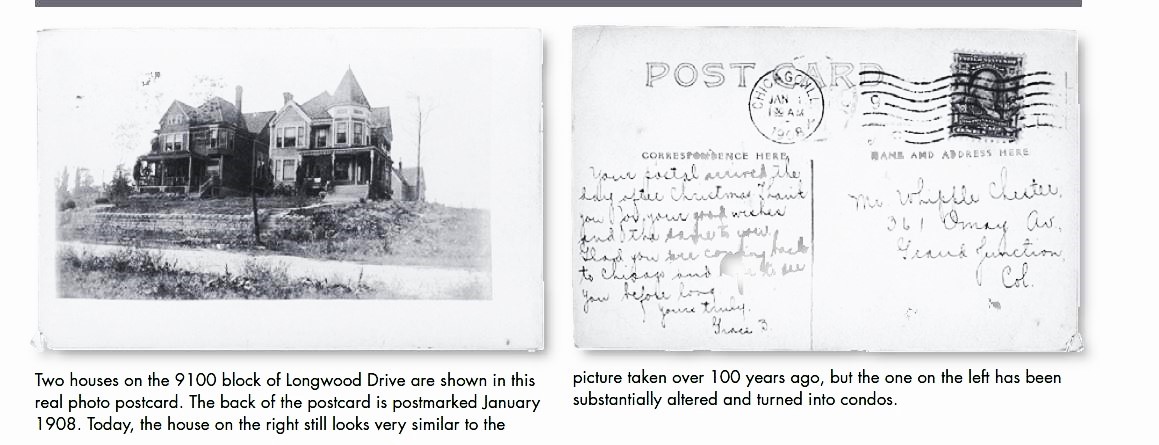
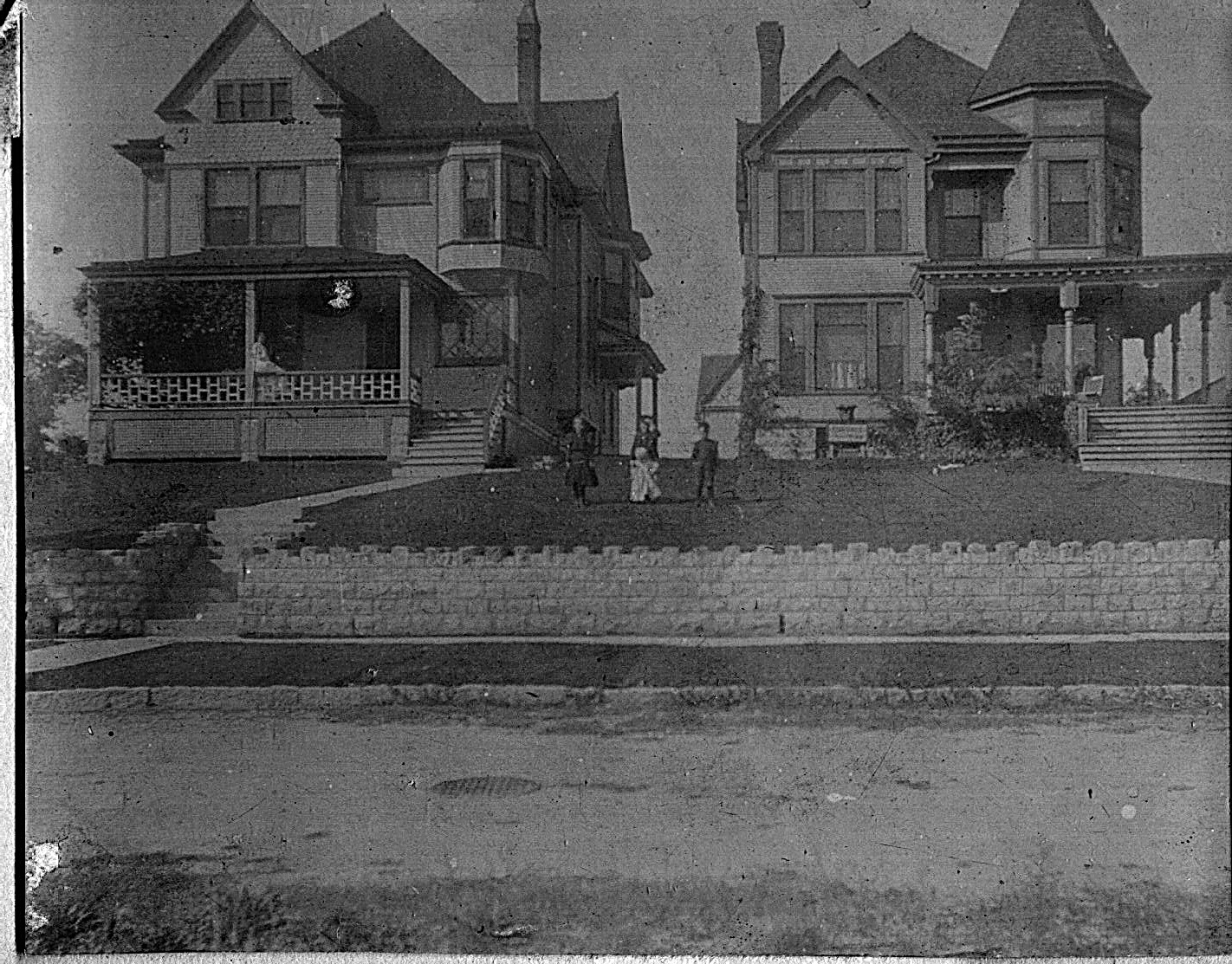
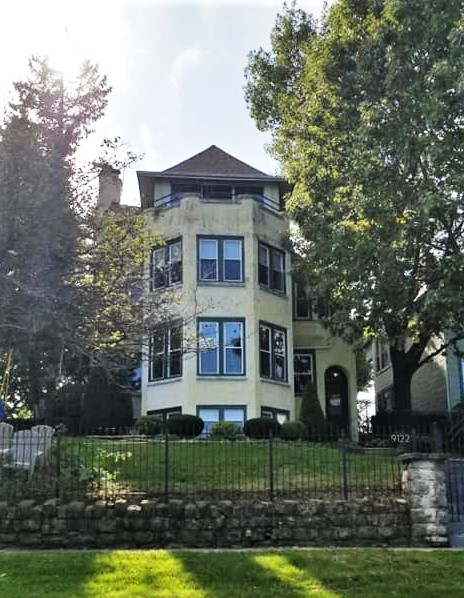
The sheepfold/icehouse opened onto what is now Longwood Drive between 91st and 92nd Streets. There is nothing left of the building today, but pieces of limestone from the structure appear to have been used for other purposes in the area.
The current houses on this site have a limestone wall in front of them that possibly is made from the remains of the sheepfold/icehouse. The house at 9122 S. Longwood Drive was owned and turned into an apartment building by architect John Todd Hetherington in the 1920s.