

The Ridge Historical Society
The Early Days of Morgan Park – Part 3: Frederick H. Winston
By Carol Flynn
Morgan Park was started as a real estate development in the early 1870s by the Blue Island Land and Building Co. (BILBCo), a group of investors which included some very prominent Chicagoans.
This post will begin looking at some of those men who strongly influenced the development of the Blue Island.
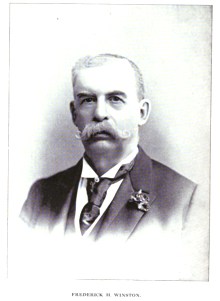
Frederick Hampden Winston was the leader of the investment group. He personally held the title to the Morgan land the investors purchased in 1868 until the BILBCo was formed the next year. He was one of the petitioners to the State of Illinois to incorporate BILBCo and served as its first president.
Winston was born in Georgia in 1830. At least one ancestor fought in the U.S. revolution. Winston’s father was a Presbyterian minister from New York, and his mother was a member of an aristocratic, slave-owning family in Georgia. When he was a young boy, his parents moved the family to Kentucky and freed their slaves for moral reasons, depleting much of their wealth. Both parents died before Winston was twelve years old.
Winston was educated at the finest private schools in Kentucky. At the age of 18, he returned to Georgia to start a business producing cotton cloth, but that was not successful. He then studied law at a U.S. Senator’s office and earned a law degree from Harvard University in 1852. He practiced law in New York before striking out for the west.
Arriving in Chicago in 1853, he immediately established himself in society; in December of that year, the Chicago Tribune mentioned his participation in an elite event of the New England Society to celebrate the arrival of the Mayflower in 1620. He was more than just an attendee, he was one of the presenters during the toasts/responses in the evening’s program.
Maria Garrard Dudley from Kentucky became his wife in 1855. They made their home in Chicago, on the north side. For decades, their address was 369 Superior Street.
Winston passed the Illinois bar and joined the law firm of, and eventually became partners with, Norman B. Judd, an attorney for railroad companies. Judd was appointed as Minister (ambassador) to Berlin by President Abraham Lincoln. Winston then worked with Henry W. Blodgett until President Ulysses Grant appointed Blodgett to a judgeship. Winston went on to be a partner in several law firms.
Winston rose to prominence as the lead attorney for the Pittsburg, Fort Wayne and Chicago Railroad, the Lake Shore and Michigan Southern Railroad, and the Chicago, Rock Island and Pacific Railroad. He was known as one of the country’s greatest experts in railroad law during the decades that railroads were rapidly expanding throughout the country, and the Chicago Legal News stated he “conducted the complicated legal business of that corporation [Pittsburg] with masterly skill and excellent judgment.”
He also became a very successful real estate investor. One biographical entry on him, written in 1899, stated that: “He had scarcely been in the then growing town [Chicago] for twenty-four hours before he saw the chances of successful real estate ventures, and before he, himself, had recognized it he began trafficking in Chicago real estate.”
In 1870, the year after the BILBCo was formed and started selling land to developers and settlers, but before Morgan Park was developed, the U.S. Cenus reported that Winston had real estate investments of $150,000 and owned personal real estate valued at $30,000.
He was involved in other businesses, also, including banking, electric street cars, and the gas industry. His name appeared often in the classified sections of newspapers for legal, real estate, and investment transactions and lawsuits and he held positions on many Boards of Directors.
Winston was described in one source as a “courteous, dignified southern gentleman united to the energetic, successful, practical man of the North.” Another source wrote he was “a well-read, gifted and thorough lawyer. In personal appearance he is prepossessing, courteous and polite.” His “solidity of character, with a smoothness and richness of mental composition, made him a most marked character among the many strong and unique men of Chicago.”
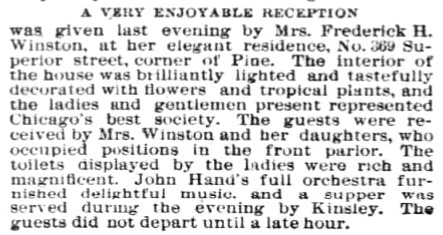
For her part, Maria Winston held her own with Chicago’s social elite. One article about a successful dinner party at their house is attached. The U.S. Censuses always listed live-in servants at their home – there were six there in 1880.
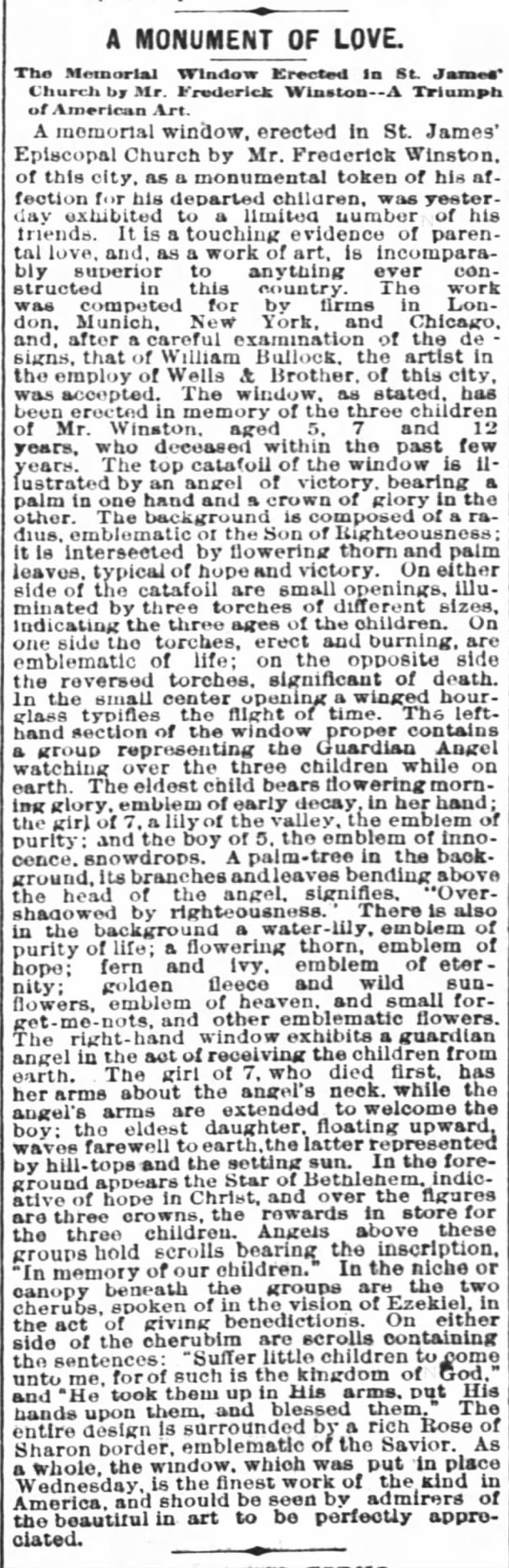
Despite their success and prestige, however, the Winston family’s life was not without tragedy. Maria and Frederick had at least nine children, but they lost daughter Ellen at age 7 in 1869, son Mervyn at age 4 in 1871, and daughter Mary at age 15 in 1875.
The Inter Ocean newspaper described in minute detail the memorial stained-glass window that Winston commissioned for St. James Episcopal Church in 1878. That article is also attached.
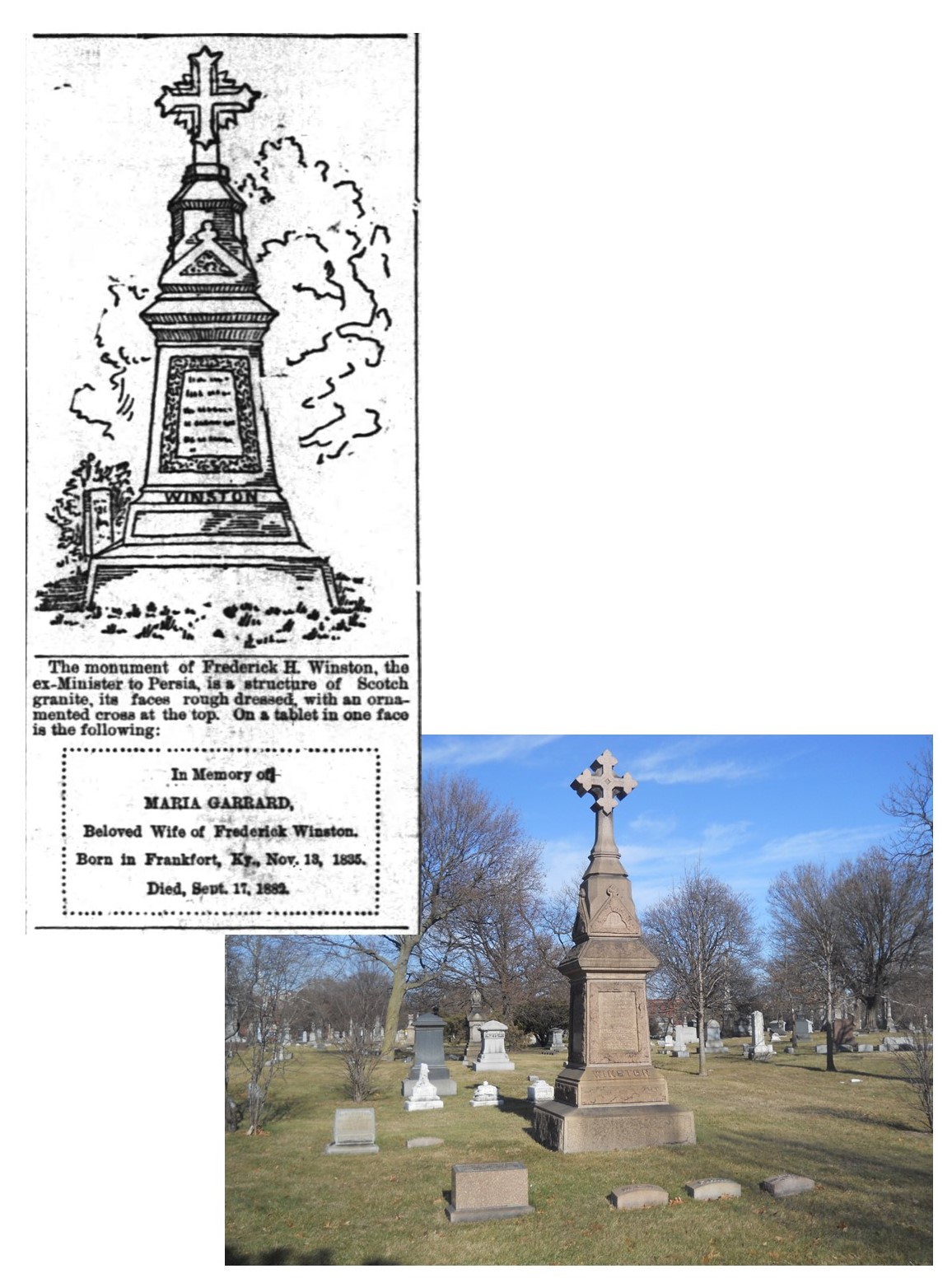
Maria died in 1882 at the age of 46. The gravesite for the family is in Graceland Cemetery, covered in an article in the Inter Ocean in 1887, attached to this post.
Winston retired from his law practice in 1884 but continued to concentrate on his real estate endeavors. He was succeeded in his law career by his son Frederick S. Winston.
The elder Winston was also a leader in the Democratic Party, the party of Stephen Douglas. As early as 1861, he took part in the funeral services for Senator Douglas alongside national and state leaders. He served as delegate to presidential nomination conventions, but he chose not to run for elected office himself.
He was known for his skills in presiding at meetings. After getting two groups to cooperate at a meeting in 1884, he commented with a smile, "Oil and water will not mix very well together, although whisky and water sometimes will."
In 1884, allegations that he masterminded election fraud in a state senate election went nowhere. That same year, he sued the Inter Ocean newspaper over an article that accused him of being part of a unscrupulous political ring. Although the court dismissed the case, the newspaper retracted the article, admitting they were wrong.
In 1885, a court case against him alleging fraud in a land purchase for one of the railroads went all the way to the U. S. Supreme Court which found in agreement with the lower courts that he had done nothing illegal. That case had taken nine years to resolve.
President Grover Cleveland appointed him as the Minister (ambassador) to Persia (Iran) in 1886. It was reported that Persia was in need of a railroad system and there was no one better than Winston to help the country develop one. In accepting the role, Winston said his goal was to increase trade between the two countries.
“I have been a practical businessman all my life. It will cost me $3 expenditures for every $1 I get from the government to accept this mission. If I do not get some credit out of it the expenditure will be a waste of money. I shall try to get that credit in the improvement of our trade,” said Winston in an interview with the Chicago Tribune.
He was sent on his “8,000-mile journey” with a lavish banquet attended by Chicago’s elite businessmen, politicians, civic and religious leaders, and journalists.
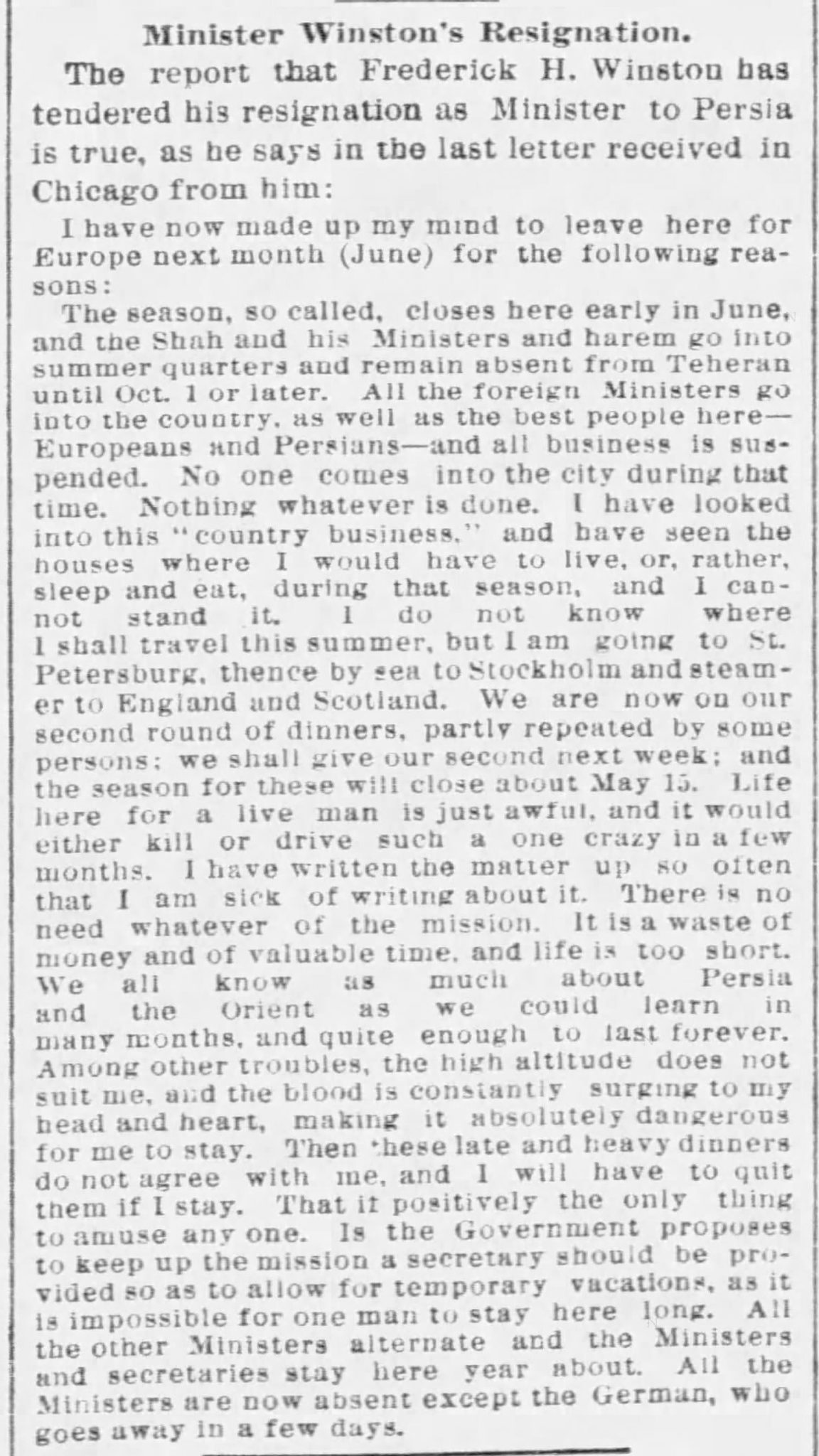
However, he became very disillusioned with Persia very quickly and resigned a few months later. He explained his resignation in a letter published in the Chicago Tribune that is attached to this post.
He spent time after that traveling in Russia, Scandinavia, England, and Scotland.
In 1886, however, he was also connected to a young actress named Jennie Woods, who died in Chicago allegedly from excessive opium smoking. The article reporting on that is also attached.
In 1887, he was linked in the papers to another actress, Eleanor Calhoun. It was reported they had been engaged before he left for Persia, but she broke it off for an engagement with a Hearst son. The Hearst family put an end to that, and she became re-engaged to Winston. Nothing more came of that. She did earn some renown on the stage and later married a prince. Winston was 57, and Calhoun was 22.
Winston also held many appointments under Illinois State governors, and Governor Oglesby promoted him to Brigadier General in the Illinois National Guard. He went by “General Winston” in his later years.
He was involved in numerous activities and clubs in Chicago and the state, including the Illinois and Chicago Historical Societies, the Union Club, and others. He was elected to membership in clubs in other cities. He was particularly active in organizations related to his ancestry, such as the Sons of the American Revolution.
Winston was a member of the Lincoln Park Board of Commissioners and served as President for twelve years. During his time, the park was expanded and many improvements were made.
In 1891, Winston became president of the Chicago Junction Railways and Union Stockyards Company, which was formed to buy up the stock of the Union Stock Yard and Transit Company, and they did come to own 98% of the stock, in effect making the corporations one and the same.
The Chicago stockyards industry was vitally connected to the railroad industry. The railroads, including those that Winston was affiliated with, were always major owners of the company’s stock. Winston was well acquainted with John B. Sherman, the founder of the Union Stockyards, who purchased most of the land known today as the Dan Ryan Woods and ran an experimental stock farm there.
At the age of 64, Winston was called “hale and vigorous.”
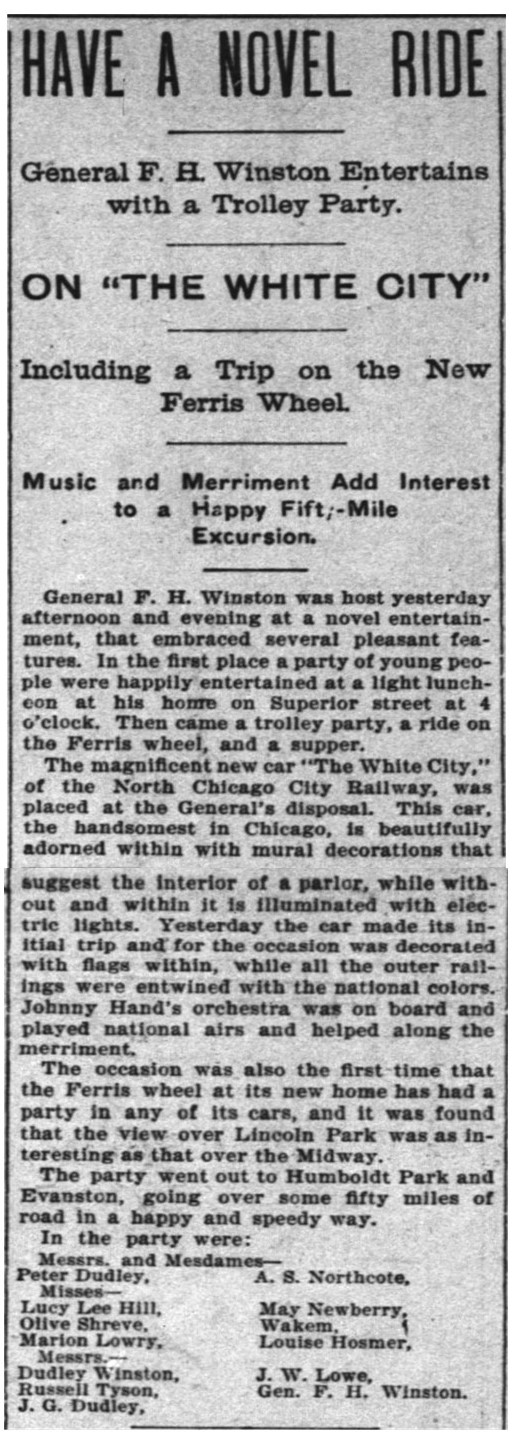
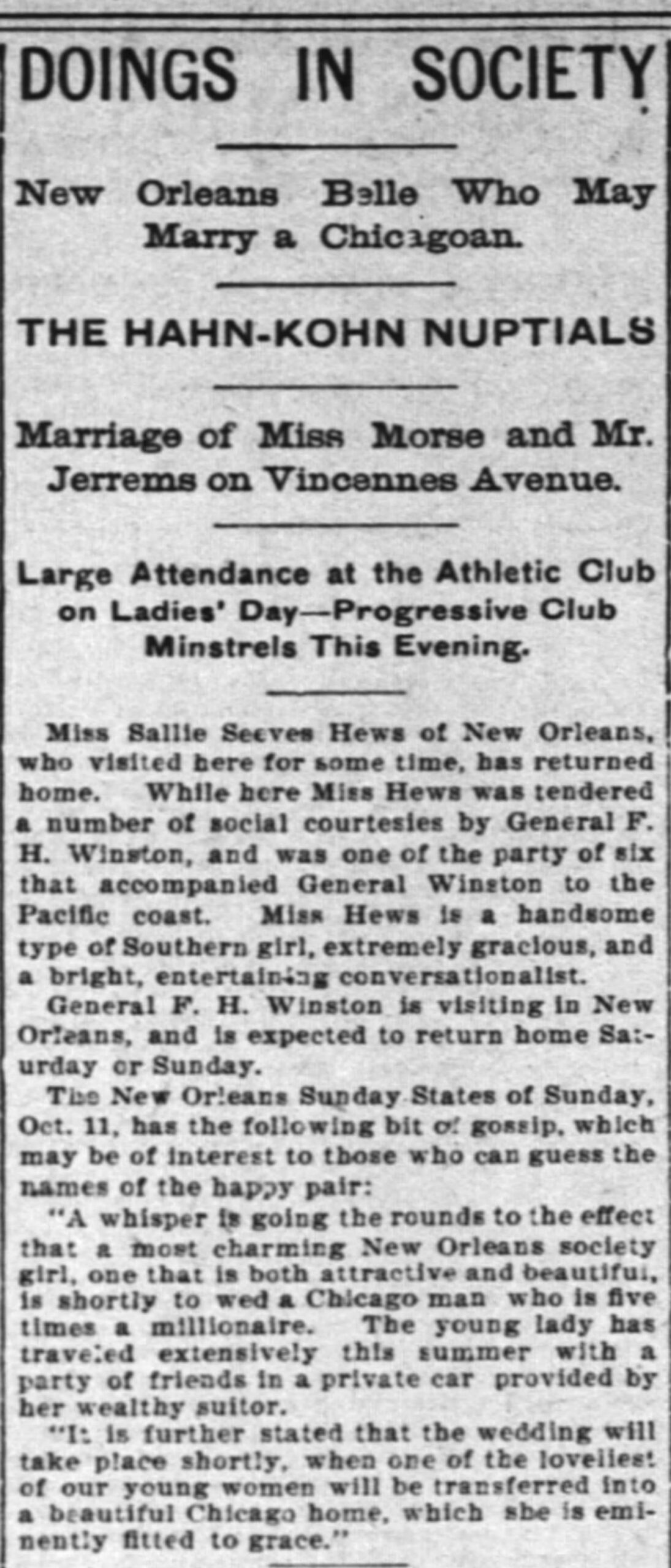
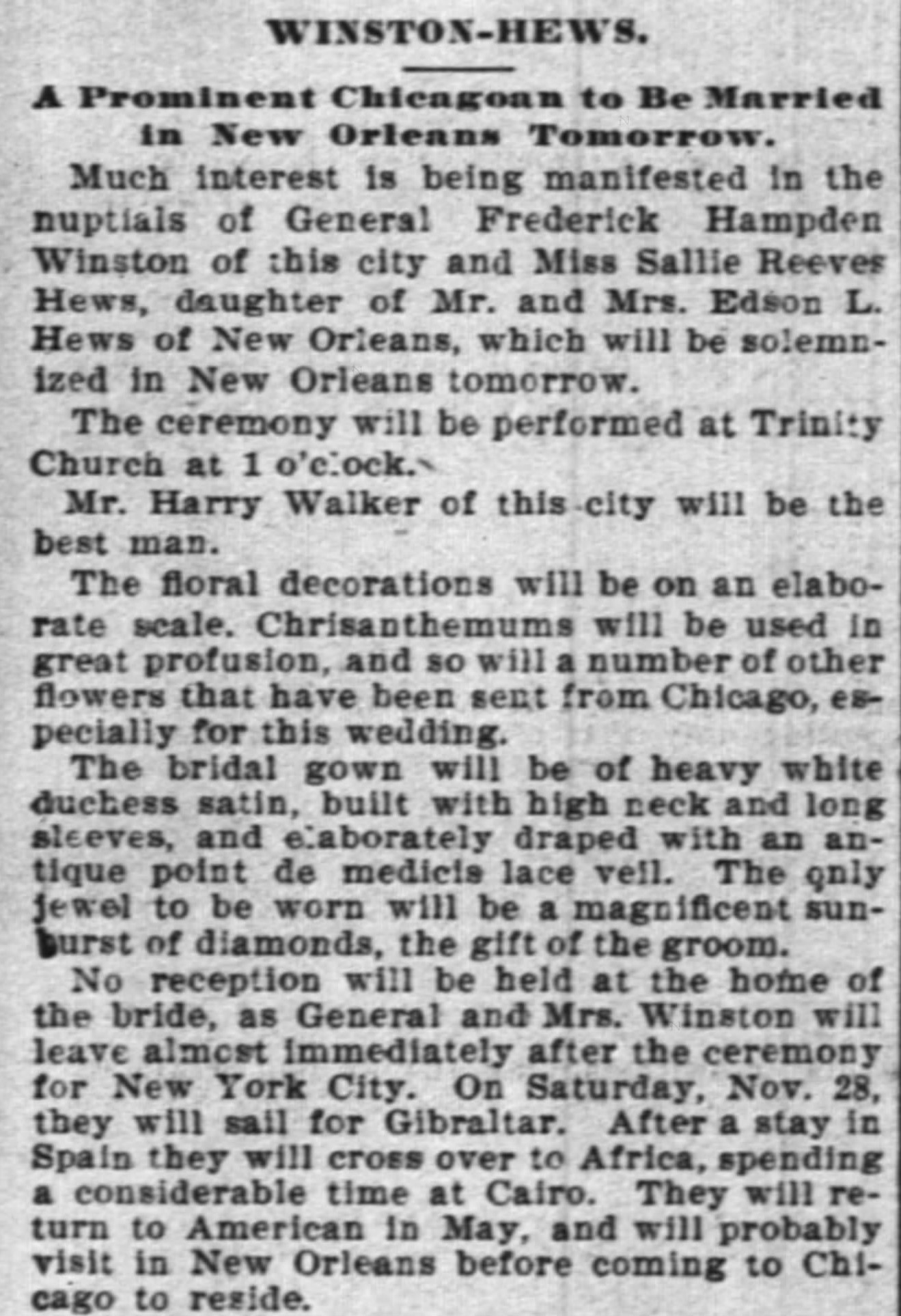
In 1895, he held a “trolley party” that was covered in the newspaper (attached). It did not mention a certain young woman from New Orleans who might have been in attendance. There was speculation that General Winston, as he was now known, and Sallie Reeves Hews might marry. They did marry in 1896, per the attached newspaper articles. Winston was 65 and Hews was 24.
Tragedy again struck in 1898 when his son Dudley Winston died at the age of 32.
In 1900, Winston was still living on Superior Street with his wife Sallie, his youngest son Ralph (age 22), and four servants. He listed
his occupation on the 1900 U.S. Census as “capitalist.”
In declining health, Winston traveled to Florida with his wife and one of his daughters to escape the Chicago winter. He died there in February 1904, at the age of 73. His remains were brought home to Chicago for burial in Graceland Cemetery with his first wife and deceased children.
Winston never lived on the Ridge, but he recognized the value of the land. By the time the charter of the Blue Island Land and Building Co. (BILBCo) expired in 1889, his name was no longer listed as one of the shareholders of the company, but he had been a major player in starting the effort.
Winston was a prime example of the connection between the railroads and real estate. The development of Morgan Park became possible because of the Rock Island Railroad. Winston was the corporate lawyer for the railroad as well as a major investor in the land of the Ridge.
This connection between the railroads and real estate will be further explored by looking at other investors in the BILBCo in coming posts.