
The Ridge Historical Society
The History of the Graver-Driscoll House – Part 10: The Cummings Family
By Carol Flynn
Every house has a history.
To celebrate the 100th anniversary of the Graver – Driscoll House, owned by the Ridge Historical Society (RHS) at 10621 S. Seeley Avenue, we’ve been running an intermittent series on its various owners. The house, designed by architect John Todd Hetherington, was built in 1922-23 for Herbert and Anna Graver. Graver was an executive with his family’s business, the Graver Tank Works.
The next two owners are timely subjects for summer. Grant and Grace Harrison Fenn owned the house from 1940 to 1946. Fenn was a mechanical engineer active in the new air conditioning industry. Their story was covered in past posts.
Ownership then passed to the Nicholas Cummings family. Their story revolves around ice cream.
Nicholas Cummings was born Nicholas Athaniscos Kumungis on September 10, 1891, in Sparta, Greece, according to immigration records. He arrived in the U.S. on March 14, 1912. He became a naturalized U.S. citizen on January 2, 1920.
On his 1917 World War I draft registrations card, he listed his employment as bookkeeper with Rusetos and Co. On the 1920 U.S. Census, he was living with his married sister Libby Rusetos’s family on the north side. His brother-in-law, Peter Rusetos, owned an ice cream manufacturing company.
Nicholas married Matina Papadakos, also from Greece. They had one son, Thomas. In 1930, Nicholas was listed as a wholesaler in ice cream. In 1940, the Cummings family was living at 10501 S. Bell Ave., and his occupation was an ice cream manufacturing business.
On his World War II draft registration card, completed in 1942, he listed his employment as Rusetos and Co. at 4801 S. Western Avenue. It appears he went into business with his brother-in-law and later either took that business over, or that business dissolved, and Cummings formed a new one at the same address.
In April 1946, Nicholas and Matina Cummings bought the Graver House, still using the 10616 Longwood Drive address, although the owners before them had purchased land to also establish the entrance used today at 10621 S. Seeley Avenue.
Around 1950, Nicholas and his son Thomas started their own company, Central Ice Cream Company, with father as president and son as vice-president, at the 4801 S. Western Avenue address.
They got involved in some interesting projects. The U.S. Army started a training program, the Army Medical Service Meat and Poultry Hygiene School, to train officers and enlisted men as inspectors for the meat and dairy products procured for the Army. In 1951, Central Ice Cream was one of the field sites for practical application of classroom studies, along with other companies like Campbell Soup and Kraft Foods.
In 1955, Central Ice Cream bid for and won the contract to supply ice cream for the Chicago Public Schools lunch program. They replaced Golden Rod Ice Cream Co., which retaliated by trying to take over other clients served by Central. Central sued Golden Rod for damages but the court dismissed the case.
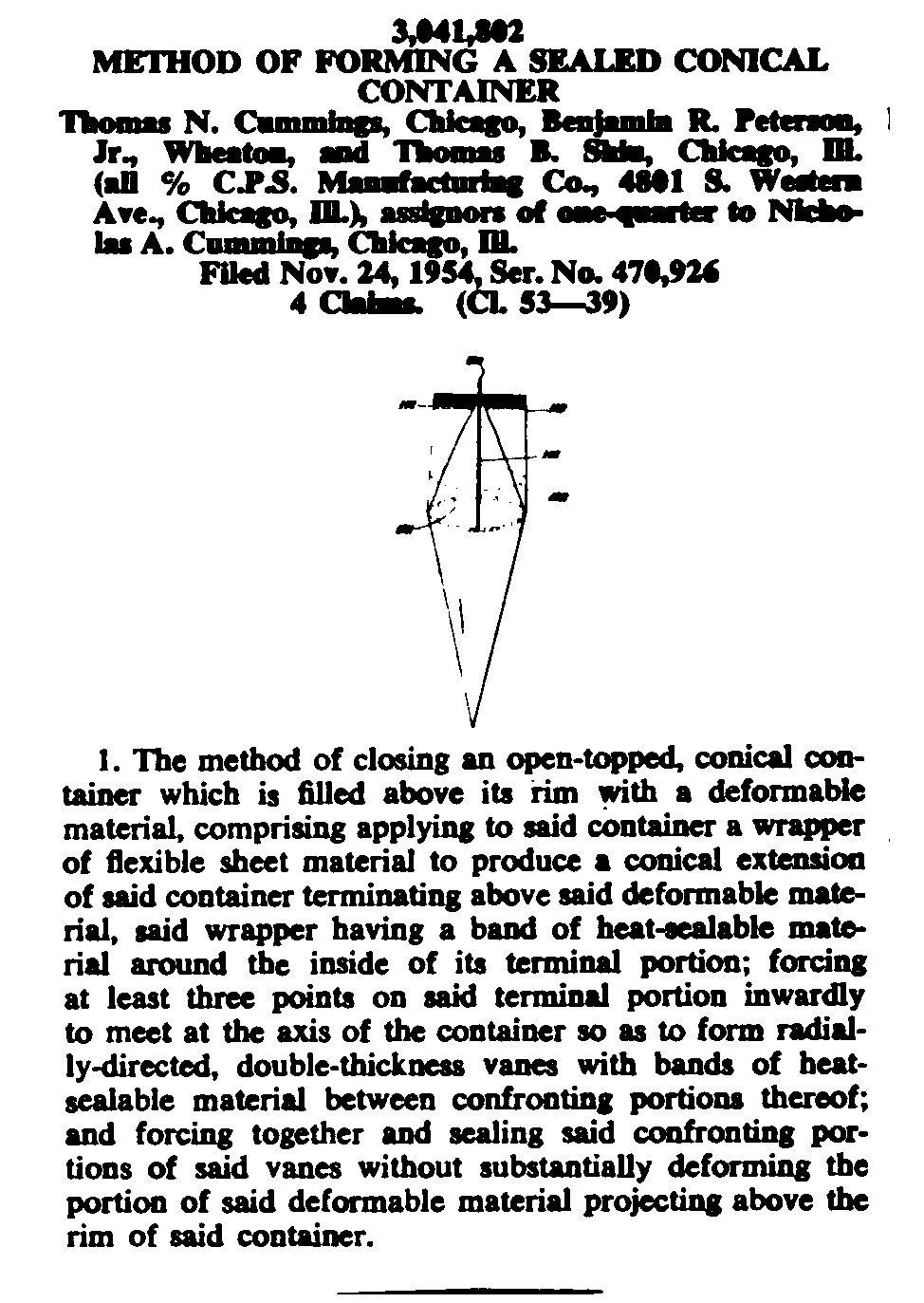
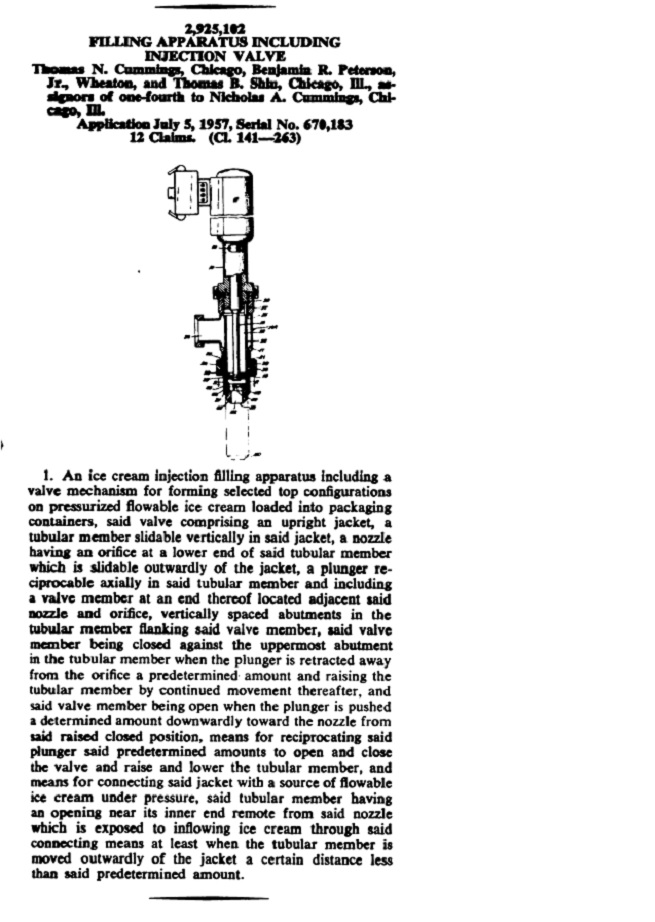
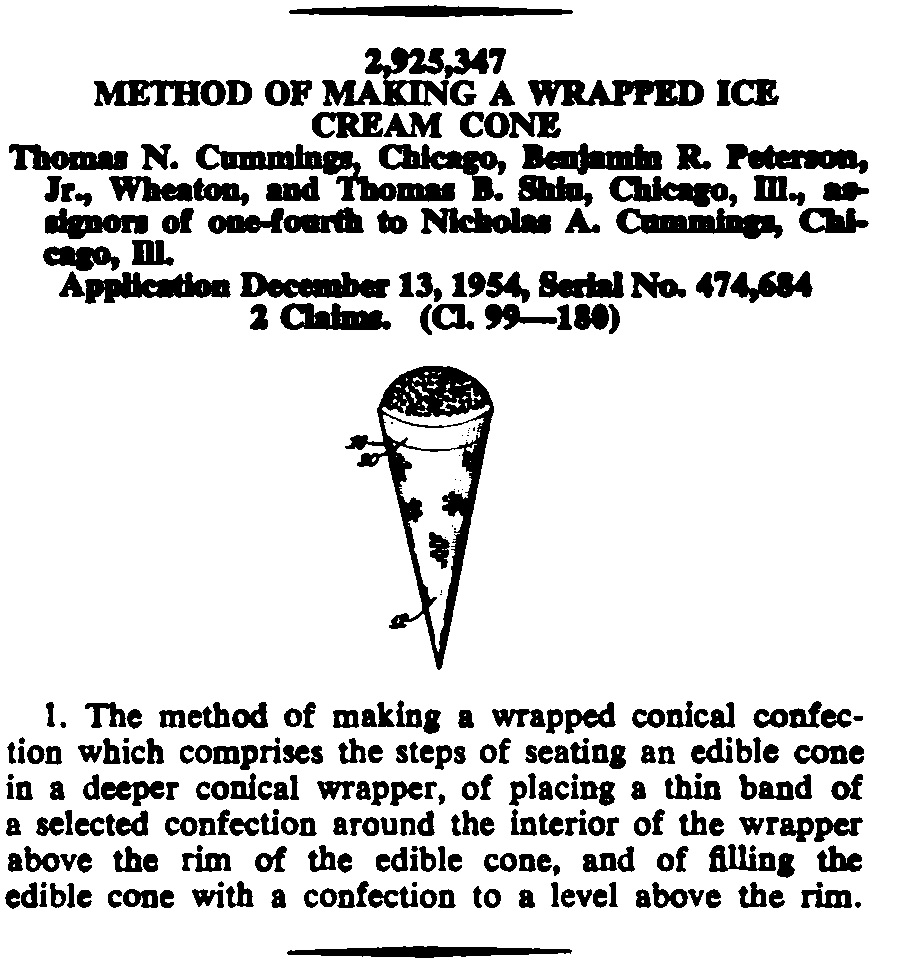
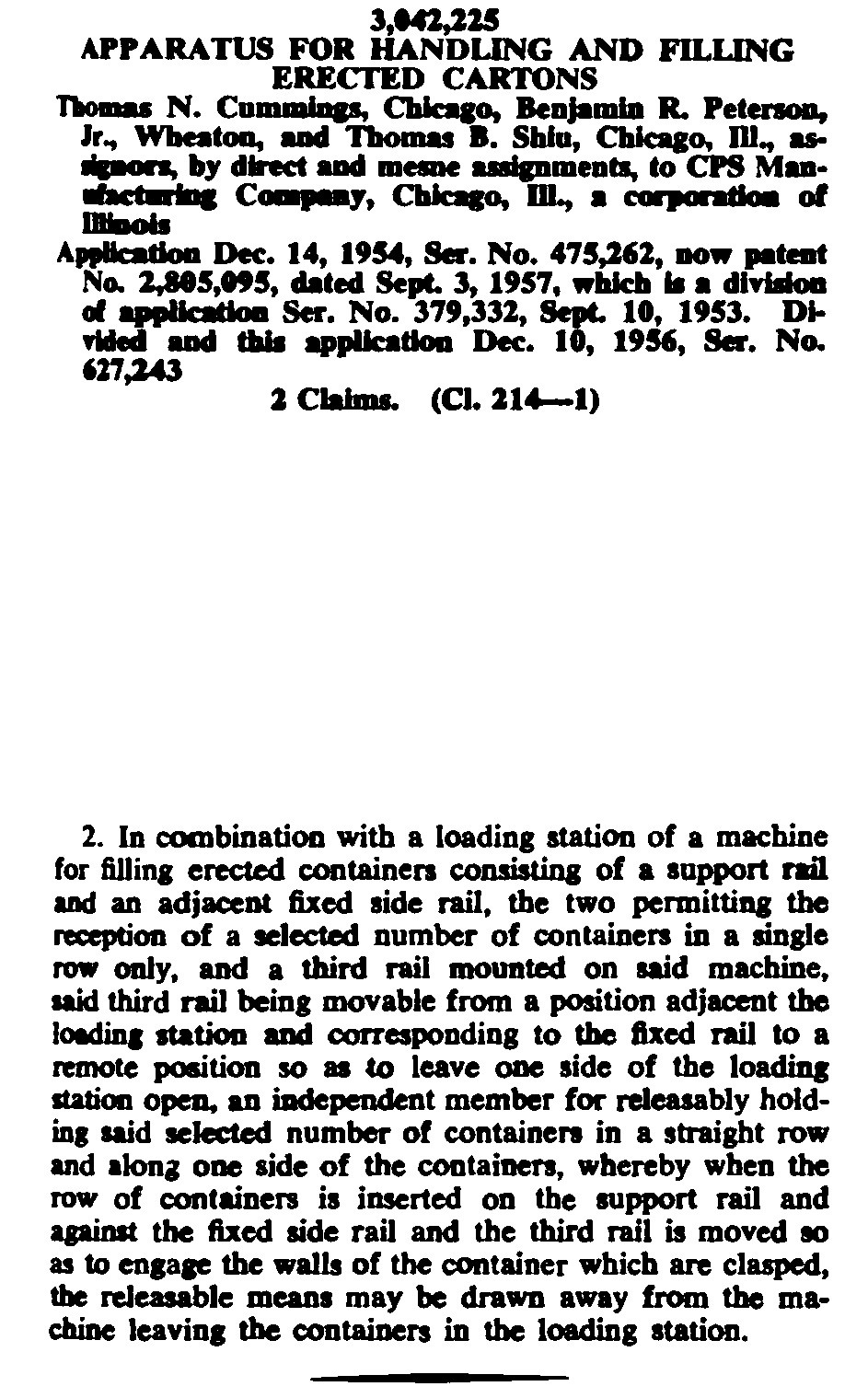
In the late 1950s-early 1960s, Thomas Cummings, working with two other men, was granted at least four patents for innovations in the ice cream industry, and the patents were shared with Nicholas.
The patents were for a filling apparatus including injection valve, a method of making a wrapped ice cream cone, a method for forming a sealed conical container, and an apparatus for handling and filling erected cartons. Those patents are attachments to this post.
The Cummings family listed the Graver House for sale in the summer of 1961.
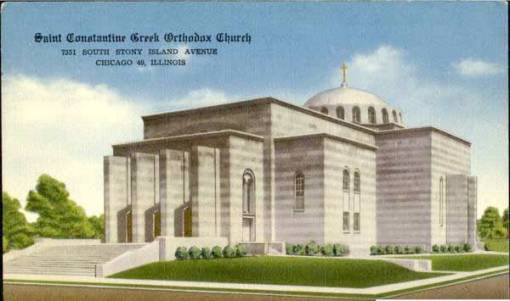
Nicholas Cummings died in November of 1961. His services were held at St. Constantine Church at 74th and Stony Island, once the largest Greek Orthodox church in North America. (The building in now the headquarters of the Nation of Islam.) He was buried in Evergreen Cemetery.
The Graver House remained on the market in 1962. Around Christmastime of that year, the Christmas tree caught on fire. The family escaped without harm, but the living room and foyer were destroyed. The family sold the house in February of 1963.
The next owners, William and Myrtle Heim, repaired the house but didn’t stay there for long. They will be covered in the next post in this series.
For many years, RHS did not know the original appearance of the living room and foyer. Then a few years ago, the Fenn family who sold the house to the Cummings family shared numerous photos that showed details of the house up to the early 1960s.
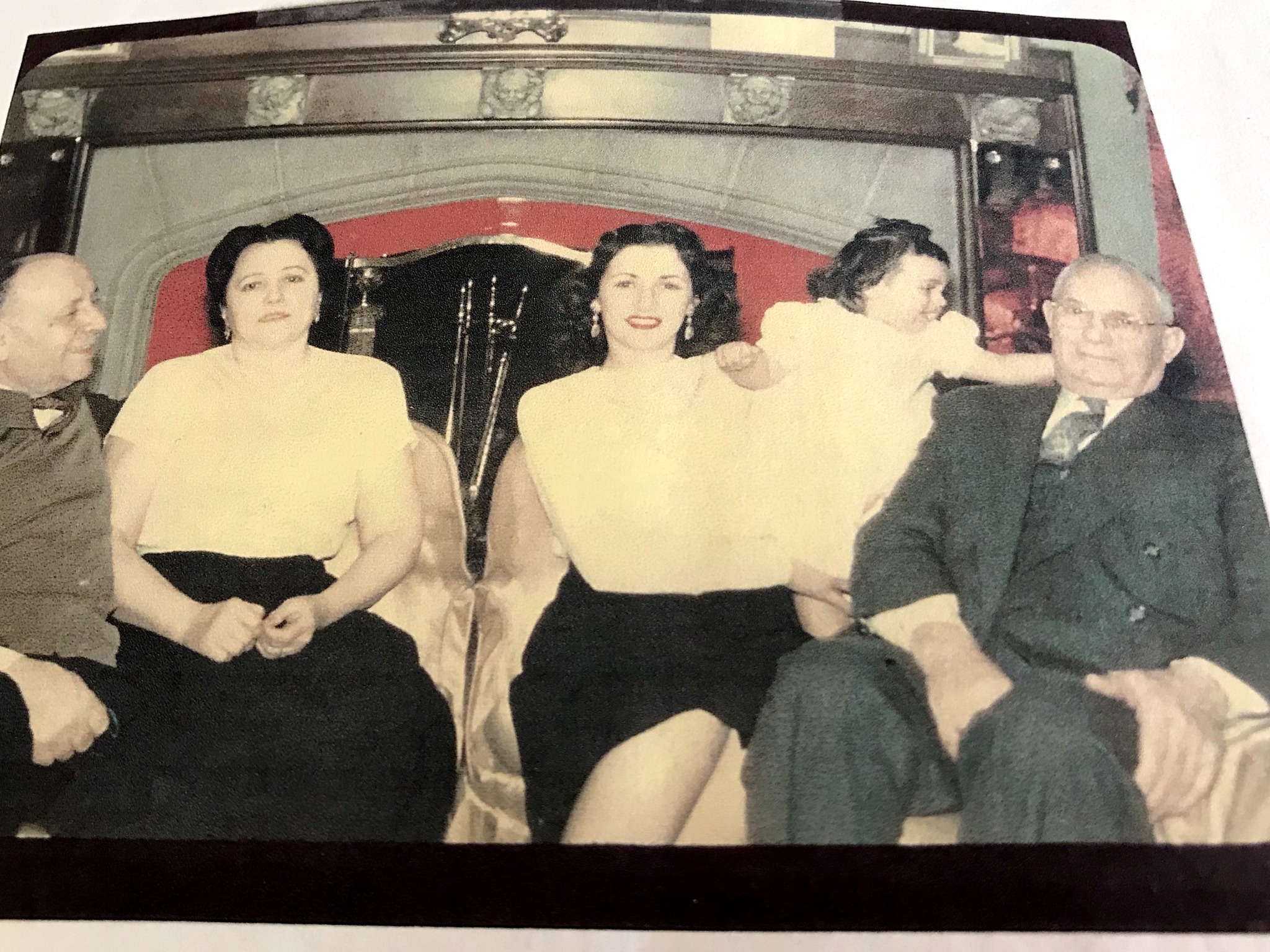
There also is one picture from the Cummings family that shows them in front of the fireplace that was destroyed in the fire, attached to this post.