
The Ridge Historical Society
The Month of March – Part 3, The House the Egans Built
By Carol Flynn
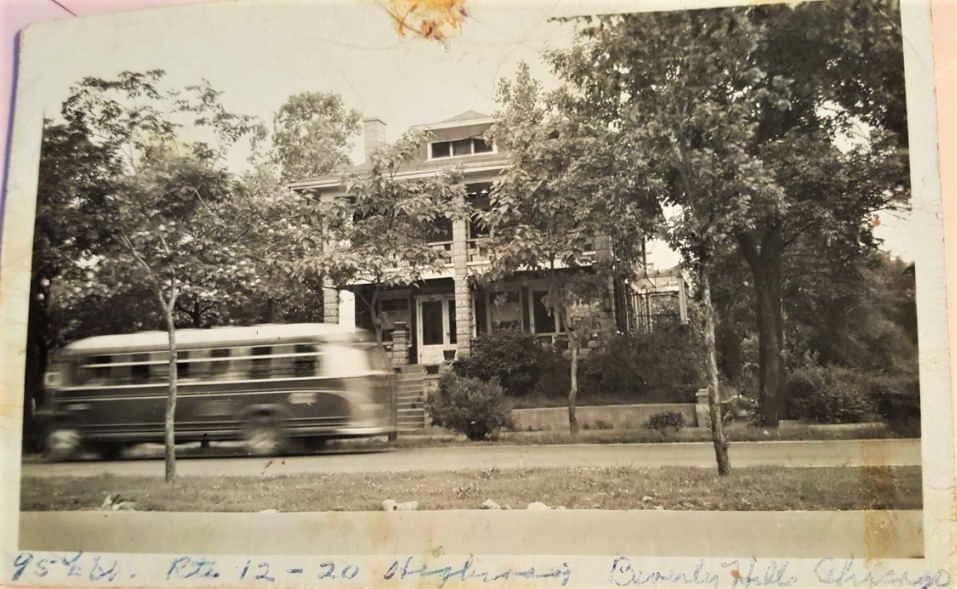
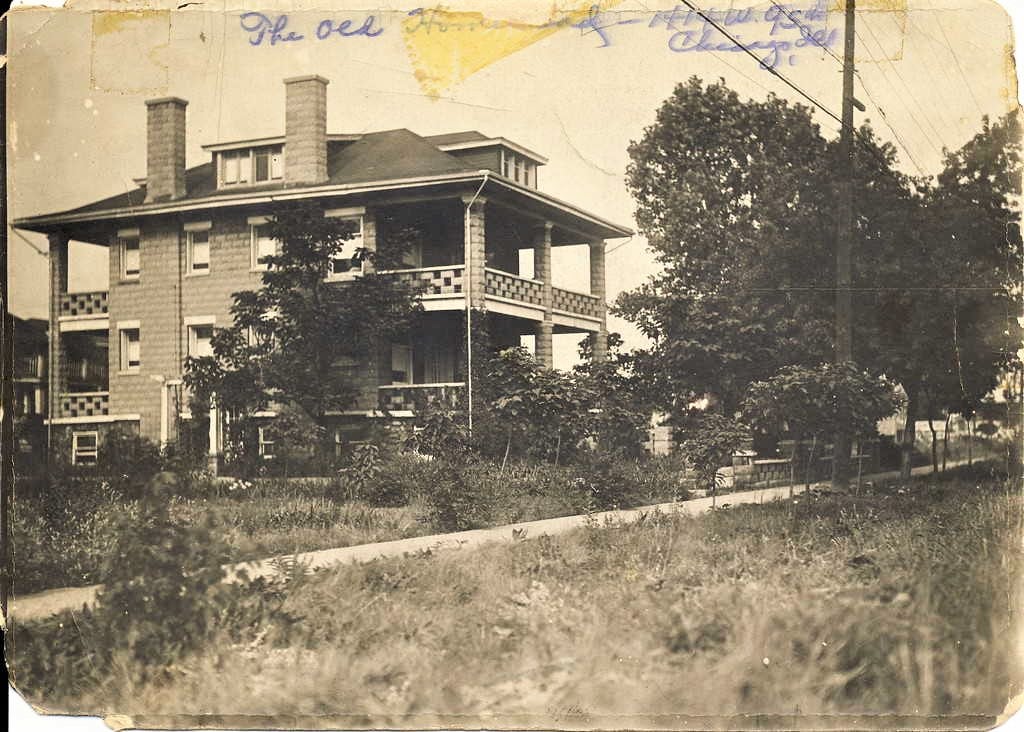
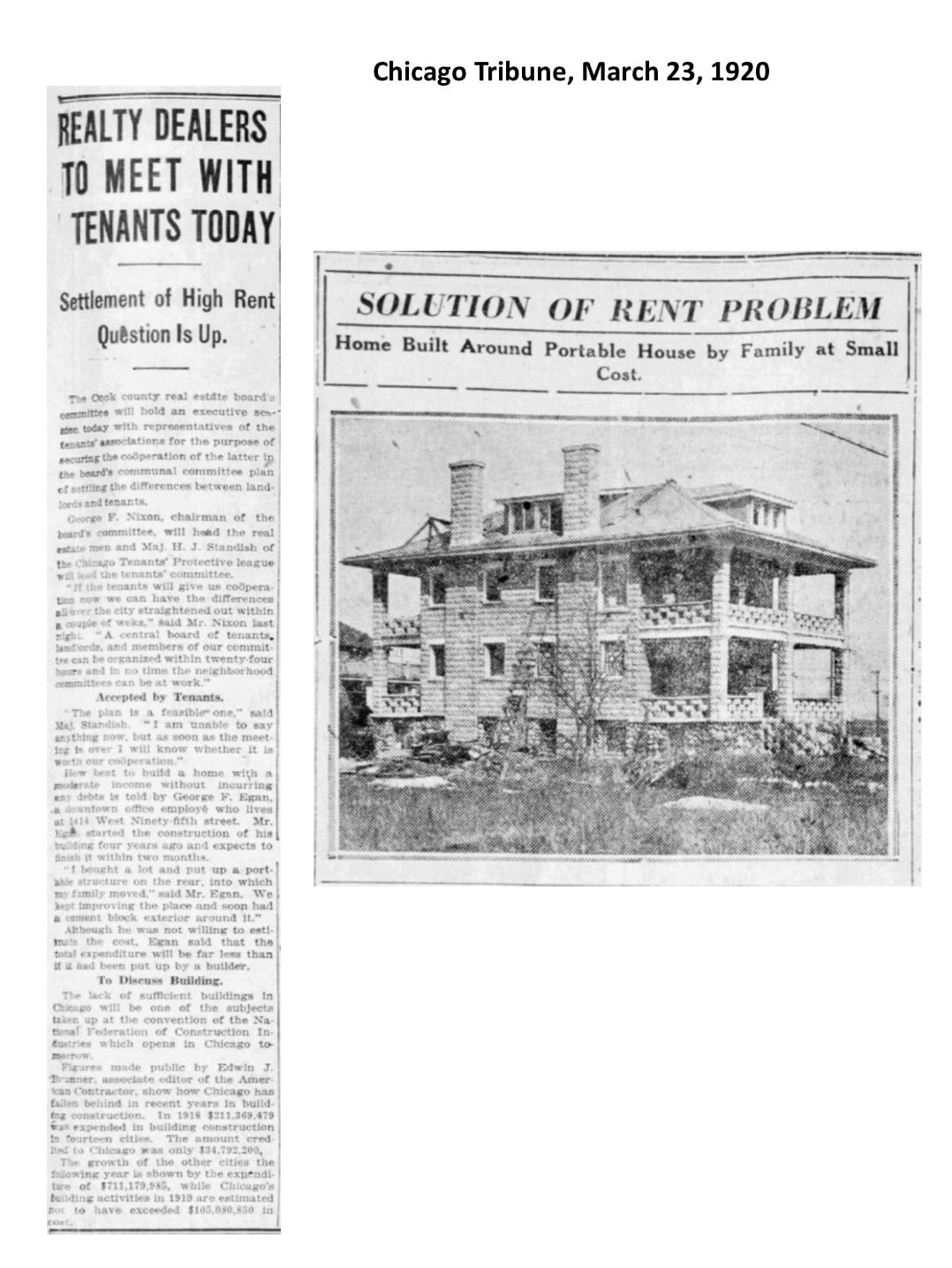
In the last few posts, we’ve been profiling the Frank and Kate Egan family, a typical Irish American family that lived on the Ridge one hundred years ago. They became media celebrities due to the house they built at 1414 West 95th Street.
As March is National Irish American Heritage Month, National Women’s History Month, and National Craft Month, the story of their house ties all three themes together.
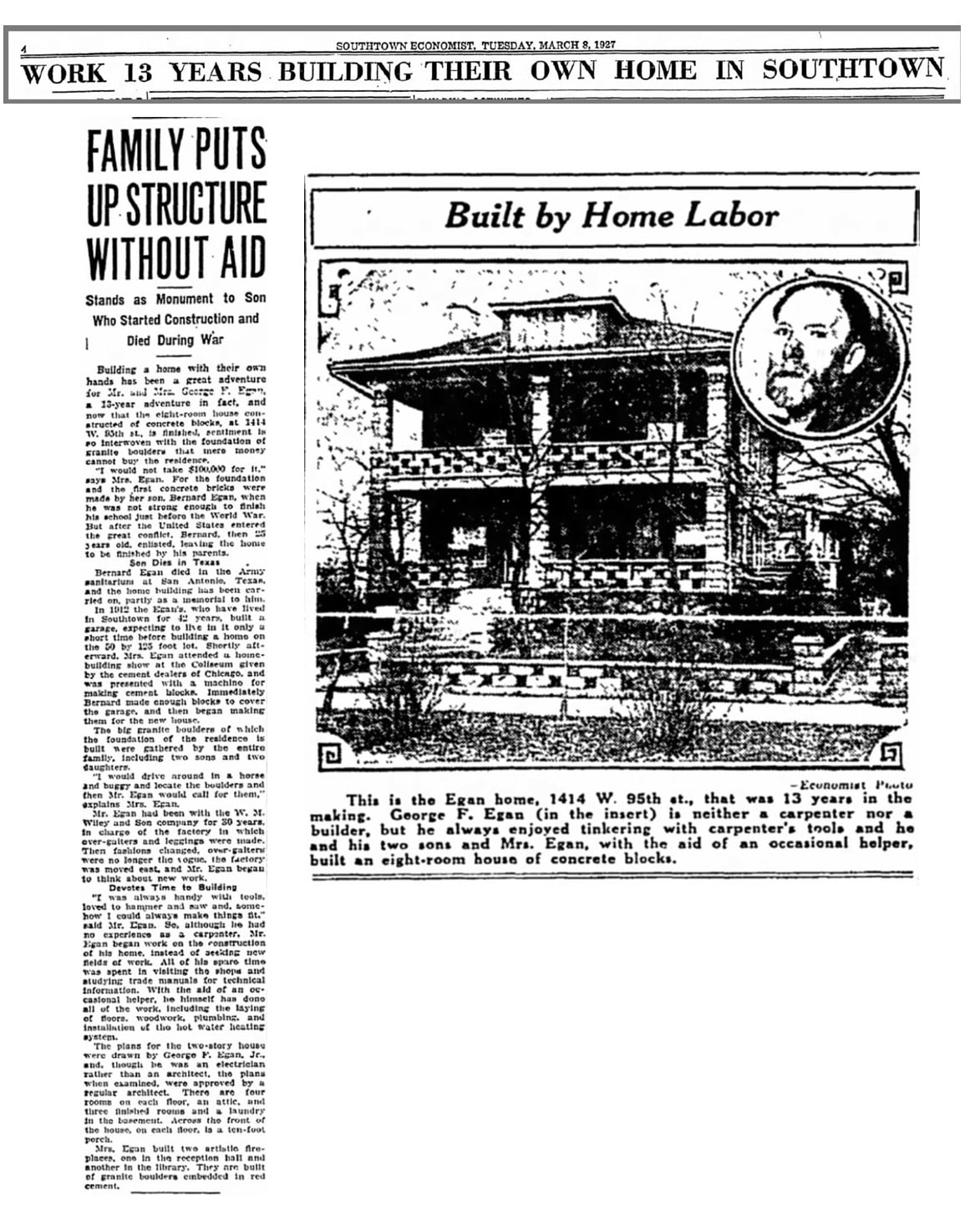
The Egans lived at 9440 S. Loomis Street for a number of years. In 1912, they acquired the property at 1414 West 95th Street, a 50-foot by 125-foot lot, with the intention of building a house. They set up a temporary portable structure like a garage that they intended to live in for a short time while the house was built.
At the time, a new building material, and the technology for making and using it, that was generating incredible public interest was cement.
Cement is a binding material that can be made from a variety of chemical substances (limestone, etc.) that when mixed with sand, gravel, and water, dries into a hard substance called concrete. Wet concrete can be poured into molds to dry to look like anything, from bricks to furniture.
The term “new” is relative here because deposits of cement formed by natural means have been found that are estimated to be twelve million years old. A form of cement was used in the Bronze Age, and it was continually refined up to modern times. Advances in the 1800s led to a product that had a reasonable drying time and developed strength quickly, important characteristics. Machinery for making cement and concrete also advanced during this time period.
The use of concrete in construction grew rapidly from 1850 on. It was used for the foundation of buildings. Then in 1908, Thomas Edison experimented with using pre-cast concrete to build houses.
Cement manufacturers and dealers began holding an annual industry exhibition at the Chicago Coliseum in 1908. By 1912, the show had 300 exhibits and 10,000 attendees. On display was everything from concrete burial cases to concrete pianos – and concrete houses.
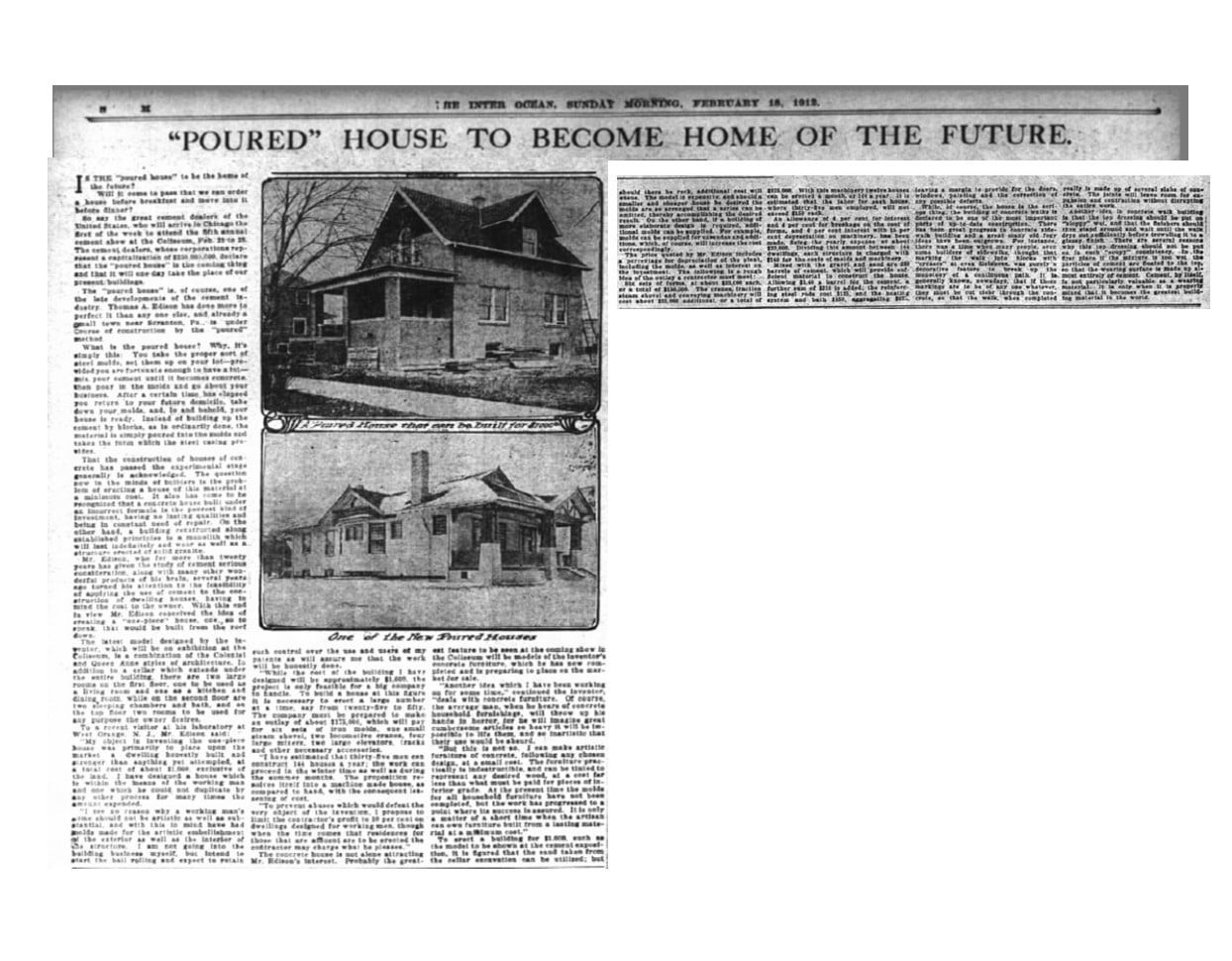
“’Poured’ house to become home of the future” declared the Inter Ocean newspaper. A “poured house” was created by mixing cement with the materials to make concrete, pouring it into molds, letting it dry and harden, and removing the molds to use the finished structural pieces. They could be any size blocks or an entire side of a house.
Many of the exhibitors held contests and games at their booths with prizes awarded to members of the public. A newspaper article reported that Kate Egan attended the cement show at the Coliseum and was presented with a machine for making concrete blocks.
Egan family descendants reported that at a church fair, husband Frank won a set of cement brick molds.
Son Bernard began to build cement blocks, and produced enough to cover the entire garage. The family then designed and began to build an entire house from cement blocks they made themselves.
They started by gathering large granite boulders to use for the foundation. All of the family members kept their eyes open for boulders. Kate drove around in a horse and buggy looking for boulders, which Frank would then call for. Note, there were a lot of boulders left by glacial activity thousands of years ago that could be found, although it took some time to round them all up.
The plans for the house were drawn up by George, Jr., who was an electrician, and they were approved by an architect. There were four large rooms on each floor, an attic, three finished rooms in the basement plus a laundry. Porches were planned for the fronts and backs of both floors.
Frank was always handy with tools, so although he had no experience as a carpenter, he began constructing the interior of the home. He visited shops and studied trade manuals for technical information. With just some occasional professional help, he installed the plumbing and a hot water heating system, and laid the floors and woodwork. Presumably, son George took care of the electricity.
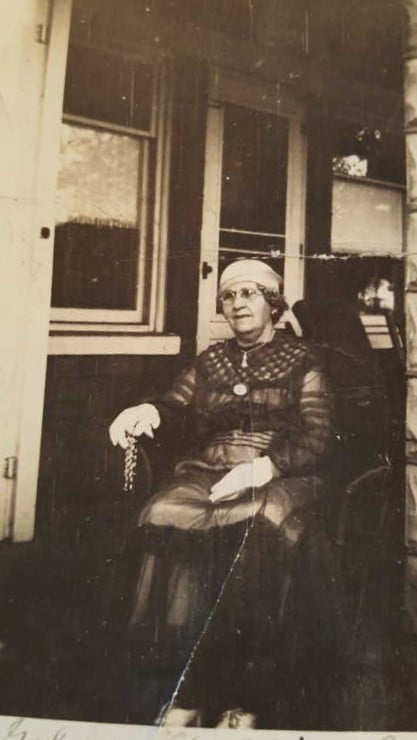
In October of 1918, it was reported that Kate, with the help of a mason, laid the final cornerstone of the house herself. She said many times afterward that she was proud she accomplished that.
Unfortunately, tragedy struck the family the next month. Although he had health problems, Bernard had enlisted at the start of World War I. In November of 1918, he died of pneumonia as a complication of influenza in a military hospital in San Antonio, Texas. His mother and sister Florence traveled down there to arrange to have his remains returned home, and he was buried in Mount Olivet Cemetery.
Bernard had built the foundation and first floor of the house. The family’s sentiment was so interwoven with the granite boulders that Kate declared a monetary value could never be placed on the house and she would not take even $100,000 for the home.
Kate was the creative force behind much of the project. She built two artistic fireplaces, one in the reception hall and another in the library. They were built of granite boulders embedded in red cement.
There were 32 windows in the house that were inset with colored stained-glass fleur-de-lis, according to a newspaper article. Kate planned this based on her love of seeing the French flag waving. There are many symbolic meanings of the fleur-de-lis, including honor and faith.
The family lived in the house while they built it. In 1920, the newspaper reported the house was almost finished and their friends would soon join them for a magnificent house-warming. There were still finishing touches to be made and Frank and Kate later estimated it ultimately took 13 years to complete the house.
Affordable housing, whether building, buying, or renting, was then, and always will be, an issue. Frank was part of a program in 1920 to advise people on how to build a home on a moderate income without incurring debt. He would not estimate the cost of the house but said that the total expenditure would be far less than if it had been put up by a builder.
Kate lived in the house until her death in 1947; Frank had died in 1939. Daughter Florence and her son lived with Kate. According to family stories posted on Ancestry, the family ran the house as a “tourist home,” what we would call a bed-and-breakfast today. It was a huge 10 room house, and at one point they were approached to sell it to a mortuary firm but turned the offer down.
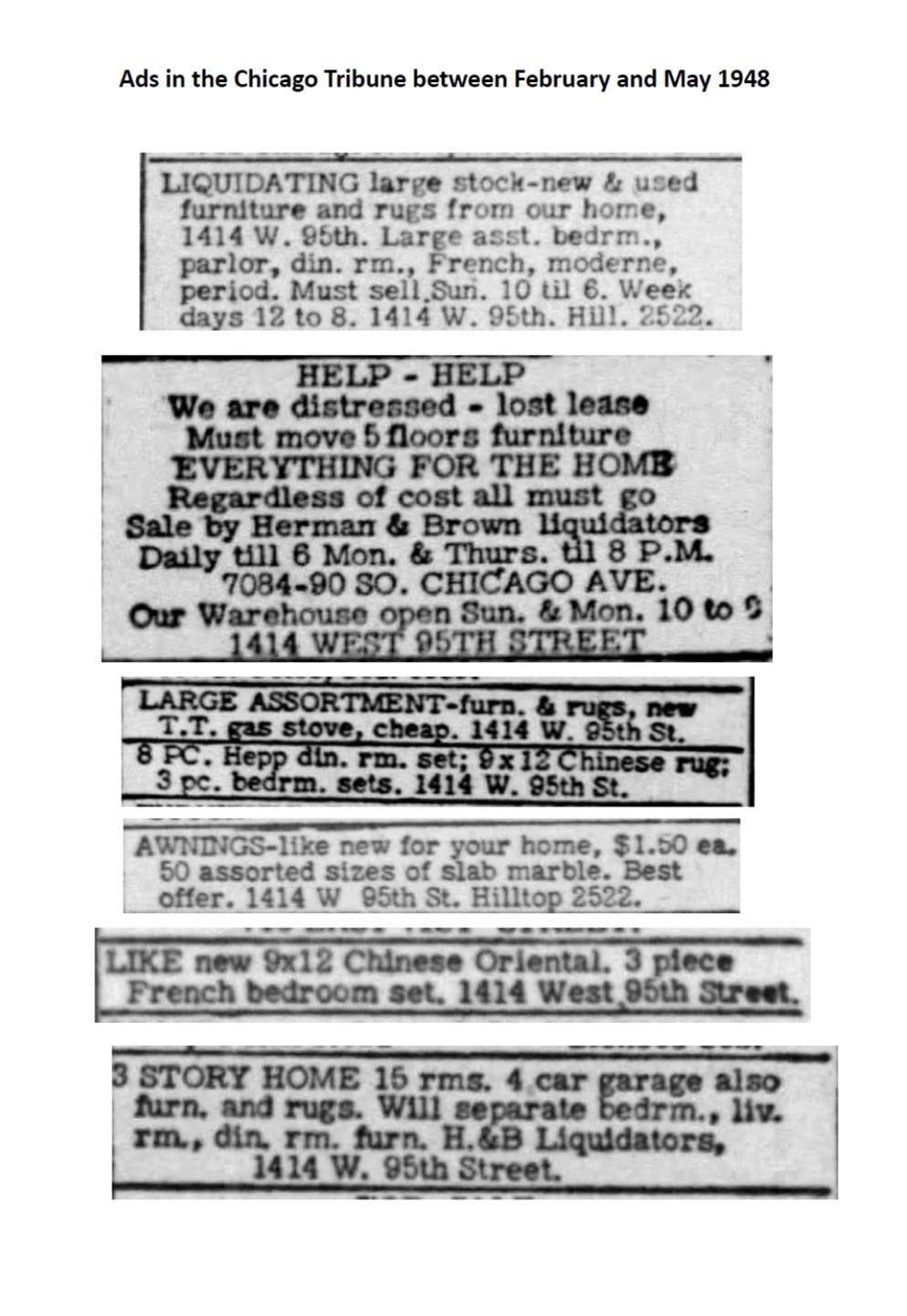
In the spring of 1948, there were a series of ads about items for sale from the house.
RHS has tracked down, so far, that the house was still occupied in the late 1950s. We’re trying to discover when it was torn down. Today the address is a vacant lot.
This gives new meaning to a “craft project” for National Craft Month.
Next post: Some final information on the Egans.
Note that other people had concrete houses built on the Ridge and there are some outstanding examples in the Beverly/Morgan Park area today.