
The Paranormal Ridge: Part 5 – Introduction to the Givins Beverly Castle
By Carol Flynn
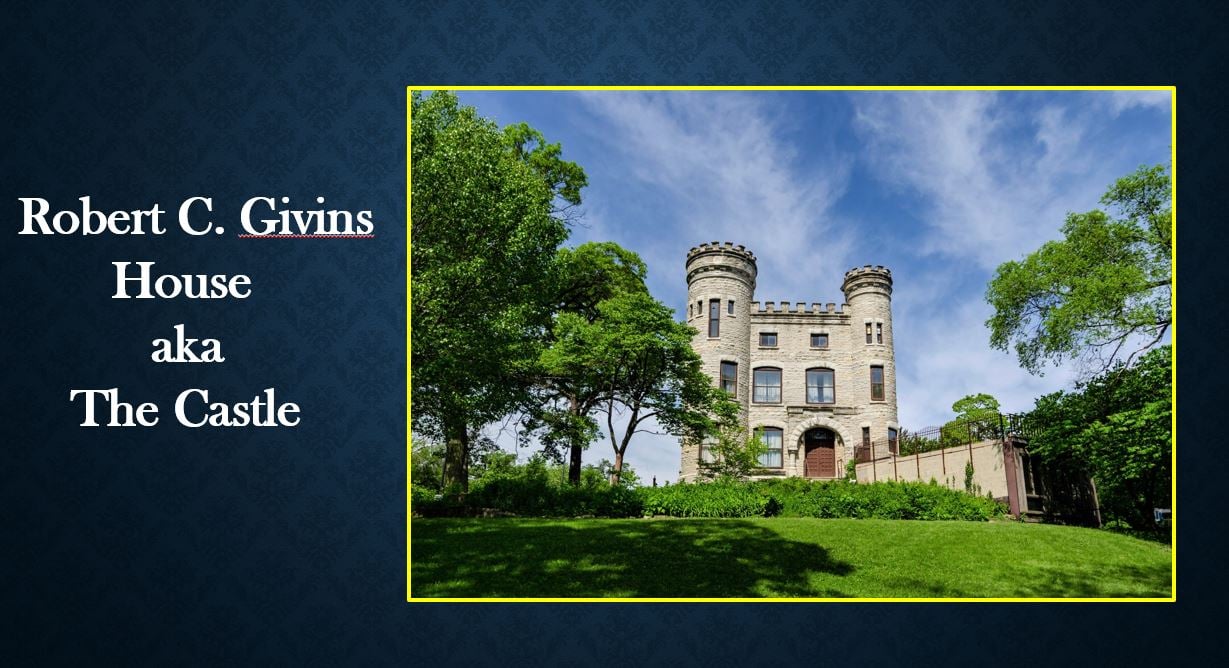
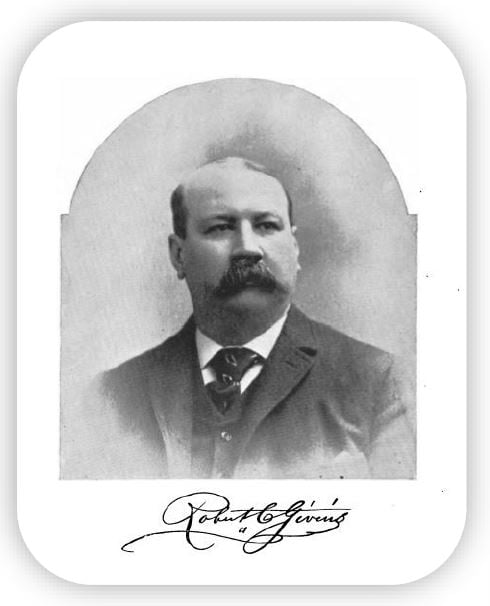
The Givins Beverly Castle, at the northwest corner of 103rd Street and Longwood Drive, is Beverly’s best-known landmark. It was built in 1886-87 by Robert C. Givins, a real estate developer who was also a lawyer, novelist, auctioneer and world traveler. Givins was a very likeable and popular man, a Chicago personality. The newspapers loved him and referred to him by the nickname “Bob,” something unheard of back in those more formal days in the press. It was even proposed that Bob Givins run for mayor of Chicago. Givins was a tireless booster of the city.
Givins’ ancestors came from Northern Ireland to Canada, and Bob Givins moved to Chicago in 1863 at the age of 17. His first wife Sophia and three of his four children unfortunately died very young, and only one son survived to adulthood.
Givins married a second time in 1884 to Emma Steen, a Chicago public school teacher. Emma was his wife when they built the Castle.
Local folklore about the Castle includes a lot of misinformation. For example, it is said that Givins and his wife never lived in the Castle. They most certainly did live there, and entertain there, and participate in local events. There were many newspaper articles to attest to this.
Givins could often be seen coming “on the double-quick down from his hill-top chateau” to catch the Rock Island train to his downtown office. They kept a cow, horse and chickens at the Castle. Bob played the banjo and Emma sang at musicals they held at the house.
They attended a town fair put on by the Washington Heights Improvement Society, where Bob Givins was observed “eating all the ice cream he could take care of,” and Emma “bought all the peaches that were left over to make peach preserves out of them for the folks on the hill.”
Bob was a member of the Prospect Club and helped plan and run leading social events in the community. He served on the finance committee to build the Church of the Mediator at 110th Street and Hoyne Avenue.
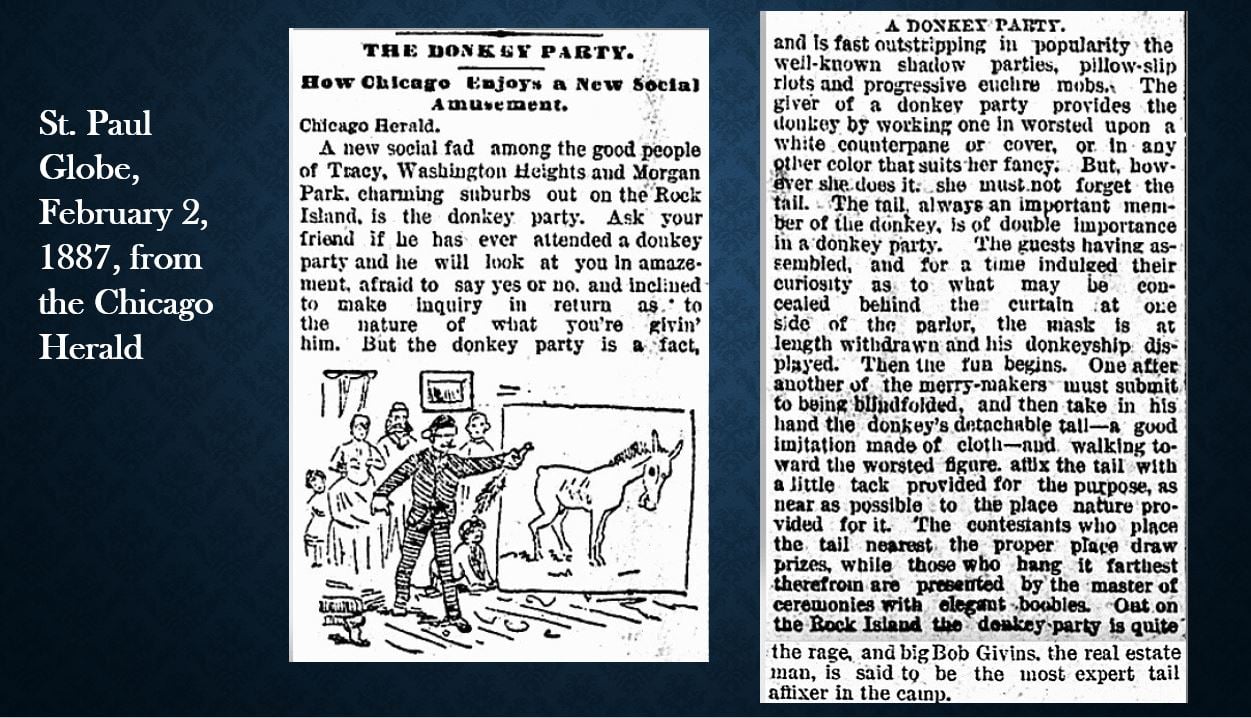
One fun example of Bob and Emma Givins’ life here was that they introduced Pin the Tail on the Donkey to the Ridge. There was an article in 1887 about this new social fad, a “donkey party,” in Tracy. Tracy was the name for the area when Givins built the Castle, and 103rd Street was known as Tracy Avenue. The area was part of Washington Heights, and annexed to Chicago in 1890, something Givins was behind all the way. The article explained how the game was played, and reported that big Bob Givins was the best donkey tail affixer out on the Rock Island line.
But the allure of living in a castle did wear off eventually. From Fall 1895 to Spring 1897, Givins rented the Castle to a private academy for young women called the Chicago Female College, and Emma and he lived in a hotel downtown. Givins finally sold the house in 1909, and they moved to the north suburbs and eventually spent most of their time in Sarasota, Florida.
The Castle was owned successively by two more private families. First came the John Burdett family, and then Dr. Miroslaw Siemens and his family. The Beverly Unitarian Church (BUC) bought the building in 1942 and has owned and operated it since that time.
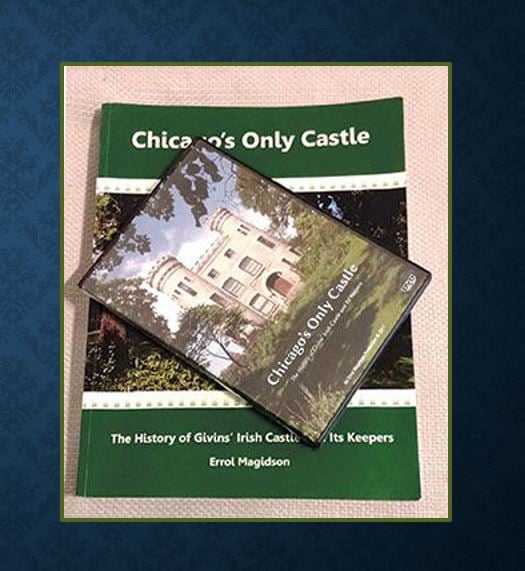
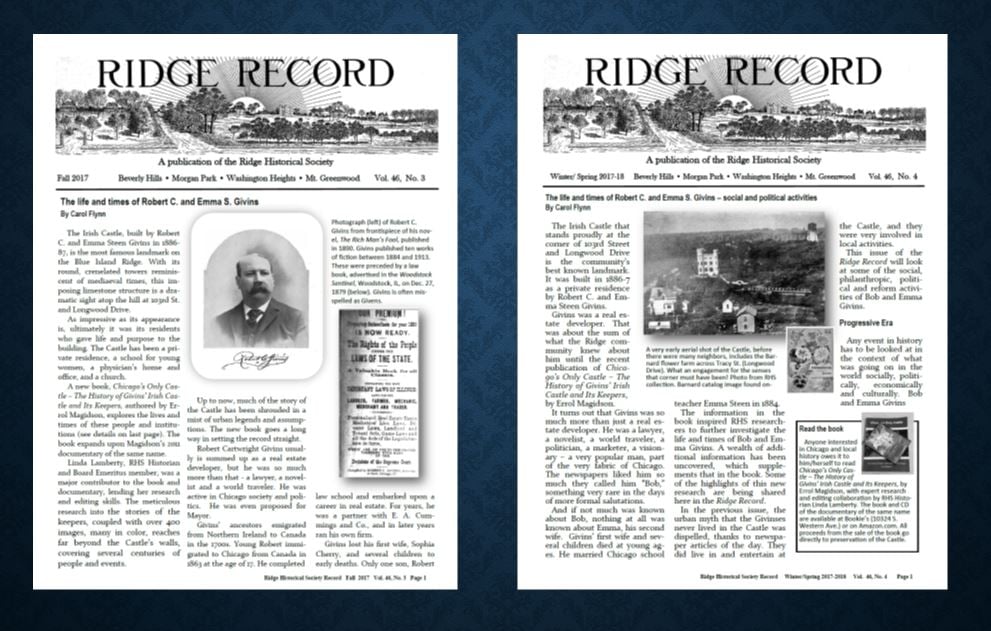
The history of the Castle is covered in the book “Chicago’s Only Castle – The History of Givins’ Irish Castle and Its Keepers,” by Errol Magidson with research assistance from Linda Lamberty, Ridge Historical Society (RHS) Historian. The book does not include much detail on Givins’ life in the Castle nor on Emma Steen Givins, so these topics were researched further leading to several RHS newsletters that are available through RHS.
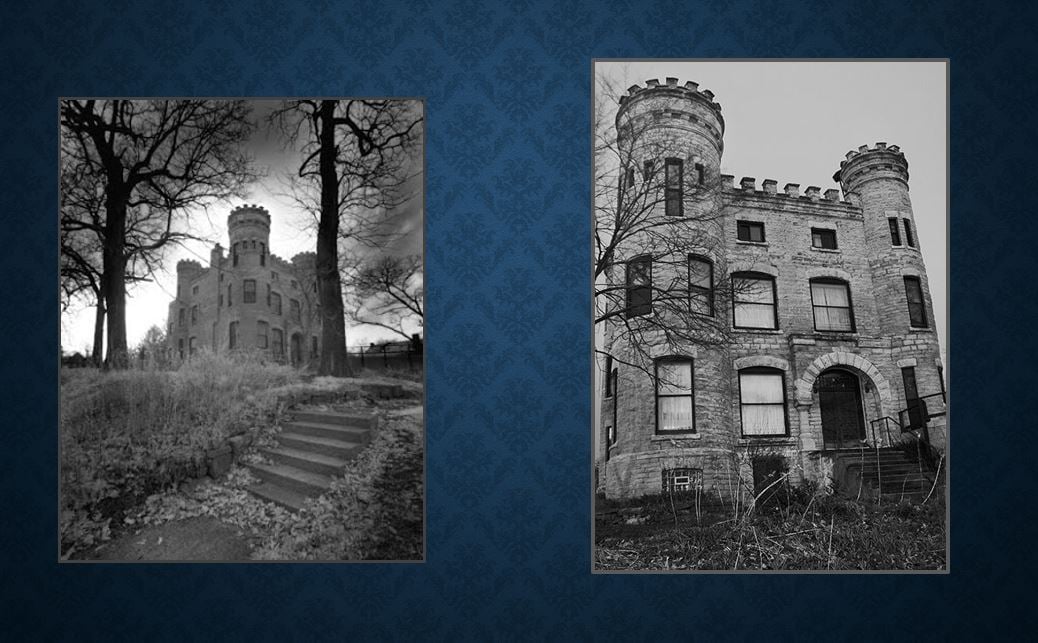
Although the Castle is a bright, proud historic landmark perched on the Ridge, it is often presented by “ghost experts” as a dark and forbidding place. Any image can be turned sinister if it is taken at a gloomy and barren time of year, emphasizing the negative, and presented in black and white using special effects. Just last year on a so-called “legitimate” Facebook Chicago history page, the Castle was reported as abandoned, derelict, and definitely haunted. A number of people, including an RHS representative, posted to correct the misinformation.
Most of the ghost stories about the Castle that are in print in books are erroneous from a historical perspective. Once a myth gets started, it just keeps being repeated. However, people have had experiences there that they have been willing to share and these stories will be presented here.
There are four categories of Castle ghost stories that will be explored in the next few posts: stories based on folklore that cannot be backed up by historical facts; significant experiences that individual people have had at the Castle that they have shared publicly; common experiences that multiple people have reported; and stories people have claimed that are extremely unlikely.