The Ridge Historical Society
True Grit and Cowboys on the Ridge – Part 1
By Carol Flynn
Tales of the Wild West, folklore truly unique to America, have captivated the world’s imagination for over 150 years.
“The Western” has become its own genre in literature and in film. The stories are usually morality parables – there is a good guy and a bad guy, clearly distinguished, and the good guy wins. If he dies in the process, he’s an even bigger hero.
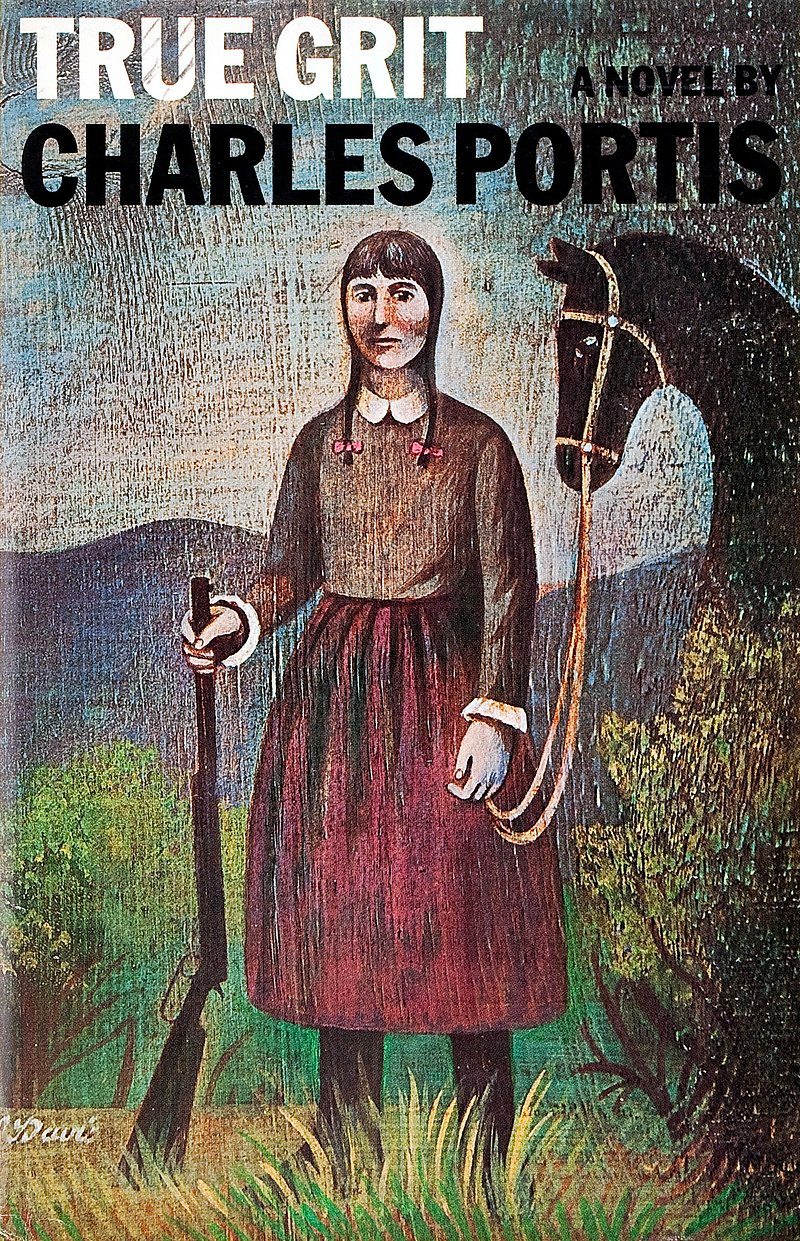
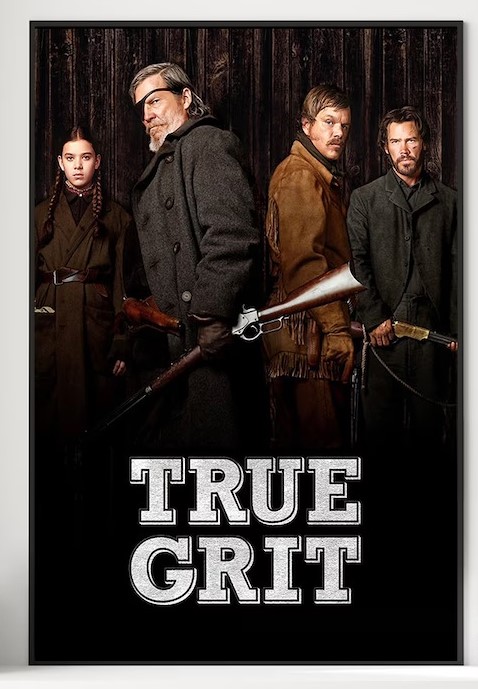
On Wednesday, August 7th, the Blue Island Ridge’s only bookstore, Bookie's Chicago, and only movie theater, the historic Lyric Theater in Blue Island, are partnering for a special showing of the 2010 film “True Grit,” an adaptation of the 1968 novel “True Grit” by Charles Portis.
This event is next in the series from Bookie’s Film Adaptation Book Club, which came back from its COVID-enforced hiatus in March with a very successful showing of “The Commitments” based on the novel of the same name by Roddy Doyle.
Critics have named “True Grit” one of the great American novels, and it has been adapted twice into award-winning movies.
The 1969 version starred John Wayne as the man with true grit, Rooster Cogburn.
The 2010 version, which will be shown at the Lyric, comes from the Coen Brothers who have given the public such great contemporary films as “Fargo” and “No Country for Old Men.” The star of the Coen Brothers’ production of “True Grit” is Jeff Bridges, who also starred in the Coen Brothers’ cult classic, “The Big Lebowski.”
RHS is mentioning this event for two reasons. First, it was the administrator of the RHS Facebook page who suggested “True Grit” as a possible novel/movie to Bookie’s owner, Keith Lewis.
The years of expansion into the western and southwestern portions of the United States, the “frontier,” are an incredibly interesting and picturesque period in U.S. history. At one time, Chicago WAS the western frontier.
That brings us to the second reason, local history’s connection to the Wild West.
Of course, Morgan Park was known as “Horse Thief Hollow” in the mid-1800s because of the horse thieves who hid out in the ravines, bringing stolen horses to the stockyards and railroads for sale. That is a big story for a series on Facebook or an in-person presentation one day.
Today let’s start with looking at the “Cowboys on the Ridge,” those true-life Western characters who had a connection to the Ridge.
Remember, we’re talking reality here, and when it comes to the Wild West, reality often was no less colorful and dramatic than the fictional stories.
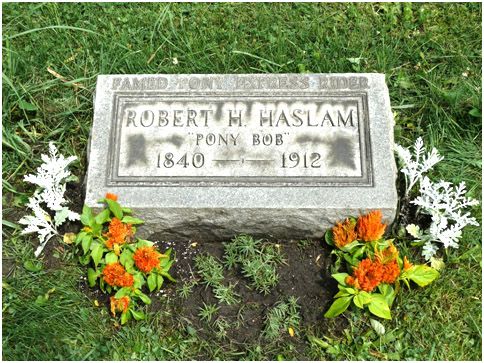
The Ridge’s biggest Western celebrity is Robert “Pony Bob” Haslam, the star of the Pony Express in the 1860s, who is buried in Mount Greenwood Cemetery. His grave is the most sought after to visit in the cemetery.
Pony Bob is considered by many to have been the bravest, most resourceful, and best rider of the Pony Express. He has quite a following among the aficionados of true Western stories, although his name never became quite as famous as some other people of the time, including Pony Bob’s very good friend, Buffalo Bill Cody.
To appreciate Pony Bob’s story, it must be considered in context of the times.
The Pony Express only lasted 18 months, and it is tied closely to Abraham Lincoln’s presidency.
By the 1850s, both U.S. coasts were settled, but the interior, from Chicago to San Francisco, was still “untamed.” A means of fast delivery of mail across the plains was needed. Telegraph lines were not existent yet and the railroads had not yet laid down tracks. Wagons could take weeks or even months to deliver a message.
In 1858, the owners of a freighting business, in an effort to snare a government contract for delivering mail, proposed a fast mail service between St. Joseph, Missouri, and Sacramento, California.
The plan was to have mounted riders travel short routes, with switch-offs at stations along the way. In just two months’ time, a system comprised of 120 riders, 400 horses, 184 stations, and hundreds of additional personnel was put together.
The Pony Express was born.
Riding for the Pony Express was difficult work — riders had to be tough and lightweight.
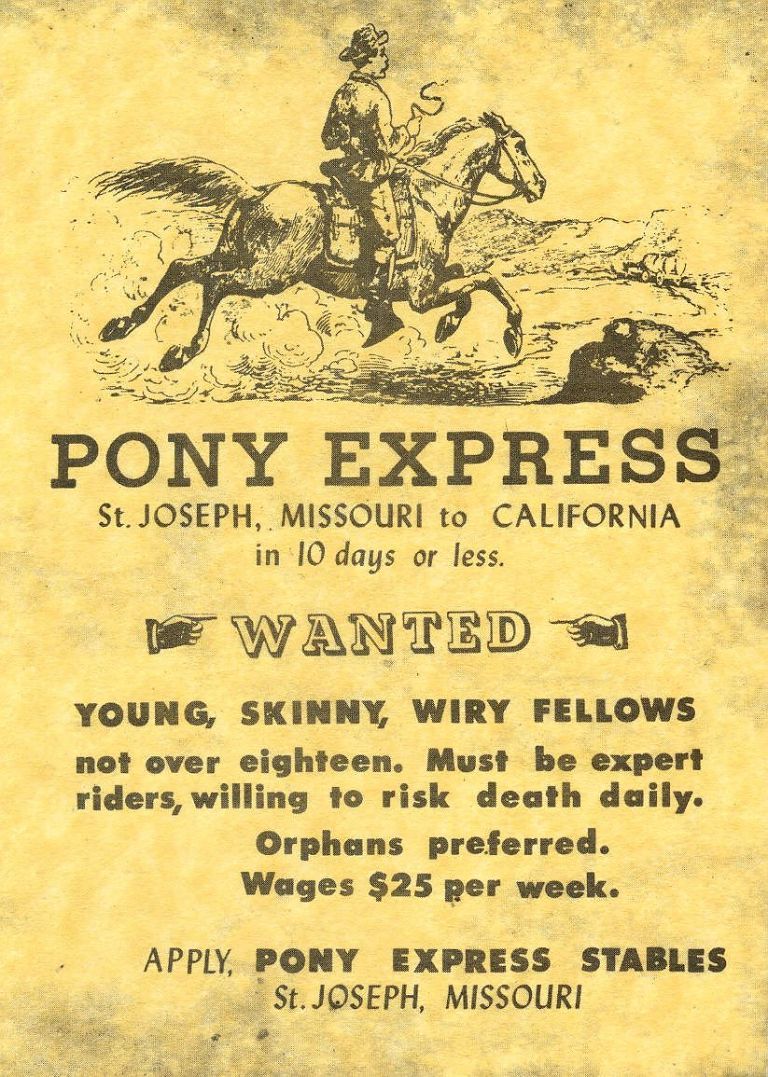
The advertisement for riders read, “Wanted: Young, skinny, wiry fellows not over eighteen. Must be expert riders, willing to risk death daily. Orphans preferred.”
Riders would travel at full gallop, changing horses every ten miles at the next station, traveling day and night for up to 100 miles before being replaced by a new rider.
The first trips east and west, which started on April 3, 1860, were each completed in ten days.
Robert Haslam was born in January, 1840, in London and he came to the US in 1856. He helped build the Pony Express stations, and was given the mail run from Friday’s Station at Lake Tahoe to Buckland’s Station near Fort Churchill, 75 miles to the east.
The next post will cover the events that made Robert Haslam a star, and earned him the nickname “Pony Bob,” which was an honor.
For information on the “True Grit” event, see the Lyric Theater website at https://www.lyrictheater.com/.