The Ridge Historical Society
Houses Designed by Harry Hale Waterman and the People Who Called Them Home: Part 1 – Waterman Begins His Architecture Career
By Carol Flynn
This is a companion series to the current exhibit at the Ridge Historical Society (RHS): “Harry Hale Waterman, Architect: Unique in Any Style.”
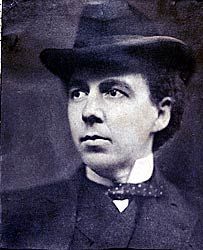
Harry Hale Waterman was the most prolific and versatile architect to work in Beverly and Morgan Park. At least 41 buildings in the community have been verified or ascribed to him.
Waterman’s contributions to the community were praised by architecture historian Harold T. Wolff, who served as past Registrar at RHS.
Wolff compiled files on many of the architects, including Waterman, who designed homes and other buildings in the Beverly/Morgan Park community. Wolff wrote that of all the architects, “none played a more significant role in establishing the character of these neighborhoods than Harry Hale Waterman.”
According to Wolff, it was Waterman who designed “imposing and distinguished houses for locations all over the Ridge,” and encouraged others “to spread the elegance [that was at first just] associated with Longwood Drive all over the landscape.”
Harry Hale Waterman was born on July 10, 1869, in Rutland, Dane County, Wisconsin, a small rural community. His father was John Adam Waterman, born in 1824, a farmer and cattle broker. His mother was Emily “Emma” Hale Waterman, born in 1838. John and Emma married in 1867 in Minnesota. Harry had one sibling, a sister, Jessie, born six years his junior.
The Waterman and Hale families were originally from the East coast, as were most of the families who moved west as the country expanded, buying land for farming and settling in the fertile Midwest.
Emma was John Waterman’s second wife. His first wife, Mary Kniffen, born in 1834, whom he married in 1855, and their daughter, Alice, died young. Alice died at four months of age in 1859, and Mary died in 1860. Interestingly, this foreshadowed a similar experience that Harry would have in his own life.
The family moved to Chicago when Harry was a young boy, where his father continued as a cattle broker. It’s safe to assume that the thriving stockyards operations making Chicago famous offered employment opportunities.
It is reported that Harry was educated in Chicago public schools, and he attended the Old University of Chicago Preparatory School.
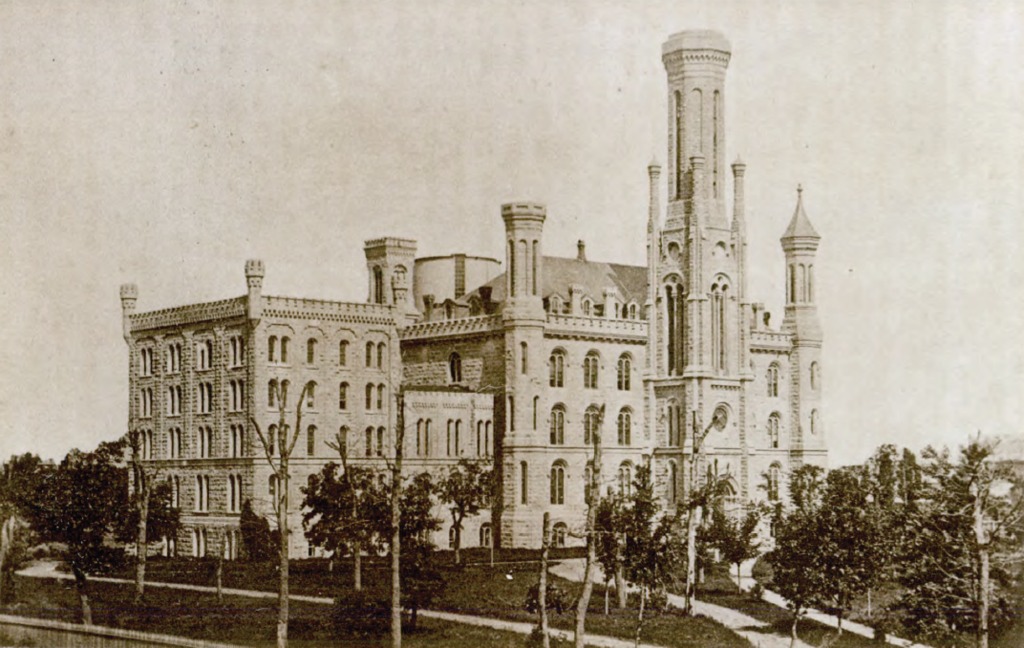
The Old UC was the original university, established in 1856 by Baptist church leaders on land donated by Senator Stephen A. Douglas at 35th Street and Cottage Grove Avenue. This school closed in 1886 for financial reasons and after fire damage, and was replaced with today’s University of Chicago, founded in 1890.
Preparatory schools were the forerunners of today’s high schools. Back then, there was a gap in public education institutions between grammar schools and colleges. For the wealthy, this gap was filled by expensive private secondary schools and private tutors, allowing those students to gain the knowledge to begin college-level courses.
To enable and encourage more young people to go to college, the universities started preparatory schools, which offered classes beyond the basic “three R’s,” geared toward helping students prepare for entry into one of the academic programs at the university. In Morgan Park, for example, the Mount Vernon Military Academy (now Morgan Park Academy) was started as a comprehensive military academy and preparatory school for the University of Chicago.
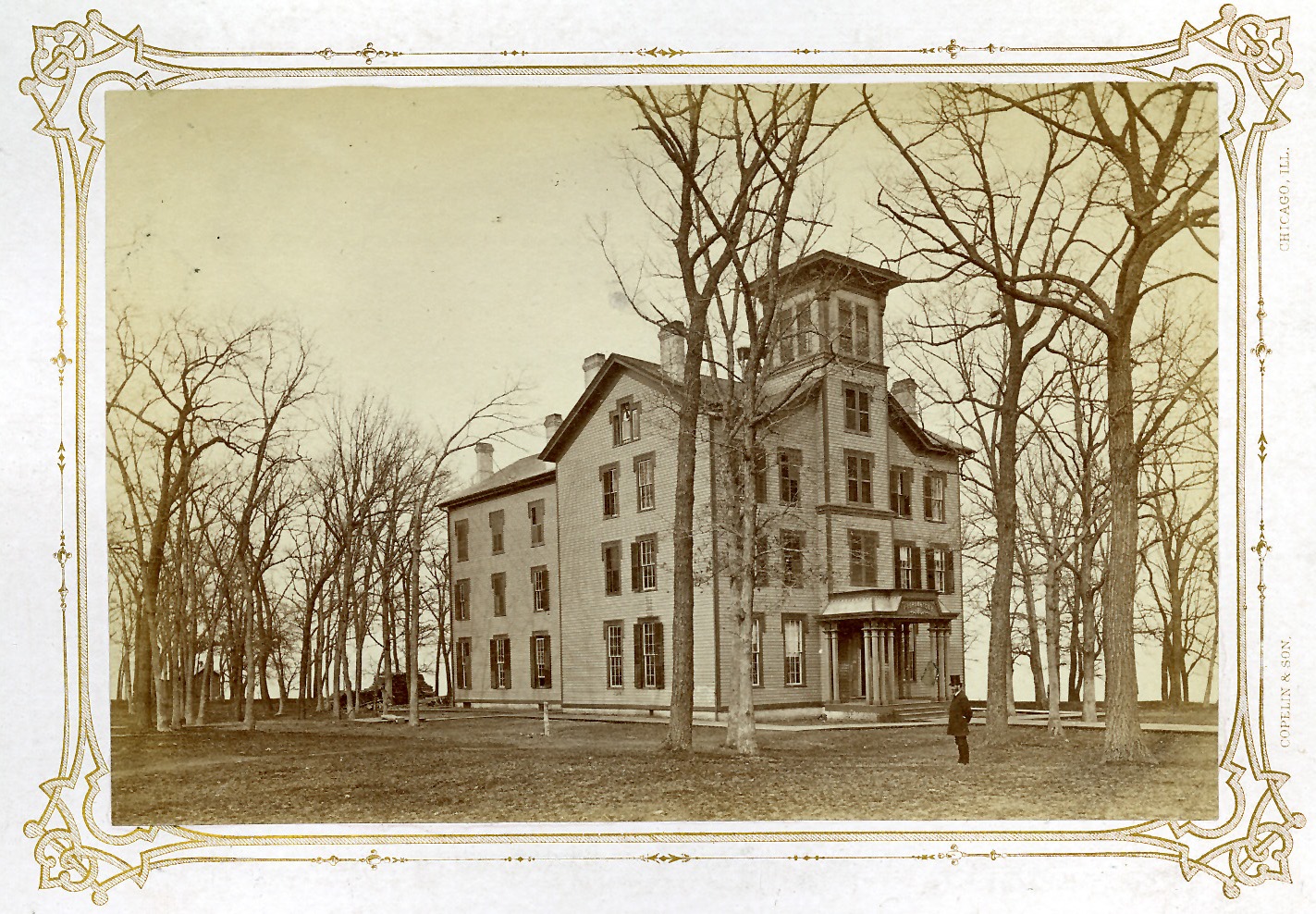
After the Old UC, Harry attended the Northwestern University Preparatory School through the 1887-88 academic year. He was listed as taking selective classes, which means he was not taking classes to qualify to enter a particular college. It does not appear that his formal education went farther than the NU Prep School, a common practice of the day. NU did not have a school of architecture at the time – few universities did.
Architecture was just developing into an academic specialty in the mid-to-late 1800s. Traditionally, designing buildings was considered part of the construction process, connected to such trades as carpentry and stonemasonry. These trades were learned through on-the-job training, apprenticeships, and many years of experience, observation, and networking.
From ancient Roman times on, it was recognized that mathematics, geometry, and engineering were the basics of architecture, along with a knowledge of building materials. Until the late 1800s, those were the types of classes/degree programs enrolled in by most people seeking architecture careers in the U.S. Those studies were followed by entry-level jobs, apprenticeships, and training in the offices of established architects.
In 1857, in the U.S., a group of architects founded the American Institute of Architects (AIA) to “elevate” the profession and to promote the qualifications of its members. The AIA developed policies on the training and credentialing of architects and set standards for ethical behavior and contracting services.
These were all guidelines, as the AIA was, and still is, a voluntary professional membership association, and not a credentialing or licensing body.
France had an architecture academy dating back to 1671 that became part of the famous École des Beaux-Arts in Paris. In the U.S., the AIA did not have the finances to start its own architecture school, but gave support to architecture programs being set up at reputable universities, such as the Massachusetts Institute of Technology (MIT) (1868) and the University of Illinois (1873).
In 1897, Illinois would become the first state to implement a law to license architects, which meant standards were set for the practice of architecture as a profession. Today, architects must be licensed to practice anywhere in the country.
This was the world of architecture when Harry Hale Waterman began his career.
In 1887, the Waterman family, including Harry and Jessie, were living at 3929 S. Vincennes Avenue when a young man named Frank Lloyd Wright, 19 years old, began boarding with them.
Wright had arrived in Chicago from Wisconsin, where he had been a student in civil engineering, to pursue a career in architecture, against his family’s wishes. However, his uncle, the Rev. Jenkin Lloyd-Jones, a Unitarian minister in Chicago, relented, and helped him find lodgings with congregants who lived nearby – the Waterman family. Wright and Harry became acquaintances.
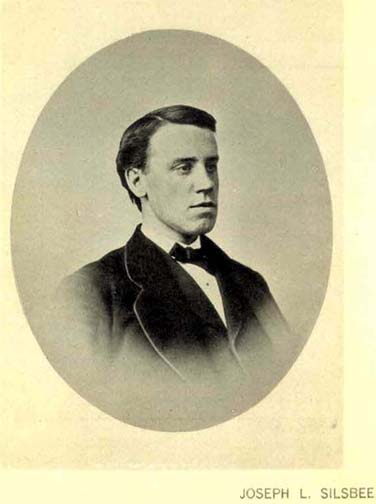
Wright had started as a “tracer,” or draftsman, in the architecture offices of Joseph Lyman Silsbee in January of 1887.
Silsbee, twenty years older than Wright and Harry, was a reputable architect with a practice in the state of New York as well as in Chicago. He had attended MIT, the first architecture school in the country. He was a founder of the Chicago and Illinois chapters of the AIA.
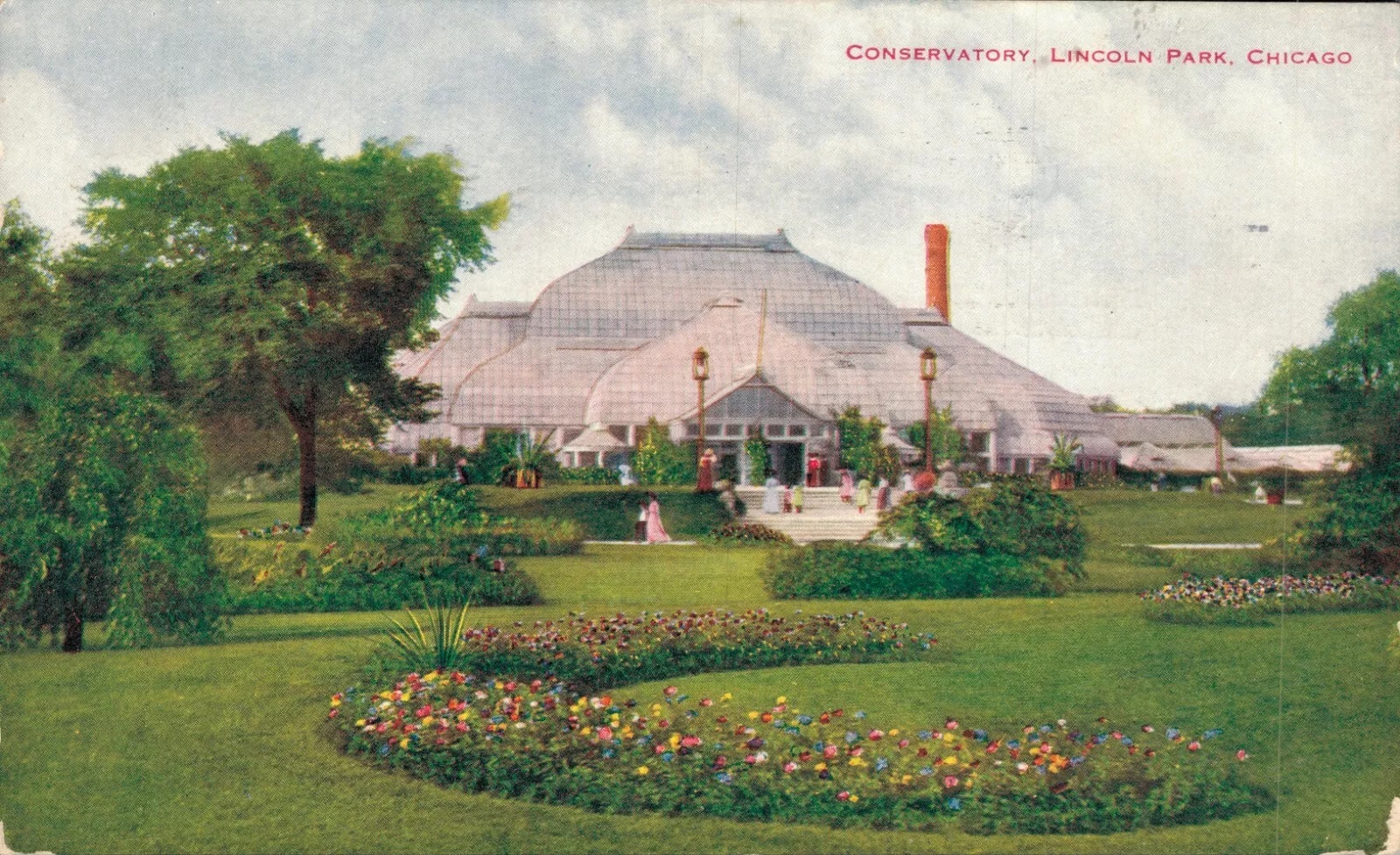
One example of Silsbee’s work in Chicago is the Lincoln Park Conservatory, built between 1890 and 1895, described as “a paradise under glass.”
Harry began employment in Silsbee’s office as a draftsman in 1888, working alongside of Wright. Other young trainees being mentored by Silsbee included George Maher and George Elmslie. Silsbee’s offices developed a reputation as a training ground for talented new architects.
Another young architect in this same orbit was Dwight Heald Perkins, who had worked at the stockyards before being accepted into the architecture program at MIT, and in 1889 began employment with architect Daniel Burnham. Among his many works, Perkins designed the Lion House and Café Brauer in Lincoln Park, as well as many schools in Chicago.
An early believer in “green spaces,” Perkins, along with landscape architect Jens Jensen, often led hiking expeditions to the Blue Island Ridge. He became known as the “Father of the Cook County Forest Preserves.”
These were the architects that were all part of Harry’s circle during his formative years.
1893 was a pivotal year for architecture in Chicago, thanks to the World’s Fair, known as the Columbian Exposition, or the White City. As one of his projects, Silsbee designed the Moving Sidewalk at the Fair, for which he won the Peabody Medal in 1895. Many of the young architects from Silsbee’s office contributed to the Fair.
More on Harry Hale Waterman’s early years with Silsbee and Wright and the 1893 Fair is covered in the RHS exhibit, which is open for free on Sundays and Tuesdays from 1:00 to 4:00 p.m. or by appointment. Additional information will be presented by RHS BOD member and Exhibit Curator Tim Blackburn in a repeat of last month’s program, “Waterman: From the White City to the Ridge,” scheduled tentatively for Friday, March 7. Watch this page for further details.
1893 was also the year that Waterman, at the age of 23, left employment with Silsbee and started his own practice. While the other architects like Wright and Maher established their own styles, which became major parts of the Chicago Prairie Style movement, Waterman worked in many different styles according to his clients’ expectations and other factors.
The next post will conclude Waterman’s bio, covering his three marriages and other interesting details of his personal life; then the series will look at families who used Waterman’s services to design their homes in Beverly and Morgan Park.