
The Ridge Historical Society
Houses Designed by Harry Hale Waterman and the People Who Called Them Home: Part 4 – Waterman’s Social Life
By Carol Flynn
This is a companion series to the current exhibit at the Ridge Historical Society (RHS): “Harry Hale Waterman, Architect: Unique in Any Style.”
An article in the Inter Ocean newspaper in 1906 described Harry Hale Waterman as “architect and South Side clubman.”
The “clubman” aspect, his “social life,” is something new to look at for Waterman. This also affected his daughter, Louise, who we will look at in the next post.
Historically, clubs were found in all ancient societies. Once unrelated clans started living together in larger groups, they started forming subgroups based on common interests that took them beyond their traditional kinship connections.
By the late 1800s, men and women at all levels of society were involved in clubs as their primary means for networking and socializing. Clubs formed for many purposes – professions, sports and athletics, charity and service work, community improvement, literary interests, music, art, hobbies – if someone was interested in something, there was most probably a club for it.
There were also clubs limited to very specific memberships. Some examples included university alumni clubs and military veterans’ clubs.
Men-only clubs were the norm, so women formed their own clubs. Membership in both men’s and women’s clubs usually depended on social standing and wealth, church affiliation, and political leanings. African Americans, Jews, and Catholics were excluded from most of the clubs formed by the white Anglo-Saxon Protestant establishment, so they formed their own clubs.
By the late 1800s, there were hundreds of clubs in the Chicago area.
Waterman, like everyone else, was involved in clubs, and some of his social life can be pieced together from various sources.
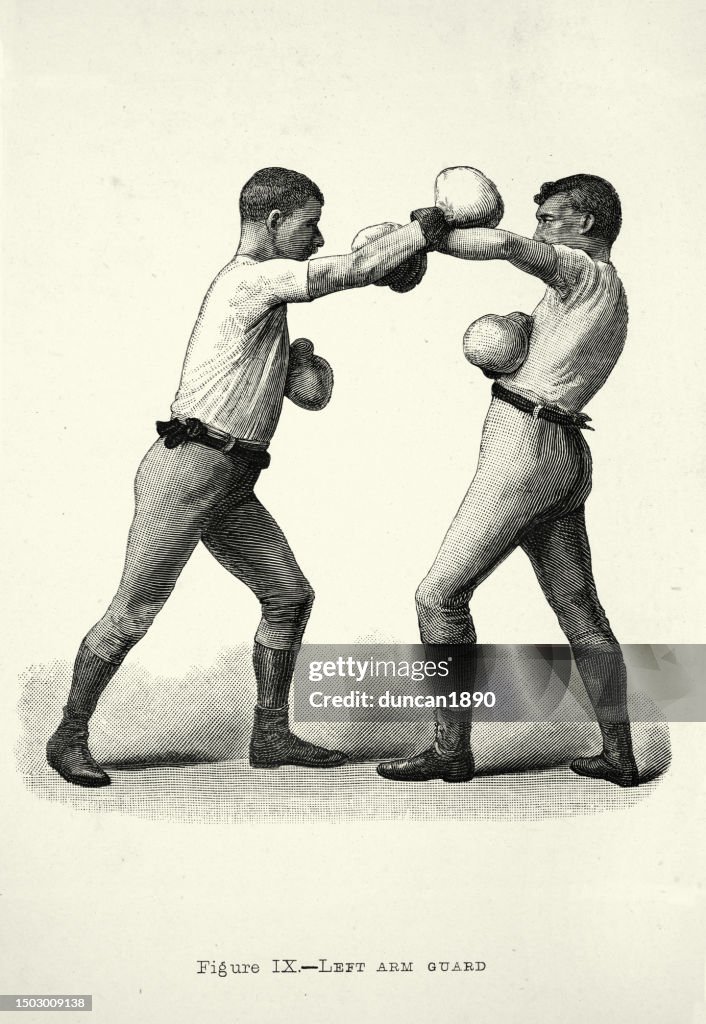
To start, it is known that Waterman and his fellow architect-in-training, Frank Lloyd Wright, who boarded with the Waterman family, liked to put on boxing gloves and spar with each other.
In the late 1800s, boxing became trendy for young, upper-class white men in the U.S. Long considered a barbaric “sport” of the lower classes, boxing was now being praised for instilling self-confidence and courage in a group that was concerned about going soft from “over-civilization.”
Rules for boxing changed (the “Queensbury rules”) to include gloved fists and less physical contact.
Universities started boxing programs, and athletic clubs in the cities, with indoor gymnasiums, hired ex-bareknuckle boxers to show their members how it was done.
Waterman and Wright were part of a trend that included Teddy Roosevelt.
Waterman’s immediate family does not show up in searches for social activities in Chicago, so more digging will have to go on to find out what they were up to, but Waterman’s marriage to Ida May Vierling on October 27, 1891, opened up social opportunities for him. He was 22 years old, and she was 19 years old when they married. Ida and her family were covered in Post #3 of this series.
Ida’s father Frank became successful and wealthy through real estate. He entered city politics and became an alderman. As a Union veteran from the U.S. Civil War, he was very active in veterans’ affairs.
His three brothers became wealthy and prominent in the iron and steel works manufacturing industry.
The wealth and prominence the brothers achieved allowed their sister Clara, who never married, to become a star of the Chicago social scene, where she was especially famous for her New Year’s Eve parties.
Ida was a young socialite when she and Waterman married, appearing in the society pages for the parties and events she attended. Details of their wedding, held at her parents’ house, were covered in the newspaper. Her wedding dress and the decorations were described.
In January 1892, the Inter Ocean newspaper ran a lengthy story about a charity ball given at the Auditorium Theater by the Knights Templar, a Masonic organization, attended by 4,000 people.
As was customary for the papers in reporting an event like this, the most prominent citizens in attendance were listed, and about 175 high society women were singled out to be mentioned for their fashion that night.
Ida’s father was a Freemason and a member of an appendage organization, Queen Esther Chapters of the Order of the Eastern Star. He had to be a Master Mason to qualify for that. Ida was also a member; women who were daughters, sisters, wives, or mothers of Master Masons could join.
Listed as attendees at this event were the F.C. Vierlings, the H.H. Watermans, the J.T. Blakes, and Miss Clara Vierling. The J.T. Blakes were Ida’s older half-sister Mary and her husband Jesse Thomas Blake.
Ida and Mary were both reported as wearing white silk with pearl trimming, and their mother was dressed in black silk with jet and diamonds. Clara wore white embroidered crepe du chien and diamonds.
Many prominent citizens of Chicago were in attendance, including Eugene Pike and his wife, and Mrs. Pike wore black silk with jet and diamonds.
Waterman was busy at the time designing and building a house for Ida and himself in Morgan Park at 10838 Longwood Drive.
It was announced in the newspaper in 1892 that “Mr. and Mrs. H.H. Waterman, nee Vierling, Morgan Park, will be ‘at home’ after Sept. 1, instead of June, as formerly announced.” It was “high society” to make an announcement like that.
Waterman embarked on a very prolific next few years on the Ridge, designing at least 14 buildings in 1892-94, including the gardener’s cottage for Pike at 1826 W. 91st Street and the home for the Blakes at 2023 W. 108th Place, just down the street from his own house.
Ida gave birth to their daughter, Louise, on August 26, 1895.
Tragically, Ida died the following year, on August 14, 1896, at the age of 24. RHS does not know the cause of death. She was buried with the Vierling family in Oak Woods Cemetery.
Waterman and Louise left Morgan Park at that time and moved back in with his parents and sister on 39th Street and Vincennes Avenue. He stayed on Vincennes Avenue for the rest of his life.
Waterman maintained connections with his late wife’s family, which we will cover shortly.
It was a given that an architect like Waterman would join professional organizations.
Waterman began his career in 1888 as a draftsman in the architecture firm of Silsbee and Kent. Joseph Lyman Silsbee was a founder of the Chicago and Illinois chapters of the American Institute of Architects (AIA), which began nationally in 1857.
All through the years, entries in the “Book of Chicagoans,” later called “Who’s Who in Chicago,” list Waterman as a member of AIA and the Illinois AIA, and the “Architectural Club.”
The Chicago Architectural Club was part of the Architectural League of America, which was formed in 1899 to improve architecture practices in cities. The League called for enforcement of better building standards, as well as beautifying cities with more parks and trees and less billboards.
This was all part of the “City Beautiful Movement” of the Progressive Era to reform urban planning to improve living conditions and quality of life, thereby improving “moral and civic virtue” within urban populations.
The Chicago Architectural Club held conventions and exhibits usually at the Art Institute of Chicago and is worthy of its own story in a future post. It’s noteworthy that Waterman was a member of this progressive group.
In 1896, the Illinois chapter of the AIA supported legislation to begin licensing architects based on an examination before an appointed board. Up to that time, anyone could design and build a structure and there were considerable shoddy practices.
Waterman, as well as his mentor Silsbee, were among the many educated and trained architects listed in support of licensure. Illinois became the first state to license architects, largely through the efforts of this Chicago group.
In 1897, an article in the Inter Ocean newspaper mentioned Waterman’s attendance at a dinner and program put on by the Chicago Architects Business Association at the Union League Club.
The program explored “The Architect’s Relation to the Business World” as seen from many different perspectives, including builders, real estate agents, homeowners, lawyers, and architects themselves.
Other attendees at the program included George Maher and Dwight Perkins. Waterman had worked with Maher at Silsbee and Kent.
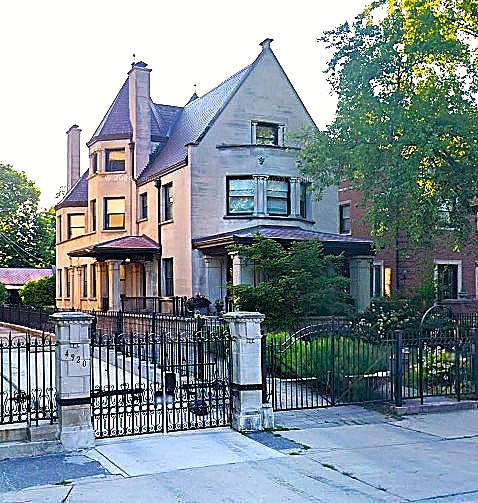
In 1898, Waterman and Perkins were hired to design a house at 4914 Greenwood Avenue, according to the Chicago Tribune, “for a manufacturer whose name is not given out.” This house was for his late wife Ida’s uncle Robert Vierling and Robert’s sister Clara, the famous “Miss Vierling” of the society pages. The house, which still stands, was built in the tony Kenwood neighborhood of Chicago.
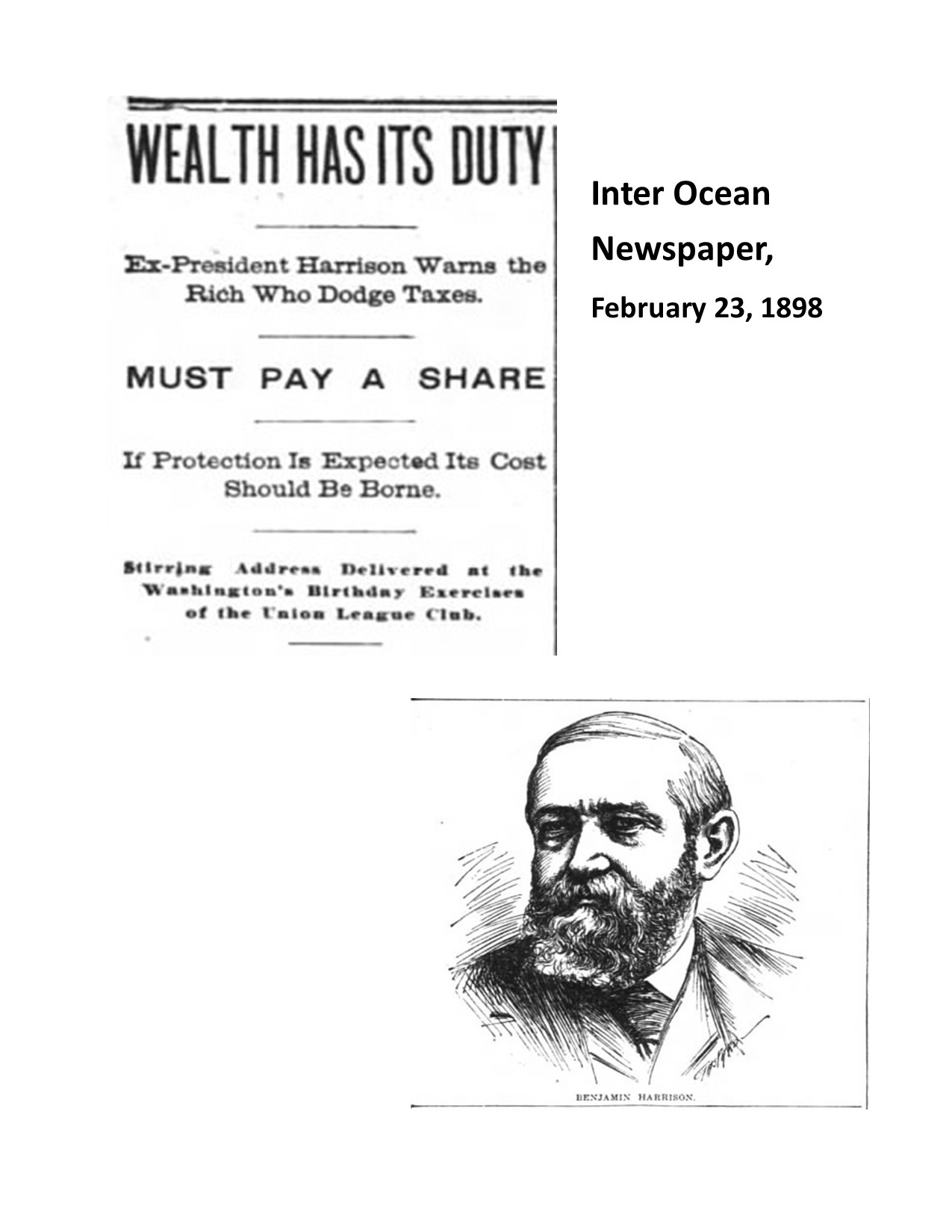
Waterman was listed as one of the “men high in official, business, and social circles” in attendance at an incredible event in 1898 where past U.S. President Benjamin Harrison appeared at the Auditorium Theater in a standing-room-only program put on by the Union League Club. Harrison delivered a speech in which he admonished the wealthy to pay their fair share of taxes.
In 1900, the Grand Army of the Republic (GAR), an organization for veterans of the Union military who fought in the U.S. Civil War, announced plans to hold the annual encampment of the group in Chicago, with a massive fund-raising campaign to raise $100,000. Frank and Margaret Vierling, the late Ida’s parents, were very active in this group.
The Finance Committee formed more than 60 subcommittees of professional men to raise this money within their professional groups. Waterman was a member of the Architects subcommittee, along with the famous William Le Baron Jenney.
In fact, the subcommittees read like a who’s who of famous Chicago businessmen. O.W. Hinkley represented Bottlers of Mineral Water and Beverages; C.H. Wacker (of Wacker Drive fame) represented Brewers; H.C. Lytton represented retail Clothing; John M. Smyth represented Furniture Manufacturing; W.A. Stanton (great-grandfather of RHS Historian Linda Lamberty) from Beverly represented Silk Dealers and Threads. Waterman was with good company.
For years after Ida’s death, Waterman was listed as a member of the south side Kenwood Club. The Vierling family was very active in this club, which was organized in 1881 as a “purely social club” that offered everything from art talks to progressive euchre parties to dances to telepathy sessions to theatrical entertainment considered “far above the average of amateurs.”
The next post on Waterman’s daughter Louise will cover how her Great Aunt Clara Vierling introduced her as a debutante at the Kenwood Club.
In his later years, Waterman kept a low social profile but always maintained his membership in the AIA.
Apparently, the Great Depression and illnesses caused Waterman to fall behind in paying his membership fees to the Chicago Chapter of the AIA, and in 1937 the Executive Committee of that group voted to waive his fees in view of his high standing in the profession. He was approaching the age of 70, which would entitle him to emeritus status.
Much more about Waterman’s career can be learned from the RHS exhibit, which is open to the public for free on Tuesday and Sunday afternoons from 1 to 4 p.m. or by appointment. RHS is located at 10621 S. Seeley Avenue in Chicago.