
The Ridge Historical Society
Part 11 – The Hofer Sisters and Politics Continued
By Carol Flynn
During the Progressive Era of the late 1800s-early 1900s, women began to come into their own as political activists. Much of their work was done through women’s clubs. Long denied membership in traditional men’s clubs, women formed their own civic organizations which became powerful forces for reform and change.
The Chicago Woman’s Club (CWC) was one of the most influential of these organizations, with members including Jane Addams of Hull House and Bertha Palmer of Palmer House hotel money and fame, who chaired the women’s events for the 1893 World’s Fair in Chicago. Women from the Ridge actively participated in the CWC, and Gertrude Blackwelder from Morgan Park served as president from 1906 to 1908.
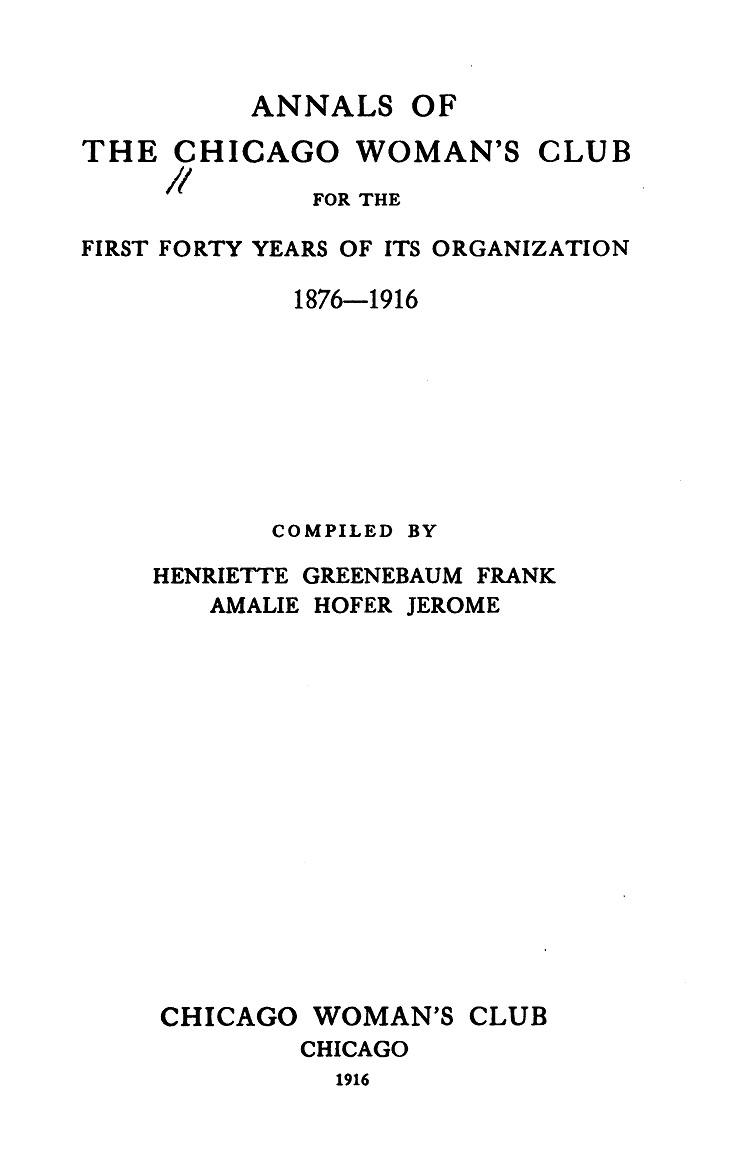
The Hofer sisters were members of the CWC. Bertha Hofer Hegner was prominent in the club’s education endeavors. In 1916, Amalie Hofer Jerome co-authored the Annals of the Chicago Woman’s Club for 1876 to 1916, a compilation of the Club’s first forty years of business.
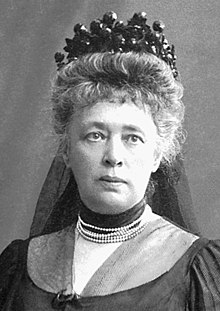
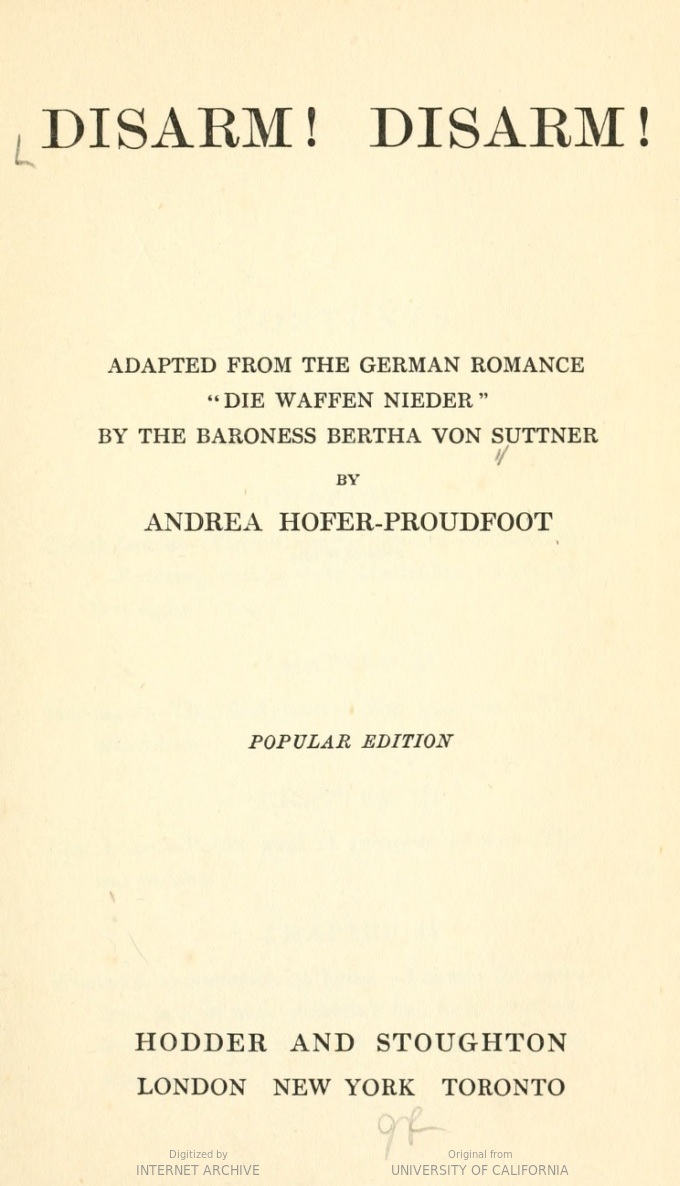
In 1912, through their CWC involvement, the Hofer sisters brought about an internationally significant event, a country-wide tour by pacifist Baroness Bertha Von Suttner of Vienna, Austria.
Andrea Hofer Proudfoot spent increasing amounts of time living in Europe in the early 1900s with her children. She and her husband regularly traveled back and forth between Chicago and Vienna, where her daughter Helen attended the Leschetizky School.
The international kindergarten movement, in which the Hofer sisters were leaders, shared many ideals with the international peace movement, and Andrea became acquainted with Baroness Von Suttner, who won the Nobel Peace Prize in 1905.
Mounting social unrest leading to increased militarism had many fearing a European war was imminent, and indeed, World War I was just around the corner. Peace organizations were established in Europe and the U.S., and women like Jane Addams were active participants.
Suttner was a leader in the international pacifist movement of the time, and was emerging as a leader of the growing feminist movement. She was an influential pro-disarmament writer, believing that world peace was inevitable due to technological advancements, and that more powerful weapons would increasingly deter war.
In February 1912, Mari Hofer presented a motion to the Chicago Woman’s Club recommending that they arrange an address by the Baroness during the coming year. This was approved, and the Club reached out to the General Federation of Women’s Clubs (GFWC), the “mother” organization that all the local clubs belonged to, and other groups for involvement. A joint Peace Committee with the GFWC and groups like the Chicago Peace Society was formed, with Mari and Amalie doing the work.
While male international pacifists had been making speeches in the U.S. for years, this was the first initiative by women to include pacifism and international affairs as part of the women’s clubs’ agenda, and have a woman address the American people. Suttner was invited to address the GFWC national convention in San Francisco in late June of 1912. She accepted the offer.
The Hofer sisters procured funding from the World Peace Foundation, which supported peace education, to cover all the expenses for the Baroness to visit the U.S. Leaving for the U.S., Suttner stopped in Paris to address the Carnegie Peace Foundation. She stated, “I shall try to put in motion a new and great force in the uplifting to good all mankind, and that force is found in the federated American women.”
Standing next to her on the platform was the personification of those women, Andrea Hofer Proudfoot, from the Chicago Woman’s Club, who served as Suttner’s full-time manager, secretary, and companion for her trip to the U.S.
They travelled by ship to New York, then across country to San Francisco by train, picking up GFWC delegates along the way. The GFWC event, with 5,000 attendees, became the first of 1,220 engagements, with the Baroness speaking at universities, churches, and organizations including peace, labor, business, and suffrage groups. Major American newspapers and journals carried the Baroness’s speeches in full, allowing her a widespread reach to the public. Although this visit is rarely mentioned now, it was very big news at the time.
The Baroness’s primary goal was to advocate for universal peace, but she saw the connection to women’s rights for education and employment, and particularly to suffrage. She encouraged women to be active in the peace movement and she encouraged peace activists to support suffrage to increase their efforts in promoting peace.
The Baroness and Andrea came to Chicago in July, where the Baroness made presentations at the 50th annual convention of the National Education Association and other meetings, and visited Jane Addams and Hull House. From there, they went on to meet with President William Howard Taft.
They returned to Chicago in November, and Suttner addressed the Chicago Woman’s Club. Women like Mrs. George Pullman held receptions for them in their homes. Suttner also addressed other groups like the Chicago Federation of Labor.
The Inter Ocean newspaper quoted part of one of Suttner’s Chicago speeches: “We must come to realize that our present, modern times have outgrown the system of war, of violence. Now we all live under the law of violence. I hope that the tool of war will be laid down, and that the workers will lay down their tools against the preparation of the implements of war. Instead of the outstretched fist, we want the outstretched hand of friendship.”
Charles Beals, the Secretary of the Chicago Peace Society, noted although the U.S. visit was “a laborious task,” that “the peace workers of the United States have been greatly strengthened by the visit of the foremost woman pacifist of the world.” This group also had great praise for Mari Hofer’s role in the endeavor, stating that “Miss Hofer served entirely without pay, gave up her summer vacation in order to make the undertaking a success, and for months, in no small measure, bore the responsibilities and did the clerical work.”
As Suttner returned to Vienna in December, accompanied by Andrea, she declared that the U.S. was ahead of other countries in the suffrage movement, and she was sure American women would get the vote franchise. That took eight more years.
The Baroness was 69 years old when she made this trip. She died of cancer eighteen months later in 1914, right before the start of World War I.
Andrea went on to more prominence in the peace movement, which will be covered in the next post.