
Explore the RHS Facebook Archives, a rich repository of local history written by Carol Flynn. For two decades, Carol brought a deeply dedicated voice to public education at RHS. Her role as Facebook administrator through mid-2025 naturally extended her prolific research into meticulously detailed articles, most notably her multi-part historical series posts. Today, Carol continues her local history writing for The Beverly Review and other outlets.
Past Events: 2020
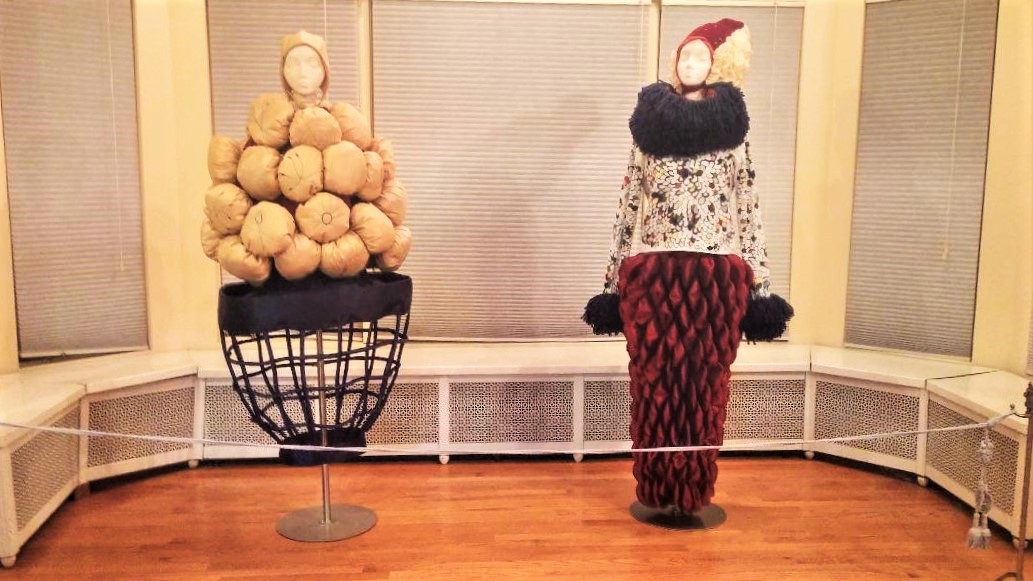
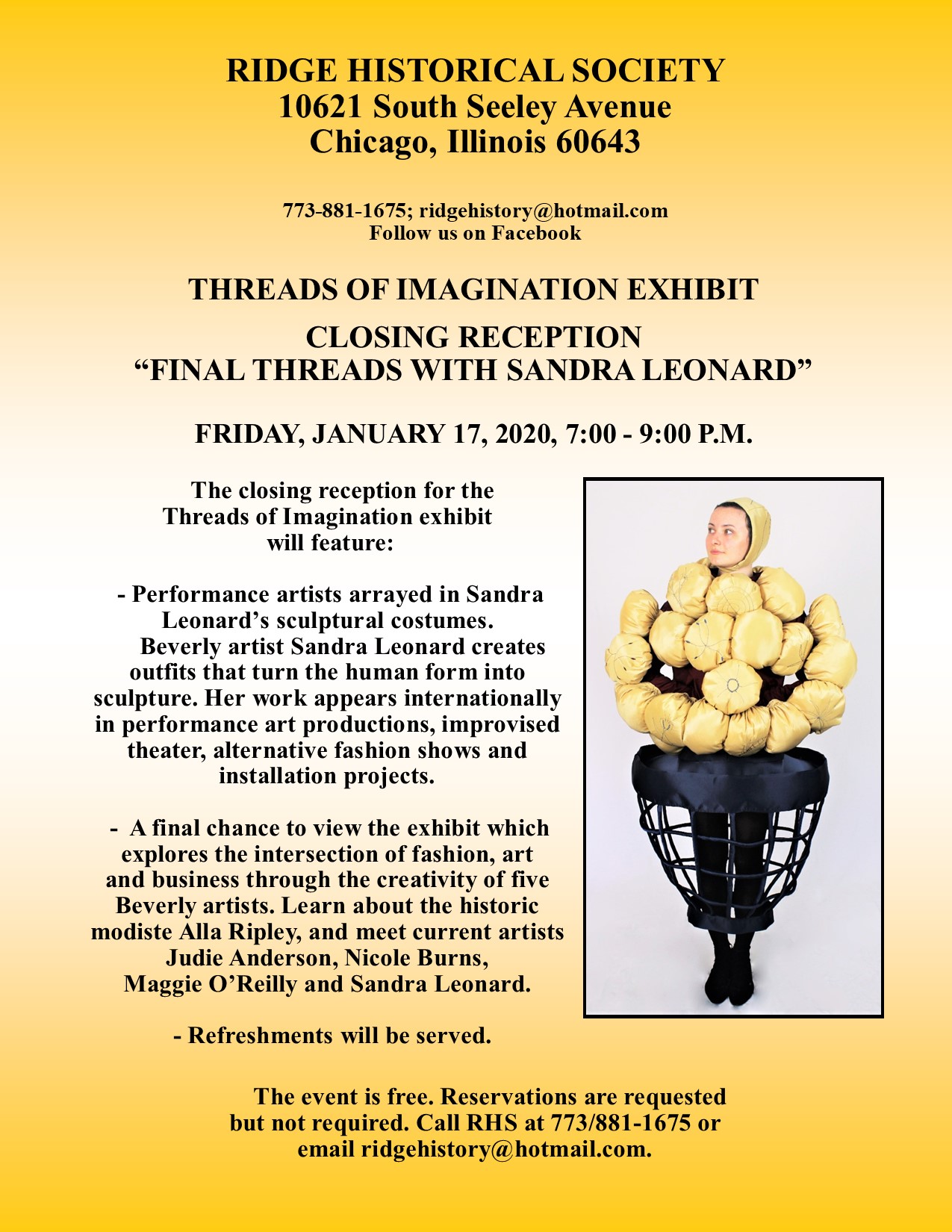
It’s been an incredible four months but they say all good things must come to an end. The closing reception for the “Threads of Imagination” exhibit at the Ridge Historical Society will be on Friday, January 17, 2020, from 7:00 to 9:00 p.m. at RHS, 10621 S. Seeley Ave., Chicago.
The event is titled “Final Threads with Sandra Leonard.” Sandra creates sculptural costumes that turn the human form into living sculpture. Performance artists arrayed in some of Sandra’s creations will interact with the guests. Sandra’s work appears internationally in performance art productions, improvised theater, alternative fashion shows and installation projects.
This will be the last chance to view the “Threads of Imagination” exhibit, a look at the intersection of fashion, art and business through the creative work of five Beverly artists. Featured are the historic Madame Alla Ripley, a famous fashion designer and savvy businesswoman who lived on the Ridge 100 years ago, and four current artists.
Judie Anderson displays a selection of her fashion illustrations from the 1960s-70s. Nicole Burns of NiBu Design shares her eclectic artwork inspired by vintage fabrics, and her collection of antique sewing items. Maggie O’Reilly showcases items from her two entrepreneurial companies – Maggy May line of girls’ clothing, and The MAYTA Collection of personal and home accessories produced by artisans in Peru and Morocco through fair trade agreements. These three artists have been profiled in recent programs and plan to be at the reception. And the fourth artist, Sandra Leonard, will be profiled this evening.
Admission is free; refreshments will be served. Reservations are requested but not required. Contact RHS at 773/881-1675 or ridgehistory@hotmail.com.
Be sure to get this event on your calendars!
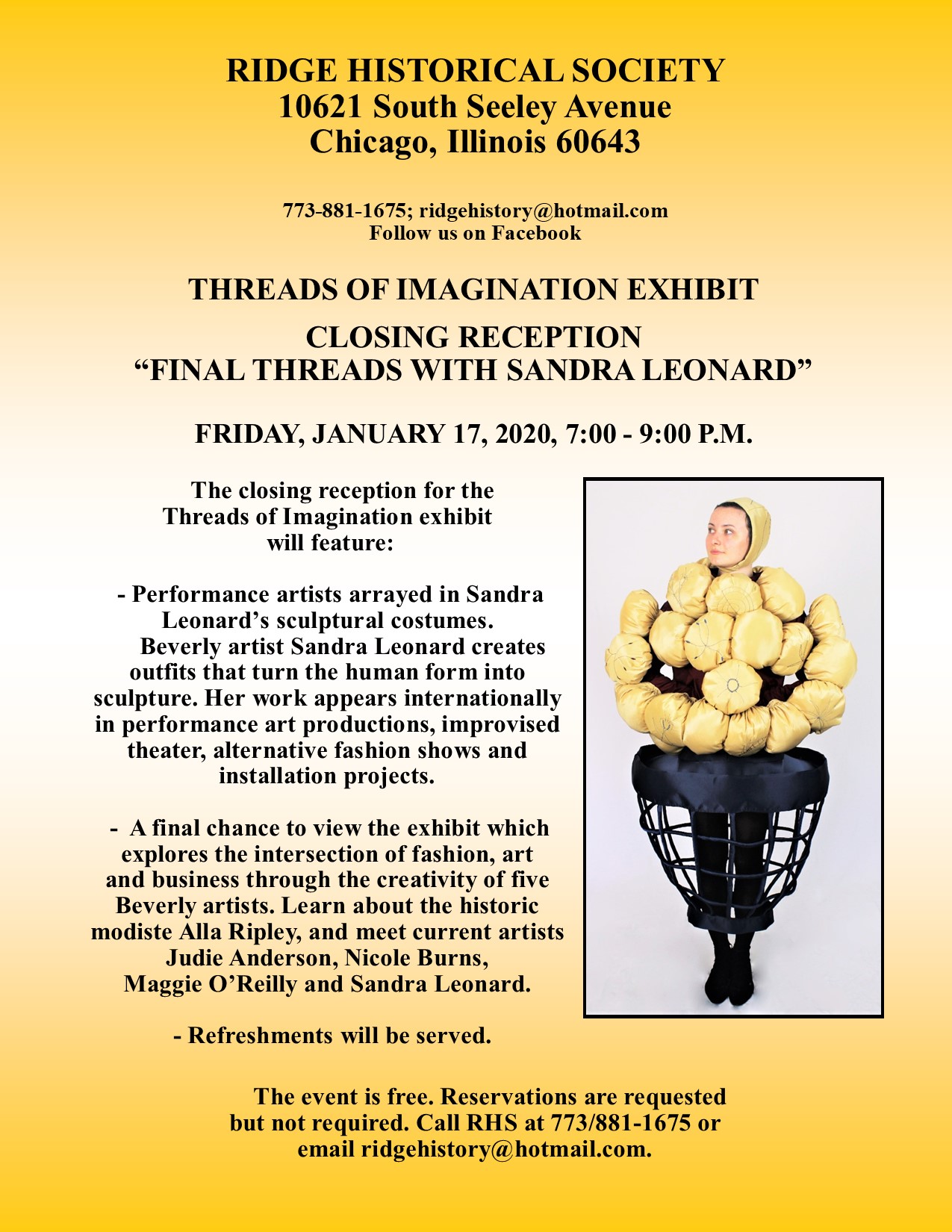
Tomorrow night, Friday, January 17, 2020 – the closing reception for the "Threads of Imagination" exhibit at the Ridge Historical Society, 10621 S. Seeley Ave., Chicago, from 7:00 to 9:00 p.m. The featured artist will be Sandra Leonard who will have performance artists there in some of her sculptural costumes. Free admission, refreshments will be served. Send a Message to RHS with any questions.
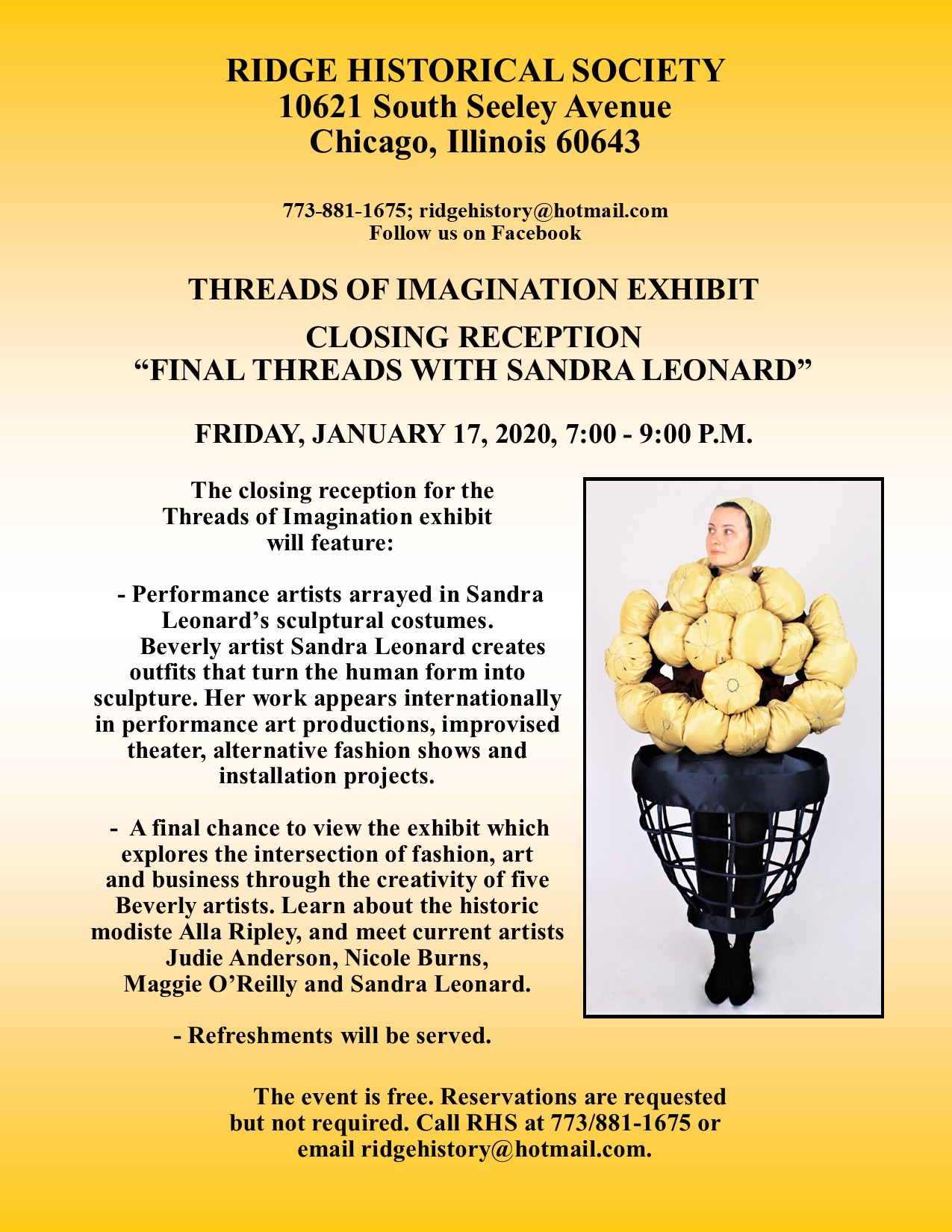
Last reminder! Attend this event before we get snowed and iced in for the next few days – the storm is due to get pretty bad during the night, after this is over. Tonight, 7 to 9 p.m., at the Ridge Historical Society, 10621 S. Seeley Ave., Chicago, the closing reception for the "Threads of Imagination" exhibit featuring performance artists wearing the sculptural costumes of Sandra Leonard. Free, great refreshments! Come on over! Reservations not required! Last chance to see this great exhibit!
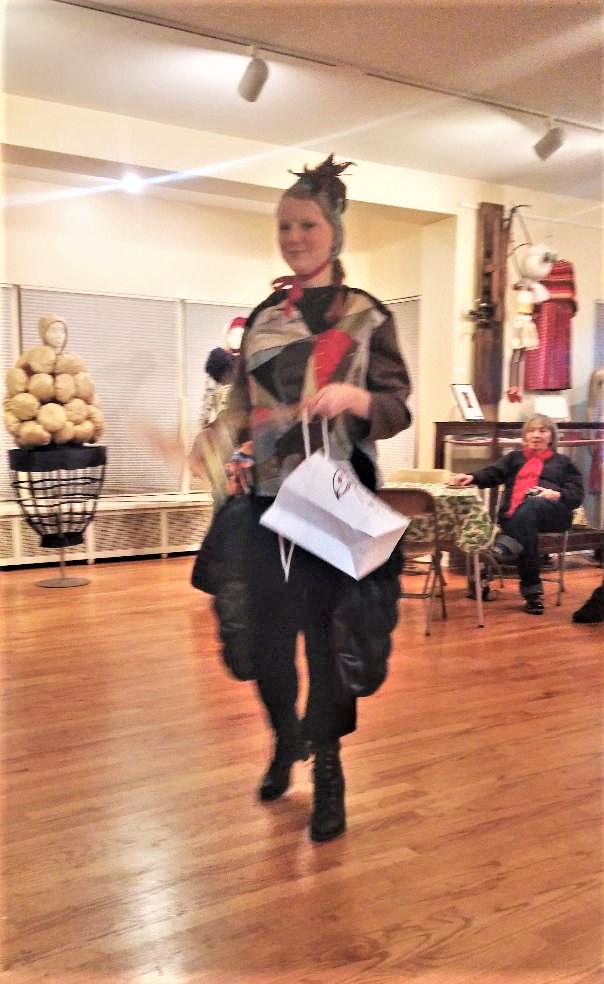
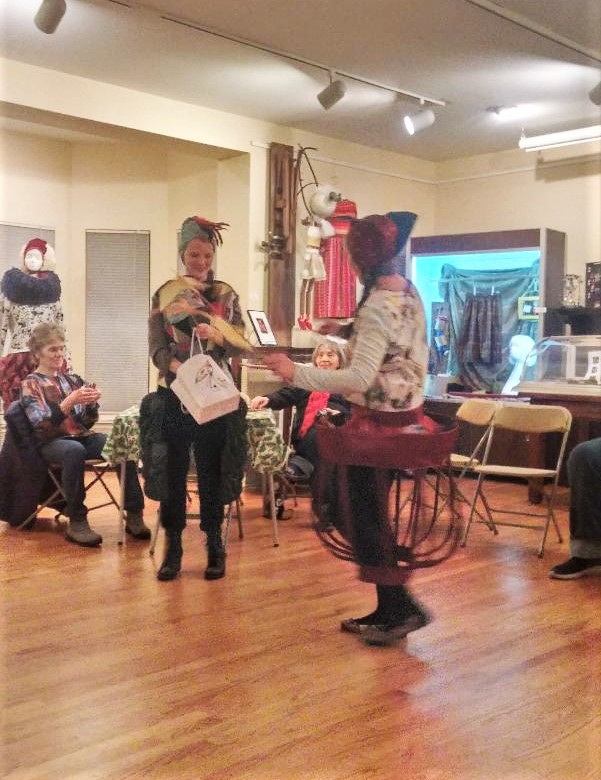
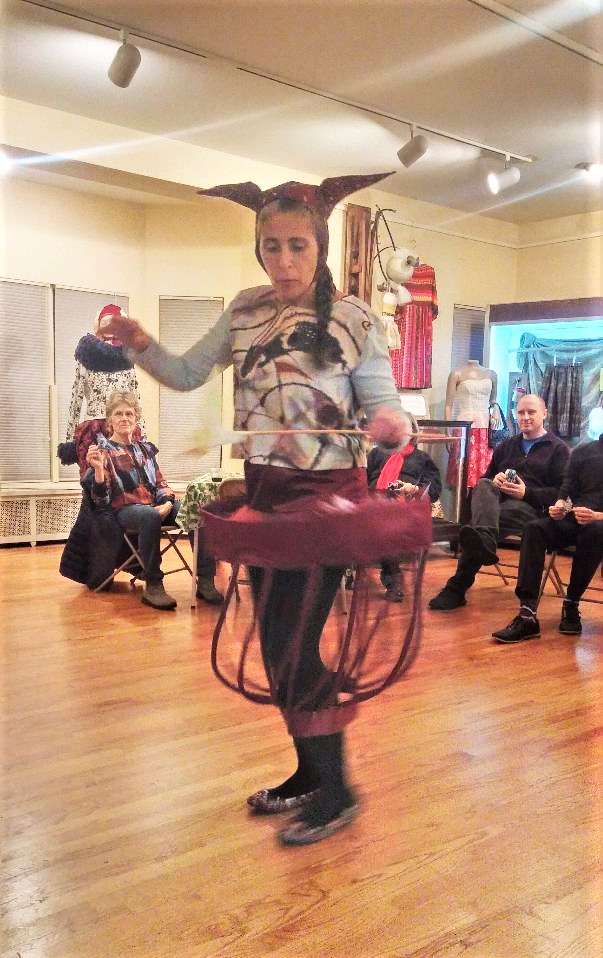
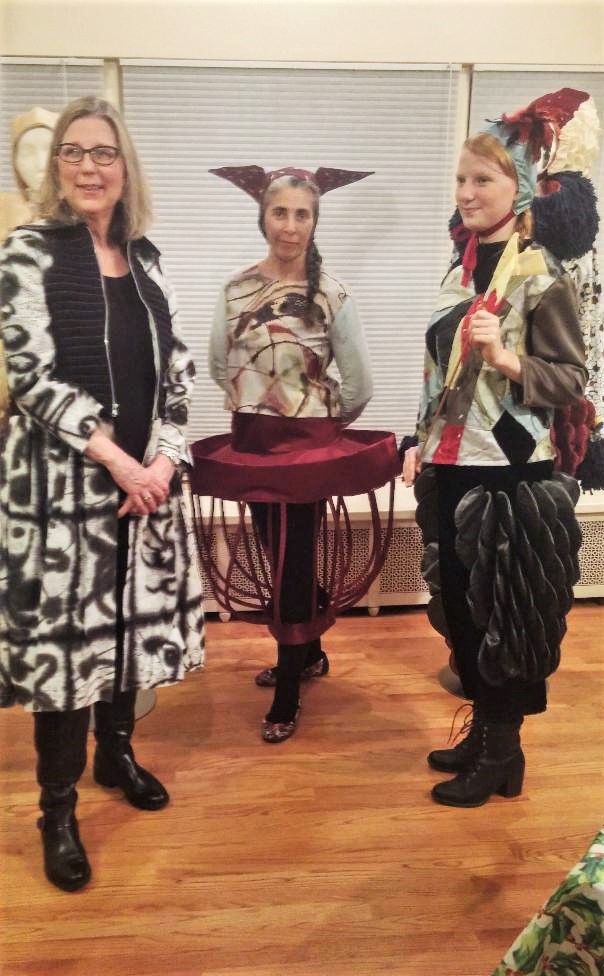
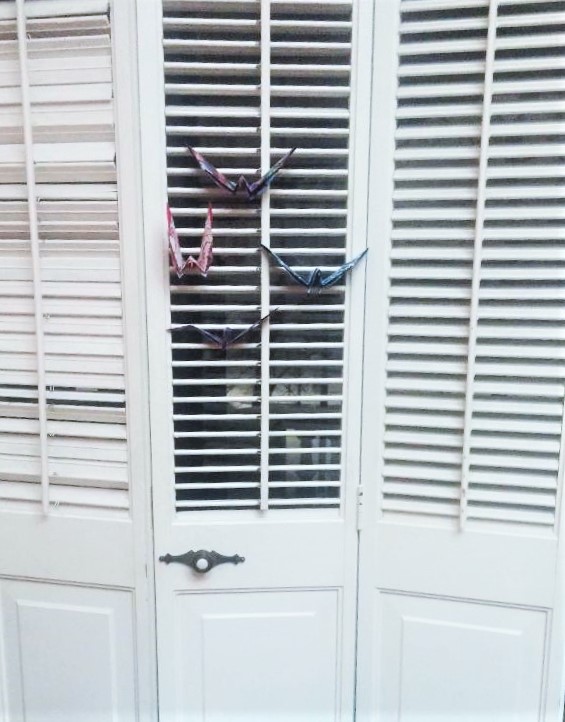
Oh, the weather outside was frightful, but the party inside was delightful …. Thank you to the brave souls who came out tonight during Chicago's first major snowstorm of the season for the closing reception for the "Threads of Imagination" exhibit at the Ridge Historical Society.
Performance artists donned Sandra Leonard's sculptural costumes for an improvised art performance event. Sandra offers a rich visual experience often based on birds and that was tonight's theme. The performers distributed origami birds to the guests which made for a nice keepsake. Some of the birds found a new home at RHS.
The event, "Speaking of Unmentionables: History of Ladies' Underwear," has been cancelled for this Sunday, January 26, 2020. It is being rescheduled for Sunday, February 9, 2020. We are sorry for any inconvenience this has caused. Thank you.
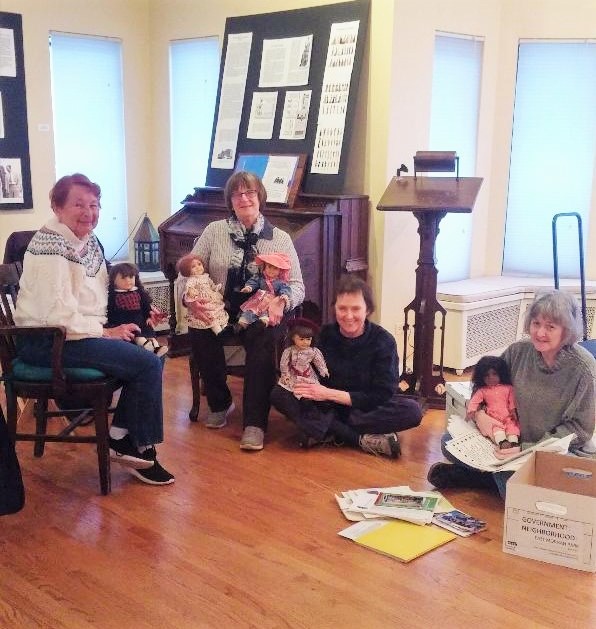
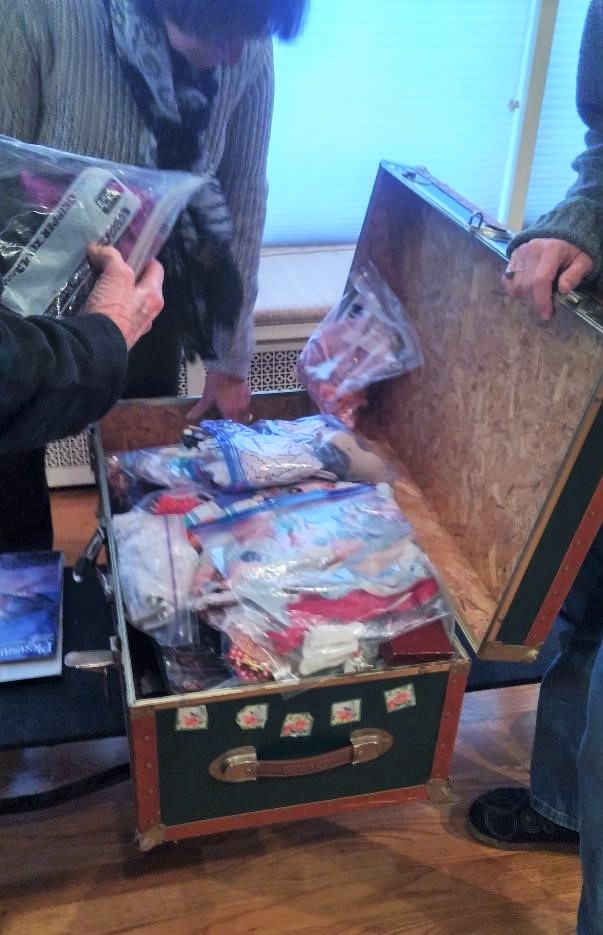
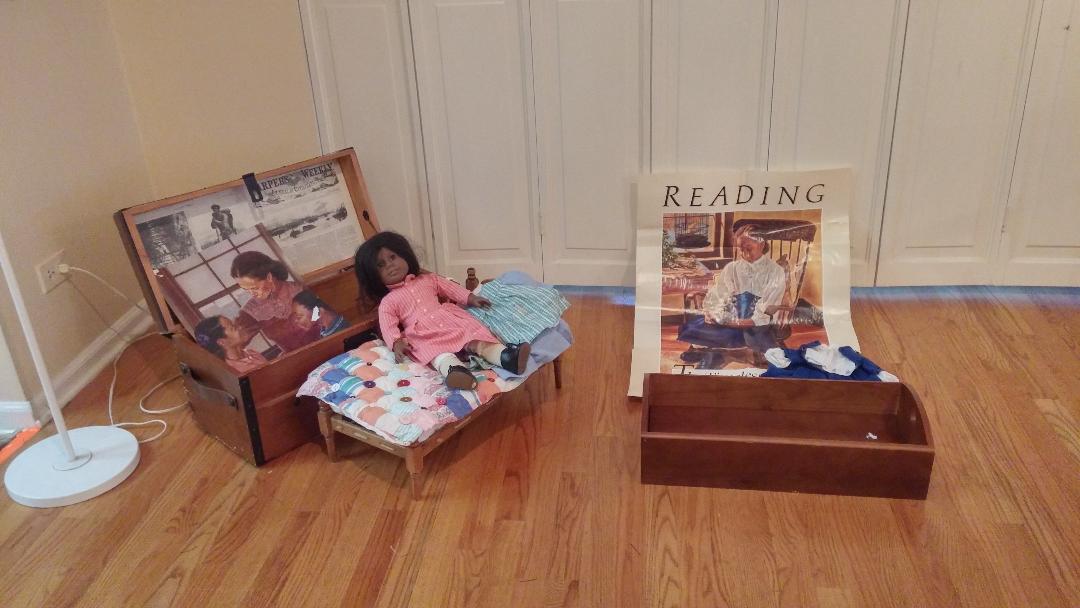
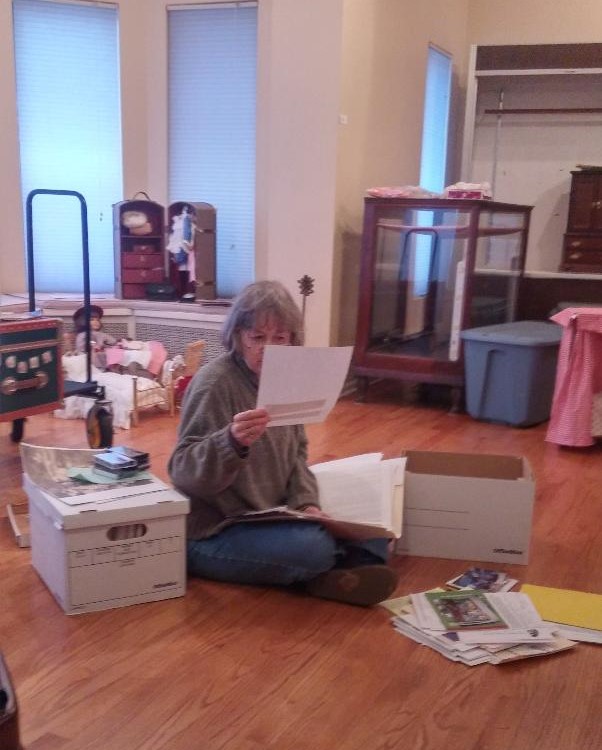
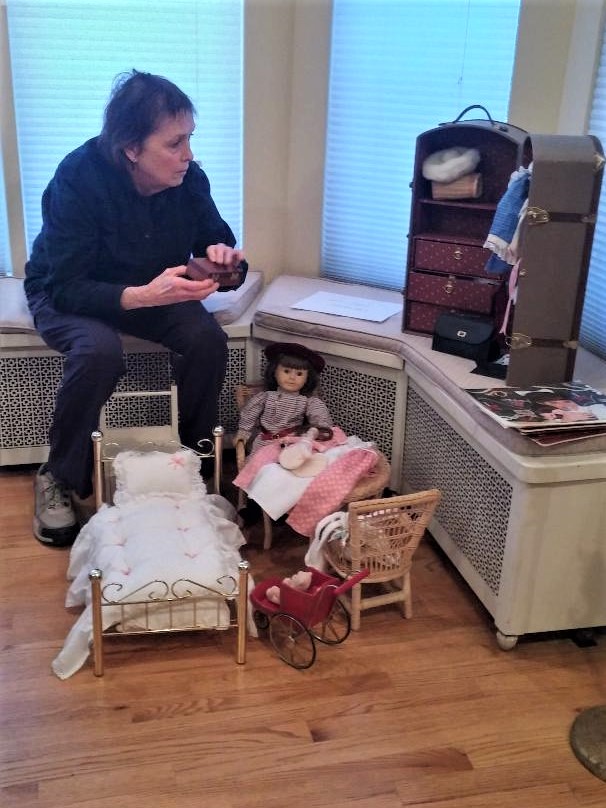
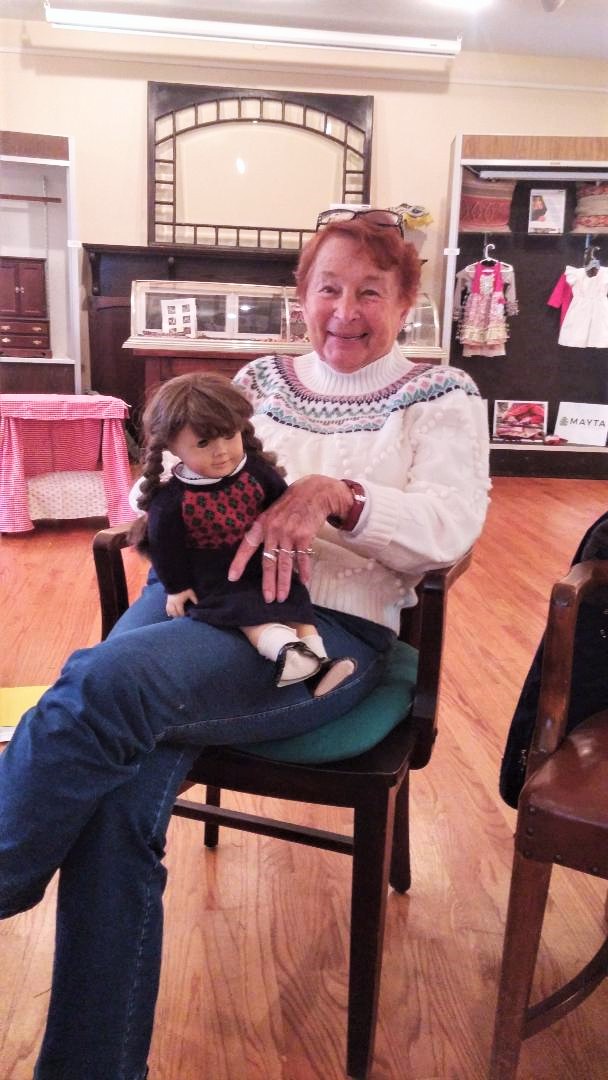
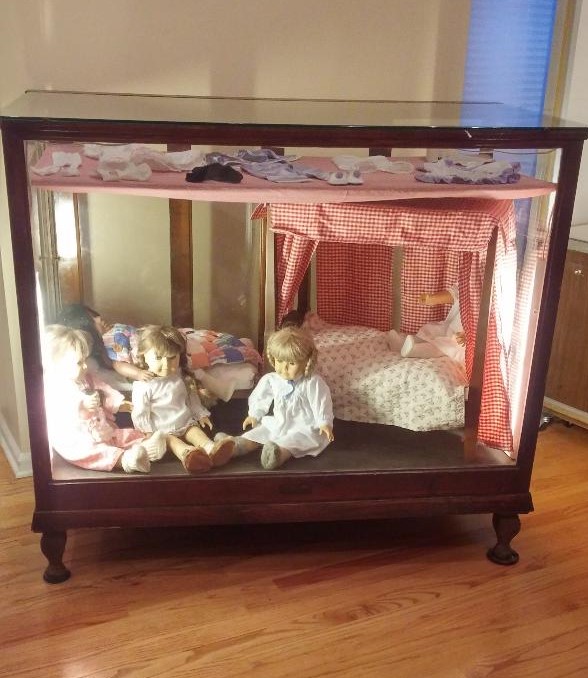
Today the Ridge Historical Society revealed a recent donation and plans for a new exhibit. Beverly resident Joan Regnier O'Connor has donated her family's collection of five original American Girl dolls and numerous furniture items and accessories.
The American Girl dolls, of course, are a well known and beloved phenomenon. They are a line of 18-inch dolls first introduced in 1986 by the Pleasant Company, founded by Pleasant Rowland. The original dolls focused on various periods of American history, with accompanying books told from the viewpoint of the girls. Rowland sold the company to Mattel in 1998.
Joan began collecting the dolls with her daughters Michelle and Christina, who are now in their 30s. They first got interested in the dolls thanks to Joan's mother-in-law, the late Grace O'Connor, who was a children's librarian in Beverly and Mt. Greenwood. Grace shared the books with her daughter-in-law and granddaughters. She used to hold parties for the dolls at the libraries.
Joining the RHS collection are Felicity from the Colonial period, Kirsten the Pioneer girl, Addy from the Civil War era, Samantha from late Victorian times, and Molly from World War II.
RHS will be showcasing the dolls in a new exhibit, "Real American Girls of the Ridge." Three of the dolls, Addy, Samantha and Molly, will be paired with stories of actual girls who grew up connected to the Ridge communities during the appropriate time periods.
Addy will be paired with the story of the late Cornelia Reeves, an ex-slave who settled in Morgan Park in 1885-86. Her descendants are believed to still be in the area and RHS Historian Linda Lamberty, the Curator for this exhibit, is tracking them down for the story.
Samantha will be paired with the late Margaret Gear Lawrence who grew up on the Ridge around 1900. Margaret became very active with the new Girl Scouts organization founded in 1912. RHS Board Secretary Carol Macola, also very active with the Girl Scouts, will help with this exhibit entry.
Molly will be paired with Elaine Spencer, RHS President, who grew up on the Ridge during World War II. Elaine will share first-hand stories of life in the early 1940s during the turbulent war years.
Pleasant Rowland, the "inventor" of the American Girl dolls, has a strong connection to the Ridge. Her paternal grandparents lived at 96th and Winchester and her father spent his formative years here.
All of these stories will be shared in upcoming Facebook posts.
The soft opening for the "Real American Girls of the Ridge" exhibit will be at the annual meeting of RHS members on February 23rd. The following Sunday, March 1, at 2:00 p.m. will be the free grand opening reception for the public at RHS. The exhibit will run through the summer. Watch this page for more information.
This Sunday, March 1, 2020, is the grand opening of the new exhibit at the Ridge Historical Society, 10621 S. Seeley Ave., Chicago. "Real American Girls of the Ridge" pairs American Girl dolls from the Historic Collection with real women from the same time period who were connected to the Ridge. The event runs from 2:00 to 5:00 p.m., is free and open to the public. Refreshments will be served. Watch the RHS Facebook page for features from this exhibit.
The history of Dan Ryan Woods – Part 9: A very popular place
By Carol Flynn
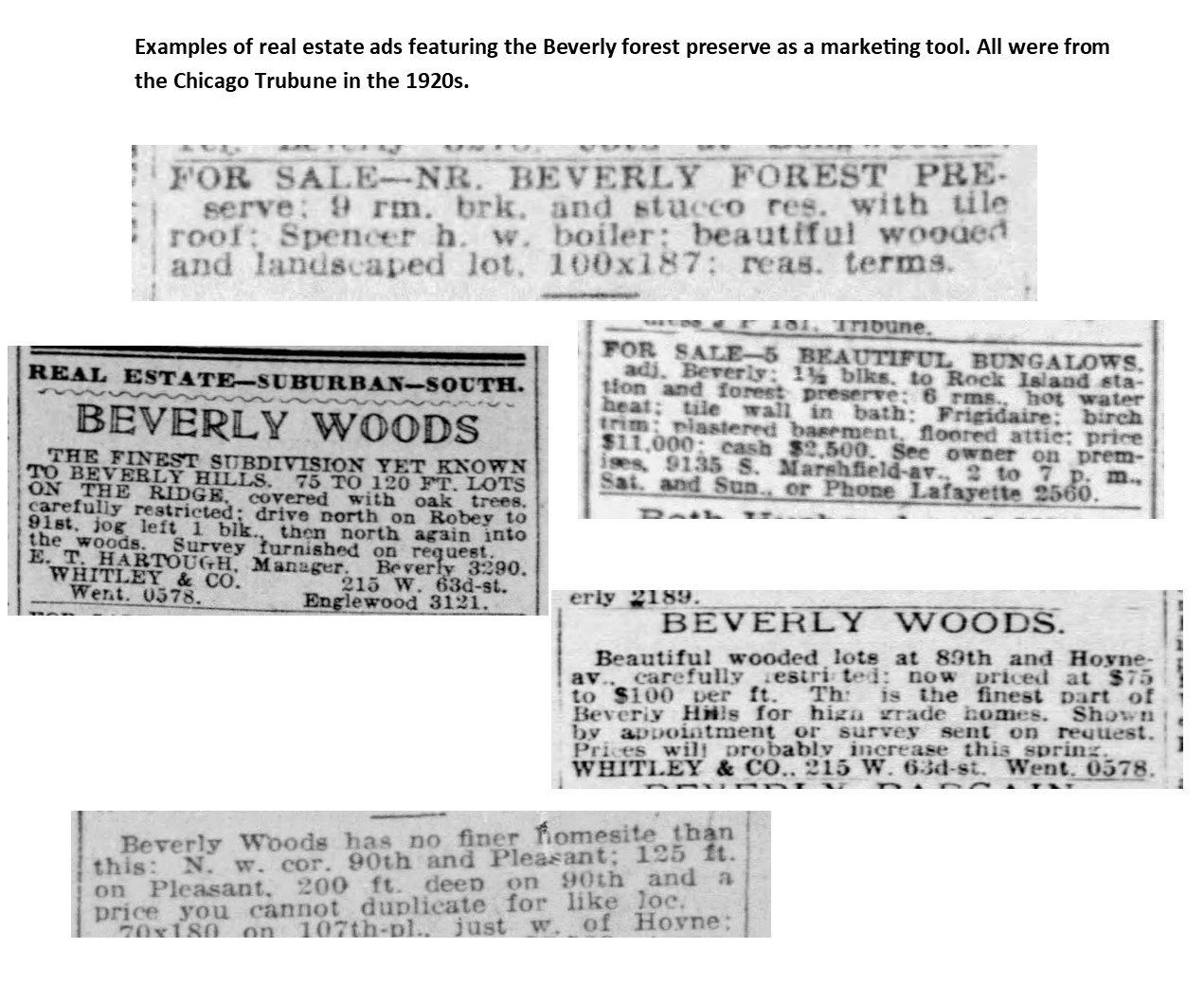
The Beverly Hills Preserve, renamed the Dan Ryan Woods (DRW) in 1924, was a popular place from the beginning. It influenced growth and development in the area. Real estate agents used the preserve advantageously in advertisements, even giving the name “Beverly Woods” to the neighborhood around the preserve.
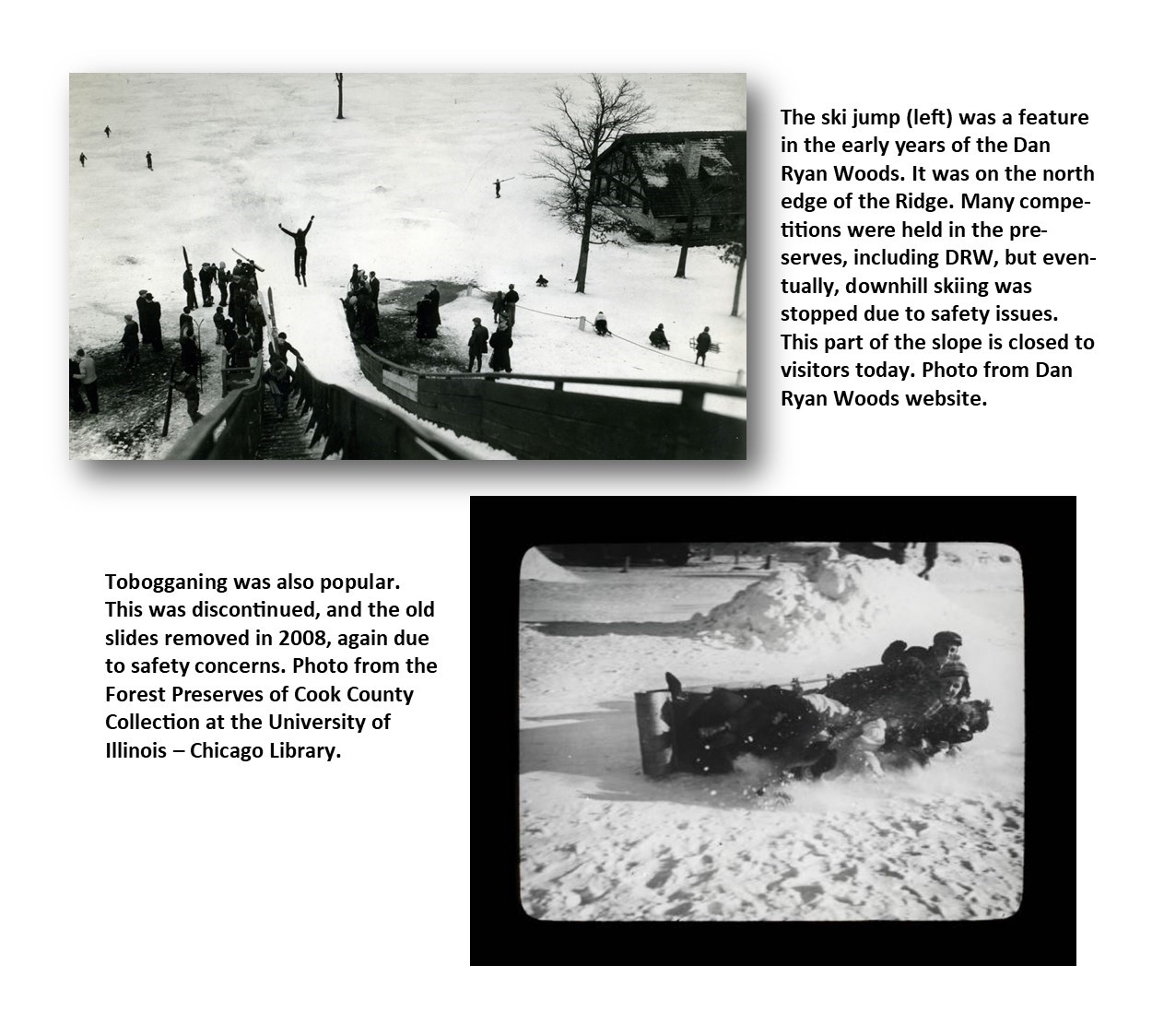
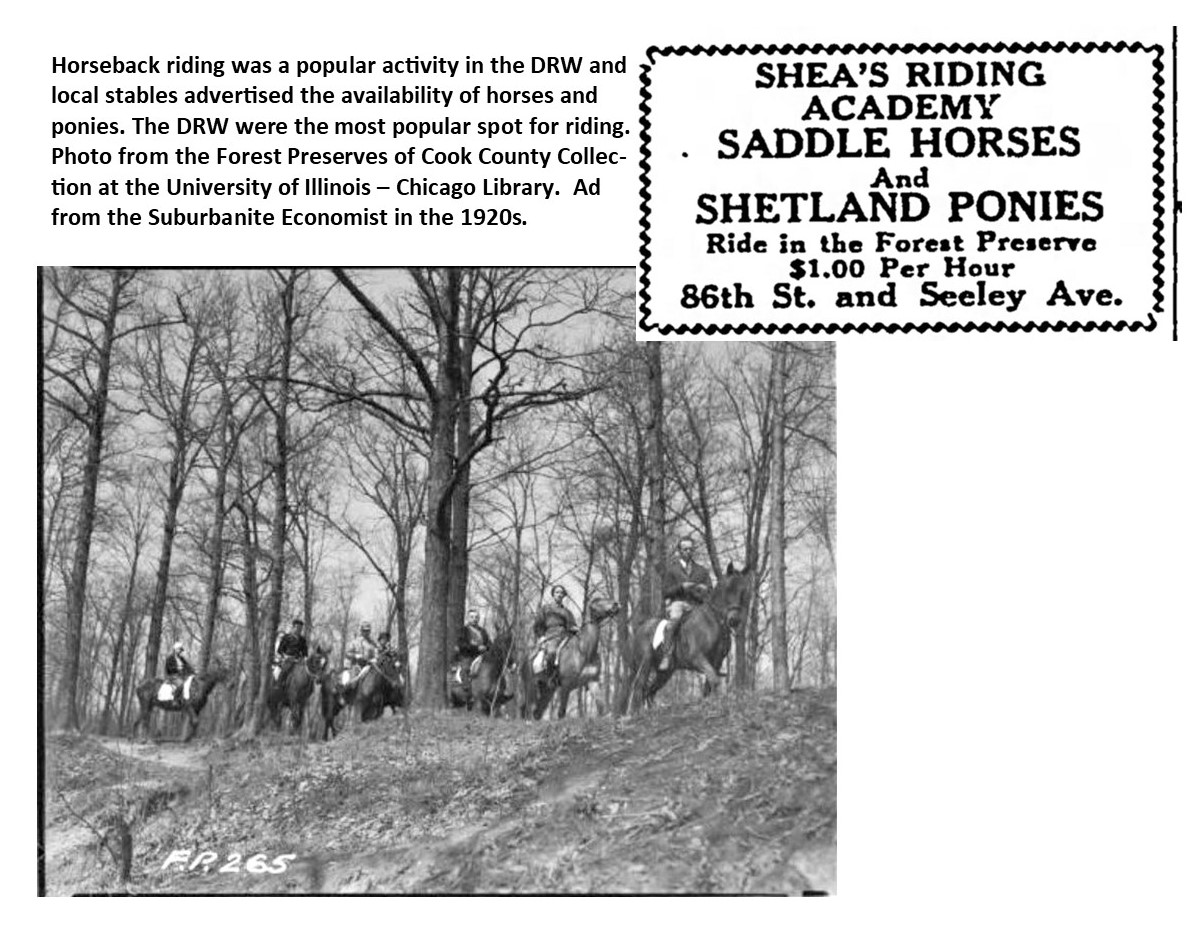
Early sports facilities included baseball diamonds, tennis courts and a cinder track. Horseback riding was very popular and there were stables in the area where visitors could rent horses and ponies. For winter sports, there was a 30-foot ski jump, toboggan slides, and flooded baseball diamonds for ice skating.
At one point, there was talk of establishing a public golf course. The small patch of land north of 83rd Street bordered by the train tracks and Western Avenue was purchased in the early 1920s with this in mind, but no golf course was built.
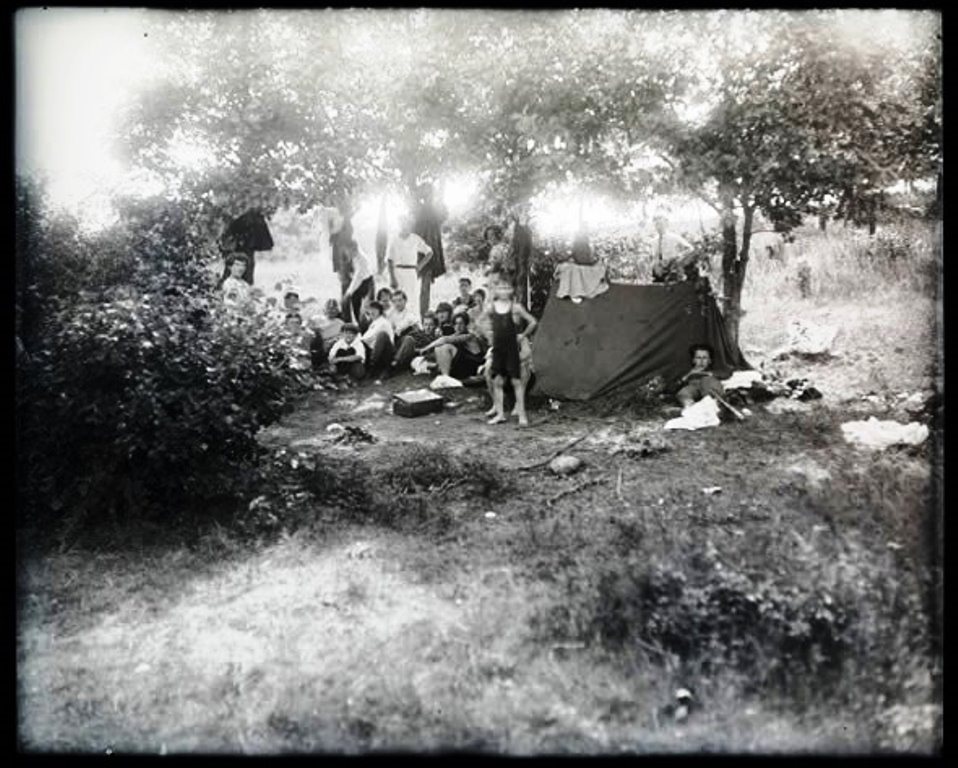
Instead, the DRW were made one of the twelve free tourist camps for automobile travelers in Cook County.
By the early 1920s, there were over nine million automobiles and trucks in the U.S. This new means of transportation offered people more freedom to travel and road trips became very popular. New roads were built and old ones like Western Avenue were improved. Tourist camps popped up all over the country to provide camping sites.
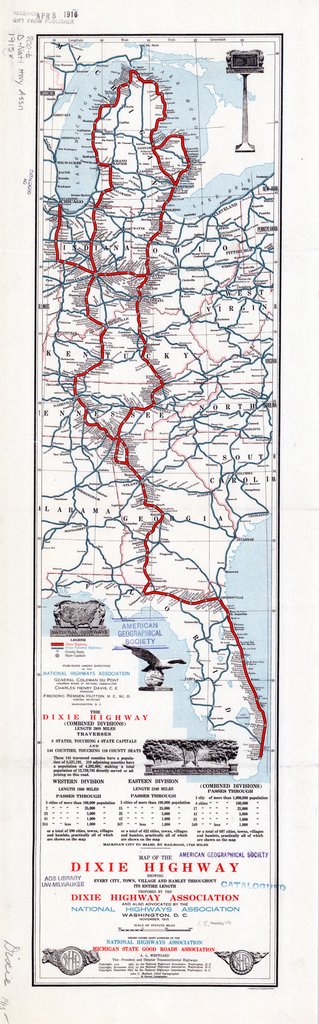
Western Avenue was part of the Dixie Highway, a system of roads started in 1915 that connected the northern states with the South, ending in Miami, Florida. The DRW were strategically located along the Dixie Highway.
In 1923-25, Chicago Tribune articles noted the extensive use of the DRW by motoists. “Deluxe” facilities included a log cabin shelter house with lounge areas and fire places; showers, toilets and laundry tubs; and gas cook stoves. Throughout the preserve, tables and benches, water and firewood supplies, and “sanitary equipment” could be found. The DRW could accommodate 600 cars.
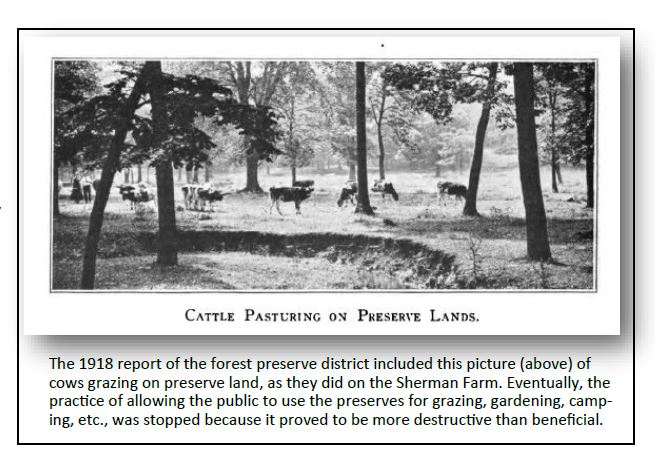
In addition to camping, the FPCC allowed local farmers to graze their cows on forest preserve land, and allowed people to have gardens in the preserves. Eventually, camping, grazing and gardening were all discontinued because they proved to be more destructive than beneficial to the preserves.
From spring through fall, hundreds of events were held in the DRW, including picnics, weddings, sports competitions, graduations, retirement parties, church socials, school outings, nature classes, Scouting activities, dances, concerts and political rallies. Associations holding conventions in Chicago often included an outing to DWR. The newspapers covered everything from very small events, like a birthday party for a six year old boy, to very large ones with thousands of attendees.
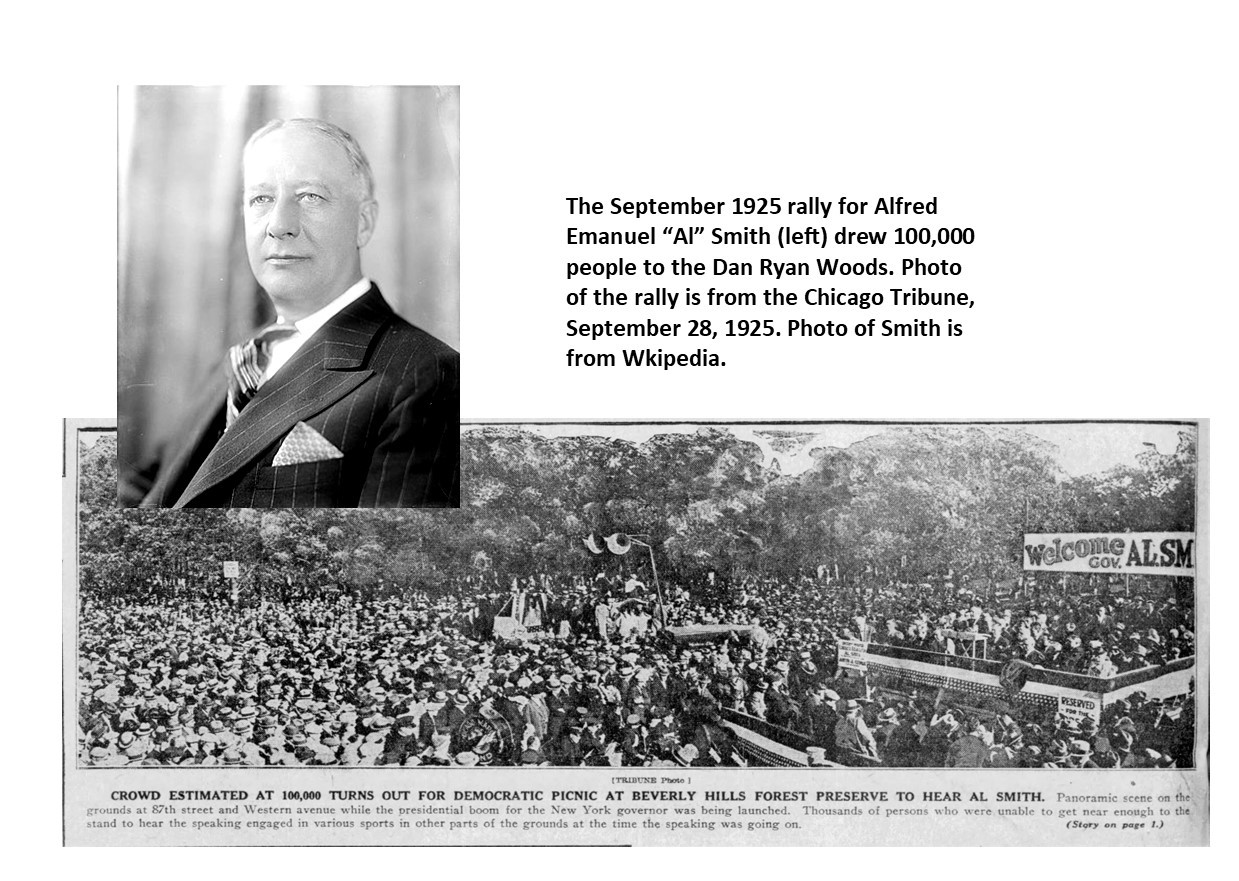
Possibly the largest event in DRW history, and certainly one of the most prestigious, was the 1925 Democratic rally that featured Alfred Emanuel “Al” Smith (1873-1944), attended by over 100,000 people. Smith, elected Governor of New York four times, was an influential leader in the Progressive Era, achieving a wide range of reforms. He improved the conditions for factory workers and for women and children in the workforce, and he condemned social injustices like lynchings and other racial violence. He was an opponent of Prohibition, recognizing that a nationwide ban on alcohol could never be enforced.
The rally in DRW was the kick-off for Smith’s campaign to run for U.S. President in 1928. On Sept 27th, he traveled from the Blackstone Hotel downtown on Michigan Avenue to the DRW in a motorcade of hundreds of autos filled with his supporters, accompanied by a detail of motorcycle police.
At DRW, Smith spoke from a make-shift wooden platform about inefficiencies in Washington and his proposals to cut spending. He stopped just short of announcing his presidential bid at the rally but it was understood that was the real purpose of the event.
Smith had made an unsuccessful bid for the Democratic nomination in 1924. He did win the nomination in 1928 but lost the presidential election to Herbert Hoover. He again sought the nomination in 1932 but lost to Franklin D. Roosevelt. Smith was the first Catholic to run for President. He mobilized Catholic women to vote for the first time after the 19th Amendment was enacted. It would take until 1960 for John F. Kennedy to be elected the first (and to date, only) Catholic President.
Next up: More on the early days of DRW.
The history of Dan Ryan Woods – Part 15: Events reflected the times
By Carol Flynn
Picnics, celebrations, entertainment, and sports events were the mainstay of Dan Ryan Woods (DRW) activities. However, other events of a more serious nature were also held there, reflective of the decades in which they occurred.
After World War II, the period known as the “Cold War” started, when political tensions ran high between the U.S. and the Soviet Union. The threat of nuclear warfare hung over the globe, tempered by the knowledge that a strike by either side would lead to mutually assured destruction.
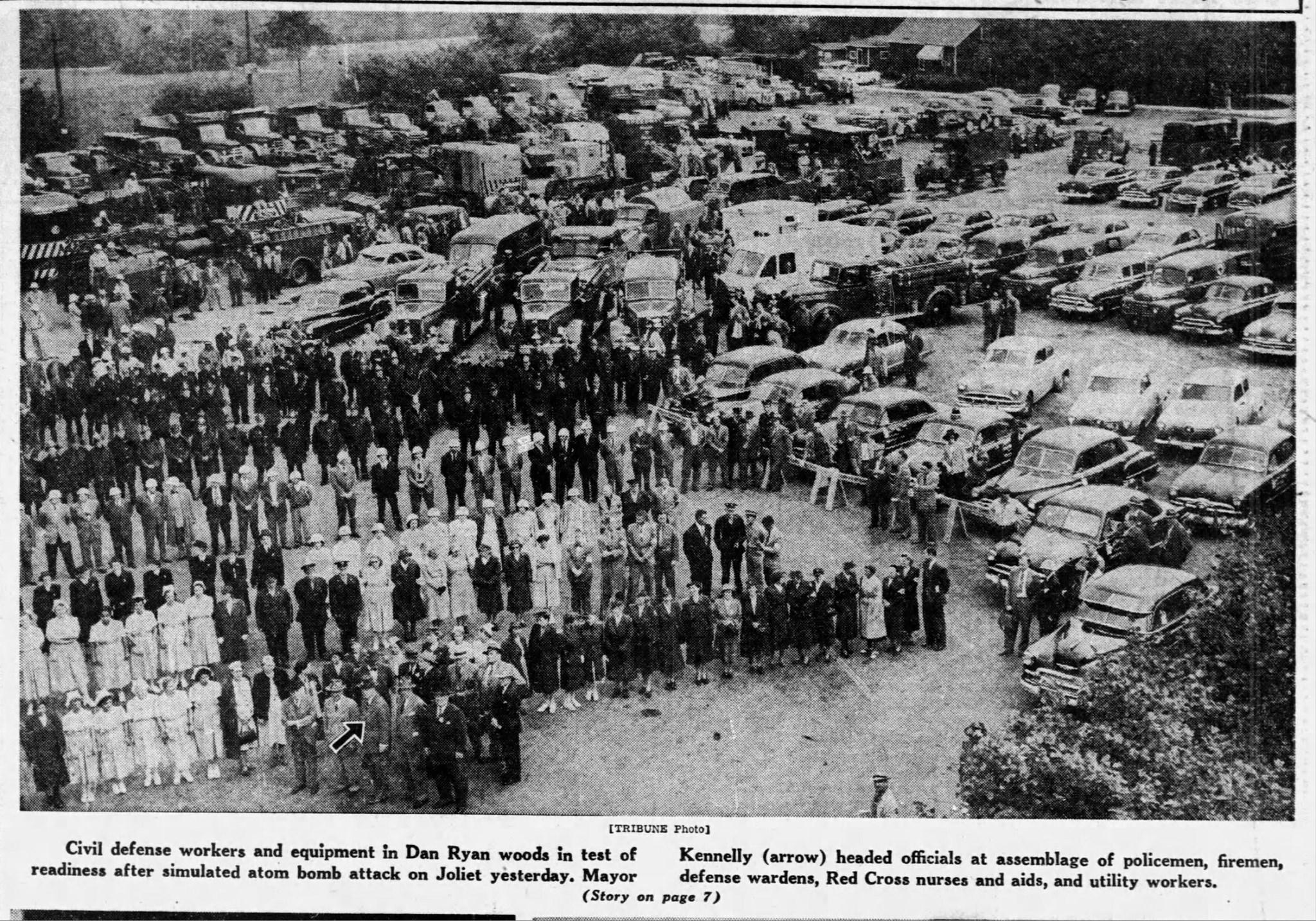
On September 25, 1951, DRW was used as the site to stage a mock response to an A-bomb attack. The scenario was that the city of Joliet was bombed and heavily damaged, and the Chicago Civil Defense Corps was mobilizing its forces to send aid. The exercise was to test the preparedness of the Chicago forces to respond to such a crisis.
The alert was sounded at 9:30 a.m., and within an hour, 200 vehicles and 600 workers had assembled in DRW. Included were fire trucks, ambulances, police cars, utility repair trucks, bulldozers, heavy cranes and other street clearing machinery, and the crews that staffed them. Red Cross nurses and aides were also part of the mix.
Premiering at the event was a mobile hospital trailer that had its own power unit and included operating facilities, and oxygen, blood plasma and other medical supplies. It was developed specifically for such a disaster.
Four amateur radio operators communicated between DRW, Joliet, and the radio control center at the Burnham Park administration offices. Mobile radios, walkie-talkies, and temporary telephones and telegraph lines were set up to coordinate efforts within the DRW assembly area, and link them to Burnham Park.
Although the vehicles did not make the actual trip to Joliet, overhead a helicopter hovered that would have monitored and reported on traffic conditions around DRW. A Civil Air Patrol plane patrolled Route 66 from Chicago to Joliet, the major highway between the cities then, and would have been ready to report on traffic and the locations of the units.
The test lasted about two hours and was reviewed by Mayor Martin H. Kennelly, other city officials, and civil defense authorities. It was pronounced a success. Fortunately, the plan never had to be implemented in reality.
The 1960s and 1970s saw activities for social causes.
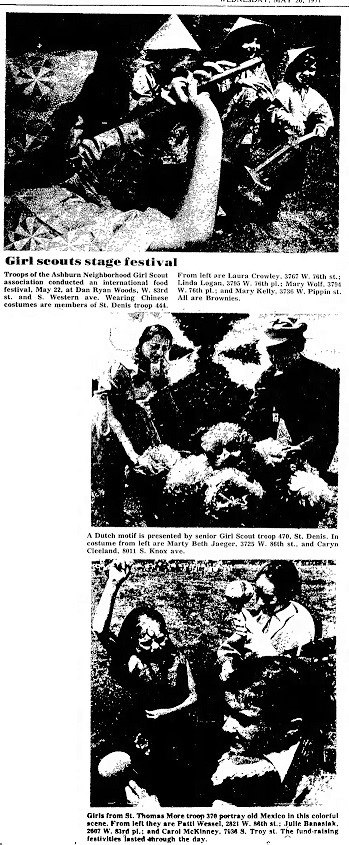
In 1971, local Girl Scout troops staged an international food festival in DRW as a fund-raiser. The girls dressed in native costumes from various countries to illustrate and educate about the diverse groups and cultures that came to the U.S.
In 1977, 150 anti-Nazi protesters held peaceful demonstrations at DRW against the National Socialist Party and its plans to march in the northern suburb of Skokie. The demonstrators marched from DRW to the Nazi Party headquarters near 71st Street and Western Avenue, where police kept the two groups separated, and there were no incidents. The Nazi Party obeyed a court order to cancel the Skokie march.
During the 1970s, DRW was one of the starting and ending points for an annual anti-hunger march conducted by the American Freedom from Hunger Foundation. As many as 40,000 high school and college students gathered pledges, met at DRW, and marched up to 30 miles to raise funds for projects ranging from schools in developing countries to local food cooperatives. At least 45 high schools from the southwest Chicagoland area were represented. The march route wound through local neighborhoods to Midway Airport and back, with checkpoints at intervals. Residents along the route offered encouragement, refreshments and restroom facilities.
Wrote one columnist about the event in 1971: “You should have been there to see the happening, and then maybe you’d understand what this age is all about. In this column, I’ve hammered a lot about today’s young folks being softies. I’ve bemoaned the hippies who protested and rioted and scorned physical fitness.
“But now, at near 10 p.m. Sunday, in the increasing darkness in the Dan Ryan Woods, I felt more thrilled than I’ve ever before been thrilled in the newspaper game. I was with thousands of fine young Americans who had walked 30 miles each to raise funds for the hungry in Cook County, Illinois, Africa, you name it. Young Americans with a purpose.”
Next: Skis and toboggans