Explore the RHS Facebook Archives, a rich repository of local history written by Carol Flynn. For two decades, Carol brought a deeply dedicated voice to public education at RHS. Her role as Facebook administrator through mid-2025 naturally extended her prolific research into meticulously detailed articles, most notably her multi-part historical series posts. Today, Carol continues her local history writing for The Beverly Review and other outlets.
Louise Barwick
The Ridge Historical Society
Louise Barwick – Part 1
By Carol Flynn
The Ridge Historical Society (RHS) has opened a new exhibit – “Louise Barwick’s Lost Ridge.”
The exhibit may be viewed on Tuesdays and Sundays from 1:00 p.m. to 4:00 p.m. or by appointment. RHS is located at 10621 S. Seeley Avenue in Chicago. The exhibit is free.
This exhibit focuses on life on the Ridge from 1893 to 1905 as seen through the watercolor paintings of Louise Barwick, an artist and educator who lived on the Ridge.
Other components of the exhibit include a section on aerial photography taken by cameras attached to kites, and “lost and found” architecture – historic photos of buildings, some of which remain and some of which are gone from the Ridge.
This post will begin a look at Louise Barwick.
The watercolor paintings by the late Louise Barwick are among the gems of the RHS collection. Miss Barwick (1871 – 1957) was a long-time resident and art teacher in the Ridge community.
It is said that a picture is worth a thousand words. Miss Barwick’s paintings are not only interesting from an artistic perspective, but also because the subject matter depicts life on the Ridge circa 1895-1905.
Completed sometime in the 1940s or before, the paintings represent memories of everyday scenes as well as special events. They offer a unique visual interpretation of local history based on the experiences of a young woman of the time. Louise also included stories and descriptions that enrich viewers’ understanding of the images.
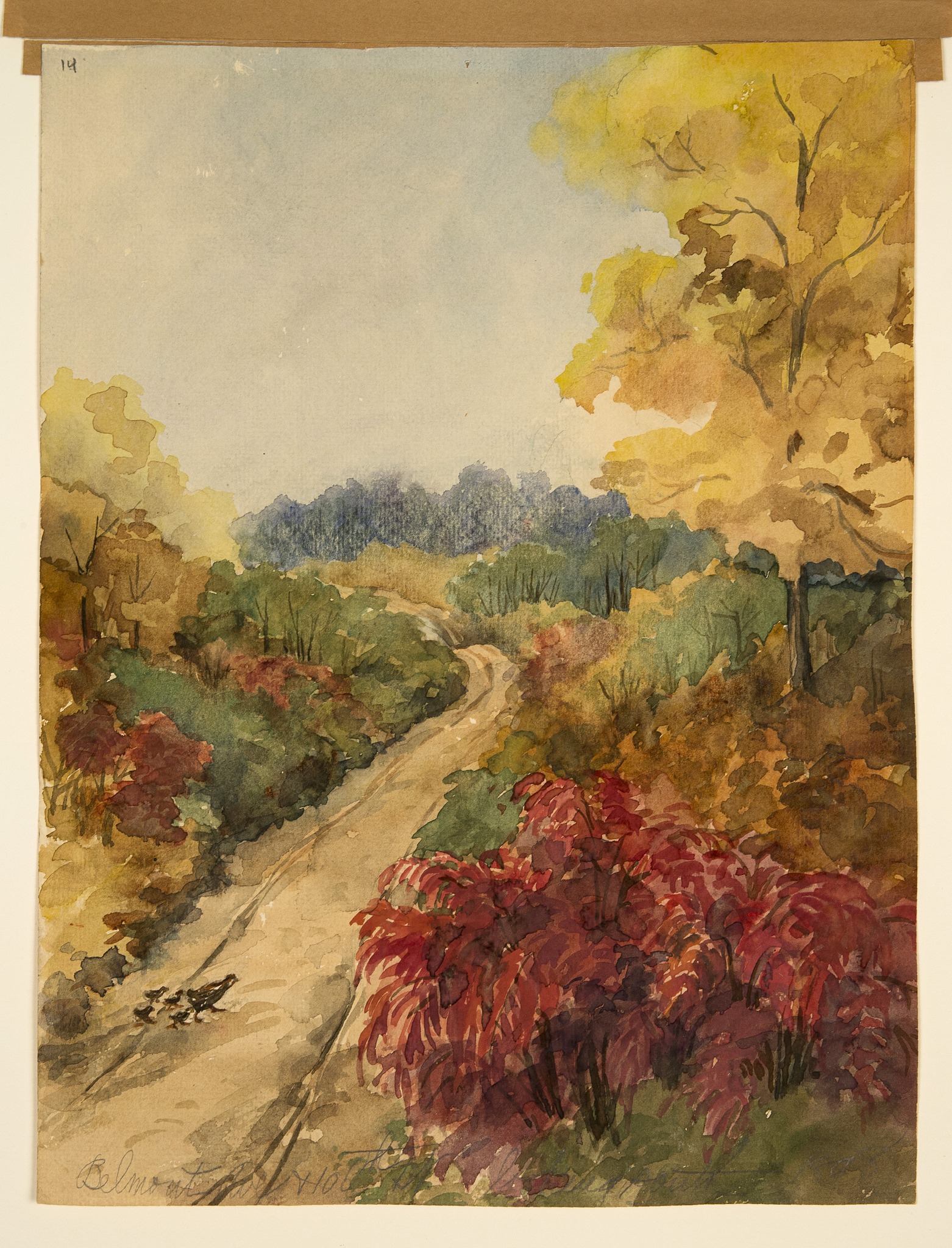
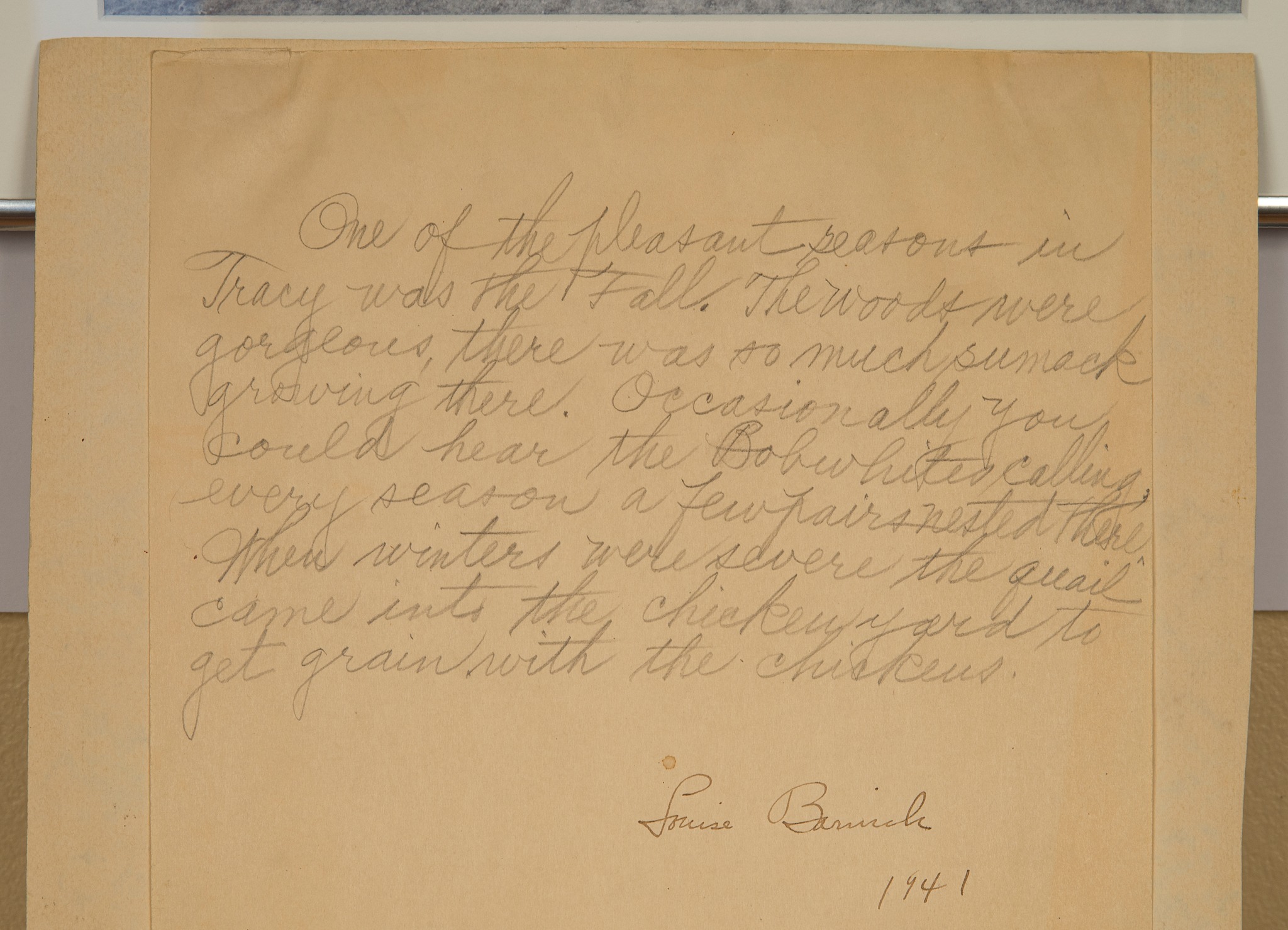
One example of her paintings and the notes with it are attached. To see more of her paintings, viewers are encouraged to visit RHS for the actual exhibit.
However, her watercolor paintings and teaching career are only part of Miss Barwick’s legacy. It was actually her geographical maps that won her fame.
And Miss Barwick’s family history is also of note. She was a descendent of Chicago pioneers whose stories are part of the earliest days of the city.
Let's start with her genealogy.
The Barwick Family
Louise’s paternal grandfather, John Barwick (1806-1881) was a successful businessman and farmer in Canada.
He arrived in the Toronto area in 1832, having served in the British army, reaching the rank of lieutenant colonel. He established a saw mill, and was also a farmer and had a tavern license to sell beer and ale. From 1843-1847 he was partners with Benjamin Thorne, a leading merchant in Toronto and Montreal, who ran gristmill, sawmill, and tannery businesses. Barwick ran the Red Mills at Holland Landing as part of Thorne’s holdings.
Barwick was very active in local politics and improvements. In the 1860s, he served as president of the Provincial Agricultural Association of Upper Canada and on the Canada’s Board of Agriculture, and was involved in an exhibit that took place in London.
He was active in the formation and funding of the Canada Emigration Society, which encouraged people from the British Isles to immigrate to Canada. The businessmen considered this an investment – immigration brought more people to farm their vast land holdings, work in their industries, and buy their products.
John Barwick married Mary Ready Lee, the second daughter of Captain Simon Lee, who was wealthy from years with the East India Company. Mary’s hand had actually been asked for by another suitor, but Mrs. Lee insisted that by tradition the daughters had to marry in order. The first suitor was obliged to either marry the elder daughter or no Lee daughter at all.
John and Mary Barwick had a successful marriage, or at least a fruitful one. They had 18 children, including son John Lee Barwick, who came to Chicago at the age of 26, and took up with the Cleaver family.
The next post will look at the Cleaver family, and “Cleaverville,” a “company town” in Chicago that predated the Pullman area by three decades.
The Ridge Historical Society
Louise Barwick – Part 2
By Carol Flynn
The Ridge Historical Society’s new exhibit, “Louise Barwick’s Lost Ridge,” may be viewed on Tuesdays and Sundays from 1:00 p.m. to 4:00 p.m. or by appointment. RHS is located at 10621 S. Seeley Avenue in Chicago. The exhibit is free.
This exhibit focuses on life on the Ridge from 1893 to 1905 as seen through the watercolor paintings of Louise Barwick, an artist and educator who lived on the Ridge. Other components of the exhibit include a section on aerial photography taken by cameras attached to kites, and “lost and found” architecture – historic photos of buildings, some of which remain and some of which are gone from the Ridge.
This Facebook series on Louise Barwick complements the exhibit, but does not repeat it. More information on Louise herself, her family and her history, is being presented in this series. The exhibit concentrates more on visual images of the Ridge in the late 1800s.
This post will look at Louise’s maternal ancestors.
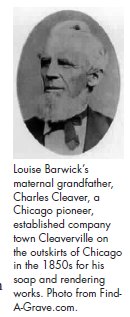
Charles Cleaver, Louise’s maternal grandfather, was born in London in 1814 into a family famous for soap-making. The Cleavers began the company that would change its name to Yardley of London after two Cleaver sons married Yardley daughters, and the Yardley family eventually took over the business.
In October 1833, Cleaver arrived in Chicago, when the city, in his own words, “… was just springing into existence … when the only sidewalk Chicago then had was an Indian trail along the river bank.”
Cleaver started the first soap and candle factory in what is now downtown Chicago. Cleaver also had a general store which he ran with his brother William.
Soap and candles were made from animal fat, usually beef tallow or pork lard. Therefore, essential to the operation were slaughterhouses and meat packing plants. Cleaver took all the lard and tallow from the meat packing houses of the city, and rendered it, that is, melted it down and clarified it (strained it to remove impurities) in the melting house adjoining the factory. He soon was the major supplier of rendered oils and other products made from the oils for the country west and north of Chicago.
In 1838, he married Mary Brookes, from another pioneer family, and they had eleven children.
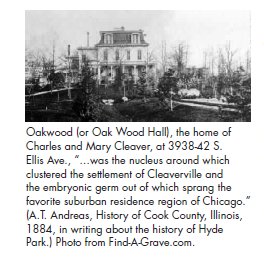
Around 1851, Cleaver bought land around what is now 35th Street and Cottage Grove. He built a meat packing facility and soap making and rendering works, and a general store. He created Cleaverville, a company town, to house his employees. He erected numerous homes and a meeting house, which was also the first church. Cleaver paid the Illinois Central Railroad to run trains to his settlement. Brother William served as postmaster and ran the store, among other duties.
Cleaverville ran from 35th Street and the lake west to Cottage Grove/Vincennes Road, and south to 43rd St., just north of Hyde Park. In fact, Cleaver coined the name Cottage Grove, because, yes, there was a cottage in a grove on the site.
Cleaverville was a smaller version and forerunner of the Pullman area, which would be built 30 years later by George Pullman as a company town for his railroad car business.
In 1853, the Cleavers built a grand house at 3938 Ellis Ave., which became the center of Cleaverville activities. The house was known as Oakwood Hall or Oak Wood Hall.
Up to 1856-57, Cleaver did all the melting for all the meat companies in the city. In 1857, Cleaver discontinued his soap factory, and turned his attention to real estate. He became one of the leading real estate men of the city.
The Cleavers, and later the Barwicks, were active in numerous organizations and listed in social registries. They were often covered in the society pages. One example occurred in 1864, when the Chicago Tribune described a holiday “Fair and Festival” planned to take place at the residence of Charles Cleaver, Esq., arranged by the ladies of the Salem Congregational Society, the church founded by Cleaver and his father-in-law Samuel Brookes. The event was a fund raiser for the church.
“There will be room for all, and the attractions will be of the very first order,” promised the Tribune. Plans called for an “excellent supper, and a choice collection of toys and fancy articles, most seasonable just at this time among the little folks.” Admission was 25 cents, “and the locality is just the pleasantest of all directions for an evening sleighing party. The ladies of Cleaverville deserve to be well-rewarded for their enterprise….”
Beginning in the late 1860s, Cleaver shared his experiences and memories of the very earliest days of Chicago in articles and talks. A collection of these materials was published as “Early Chicago Reminiscences” in 1882 by Fergus Printing Co. and is well worth a read by Chicago history buffs.
Charles Cleaver died in 1893 and is buried in Oak Woods Cemetery.
The next post will look at the Brookes family, Louise Barwick’s maternal grandmother’s side, another very early family in Chicago history.
The Ridge Historical Society
Louise Barwick – Part 3
By Carol Flynn
The Ridge Historical Society’s new exhibit, “Louise Barwick’s Lost Ridge,” may be viewed on Tuesdays and Sundays from 1:00 p.m. to 4:00 p.m. or by appointment. RHS is located at 10621 S. Seeley Avenue in Chicago. The exhibit is free.
This exhibit focuses on life on the Ridge from 1893 to 1905 as seen through the watercolor paintings of Louise Barwick, an artist and educator who lived on the Ridge. Other components of the exhibit include a section on aerial photography taken by cameras attached to kites, and “lost and found” architecture – historic photos of buildings, some of which remain and some of which are gone from the Ridge.
This Facebook series on Louise Barwick complements the exhibit, but does not repeat it. More information on Louise herself, her family and her history, is being presented in this series. The exhibit concentrates more on visual images of the Ridge in the late 1800s.
This post will continue to look at Louise’s maternal ancestors.
Louise Barwick’s maternal grandmother, Mary Brookes Cleaver, was the daughter of Samuel Brookes, the first florist in the City of Chicago. He was described as “an old-fashioned English gardener” by the American Florist magazine in 1912.
However, Brookes was so much more than that.
Before deciding to bring his family over to the New World, he was a distinguished botanist, florist, horticulturist, and carpologist (one who studies fruits) who owned and operated one of the largest London nurseries, where he studied and dealt in exotic imported plants. He introduced the azalea, the chrysanthemum and the Chinese cherry, among other plants, into Europe, from cuttings from China. He won numerous awards for his plants.
Brookes came to Chicago via Canada in 1833, bringing along his family, servants, various pets, and rootstock to establish a new business. Charles Cleaver claimed that Brookes also brought the first piano to Chicago.
Brookes built Chicago’s first commercial greenhouse in 1845. He eventually moved his business and his home to Cleaverville. He was as respected in America as in Europe for his horticultural knowledge. He was called the “Father of the Chrysanthemum” in the trade because no one had as much experience with the flower as he did.
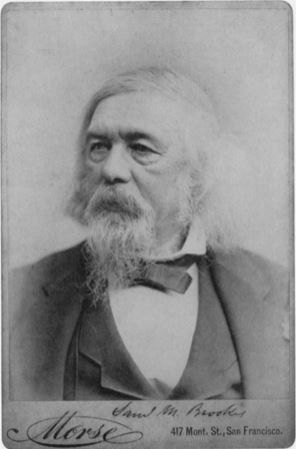
Besides daughter Mary, who married Charles Cleaver, two of the Brookes sons, Frederick William (F. W.) Brookes and Samuel Marsden Brookes, are notable for this story.
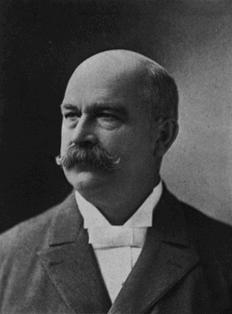
F.W., who seemed to always be referred to by his initials, started a career as a printer and worked with the Chicago Tribune, but eventually joined his father in the greenhouse business. He spent his later years as a resident of Morgan Park, and his home for many years was a showplace for some of the original Norway pines from the first greenhouse.
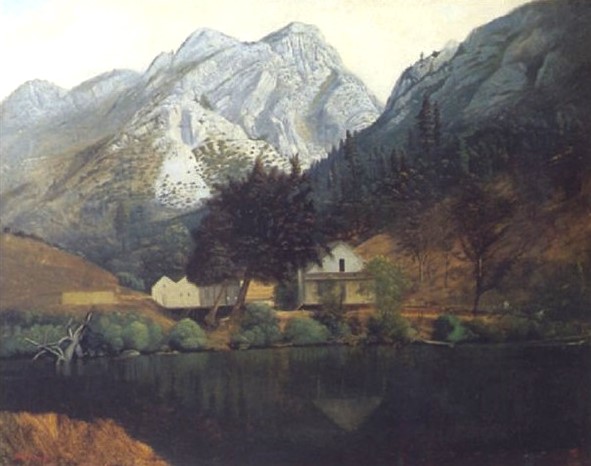
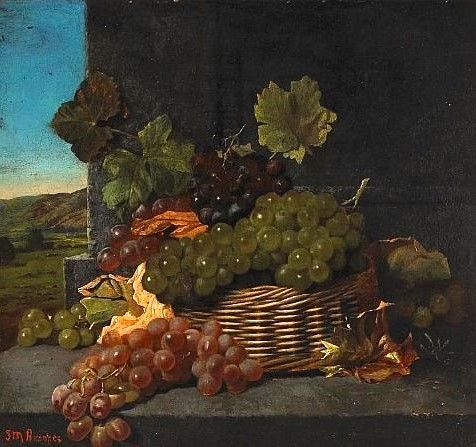
Samuel Marsden Brookes was 17 when his family left England, a graduate of a private school, and a budding artist. Once in Chicago, although his father disapproved, young Samuel continued his pursuit of studying art anywhere and anyway the opportunity presented itself, eventually giving art lessons himself. He moved to California, where he became a well-known artist in San Francisco, specializing in portraits, landscapes and still life paintings.
Perhaps Louise Barwick’s artistic leaning was a family gift.
The Ridge Historical Society
Louise Barwick – Part 4
By Carol Flynn
The Ridge Historical Society’s (RHS) current exhibit, “Louise Barwick’s Lost Ridge,” may be viewed on Sundays and Tuesdays from 1:00 p.m. to 4:00 p.m. or by appointment. RHS is located at 10621 S. Seeley Avenue in Chicago. The exhibit is free. RHS may be contacted at 773/881-1675 or ridgehistory@hotmail.com.
Louise Barwick (1871 – 1957) was a long-time resident and art teacher in the Ridge community. Her watercolor paintings of local scenes from around 1900, which form the basis of the current exhibit, offer a visual history of the environment of that time.
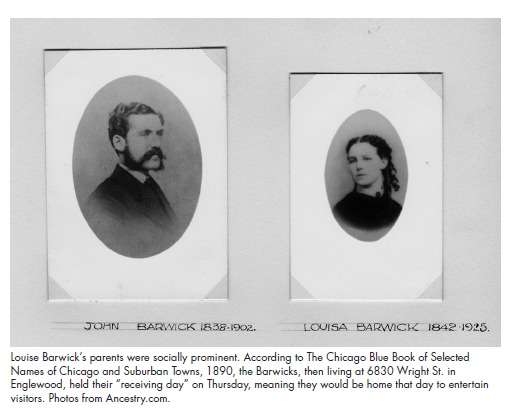
Louise Barwick’s ancestors were among the very earliest settlers in Chicago. The first few posts of this series looked at the Barwick, Cleaver, and Brookes families. Louise’s mother was Louisa (Lou) Cleaver (1842-1925), the third child of Charles and Mary Brookes Cleaver. Lou graduated from the Dearborn Academy, one of the first schools for girls established in Chicago. In 1868, Lou married John Barwick (1838-1902), who had come to Chicago around 1865.
Louise Isabel Barwick was born on May 1, 1871, the second of seven children, to John and Louisa Barwick.
On the 1880 census, the Barwick family was listed as living at 920 Bowen Ave., in Cleaverville, the “company town” built by Charles Cleaver, Louise’s maternal grandfather, for the employees of his meat packing facility and soap making and rendering works at 35th Street and Cottage Grove. The Barwick family lived next door to the family of a Cleaver brother-in-law. Barwick’s occupation was given as bookkeeper.
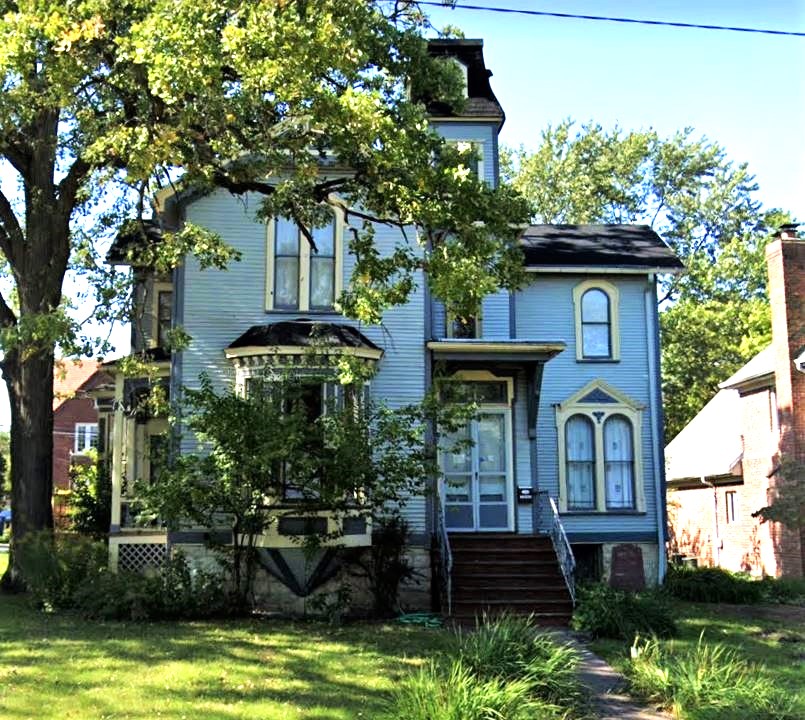
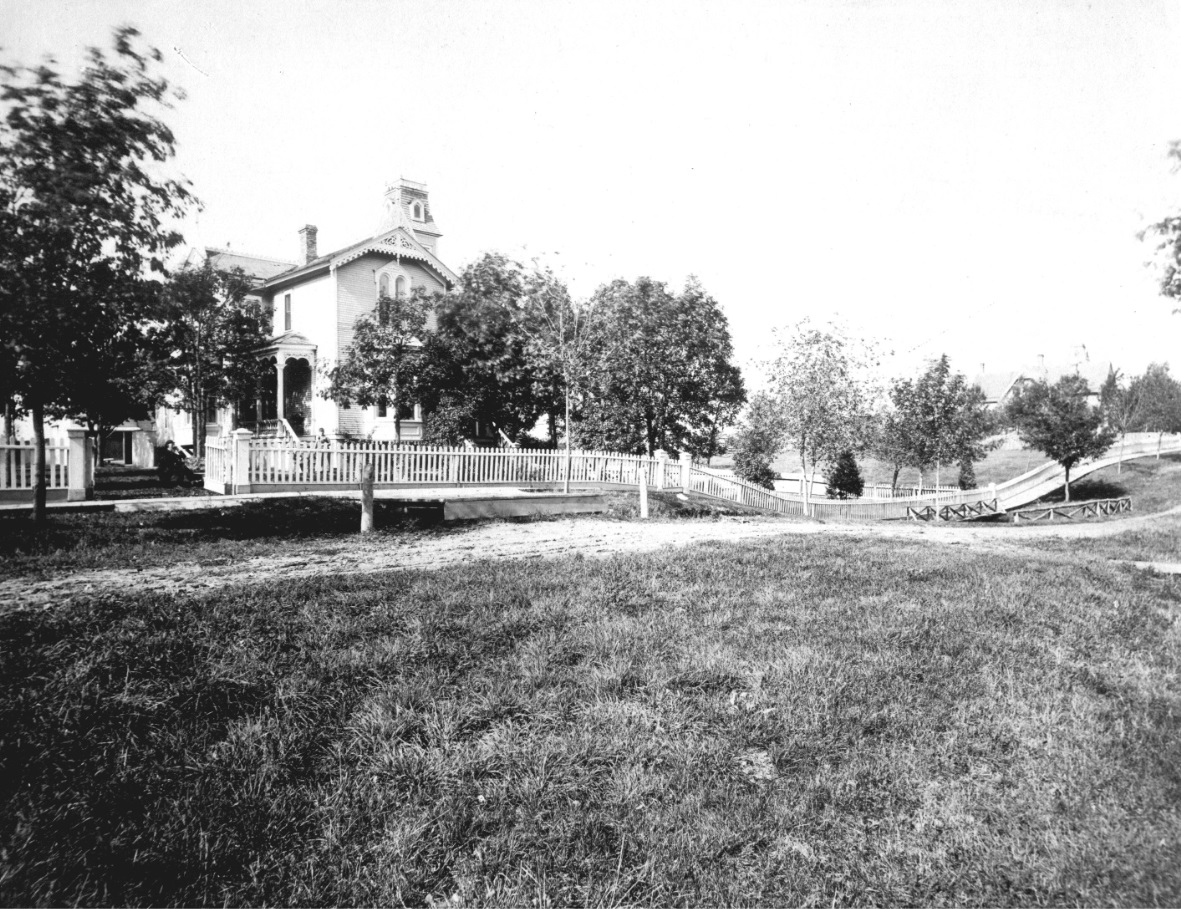
The Barwick family moved around a bit. The 1892 voters’ list recorded them at Belmont Ave. near Tracy, which would be around 103rd Street and Seeley. By 1900, Barwick had joined his father-in-law in real estate, and the Barwick family resided in the house at 10330 S. Seeley Ave. That house was built for George Chambers in 1874, and is still standing today, one of the most historic in Beverly.
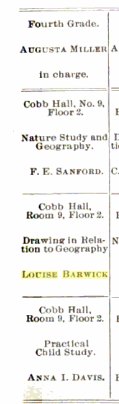
Louise graduated in 1891 from the Cook County Normal School, a training institution for teachers. This was significant as the school was run by Col. Francis Wayland Parker, one of the giants in the history of American education.
Parker (1837 – 1902) was from New Hampshire, worked as a teacher, and rose to Colonel in the Union Army during the U.S. Civil War.
After the war, in Germany, Parker studied progressive education theories and techniques of people like Rousseau, Frobel, Pestalozzi, and Herbart, educators we have written about before for their profound influence on the educators who called the Ridge home, such as the Hofer sisters.
Parker came to embody the Progressive Era’s initiatives and reforms to change the focus of education for children to be based on learning by doing as opposed to lectures and rote memorization.
After returning to the U.S., after serving as the superintendent of the Boston Public Schools, Parker came to Chicago in 1883 to become the principal of the Cook County Normal School, where he constantly experimented with developing and expanding curriculum. Reading, spelling, and writing became “communications.” Art, music, and physical education were added to the curriculum. The study of nature was added to the science curriculum.
Parker started a private experimental school, the Chicago Institute, that merged with the U. of Chicago Laboratory Schools in 1901.
Louise Barwick was educated as a teacher under Col. Parker’s guidance, and she became a teacher at the Normal School herself. Although she was a talented painter, her real excellence showed in her geographic map-making skills, both drawn and modelled in clay and other materials.
During the 1890s, Louise taught classes at the Normal School as part of the Geography program. Some of the topics were “Drawing Geographical Types,” and “Relief Maps in Chalk.”
For a time, the geography art classes were under the direction of Ida Cassa Heffron, who lived in Beverly at 10638 S. Prospect Ave. Heffron’s father was Rev. Daniel Salisbury Heffron, who helped found Bethany Union Church and was pastor there for 11 years.
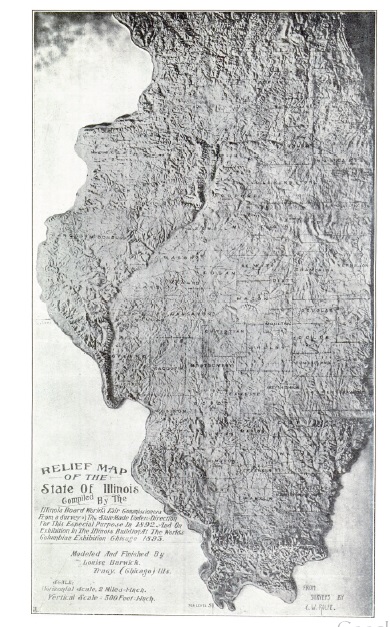
In the next post, we will look at the phenomenal work Louise completed for display at the 1893 World’s Fair in Chicago, the Columbian Exposition. This was a huge relief map of Illinois that illustrated the topographical features of the land.
The Ridge Historical Society
Louise Barwick – Part 5
By Carol Flynn
The Ridge Historical Society’s (RHS) current exhibit, “Louise Barwick’s Lost Ridge,” may be viewed on Sundays and Tuesdays from 1:00 p.m. to 4:00 p.m. or by appointment. RHS is located at 10621 S. Seeley Avenue in Chicago. The exhibit is free. RHS may be contacted at 773/881-1675 or ridgehistory@hotmail.com.
Louise Barwick (1871 – 1957) was a long-time resident and art teacher in the Ridge community. Her watercolor paintings of local scenes from around 1900, which form the basis of the current exhibit, offer a visual history of the environment of that time.
However, it was actually Louise’s map-making skills that brought her recognition in her own time, and set her above the many genteel young women who engaged in painting as an “appropriate” pastime for a woman in those days.
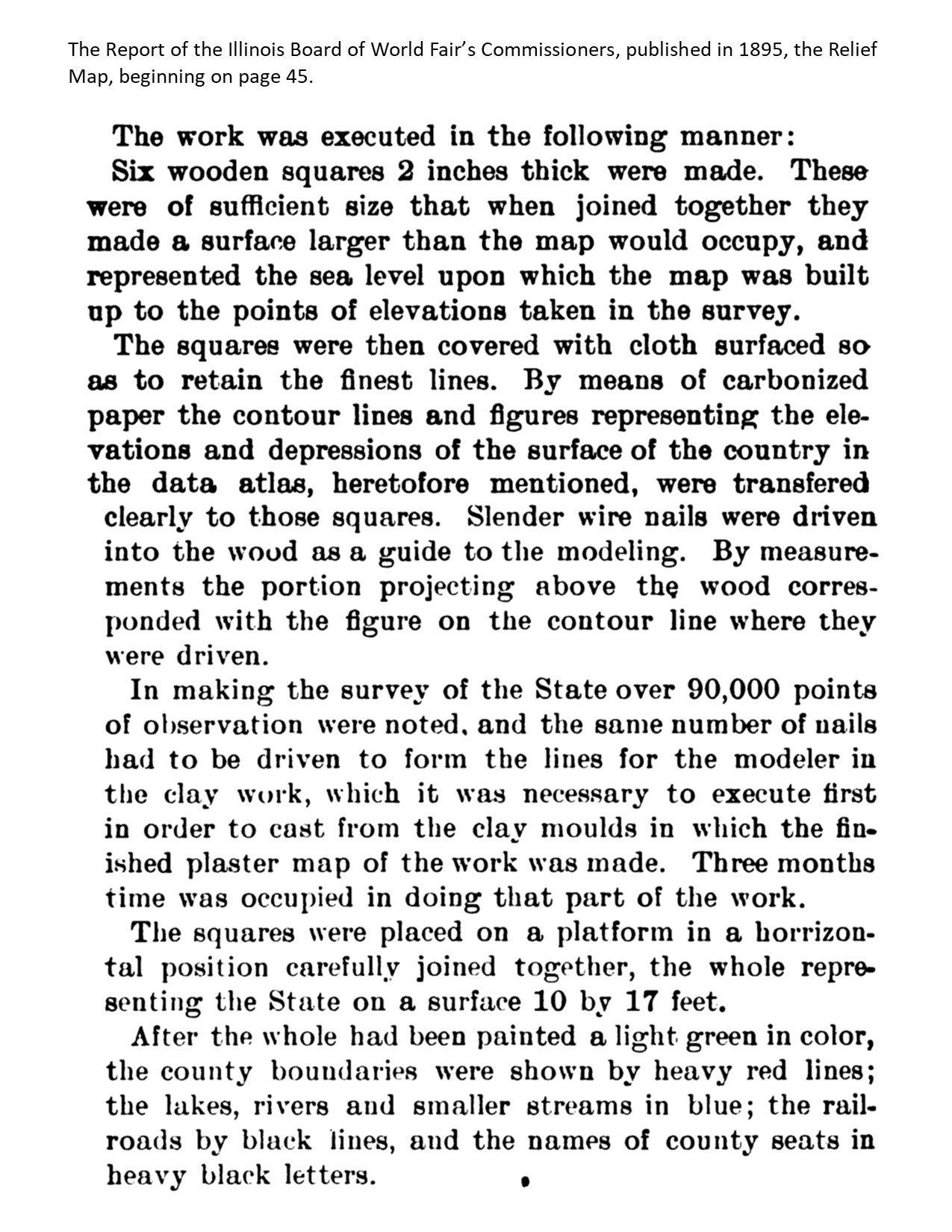
Louise Barwick’s work was one of the prize features of the Illinois building at the 1893 World’s Fair in Chicago, also known as the Columbian Exposition. She created and displayed a relief map of the State of Illinois, showing the topographical features of the state, such as the rivers, valleys, and geographic formations, as well as the counties, major cities, and railroads. The map was a huge 10 feet by 17 feet and made of plaster.
The Report of the Illinois Board of World Fair’s Commissioners, published in 1895, who proposed the map, covered the project in great detail. It was based on surveys overseen by C. W. Rolfe, professor of geology at the U. of Illinois – Urbana.
Then “Miss Louise Barwick of Tracy, Cook County, Illinois, a skilled artist in modeling work, was engaged to model the work in clay preparatory to making the plaster cast.”
Ten more pages of the report, which can be found through this link, explain the content of the map, based on the academic knowledge of the day. https://www.google.com/books/edition/Report_of_the_Illinois_Board_of_World_s/1IYPAAAAYAAJ?hl=en&gbpv=1&dq=The+Report+of+the+Illinois+Board+of+World+Fair%E2%80%99s+Commissioners&printsec=frontcover
Louise and her father received payment of $850 for this work, according to the financial records of the Board. There was no break-down for this amount so whether it was for supplies or as revenue was not clear.
The Board made many positive comments about the map. No topographical survey of Illinois had ever been made before, and no other state had made a relief map in the form of this one from actual survey of its surface.
The Board report stated: “The whole, when completed, making a graphic birdseye view of the State, the like of which no human eye had ever seen before. As an exhibit it was one of the most interesting in the building. It was daily surrounded by the aged and the youthful visitor, who seemed greatly impressed as they gazed on the face of our great State. Teachers, students and children engaged in the primary grades of education, seemed alike deeply interested in studying it…. The map teaches many more object lessons to the student of geography of our State, and if one could be placed in every school of the State the value to the cause of education in that one study cannot be estimated.”
The map wound up in the Illinois State Museum, but unfortunately, has been lost to time. RHS contacted the Museum to learn if the map still existed, but was informed that it was no longer in the collection. Museum staff assumed that the map likely disintegrated over time or was lost in a fire.
Louise Barwick became known as a skilled artist in modeling work. More of her maps will be discussed in the next post.
The Ridge Historical Society
Louise Barwick – Part 6
By Carol Flynn
The Ridge Historical Society’s (RHS) current exhibit, “Louise Barwick’s Lost Ridge,” may be viewed on Sundays and Tuesdays from 1:00 p.m. to 4:00 p.m. or by appointment. RHS is located at 10621 S. Seeley Avenue in Chicago. The exhibit is free. RHS may be contacted at 773/881-1675 or ridgehistory@hotmail.com.
Louise Barwick (1871 – 1957) was a long-time resident and art teacher in the Ridge community. Her watercolor paintings of local scenes from around 1900, which form the basis of the current exhibit, offer a visual history of the environment of that time.
As was reported in the last post, however, it was actually Louise’s map-making skills that brought her recognition in her own time, and set her above the many genteel young women who engaged in painting as an “appropriate” pastime for a woman in those days.
A giant relief map of Illinois that was created by Louise was a main feature of the Illinois building at the 1893 World’s Fair in Chicago, also known as the Columbian Exposition.
Louise was also known for her illustrations of maps in several publications.
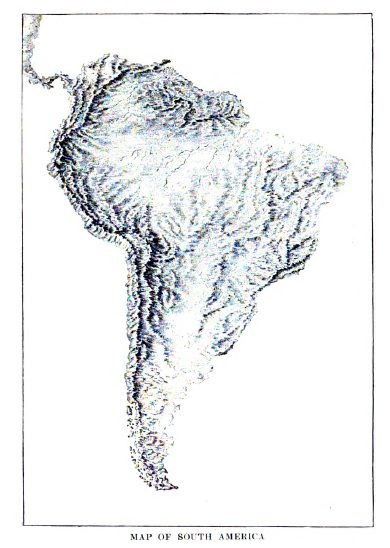
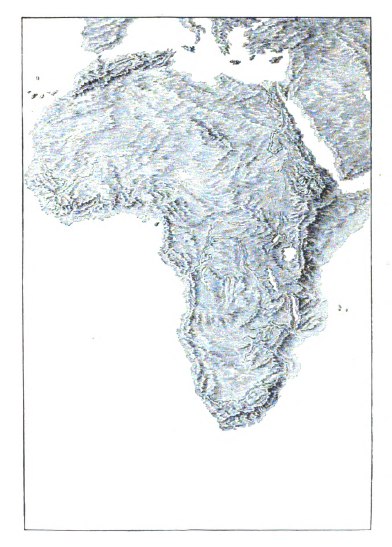
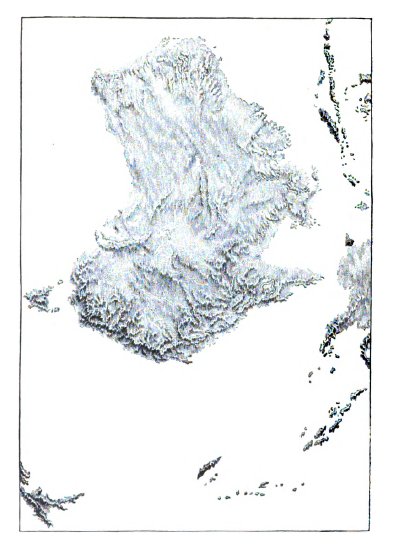
She illustrated the relief maps for The Werner Introductory Geography, a textbook written by Horace S. Tarbell, the Superintendent of Schools of Providence, Rhode Island, published in 1896.
A review of this book in August 1896 in The Inland Educator, a publication labeled as “a journal for the progressive teacher,” stated that “the Werner geographies are a very substantial advance beyond the ordinary text-book along the line of ‘the new geography.’ Most of the stock fallacies which have been perpetuated by a long line of unscientific book makers are avoided.”
The review also states that the “illustrations and maps are well selected and executed” but notes that the elevations showed in the relief models were “exaggerated,” an “extreme now practiced by many model makers.”
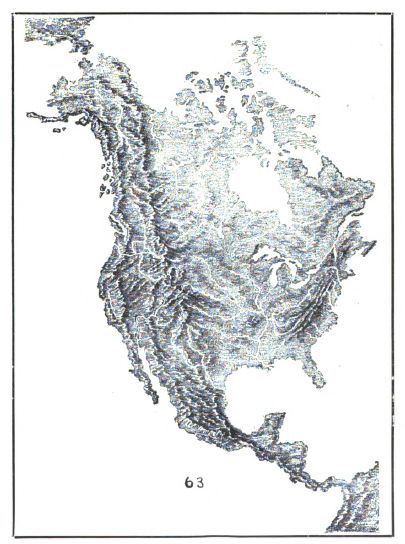
In 1903, Ida Cassa Heffron, who was mentioned in the last post, published a book, Chalk Modeling – The New Method of Map Drawing.
Heffron, a Beverly resident whose father Rev. Daniel Salisbury Heffron helped found Bethany Union Church, was a lecturer and instructor in art at the Cook County Normal School and the University of Chicago, under Col. Francis Parker, the renowned education reformer.
Louise taught under Heffron at the Normal School. Louise created the maps of the continents in Heffron’s book on Chalk Modeling.
Heffron wrote in her introduction: “Acknowledgments are also due Miss Louise Barwick, for the zeal displayed in forwarding the development and delineation of the Maps of the Continents, and for valuable assistance rendered in the drawing of the same, as illustrations for this work.”
Next post: Louise Barwick’s teaching career on the Ridge.
The Ridge Historical Society
Louise Barwick – Part 7
By Carol Flynn
The Ridge Historical Society (RHS) is open again, following weather-related closures.
The current exhibit, “Louise Barwick’s Lost Ridge,” may be viewed on Sundays and Tuesdays from 1:00 p.m. to 4:00 p.m. or by appointment. RHS is located at 10621 S. Seeley Avenue in Chicago. The exhibit is free. RHS may be contacted at 773/881-1675 or ridgehistory@hotmail.com.
Louise Barwick (1871 – 1957) was a long-time resident and art teacher in the Ridge community. Her watercolor paintings of local scenes from around 1900, which form the basis of the current exhibit, offer a visual history of the environment of that time.
By 1904, Louise was employed as a teacher in the Calumet district of the Cook County school system, which included Morgan Park. Morgan Park was listed as one of the few school districts that had both drawing and music specialty programs.
For the next several decades, Louise was a drawing teacher at various schools on the south side of Chicago, including the West Pullman School as well as the Morgan Park schools. She lived with her mother at several addresses, and in 1920, Mrs. Barwick, Louise, and younger sister Edith Beardsley and niece Louise Beardsley were all living at 2236 W. 113th St., in Morgan Park. Louise was listed as a grammar school teacher, and her sister as a music teacher.
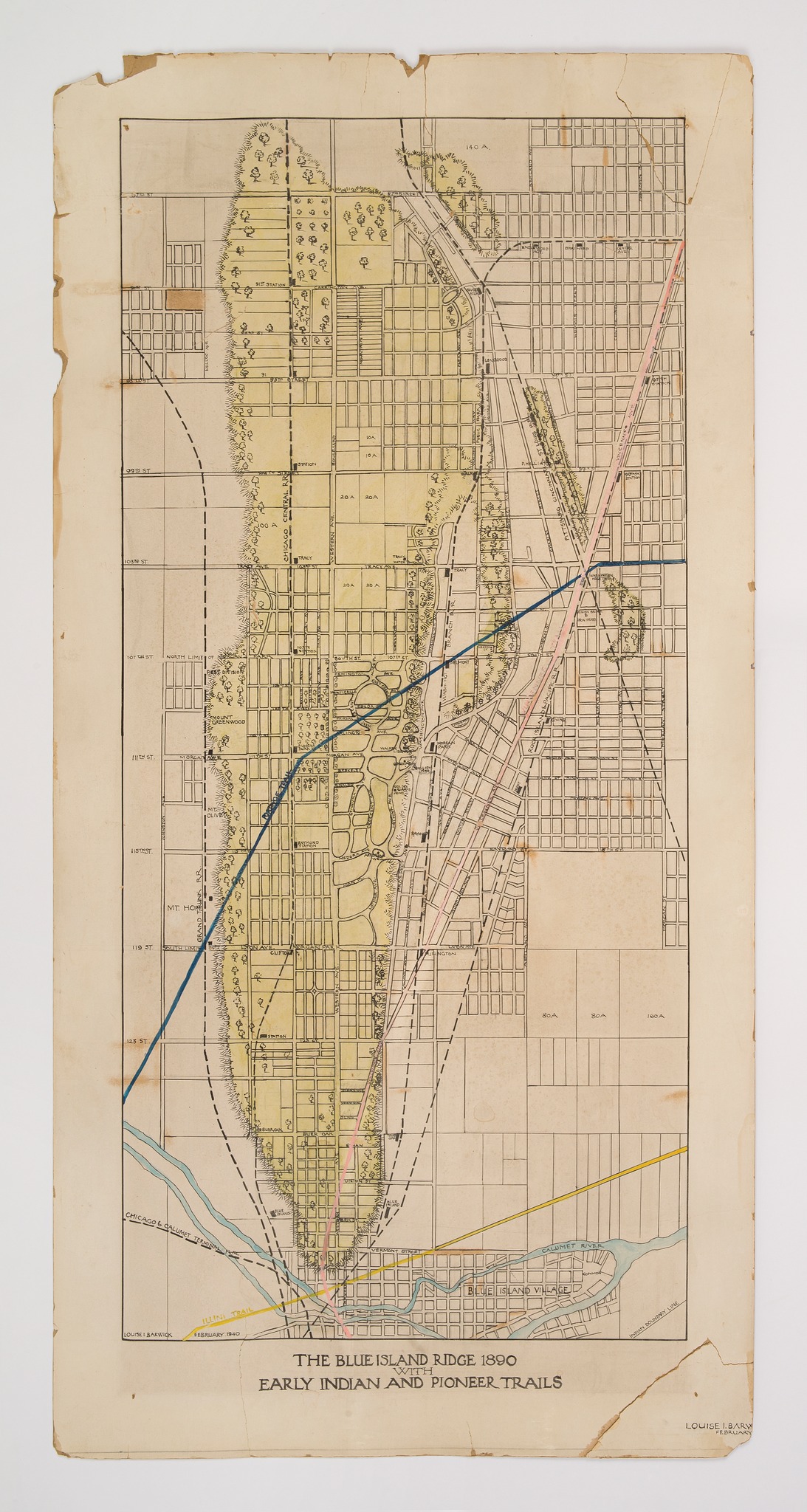
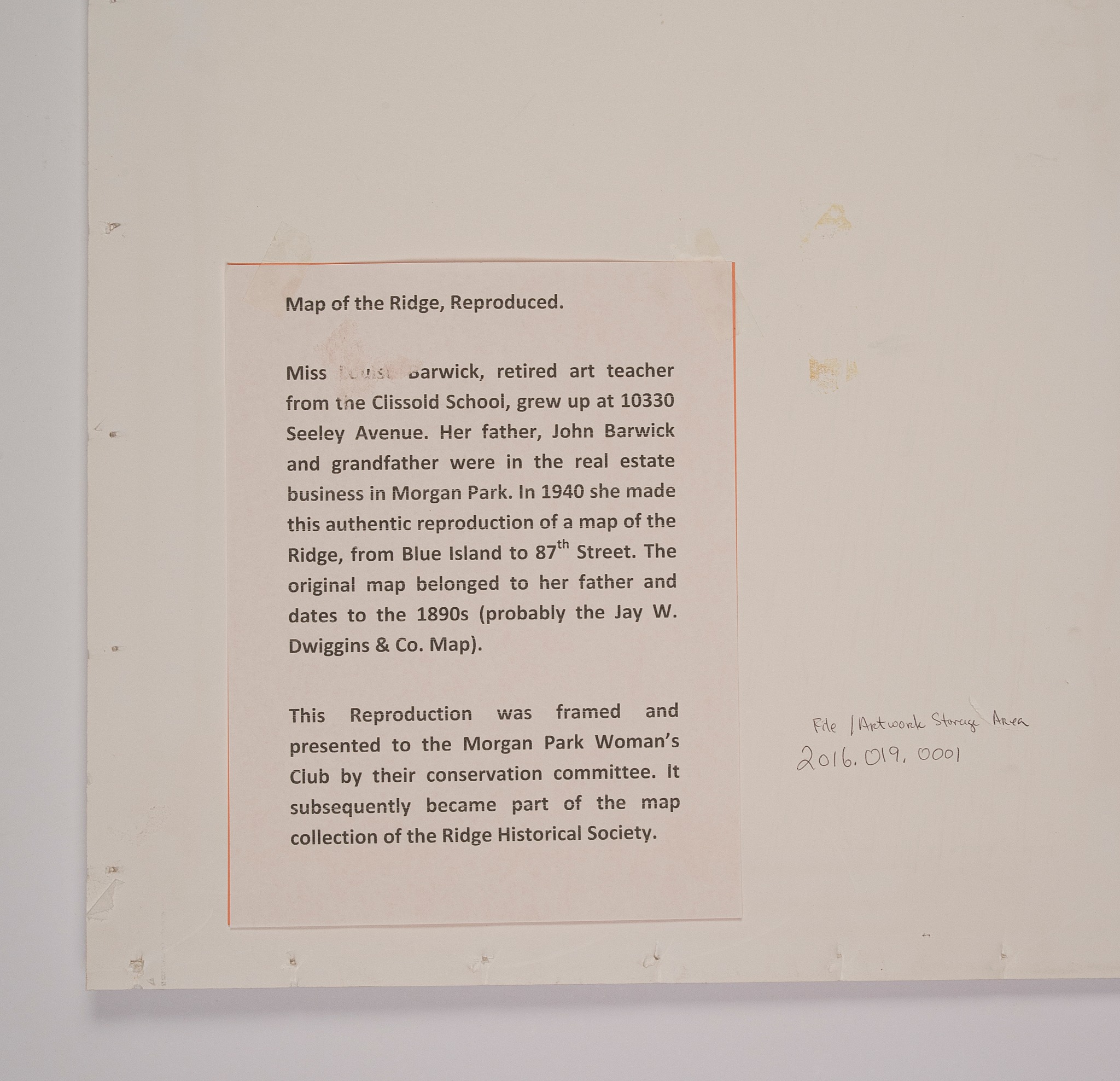
In 1940, Louise, now a retired art teacher from Clissold School, made an authentic reproduction of a map of the Ridge from Blue Island to 87th Street that belonged to her father and dated back to 1880. The reproduction was framed and presented to the Morgan Park Woman’s Club and is now in the RHS collection. At the time she and her sister lived at 11252 S. Bell Ave.
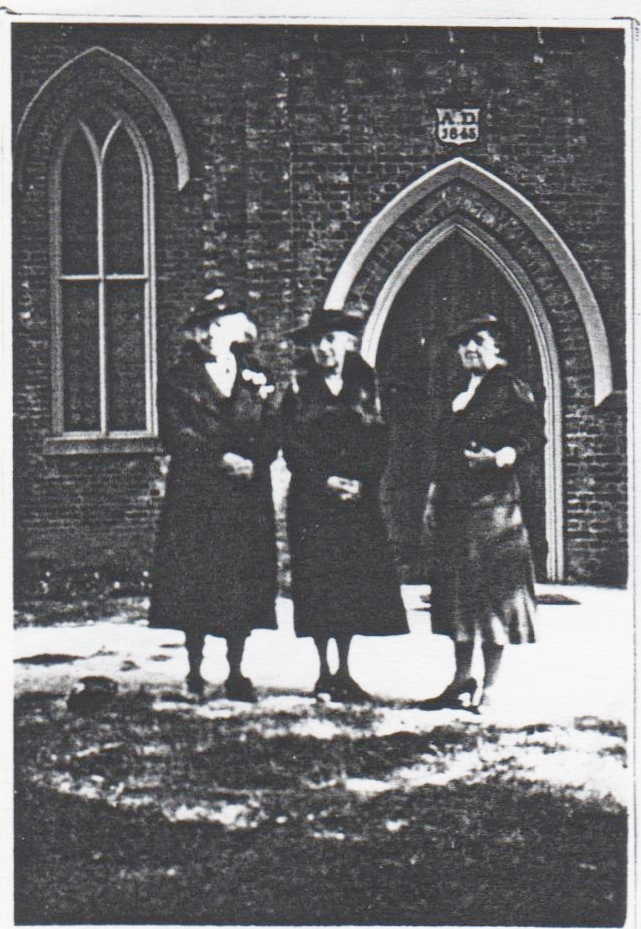
Louise Barwick died in 1957 and was laid to rest in Mt. Hope Cemetery. Unfortunately, RHS does not have a good photo of Louise Barwick.
The next post will share some of Louise’s water color paintings of local scenes.
The Ridge Historical Society
Louise Barwick – Part 8
By Carol Flynn
The Ridge Historical Society (RHS) realizes it’s Super Bowl Sunday, but not everyone watches football! If you’re looking for an alternative, a visit to RHS to see the current exhibit – completely free to the public – is an enjoyable way to spend an afternoon.
The current exhibit, “Louise Barwick’s Lost Ridge,” may be viewed on Sundays and Tuesdays from 1:00 p.m. to 4:00 p.m. or by appointment. RHS is located at 10621 S. Seeley Avenue in Chicago. RHS may be contacted at 773/881-1675 or ridgehistory@hotmail.com. Parking is available at the building or on Seeley Avenue.
Louise Barwick (1871 – 1957) was a long-time resident and art teacher in the Ridge community. Her watercolor paintings of local scenes from around 1900, which form the basis of the current exhibit, offer a visual history of the environment of that time.
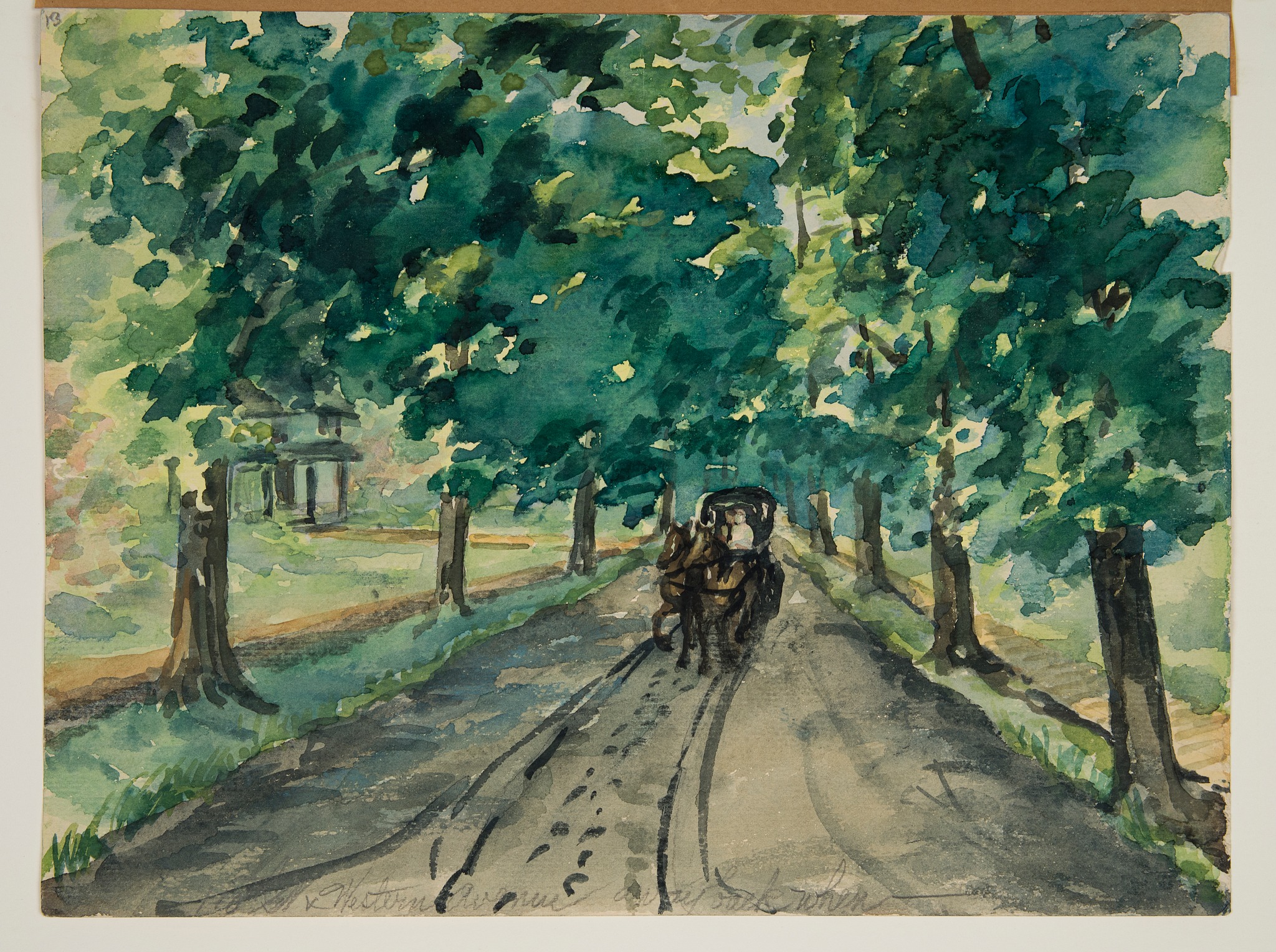
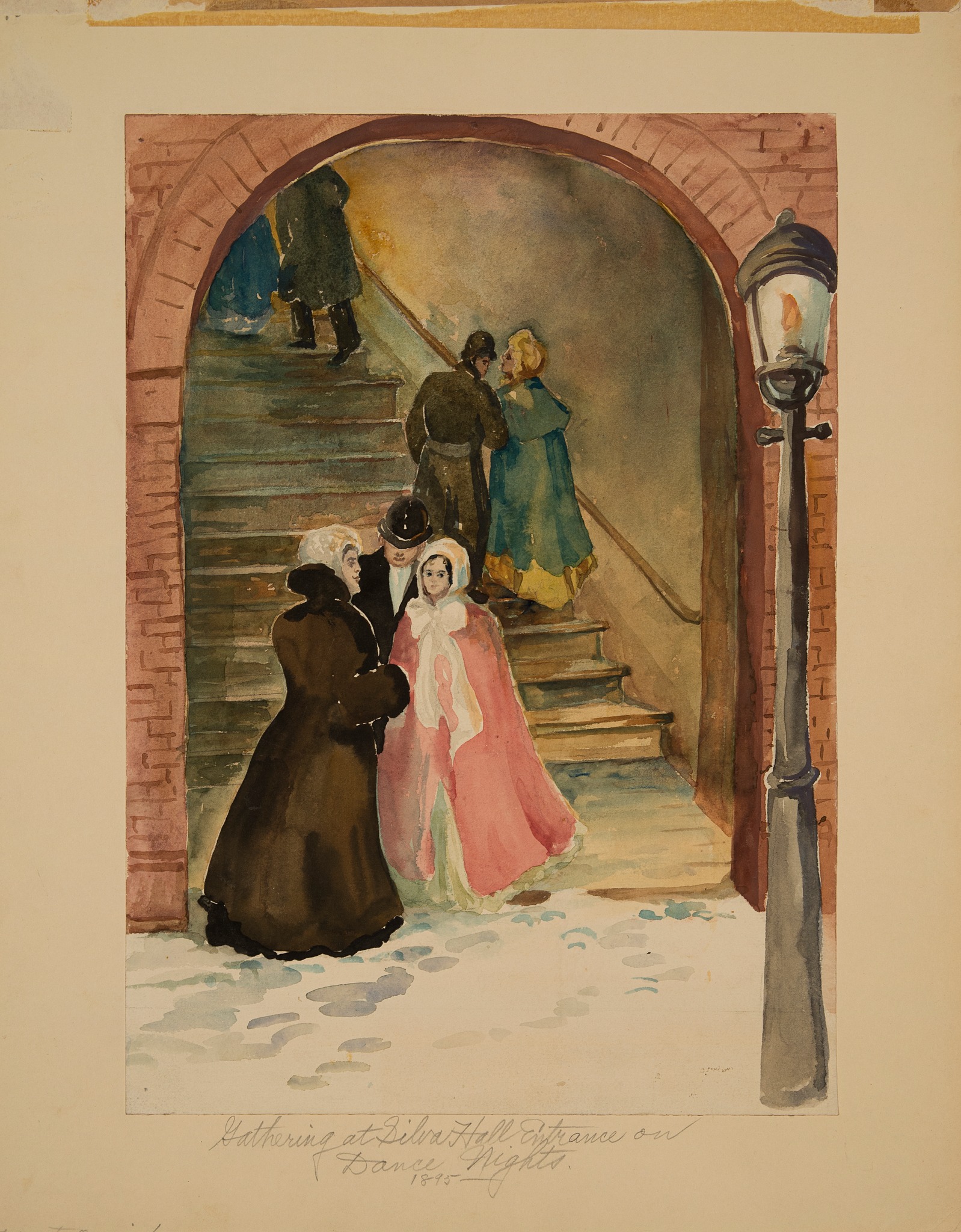
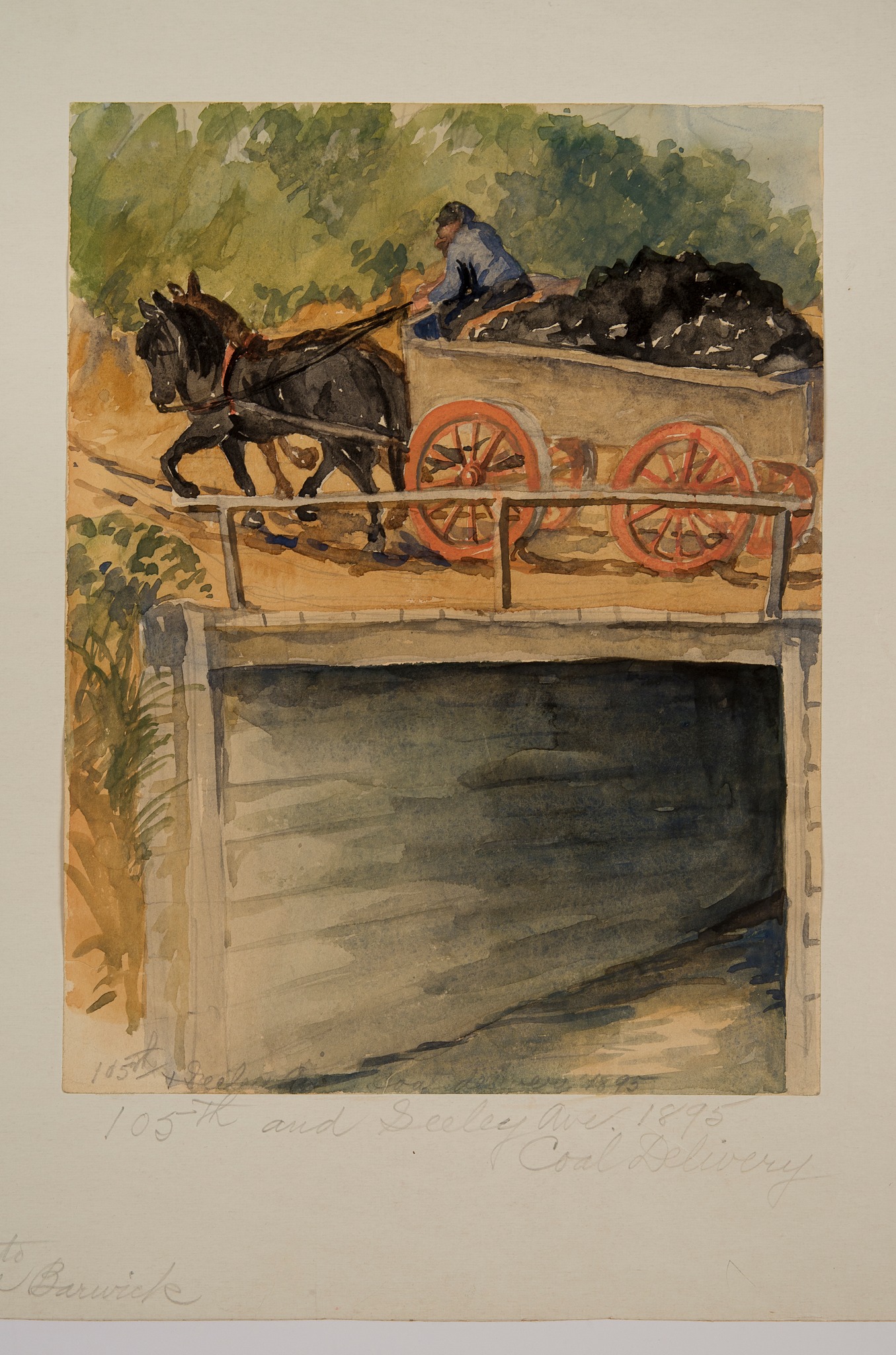
Miss Barwick painted these works throughout her lifetime. Some were painted at the time (1890s) and others were painted from memory later in her life. It appears that sometime around the 1940s, the paintings were given to the Walker Library at 110th and Hoyne Avenue, and later they were given to RHS, where they are a valued part of the collection.
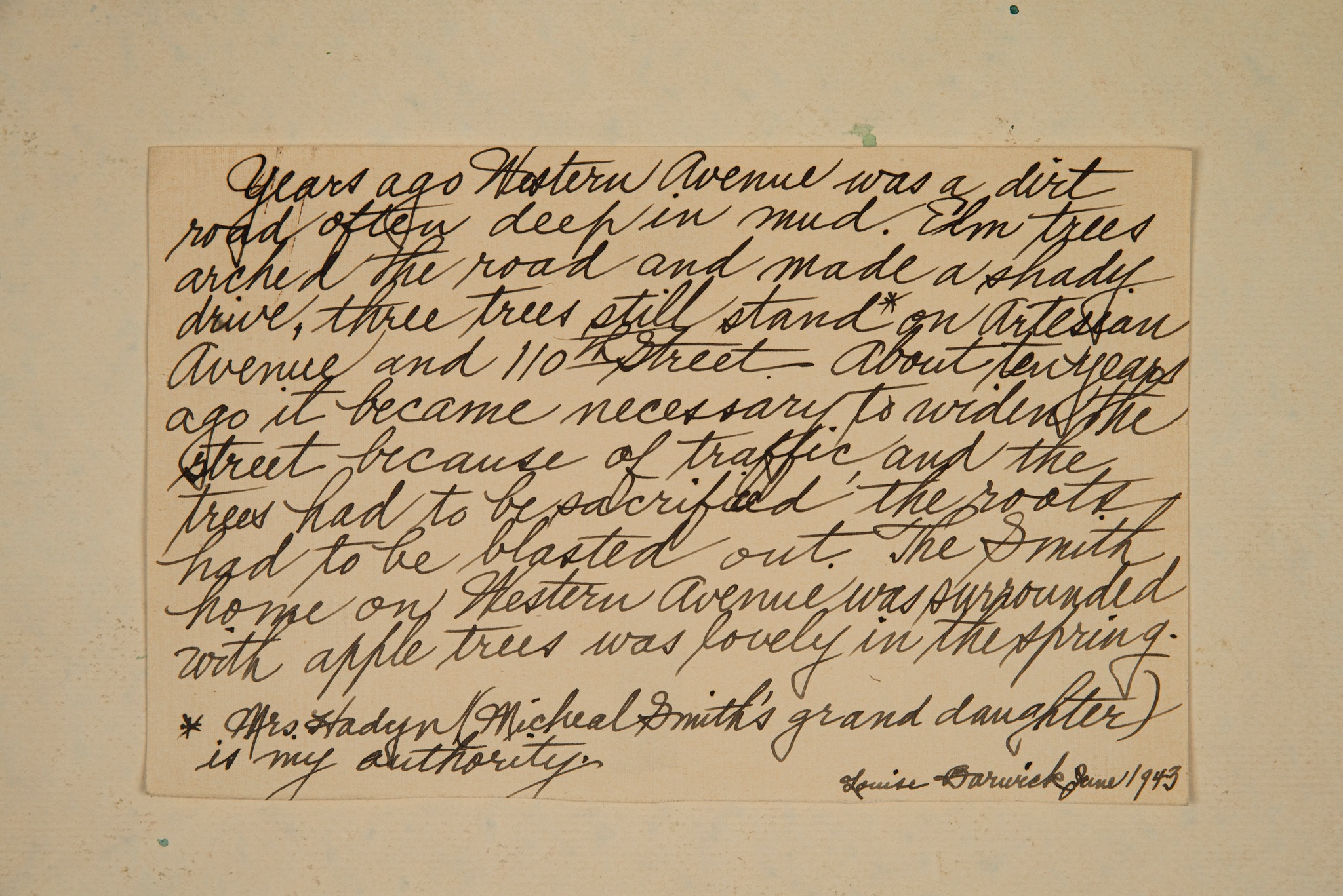
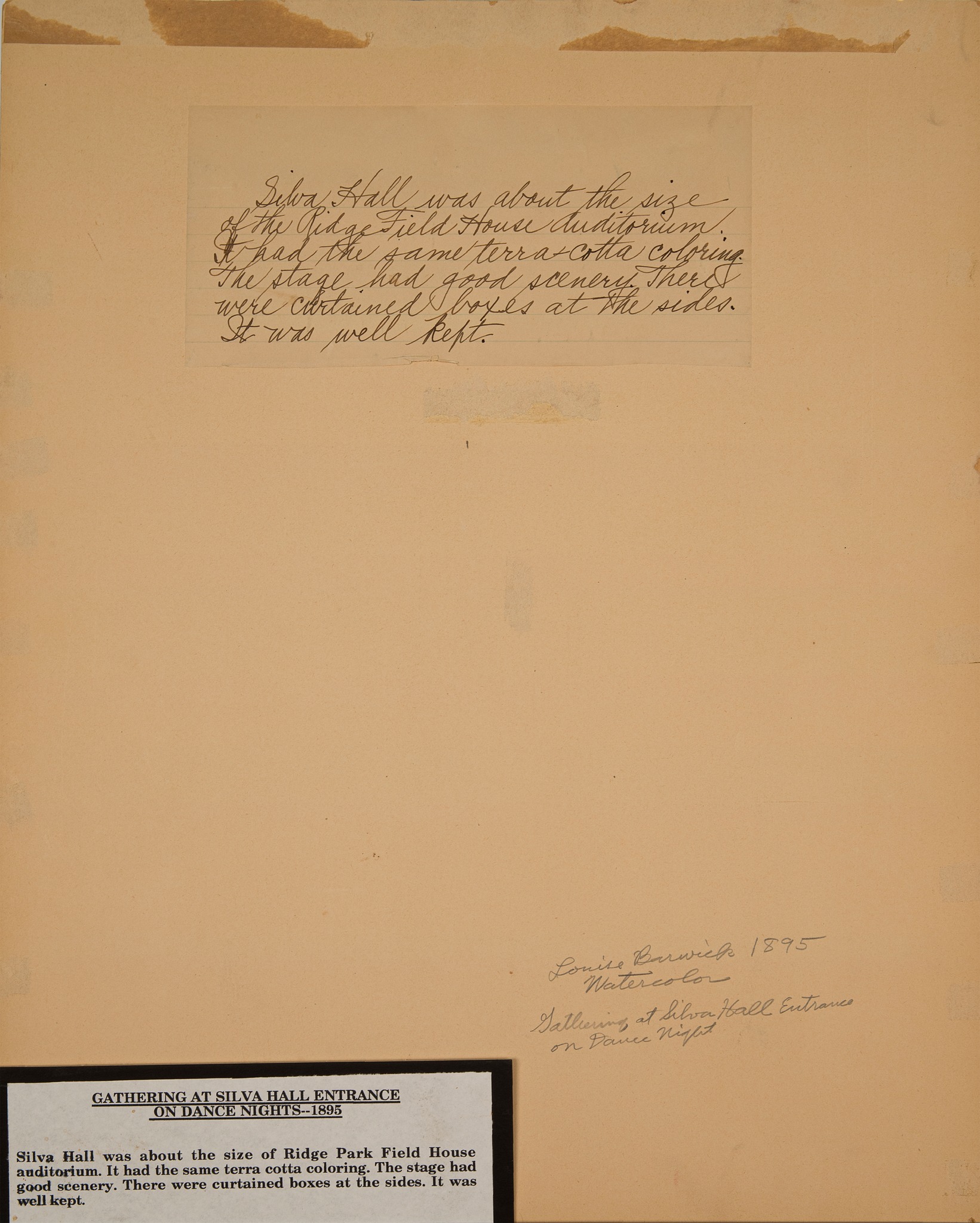
Many of the paintings are accompanied by written narratives from Miss Barwick herself, describing and explaining the scene and its significance, from the perspective of a young woman at the time.
Here are a few of her paintings and their narratives. Visit the RHS exhibit to learn more about this remarkable woman and life on the Ridge 125 years ago.