
Explore the RHS Facebook Archives, a rich repository of local history written by Carol Flynn. For two decades, Carol brought a deeply dedicated voice to public education at RHS. Her role as Facebook administrator through mid-2025 naturally extended her prolific research into meticulously detailed articles, most notably her multi-part historical series posts. Today, Carol continues her local history writing for The Beverly Review and other outlets.
Past Events: 2024
Please join us with your friends and neighbors for a popular fundraiser at the Graver-Driscoll House for champagne, sweet and savory treats as we celebrate the new year.
Saturday, January 6, 2024 – 7PM to 11PM
Enjoy our Louise Barwick’s Lost Ridge and Lost & Found local architecture exhibits while you sip, savor and socialize. Come for a fun evening with door prizes and surprises.
Get tickets by January 5, 2024.
Buy tickets online: https://bit.ly/RHSchampagne
One Ticket $40.00
Two Ticket Bundle $70.00
Three Ticket Bundle $100.00
Four Ticket Bundle $130.00
Five Ticket Bundle $160.00
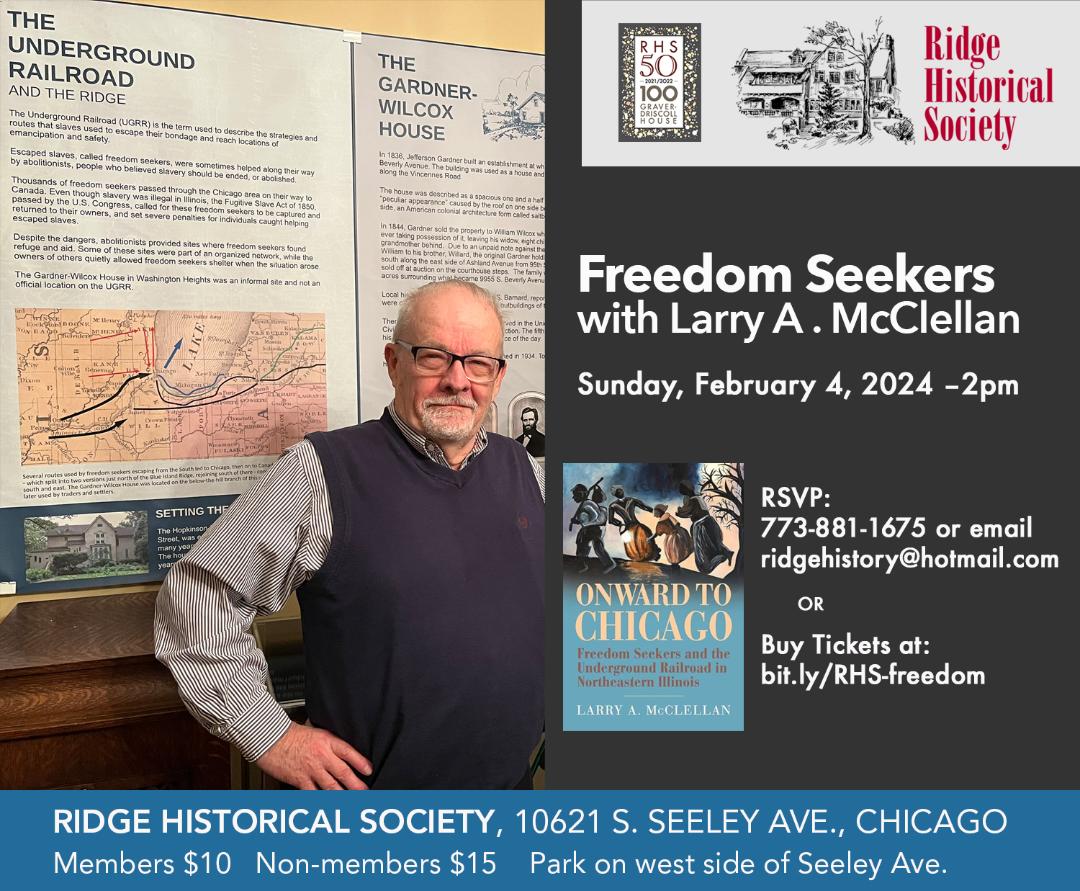
Freedom Seekers with Larry A. McClellan
Black History Month Program Focus is the Underground Railroad in Northeastern Illinois
Larry A. McClellan, emeritus professor of sociology and community studies at Governors State University, will present a program on his book, “Onward to Chicago,” which uncovers stories of the Underground Railroad freedom network in northeastern Illinois, Sun., Feb. 4, 2 p.m., Ridge Historical Society, 10621 S. Seeley Ave.
McClellan will share his work and personal experiences in developing a deeper, broader insight into the freedom seekers and their impact on local history.
“Onward to Chicago” was published by Southern Illinois University Press and released last summer. According to the press website, Illinois’s status as a free state beckoned enslaved people decades before the Civil War, and traditional histories of the Underground Railroad in Illinois start in 1839.
Larry A. McClellan reframes the story, not only introducing readers to earlier freedom seekers, but also illustrating that those who bravely aided them were Black and white, men and women. McClellan features dozens of individuals who made dangerous journeys to reach freedom as well as residents in Chicago and across northeastern Illinois who made a deliberate choice to break the law to help.
“Onward to Chicago” shows how Chicago emerged as a point of refuge for freedom seekers, and how the I & M Canal created opportunities for Black men, women, and children to escape slavery. “From eluding authorities to confronting kidnapping bands working out of St. Louis and southern Illinois, these stories of valor are inherently personal. Through deep research into local sources, McClellan presents the engrossing, entwined journeys of freedom seekers and the activists in Chicagoland who supported them,” the website says.
McClellan’s book won the 2023 Underground Railroad Free Press Hortense Simmons Memorial Prize for Advancement of Knowledge.
McClellan has been instrumental in adding listings to the National Park Service Network to Freedom register of the Underground Railroad, and is President of the Little Calumet Underground Railroad Project. He is the author of “The Underground Railroad South of Chicago” and “To the River: The Remarkable Journey of Caroline Quarlls, a Freedom Seeker on the Underground Railroad.”
McClellan will have his book, “Onward to Chicago” available for purchase at the event.
Admission to the presentation is $10 for members and $15 for non-members. Space is limited and tickets or reservations are required. Info and RSVP at: 773-881-1675 or ridgehistory@hotmail.com. Get tickets at bit.ly/RHS-freedom.
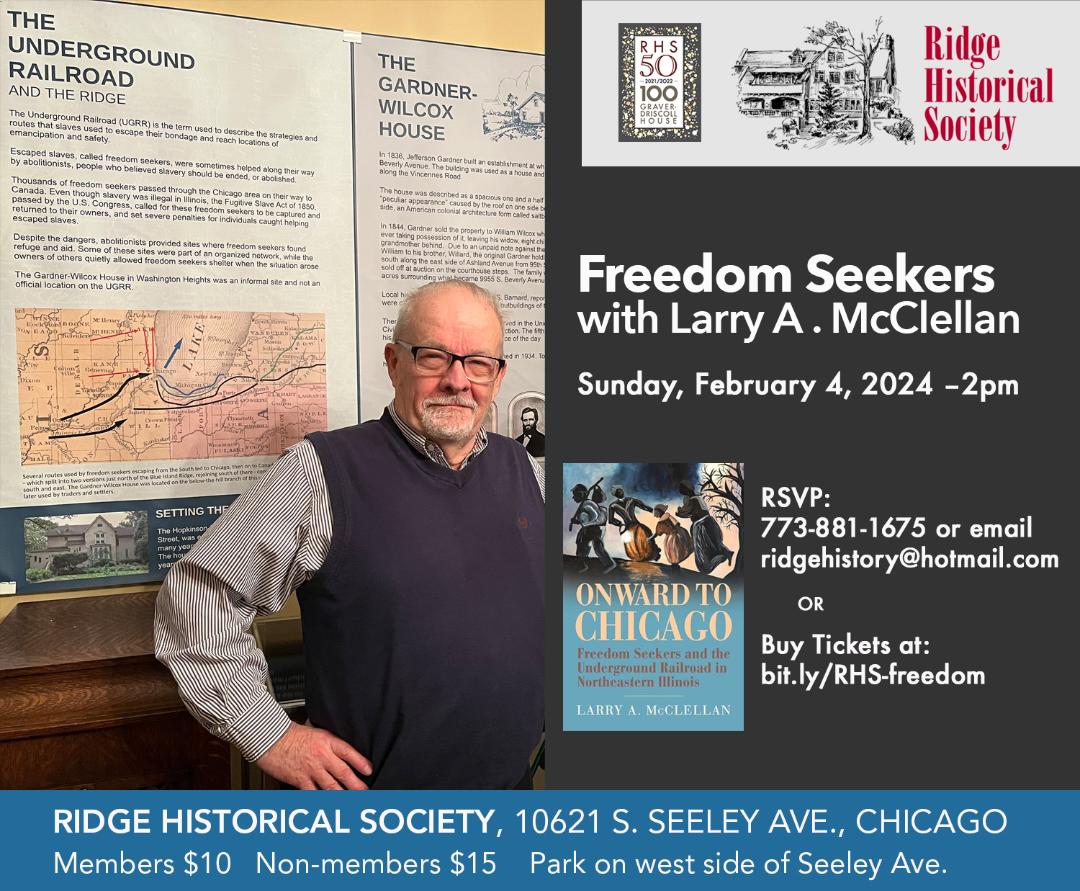
Freedom Seekers with Larry A. McClellan
Black History Month Program Focus is the Underground Railroad in Northeastern Illinois
Larry A. McClellan, emeritus professor of sociology and community studies at Governors State University, will present a program on his book, “Onward to Chicago,” which uncovers stories of the Underground Railroad freedom network in northeastern Illinois, Sun., Feb. 4, 2 p.m., Ridge Historical Society, 10621 S. Seeley Ave.
McClellan will share his work and personal experiences in developing a deeper, broader insight into the freedom seekers and their impact on local history.
“Onward to Chicago” was published by Southern Illinois University Press and released last summer. According to the press website, Illinois’s status as a free state beckoned enslaved people decades before the Civil War, and traditional histories of the Underground Railroad in Illinois start in 1839.
Larry A. McClellan reframes the story, not only introducing readers to earlier freedom seekers, but also illustrating that those who bravely aided them were Black and white, men and women. McClellan features dozens of individuals who made dangerous journeys to reach freedom as well as residents in Chicago and across northeastern Illinois who made a deliberate choice to break the law to help.
“Onward to Chicago” shows how Chicago emerged as a point of refuge for freedom seekers, and how the I & M Canal created opportunities for Black men, women, and children to escape slavery. “From eluding authorities to confronting kidnapping bands working out of St. Louis and southern Illinois, these stories of valor are inherently personal. Through deep research into local sources, McClellan presents the engrossing, entwined journeys of freedom seekers and the activists in Chicagoland who supported them,” the website says.
McClellan’s book won the 2023 Underground Railroad Free Press Hortense Simmons Memorial Prize for Advancement of Knowledge.
McClellan has been instrumental in adding listings to the National Park Service Network to Freedom register of the Underground Railroad, and is President of the Little Calumet Underground Railroad Project. He is the author of “The Underground Railroad South of Chicago” and “To the River: The Remarkable Journey of Caroline Quarlls, a Freedom Seeker on the Underground Railroad.”
McClellan will have his book, “Onward to Chicago” available for purchase at the event.
Admission to the presentation is $10 for members and $15 for non-members. Space is limited and tickets or reservations are required. Info and RSVP at: 773-881-1675 or ridgehistory@hotmail.com. Get tickets at bit.ly/RHS-freedom.
The Ridge Historical Society
Please Join Us –
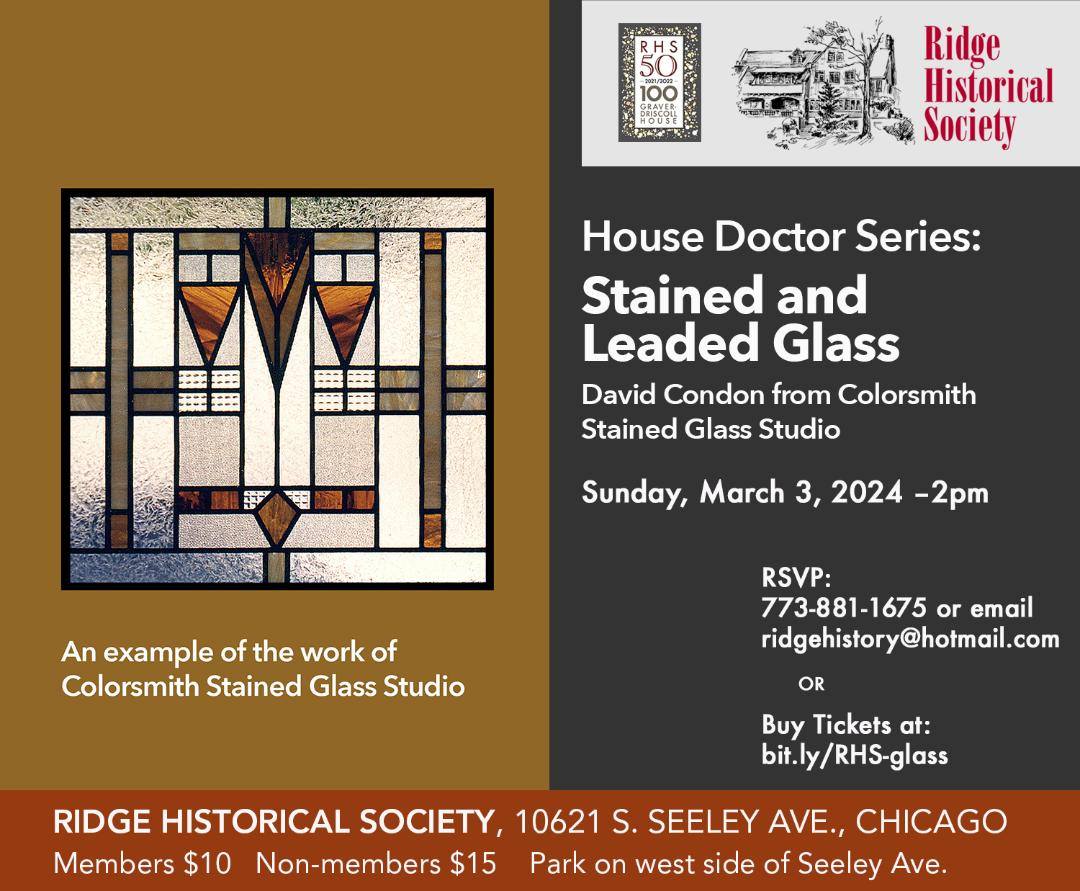
House Doctor Series:
Stained and Leaded Glass
Sunday, March 3, 2:00 p.m.
Stained glass windows are a design element in many historic (and contemporary!) homes and buildings. They add an eye-catching, colorful feature to a room by “harnessing the power of the sun” (quoted from HGTV).
Join RHS on Sunday, March 3, at 2:00 p.m., for a program with David Condon from Colorsmith Stained Glass Studio, as part of the ongoing House Doctor Series.
David will share information on the design, creation, care, and restoration of leaded glass and stained glass windows, and will answer your questions. He will also talk about the new windows he created for RHS – a leaded, stained glass window for the front door, and a small leaded side window.
RHS is located at 10621 S. Seeley Avenue, Chicago.
Cost: Members $10 | Non-members $15
RSVP at 773-881-1675 or email ridgehistory@hotmail.com
Or buy tickets here: https://bit.ly/RHS-glass
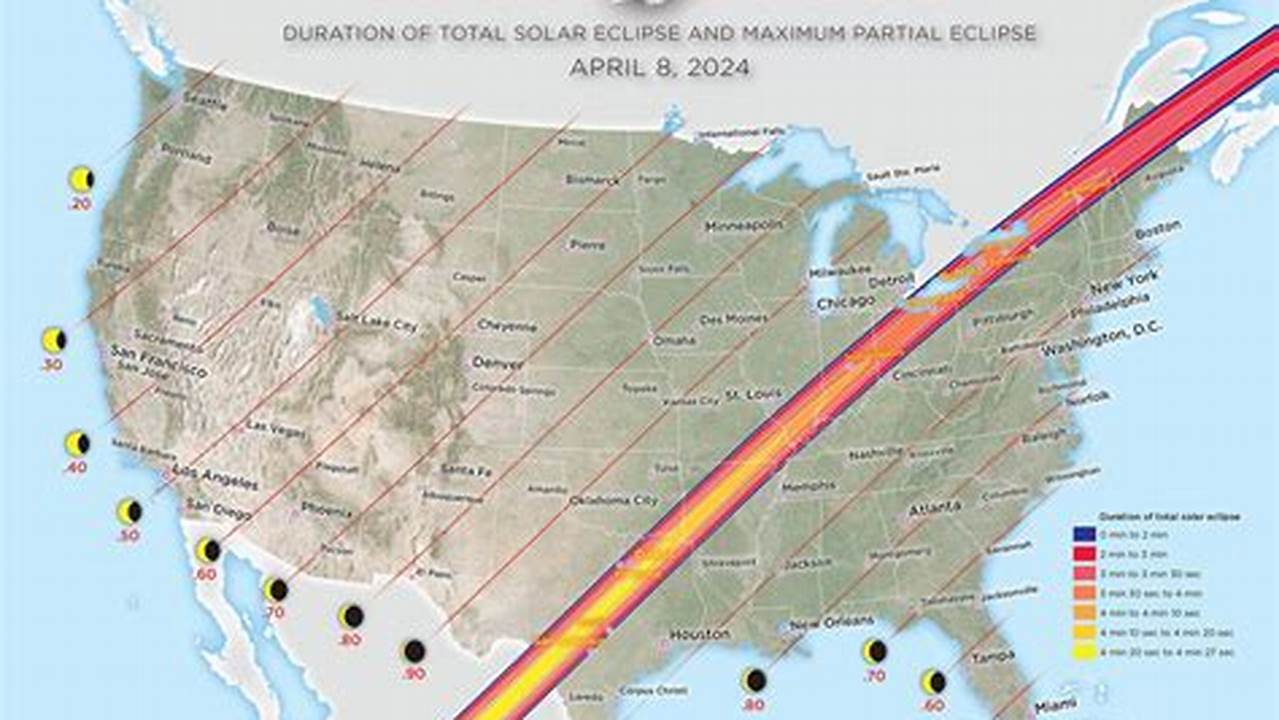
Tomorrow, April 8, 2024, there will be an eclipse of the sun viewable in the Ridge communities. This is a historic event of the celestial kind.
The sun, the moon, and the earth are all lined up right now so that the moon, on its normal trajectory, will pass between the sun and the earth, blocking the light of the sun from the earth.
On the Ridge, a "partial eclipse" will be viewable, but it is almost full. From North Beverly down to Blue Island, viewers will be able to see a 94.3 – 94.5% full eclipse, from 12:51 p.m. to 3:21 p.m., with the maximum point at 2:07 p.m.
People are advised not to stare directly at the eclipse so the retinas of their eyes are not damaged. Special glasses that are 1,000 times darker than sun glasses, blocking out almost all light, have been available from many vendors, including the Adler Planetarium, Amazon, Walmart, and libraries.
Viewers are advised to use filters to protect the lenses of their cameras, recorders, and phones from being "fried."
Many people are traveling hundreds of miles from Chicago to areas where the full eclipse is viewable. The path passes from southwest to northeast of Chicago.
Undoubtably there will be numerous pictures and videos of the eclipse for people to study.
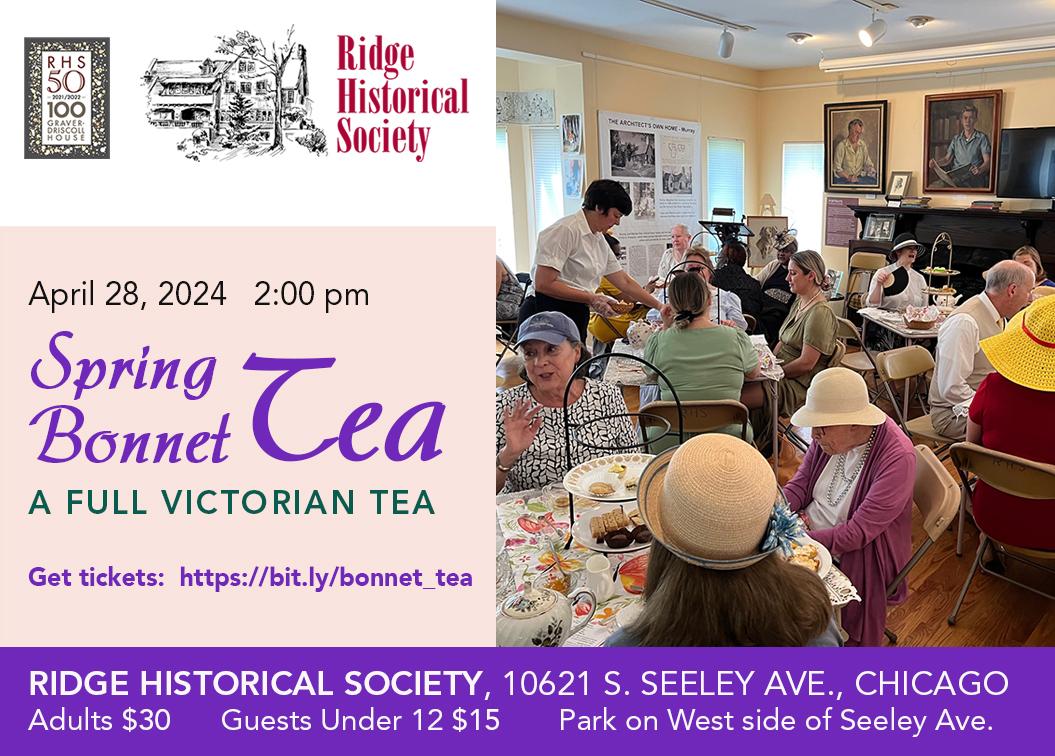
Sunday, APRIL 28, 2024 – 2pm
Spring Bonnet Tea
RHS is happy to be able to hold this annual fundraiser event again. Join us for a Full Victorian Tea featuring a fine selection of savories, scones and pastries. Ladies, please wear a spring hat or bonnet!
A wonderful multi-generational event — bring your daughters or granddaughters!
This Full Victorian Tea set in the Historic Graver-Driscoll House, on the Ridge in the Beverly Hills neighborhood of Chicago.
Space is limited, advance ticket purchase or RSVP required.
Adults $30 Guests Under 12 $15
Get tickets online: bit.ly/bonnet_tea
RSVP: ridgehistory@hotmail.com 773.881.1675
The Ridge Historical Society
History and Art This Weekend
By Carol Flynn
I’ve been remiss with sharing stories on this Ridge Historical Society (RHS) Facebook page lately because I’ve been very busy doing research on topics that will lead to interesting new stories.
Tomorrow, May 19th, is the Beverly Area Planning Association (BAPA) Home Tour, where five homes and one facility will be open for touring. I don't know all the houses (it's a surprise!) but I know the historic Hopkinson-Platt House at 108th and Drew Street will be open, and that is not to be missed!
This is one of the best home tours in the city. The tours were actually started many years ago by the local chapter of the Daughters of the American Revolution (D.A.R.), and then RHS ran them for a while, and now BAPA does a superb job with them.
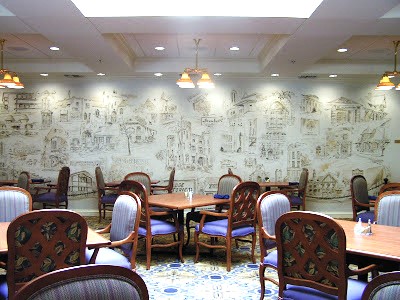
The tour will start at Smith Village Senior Living facility at 113th Place and Western Avenue. This is where people will pick up their packets and have a chance to tour the first-floor common areas. One sight to see is the mural by the late Jack Simmerling called “Life on the Ridge” that covers a wall in one of the dining rooms.
I will be there from 12 to 3 p.m. to discuss the mural and help people identify locations, so please stop by! As one viewer said, “This was like taking a walk through the neighborhood of my youth.” There are current buildings and some that are now gone depicted in the mural.
The other place to visit is the historic Eugene S. Pike House at 91st and Longwood Drive, which the community has adopted for preservation. The Beverly Area Arts Alliance will be holding an outdoor event there, “Arts in the Yard@the Pike House”, with music and art activities, including Robin Power demonstrating ceramics.
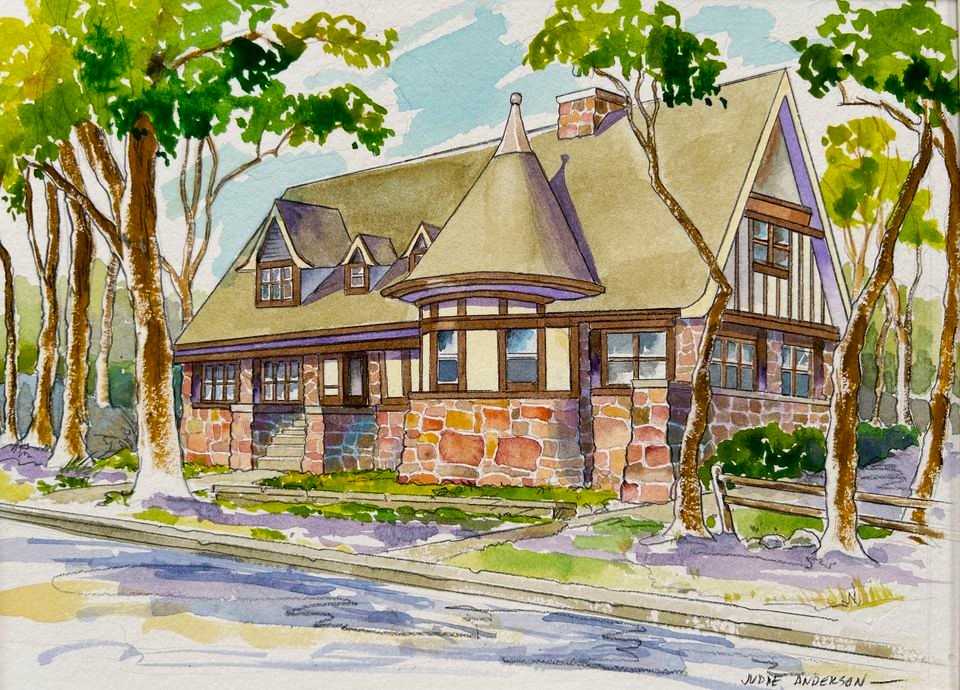
One of the highlights will be a new painting of the Pike House by Beverly artist Judie Anderson. Judie has captured the Pike House in its whimsical, “fairy-tale” persona. The American Institute of Architects once commented about the house that you expect to see Hansel and Gretl come skipping down the path, and Judie’s watercolor brings that to mind. Judie is calling the painting “The Watchman’s Residence,” because that is what it was known and used as by the Forest Preserves of Cook County, which owns the house. Prints will be available for a donation, and Judie will be there to sign them.
Topics coming up next on the RHS Facebook page are many: the return of the 17-year cicadas known as Brood XIII; the next installment in the “Lost and Found” series; more posts on James H. Gately; the 100th anniversaries of Smith Village and St. Barnabas Parish; and stories about the many families who called the Pike House “home” are just a few. Stay tuned.
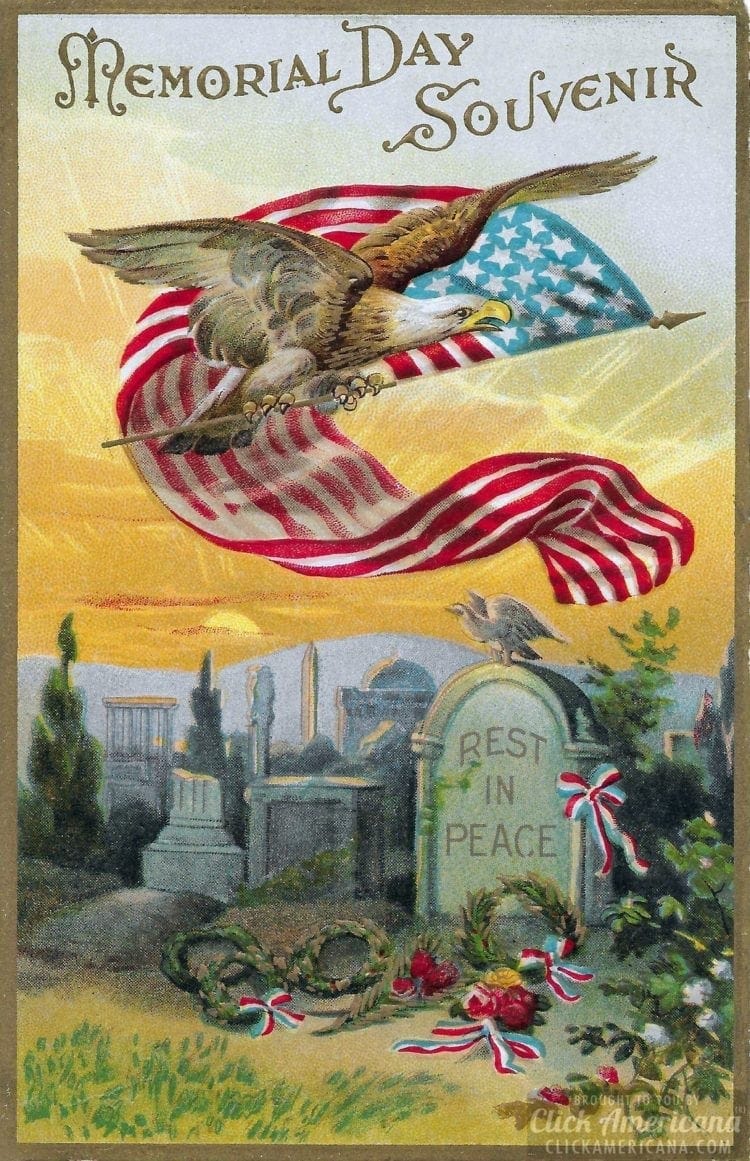
The Ridge Historical Society will be closed on Sunday, May 26, 2024, for the Memorial Day week-end.
Let us take time to remember and honor those who have died in military service to the U.S.
Enjoy the Beverly/Morgan Park Memorial Day Parade on Monday, May 27.
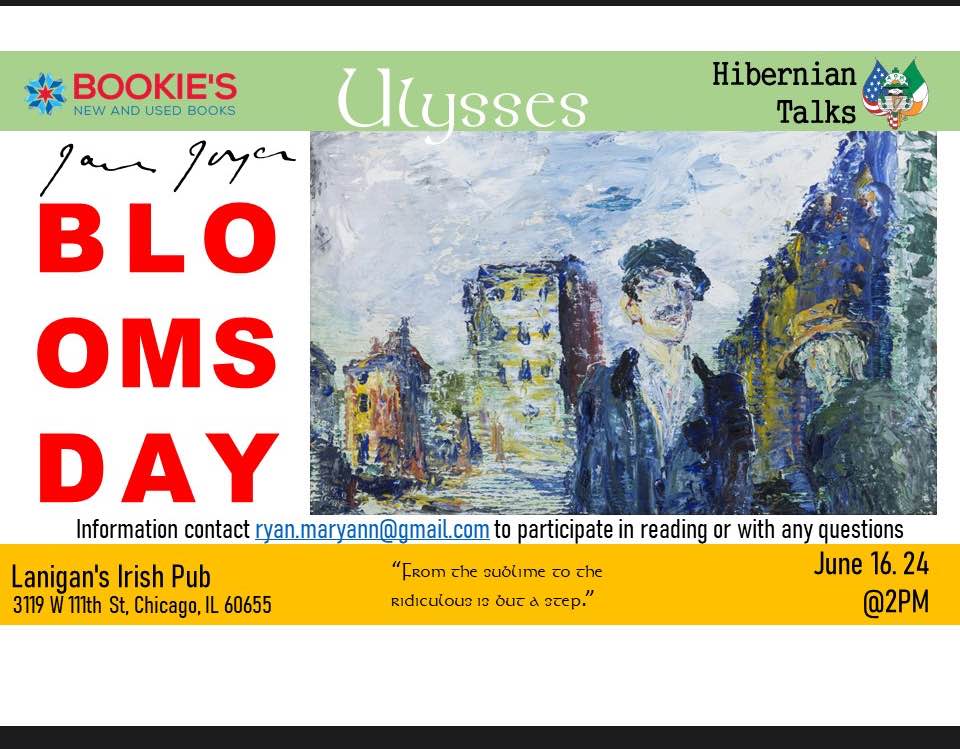
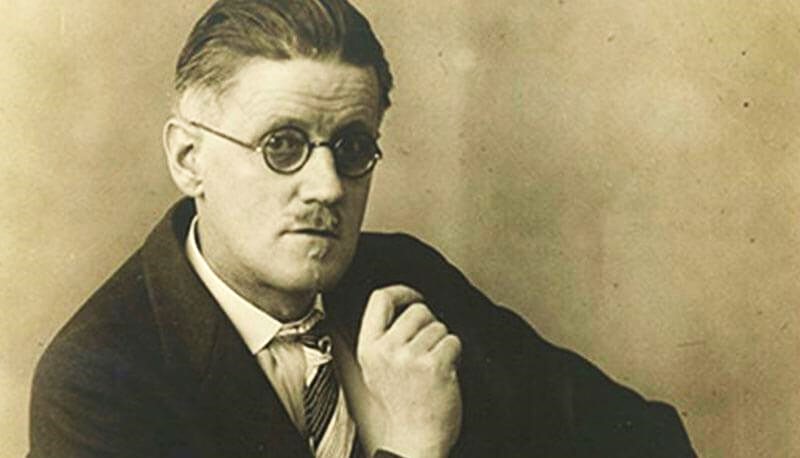
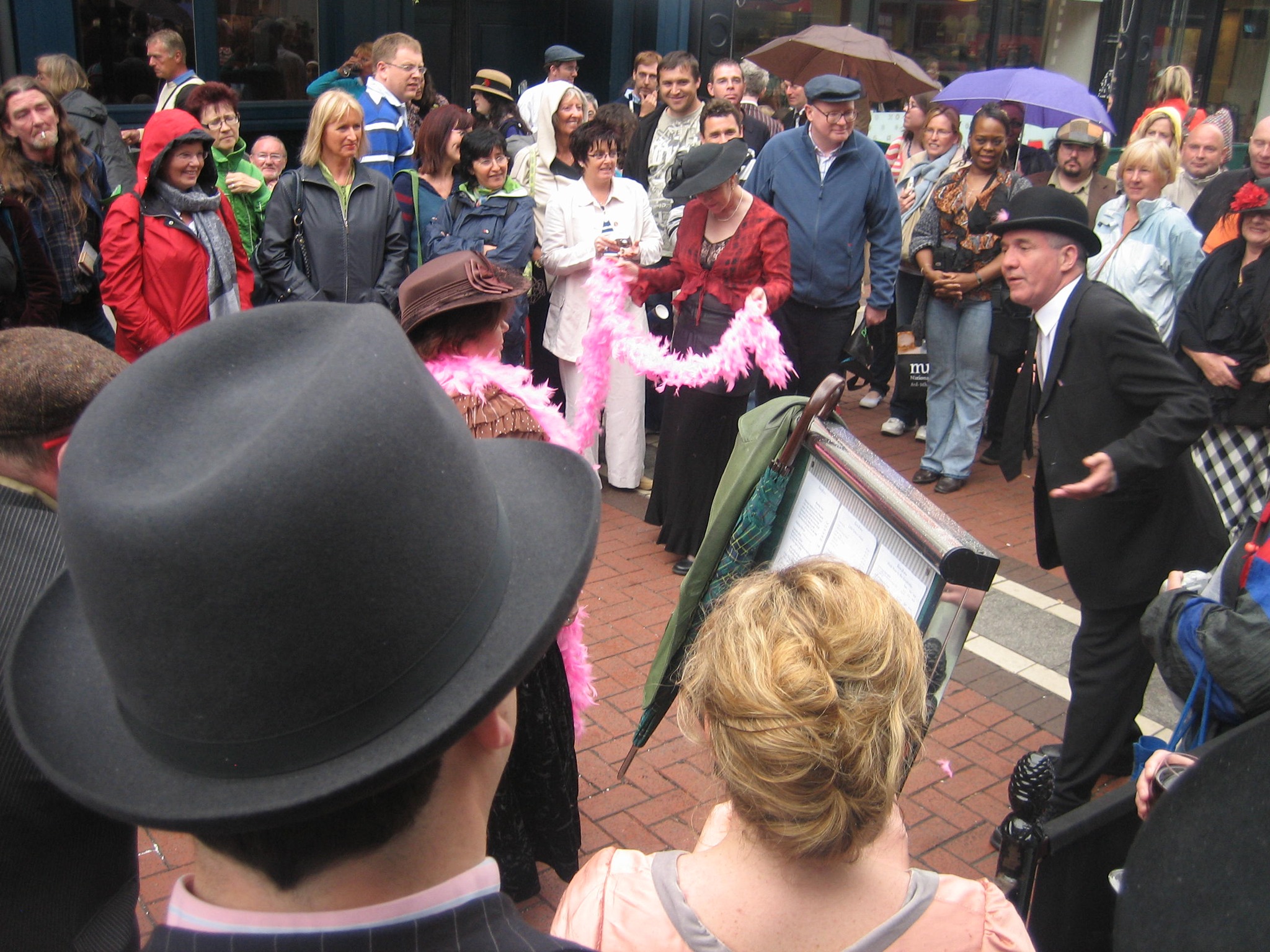
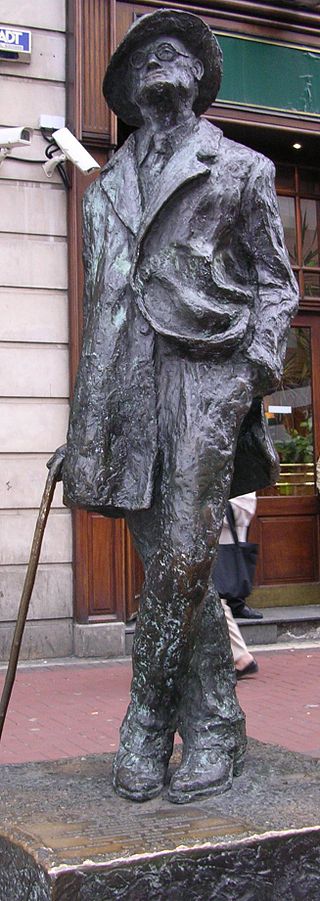
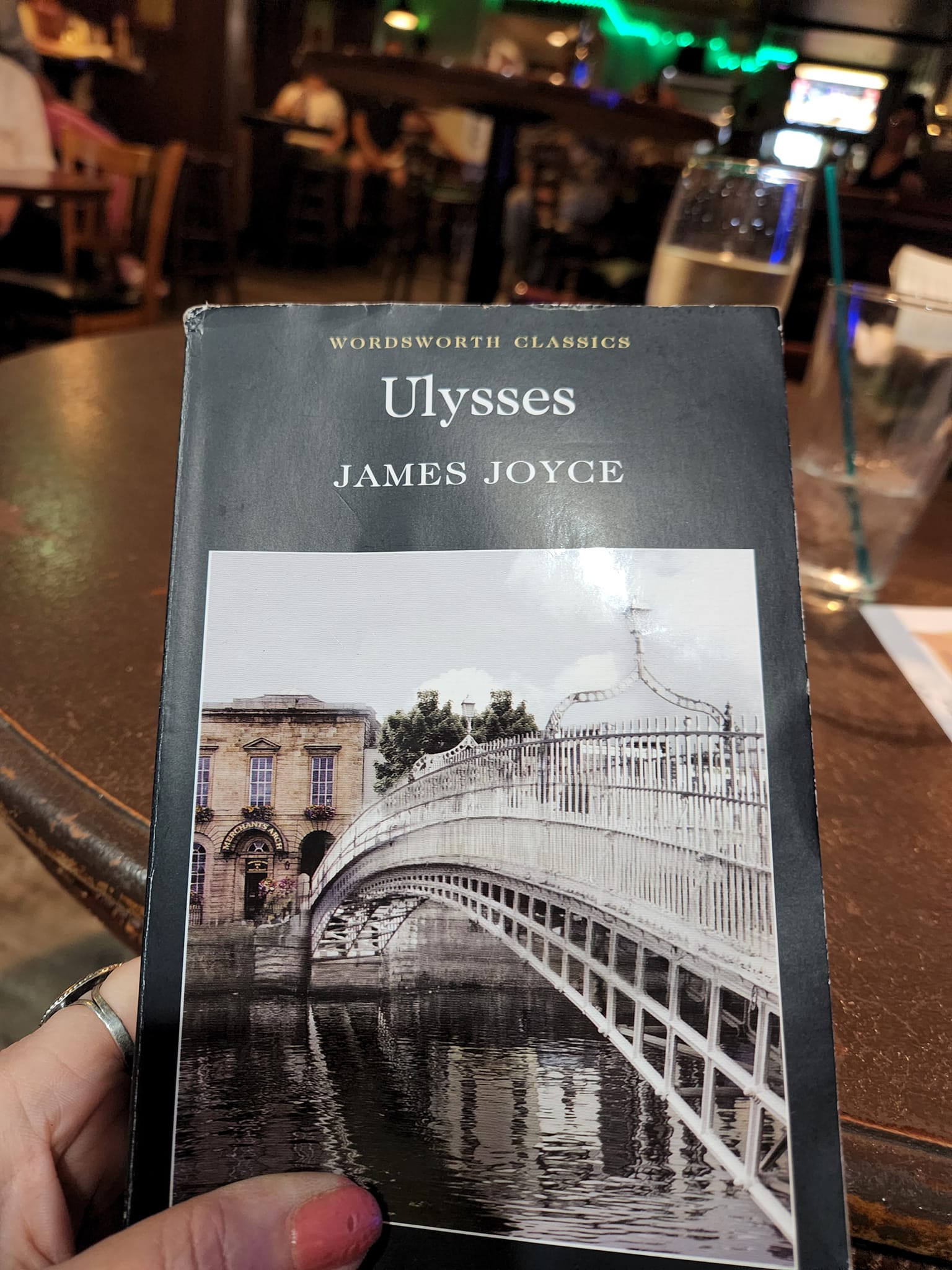
A lot of events are going on in June that focus on history and community. Right now, I am promoting Bloomsday, Sunday, June 16, the annual holiday that celebrates the novel "Ulysses" by James Joyce because WE NEED READERS for the event.
Now, let's be honest. "Ulysses" is the most famous novel ever written that very few people have actually managed to read. More people have read about the novel than have actually read it. Reading this novel is mandatory to include on bucket lists along with swimming with sharks.
I was "afraid" to get involved in a Bloomsday event in the past because I've started the novel at least four times in earnest and I've only completed the first chapter so far. (I have managed to read some other Joyce-related stuff – "The Dubliners" short stories are a great place to start, the nuns had us reading those in high school English classes, plus there are many study guides on "Ulysses" and loads of info on James Joyce).
It's a really tough novel to get through, and Joyce did that on purpose. He said, “I’ve put in so many enigmas and puzzles that it will keep the professors busy for centuries arguing over what I meant, and that’s the only way of insuring one’s immortality.”
Around the world, Bloomsday is celebrated. In Dublin, Ireland, where "Ulysses" takes place, people go around visiting all the sites of the action in the novel, and re-enactments are the big thing.
When I was in Dublin, I did visit some of the sites, like the Martello tower where the story begins (so I can picture chapter 1 – four times), but I was not there on Bloomsday. Bloomsday is named for one of the characters, Leopold Bloom, and all the action takes place on one day, June 16, 1904, thus the date.
Beverly/Morgan Park/Mt. Greenwood will have a Bloomsday event on Sunday, June 16, 2024, at Lanigan's Irish Pub at 3119 W. 111th Street, from 2 to 5 p.m. The highlights will be readings from the novel and Irish music from Pat Boarders and Pat Finnegan.
We're fortunate to have MaryAnn Ryan in our community. She has a Ph.D. in English and Irish literature and SHE HAS READ "ULYSSES" AND EVEN TAUGHT COLLEGE-LEVEL CLASSES ON THE BOOK!
Dr. Ryan is coordinating the readers for this event and has put out a call for people to contact her if interested. Believe me, you do not have to be any kind of expert to get involved in this! Mary Ann will help you pick a passage to read, and help you understand Joyce and this book.
It's loads of fun to do Bloomsday, whether you do a reading or not. The comradery is great, the music is great.
This year it falls on Father's Day, and this will be a nice alternative event for an entertaining afternoon.
Copies of "Ulysses" are available through Bookie's Chicago on 103rd and Western, and the store and Keith Lewis are co-sponsors of this event.
Also on the team is Tim Noonan, who is a champion not only of social causes in the 19th ward, but also of Irish culture. Tim ran the Bloomsday event two years ago, and brought together this year's event, also. Through him, another co-sponsor is the Ancient Order of Hibernians fraternal organization.
(By the way, Keith and Tim haven't gotten all the way through "Ulysses," either. That doesn't stop any of us from having fun at this event.)
So contact MaryAnn Ryan at ryan.maryann@gmail.com to do a reading, and plan to attend this event. There is no charge but voluntary donations to offset the costs will be very appreciated.
Bloomsday was a way of re-energizing "all things Joyce" and I know I will leave the event with new resolve to finish the novel – or at least to tackle chapter 2.
My article this week in the Beverly Review:
https://www.beverlyreview.net/news/community_news/article_2479546e-2291-11ef-91e0-73d8666dc901.html
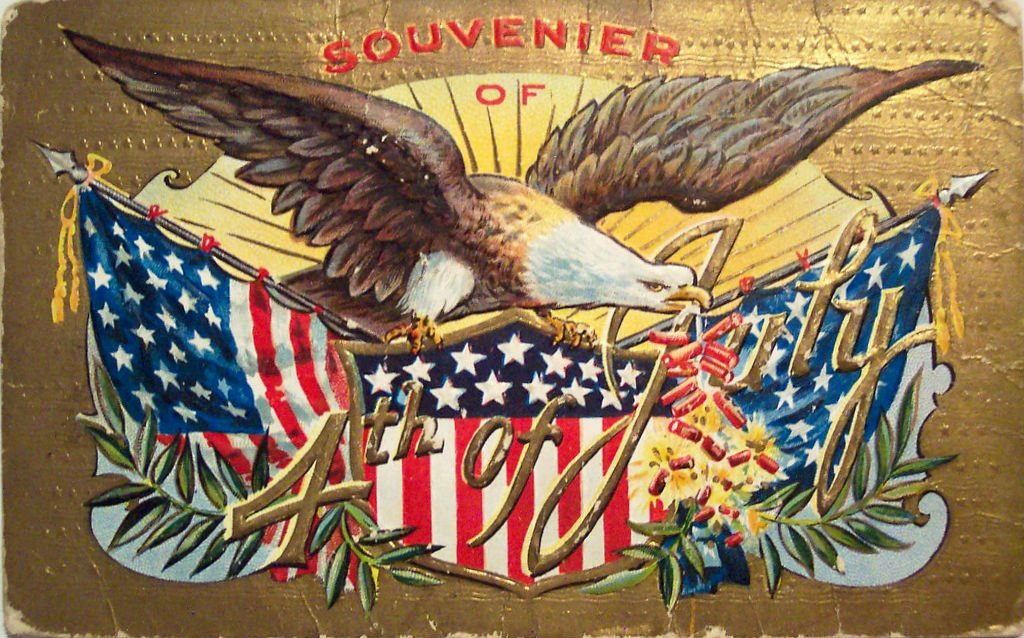
Happy Fourth of July from the Ridge Historical Society
By Carol Flynn
The Ridge 100 Years Ago
As this year’s Fourth of July activities wrap up, let’s look back at the holiday 100 years ago. The Ridge communities were known for their festive celebrations.
On June 27, 1924, Sullivan’s Englewood Times, a south side Chicago newspaper, reported that “big doings” were being planned for the annual community Fourth of July event to be held in Ridge Park.
“The community has a reputation to provide a good time and it surely will be a successful day if balmy summer weather prevails,” stated the paper.
The Boy Scouts assisted the Beverly Hills Post of the American Legion in going house-to-house to help the event’s finance committee raise funds.
A busy day from 9:30 a.m. to 10 p.m. was planned. A “delightful time” was promised, with pink lemonade, dancing, a public speaker, athletic and swimming events, baseball, a band concert, and “booths galore.” Not to be forgotten was the “beautiful” fireworks display scheduled for the evening.
“The park is big and a spirit of welcoming” would be extended to everyone, promised the event planners.
The weather did cooperate that day. July 4th fell on a Friday in 1924. It was a clear day, but cool, in the low- to mid-sixty degrees. That proved to be fine with the community, and the event proved to be everything promised.
“The Ridge’s Community Fourth was one of the best ever. The whole town was there from Morgan Park to Beverly and 91st st., not counting the visitors from other places,” wrote the paper the following week, on July 11, 1924.
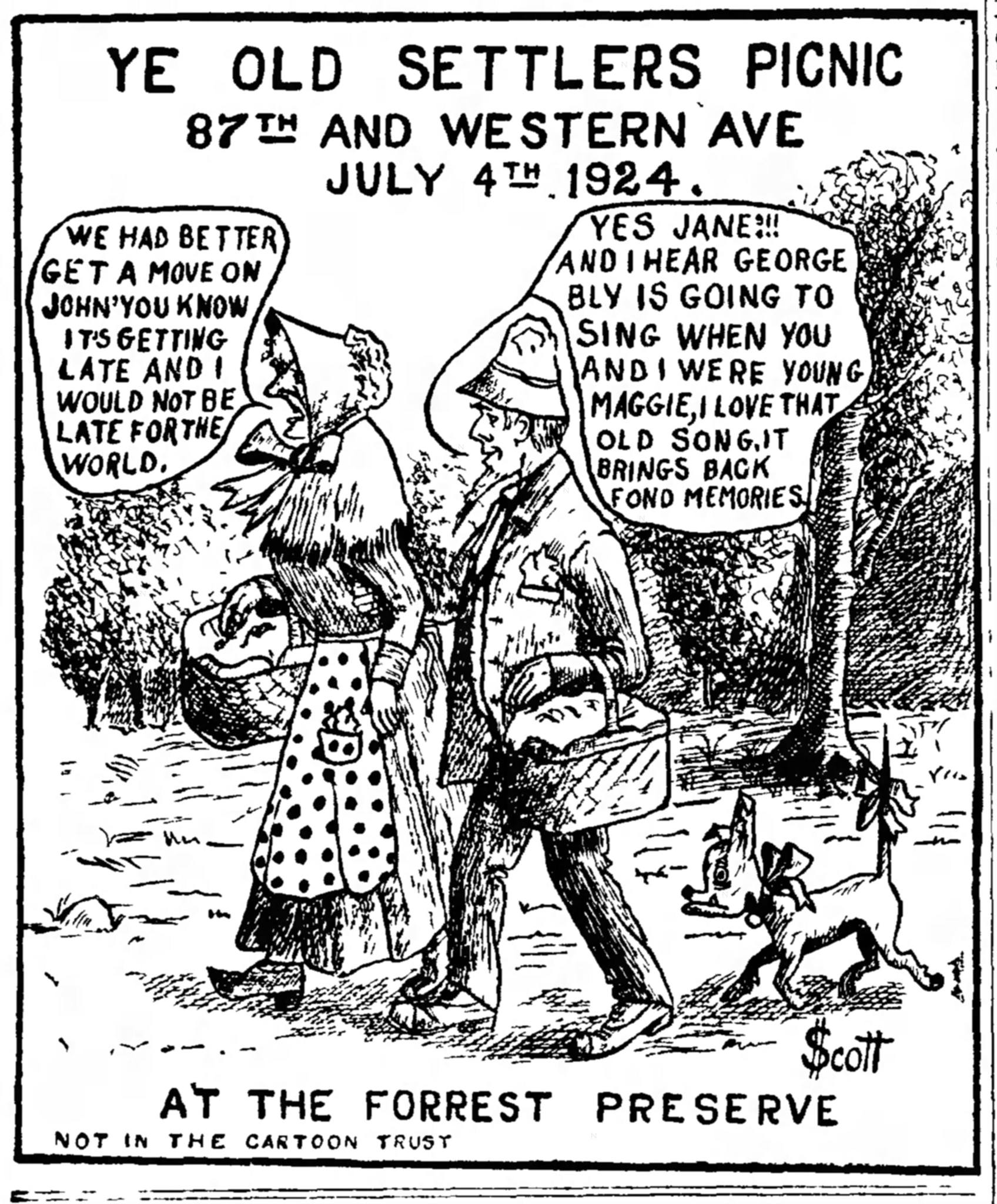
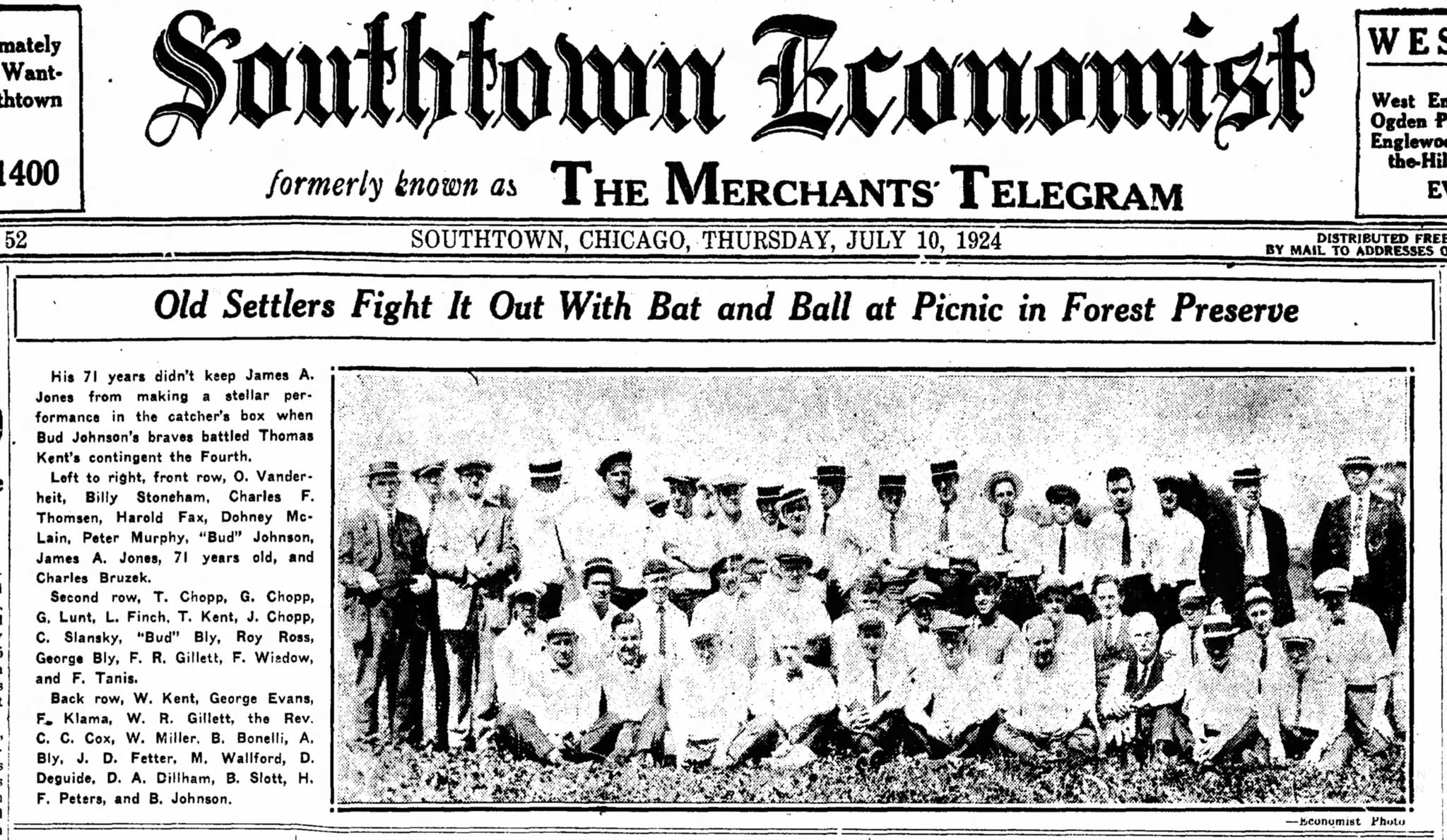
About a mile to the north, in the Beverly Woods (now Dan Ryan Woods) at 87th Street and Western Avenue, another group also held a big Fourth of July event in 1924.
According to the Southtown Economist, another southside paper that had previously been known as The Merchants Telegram, the Englewood Old Settlers Association invited their community to join them for a day of picnicking, music, and games.
“Old settlers,” or “pioneer,” societies were once very popular. People who had lived in a community for a specified amount of time got together to share stories and memories. Today, in some ways, the “nostalgia” pages of Facebook fill some of this function, although there is no comparison to getting together in person for reminiscing.
A person had to have lived in Englewood for at least 20 years to qualify for membership in the Englewood Old Settlers Association. The membership of the club numbered 600 in 1924.
For the Fourth of July outing, the attendees gathered at 63rd Street and Ashland Avenue at 10:00 a.m. Transportation to the woods would be by automobile, something still new and exciting for many people. Anyone who needed a ride would be able to find one.
The newspaper reported, “In striking contrast to the days when lanterns furnished their only illumination to guide them to neighborhood gatherings, automobiles will carry the Old Settlers to their picnic.”
The cars were decorated with flags, and horns were provided to create noise for the procession.
The day was filled with activities. Charles S. Deneen, the past Governor of Illinois, gave a speech in the morning. (The next year Deneen would become the U.S. Senator from Illinois.)
A piano had been brought along, and next, the attendees, some in wheelchairs, sang patriotic and old time songs.
A five-inning baseball game was played by two teams of Old Settlers. The oldest player was 71 years old. The prize of a straw hat went to the first man to hit a home run, which happened in the third inning and was the only home run in the game.
Additional competitions went on, with prizes supplied by the local businessmen.
For men, there was horseshoe pitching. Women’s events included wood sawing and nail driving.
There were potato races and sack races, races for “fat men” and “fat ladies,” and for married men and married women. There were also races for boys and girls.
A prize was awarded for the best decorated auto.
Tables and chairs were brought over to the woods for people to set up their “basket” lunches and dinners. Ice cream, pop, and peanuts were sold.
Later in the day there was dancing.
About 2,000 people attended and the event was deemed a social and financial success.
The paper reported that moving pictures of various events would be taken. Those movies may still exist somewhere and would be wonderful to watch.
Because July fourth was on a Friday, many businesses also gave their employees Saturday off. It was the norm back then for people to work a half day on Saturday in addition to full days Monday through Friday. The average work week was 50 hours.