Explore the RHS Facebook Archives, a rich repository of local history written by Carol Flynn. For two decades, Carol brought a deeply dedicated voice to public education at RHS. Her role as Facebook administrator through mid-2025 naturally extended her prolific research into meticulously detailed articles, most notably her multi-part historical series posts. Today, Carol continues her local history writing for The Beverly Review and other outlets.
2019
A New Year brings new ideas and enthusiasm for celebrating the rich history of the Beverly Hills, Morgan Park, Washington Heights, and Mt. Greenwood neighborhoods on the far southwest side of Chicago. With this post, the Ridge Historical Society will be starting new features to reach out for stories, questions, and pictures. This is your community, this is your history, this is your society! We hope you will like and share this page and these posts so we can reach as many people as possible.
The area is known for its outstanding and diverse architecture. We have everything from Queen Anne to Prairie style, from Art Moderne to Chicago bungalows. To drive, walk or bike around the neighborhood is to constantly delight in the scenery. We even have our own castle!
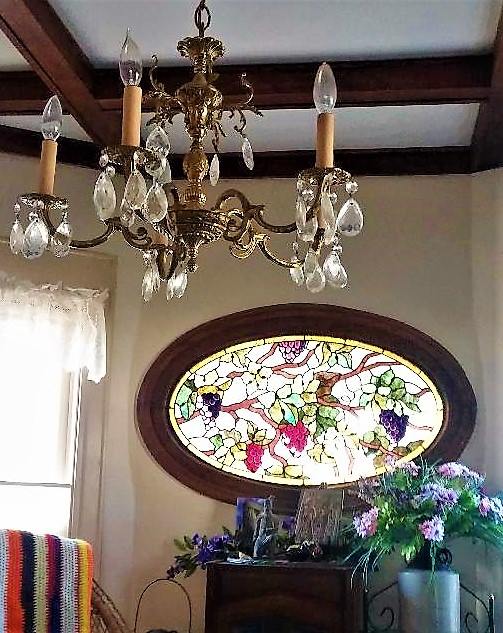
But the outsides of the houses are just one aspect. Inside the houses are delightful and charming features we rarely get to see. Last week, I was in a house that boasted a graceful, romantic original stained glass window as well as an original chandelier. Here is a picture. So often features like these have been removed with renovation and it is wonderful to find them preserved.
I invite you to share pictures of original features in your house or others you have seen. As most of these are private residences, we won't reveal addresses. I know we'll all enjoy these pictures.
Published by Carol Flynn – RHS Communications.
Real photo post cards (RPPCs) were the rage at the turn of the 20th century, around 1900. Itinerant photographers roamed the cities and country sides taking pictures of everything from houses to natural disasters. The postcards were sold as souvenirs. Today. these images are often referred to as "folk photography" and RPPCs offer a valuable visual documentation of history.
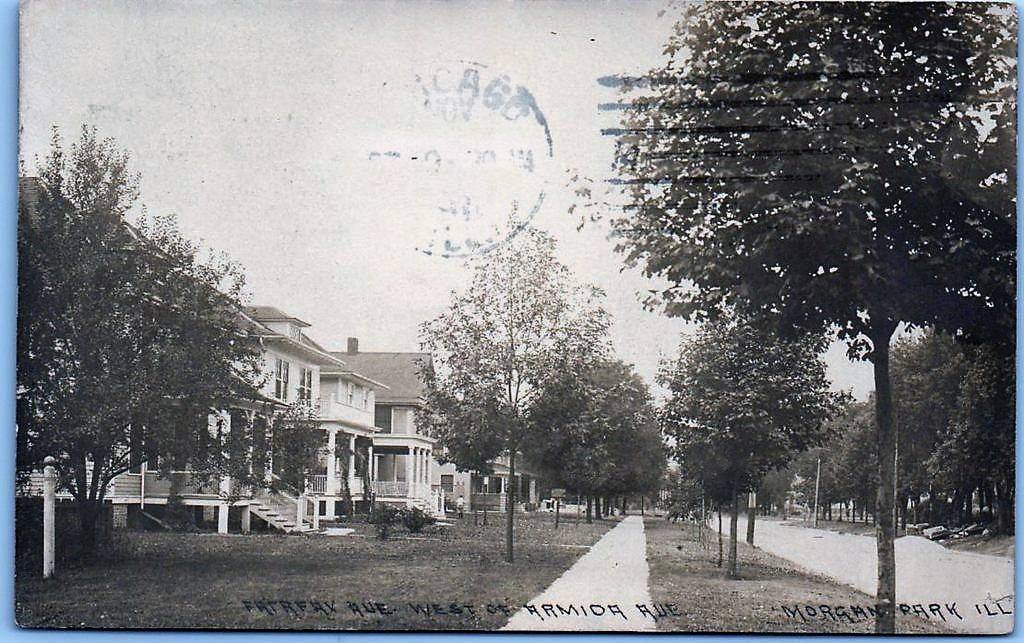
There are loads of RPPCs for the Beverly, Morgan Park and Blue Island area. You could go broke trying to collect them all so I save electronic images when I come across them. Here is one I found recently.
It is of a block of houses, and what makes it interesting is the location: Fairfax Ave. west of Armida Ave., Morgan Park.
Well, we don't have a Fairfax or an Armida. So where was this?
When Morgan Park was first planned and laid out, prominent citizen Colonel George R. Clark named some of the streets based on an epic morality poem called Jerusalem Delivered, published in 1581 and popular reading in the Victorian times. Armida was a character in the poem and Edward Fairfax was the most popular translator of the poem from the original Italian to English.
With annexation to Chicago in 1914, most of the old names had to be changed. Armida became Hoyne Ave. and Faifax became 110th Street. So this is looking west on 110th Street from Hoyne Avenue, ca. 1900.
Posted by Carol Flynn, RHS Communications #ridgehistoricalsociety
Since we are experiencing a "weather event" due to a "fractured polar vortex" today (translation: it's snowing out), this seems like a good time to share some history. So everyone grab your coffee or hot chocolate and gather round.
A day or two ago, on the Facebook page Forgotten Chicago, a post was made about the Optimo Hat shop which is downtown in the Monadnock Building. I started a post on that and this is a continuation of that.
Now, everyone knows that Optimo Hats was a successful shop here in Beverly on Western Ave. for many years, owned and operated by Graham Thompson. You can read all about the business on its website. When it was decided to move the shop downtown, we were all very happy about the store's success, but sorry to see it leave Beverly. But Graham did not abandon Beverly – in fact, he did a really wonderful thing. He took over an old, historic fire station and set up his hat-making operations there. This is the story of that fire station, known as Chicago Fire Department (CFD) Engine Co. 121.
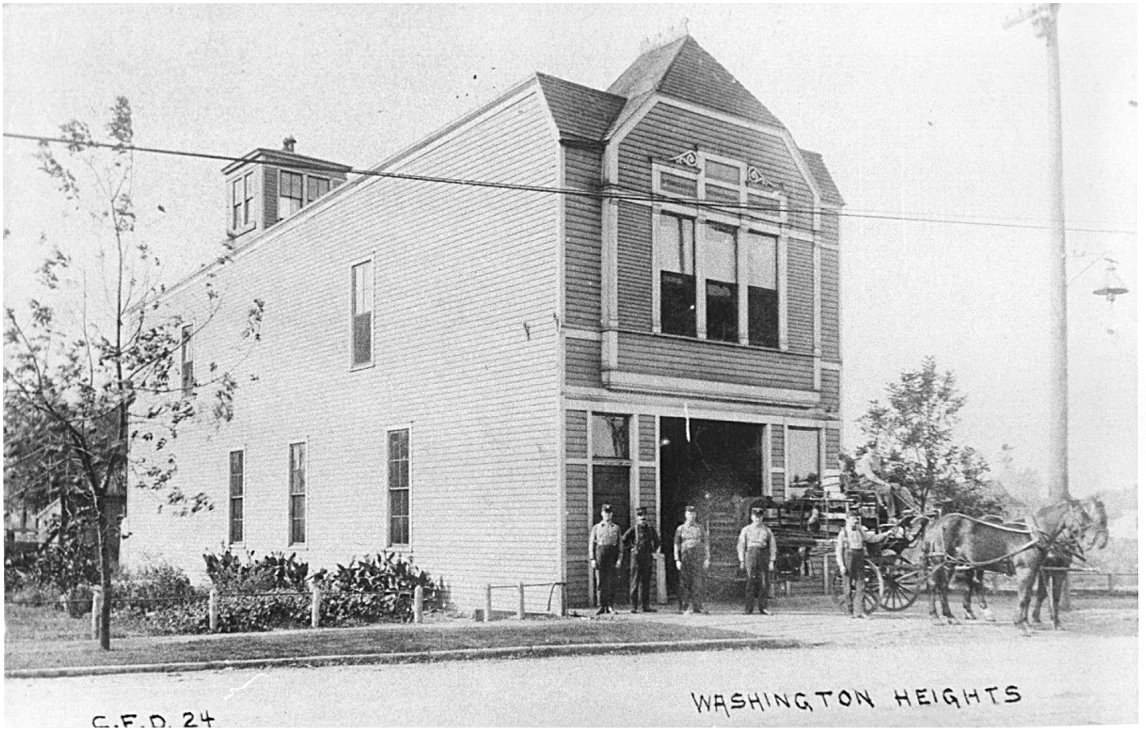
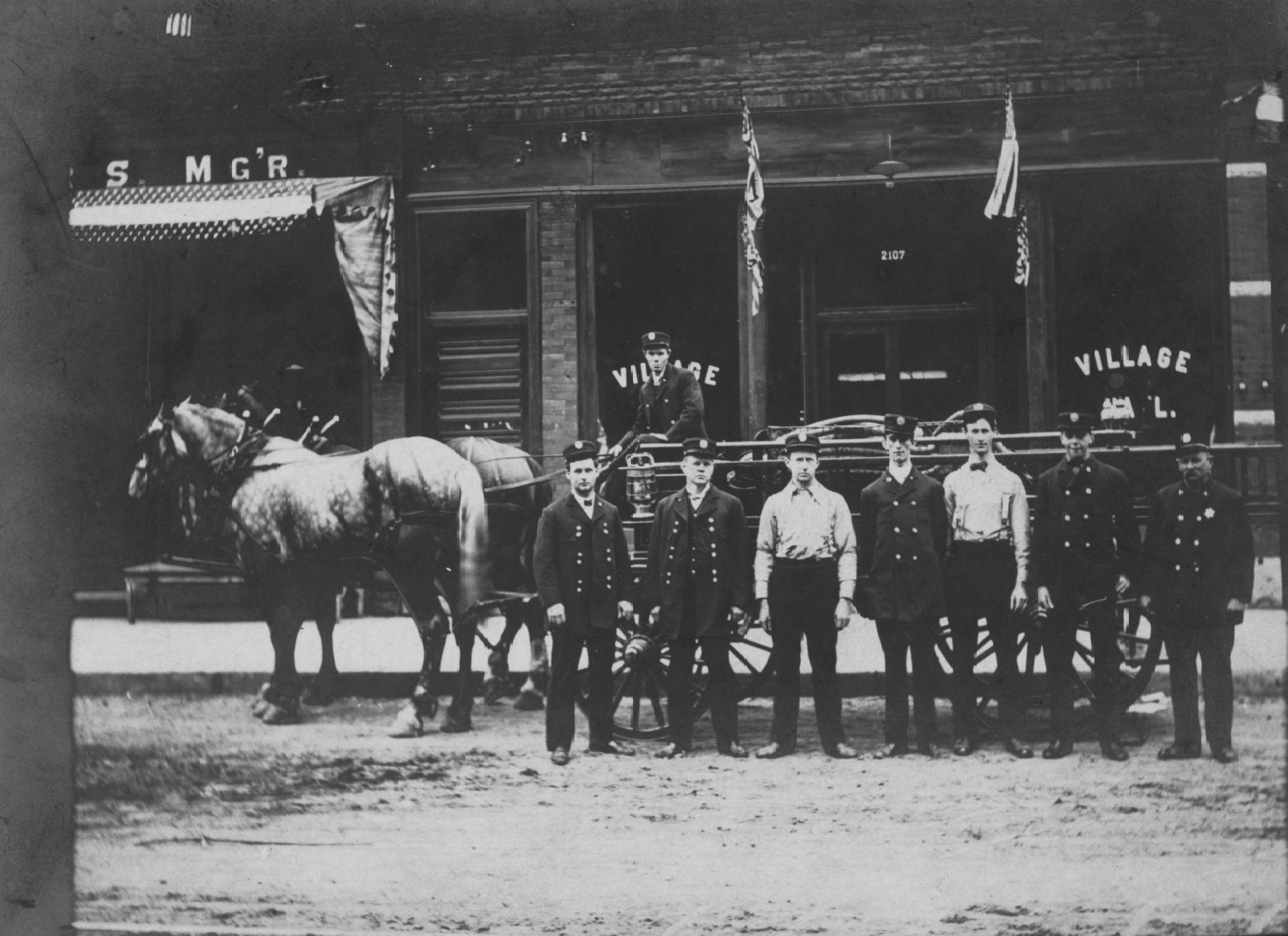
Beverly Hills, as this section of the community eventually became known, annexed to the City of Chicago in 1890. Prior to annexation, the area was served by the volunteer fire department of Washington Heights. With annexation, the volunteers were incorporated into the CFD and a fire station was built at 104th St. and Vincennes Ave. in 1890-91 (picture 1 from the Ridge Historical Society archives). [Ed. note: There is still the fire station at 10400 S. Vincennes – CFD Truck 24. The original frame structure is long gone, replaced by a brick facility.]
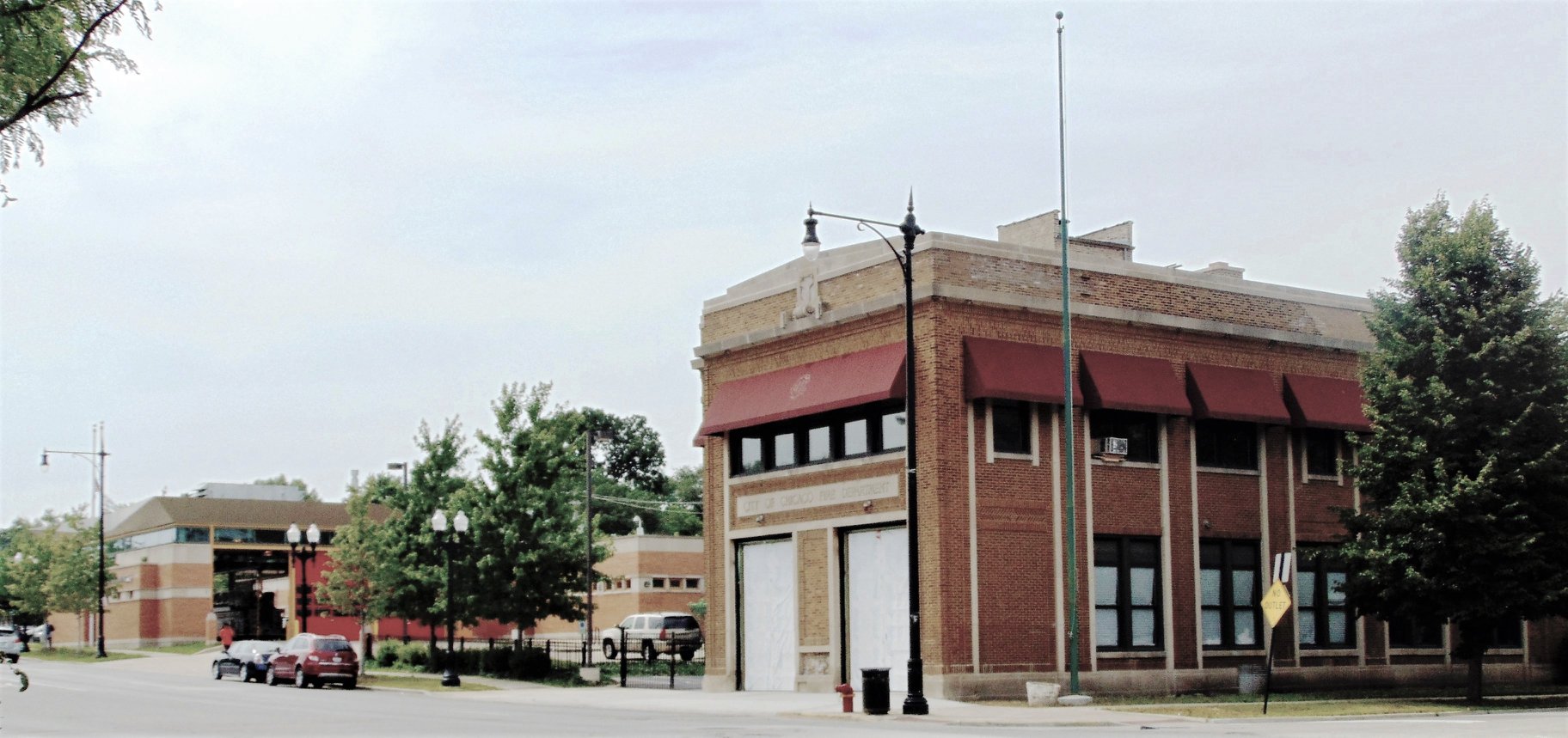
Then in 1912, the city purchased the corner lot at 1700 W. 95th St. to build a new fire station in the ever-growing community. Engine Co. 121 was organized on March 1, 1915, the first CFD company with motor equipment. Total manpower was eight men. In 1940, the firehouse was enlarged and in 1941, Truck Co. 40 was reorganized to that location.
The original station was used for over nine decades and still stands, a local landmark. In 2008, right next door to the old firehouse, a new station was built. Photo 2 (by C. Flynn) shows the old and new stations together. The old station, in the foreground, is the one now being used for hat production.
The original 1915 firehouse, standing alongside the modern facility, offers a unique history lesson – the opportunity to contrast “then” and “now.”
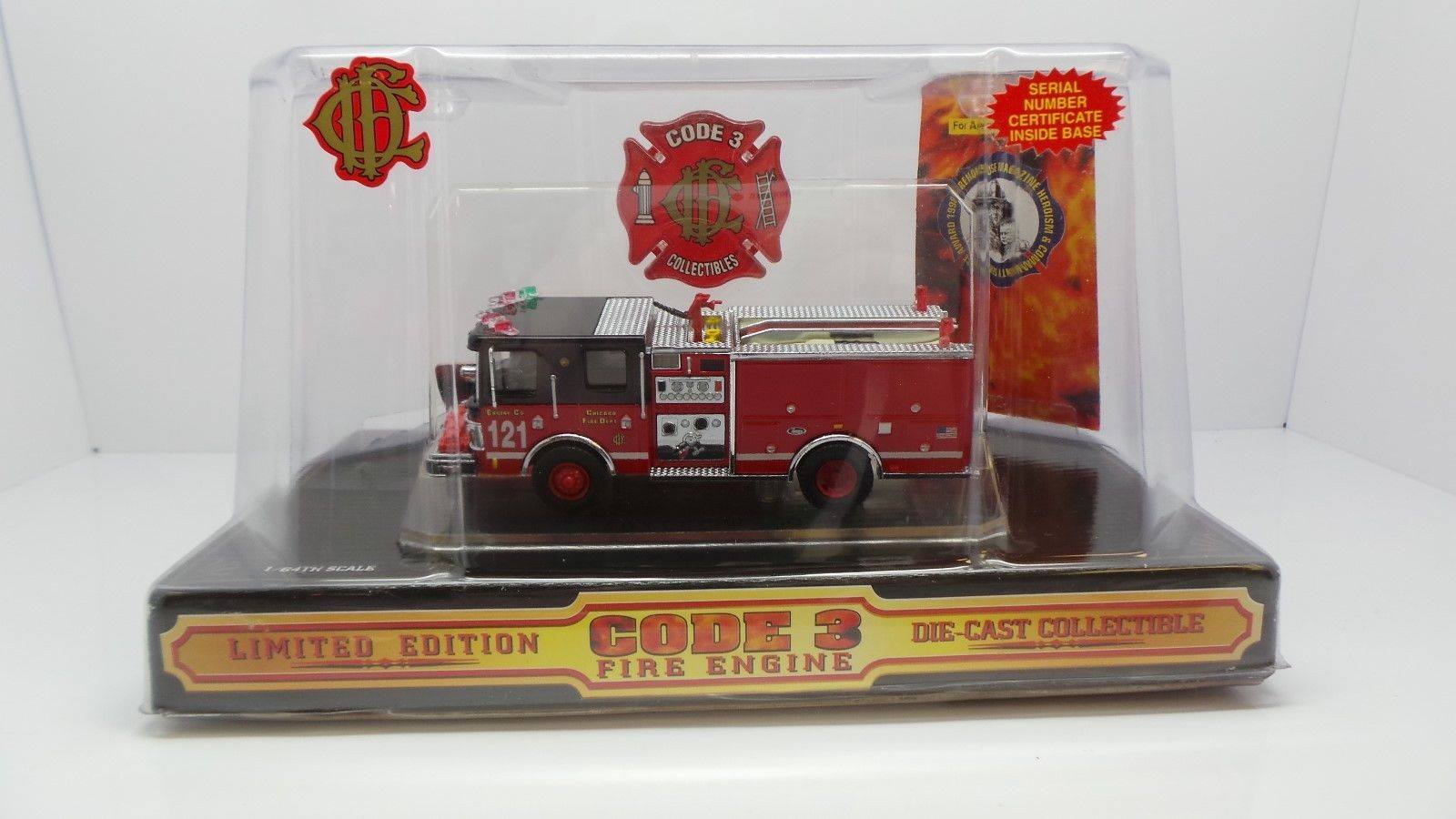
There is even a collectible for Engine Co. 121. Code 3 Collectibles has a 1:64 scale die cast Luverne pumper Engine 121 released in 1999 as part of its “Fire and Rescue” line. Sold out by the company, the models can be found on eBay and other outlets.
– Carol Flynn, RHS Communications #ridgehistoricalsociety
This is a good article about the hat production facility.
https://chicago.curbed.com/2018/5/1/17306880/optimo-hatmaker-som-beverly-firestation
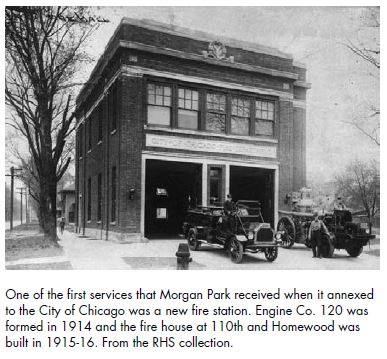
Looks like I can share more today. The fire station at 110th and Homewood was mentioned. That is the fire station location for Morgan Park, and my great-grandparents lived right on that block.
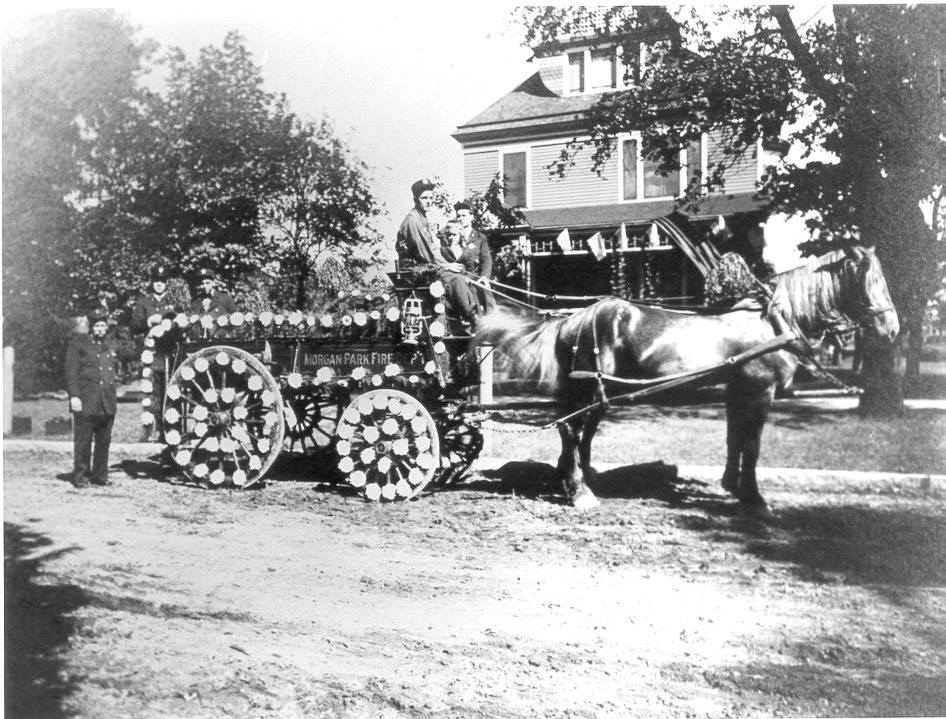
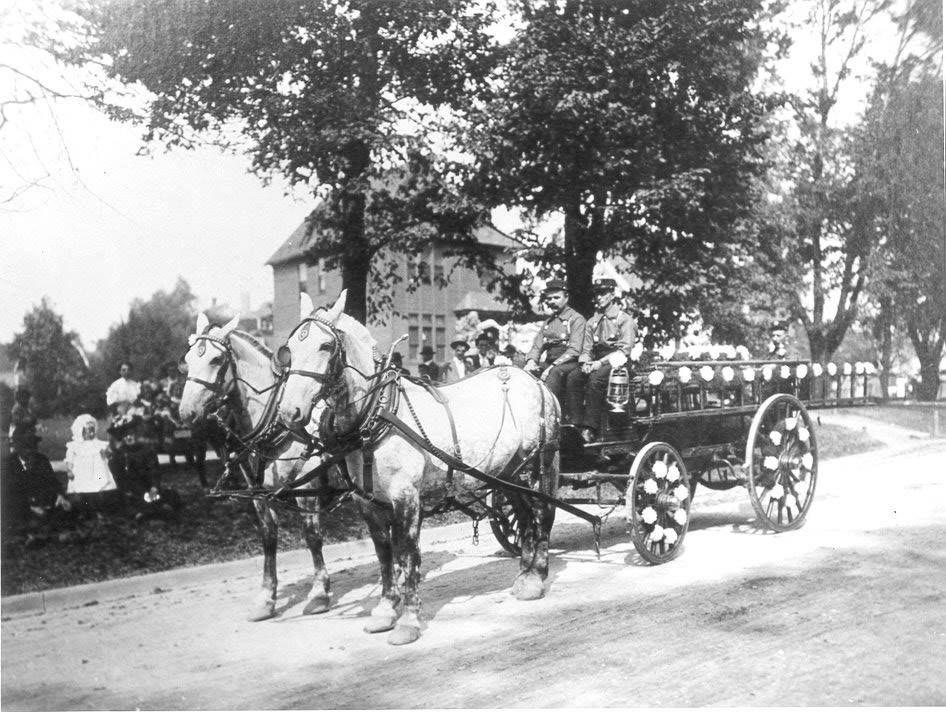
I am sharing some early pictures (from the Ridge Historical Society archives) of the Morgan Park fire department, when Morgan Park was its own village and not annexed to Chicago yet. Most of these local fire departments started as volunteers, on a shoe-string budget.
One of my favorite stories for the early MP fire brigade was that when they got a call, they borrowed the horses from the dairy barn down the street to pull the fire wagon. The only problem was that the horses knew the milk delivery route and stopped at every house along the way that usually got milk. It took forever to get to the fire. The Village of MP had to get the fire department its own horses.
The last picture is of the first fire house built there when MP annexed to the city, and the caption I wrote for the RHS newsletter. Many of the small towns around the city annexed so that they could get better services such as fire, police, schools, water, lighting, paving.
– Carol Flynn, RHS Communications #ridgehistoricalsociety
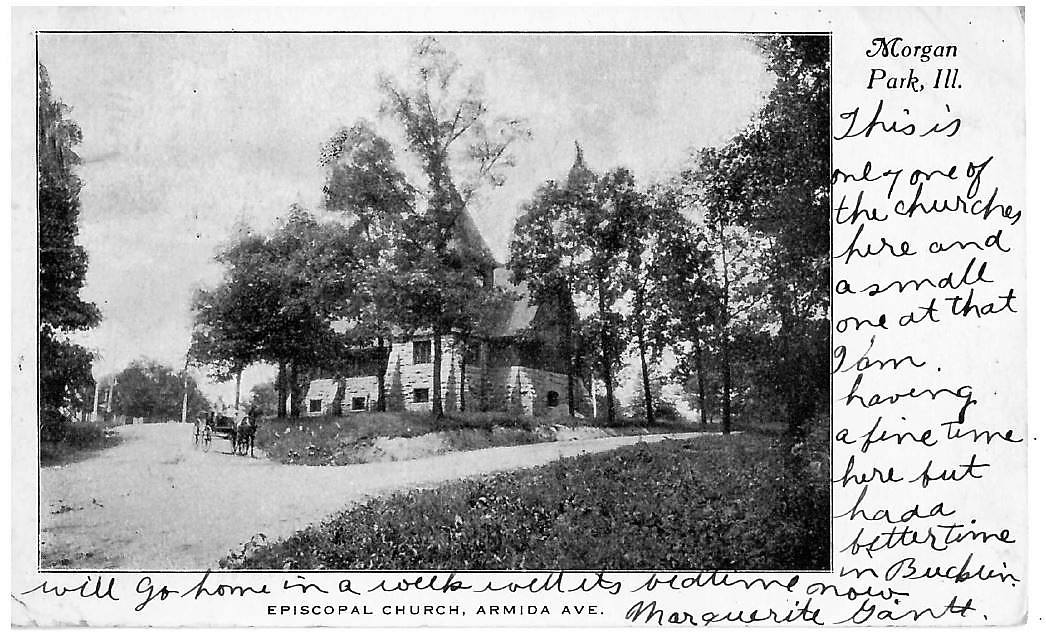
Here's an interesting RPPC (Real Picture Post Card) from Morgan Park I found on Ebay recently.
The picture is wonderful: The card is labelled "Episcopal Church, Armida Ave." This is a very early photograph of the Church of the Mediator, which stands on its own little island of land at 10961 S. Hoyne Ave. (if you remember last week's post, Hoyne was originally called Armida Ave., based on an Italian Renaissance poem). The church is surrounded by rural countryside and dirt roads, and a horse and buggy stands waiting in the road.
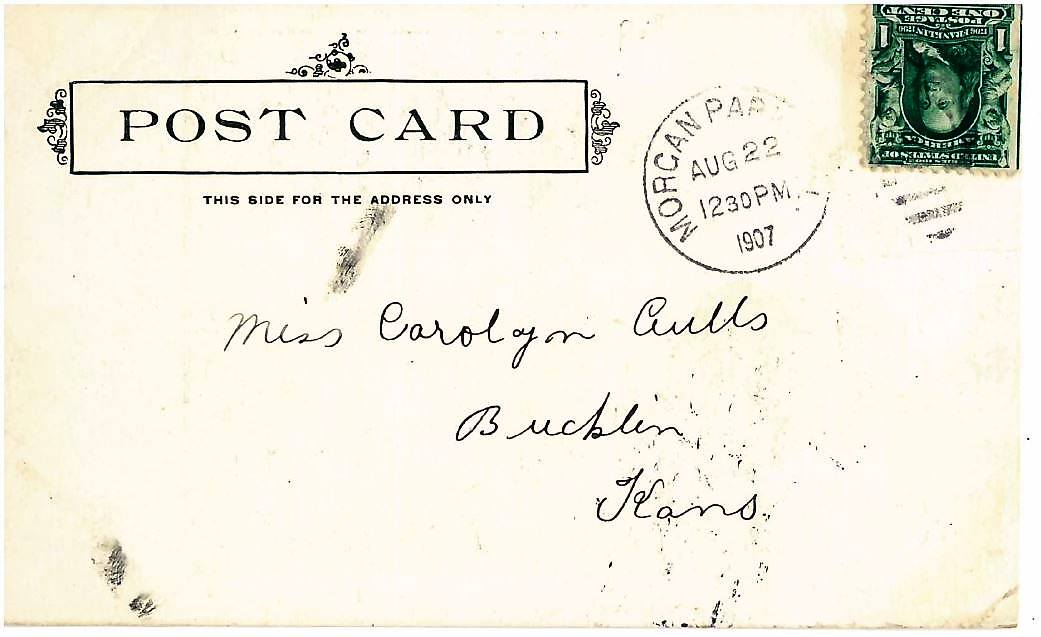
The back of the card is postmarked Morgan Park, Aug. 22, 1907, 12:30 p.m. (Morgan Park was still its own Village then – it would not annex to Chicago for another seven years), and bears a one cent stamp. It is addressed to a woman in Bucklin, Kansas.
The sender wrote this on the front of the card: "This is only one of the churches here and a small one at that. I am having a fine time here but had a better time in Bucklin. Will go home in a week. Well it's bedtime now." It is signed Marguerite Gantt.
WHAT?? She had a better time in Kansas than in Morgan Park?? I wonder if she would still say that today!
But this card does remind us that Morgan Park was intentionally founded as a religious, education and temperance community. It was carefully designed and laid out to resemble an English country village. This little church was keeping with that motif.
The Church of the Mediator (in a newer building that replaced this early church) closed its doors for good in 2009 due to a declining congregation. The building sits empty and for sale. One big problem is the lack of parking, but you can see that at the time this picture was taken, car parking would never have been dreamed of yet.
And a side note, one of the people involved in the building of this church was Robert C. Givins, who built the Castle at 103rd and Longwood Drive. Givins' father was an Anglican minister in Canada. The Anglican Church is the Church of England, headed by the current King or Queen. In the USA, it is the Episcopal Church, organized after the American Revolution.
– Carol Flynn, RHS Communications. #RidgeHistoricalSociety
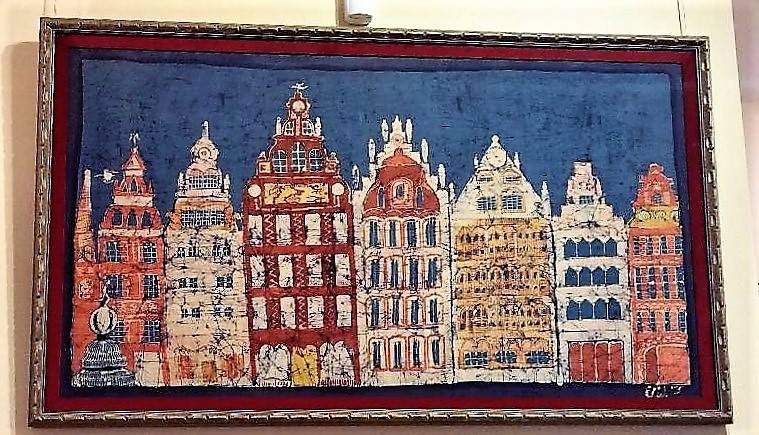
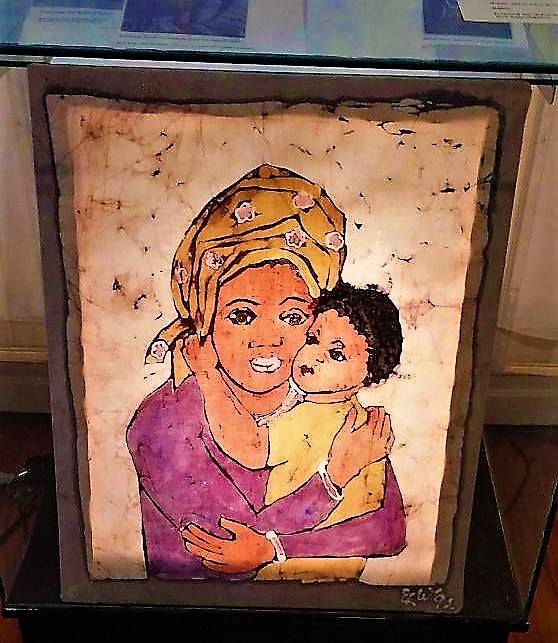
Winter got you down? Right about now, cabin fever is setting in big time in Chicago. We need to find fun, local, free things to do! And the Ridge Historical Society is coming to the rescue. On Friday, February 8, RHS will open its doors from 1 to 3 pm, and again from 7 to 9 pm, to welcome in everyone to view the current exhibit of the "Art of Ethel Wirtshafter."
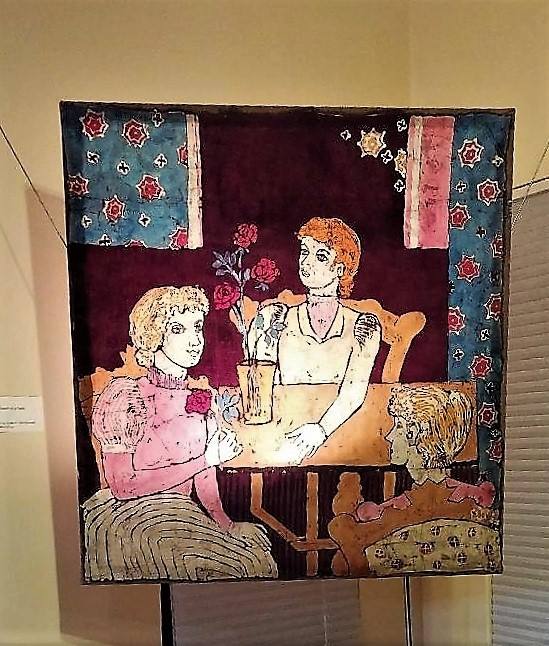
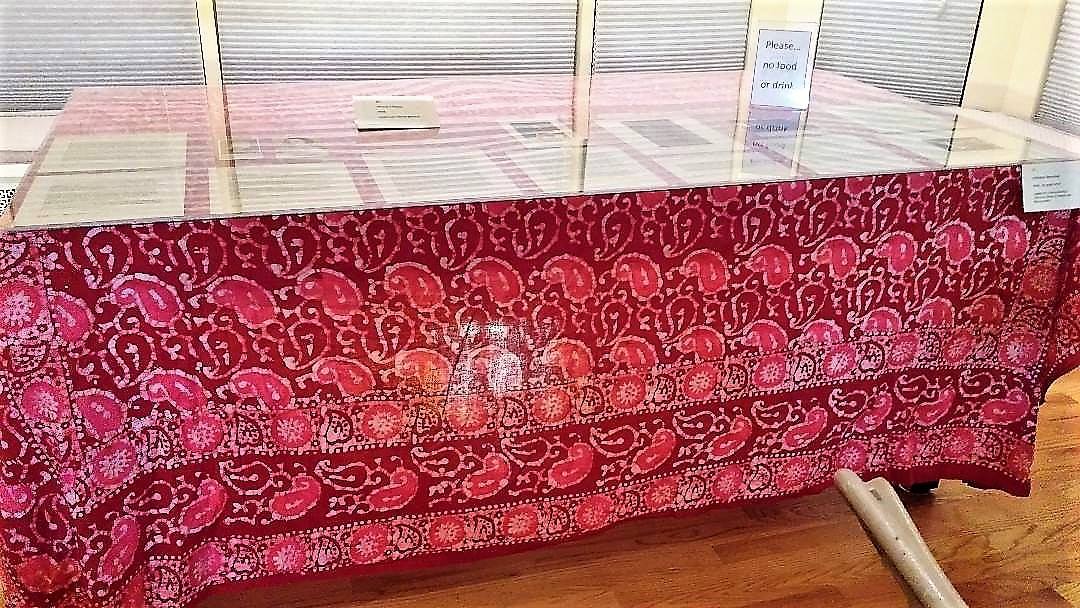
Ethel was a beloved local artist whose signature works were batiks. Batik is an ancient method for dying fabric, where layers of beeswax are applied to the cloth and scraped off, allowing the dye to be absorbed.
Most batiks we know are from Indonesia and feature repetitive geometric designs. But Ethel used the fabric like a canvas and created scenes with people and objects.
I will post more about this during the coming week. Please come over to RHS, 10621 S. Seeley Ave., next Friday for the Open House! If you have ever been curious about the historical society, here is your opportunity to come inside this amazing place. The mission is to investigate and preserve the history of the Beverly Hills, Morgan Park, Washington Heights, and Mt. Greenwood neighborhoods of Chicago. And what a rich history we have! Membership is open to everyone and there are loads of volunteer opportunities to work with the collection, house and grounds, and programs and events,
I will be there and I hope to meet a lot of you that day.
– Carol Flynn, RHS Communications
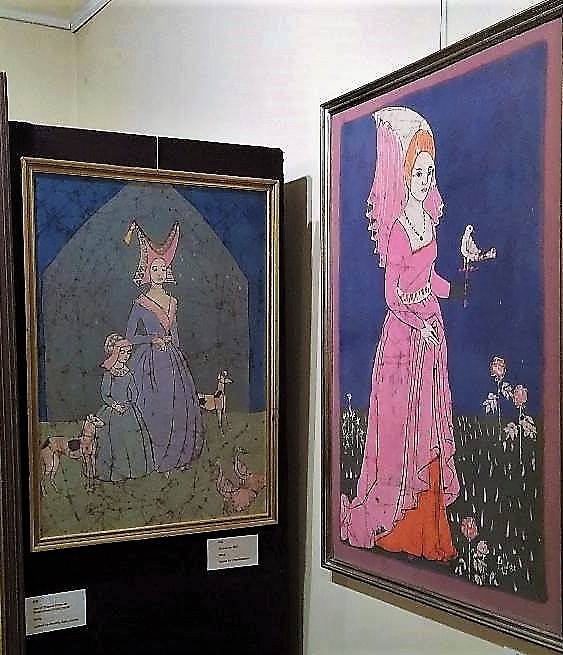
Here are just two of Ethel's works, again, batiks, dye on cloth. The first is a cityscape on loan from a private collector, the second shows one of her favorite themes, Madonna and Child, and is on loan from the Vanderpoel Art Association, where Ethel taught art classes for 45 years.
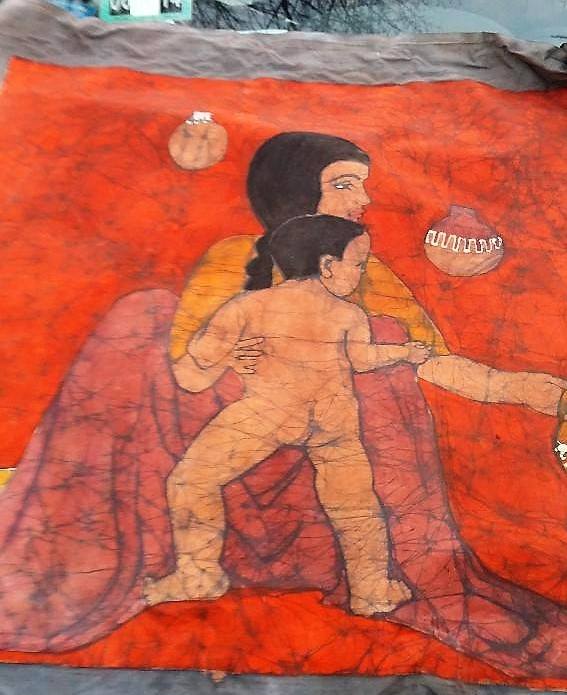
Being added to the Wirtshafter exhibit this week – another batik found all rolled up at a house, and is now part of my personal collection, and it will be on loan to RHS until Feb. 24. This would be from Ethel's "Madonna and Child" series, with a Southwest theme. The colors are amazing – very vibrant. Ethel mixed her own dyes for her work. See the exhibit, "The Art of Ethel Wirtshafter," at the Ridge Historical Society, 10621 S. Seeley Ave., at the Open House on Friday, Feb. 8, from 1 to 3 p.m. and from 7 to 9 p.m. All are welcomed, free of charge. Get to know your local historical society!
Reminder! Tomorrow, Friday, February 8, is the Open House at the Ridge Historical Society, 10621 S. Seeley Ave. We will be welcoming all visitors from 1:00 to 3:00 p.m. and from 7:00 to 9:00 p.m. The event is free and refreshments will be served. Please join us!
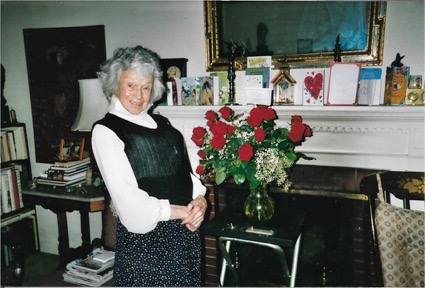
The special exhibit right now is “The Art of Ethel Wirtshafter.” More than 30 pieces by this beloved local artist and art teacher, who died in 2009 at the age of 99, are on display. Included are some paintings, but mostly Ethel’s signature work, batiks, created using the ancient technique for dyeing cloth.
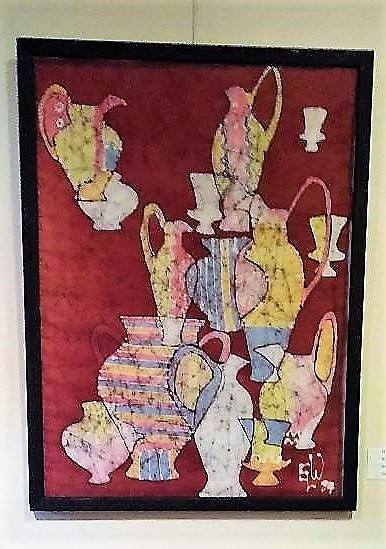
The artwork is on loan from private collectors and from the Vanderpoel Art Association and the Beverly Arts Center. This exhibit offers an extraordinary opportunity to see so many of Ethel’s works in one location. Pictures of Ethel’s work on display are posted here, followed by a picture of the artist.
RHS is located in the Graver-Driscoll House, designed in 1921 by John Todd Hetherington, and part of the Longwood Drive Historic District. Our mission is to preserve and interpret the history of the local communities. Tomorrow’s Open House is an invitation to learn more about us. Membership is open to everyone and there are many opportunities for involvement. We hope you will stop by!
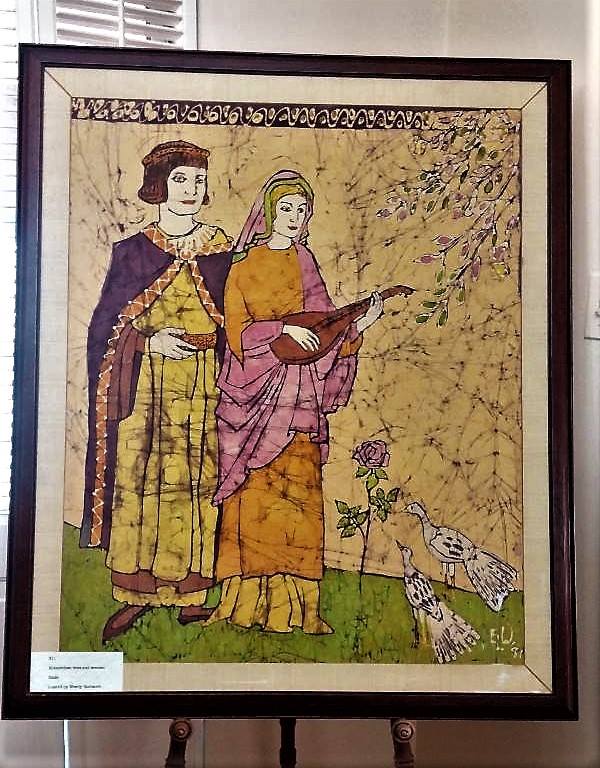
Thanks to the folks who visited the Ridge Historical Society today for our Open House and to view "The Art of Ethel Wirtshafter" exhibit. Despite the freezing cold below-zero temperatures, and I do mean COLD, at least 100 people came over. We even had someone bring over her Ethel Wirtshafter batik to add to the display – making for three additional pieces added this week.
One of the new pieces added this week is posted here. It is one of Ethel's signature batiks, created using the ancient fabric-dyeing technique. The word that comes to mind when you see it in person is "exquisite."
For those who missed today's event, the exhibit will run through February 24. Arrangements may be made to view the exhibit by contacting RHS at 773/881-1675, or ridgehistory@hotmail.com.
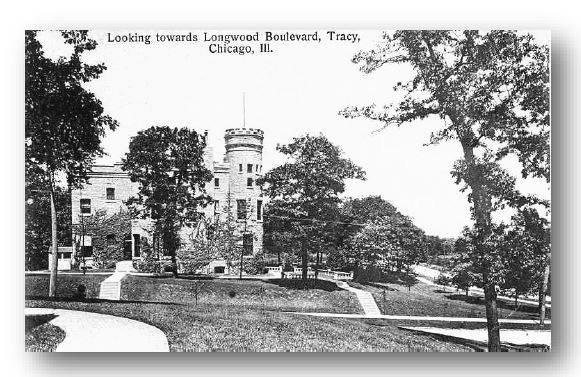
Tomorrow is Valentine’s Day, which brings to mind tales of love and devotion. Beverly/Morgan Park has its share of love stories (and a few scandals, but that is for another day). One of the most compelling surely has to be that a man built an actual castle for his new bride. We’re talking about the Givins Castle at 103rd Street and Longwood Drive, of course. This entire story has a lot of urban myth attached to it, and here are the real facts.
Robert Cartwright Givins was a very popular man in Chicago, very well-liked. The newspapers often referred to him as “Bob,” something unusual for the formal times of the late 1800s. He was a real estate developer, a lawyer, a writer of romance and science fiction novels, a world traveler, and the biggest booster of Chicago to be found. Bob Givins was even proposed for mayor. He had moved to Chicago from Canada, and his family came from Northern Ireland Protestant descendancy.
Givins lost his first wife and three of his four children at an early age. Only one son, Robert Saltern Givins, made it to adulthood – and he was involved in one of the scandals we will save until later.
On August 17, 1884, the Inter Ocean newspaper ran this little blurb: “Mr. Robert C. Givins has gone to St. Paul and Lake Minnetonka. Will he come back alone?”
Givins came back with a new wife, the former Emma Steen. Emma was a Chicago school teacher, 13 years younger than Givins, and of Norwegian descent. They built the Castle on the hill in Tracy, as the area was then known, in 1886-87. Tracy was the name of the street that would become 103rd Street.
Now we get to some of the myths. First, that Givins visited Ireland, saw this castle on the River Dee, and came home and built it for his new wife. Well, there is no documentation of this that we have found – yet. It seems the first time this was mentioned was about 50 years after the Castle was built. It actually could be highly likely that the Castle was built due to Masonic influence – the Givinses were very active in the Knights Templar of the Masons.
Second, there is a myth that the Givinses never lived in the Castle. They most certainly did. There are numerous newspaper articles about their activities there, and their involvement in the local community. They even brought a trendy new game to the Ridge: “pin-the-tail-on-the-donkey.” During the winters, they took up rooms in downtown hotels, which is something the rich living outside the city often did to avoid the commute downtown for business and social activities.
Givins was in favor of the annexation of Washington Heights, which included Beverly, to Chicago in 1890. He sat on the finance committee for the first Church of the Mediator at 110th St. and Hoyne Ave.
Emma Givins was a strong supporter of education for women and teachers’ rights. She was a founder of an early domestic science school through the Chicago Woman’s Club. This was a forerunner of today’s Family and Consumer Sciences programs.
The Castle was sold in 1909. The Givinses divided their time between the north suburbs and Sarasota, Florida. Emma died in 1914 at the age of 56. Bob died the following year, age 69. They are buried in Rosehill Cemetery on Chicago’s north side.
– Carol Flynn, RHS Communications @ridgehistoricalociety