
Explore the RHS Facebook Archives, a rich repository of local history written by Carol Flynn. For two decades, Carol brought a deeply dedicated voice to public education at RHS. Her role as Facebook administrator through mid-2025 naturally extended her prolific research into meticulously detailed articles, most notably her multi-part historical series posts. Today, Carol continues her local history writing for The Beverly Review and other outlets.
Lost or Found?
The Ridge Historical Society
Lost or Found?
By Carol Flynn
Today starts a new series, “Lost or Found?,” based on the current exhibit at the Ridge Historical Society (RHS), “Louise Barwick’s Lost Ridge,” which explores the Beverly/Morgan Park neighborhood as it existed in times past.
One section of the exhibit, “Lost or Found,” curated by Tim Blackburn, RHS Board member and researcher, includes historical images of buildings in Morgan Park, some of which are gone and some of which still stand. While the pervading theme of the entire exhibit is what has been lost, Linda Lamberty, RHS Historian and overall exhibit curator, notes that this section is “infused with hope by including sites that have survived.”
The exhibit and this Facebook series use images from an 1889 book of photographs printed using photogravure, a process using a grained copper plate which is coated with a light-sensitive gelatin tissue which has been exposed to a film positive, and then etched. This results in high-quality, rich prints and reproductions. The process was popular in the 1800s and is still used today by some fine-art photographers.
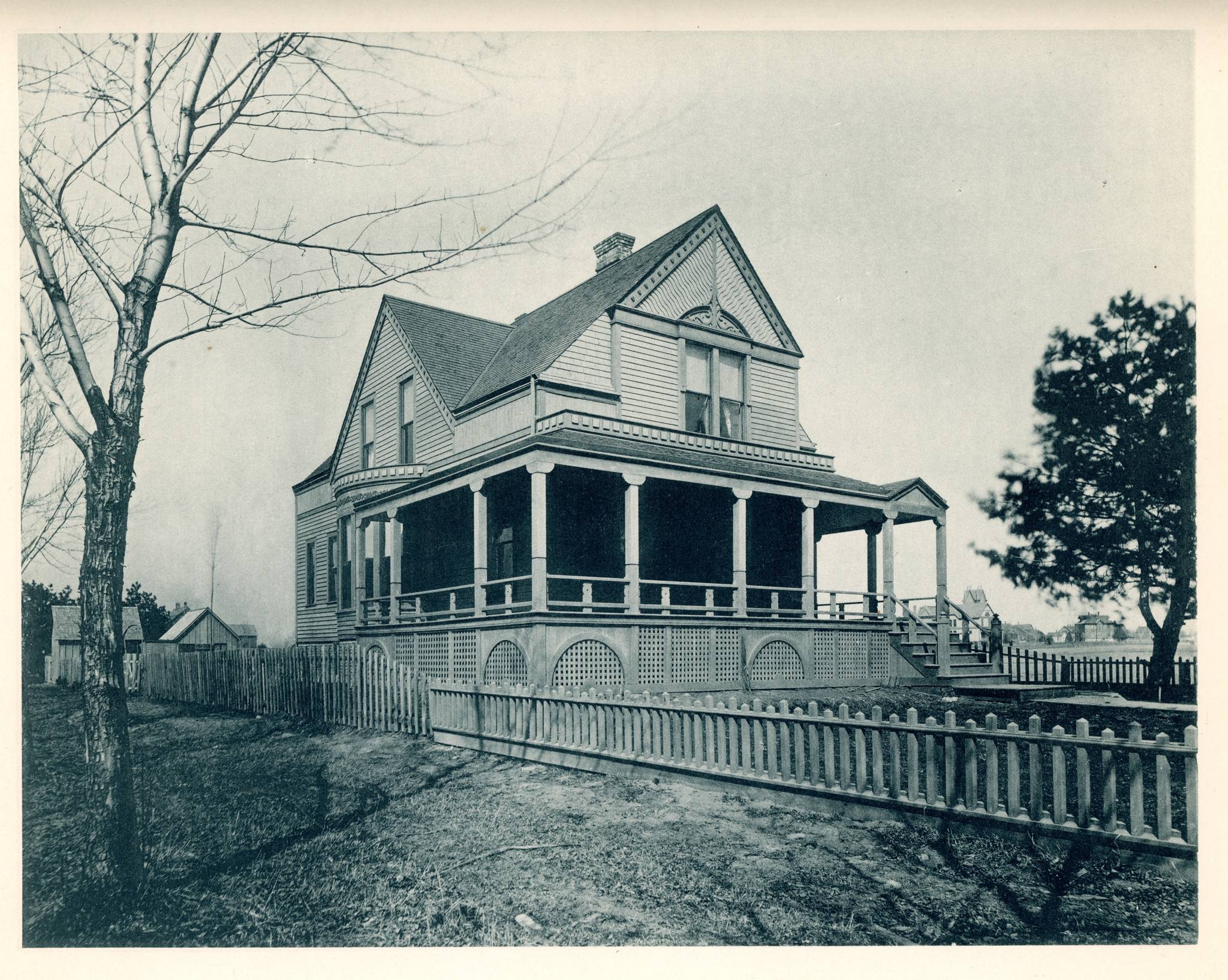
Twenty-three photographs were available for the exhibit, and thirteen of the buildings in those photos are still standing. Readers are invited to view a photo and identify the building, and comment whether the building is still standing, and if so, its present location. The challenge is tougher than it seems because some of the buildings have been substantially altered or moved.
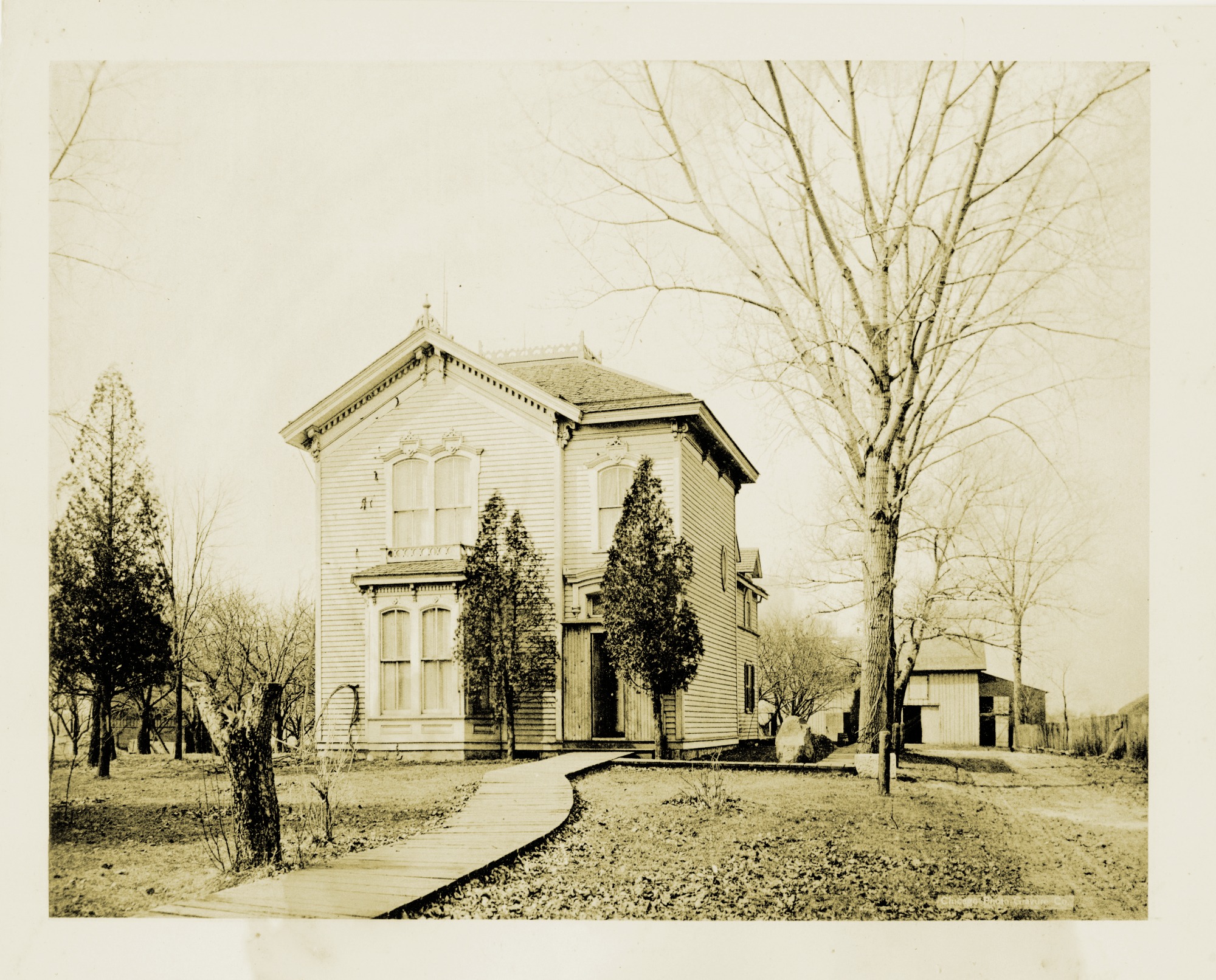
Here is our first photo. Is this house still standing? If yes, where? The answer, and the history of the house, will be posted in a few days, so keep watching this page.
All of the images, plus much more, can be viewed in the exhibit at RHS.
“The RHS exhibit encourages visitors to think about the importance of preservation to our history and the many ways we can preserve the memory of buildings that are no longer standing,” said Tim.
The RHS exhibit is free and open for viewing on Tuesdays and Sundays from 1:00 to 4:00 p.m., or by appointment. RHS is located at 10621 S. Seeley Avenue in Chicago, and may be contacted at 773-881-1675 or ridgehistory@hotmail.com.
The Ridge Historical Society
Lost or Found? – Identify Building #2
By Carol Flynn
Last week, the Ridge Historical Society (RHS) started a new series, “Lost or Found?,” based on the current exhibit at RHS, “Louise Barwick’s Lost Ridge,” which explores the Beverly/Morgan Park neighborhood as it existed in times past.
One section of the exhibit includes historical images of buildings in Morgan Park, some of which are gone and some of which still stand. This Facebook series will present the historic photos of some of the buildings, and ask readers to identify if the building is still standing, and if so, where it is.
It can be trickier than it sounds because many of the buildings have been altered, and some have been moved.
The first picture was presented last week, and several viewers identified it correctly on the RHS Facebook page. It is a house still standing, and the story of the house will be posted in the next few days. New research on the house and family has been located so that is being incorporated into the post.
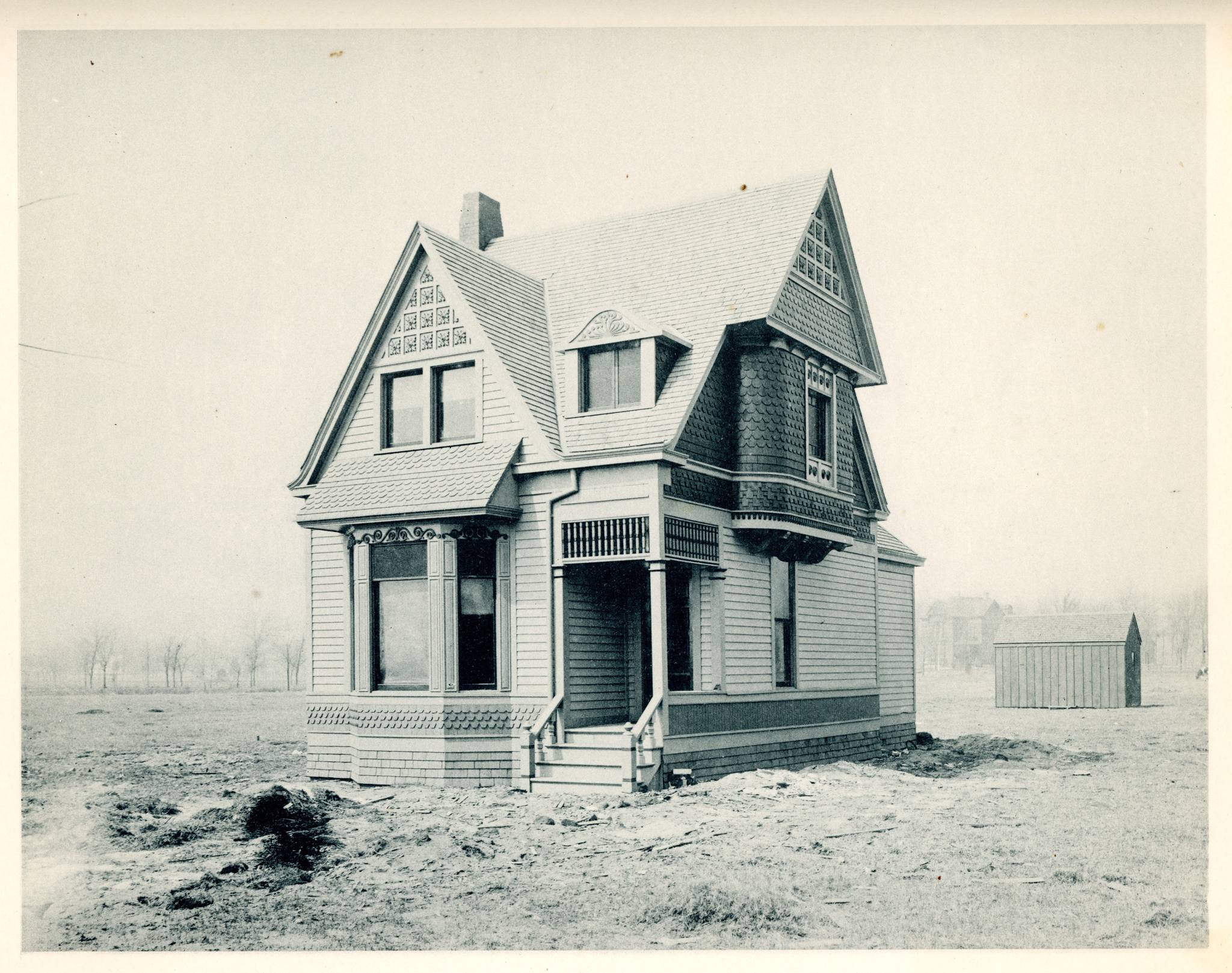
While that post is being compiled, let’s get a head start on the second building.
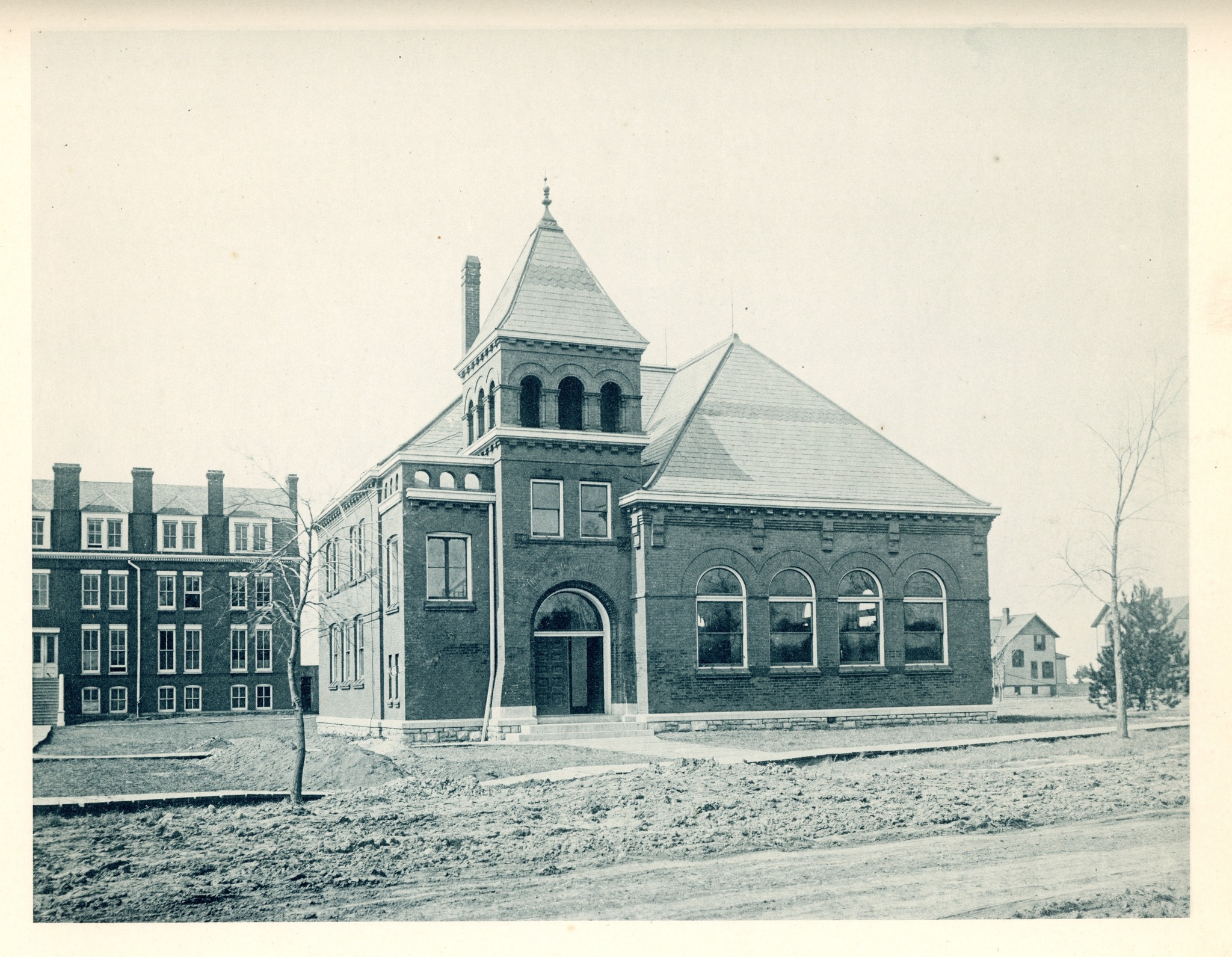
Here is Building #2, from an 1889 photo. Is it still standing? If so, where is it?
The RHS exhibit is free and open for viewing on Tuesdays and Sundays from 1:00 to 4:00 p.m., or by appointment. RHS is located at 10621 S. Seeley Avenue in Chicago, and may be contacted at 773-881-1675 or ridgehistory@hotmail.com.
The Ridge Historical Society
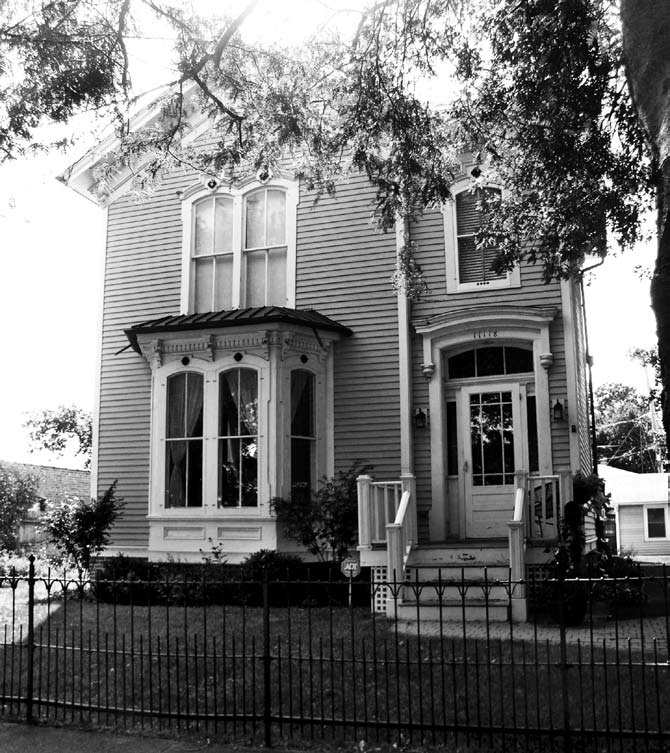
Lost or Found? – Building #1: FOUND – Part 1 on the Iglehart House
By Carol Flynn
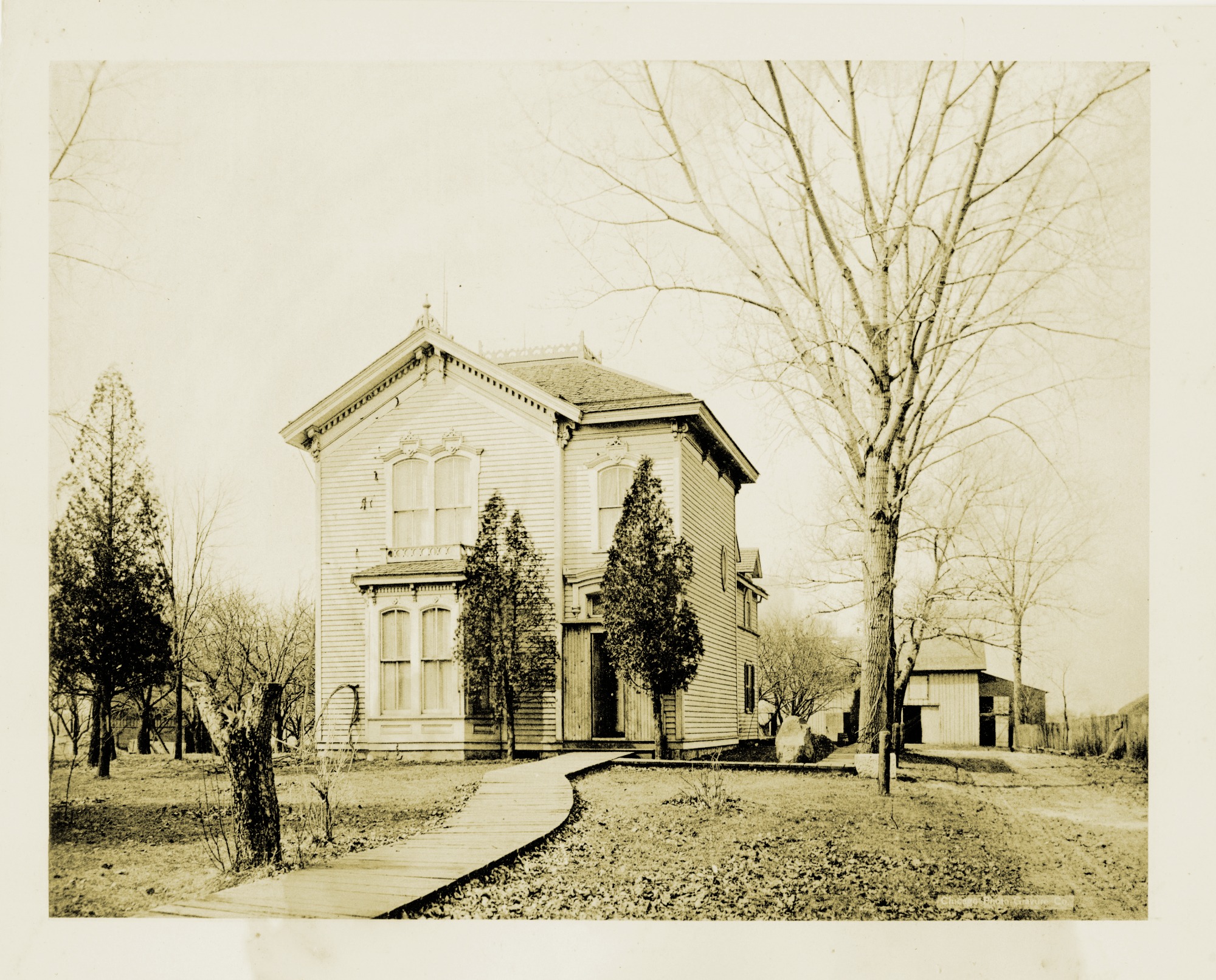
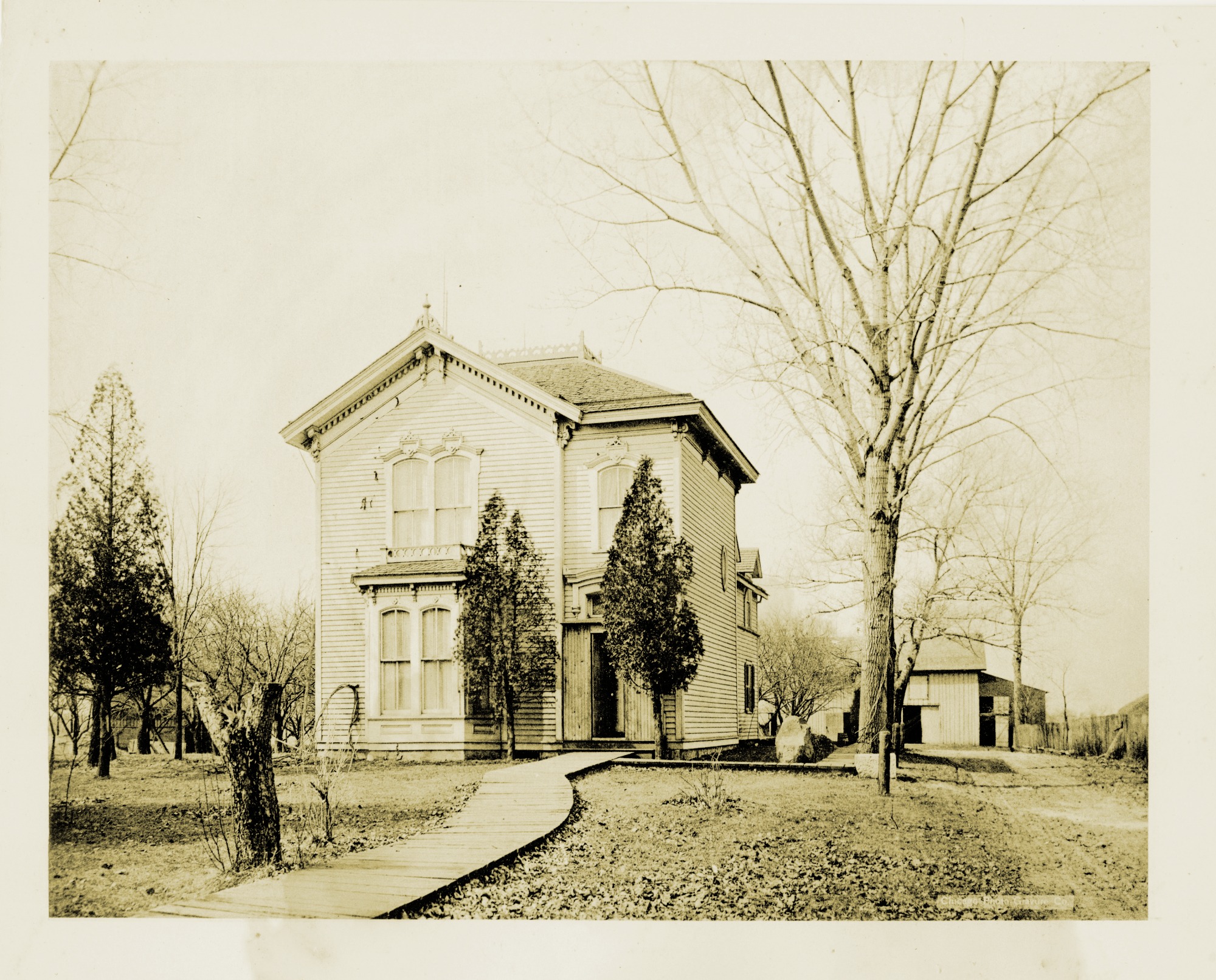
This new Facebook series from the Ridge Historical Society, “Lost or Found?”, presents photos of buildings in Morgan Park from an 1889 publication, and invites the reader to comment if the building is still standing, and if so, where it is located.
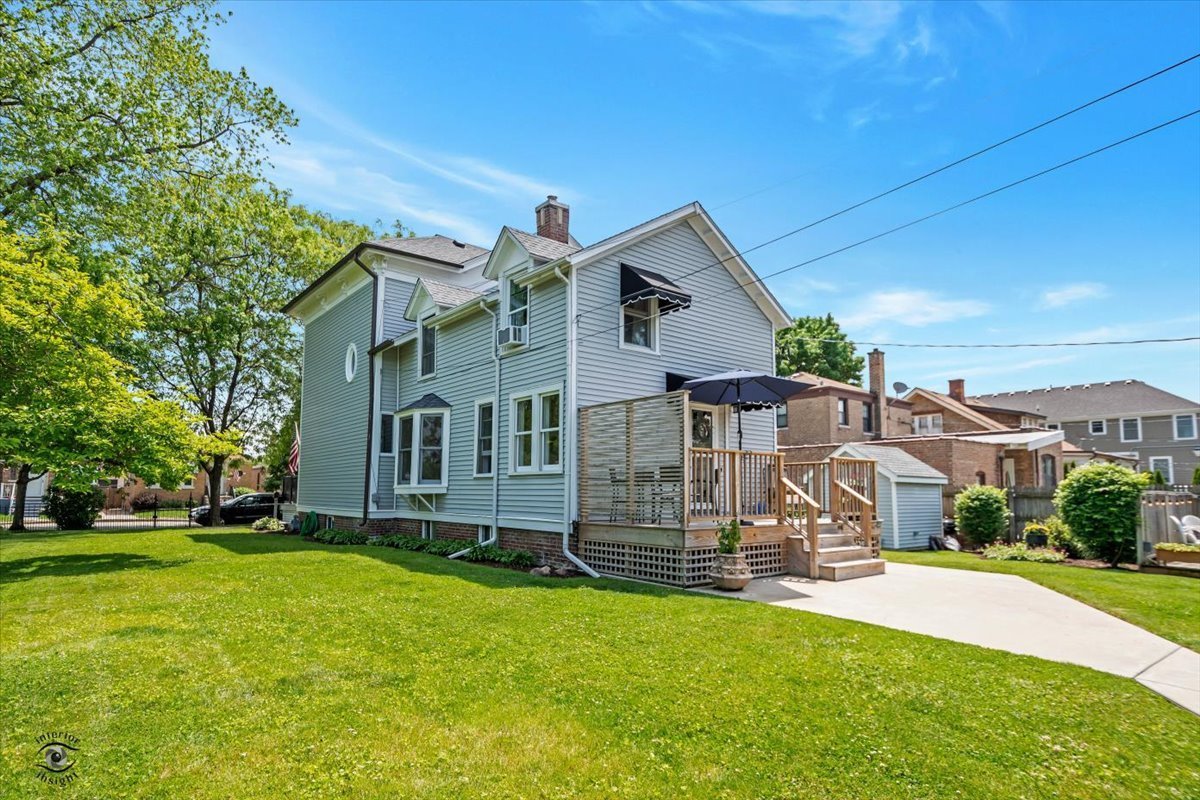
The first building was correctly “found” and identified by several people as the Charles D. Iglehart House at 11118 S. Artesian Avenue. Several people guessed it was a house on Prospect Avenue, and that was a reasonable guess that will be addressed a little later in this post.
The Iglehart House is the oldest identified house in the community, and one of the oldest houses in Chicago. It was designated a Chicago Landmark by the Commission on Chicago Landmarks in 1994. The house has two parts, a farmhouse/cottage in the rear that was built in 1857, and an addition with an Italianate façade in the front that dates to the 1870s.
It is that old farmhouse in the back that gives the house enough historical significance to be worthy of landmark status. The Preliminary Staff Summary of information on this house submitted to the Commission stated that: “While its Italianate style is not uncommon for the mid-nineteenth century, it is certainly unusual to find an authentic farm house still extant within the city limits. Few Chicago buildings can claim the age and degree of preservation of this venerable residence.”
The original farmhouse was built by Charles D. Iglehart, a farmer who moved to Cook County from Maryland with his wife Elizabeth and young children in 1856. More information on the Iglehart family will be covered in the next post.
They took up residence and farming on the Ridge, at the corner of what is now 111th Street and Western Avenue. The land then was known as North Blue Island, or Worth township in Cook County. Popularly, the area was also known as “Horse Thief Hollow” from the horse thieves who hid out in the ravines in the 1830s – 40s but were gone by the 1850s (except for folklore). The section that would become known as “Morgan Park” wouldn’t be founded until 1874.
The Iglehart House was built when just a few houses were scattered around a very rural farming community. However, Western Avenue was already a “thoroughfare,” that is, a public road connecting places along its route. From 1851 to 1869, the road marked the western border of the city of Chicago. Western Avenue was also known as the “Blue Island Plank Road” for many years, because in 1854, it had been lined with wooden planks and connected to a system of roads which took people all the way to “downtown” Chicago.
The original Iglehart farmstead extended from 111th Street to 115th Street, and Western Avenue to Rockwell.
There was nothing around the house but prairie. Eye-witness accounts of the time describe the land as a natural paradise. The Barnards, another early family, related stories of abundant prairie flowers in the spring and summer – ladies’ slippers, violets, phlox – and in autumn, wild sunflowers that grew taller than the tallest men. Wild fruits were also abundant – huckleberries, strawberries, blackberries, plums – as was wild game like turkeys and rabbits, and seasonal waterfowl.
The early settlers could hear wolves howling at night. The wolves killed livestock, and there was one story of a Mrs. Smith dying while trying to walk home in winter from Chicago to her house on the Ridge with provisions for her children. Her remains were found partially eaten by wolves.
Eventually, wolves and humans could not share the habitat of the Ridge, resulting in the decimation of the wolves. Hunting down the wolves became a local pastime, engaged in by people like Thomas Morgan, with the hunting dogs he brought with him from England.
One story that was passed down was of Thomas Iglehart, one of the sons born on the Ridge, riding on horseback, chasing down and killing a wolf. It was claimed that the wolf was displayed for many years in the Iglehart home.
The Iglehart House started with the cottage-style farmhouse. Kerosene lamps provided light, cooking was done on a wood-burning iron range, a pot-bellied stove provided heat for the living spaces, and water came from a well in the back yard. Supplies were brought in by horse or oxen-drawn wagons.
The Iglehart family added the Italianate front part in the 1870s, but the architect, if there was one, is unknown. It was not unusual for homeowners to design and build their own houses, with help from the neighbors. The Italianate style was very popular in the 1870s, as evidenced by the number of houses built in that style during that time, including some very nice examples on Prospect Avenue. Hence, it was a good guess that this house could be found on that street.
Few internal features of the house remain today, but two impressive pieces are reported. One is a marble fireplace, and the story is that the marble was imported from Italy and then brought to the Ridge by ox cart. The other is a hand-tooled walnut banister and newel post on the interior staircase.
The Iglehart family was gone from the house by 1930, moving to other locations on the Ridge. During the 1920s, the land the Iglehart family owned was subdivided and sold.
Also, sometime in the 1920s, likely when Western Avenue was graded, widened, and repaved beginning in 1922, the house was moved about 40 feet to the west, allowing for a street to be added in front of the house, and today that is Artesian Avenue.
After the Iglehart family, the house was owned by members of the Arthur R. Ayers family, and then by the Paul A. Parenti family. These owners are truly commended for preserving the house so well for 100 years.
“Lost or Found?” is based on the current exhibit at the Ridge Historical Society (RHS), “Louise Barwick’s Lost Ridge,” which explores the Beverly/Morgan Park neighborhood as it existed in times past. Barwick was an artist and teacher who lived at 10330 S. Seeley Avenue in another notable Italianate-style house. Her watercolors of the Ridge depict scenes from around 1900.
The exhibit is open to the public for free on Tuesday and Sunday afternoons from 1:00 to 4:00 p.m. or by appointment. RHS is located at 10621 S. Seeley Avenue in Chicago. The email is ridgehistory@hotmail.com and the phone number is 773/881-1675.
The next post in this series will share more information on the Iglehart family, and then we will move on to building #2 in the “Lost or Found?” series.
The Ridge Historical Society
Lost or Found? – Building #1: FOUND – Part 2 on the Iglehart House
By Carol Flynn
This new Facebook series from the Ridge Historical Society, “Lost or Found?”, presents photos of buildings in Morgan Park from an 1889 publication, and invites the reader to comment if the building is still standing, and if so, where it is located.
The first building was correctly “found” and identified by several people as the Charles D. Iglehart House at 11118 S. Artesian Avenue. The previous post discussed the house itself. This post will share some information on the Iglehart family.
Charles Duvall Iglehart was born in 1818 to a farming family in Maryland. His father, Richard, was a slave-owner. The Slave Schedule for the 1850 U.S. Census lists eleven enslaved people living at Richard’s residence, ranging from a 7-year-old boy to a 70-year-old woman.
Charles was also listed as part of that residence, with his wife Marietta and an infant son, Jacob. Marietta died shortly after that census was taken, leaving Charles with a motherless Jacob.
In 1853, Iglehart married Elizabeth A. Haslup in the District of Columbia. They had their first child, son Charles, in 1854.
Andreas’ History of Cook County, published in 1884, reported that “C.D. Iglehart and family came in November 1856, and settled … on what is now known as the corner of One Hundred and Eleventh Street, on Morgan and Western avenues.”
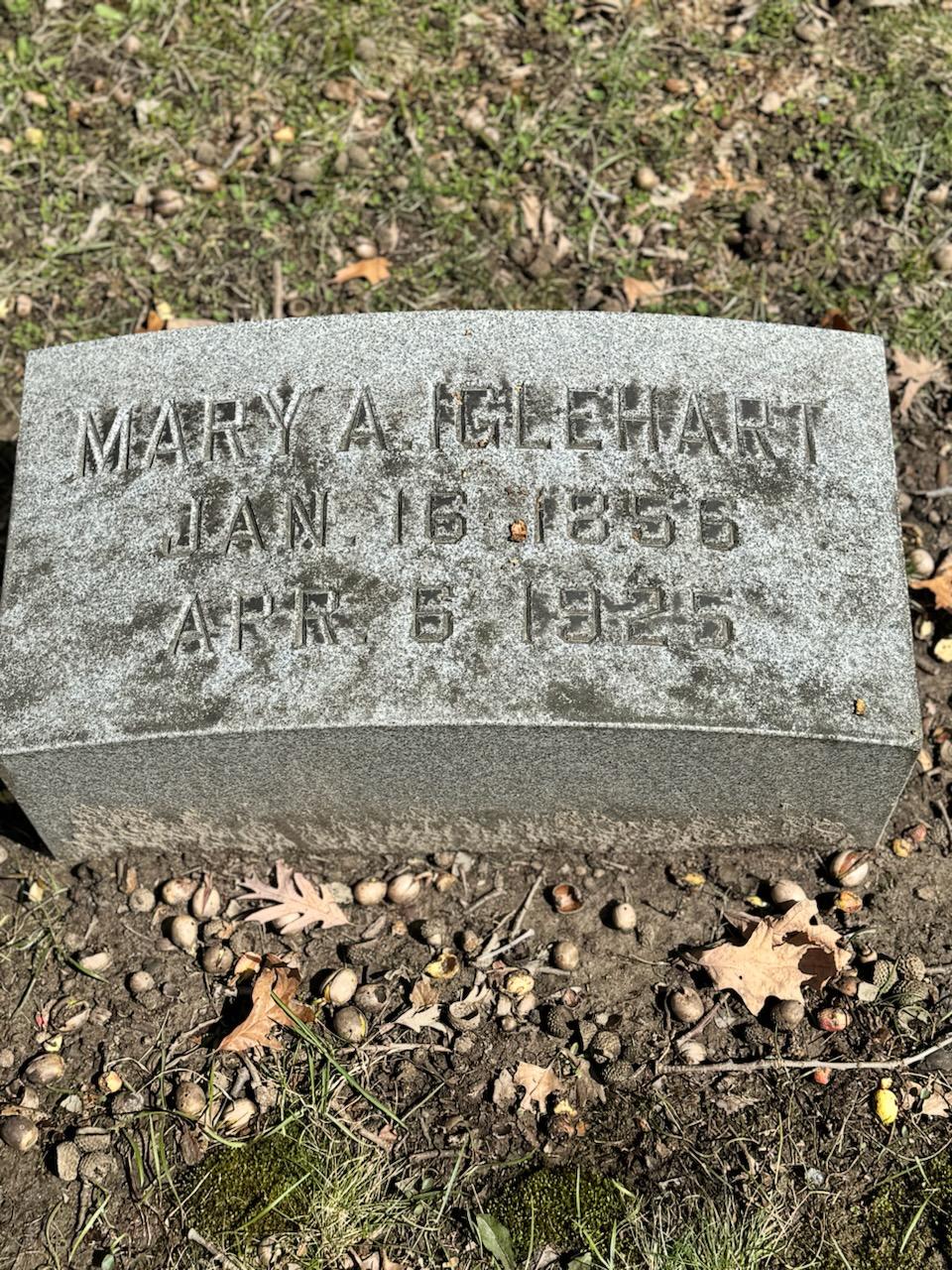
Their second child was a daughter, Mary Ann. Andreas claims she was “the first birth in the immediate vicinity of Morgan Park … in 1857.”
However, Mary Ann is buried in Mt. Greenwood Cemetery, and her date of birth engraved on her gravestone is given as January 16, 1856. This is also mentioned on family trees on Ancestry, and one entry lists her birth occurring out east before they left for Chicago.
If Andreas’ date of November for the Igleharts’ arrival in Cook County is accurate, this means that the claim about being the first (white) child born here cannot be accurate – it is quite possibly just urban folklore. The source of the claim that Andreas makes is not mentioned.
Three more children were born to the Iglehart family on the Ridge. Third was Margaret Ellen, who went by Ellen or Nellie, born in 1858; then Thomas born in 1859; and Elizabeth, or Lizzie, born in 1865. Iglehart’s oldest son Jacob was listed living with the family on the 1870 census.
Charles Iglehart was described as an educated, cultured man who attracted the same type of people as guests in his home. The Iglehart family remained in the Morgan Park community for many years. They are credited with starting the second orchard on the Ridge, around 1857 (William Morgan, son of Thomas Morgan, established the first).
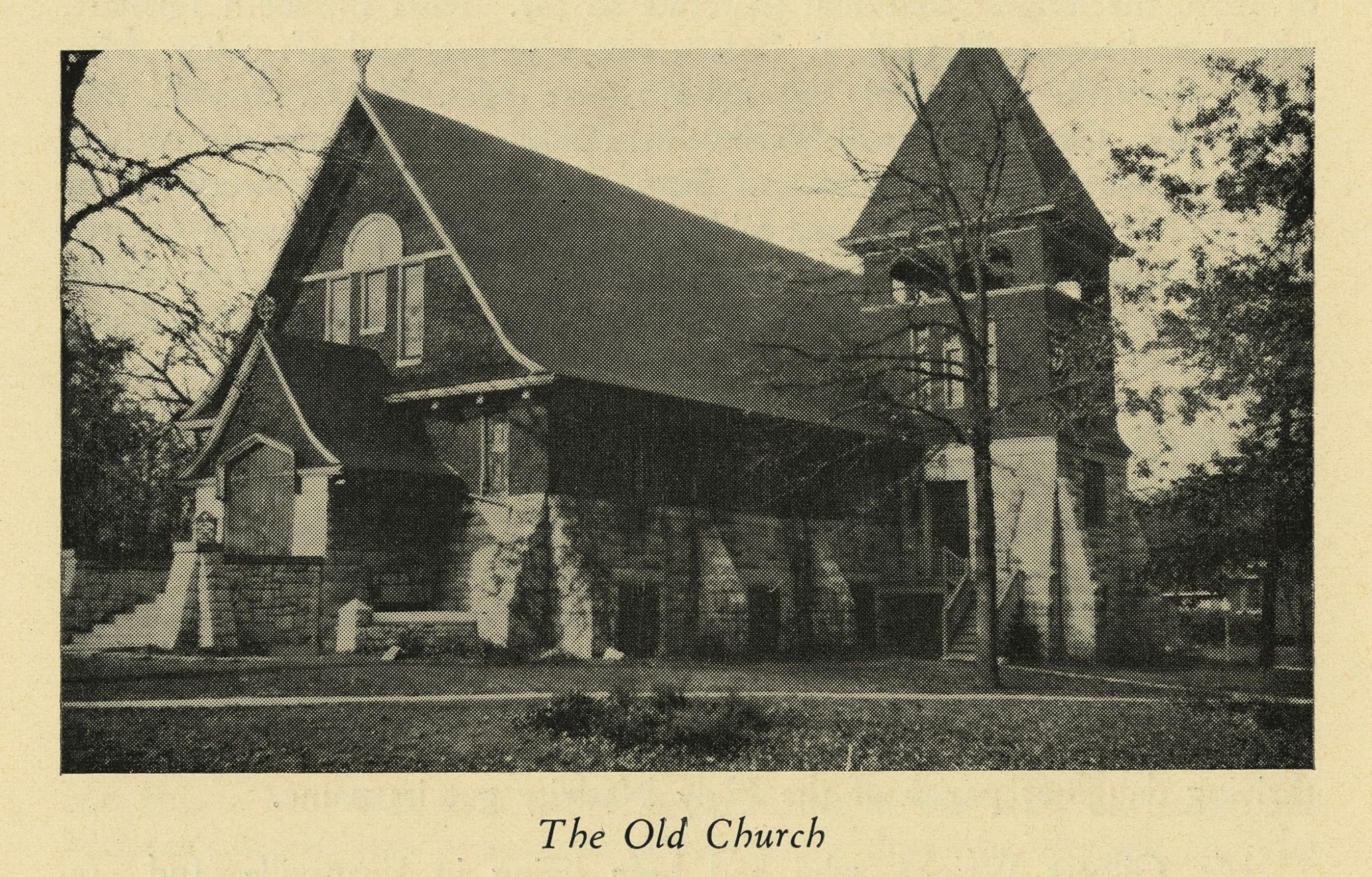
They were among the original subscribers to the Morgan Park Baptist Church, which held its dedication in April of 1874. They also were founders of the Church of the Mediator, sitting empty now at 109th Street and Hoyne Avenue.
Charles Iglehart died in 1886 at the age of 68. His family stayed in the house, and on the 1910 census, Elizabeth Haslup Iglehart was listed as the matron of the house. She died in 1917 and was buried with her husband in Mount Greenwood Cemetery.
The three Iglehart daughters lived in the house in 1920, but left within a few years, moving to other locations on the Ridge. The original farm property, which extended at one time from 111th to 115th Street, from Western to Rockwell, was sold for residential and commercial development. When Western Avenue was regraded, widened, and repaved in 1922, the house was moved a block west, and set on a new foundation. A street was later added, Artesian Avenue.
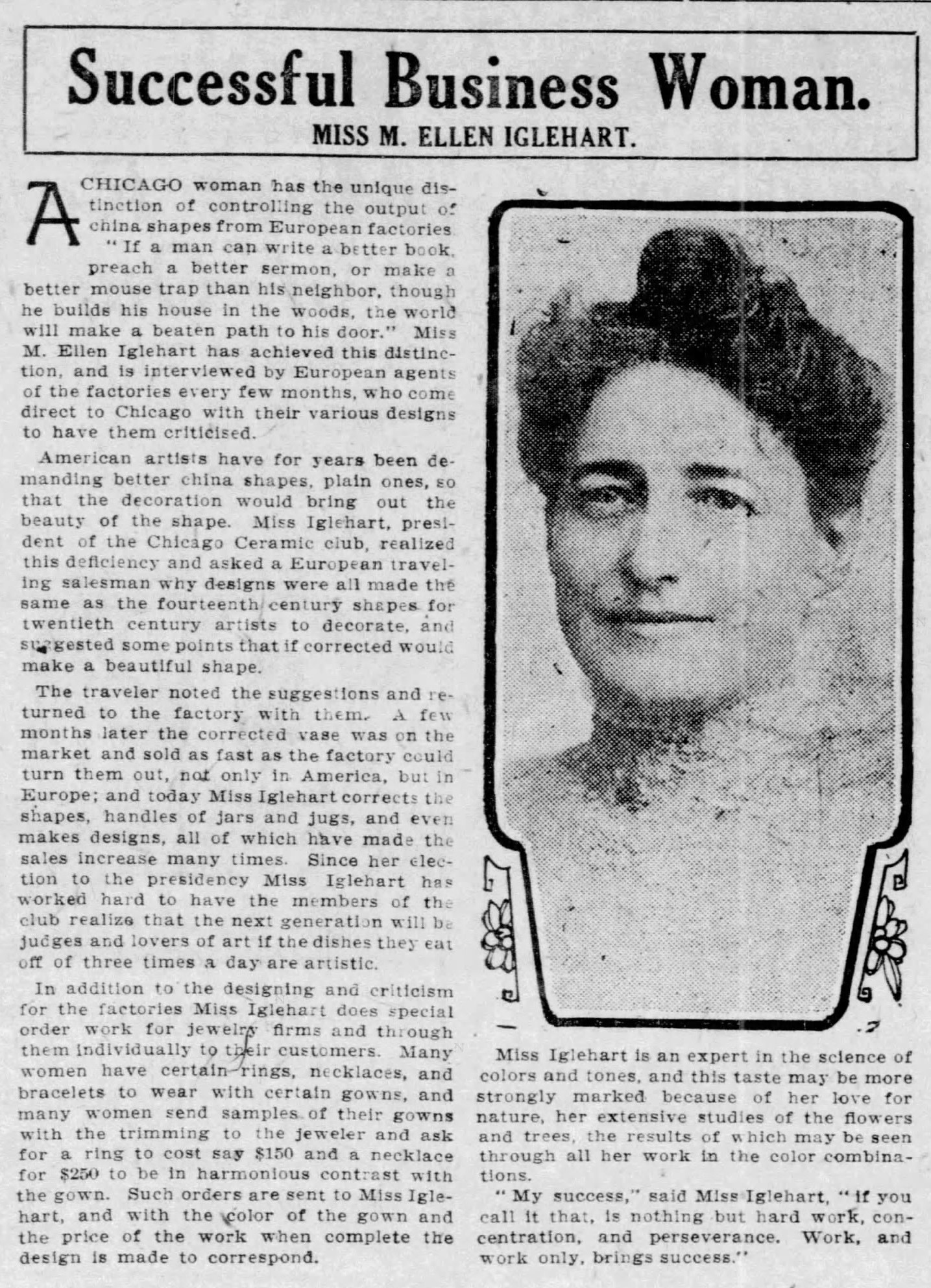
Mary and Ellen were both art teachers, and neither married. Ellen became famous for her work in ceramics, including hand-painted chinaware.
Youngest daughter Lizzie was a widow; her husband Edward James Carson, a salesman, died in 1916. In 1920, she was working as a piano teacher. She had three adult children also living at the house.
The Iglehart daughters were active in the Daughters of the American Revolution, and Lizzie was a contributor to early local history groups. She was a member of the Morgan Park Woman’s Club.
Charles Iglehart’s oldest son Jacob moved to Tennessee, where he practiced as an osteopath. In one directory he was listed as a “magnetic healer.” Magnets have been used for hundreds of years to treat pain and there is some slight research evidence that electromagnetic therapy may be helpful.
The younger sons, Charles and Thomas, went into business together as contractors. Both lived in Morgan Park with their families.
The Ridge Historical Society
Lost or Found? – FOUND – Building #2 (Part 1)
By Carol Flynn
A few months ago, the “Lost or Found?” series was started on this Ridge Historical Society (RHS) Facebook page as part of the current exhibit at RHS, “Louise Barwick’s Lost Ridge.”
Historical images of buildings in Morgan Park from an 1889 book of photographs are being shared. Some of these buildings still stand but some are gone. Viewers are invited to identify the buildings, and their locations if the buildings still exist.
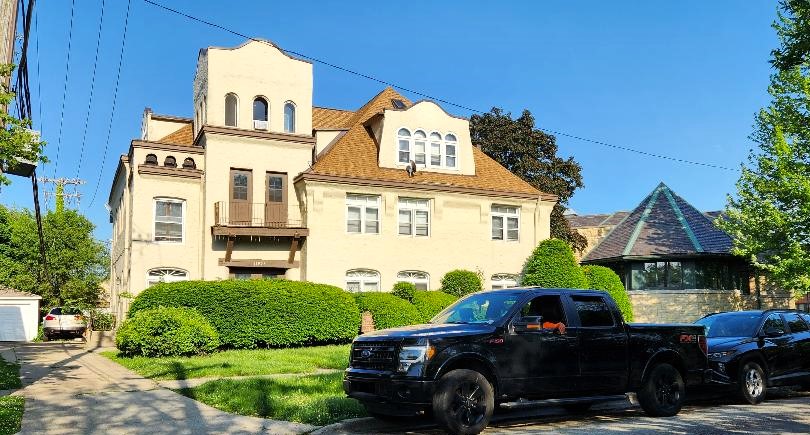
Several commenters correctly identified the second building in the series as “found,” that is, still here, although it has been moved from its original location and substantially altered from its original look.
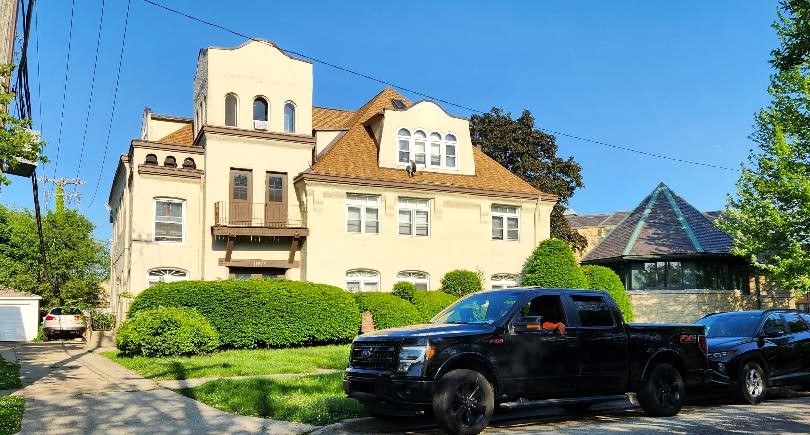
The building is known today as “Casa del Loma,” translated as the “House on the Hill.” It is located at 11057-59 S. Hoyne Avenue, just to the north of the Walker Branch of the Chicago Public Library at the northeast corner of 111th Street and Hoyne Avenue.
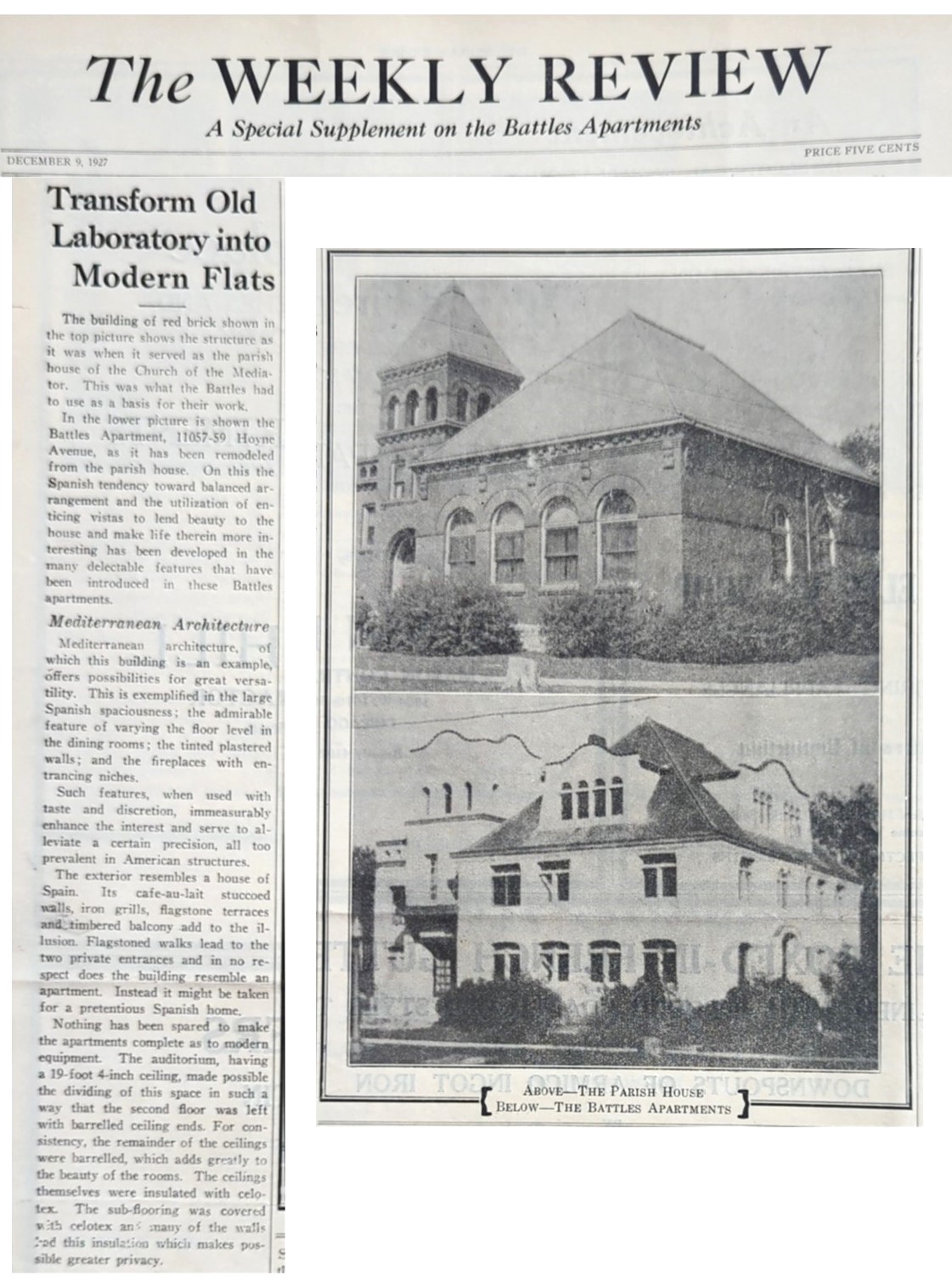
This building has one of the more interesting histories in the community, with two other “lives” before it was transformed into the Casa. In 1927, the Weekly Review, the local newspaper that eventually became the Beverly Review, published a special supplement on the building, giving its detailed history.
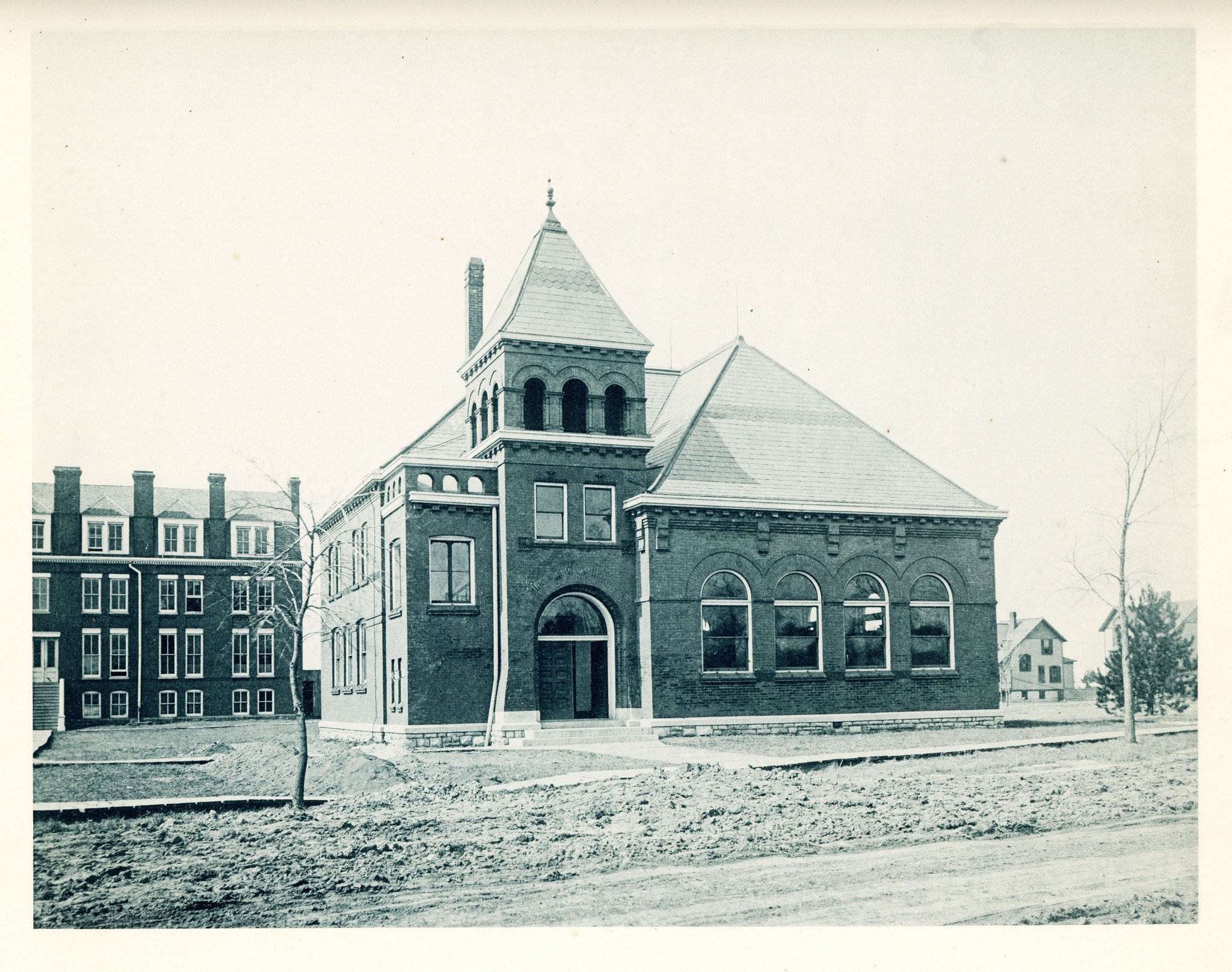
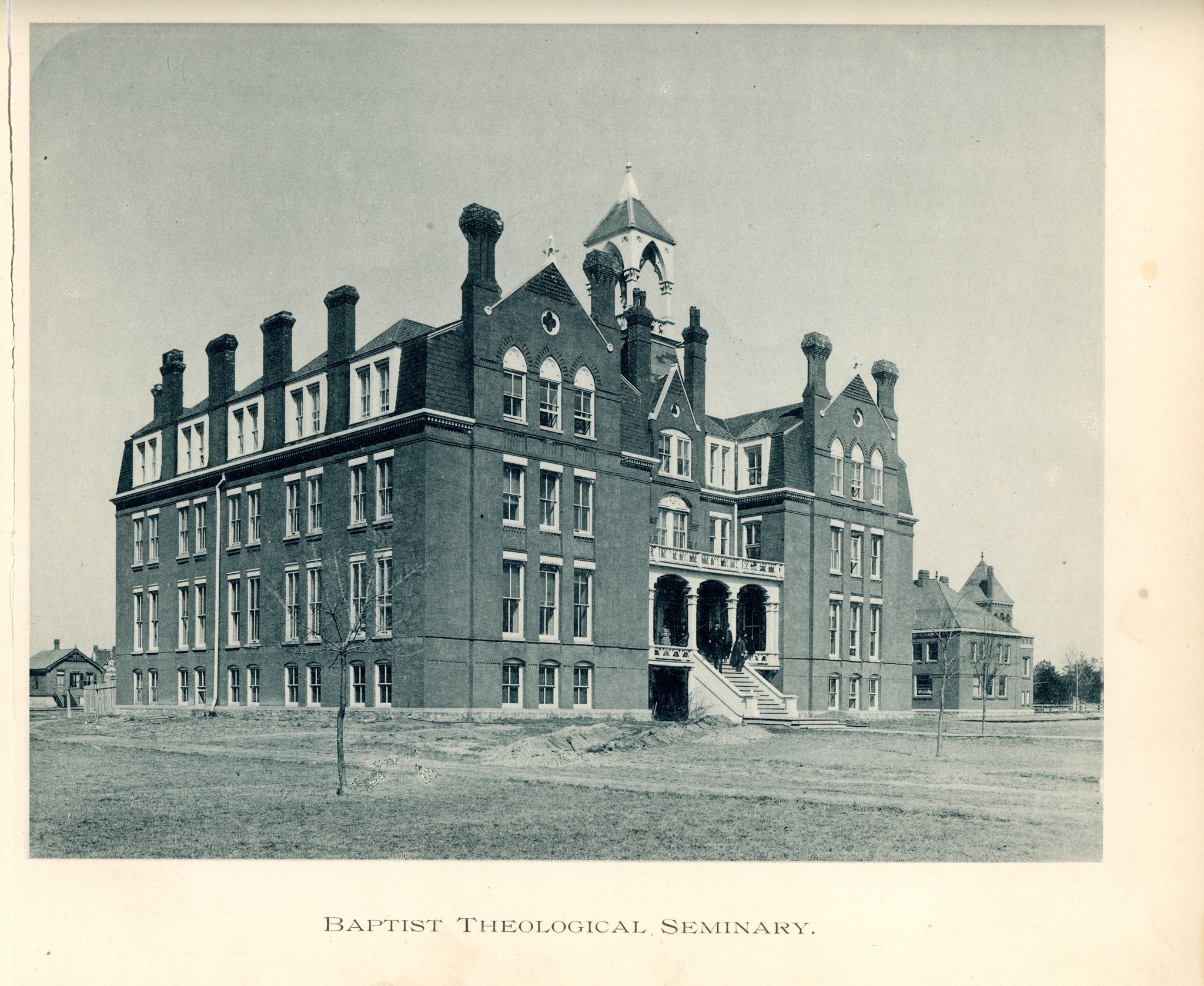
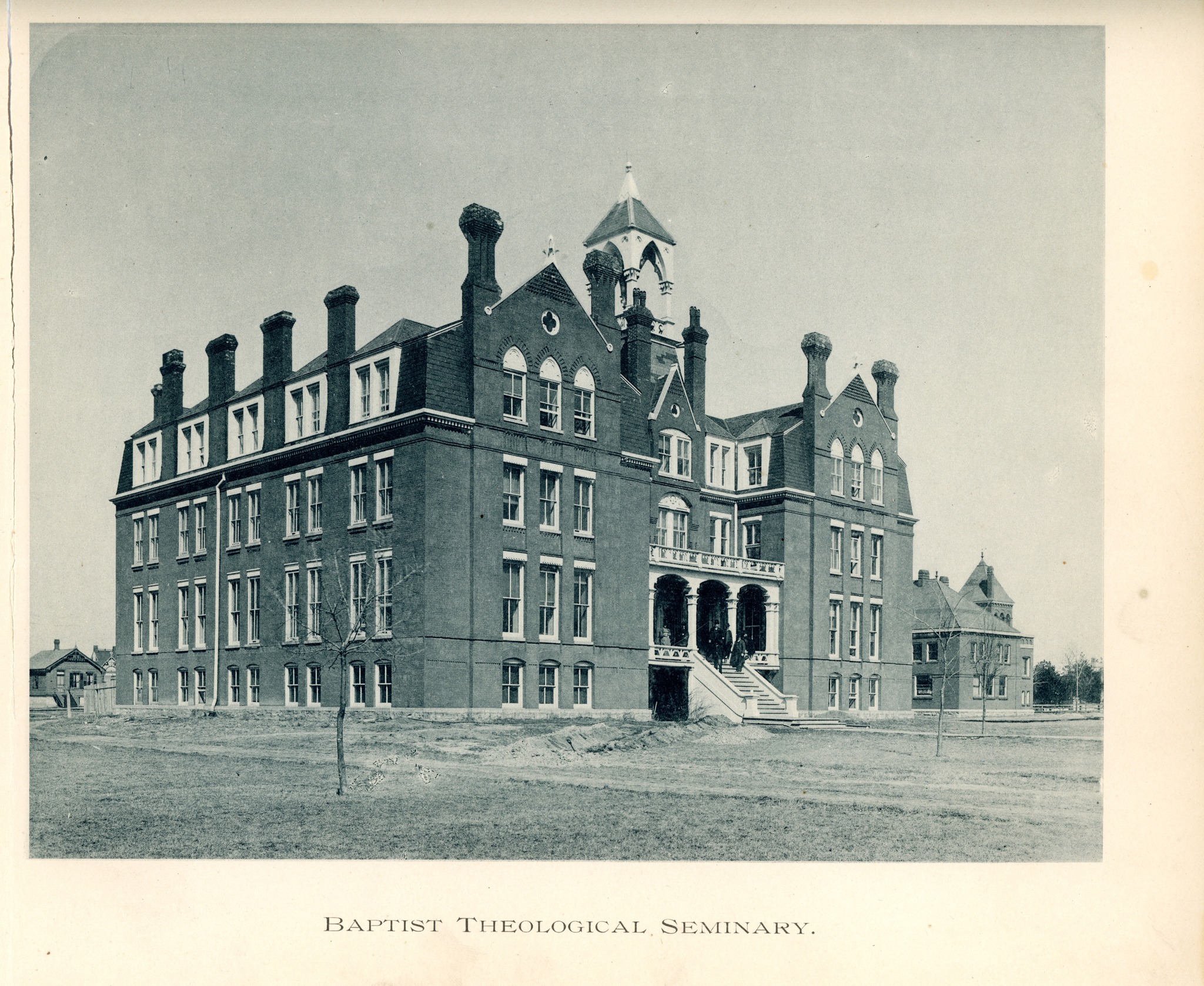
The building was originally built as the physics laboratory for the Baptist Union Theological Seminary. The Seminary was founded in 1865 as part of the “Old” University of Chicago, that is, the first attempt to form an institution of higher learning in the city, started by Illinois Senator Stephen Douglas.
Originally classes were taught in buildings near Douglas’ Oakenwald estate at 35th Street and Cottage Grove. In 1877, a generous offer of free land (five acres) from the Blue Island Land & Building Co. (BILBCo) caused the seminary to relocate to Morgan Park and build its facilities there.
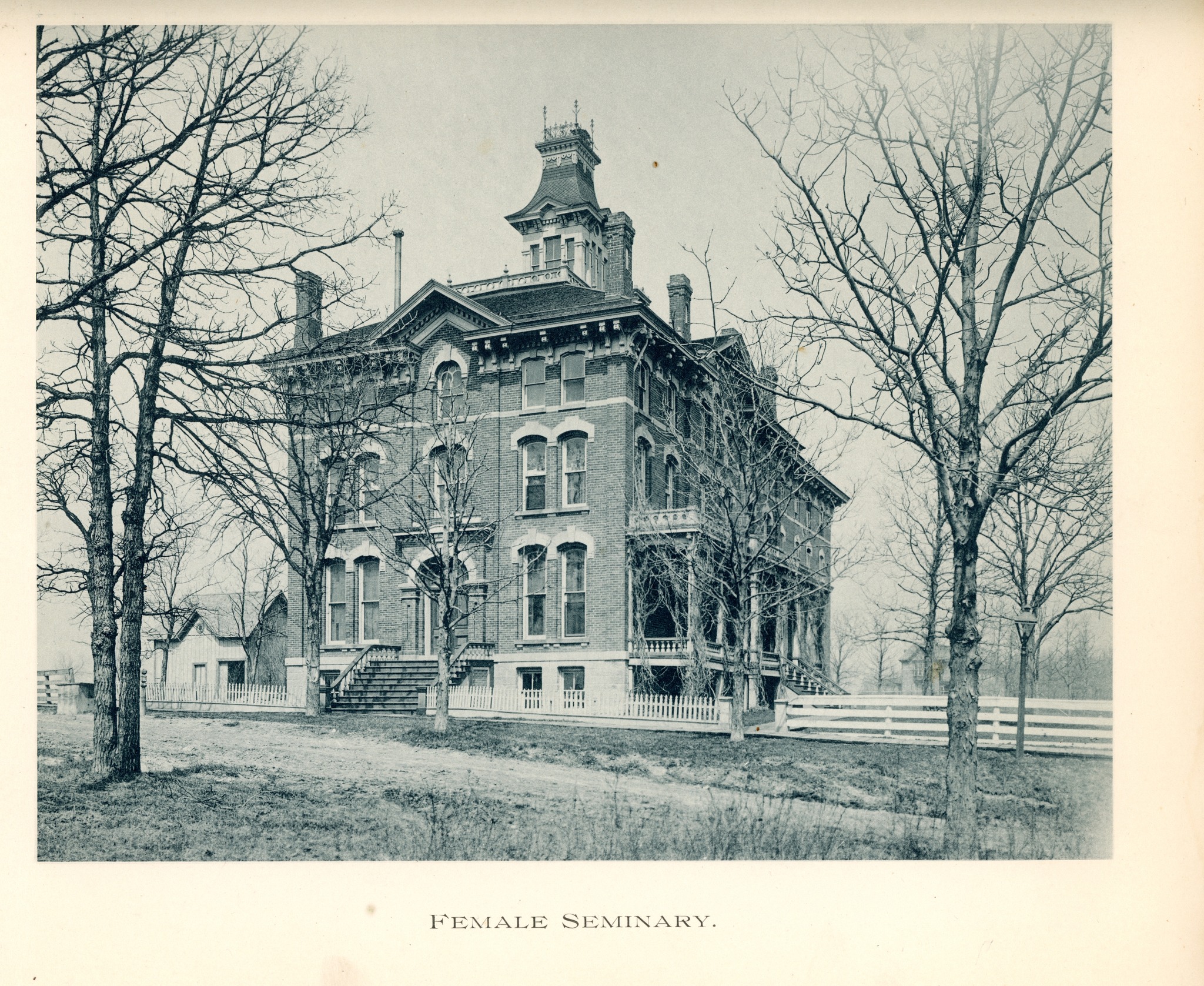
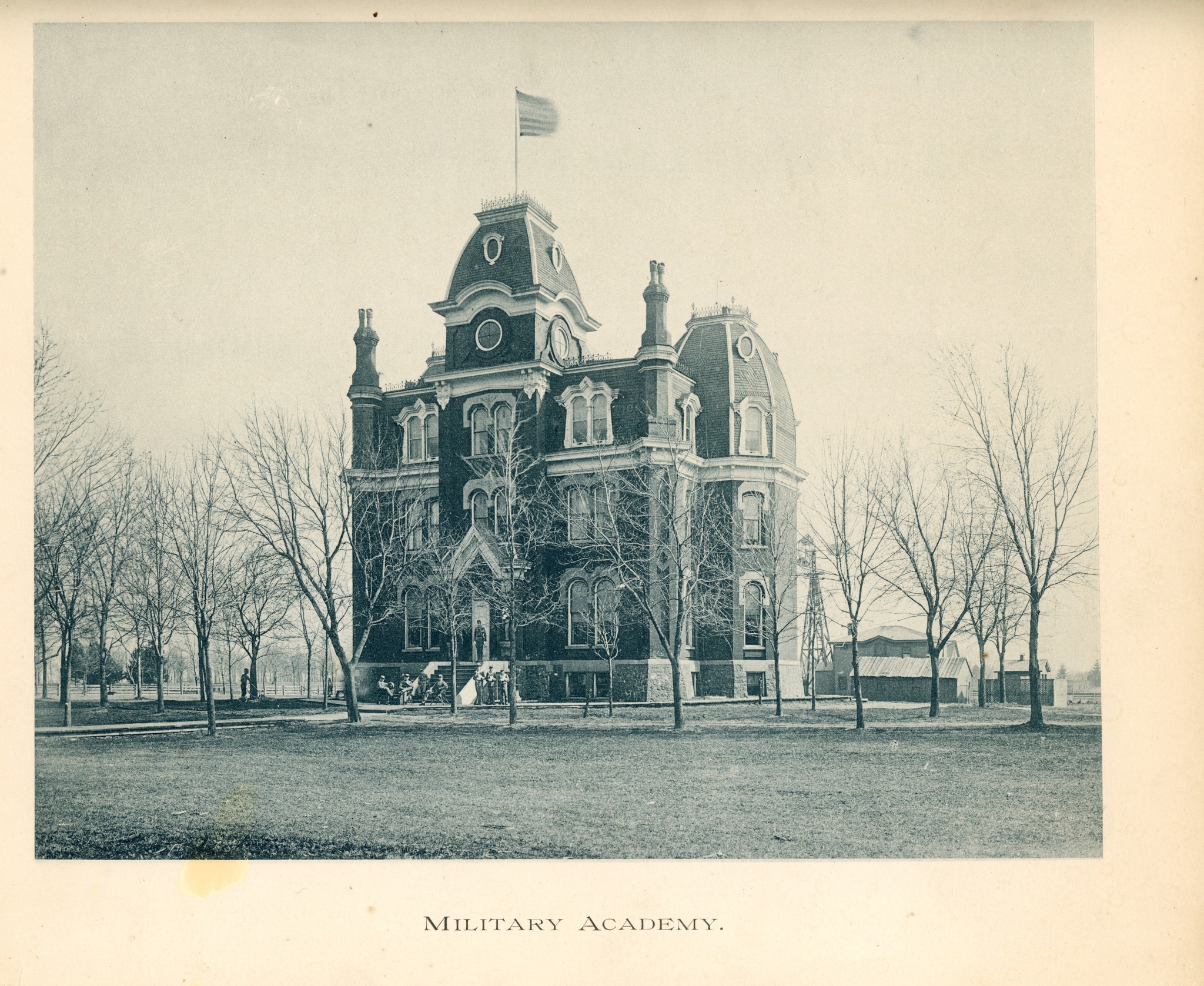
This was part of the BILBCo’s plan to establish Morgan Park as a prestigious religious, education, and temperance community. It was anticipated that additional educational facilities would follow, creating a new University of Chicago. Morgan Park Academy, started as the Mount Vernon Military Academy, and the Chicago Female College, were already established in Morgan Park.
An imposing three-story office and classroom building, now long gone, was built on the site, and in the early 1880s, the “physical laboratory” was built on a corner of the land, on the west side of Hoyne Street across the street from its present location, facing 110th Place, which was called Arlington Avenue back then.
However, the plans for establishing the “new” University of Chicago in Morgan Park never became a reality. The land in Hyde Park was chosen instead, due to another generous gift, this time from the Rockefeller family.
In 1892, the Baptist Theological Seminary became part of the Divinity School of the new University and relocated from Morgan Park. Other institutions used the Morgan Park buildings for a while, but shortly after 1900, the main building was demolished.
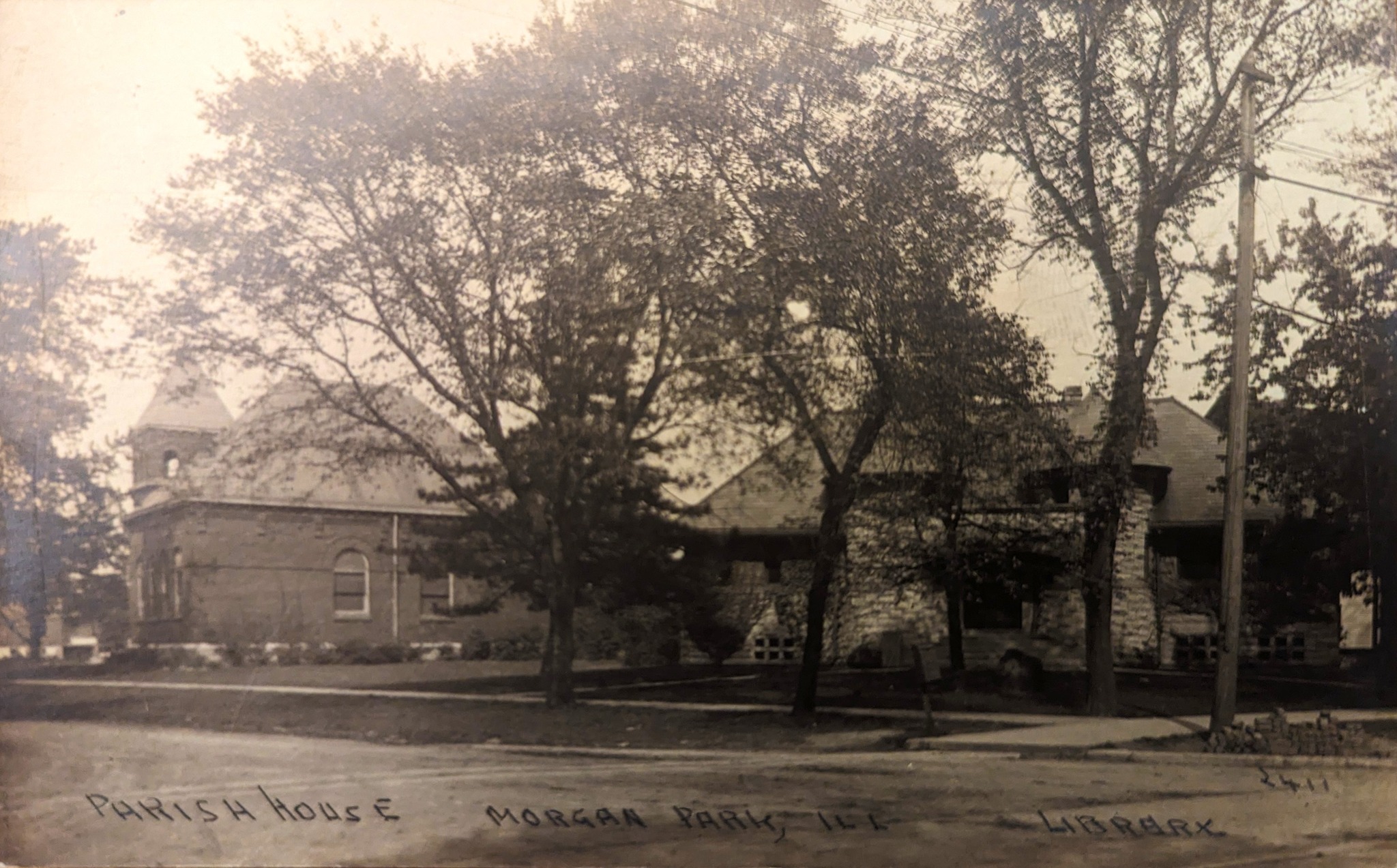
The old laboratory was then purchased by the Church of the Mediator at 10961 S. Hoyne Avenue, and physically moved across the road to its present location.
Buildings were often moved back then, as this was easier than building a new building. The process was to raise the building on to cut logs used as rollers, and have horses pull the house to its new location, where a new foundation had already been dug. This process could take days depending on the distance the building had to be moved, but in this case, it was just across the road.
The Church of the Mediator was a thriving church one hundred years ago, and it still stands but has not been used since the congregation closed its doors in 2007.
The laboratory building became the parish center. It was not used for religious activities but became more of a community center. A dancing school, amateur theatricals, bazaars, and other functions were centered there. The building needed only slight alterations to be used for this new purpose.
Eventually, additions were made to the church itself, allowing the parish to hold events on site, and after about twenty years, the building was no longer needed as the parish center.
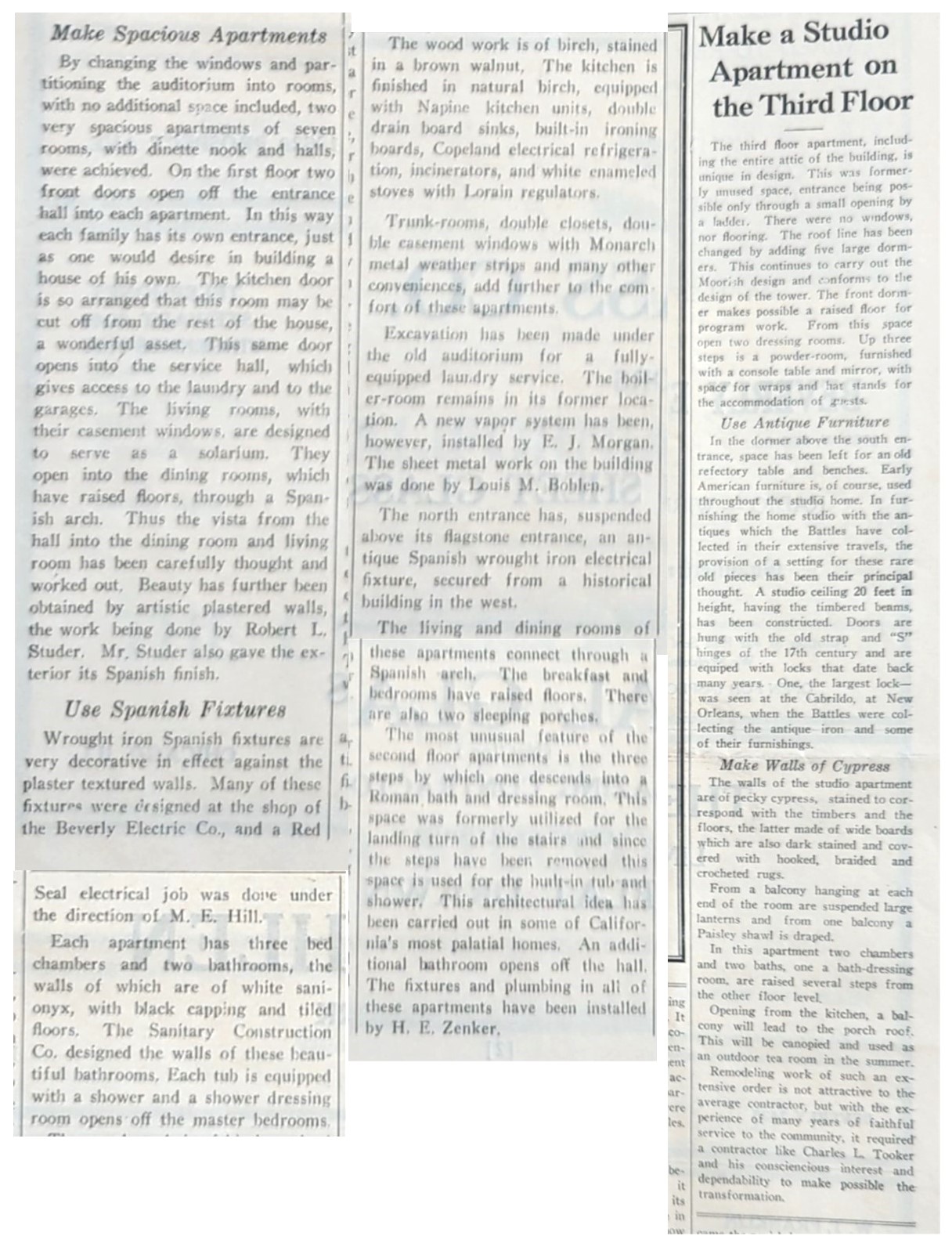
It was then sold to Charles Curtis and Blanche Dunlap Battles, who converted it into Casa del Loma, also known as the Battles Apartments.
In the next post, the building’s transition from a physics laboratory/parish house to modern, state-of-the-art apartments in 1927 will be shared.
The RHS exhibit is free and open for viewing on Tuesdays and Sundays from 1:00 to 4:00 p.m., or by appointment. RHS is located at 10621 S. Seeley Avenue in Chicago and may be contacted at 773-881-1675 or ridgehistory@hotmail.com.
The Ridge Historical Society
Lost or Found? – FOUND – Building #2 (Part 2)
By Carol Flynn
Building #2 in the “Lost or Found?” series was identified as the current Casa del Loma apartment building at 11057-59 S. Hoyne Avenue.
From the last post, the building was constructed as the physics laboratory for the Baptist Theological Seminary in the late 1800s. After that institution closed in 1892 to join with the University of Chicago Divinity School, the building was purchased by the Church of the Mediator, moved across the street to its present location, and used as a parish center.
Eventually the church was enlarged to include a parish center on site, and the old laboratory/parish center was sold to Charles Curtis and Blanche Dunlap Battles, who repurposed the building into modern apartments in 1927.
Charles Curtis Battles (born 9/12/1878) and Blanche Dunlap (born 10/20/1879) were both born in Iowa, and knew each other growing up in Perry, Iowa.
Charles was the son of a well-known and well-liked farmer who was a U.S. Civil War Union Army veteran, and Blanche the daughter of a dry goods merchant who was also the postmaster. Both families were members of the Methodist Episcopal (M.E.) Church. An 1896 newspaper article has Charles and Blanche both listed as guests at a surprise 18th birthday party for a friend. By 1903, Charles and Blanche were married.
Charles was employed as a messenger, or agent, of the United States Express Company, a shipping and delivery company. During World War I, the government urged the consolidation of the numerous express services into one company to aid the war effort. Charles became an employee of the new American Railway Express Co., where he worked his entire adult life. He would have traveled quite a bit in that job.
A newspaper article reported in 1906 that Charles was the first man to arrive in San Francisco with a relief train following the San Francisco earthquake. The day after the natural disaster, he left Chicago in charge of a train full of supplies, accompanied only by a newspaper reporter and a member of the Chicago relief committee.
The paper reported that Charles started with the company as an agent out of Des Moines and was later assigned to Chicago, likely a promotion.
Blanche was known for her drama and music talents, and volunteer work with churches. She had a notable career as a performer, pageant director, drama coach, lecturer, columnist, and critic in the field of religious drama and music.
In 1894, at the age of 15, Blanche won first place in a “declamation contest” in which contestants deliver speeches that have been written and delivered before, usually from a famous source. The subject of her presentation was not mentioned. The prize was a $50 scholarship to the Soper School of Oratory in Chicago. It was stated then that “she possesses genius of a high order, and if her talent is developed will make a bright record.”
Blanche went on to many other accomplishments.
One example of her work was the production at multiple venues of a concert, “The Challenge of the Cross,” in which she starred and directed, and which included singing disciples and angels descending from the balconies.
A review of one of the concerts stated, “Those who attended had nothing but the highest praise for the offering,” and that Mrs. Battles’ “work and personality stamp her as an artist of unusual accomplishment.” At another venue, the reviewer wrote, “So impressive was the visual presentation … that tears fell from the eyes of people. It will always be remembered as a great spiritual uplift to all present.”
Another undertaking she was known for were “ladies’ kitchen bands,” where pots and pans and utensils were adapted into musical instruments. The concerts she arranged got good reviews, not only for the ingenuity of the band members but because they produced good music.
Some of Blanche’s work was as a volunteer, often for church fund raisers, but there were professional endeavors, also. For example, she was a columnist of repute for the “Musicians’ Magazine” published out of Chicago. The assumption is made that at least some of these had to be paying jobs, but curiously, the U.S. Censuses always listed her as not being employed.
In 1910, Charles and Blanche lived at 9907 S. Prospect Avenue and by 1920, they lived at 11336 S. Lothair Avenue.
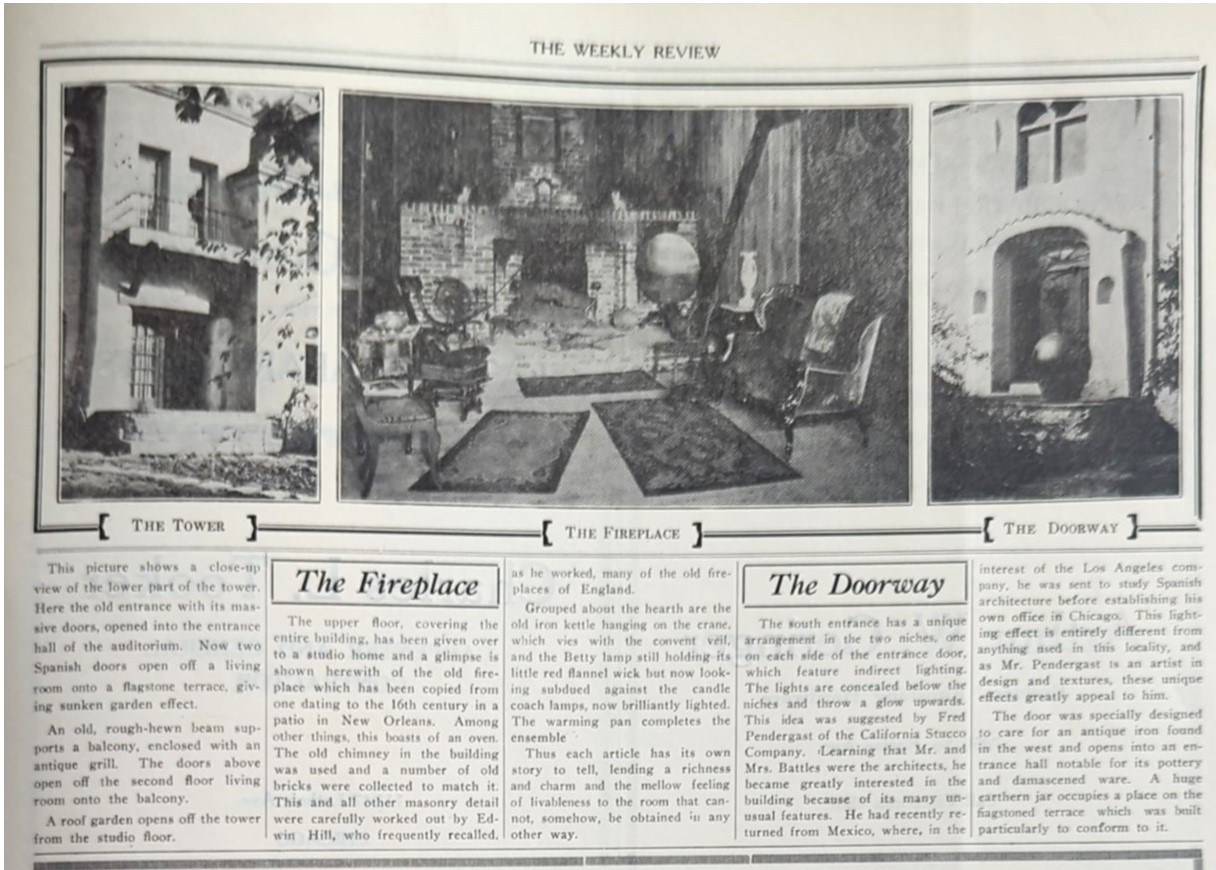
They bought the old parish house, and a special feature in the 1927 Weekly Review, the local newspaper that eventually became the Beverly Review, described its repurposing into the “Battles Apartments.” Those articles are shared here. [This is a quick electronic “cut-and-paste” job in Publisher from the scanned newspaper. Note that the old newspaper is very fragile and faded.]
Charles and Blanche Battles lived in one of the apartments, and Blanche opened her studio on the third floor. She used it for both professional and social purposes. It was full of antiques, which she had collected.
They operated a “tearoom” in the building, which was used by many groups for events and programs, from luncheons to artist exhibits. An event was often followed by a tour of Blanche’s studio to view the antiques. It was a very popular place in the early 1930s.
By 1940, the Battles moved to 1400 Lake Shore Drive, and by 1950, they retired to San Diego, California.
In 1941, it was announced that new residents of Casa del Loma were Dr. Noor R. Beshir and Dr. Nellie A. Beshir. They were chiropractors and used the space as a dwelling, office, and clinic. They lived there for several decades, and their son Alton was a graduate of the Morgan Park Military Academy.
Many other tenants called Casa del Loma home through the years. The building on the hill, with its Spanish facade shining in the sun, contributes to the interesting variety of architecture found in the Beverly/Morgan Park community. It's a good example of repurposing an old building, which possibly would have been demolished otherwise.
The Ridge Historical Society
Lost or Found? – Identify Buildings #3, 4, and 5
By Carol Flynn
“There was a time, not long past, when Morgan Park was only the tramping ground of the hunter, and little did its early settlers think it would ever be a component part of the young Giant, then beginning to loom up some thirteen miles to the North.
“But Time and Railroads work mighty changes in a very few years in this great Northwest.
“Commerce, Manufactures and Agriculture have made Chicago one of the great marts of the world.”
– Views of Morgan Park, 1889
This quote is from the introduction to a book of photographs of buildings in Morgan Park published in 1889.
Those photos form part of the current exhibit at the Ridge Historical Society (RHS), “Louise Barwick’s Lost Ridge,” which explores the Beverly/Morgan Park neighborhood as it existed in times past.
One section of the exhibit, produced by RHS Board member Tim Blackburn, includes historical images of buildings in Morgan Park. Some of these buildings still stand, although they might have been moved from their original locations or altered from their original looks, and some of these buildings have been demolished
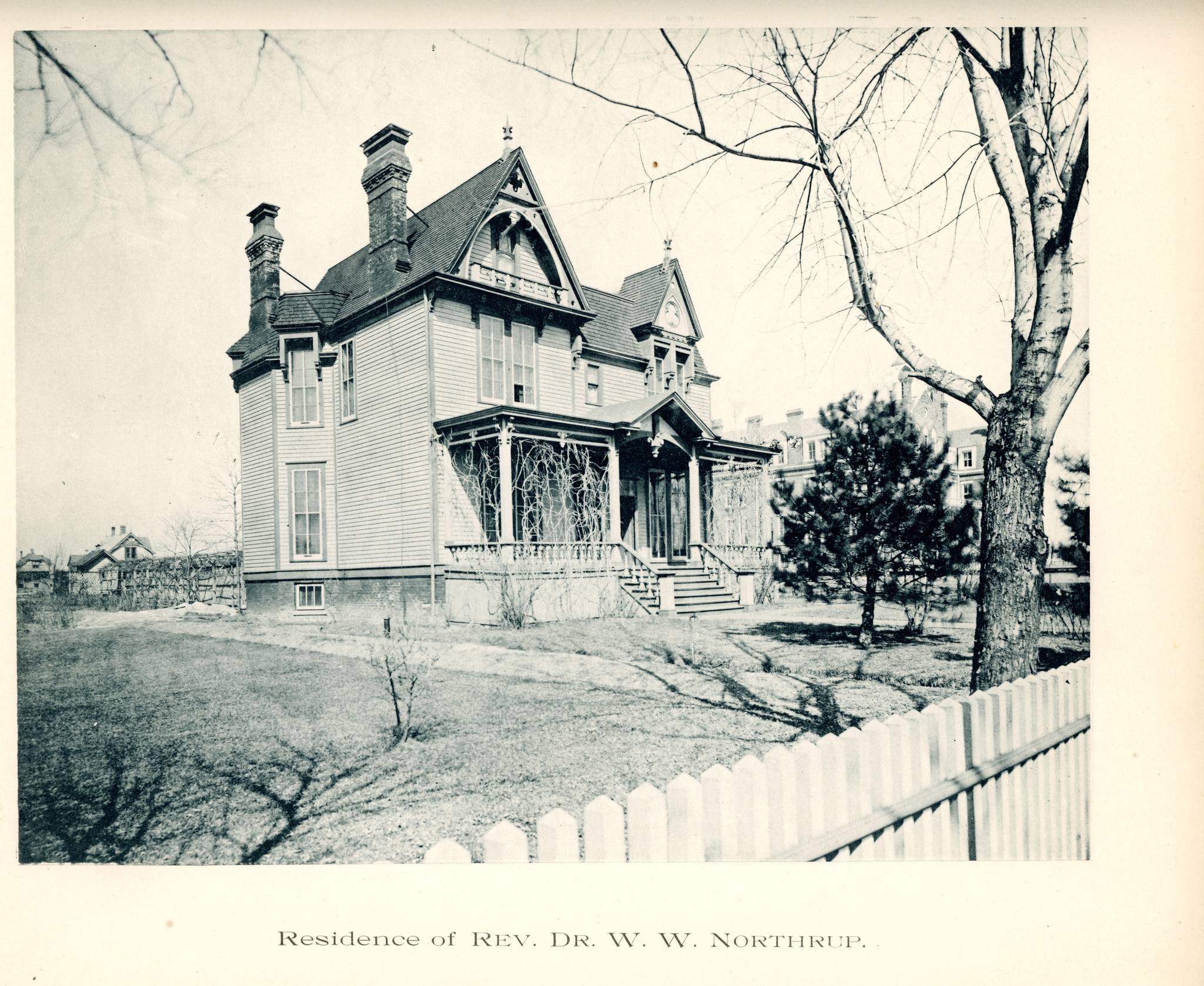
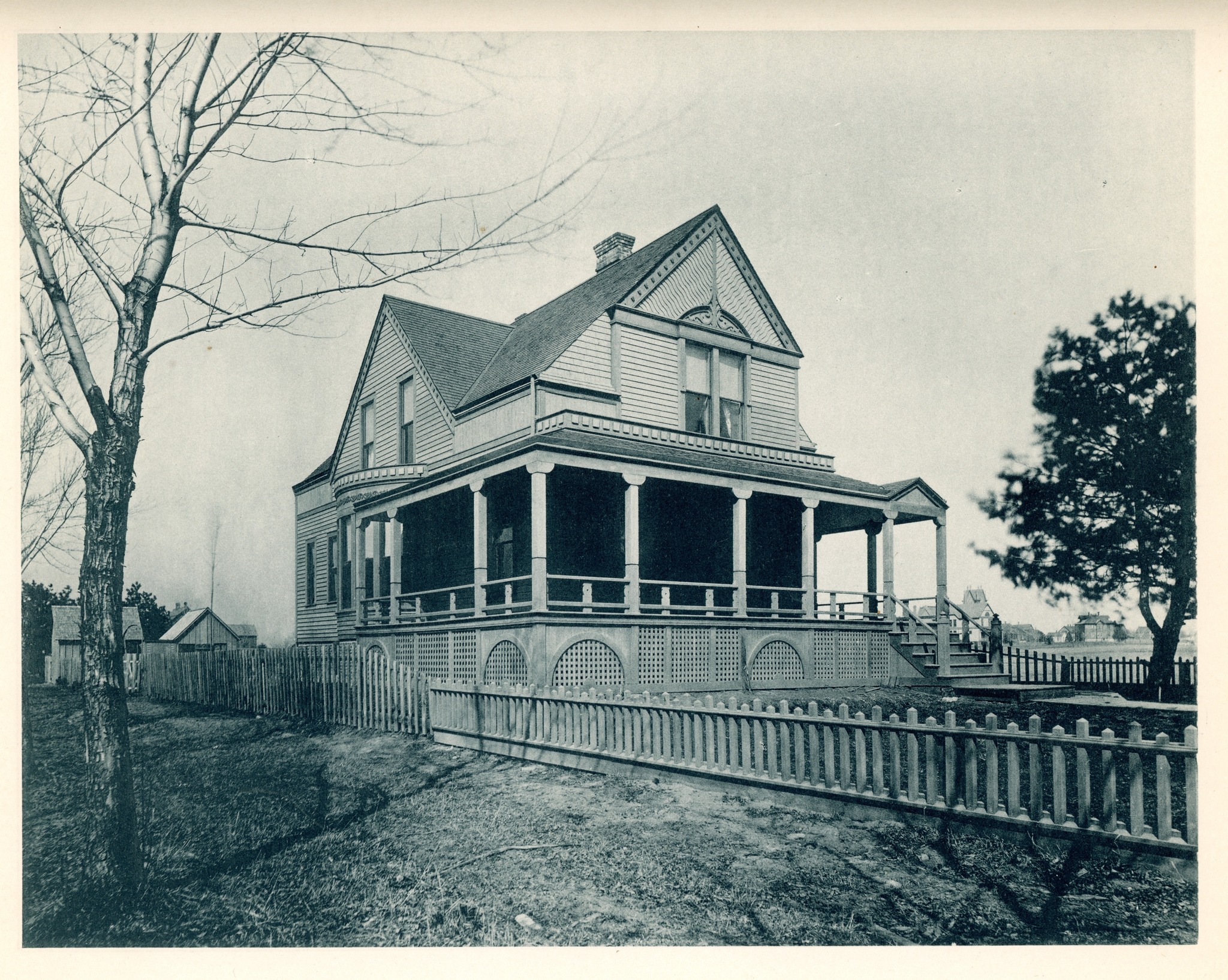
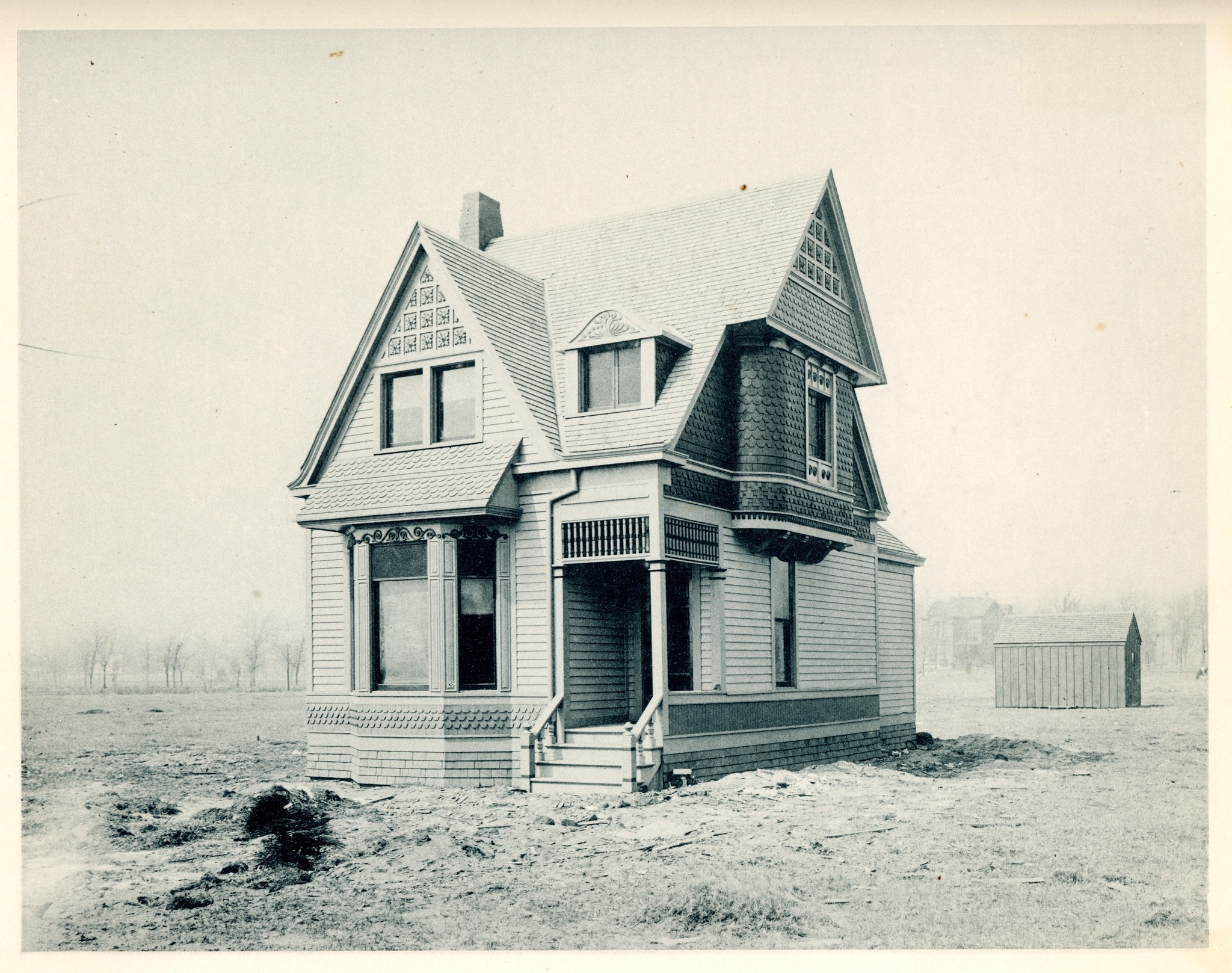
Here are three images from that book of photos. Can you find these houses in Morgan Park – that is, if they are still standing?
The answers will be posted in a few days.
The Ridge Historical Society
Lost or Found? – Identify Buildings #3, 4, and 5 – TWO LOST AND ONE FOUND
By Carol Flynn
Last week, three more pictures of buildings from an 1889 book of photographs of Morgan Park were posted in the “Lost or Found?” series, with the challenge to identify them and find them if they were still standing.
The answer is that all three of these houses stood on 111th Street but two are gone now and the third is hidden from view.
The Blue Island Land and Building Company established Morgan Park in 1874, designing it as an educational, religious, and temperance community, laid out like an English Village.
In 1889, 111th Street was known as Morgan Avenue and was primarily residential. Western Avenue had not been developed yet as a commercial thoroughfare and was still very rural. The commercial districts were concentrated around the Rock Island train stations to the east, today’s Metra line.
According to RHS research:
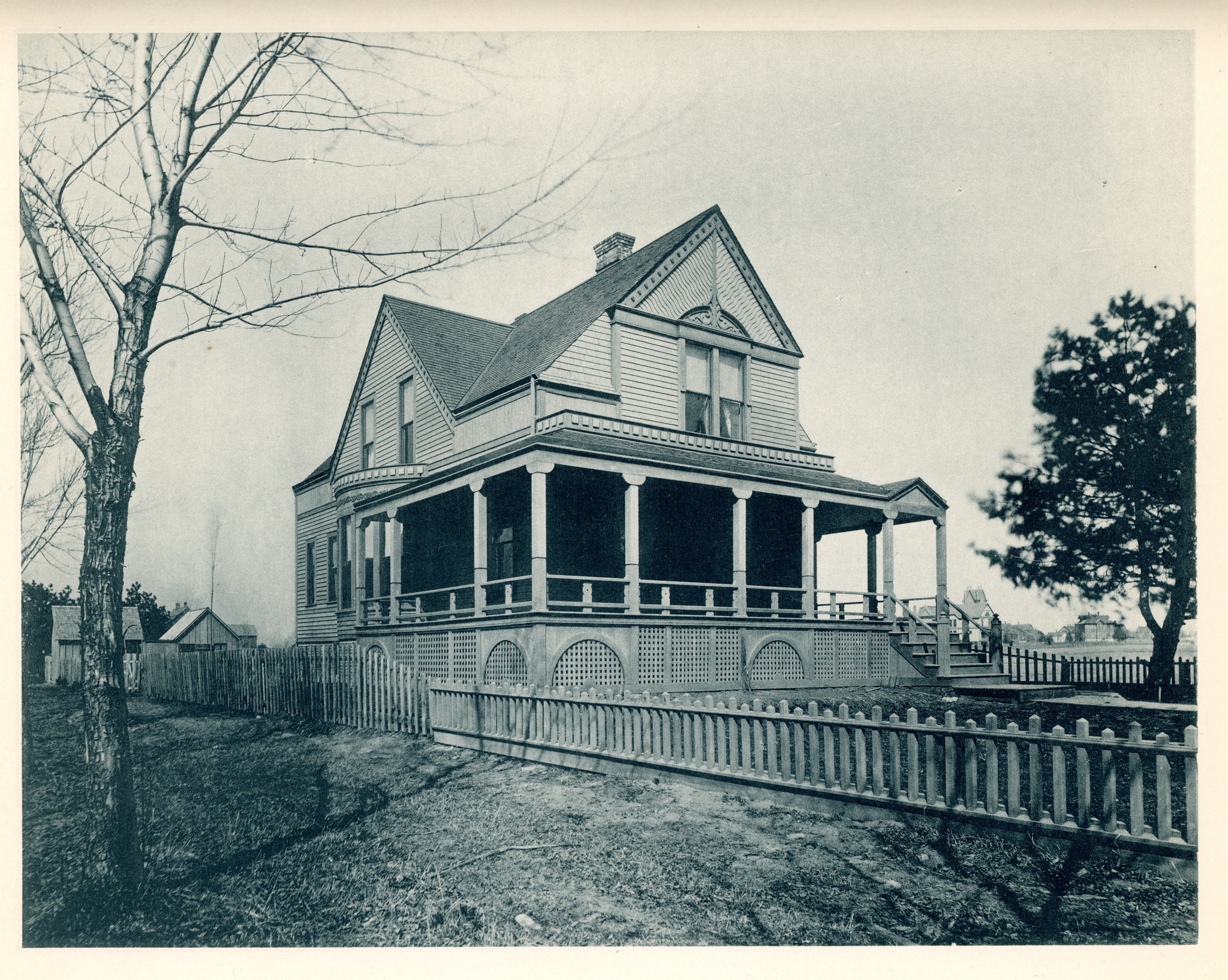
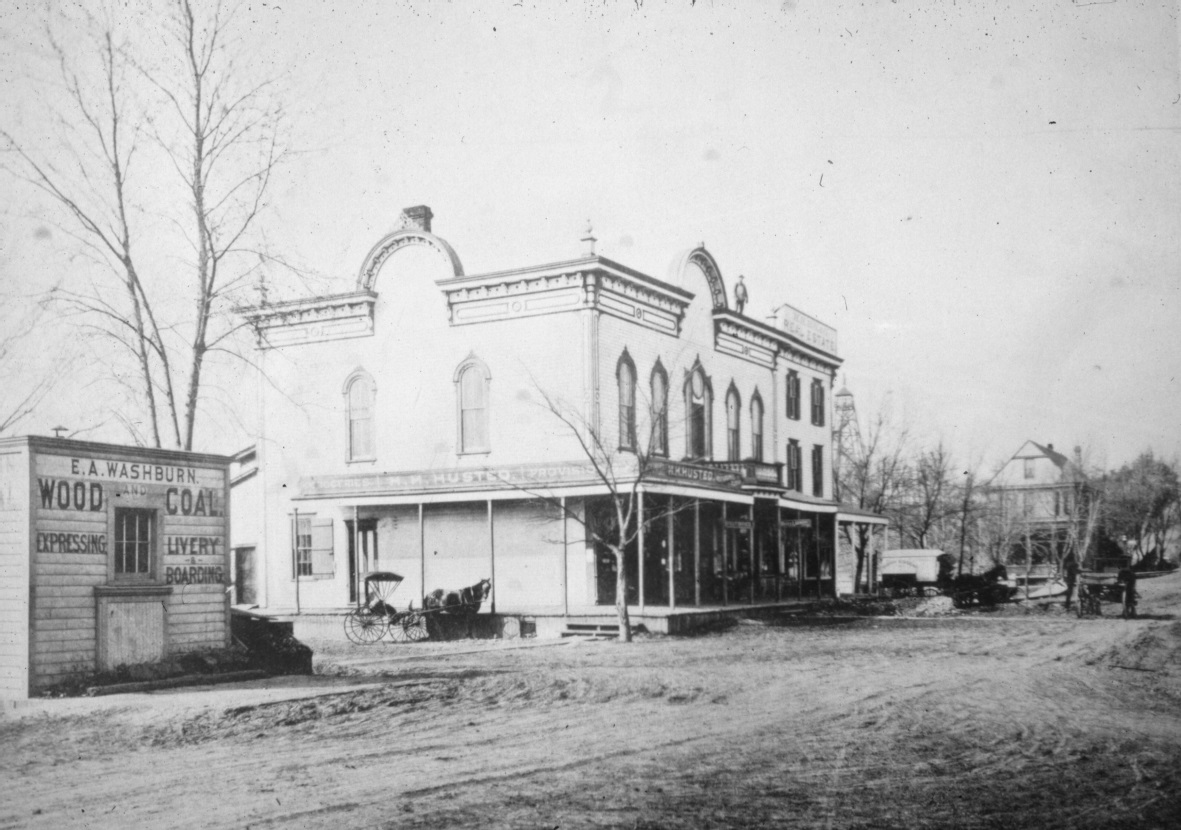
Building #3 is lost. This was the Henry Oswald Hough House, with the original address of 2368 Morgan Avenue, located at the northeast corner of 111th Street and Western Avenue where there is now the new dollar store, replacing the CVS pharmacy.
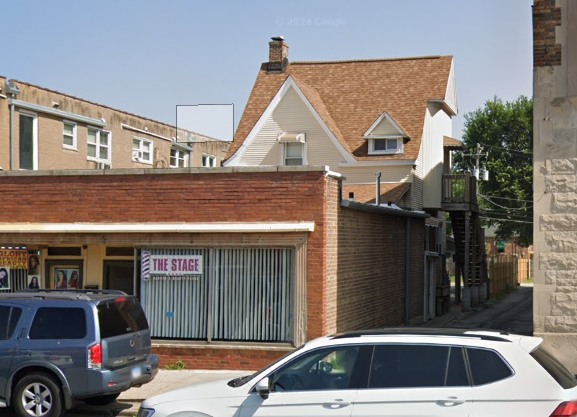
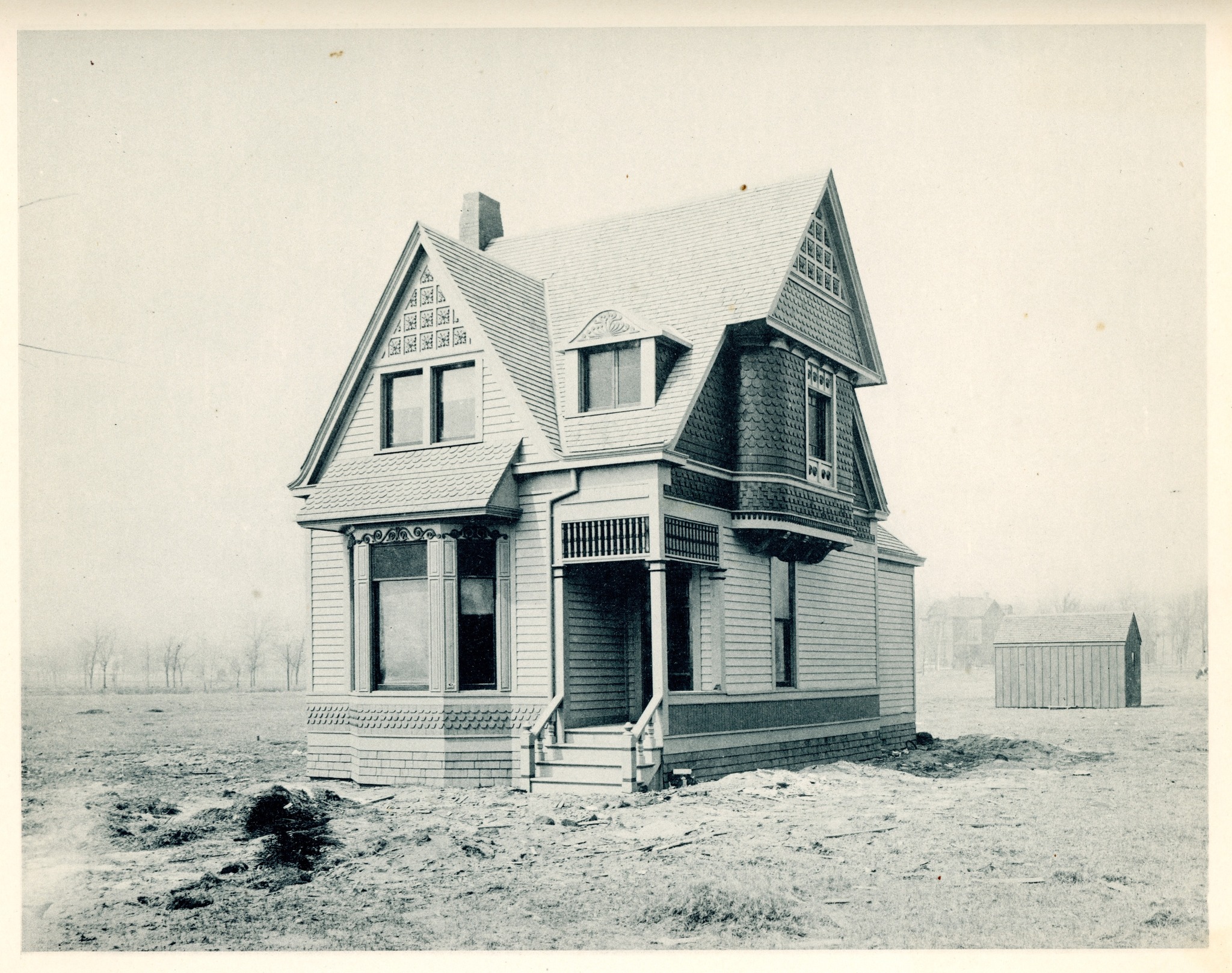
Building #4 is found. This is the Joseph E. McMeen House at 2330 W. 111th Street. The house still stands, but it is obscured by a modern commercial storefront built in front of it on 111th Street.
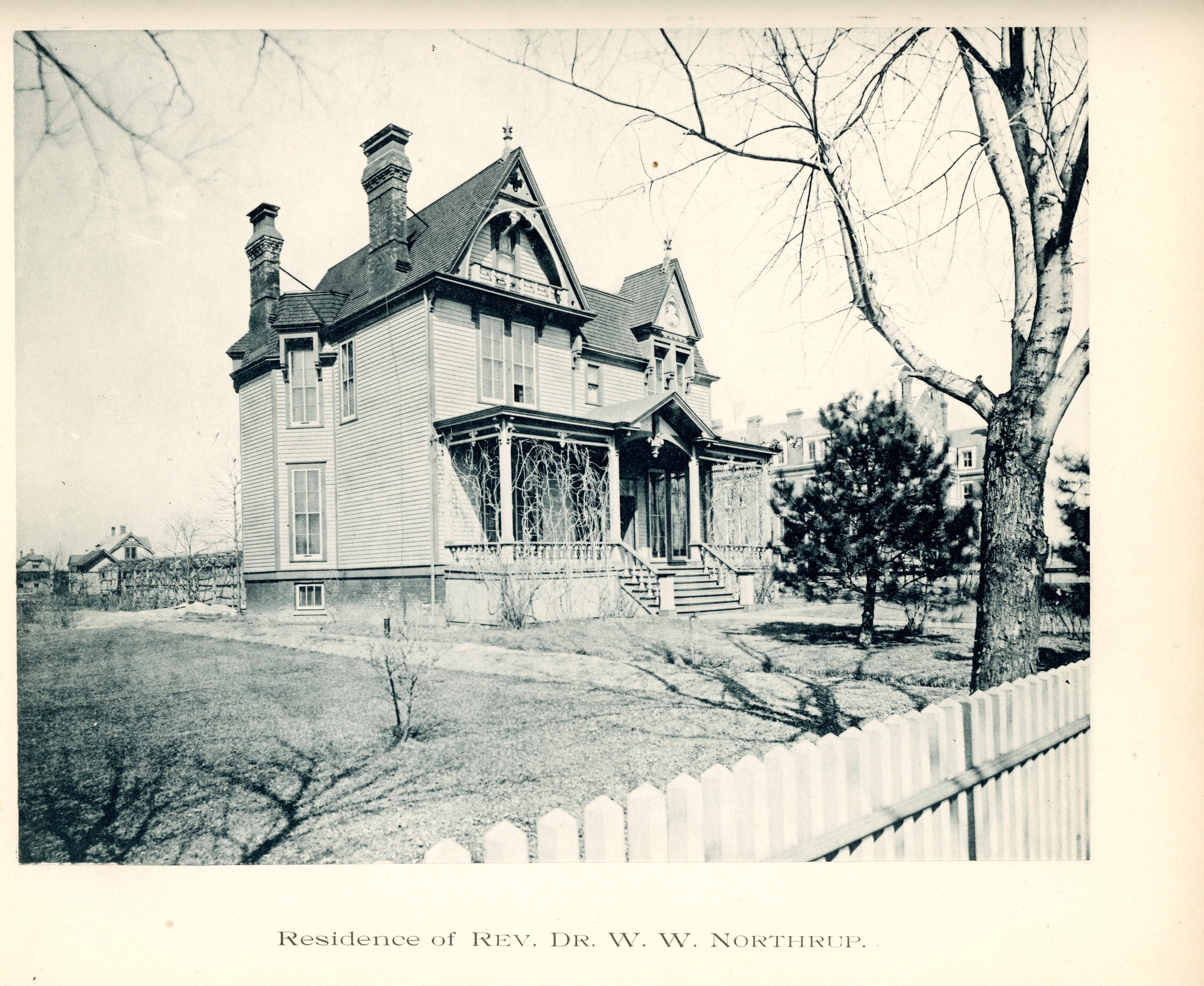
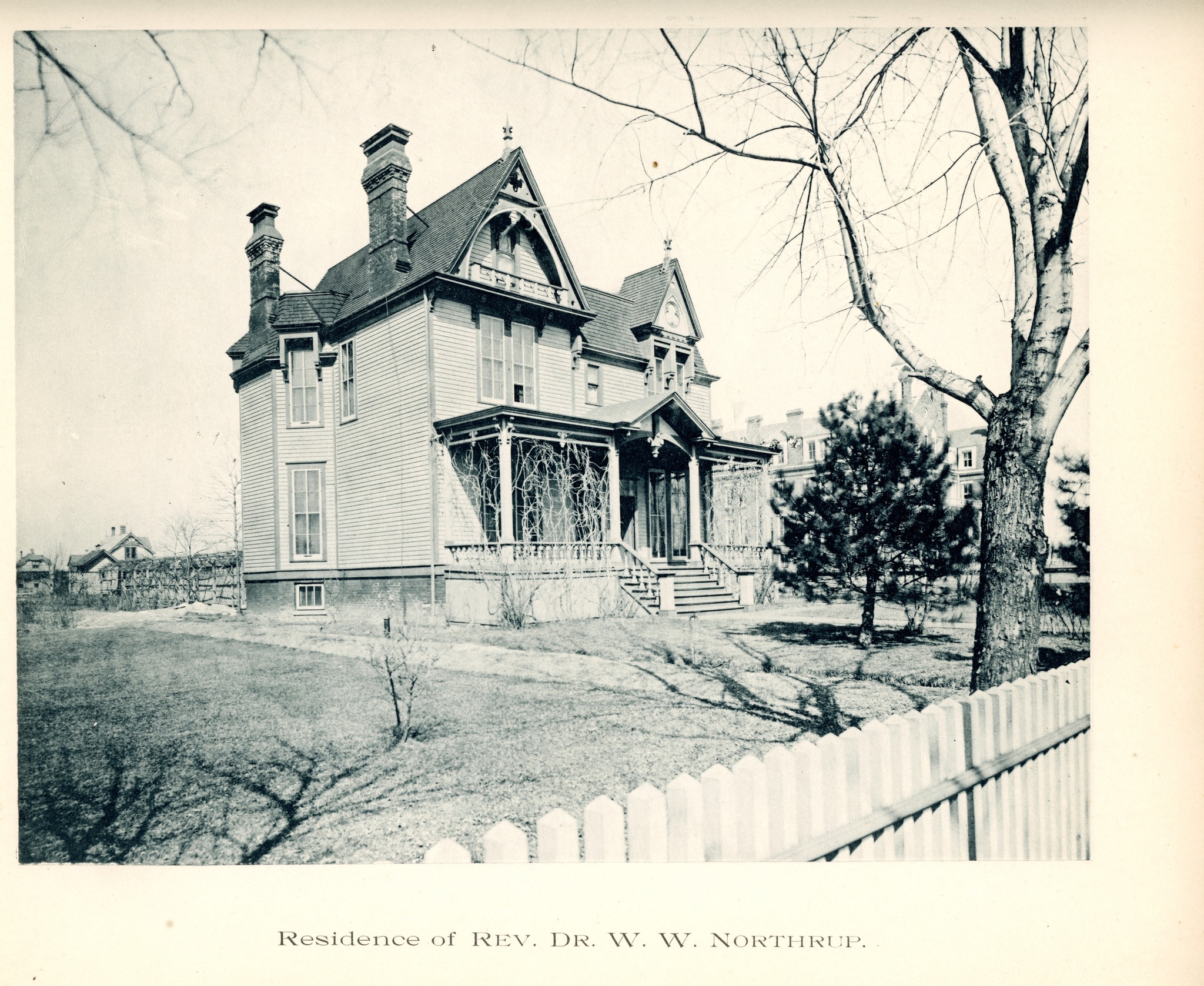
Building #5 is lost. This was the Rev. Dr. George William Northrup House, with the original address of 2242 Morgan Avenue. The house is no longer standing; the location is now an empty lot on the 2100 – 2200 block of 111th Street.
These houses all had significant histories, which will be covered in the next posts.
The Ridge Historical Society
Lost or Found Series – More information on Hough, McMeen, and Northrup
By Carol Flynn
In the last post, three houses in Morgan Park that were photographed in 1889 were identified. Two were lost, that is, demolished, and the third was found, still standing but obscured from view by a modern commercial building constructed in front of it.
The three houses were all located on 111th Street, which was called Morgan Avenue back then.
Morgan Avenue, on top of the hill from Western Avenue to Longwood Drive, was primarily residential. Many nice houses were built along the street for the earliest residents of this suburban village, which had been founded in 1874 by the Blue Island Land and Building Company.
The top of the hill was also the location for prestigious education institutions. On the north side of the street was the Baptist Union Theological Seminary, which moved to Hyde Park as part of the University of Chicago. The Mount Vernon Military Academy, which evolved into today’s Morgan Park Academy, was, and still is, on the south side of 111th Street.
East of Longwood Drive, at 111th Street and Hale Avenue, was the Morgan Park stop on the Chicago, Rock Island, and Pacific Railroad commuter line. The men who started the Blue Island Land and Building Co. and Morgan Park were also the owners of the Rock Island Railroad (now part of Metra).
They were savvy businessmen. First, they bought land on the Ridge from the old Morgan estate. Then they built their railroad through the area, connecting the Ridge with downtown Chicago. Then they sold off the land north of 107th Street in plots for homes for a higher price and developed the land south of 107th Street into the village of Morgan Park.
They made substantial amounts of money doing this and became very wealthy men. This was a common practice throughout the expanding U.S. The railroad men were quite often also the major land developers.
Commercial development in Morgan Park first began around the train stops. A large park would be established in front of the train stop on 111th Street. This park would be called Depot Park but today is known as Bohn Park. Depot Park would became Morgan Park’s “village green” for festivals and the location of the village Christmas tree.
Washburn Hall, which included commercial space on the first floor and a large room on the second floor for meetings and special events, was also on this section of Morgan Avenue.
The first of the three houses in last week’s post, at the northeast corner of 111th Street and Western Avenue, was the residence of Henry (Harry) Oswald Hough and his wife, Claudia Hakes Hough.
Western Avenue then was still very rural even though it was a major north/south thoroughfare through the area.
H.O. Hough, as he was usually referred to in the newspapers, was a bookkeeper for a stockyards company. He was educated at the University of Chicago. There’s not that much information available about his job, but there is some information about his social life in Morgan Park.
Before he even got to Morgan Park, in the 1870s, Harry’s name popped up in the society pages as being one of the available single men at parties. One example was a party put on by the South Side Independent Club at a private residence in the Prairie Avenue district in 1875.
Claudia came from Connecticut and was 19 years old when she married Harry in 1884; he was 26.
Tragedy struck their young family when their two-year old son, Rupert, died in 1887. They had a second child, Waldern, who lived to adulthood but his mother, Claudia, outlived that son also.
Harry and Claudia lived in Morgan Park by 1888, and were part of the active social scene there. They “rubbed elbows” with some of the famous names from local history, including the Blackwelders, Silvas, Igleharts, Wiswells, Givins, Ayers, and Myricks.
They were early members of the Owl Club of Morgan Park, which, according to the Chicago Tribune, was “composed of the elite of the town, which is sufficient guarantee regarding the character of its recipients. It is a pleasure to belong to such an organization as the Owl Club.”
[The Owl Club of Chicago started as a press club, but expanded to include everyone from artists to businessmen. As more “men about town” became members, the press started to consider the club as less distinguished and the elitism as “pretentious.” The press members left the club and formed a new club, the Chicago Press Club. David Herriott, the editor and publisher of the Morgan Park Post, served as a president of the Chicago Press Club.]
Claudia was an accomplished musician, and Harry liked getting on the stage, also. The couple was involved in local performances, and they entertained at their house regularly.
A few examples include Harry leading the “german” at a reception of the Owl Club in 1888, and Claudia managing a performance of “Liebling’s amateurs” at the Hough home in 1889. The german was a very popular group dance that was more like a party game. The Liebling Amateurs were students and followers of Emil Liebling, a German pianist and composer who lived in Chicago.
Other performances that both Harry and Claudia appeared in with the Owl Club drama group included “Little Brown Jug” and “Among the Breakers,” both at Washburn Hall, sometimes referred to as the Morgan Park Hall.
They also participated in Owl Club costume parties at the Hall, popular events in the late Victorian era. These included a calico party, where the women all dressed in calico, and games were played, such as the men each receiving an envelope with a piece of calico in it, and having to find the women whose dress matched the piece of cloth.
Another costume party put on by the Owl Club was a “phantom” party, or a “sheet-and-pillow-case” party, where the attendees dressed as ghosts with costumes made from, yes, sheets and pillow cases.
It was also reported in the Tribune that the Hough House in Morgan Park was burglarized in July 1889, and “a spring overcoat and a lot of silverware” were stolen.
Alas, Henry’s and Claudia’s marriage did not last. They divorced, and she eventually moved to California, and he moved to Florida.
The Hough House was demolished some time ago, and recently a new dollar store opened on that corner, replacing the CVS pharmacy that had been there.
The second house in this post is identified as the Joseph E. McMeen House at 2330 W. 111th Street. The house still stands, but it is obscured by a modern commercial storefront built in front of it on 111th Street.
McMeen was an interior decorator and painter, and one source listed him in the furniture business. He had an office in the city.
It doesn’t appear that McMeen laid down long-lasting roots in Morgan Park. The newspapers reported that his house at 109th and Hermosa (then Fairfield), which had only been built six months before, was destroyed by a fire in 1889. The family was sleeping and had a narrow escape.
That is also the year he is listed as living in the house on 111th Street that still stands, so it seems likely he moved into that house after the other was destroyed. The picture of the house shows it was just completed; there wasn’t even a walkway to the front door yet.
McMeen was also in the newspaper when he was injured by a cable car. He was awarded $1,000 from the Chicago City Railway Company.
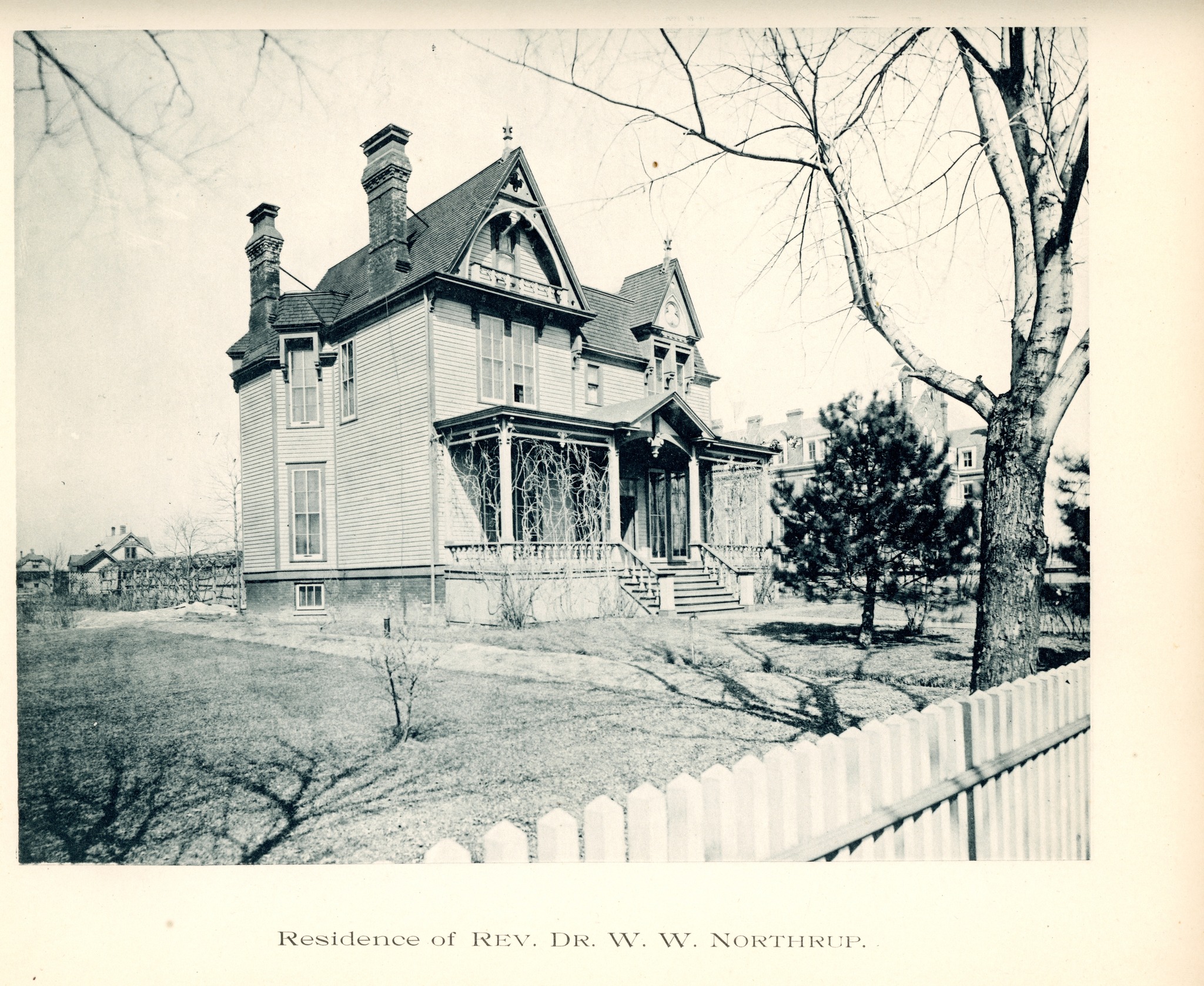
The third house was the residence of Rev. Dr. George William Northrup. The address was 2242 Morgan Avenue, but the house has been demolished and today the space is a vacant lot.
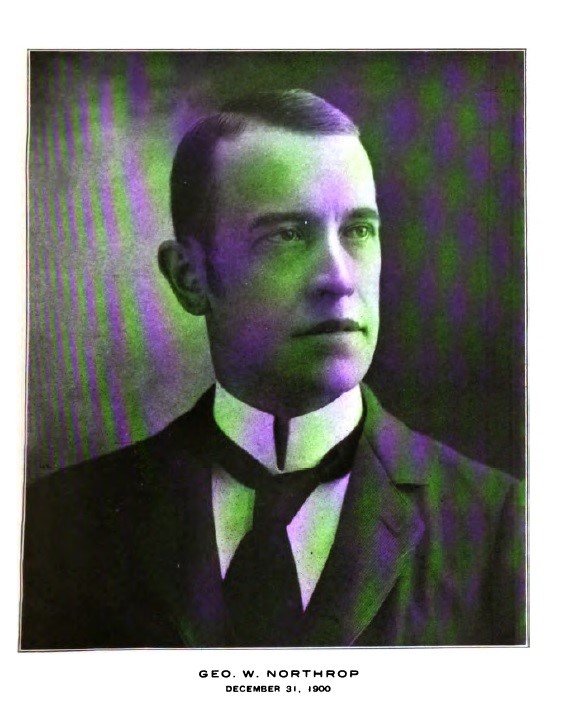
Northrup was the most prominent of the three residents. He was the President of the Baptist Union Theological Seminary, as well as a professor there.
Northrup is part of the story of how the University of Chicago was almost established in Morgan Park, and that will be covered in the next post
The Ridge Historical Society
Lost or Found Series – The Northrup House
By Carol Flynn
The final post to wrap up the Lost or Found Series is on the Rev. Dr. George William Northrup House.
This house is “lost,” that is, it was demolished sometime in the past. It was located at 2242 Morgan Avenue, the name of 111th Street before Morgan Park was annexed to the City of Chicago in 1914. Today the location is a vacant lot between 2154 and 2204 West 111th Street.
Northrup is one of the most prominent people in Chicago history to have lived on the Ridge. He was the President of the Baptist Union Theological Seminary, as well as a professor there. He was part of the story of how the “new” University of Chicago was established with an original connection to Morgan Park.
The Baptist church came to Chicago with the earliest settlers. In 1863, a group of Baptist leaders created the Baptist Theological Union, and the Illinois legislature granted the Union a charter to found an institution for theological instruction.
The Baptist Union Theological Seminary was founded in 1865 along with the “Old” University of Chicago, that is, the first attempt to form an institution of higher learning in the city, started by Illinois Senator Stephen Douglas.
The formal work of the Seminary began with the appointment of George W. Northrup as President and Professor of Systematic Theology.
Northrup was born in New York in 1826. He was self-taught, and without formal education, he entered college as a sophomore, and graduated with top honors. He then received a degree from Rochester Theological Seminary and was hired there as a professor.
His reputation spread as an educator and orator, and he was invited to Chicago to take charge of the new Seminary.
Originally classes were taught in buildings near Douglas’ Oakenwald estate at 35th Street and Cottage Grove. The Seminary grew under his leadership and earned a reputation for excellence.
Northrup was personally involved in fund raising for the Seminary, and through this, he met and developed a relationship with John D. Rockefeller, business icon and philanthropist.
In the mid-1870s, the Seminary, and the Old University of Chicago, started having financial issues, and there was talk of having to close.
In 1877, a generous offer of free land (five acres) from the Blue Island Land & Building Co. (BILBCo.) led to the Seminary selling its buildings and land, relocating to Morgan Park, and building new facilities there.
This was quite a coup for the BILBCo., and helped fulfill the plan to establish Morgan Park as a prestigious religious, education, and temperance community. It was anticipated that additional educational facilities would follow, creating a new University of Chicago. Morgan Park Academy, started as the Mount Vernon Military Academy, and the Chicago Female College, were already established in Morgan Park.
The Seminary built an imposing three-story office and classroom building, now long gone, on the north side of 111th Street, just east of Western Avenue. Funding partially came from Rockefeller to do this, as well as from the BILBCo.
The Seminary brought to Morgan Park a considerable number of administrators, professors, clergymen, students, and members of the Baptist church. This led to a building boom for new houses.
Northrup moved to Morgan Park to continue to head the Seminary. Other important names were William Rainey Harper, a Baptist clergyman of Irish and Scottish ancestry who was an expert in Semitic languages and a professor of Hebrew at the Seminary.
There was also Thomas Wakefield Goodspeed from New York, who studied at the Old University of Chicago, was a founder of the Morgan Park Baptist Church, and was the financial officer for the Seminary.
The Old University of Chicago closed in 1886. Immediately talk about founding a new university was started. Public sentiment was in favor of building the school near the location of the original one, partly to honor the legacy of Senator Douglas, but also because people did not want the school in a suburb away from city accessibility.
Northrup, Goodspeed, Harper, and other leaders of the Seminary approached Rockefeller about establishing a new University of Chicago. The proposal was that the main university would be in Hyde Park, with some auxiliary components in Morgan Park.
Rockefeller agreed to the funding, but he was not interested in the Morgan Park part of the plan. His donations, which totaled over $1.5 million, included the stipulation that the Baptist Seminary become the Divinity School of the new university, and move back to Hyde Park. The Board for the new university readily accepted this plan.
In 1892, the Baptist Theological Seminary became the Divinity School of the new University of Chicago, and relocated from Morgan Park. Harper was named the president of the new university, and Goodspeed was a member of the Board of Trustees serving as secretary, registrar, and historian
Northrup, now approaching his 70s and having health issues, declined a leadership role, preferring to devote his time to teaching.
Northrup died in 1900. His personal library, consisting of 1,500 valuable books, was gifted to the university. His body lay in state at the university, and the famous sculptor from the Art Institute of Chicago, Lorado Taft, produced a marble bust of Northrup. He was buried in Oak Woods Cemetery.
Northrup outlived his two wives, Mary and Naomi, and had four adult children, three sons and a daughter. The daughter, Alice Northrup Simpson, lived her life in Morgan Park. She was employed as a teacher before marrying the Rev. Benjamin J. Simpson, and becoming the mother of five children. Simpson died in 1894 at the age of 39, leaving Alice a widow with five children. Alice died in 1916.
Other institutions used the Morgan Park Seminary buildings for a while, but shortly after 1900, the main building was demolished.
The female college continued for a number of years, but eventually closed as more education opportunities became available for women. The original building, on the Ridge on Lothair Avenue, was demolished in 1911.
The military academy was a preparatory school for the university for a few years, but the university decided to close it, and the school became the independent Morgan Park Military Academy.