Explore the RHS Facebook Archives, a rich repository of local history written by Carol Flynn. For two decades, Carol brought a deeply dedicated voice to public education at RHS. Her role as Facebook administrator through mid-2025 naturally extended her prolific research into meticulously detailed articles, most notably her multi-part historical series posts. Today, Carol continues her local history writing for The Beverly Review and other outlets.
New Year in Chicago and on the Ridge 100 Years Ago
The Ridge Historical Society
The New Year in Chicago and on the Ridge 100 Years Ago – Part 1
By Carol Flynn
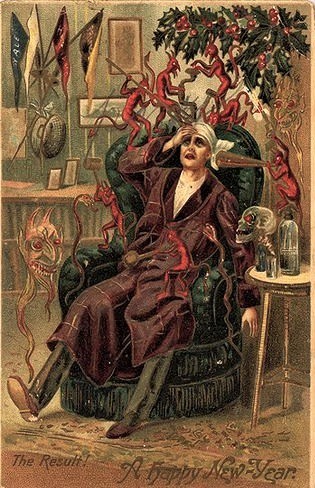
One hundred years ago, the annual welcoming in of the New Year promised to be one of the tamest ever. The United States was under the mandate of Prohibition. No alcohol could be produced, imported, transported, or sold.
In early December of 1922, Colonel Levi G. Nutt of the Federal Internal Revenue Department, charged with enforcing Prohibition in northern Illinois, was reported by the Chicago Daily Tribune to be organizing an undercover force of agents who would dress in evening clothes and “bear a general resemblance to ordinary human beings” to infiltrate New Year’s events to “harass, mangle, and destroy the merry making.”
The Tribune reported that “Col Nutt, who may be a nice man in a family circle, is a terror in the performance of duty, and he seems to enjoy saying that he expects to fill the jails and the hoosegows, the coolers and the police stations.”
However, the Chicago police didn’t intend to cooperate. According to the Tribune, Chief of Police Charles C. Fitzmorris said, “Let ‘em celebrate. The police will not interfere in any lawful celebrations. I expect to celebrate myself….[H]alf the men are to be off duty on Christmas and the other half on New Year’s.”
The Illinois Anti-Saloon League reportedly decided to ignore the New Year celebrations as a “temporary matter” that would not “take precedence over the fight” against illegal saloons.
The Tribune then reported that the raids were off, that Roscoe C. Andrews, Federal Prohibition Director for the State of Illinois, said that as long as people didn’t publicly flourish their hip flasks they would not be subject to search and seizure. This meant, wrote the Tribune, that “persons capable of pouring discreetly from under a tablecloth or a napkin, or from a flask in the pocket, will be immune from arrest.”
“Chicago’s holiday lid … [is] blasted clear off,” wrote the Tribune, leading Chicagoans to rush to make reservations for events.
Andrews, however, reacted to this Tribune article with an angry rebuttal, declaring, “Any statement that the lid is off in Chicago and that violations of the national prohibition act will be countenanced in any way, is absolutely without foundation….The mere fact that flasks are concealed under tablecloths or napkins is no defense.”
The battlelines were drawn.
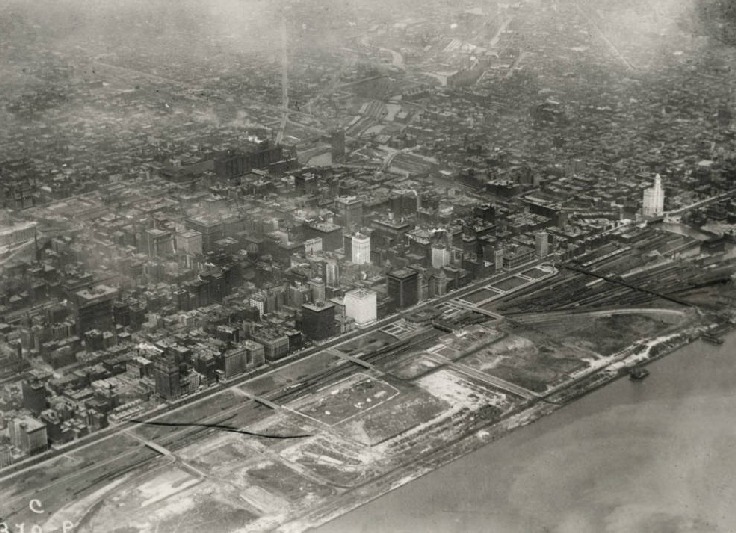
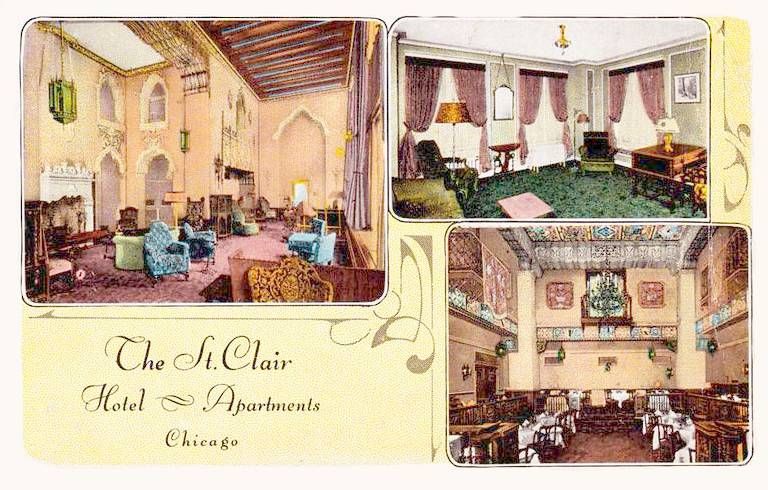
Numerous parties took place that holiday week-end, in hotels, cabarets, and private clubs and residences. The demand for space in the hotels was so great that some events had to take place on January 1 instead of December 31.
Many of the events were dinner dances, starting in the early evening. A formal dinner was followed by music and dancing. As many as three orchestras performed at some events. Additional entertainments, like vaudeville acts, were on some of the agendas. Events at country clubs included outside sports like ice skating and hockey. At midnight, noisemakers, horns, and pistol caps created a din that could go on for half an hour. Then a less formal supper was served at midnight, followed by dancing until the wee hours of the morning.
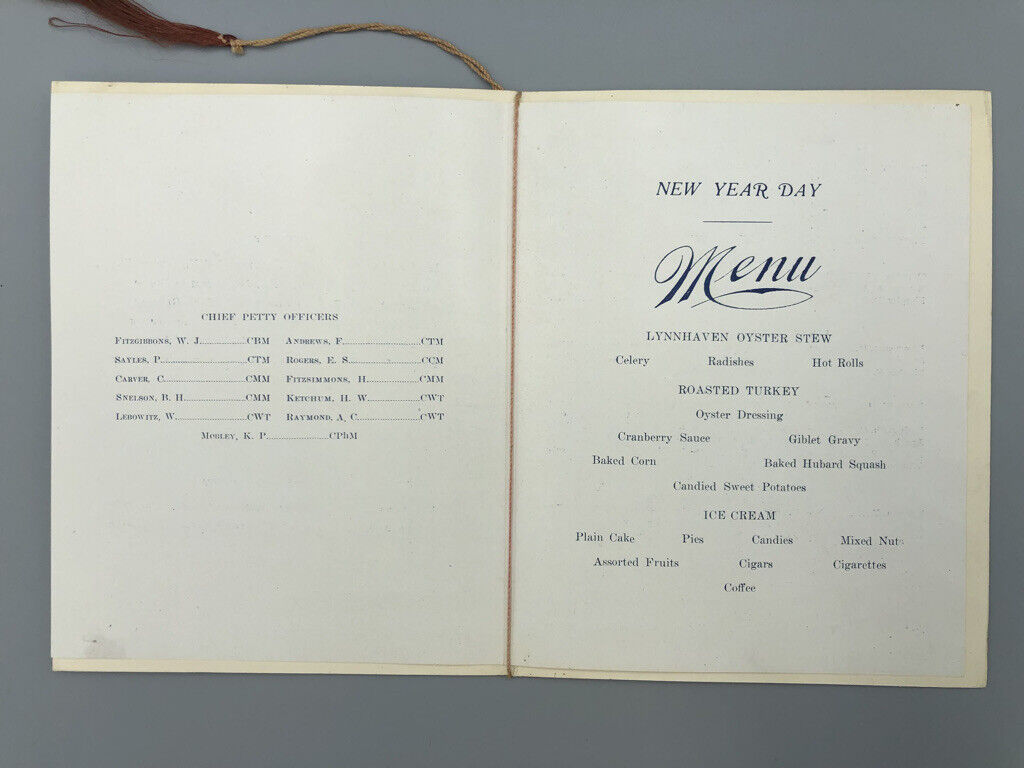
The menus for the formal dinners were always interesting and opulent. A typical New Year’s menu at a hotel included beginning courses of fruit cocktail, consommé, cream of tomato soup, and celery and almonds, followed by chicken and oysters dishes. The meat entrées included broiled pork tenderloin with pineapple fritters and fruit sauce, roasted turkey with cranberry jelly, and braised filet of beef with Bordelaise sauce. The side dishes were mashed potatoes, fried sweet potatoes, fresh spinach, and corn with green peppers. The entrees were followed by a lettuce and tomato salad. Desserts included pumpkin pie, peach pie, maplenut ice cream, steamed fruit pudding, assorted cakes, cheese, apples and raisins. Coffee, tea, and milk were availalble, and of course, people brought along their own flasks.
The cost for this meal was around $2.00 per person. A fifth of bootlegged Scotch was going for around $12.
The next day, St. Louis and San Francisco reported that riots ensued when federal agents raided events at hotels and resorts. The party-goers threw water glasses, flower vases, chairs, and even their plates bearing their entrees at the agents. People were injured – one agent was knocked unconscious by a flying bottle – and arrests were made.
Not so in Chicago. The promised raids of the “famous full dress army” never materialized, except for a few “minor cafes and saloons.”
The Tribune reported that Chicago “danced, sang, ate, went to theaters, churches and receptions.” Events at three to four hundred cafes, hotels, cabarets, and gardens, and too many private parties in residences and clubs to count, were celebrated with “little disorder” – for the most part, people were “good-natured and jolly.”
The weather was mild that year, very similar to what is forecasted for Chicago this year – the temperatures were in the mid-forties and cloudy, with a little light rain. Some 75,000 people descended upon the loop and the lakefront.
1922 turned out to be one of the biggest New Year’s Eve celebrations in Chicago’s history. Even Colosimo’s Café at 21st Street and Wabash Avenue, run by the “Chicago Outfit,” had to close its doors and cut off admittance, so great were the crowds trying to gain entry.
Many people held “watch parties” at home. Tomorrow, we’ll explore what was going on in Beverly and Morgan Park as 1922 became 1923.

The Ridge Historical Society
The New Year in Chicago and on the Ridge 100 Years Ago – Part 2
By Carol Flynn
Yesterday, we posted about New Year’s celebrations one hundred years ago. Despite Prohibition, 1922 turned out to be one of the liveliest New Year’s Eves in Chicago history, largely due to the police turning a blind eye to “the toters of hip liquor,” that is, the many people who imbibed from secreted hip flasks.
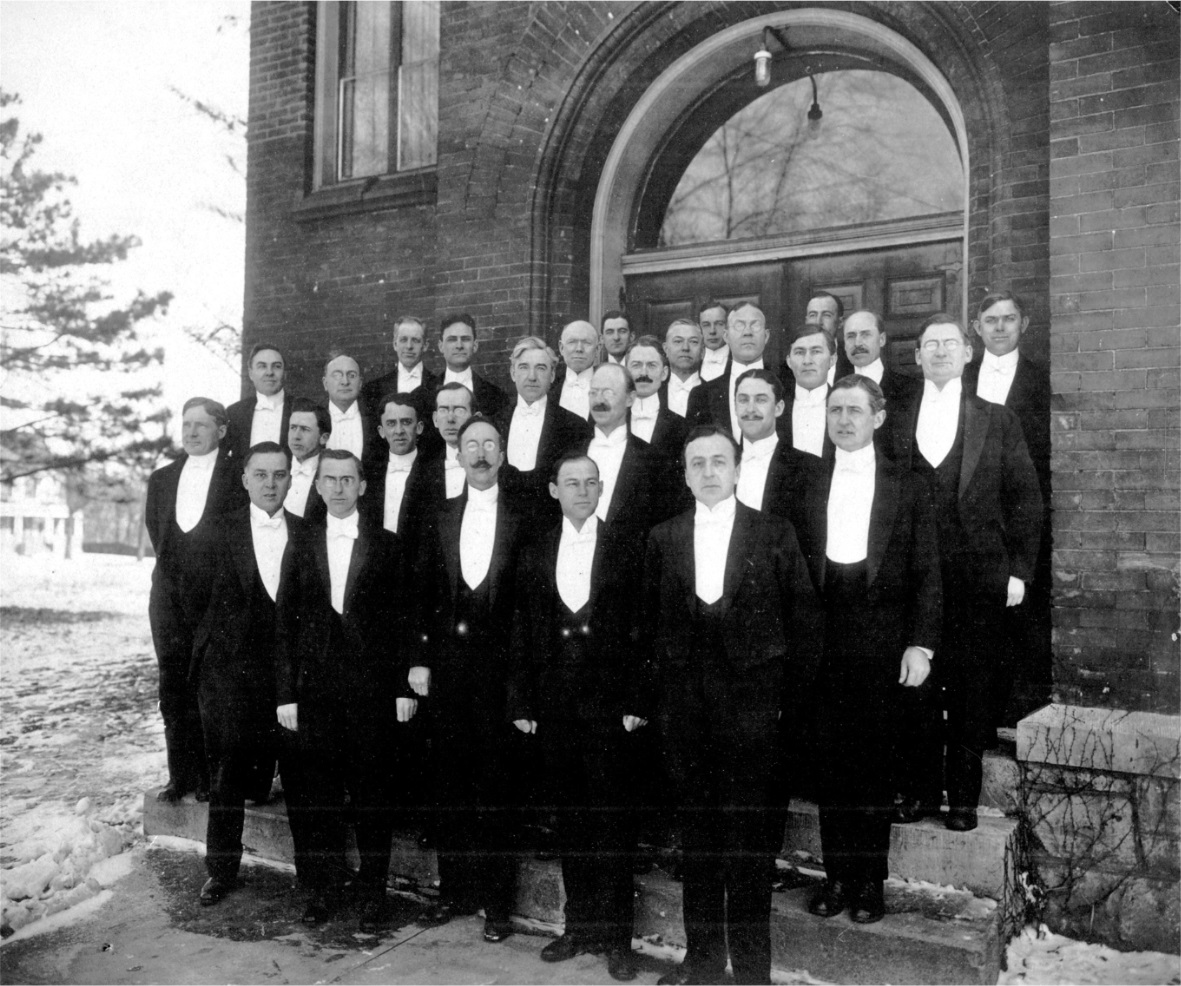
As temperance communities from their earliest days, Beverly and Morgan Park were never known for wild New Year’s parties. In 1922, the local paper reported that between Christmas and the New Year, social events included a “hop” in the Ridge Park field house hosted by the Beverly Hills Post of the American Legion, the annual children’s party given by the Morgan Park Woman’s Club, and a performance of The Messiah by the Euterpean Chorus, a local all-male ensemble, at the Morgan Park M. E. Church. Ridge Park flooded its baseball field, and the young people were having a “glorious time” ice skating.
There were private parties, of course, and whether liquor was served was not reported in society columns. Illegal stills discovered in the neighborhood were reported in the local papers occasionally, albeit rarely.
In January of 1923, the paper reported that Mr. and Mrs. Harry Rickert of 9922 Vincennes Avenue had a watch night party on December 31.
A little RHS sleuthing revealed that Harry John Rickert was born in Illinois in 1884. His mother was from Germany. In 1907, Rickert married Anna M. Rheinberger, a naturalized citizen born in Germany in 1886 who came to the U.S. in 1891. They had one son, Elwood Edward, born in 1908.
On his 1918 World War I draft registration and the 1920 U. S. Census, Rickert’s occupation is listed as a teamster, working for the Stephens and Kay company, hauling grain and coal. A “teamster” back then referred to a person who drove a wagon pulled by horses, mules, or oxen. However, the 1920s saw the real beginning of the trucking industry, and Rickert and his son were mentioned in the paper as going on a motor trip with friends, so Rickert could have been driving a delivery truck by then.
Apparently, Anna liked to entertain, as she is regularly mentioned in the papers as the hostess for events, ranging from fund raisers for hungry children in war-torn Germany to surprise baby showers to luncheons/card parties. She was active with the ladies’ aid group and the sewing circle of the Evangelical Zion Church at 100th Street and Throop Street, and neighborhood social groups like the Just Pals club and the Bunco Matrons.
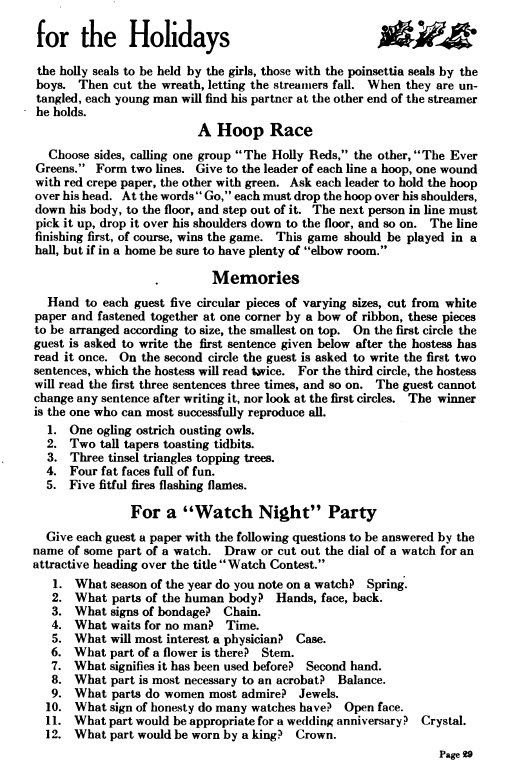
Back then, New Year’s Eve parties were called “watch night parties” because the general theme was “watching the old year out” as opposed to welcoming in the New Year as is done today.
The custom was to open the front door at the stroke of midnight so the old year could exit and join all the years of the past, and the “baby new year” could enter and begin its life. The guests would form a circle and sing “Auld Lang Syne.”
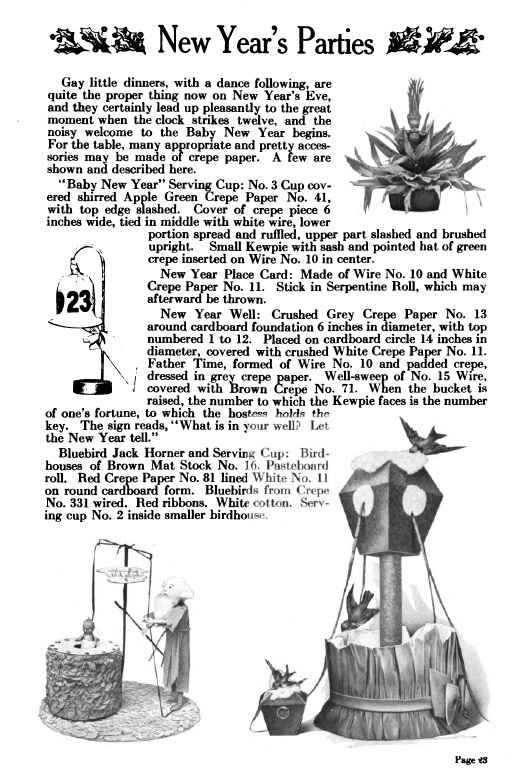
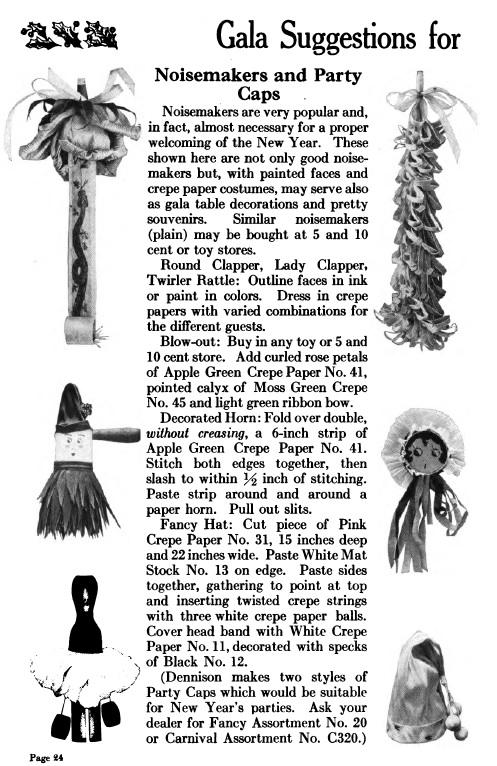
Although we don’t know the details of the Rickerts’ New Year’s Eve party in 1922, some ideas as to what they might have done can be found in entertainment guides from the time.
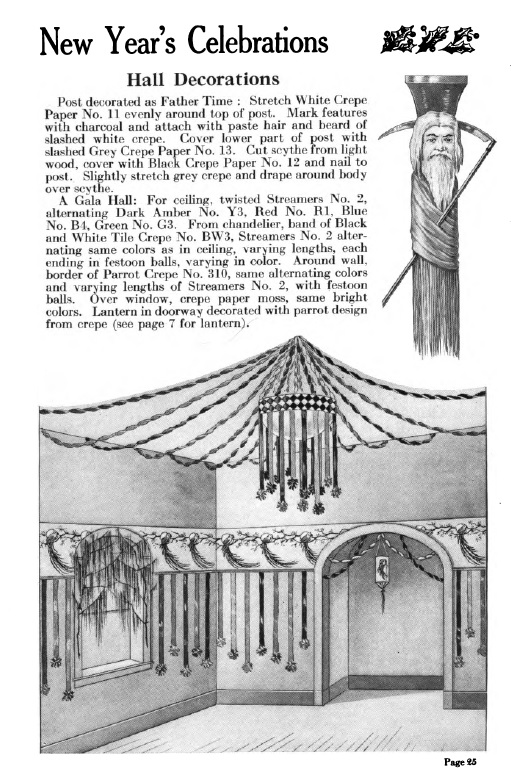
In the early 1900s, party decorations started to become much more sophisticated, as commercial products replaced homemade ones. Several companies, notably Dennison Manufacturing Company, began making products such as heavy cardboard die cuts; paper plates, cups, and napkins; crepe paper streamers, and the like.
Dennison published books that were a combination of party planners and catalogs for their products for holidays such as Christmas, New Year, and Halloween. The pages from the “Dennison’s Christmas Book” of 1921 that included ideas for New Year celebrations are shared here.
We know that the Dennison line was available locally, because in December of 1922, an advertising announcement in the local paper stated: “New Year Favors, Jokes and Novelties. Full line of Dennison goods. Frank Kellner, 443 W. 63rd st.-adv.”
While winter holiday events occupied the attention of the residents of the Ridge, local news also caught the eye.
Two interesting pieces of news were shared that holiday week that became important historically.
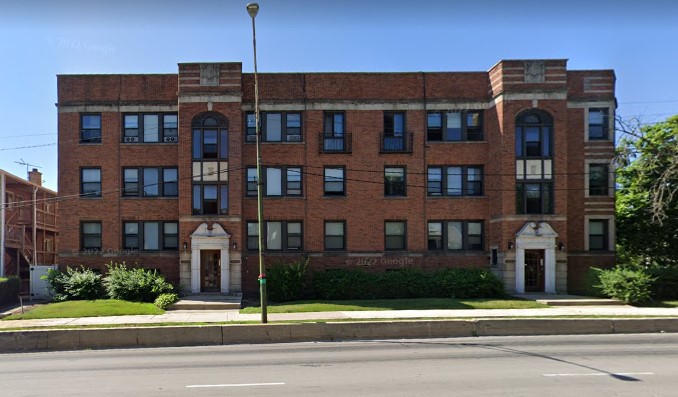
Plans were announced for the first apartment building to be built in Morgan Park at 111th Street and Hoyne Avenue at the cost of $300,000. To be called Ridge View, the building would be three stories of 42 four- and five-room apartments. This was notable because up to this time, Morgan Park was primarily a community of single-family homes. Within a decade or two, local civic groups would begin to oppose the building of additional large apartment buildings in the community.
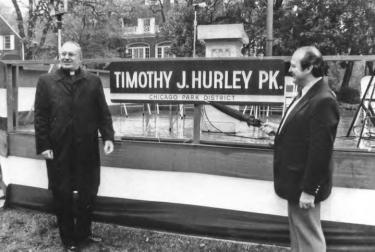
The second news item was that the Catholic Archdiocese of Chicago had purchased the southwest corner of 100th Street and Longwood Drive. The rumor was afloat that a new parish was going to be created with a church and school built on the grounds. This was the beginning of St. Barnabas Parish. At the time it set off a wave of opposition to more Catholics moving into the predominantly Protestant community, resulting in protestors burning a cross on the land, and managing to have the land condemned for use as a public park. Undeterred, founding pastor Father Timothy Hurley moved the location of the new parish a few blocks farther south, and this original land is now Hurley Park.
One more topic being covered in the local papers was that, just like this year, 1923 was the year for the aldermanic election. Candidates and their supporters were busy circulating petitions for inclusion on the ballot. As one newspaper pointed out tongue-in-cheek, we never know how popular or unpopular a man is until we hear the stories from the workers who knocked on the doors for signatures.
Happy New Year from the Ridge Historical Society.