
Explore the RHS Facebook Archives, a rich repository of local history written by Carol Flynn. For two decades, Carol brought a deeply dedicated voice to public education at RHS. Her role as Facebook administrator through mid-2025 naturally extended her prolific research into meticulously detailed articles, most notably her multi-part historical series posts. Today, Carol continues her local history writing for The Beverly Review and other outlets.
The History of Brood XIII Cicadas in the Chicago Area

The Ridge Historical Society
The History of Brood XIII Cicadas in the Chicago Area – Part 1
By Carol Flynn
The Blue Island Ridge is experiencing a spectacular display from Mother Nature that will go on for the next six weeks or so: the emergence of insects known as Brood XIII or the Northern Illinois Brood of periodic cicadas.
The natural world is an integral and important part of the community’s history and development, and this is an extraordinary natural history event that has occurred every 17 years for a very, very long time.
As promised to the entomophiles (insect lovers) in the community, or to those who at least have accepted Brood XIII even if with qualms, here is some research on the history of cicadas in the Chicago area, starting with some basic information on cicadas.
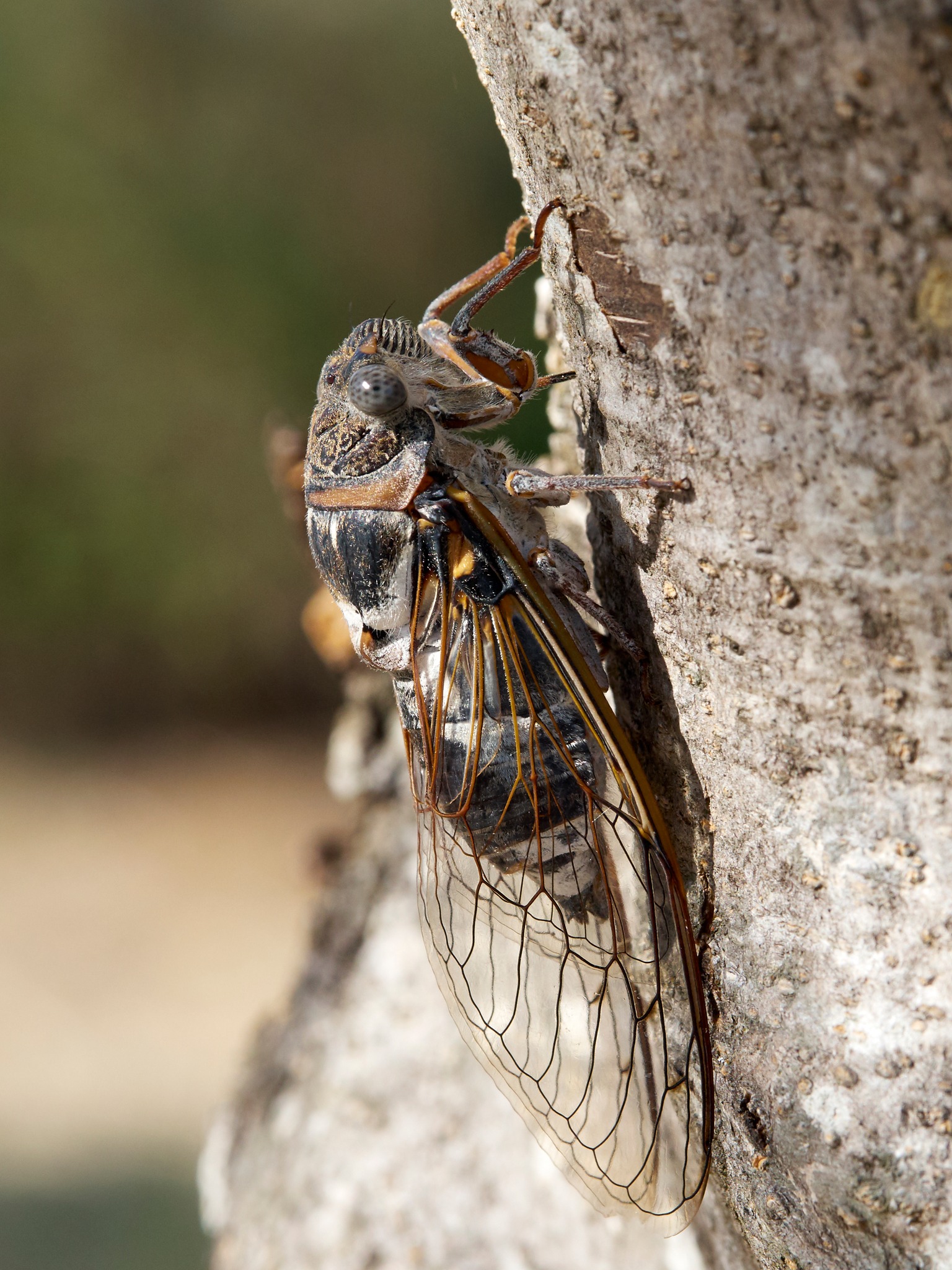
Today there are over 3,000 species of cicadas worldwide. They all live the major part of their lives underground as nymphs, or juveniles, feeding off the sap of the root systems of deciduous trees, those trees that shed their leaves annually. Cicadas are important parts of eco-systems, aerating and enriching the soil, allowing the trees to grow and flourish.
At the end of their life span, cicadas emerge from the soil, molt into an adult form, mate, and die. The eggs laid by the females hatch and the nymphs burrow into the soil and begin a new lifecycle. While breeding, the males are known for their very loud “song.”
The earliest cicada fossils that have been identified date to the last period of the Paleozoic Era, some 260 million years ago, predating the dinosaurs. Modern cicadas have been around for 40 million years.
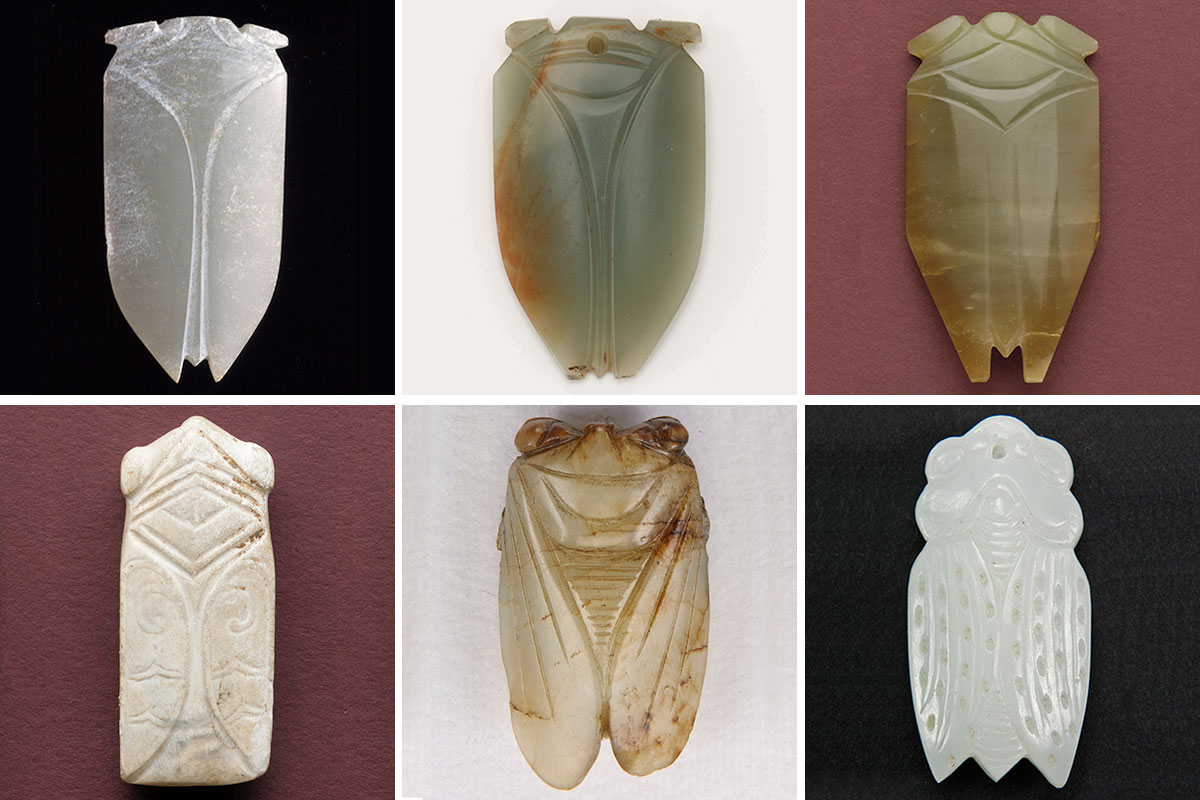
The earliest documentation of human use of cicadas dates to the Chinese about 3,500 years ago. Cicadas were considered a sign of rebirth and images of them were carved out of jade.
Cicadas were mentioned in Homer's “Iliad,” and were described by Aristotle in his “History of Animals.” They were eaten in Ancient Greece, and the shells were used in traditional Chinese medicines. They have been used for money and to forecast the weather.
In Ancient Greek mythology, the goddess of the dawn, Eos, asked Zeus to let her lover Tithonus live forever as an immortal, but she neglected to ask Zeus to make Tithonus ageless. As a result, her lover grew old but never died. He became so tiny and shriveled that he turned into the first cicada, and he became the emblem for music.
A genus of cicadas called the Magicicada exists only in North America. These are known as the “periodic cicadas,” and the species within this genus have some unique features that set them apart from other cicadas.
All species of cicadas live underground for the major part of their lives, with lifecycles from one to nine or more years. Nearly all of the species outside of the U.S. are “annual cicadas” with some members of each species reaching maturity every year and emerging from underground.
What makes the North American “magic cicadas,” a play on the genus name, unique is two things. First, some of the species have evolved 13- or 17-year lifecycles, making them the longest living insects on the planet. Second, these species have synchronized emergence – almost all of the members of the species emerge at the same time.
Insects are part of the diets of many countries and cultures. The role of insects in the diets of the Indigenous Peoples of North America, however, is for the most part poorly documented.
One paper published in 1910 in the Journal of the New York Entomological Society, “The Use of Insects and Other Invertebrates as Food by the North American Indians,” by Alanson Skinner, reported that insects did not form any substantial part of the diet of Native Americans east of the Mississippi River because other food sources, both plants and game, were so plentiful.
This would include the Blue Island Ridge, and surrounding territory, an area known for its natural bounty such as fruit and nut trees and shrubs and edible wild plants including rice in the wetlands; game including deer, many small mammals, prairie birds, and migratory waterfowl; and abundant fish from the Calumet River and Stony Creek.
The Potawatomi, the Indigenous People who lived in the area when the European settlers came, were also cultivators of crops, growing the “three sisters,” corn, beans, and squash. Although they did not rely on insects for their main diet, what is not known is if any insect species were considered delicacies for them, as some insects are considered in other cultures. They certainly would have been familiar with the periodic cicadas, which are described as having a sweet, nut-like flavor.
It was documented that the Cherokee in North Carolina enjoyed cicadas as a treat. They dug up the nymphs and fried them in hog fat, baked them into pies, and salted and pickled them to save for later.
The Onondaga Nation of the Iroquois Confederacy in New York calls cicadas Ogweñ•yó’da’ and considers them a great snack. When their crops, orchards, food supplies, and homes were burned and many of their people killed by the Continental Army during the American Revolution in retaliation for some of the Native American tribes siding with the British, they were faced with starvation as they tried to rebuild. Then thousands of cicadas emerged from the ground, providing a much-needed food source. They consider cicadas a gift from the Creator.
American Indians in the western and southern sections of North America, with more sparse resources, did include many different insects in their diets.
Cicadas do have a place in some Native American folklore. The mythology of the Hopi people of northern Arizona believes that two cicadas, known as maahu in the Hopi language, led the Hopi people into the fourth world. The fourth world is the world they live in now, believed to follow previous worlds that were underground. The maahu played flutes, creating the buzzing of the cicadas, which healed the humans when shot with arrows from the eagles that guarded the fourth world. Today Hopi artists create kachinas, or spirit figures, of the maahu.
The next post of this series will look at the reactions of the European colonists who encountered the periodic cicadas when they arrived in the “New World.”
The Ridge Historical Society
The History of Brood XIII Cicadas in the Chicago Area – Part 2
By Carol Flynn
The missionaries, explorers, traders, and settlers who came from Europe to the Americas had varying degrees of experience with cicadas in their home countries.
There are over 3,390 species of cicadas identified today, and they are found on every continent, except Antarctica, in habitats with deciduous trees. Cicadas prefer more tropical climates, and there are at least 800 species of cicadas in Latin America, but only sixty species are found in the Middle East, North Africa, and Europe.
The common, or ash, cicada, which often lays its eggs in ash trees, is one of the most familiar species in central and southern Europe. It was officially named in 1758. It is found in Italy, France, and Spain, countries of origin for early travelers to the Americas. The ash cicada has a three-year lifespan underground, with some specimens maturing and emerging every year.
Farther north in Europe, cicadas are scarcer.
In England, where many of the early colonists came from, only one species of cicada is found. This is a different species from the ash cicada, and like many other species of these insects around the world, this one has a very limited geographic range. It is confined to the New Forest in the southern part of the country, a 71,000-acre tract of forest, heathland, and pasture, declared a royal forest more than 1,000 years ago.
This same species was once found throughout Europe as part of a complex of species, each one distinguished by its “song.” Now it is considered endangered. The New Forest cicadas haven’t been seen or heard in England since 2000, a source of worry and study for the experts. The species does still exist in limited places in East Europe.
No species of cicadas appear to be listed as native to Ireland, which has a cooler climate than many insects and reptiles can tolerate.
Although some Europeans who came to the “New World” might have had some experience with cicadas in their countries of origin, many, including the English, likely did not. They had to learn about and adjust to the native flora and fauna in their new country.
The periodic cicadas found only in North America were new to them. The unique characteristics of the periodic cicadas is that distinct species and combinations of species, called broods, have evolved 13- or 17-year lifecycles, and they emerge almost all at once in synchronization.
Cicadas were commonly identified as “locusts” in the beginning. They were viewed as the biblical pests who appeared in large swarms, traveling across an area and devouring crops. Cicadas are not in the locust family, and do not behave like locusts. There are true locusts in the Americas, however, and the size of the periodic broods of cicadas and their clumsy flying resulted in their being considered together at first.
The first known account by an English settler that referred to cicadas was a 1633 report by William Bradford, the governor of the Plymouth Colony, in which he stated: “… there was a numerous company of Flies which were like for bigness unto wasps or Bumble-Bees; they came out of little holes in the ground, and did eat up the green things, and made such a constant yelling noise as made the woods ring of them, and ready to deafen the hearers; they were not any seen or heard by the English in this country before this time ….”
During the 1700s, the details of the lifecycles of the periodic cicadas, that is, the 13- and 17-year lifespans underground and the emergence en masse of large numbers from holes in the ground, started to be recognized and documented.
In 1775, Thomas Jefferson reported on one brood’s 17-year cycle, mentioning that an acquaintance remembered “great locust years” in 1724 and 1741, and Jefferson recalled one in 1758, and now they were emerging at his estate at Monticello in 1775. He noted the females laid their eggs in the small twigs of trees.
In 1800, a Black tobacco farmer in Maryland, Benjamin Banneker, who was a self-taught naturalist and mathematician, wrote in his journal about experiencing the emergence of cicadas in 1749, 1766, 1783, and 1800.
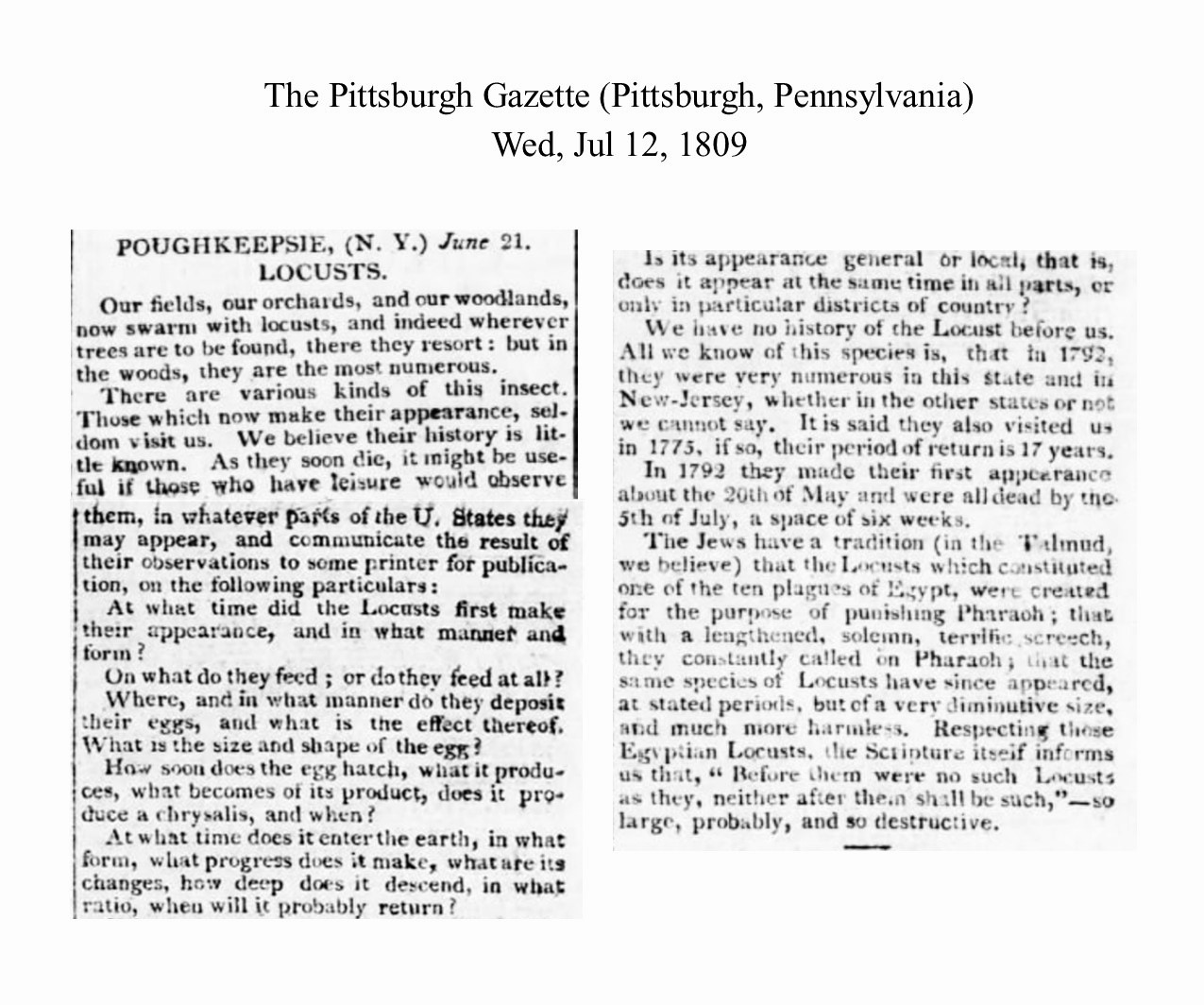
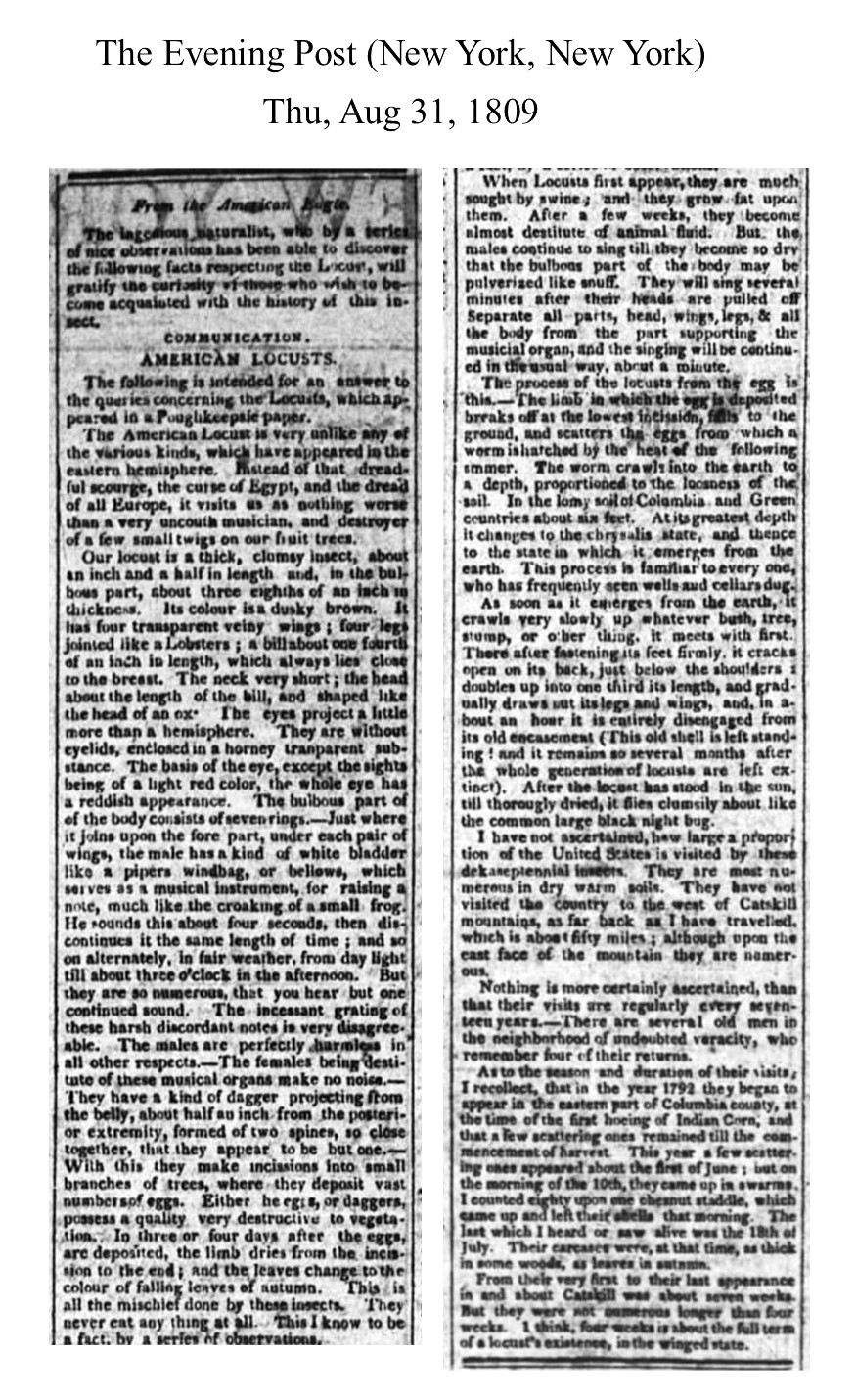
Articles that appeared in 1809, attached to this post, described the current knowledge about these “American locusts.”
As early as 1715, it was also observed that these insects were a favored dietary course for animals. One Philadelphia-based minister reported that “swine and poultry ate them, but what was more astonishing, when they first appeared some of the people split them open and ate them.”
Settlers started putting down roots in the Chicago area in the late 1700s, and on the Blue Island Ridge in the 1830s. They encountered what today is known as Brood XIII of the 17-year cicadas, also known as the Northern Illinois Brood, the largest group of cicadas in the world.
The next post in the series will look at how Chicago embraced this natural phenomenon through the years.
The Ridge Historical Society
The History of Brood XIII Cicadas in the Chicago Area – Part 3
By Carol Flynn
By the time settlers from Europe started putting down roots in the Chicago area in the late 1700s, the people on the East coast had been documenting and discussing the periodic cicadas for over a century.
The periodic cicadas of the genus Magicicada, found only in North America, have characteristics that make them unique in the animal kingdom.
These characteristics are the 13- or 17-year lifecycles they have evolved, and the synchronized emergence of almost all the insects in a species at the same time in the same year.
In the early 1800s, cicadas were still confused with locusts, but really the two insects were very different. Cicadas did not descend upon and destroy crops the way the biblical swarms of locusts did, and this difference was starting to be slowly recognized.
The thinking about the cicadas was shown in a succession of articles in the Chicago Tribune in 1871, a year that the same species of cicadas emerged that are emerging now. By that year, the communities of Beverly and the new Morgan Park were being built, so these insects certainly would have been noticed on and around the Blue Island Ridge.
Some excerpts from those articles are:
May 30: “The much-dreaded seventeen-year locust has already appeared in Illinois. They will probably be found all over the northern part of the State, in greater or less numbers, and will undoubtably make immense havoc among the fruit trees and shrubs, while they threaten but little damage to the grain. The locust is reported to have last appeared in this section in 1854, so that it is due in 1871.”
June 19: “The insects are said to be really no locusts at all, no more than a horse is a hog. [They are] scientifically quite distinct. We saw them on the trees in myriads, and the smaller limbs and twigs were bored by them and millions of eggs deposited in the wood. The noise made by them in the forest is wonderful…. Of all the curious creatures that we have seen, they ‘beat all nature.’”
June 28: “The mission of the seventeen-year locusts has apparently been discovered. It having been ascertained that these celebrated insects have not visited … for the purpose of devouring the crops, as the farmers had anticipated, it came to be a question what under heaven they did come for.” With tongue in cheek, the article decided the cicadas came to entertain schoolboys, providing them with a means to disrupt classroom activities.
In 1888, seventeen years later, the newspapers covered the next emergence of the periodic cicadas in the Chicago area. By then much of its lifecycle was documented, but still not well understood.
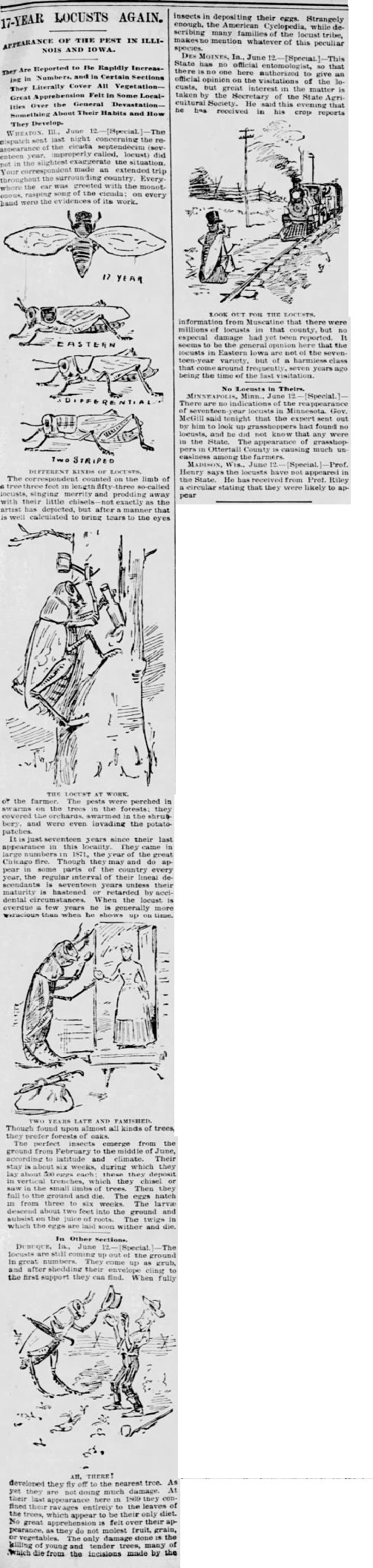
Chicagoans were familiar enough now with the cicadas, however, to start thinking of them in more entertaining ways. An article in the June 13 Chicago Tribune, included as an attachment to this post, used illustrations giving them some human characteristics.
They were still having trouble with a common name for the insect, however. On July 5, the Inter Ocean newspaper reported: “The insect known as the seventeen year locust is not a member of the locust but of the cicada family, and its correct name is the harvest fly.”
By 1905, Chicagoans were starting to get downright blasé about the cicadas, and the comments were sarcastic or ironic.
Some examples were:
Chicago Tribune, April 24: “The seventeen year locusts … are due again this spring. They will have to come early if they expect to hold their own with the every-year insect pests.”
Chicago Tribune, June 7: “’What are you making such a hideous racket about?’ asked the caterpillar. ‘Mind your own business!’ retorted the seventeen year locust. ’This is the first chance I’ve had to make a noise since 1888!’ Whereupon he started up his buzz saw again.”
Chicago Tribune, June 8: “If the seventeen year locust could be grafted on the mosquito there might be sixteen consecutive years worth living, anyway.”
Chicago Tribune, June 26: “In addition to its other objectionable qualities the seventeen year locust labors under the hallucination that it can sing.”
However, with every emergence, new facts about the cicadas were being learned. In 1905, it was reported that sometimes the 17-year cicada “gets dates mixed up and comes out ahead of time.”
Scientists have observed that some of the periodic cicadas emerge one or four years too soon, or four years too late. Why this occurs is still a mystery. One theory is that these “stragglers,” as they are called, may be developing too quickly or too slowly, but that does not explain why this occurs in four-year cycles.
By 1922, the value of cicadas was starting to be recognized, and actual praise and fondness for the insects started to creep into reports about them.
In the Chicago Tribune on July 9, an article called them a “magnificent visitor” with “rich coloring” and “intense coral eyes,” “the least pestiferous pest that ever swarmed over the country.”
The article noted the fondness animals had for eating them, from birds to cats and dogs. It was noted that animals filling up on cicadas left their usual food uneaten, and “if the cherries hang in rich, red clusters it is because the birds and squirrels are too fed up with locusts to notice their former favorite food.”
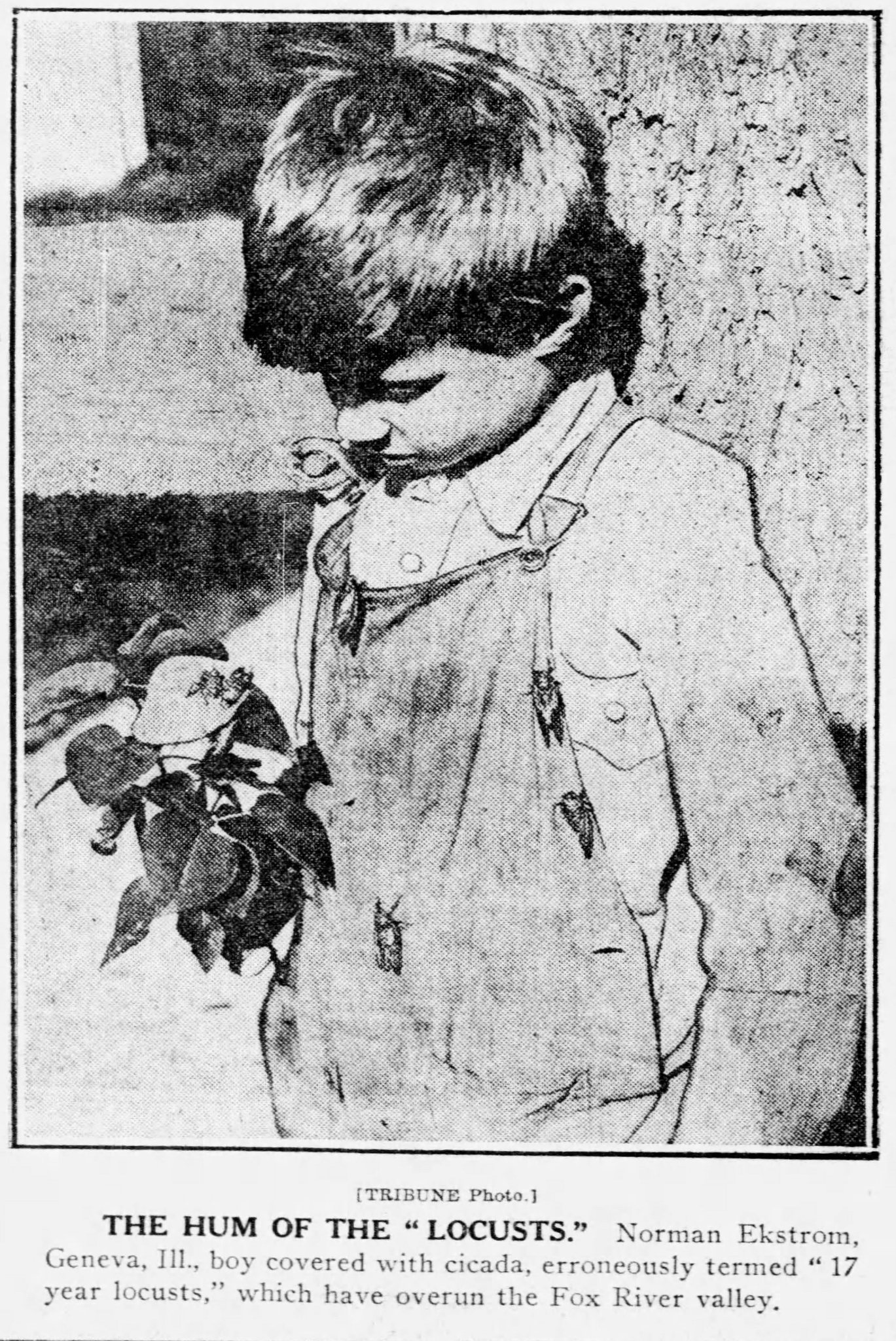
Photos of the cicadas started being used in the papers.
This was also their first emergence year when they started being referred to regularly as Brood XIII of the 17-year cicadas. This numbering system started in 1893, developed by Charles Marlatt to replace the very complex and difficult system that existed previously.
A “brood” has been described as like a graduating year for a classroom of cicadas that have all grown up together. In the system, the numbers 1 to 17 denote the 17-year cicadas, and 18 to 30 the 13-year cicadas.
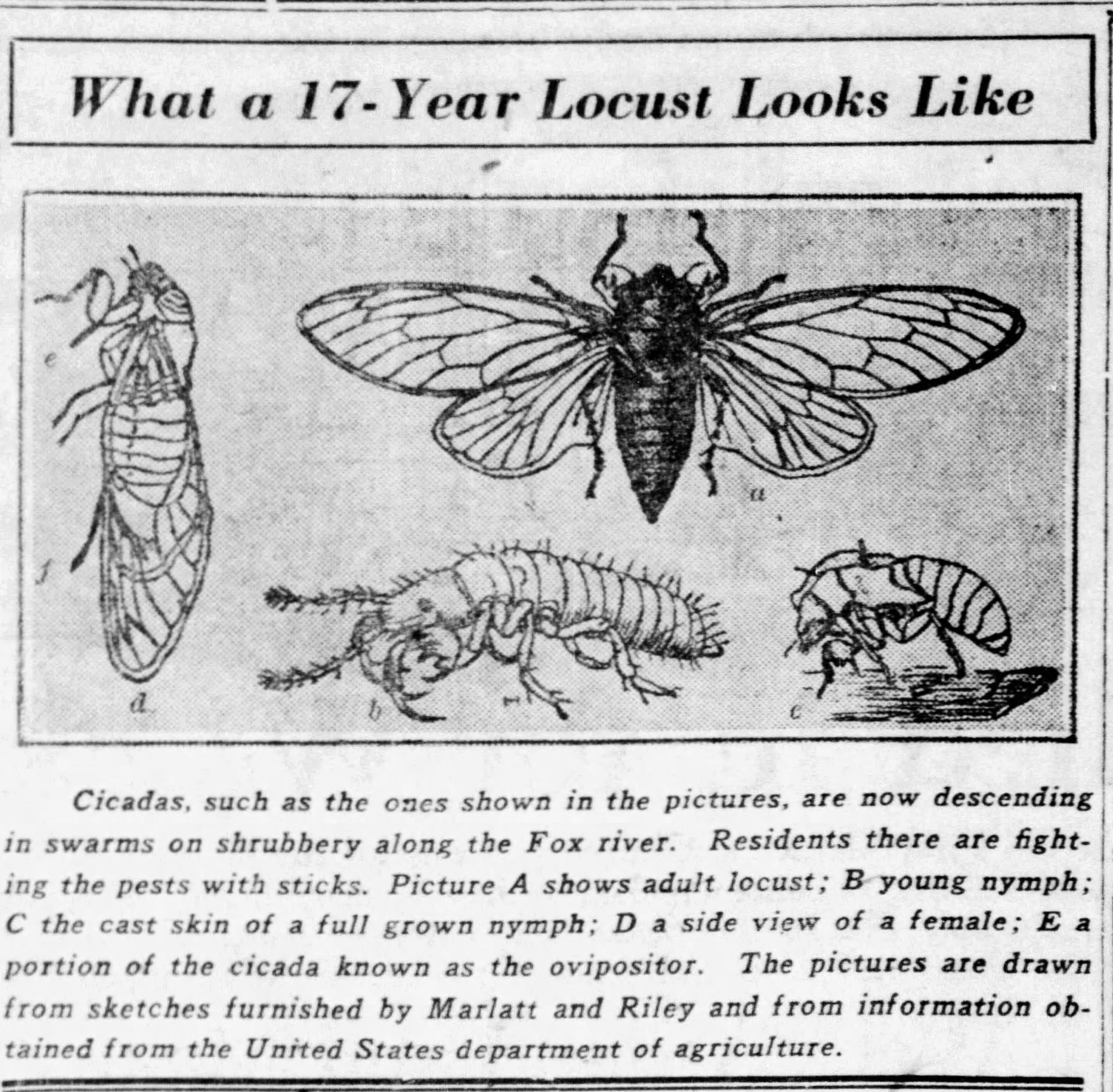
An illustration by Marlatt of the “Seventeen Year Locust” which is now known as Brood XIII appeared in the Chicago Tribune in 1922.
The next emergence of Brood XIII was in 1939. That would be the earliest year that people who remember it are still around. The next post will look at cicadas in “recent memory.”


The Ridge Historical Society
The History of Brood XIII Cicadas in the Chicago Area – Part 4 REVISED and Conclusion
By Carol Flynn
The earliest emergence of Brood XIII of the 17-year periodic cicadas, also known as the Northern Illinois Brood, that people are around to remember occurred in 1939.
Since then, there have been five more emergences – 1956, 1973, 1990, 2007, and 2024.
By 1939, the basics of the cicada life cycle and behavior were known. Future years brought fine-tuning and additions to this knowledge.
In 1956, newspaper articles were still advising on how to use dangerous, deadly insecticides to kill the emerging cicadas and newly hatched nymphs before they could burrow too deeply. Once they got underground, they were harder to destroy.
One article, which appeared in the Chicago Tribune, stated “If you rate yourself a public spirited citizen who wants to help suppress this pest, here is the procedure,” then related how to use nerve gas developed by the Nazis in World War II on the harmless insects.
The chemical could only be used safely if special protective clothing and face masks approved for use with poisonous gases were worn.
It seems incredible today that these chemicals were not only available for purchase by the public back then, but encouraged for use at their homes.
In 1973, the County Extension Offices advised against spraying the cicadas.
“The best alternative to spraying is to have patience for about two weeks and the Cicada will complete its life cycle and pass out of the picture for another 17 years,” said one advisor.
In between 1956 and 1973, biologists realized that Brood XIII is made up of three distinct species of periodic cicadas that are on the same 17-year cycle, and emerge together. Each species has a distinctive “song” adding to the community cicada chorus.
1973 was also the first year that an official “census” of Brood XIII was started to see if the population stayed consistent or fluctuated from one emergence to the next emergence 17 years later.
In 1990, it was reported that the populations of cicadas were down due to the vast numbers of elm trees that had been lost in the last few decades.
The loss of the trees was due to Dutch Elm Disease, a fungal infection, introduced into the U.S. via imports that came through the Netherlands, although the beetle that carried the fungus came from Asia.
The elm trees in the U.S. had no natural immunity to the fungus, so the spread of the disease to the Chicago area, beginning around 1960, led to the destruction of hundreds of thousands of trees here. The Forest Preserves District of Cook County, a major habitat for Brood XIII, lost over 100,000 trees, including many in the Dan Ryan Woods on the Ridge.
2007 was the first time “cicada mania” took over.
“Cicada cuisine. Cicada sculptures. Cicada poems. Cicada blogs. Cicada tank tops, baseball hats, and coffee mugs. Even a traveling CicadaMobile,” reported the Chicago Tribune. Photographing cicadas became a popular undertaking in 2007. Chicago became a destination spot for people wanting to experience the cicadas.
Cicada cuisine has been a topic over the years.
That animals in the wild, as well as pet cats and dogs, enjoyed them was well known. In 1956, Brookfield Zoo requested that the public collect cicadas and bring them to the zoo, where they fed them as a treat to the birds, reptiles, and even some of the monkeys. The zoo received so many cicadas they froze them for use during the winter.
It is reported that the Brood XIII emergence, as well as other large brood events in other parts of the country, has unexpected consequences – the creation of temporary imbalances in local ecosystems. As the wildlife fills up on cicadas, the usual insects and small prey they eat, including some considered “pests” for crops and gardens, proliferate, and it can take several years for levels to return to “normal.”
Human consumption of cicadas remains of interest. It was reported early on that some Native Americans and early settlers ate them.
Newspaper articles give directions for harvesting cicadas, and recipes for preparing them, from coating them in egg-batter and deep frying them to using them in pies. Their taste has been described as “sweet and nut-like,” “crispy chicken nuggets,” and “new potato with a hint of avocado.”
Cicadas also have their place in myths and superstitions.
They were considered locusts for centuries, and a bad omen, that would destroy crops. This was not true; cicadas are not related to locusts at all.
In some ancient cultures, they were considered a sign of rebirth and transformation. They were also often a symbol connected to music.
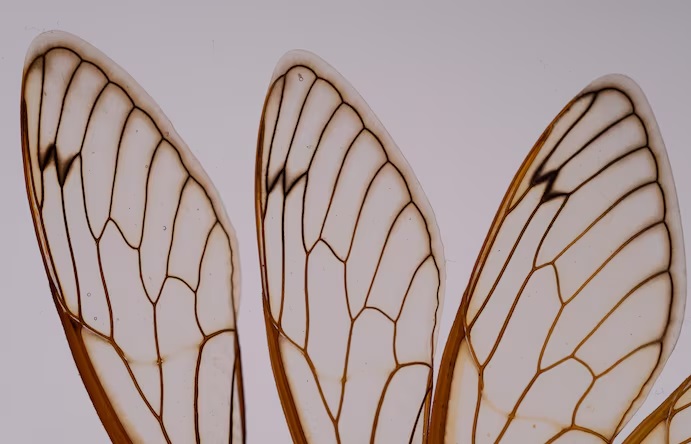
For a long time, before their regular lifecycles were understood, they were considered the forecaster of wars, because there is the appearance of a “W” on their wings.
Of all their traits, though, the one that fascinates people the most is the periodic cicadas’ emergence in 13- and 17-year cycles.
These “prime number” occurrences have resulted in several theories as to their origins, usually relating to “survival of the fittest” natural selection to avoid predation.
However, to some conspiracy theorists, there may be something more sinister going on here. Cicadas could be human-engineered, or even from another planet.
The emergence of Brood XIII is coming to an end for this cycle.
Although very dramatic, and loud, in some places, there is anecdotal evidence on the Ridge that the numbers are down this year due to the decrease in old-growth deciduous trees, those that drop their leaves annually, like the old oak trees that grace the area.
These trees are dying off due to old age, and they have not been replaced over the years. As the trees die off, so do the cicadas that live in their root systems.
There will be many less trees and therefore less cicadas in the coming years if trees that can host and sustain cicada populations are not planted to replace the ones that are removed.
This brings to a pause this series on Brood XIII of the North American periodic cicadas. The story will resume in 2041.