Explore the RHS Facebook Archives, a rich repository of local history written by Carol Flynn. For two decades, Carol brought a deeply dedicated voice to public education at RHS. Her role as Facebook administrator through mid-2025 naturally extended her prolific research into meticulously detailed articles, most notably her multi-part historical series posts. Today, Carol continues her local history writing for The Beverly Review and other outlets.
Thanksgiving
Ridge Historical Society
The First Thanksgiving Feast
By Carol Flynn
Thanksgiving Day is a uniquely American holiday. More so than any other holiday, it is associated with a certain traditional menu, including roast turkey, stuffing, mashed and sweet potatoes, cranberry sauce, and pumpkin pie. But the menu for the first celebration recorded four centuries ago was very different than the one we enjoy today.
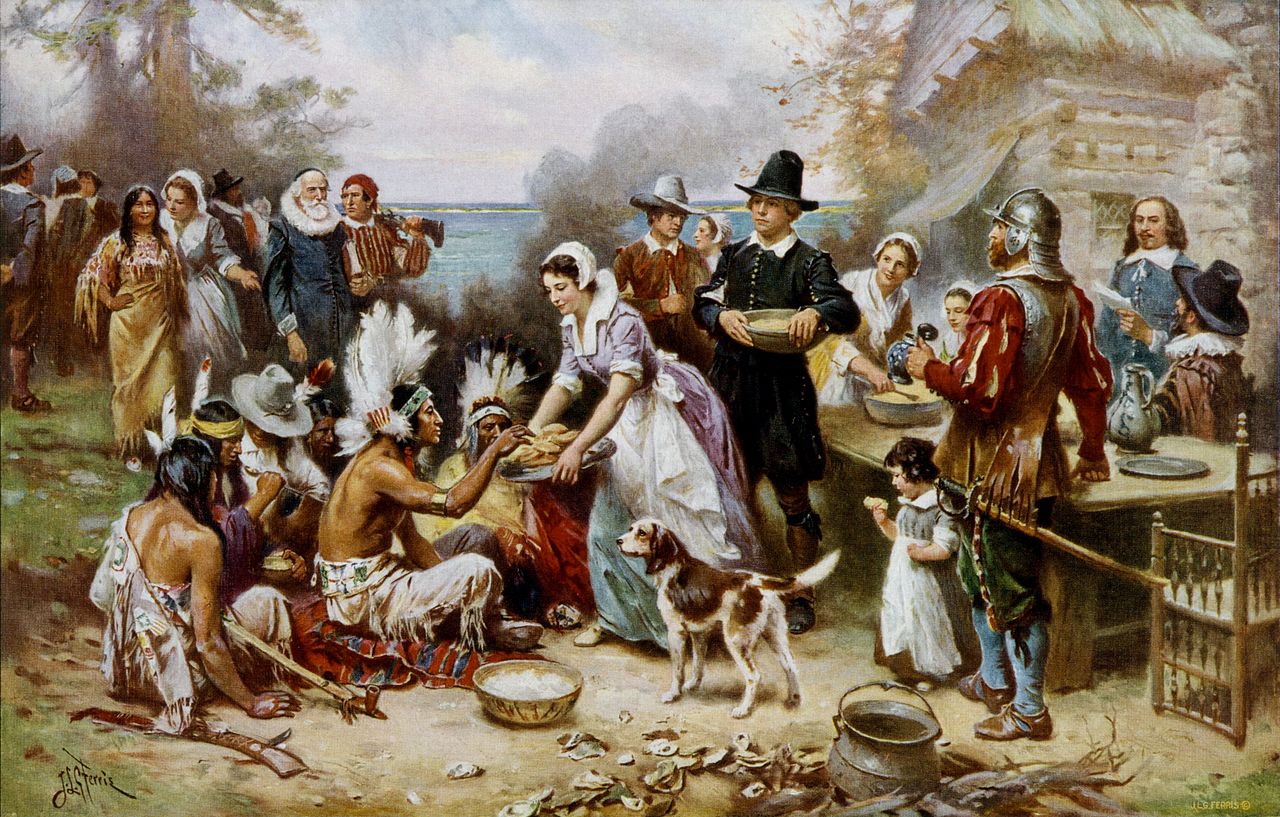
The first “Thanksgiving” celebration occurred in 1621 in Plymouth, Massachusetts, as a harvest feast. The celebrants were the English Protestants called Puritans, known affectionately in American history as the “Pilgrims,” who had split from the Church of England and come to the New World on the ship called the Mayflower; other Englishmen such as the crew who also came on the ship; and the Wampanoag people, the Native American tribe that had lived in the area for over 12,000 years.
Note that there was already a colony of settlers in Jamestown, Virginia, dating to 1607. Most likely they also held harvest feasts, but the Plymouth celebration is the one for which detailed records exist, hence it is considered the first Thanksgiving.
The Pilgrims intended to go farther south than Massachusetts. Delays caused them to not leave England until September, and they arrived in America in November. Bad weather forced them to land where they did and remain there for the winter. They were not at all prepared for the freezing cold and snow they encountered in the New World, which had a much harsher climate than that of England. The one hundred settlers and fifty crew members stayed on the ship in Plymouth harbor that first winter. Many of them, weakened by the trip and suffering from scurvy from lack of Vitamin C, and some already suffering from tuberculosis, came down with pneumonia. About half of them died on the ship, most without ever setting foot in their new country.
They were finally able to come ashore and build huts in March 1621. They were greeted by the Wampanoag people. The Wampanoag showed the Pilgrims how to fish and hunt in the area, and how to cultivate the native food plants and gather fruit.
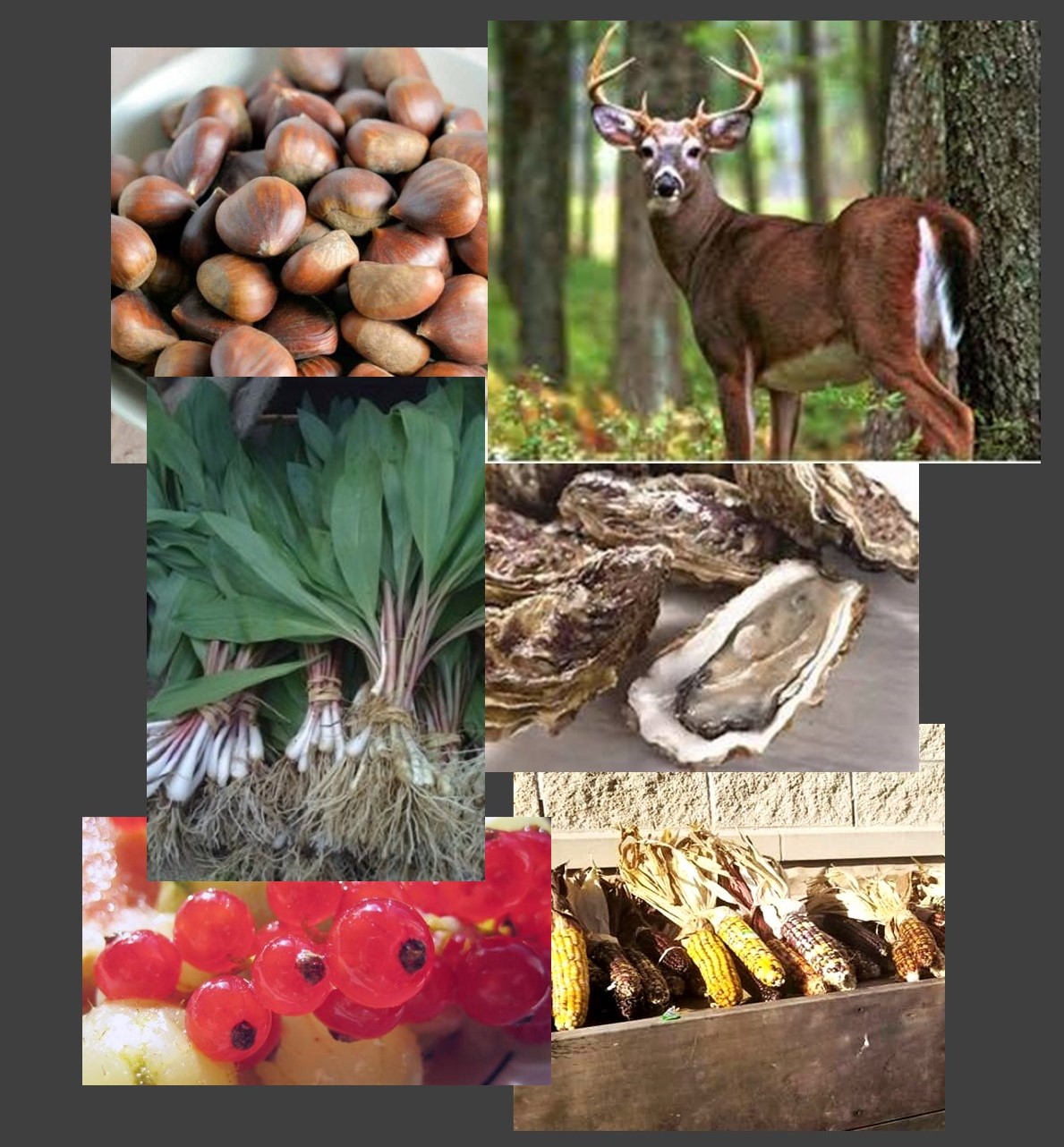
As far as what was available for a harvest feast that fall, many items we take for granted now were not available then. There were no sweet or white potatoes. It would be another hundred years before potatoes came up to North America from South America. The Pilgrims had not yet planted wheat fields so there were no pies and no bread. The sugar rations they brought with them had quickly been depleted on the journey over, so there were no jellies or sweet desserts. They brought no large livestock with them on the Mayflower, only chickens, and a few pigs and goats, so there were no dairy products except maybe goats’ milk. No ovens had been constructed yet for baking, so all cooking was done over open fires.
A journal kept by Puritan William Bradford reported the colonists went fowl hunting for this harvest feast. Duck, geese, swans, and turkeys were all plentiful. The Wampanoag guests brought a gift of five deer to the celebration, so venison, probably some roasted and some served in a hearty stew, was without a doubt on the menu. Historians also believe that seafood was a major component of the feast, this being New England by the coast. Mussels, lobster, bass, clams, and oysters were readily available. The first Thanksgiving was very heavy on animal protein.
The vegetables the Wampanoag cultivated at the time included corn, pumpkins, squash, turnips, garlic, onions, beans, carrots, lettuce, spinach, and cabbage. The pumpkins were roasted. Fruits available for gathering included blueberries, plums, grapes, and gooseberries. Cranberries were there but it was another fifty years before there were reports of boiling them with sugar to make a jelly.
Flint corn, the multi-colored “Indian corn,” was plentiful at the first harvest. Most likely, the corn was ground into cornmeal, which was boiled and pounded into a thick corn mush or porridge. This was called Indian pudding, a take on the English fondness for “hasty pudding.” Later this dish was sweetened with molasses, made from sugar cane brought up from the Caribbean islands.
Herbs, and nuts like chestnuts, walnuts, and beechnuts, were plentiful from the forests. Along with onion, these would have been used for stuffing the fowl and flavoring dishes.
The celebration itself was a three-day event, with feasting, ball games, singing, and dancing. “Grace” was likely said before meals, but it was several years later that an official prayer service was added to the annual harvest celebration to give thanks for rain after a two-month drought.
Within a few years, the Pilgrims planted wheat and other crops. Other settlers came, bringing dairy cows and honeybees. Eventually, the diet of the settlers expanded.
Fast forward to 1827, and Sarah Josepha Hale, the editor of the popular Godey’s Lady’s Book, began advocating for a national Thanksgiving Day. She petitioned thirteen presidents until finally, Abraham Lincoln made the declaration in 1863 as a way to help unite the country in the midst of the Civil War.
For decades, Hale published Thanksgiving recipes and menus in her magazine. She also published a number of cookbooks. She championed mashed potato dishes, which were considered exotic in the mid-1800s.
A typical cookbook of 1870 recommended the following menu for Thanksgiving dinner: Oyster soup, cod with egg sauce, lobster salad, roast turkey with cranberry sauce, mixed pickles, mangoes, pickled peaches, coleslaw and celery, boiled ham, chicken pie, jelly, browned mashed potatoes, tomatoes, boiled onions, canned corn, sweet potatoes, and roasted broccoli. Mince and pumpkin pies, apple tarts, and Indian pudding were the desserts. Apples, nuts, and raisins were for snacking.
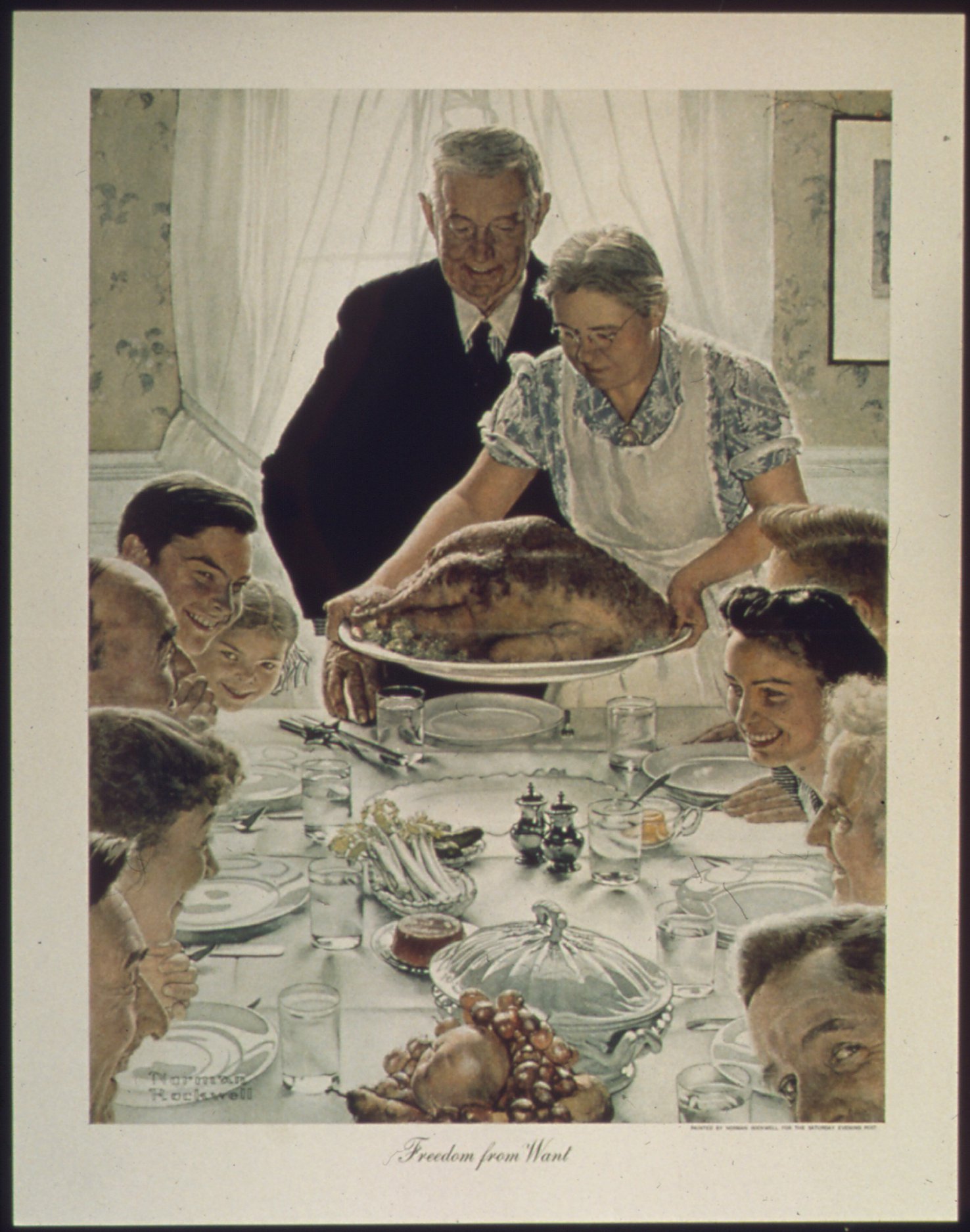
By the early 1900s, the basic fare was set – turkey, stuffing, mashed and sweet potatoes, gravy, cranberry sauce, and pumpkin pie. Most families have favorite dishes they add to the table, and of course there are many regional, ethnic, and individual variations. The menu is forever evolving – green bean casserole was invented in 1955 by the Campbell Soup Company to promote the use of its cream of mushroom soup and has become a Thanksgiving standard.
Studies have shown that Thanksgiving dinner is the largest eating event in the U.S. People eat more on Thanksgiving than any other day of the year. And then there are always the leftovers … turkey sandwiches, turkey tetrazzini, turkey chili…. Happy Thanksgiving!
For more information on the history of Thanksgiving, visit smithsonian.com, nationalgeographic.com, history.com, and other history websites.
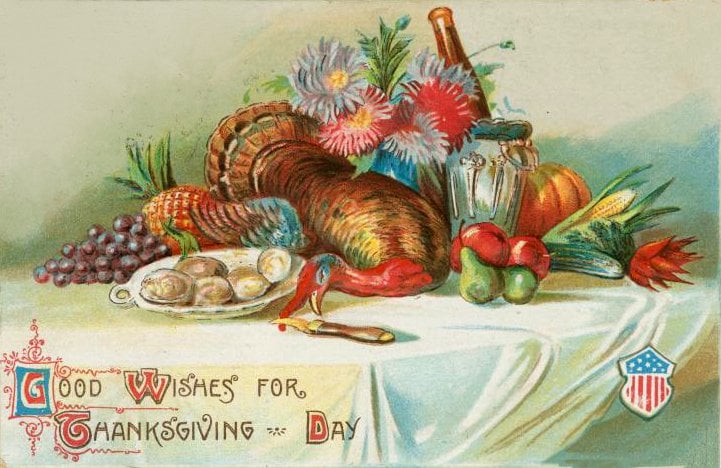
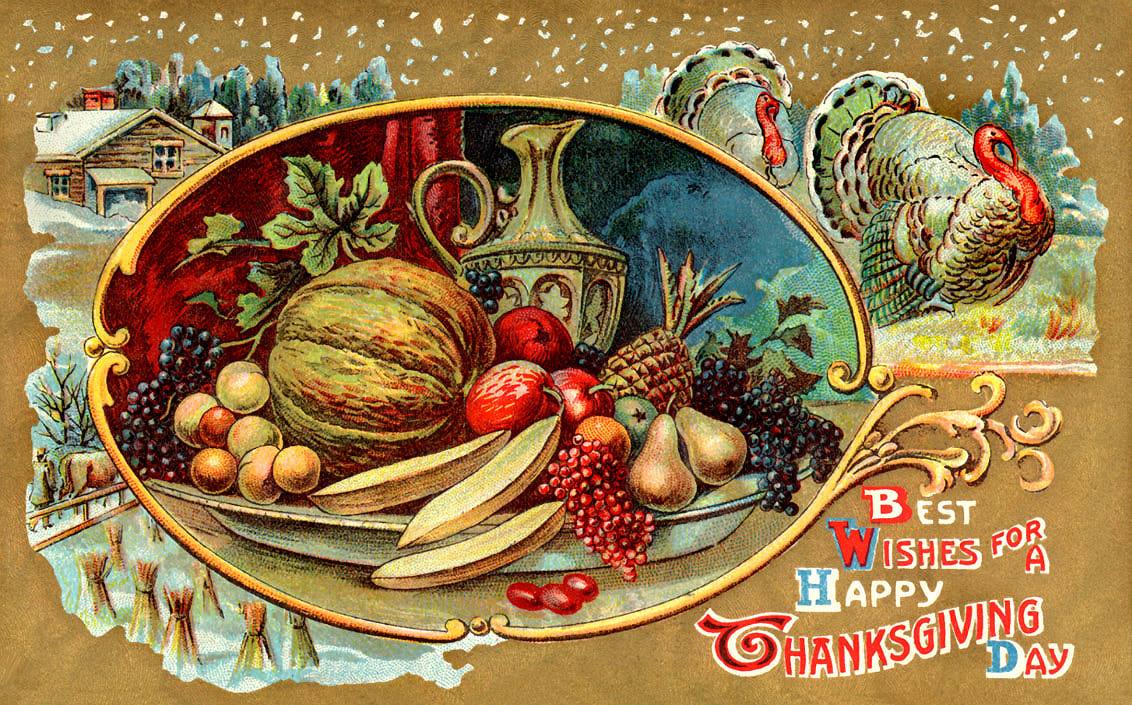
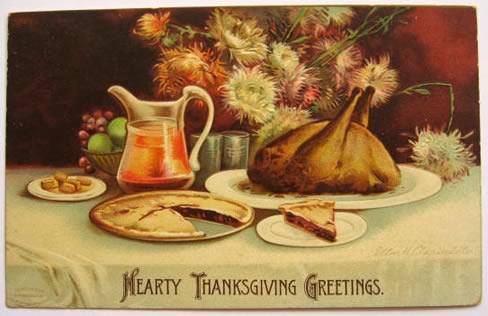
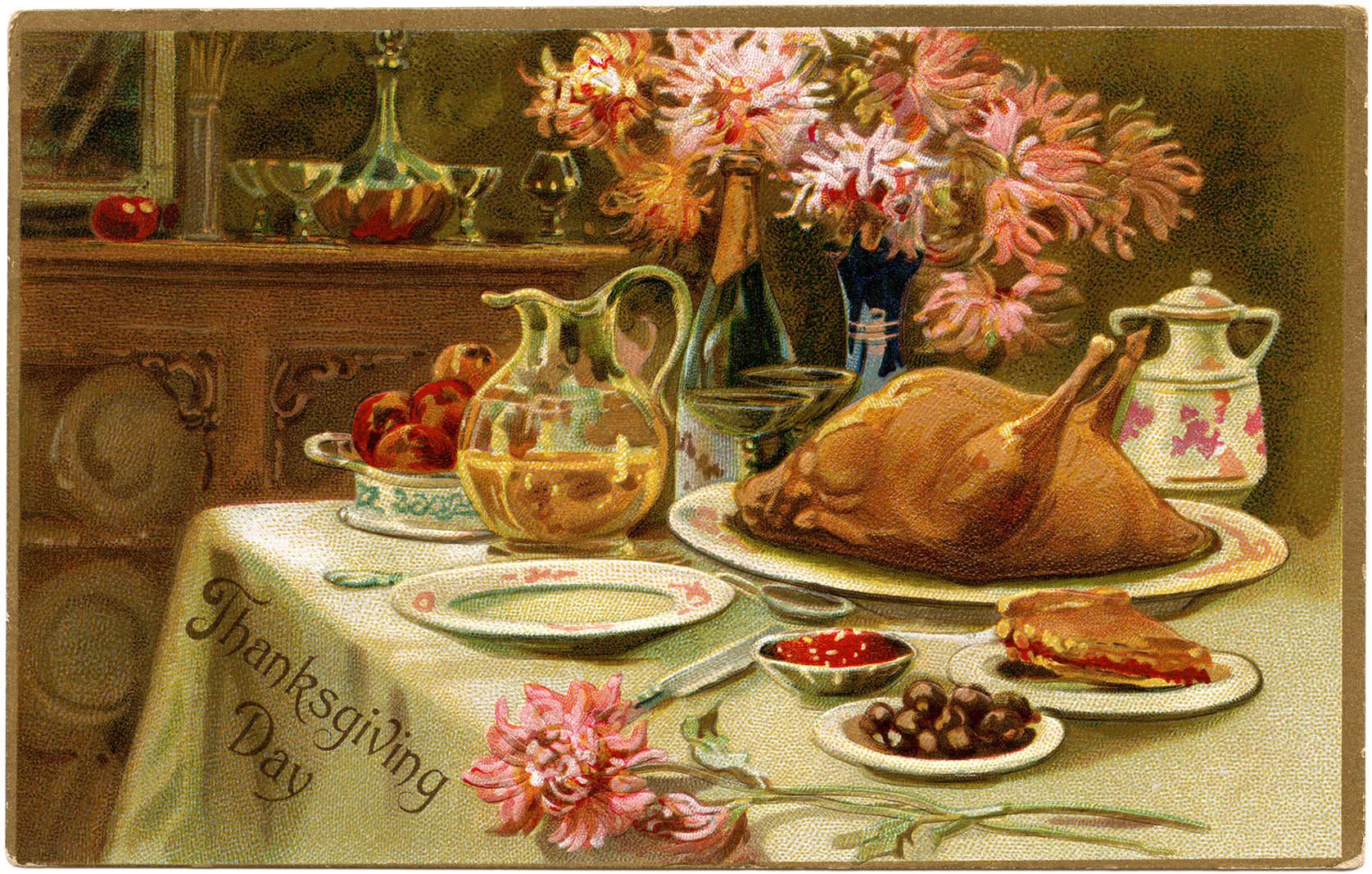
Happy Thanksgiving! Here are some vintage postcards. Since the day is mainly devoted to eating, they all feature feasts.
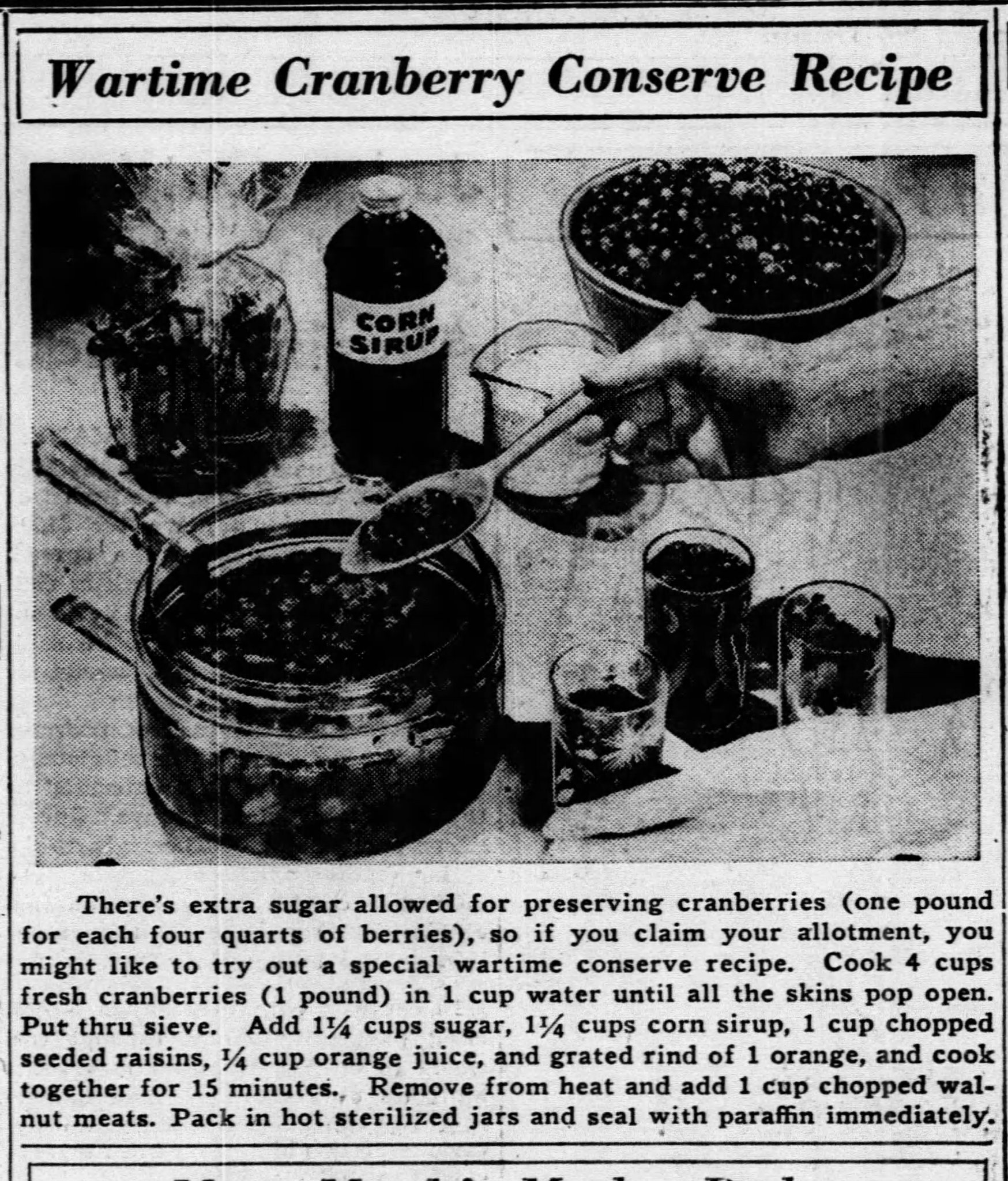
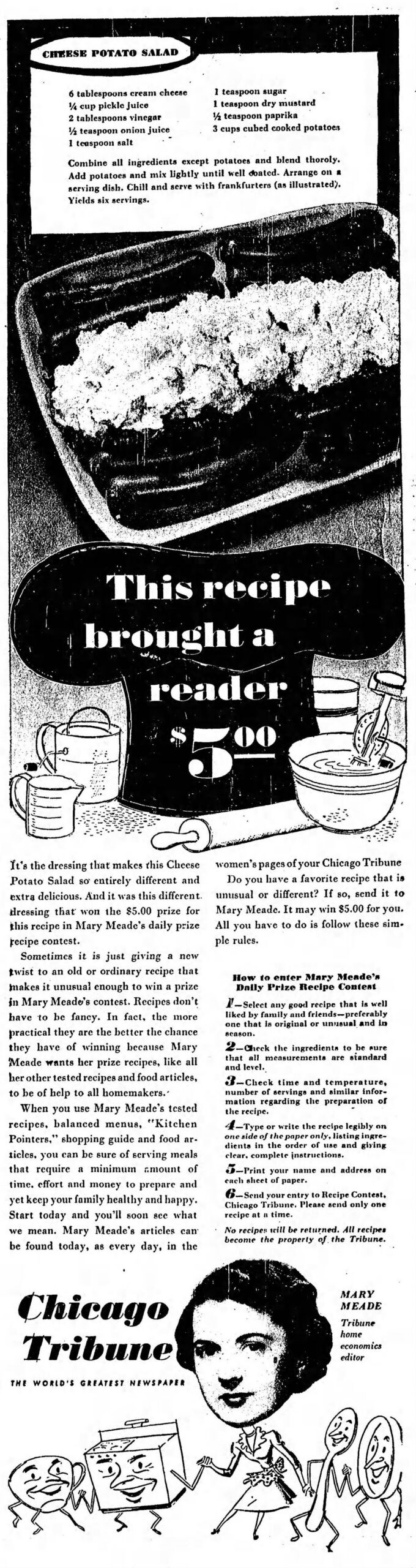
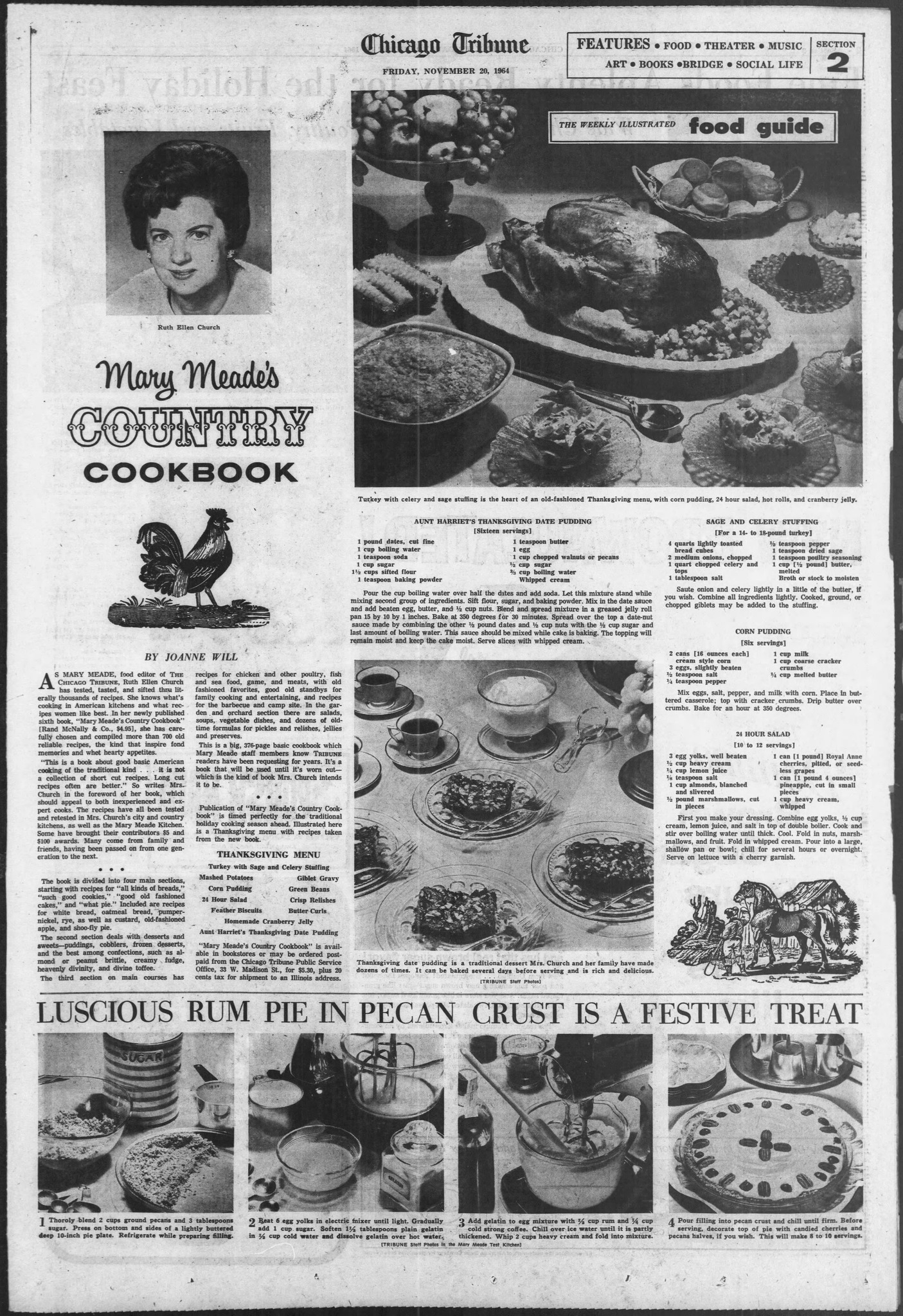
The Ridge Historical Society
Thanksgiving Week on the Ridge
By Carol Flynn
Thanksgiving has been considered an official U.S. holiday since it was declared by President Abraham Lincoln in 1863. Of course, taking time to give thanks for one’s blessings, and holding harvest feasts, long predated the Pilgrims’ events in the “New World” in the 1600s, but the U.S. assigned those concepts to a specific day each year.
For the next few days, we’ll look at some trivia that connects the Ridge to Thanksgiving week.
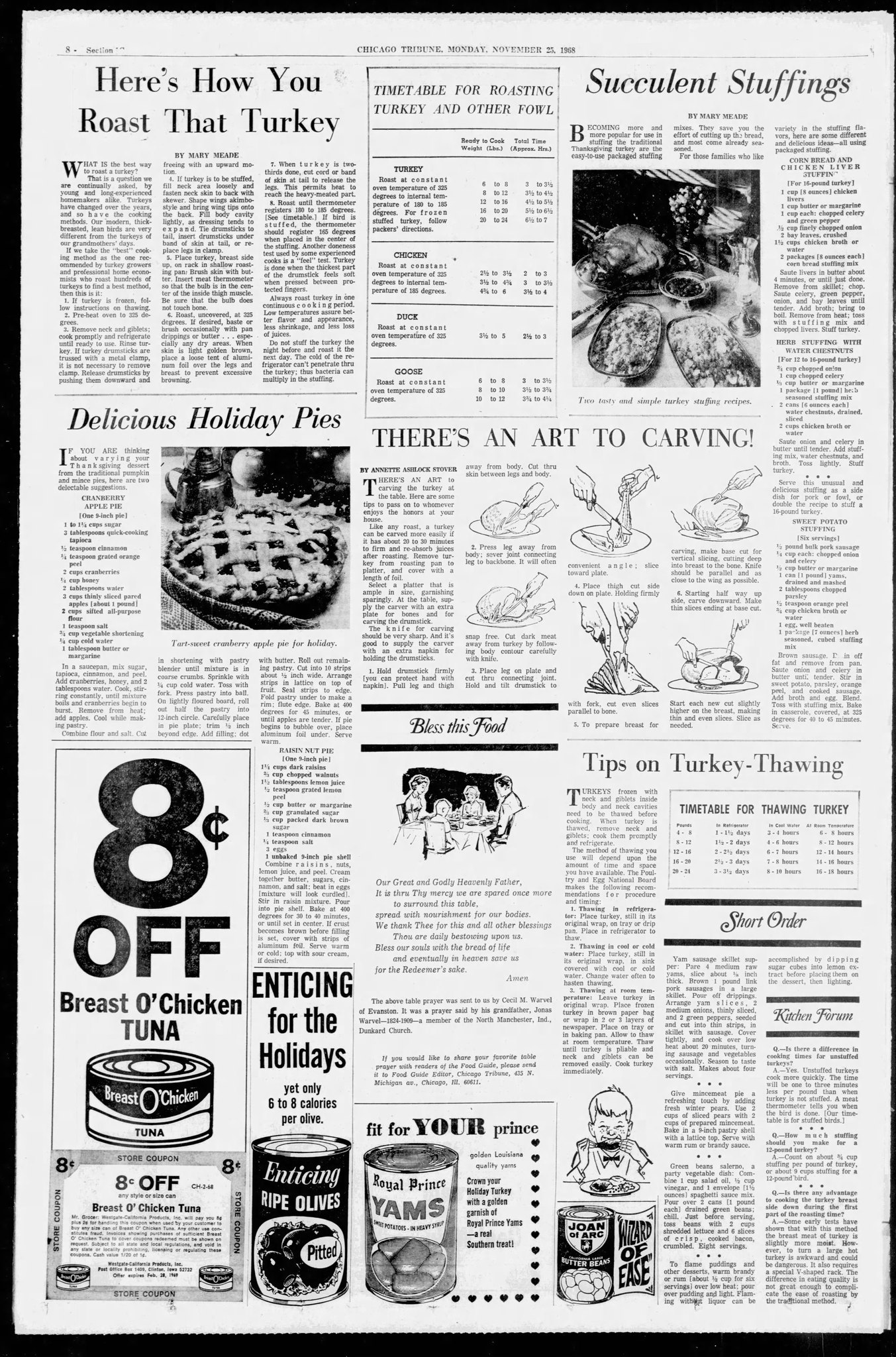
Anyone still deciding what to serve for Thanksgiving dinner need look no further than the Chicago Tribune food columns of fifty and more years ago. The food editor, Mary Meade, was none other than Beverly’s own Ruth Ellen Loverien Church, from 1937 until her retirement in 1974.
“Mary Meade” was the generic name the Tribune used for its woman food writers for years, because it was a common understanding, not only in the newspaper industry but in the workforce in general, that most women would not stay long in professional jobs but would marry and make home-keeping and raising families their careers.
Ruth was the fourth Mary Meade, and she broke this mold. She combined marriage and motherhood with a professional journalism career. She earned a degree in food and nutrition journalism from Iowa State University, and moved to Chicago in 1936, where she took the job with the Tribune.
In 1942, Ruth married Freeman Sylvester Church, a third-generation Beverly resident. They made their home in North Beverly and had two children.
Ruth eventually oversaw the largest food staff of any newspaper in the country, including five home economists. She established a kitchen in the Tribune Tower for recipe testing and food photography. She wrote at least twelve cookbooks and pamphlets, with authorship under her own name. She pioneered “specialty” cookbooks, such as one devoted to pancakes, waffles, omelets, and other breakfast foods. She also started the first wine column in a newspaper.
Some of the recipes she suggested for Thanksgiving through the years appear here.
Tomorrow we’ll look at the Ridge’s contribution to National Game and Puzzle Week, and on Friday, we’ll return to “Mary Meade” to look at some of her recipes for left-over turkey.
The Ridge Historical Society
Thanksgiving Week – Part 2
By Carol Flynn
Thanksgiving week is also National Game and Puzzle Week. The timing is intentional, as this holiday kicks off the next six weeks of friends and family gathering to socialize and celebrate. And after the winter holidays come a few months of cold weather perfect for indoor activities.
Puzzles and games are a time-honored way to entertain, engage, and bring together people of all ages. Tabletop boardgames fell out of favor when video games became popular, but the COVID pandemic brought a resurgence of interest in tabletop board games as people looked for fun activities while they were confined to home.
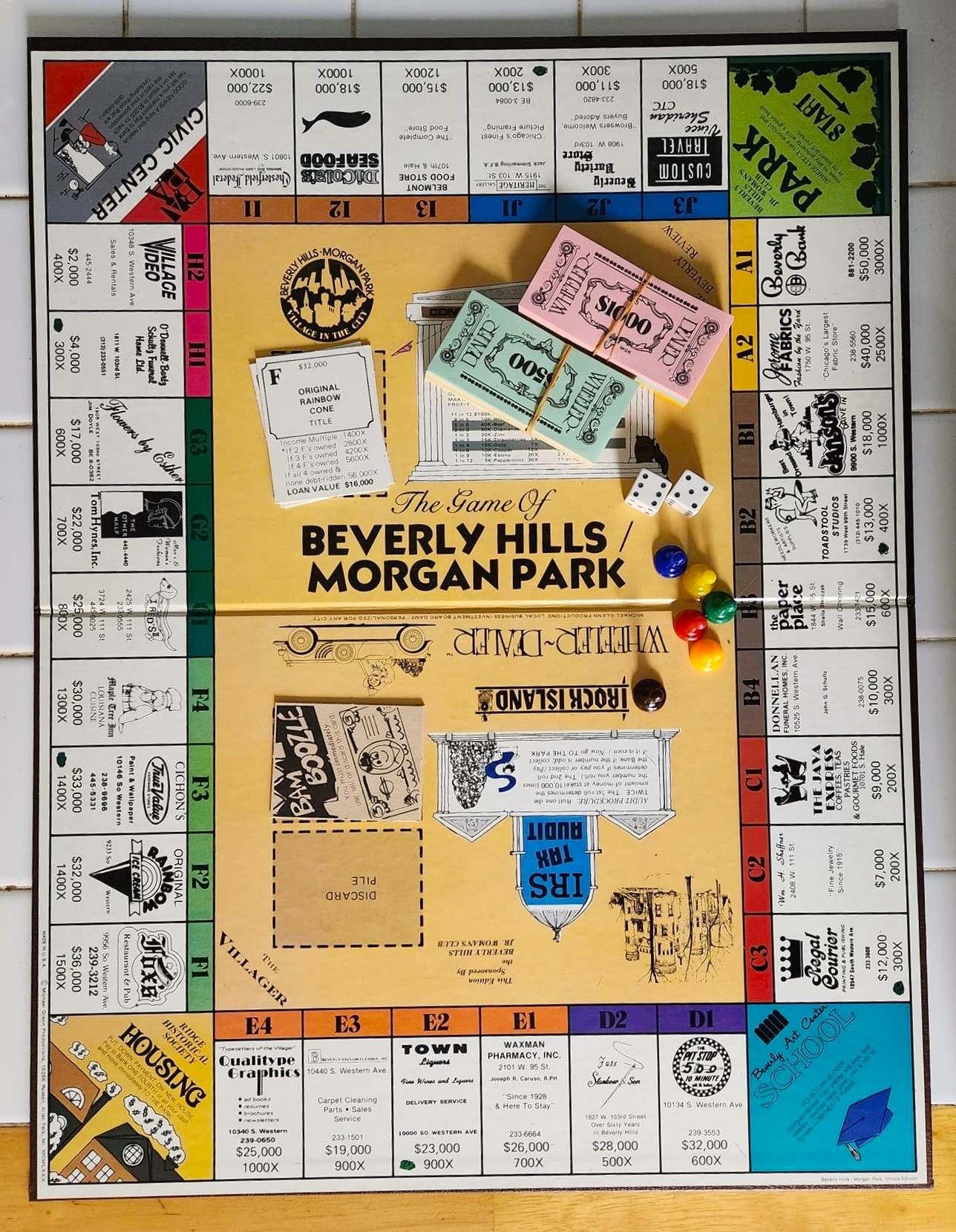
Forty years ago, the Beverly Hills Junior Woman’s Club came out with a boardgame for this community. “The Game of Beverly Hills/Morgan Park” was a fund raiser, likely for nursing school scholarships. The game, based on Monopoly, was a customized product from a company in Michigan. You can read all about it in this week’s Beverly Review at: https://www.beverlyreview.net/news/community_news/article_ce5223bc-6a82-11ed-89bb-8f4a686346d3.html
People bought the game as a keepsake. Janice Bruno Griffin of Morgan Park recently reminded RHS of the game when she contacted an RHS representative about the copy she had. Copies of this game are likely to be found in homes throughout the community.
It’s interesting to note which businesses on the game board are still around today and which are only part of memory now. The game is a snapshot in time, both recording history and becoming a part of history.
The Ridge Historical Society
Thanksgiving Week on the Ridge- Part 4
By Carol Flynn
Thanksgiving has come and gone for another year.
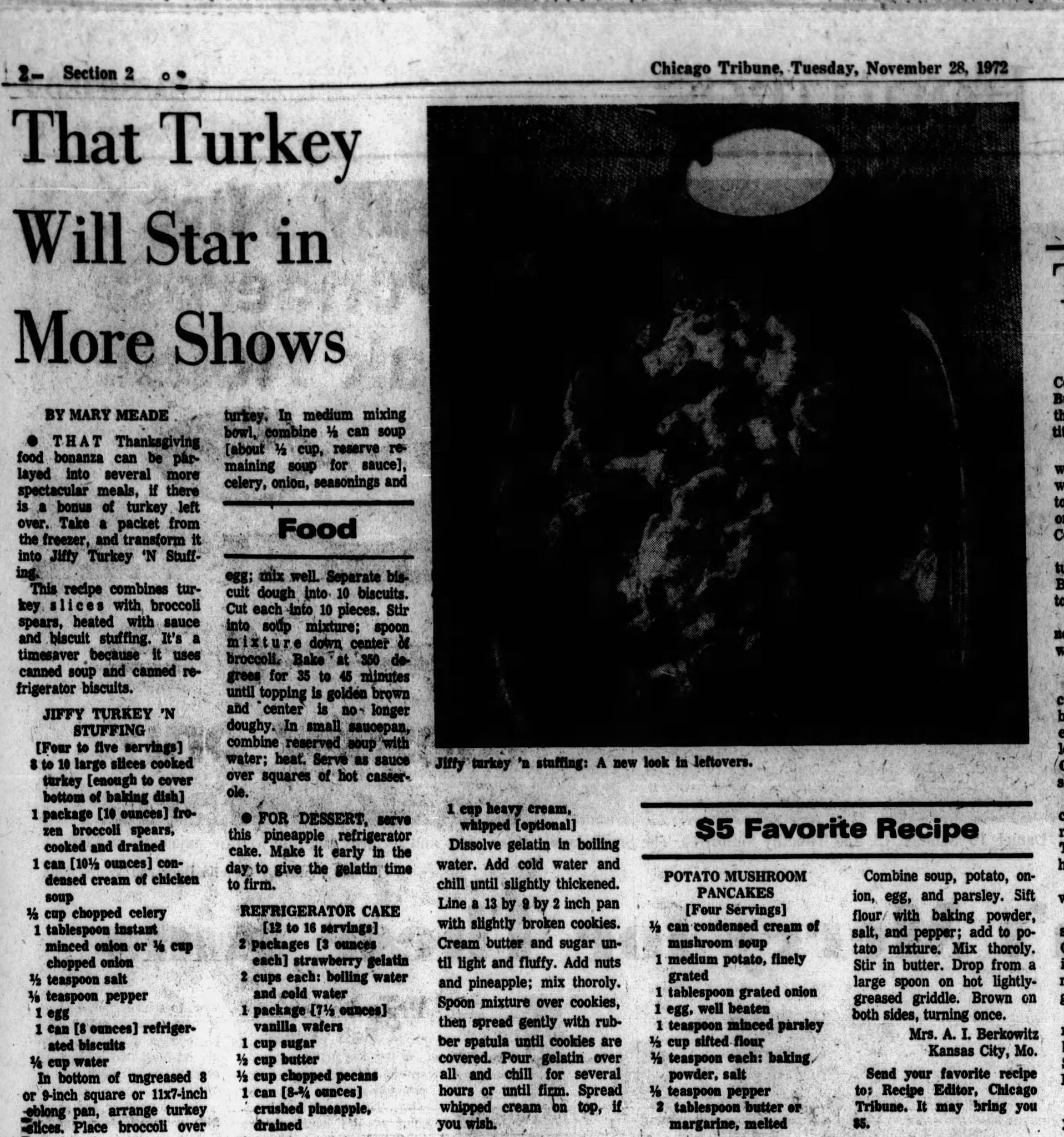
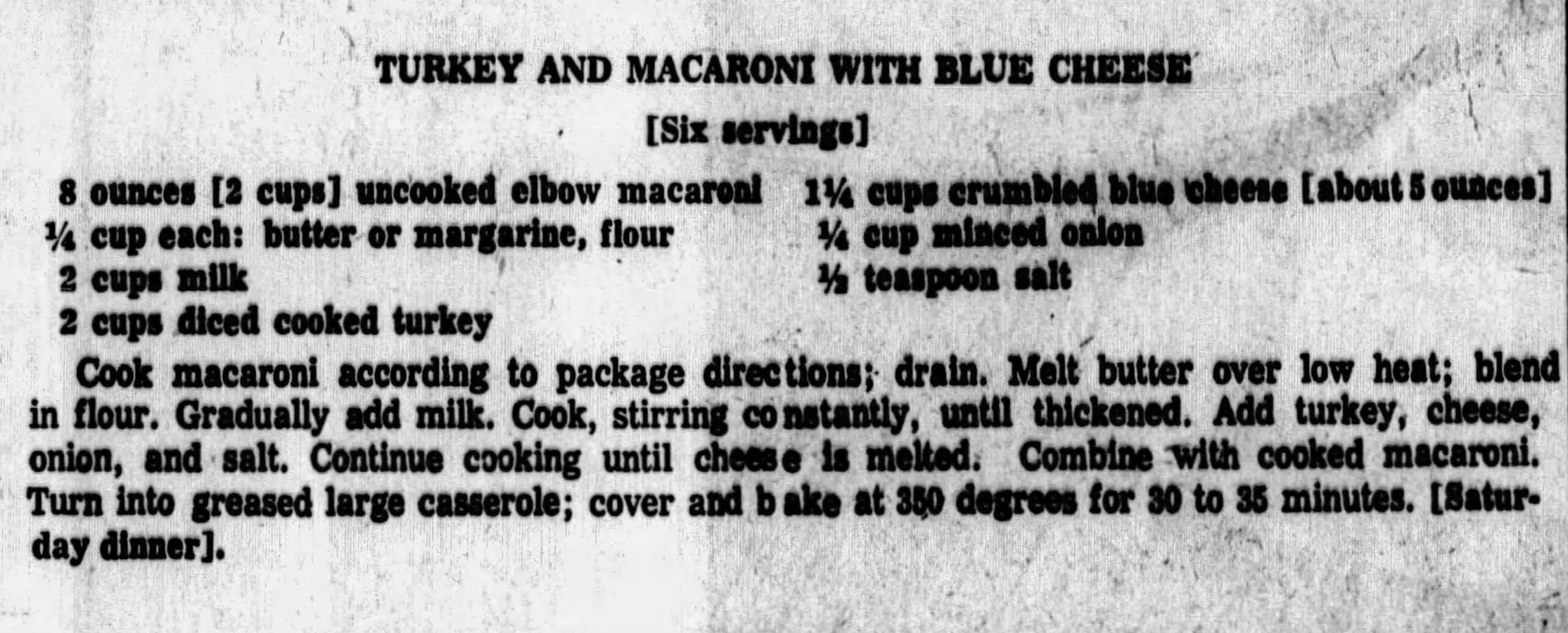
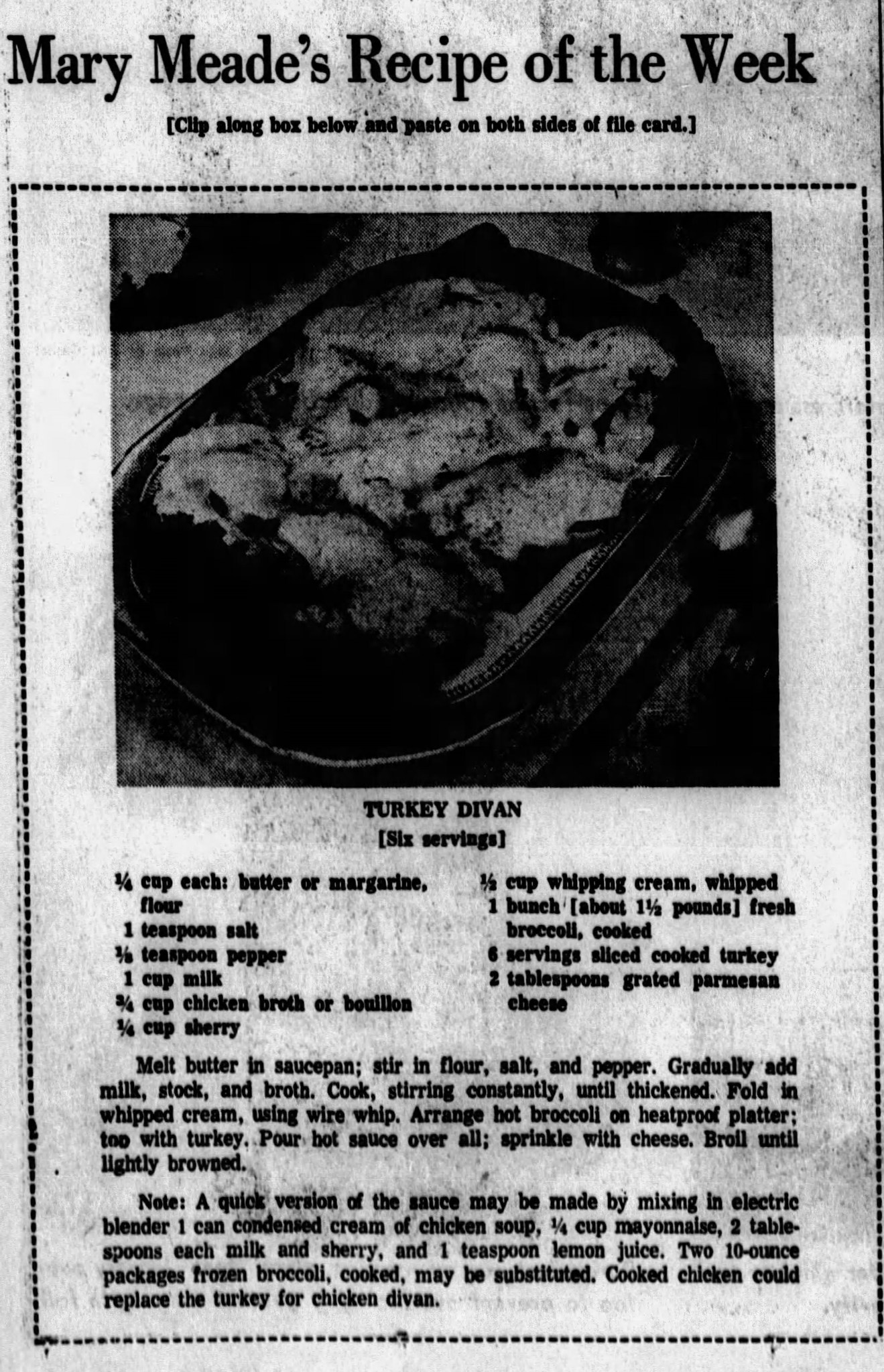
As we promised a few days ago, here are some recipes for left-over turkey.
They were published in the Chicago Tribune during the years the position of Mary Meade, the food editor, was held by Beverly resident Ruth Ellen Church.
These are from 1972 and they show the culinary whims of fifty years ago.
HAPPY THANKSGIVING from the Ridge Historical Society
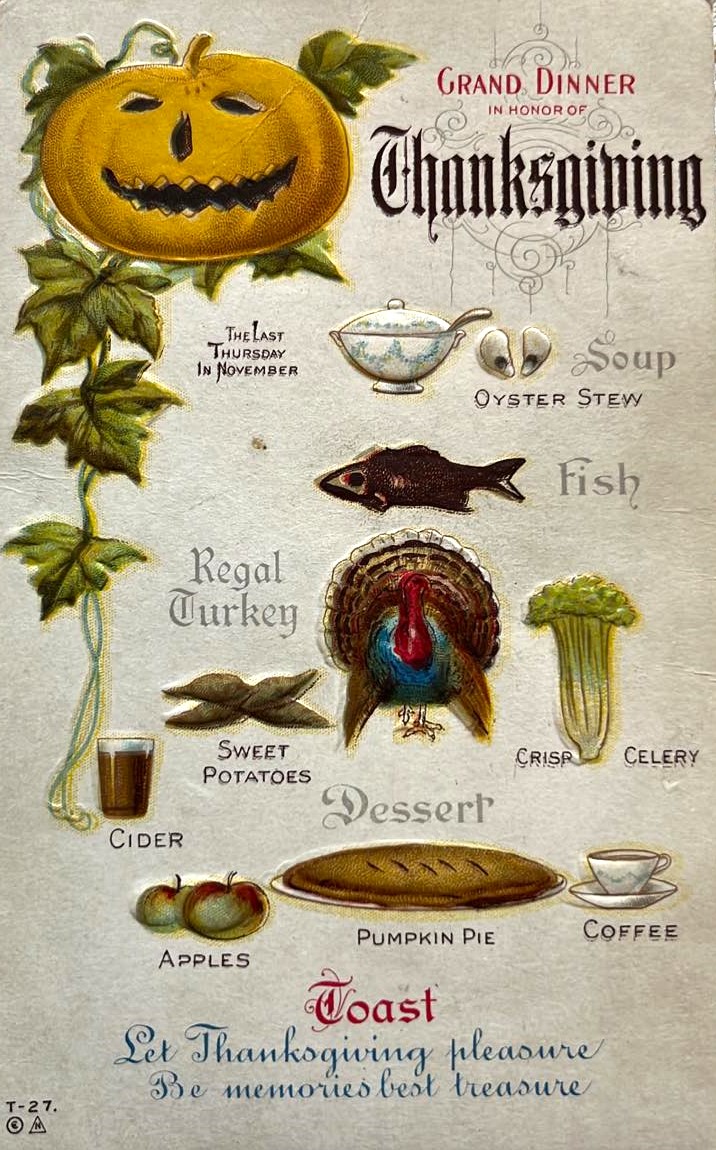
Thanksgiving, more than any other U.S. holiday, has a traditional menu associated with it.
This vintage postcard shares a typical dinner from 100+ years ago.
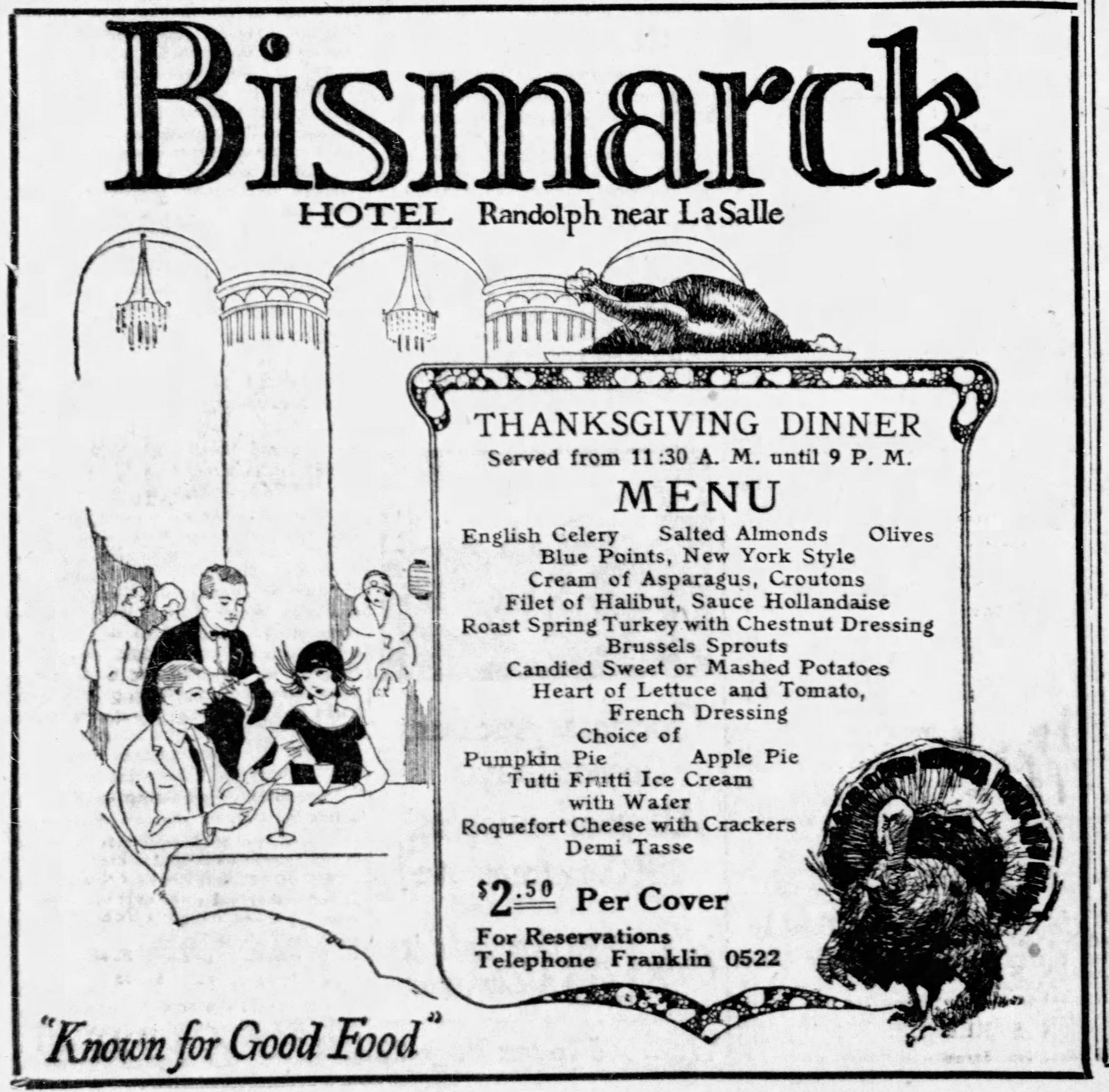
Diners could enjoy a multi-course meal at the downtown hotels. Here is an ad for Thanksgiving dinner at the Bismark Hotel that appeared in the Chicago Tribune in November 1923.
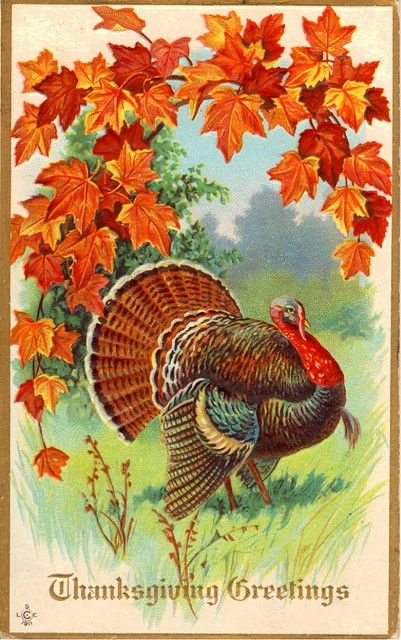
Happy Thanksgiving from the Ridge Historical Society