Explore the RHS Facebook Archives, a rich repository of local history written by Carol Flynn. For two decades, Carol brought a deeply dedicated voice to public education at RHS. Her role as Facebook administrator through mid-2025 naturally extended her prolific research into meticulously detailed articles, most notably her multi-part historical series posts. Today, Carol continues her local history writing for The Beverly Review and other outlets.
Vintage Postcards
Real photo post cards (RPPCs) were the rage at the turn of the 20th century, around 1900. Itinerant photographers roamed the cities and country sides taking pictures of everything from houses to natural disasters. The postcards were sold as souvenirs. Today. these images are often referred to as "folk photography" and RPPCs offer a valuable visual documentation of history.
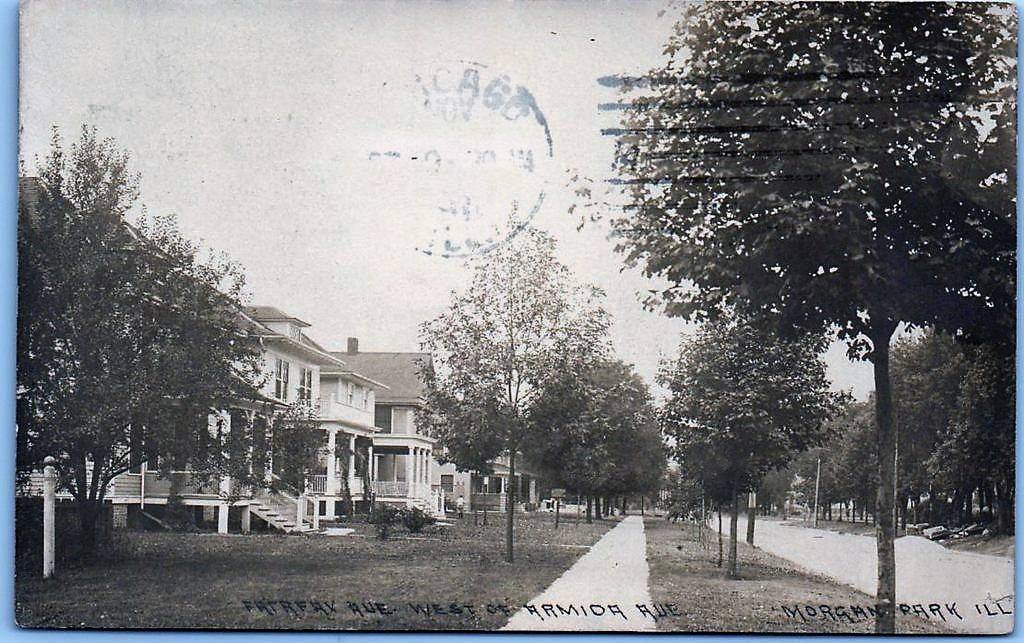
There are loads of RPPCs for the Beverly, Morgan Park and Blue Island area. You could go broke trying to collect them all so I save electronic images when I come across them. Here is one I found recently.
It is of a block of houses, and what makes it interesting is the location: Fairfax Ave. west of Armida Ave., Morgan Park.
Well, we don't have a Fairfax or an Armida. So where was this?
When Morgan Park was first planned and laid out, prominent citizen Colonel George R. Clark named some of the streets based on an epic morality poem called Jerusalem Delivered, published in 1581 and popular reading in the Victorian times. Armida was a character in the poem and Edward Fairfax was the most popular translator of the poem from the original Italian to English.
With annexation to Chicago in 1914, most of the old names had to be changed. Armida became Hoyne Ave. and Faifax became 110th Street. So this is looking west on 110th Street from Hoyne Avenue, ca. 1900.
Posted by Carol Flynn, RHS Communications #ridgehistoricalsociety
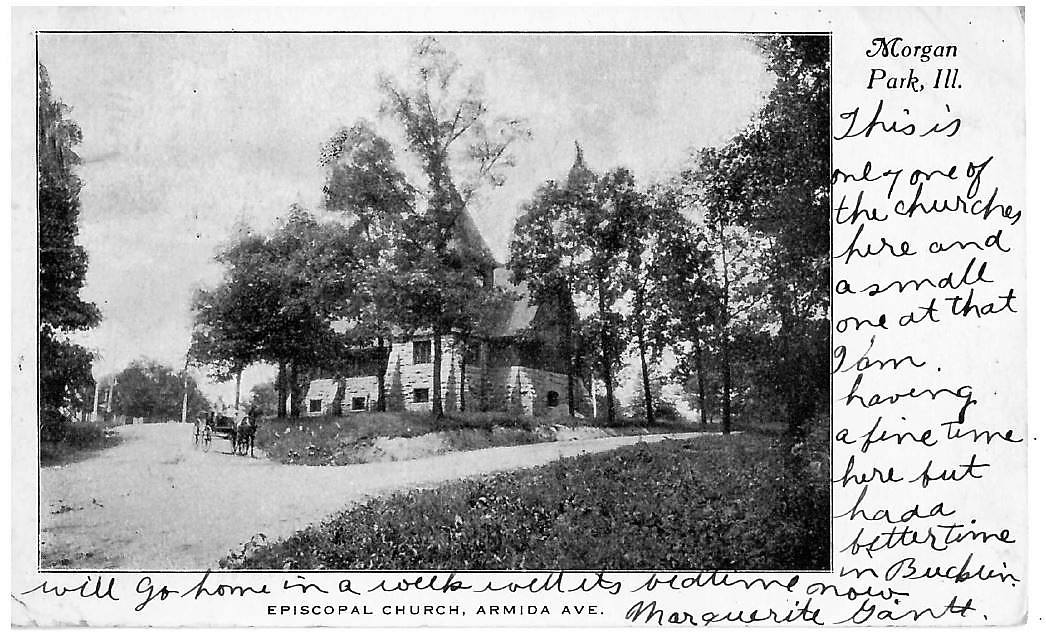
Here's an interesting RPPC (Real Picture Post Card) from Morgan Park I found on Ebay recently.
The picture is wonderful: The card is labelled "Episcopal Church, Armida Ave." This is a very early photograph of the Church of the Mediator, which stands on its own little island of land at 10961 S. Hoyne Ave. (if you remember last week's post, Hoyne was originally called Armida Ave., based on an Italian Renaissance poem). The church is surrounded by rural countryside and dirt roads, and a horse and buggy stands waiting in the road.
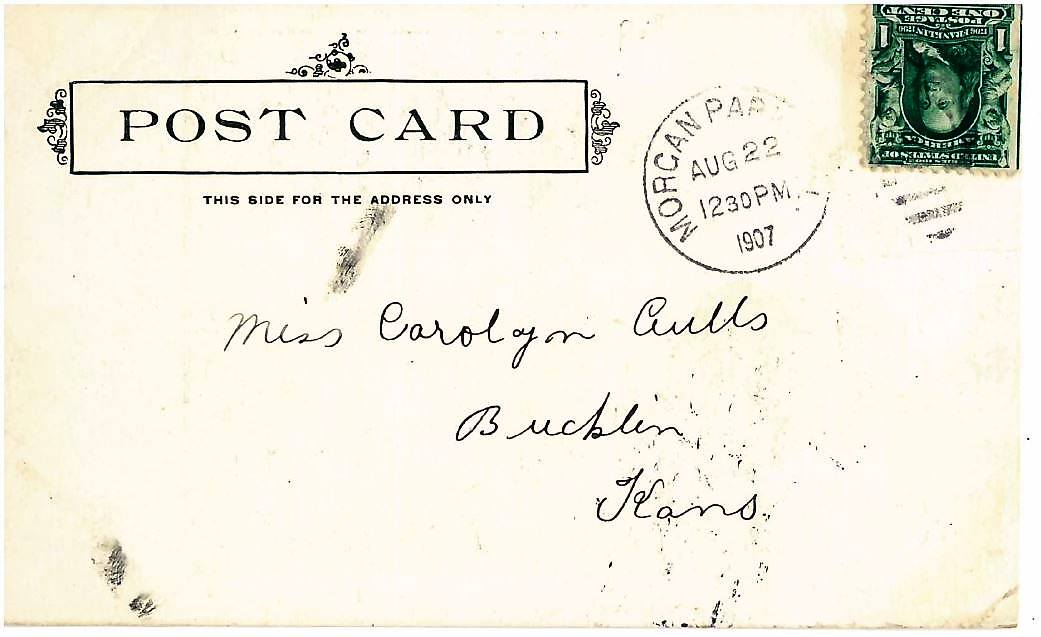
The back of the card is postmarked Morgan Park, Aug. 22, 1907, 12:30 p.m. (Morgan Park was still its own Village then – it would not annex to Chicago for another seven years), and bears a one cent stamp. It is addressed to a woman in Bucklin, Kansas.
The sender wrote this on the front of the card: "This is only one of the churches here and a small one at that. I am having a fine time here but had a better time in Bucklin. Will go home in a week. Well it's bedtime now." It is signed Marguerite Gantt.
WHAT?? She had a better time in Kansas than in Morgan Park?? I wonder if she would still say that today!
But this card does remind us that Morgan Park was intentionally founded as a religious, education and temperance community. It was carefully designed and laid out to resemble an English country village. This little church was keeping with that motif.
The Church of the Mediator (in a newer building that replaced this early church) closed its doors for good in 2009 due to a declining congregation. The building sits empty and for sale. One big problem is the lack of parking, but you can see that at the time this picture was taken, car parking would never have been dreamed of yet.
And a side note, one of the people involved in the building of this church was Robert C. Givins, who built the Castle at 103rd and Longwood Drive. Givins' father was an Anglican minister in Canada. The Anglican Church is the Church of England, headed by the current King or Queen. In the USA, it is the Episcopal Church, organized after the American Revolution.
– Carol Flynn, RHS Communications. #RidgeHistoricalSociety
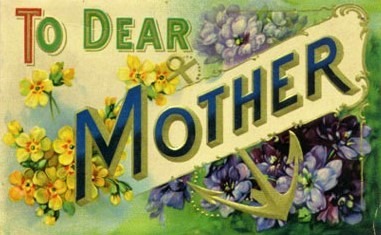
A vintage postcard for Mother's Day. The symbol of the anchor is particularly interesting here, not something you often find on a card for a mother. But it is so appropriate – the anchor is a symbol of strength, stability, safety, security. These are certainly the traits associated with motherhood.
Did you know Mother’s Day actually has its origins in the pacifist movement and concern for Veterans?
Mother’s Day was founded to honor peace activist Ann Jarvis, by her daughter Anna. Jarvis cared for wounded soldiers on both sides during the Civil War. She created Mother’s Day Work Clubs to address public health needs. Her daughter wanted to continue the work her mother started and to honor mothers for all they do.
This was 1908. The U.S. Congress rejected the proposal. They joked they would have to create a “Mother-in-Law’s Day” also. By 1911, all of the states had adopted the day, and in 1914, President Wilson proclaimed it a national holiday.
Anna Jarvis came to regret she ever came up with the idea when the holiday became so commercialized. Hallmark Cards began selling pre-made cards in the early 1920s, and this exploitation of the day for profit infuriated Jarvis. She wanted people to really think about their mothers, to honor their mothers with hand-written testimonials, not to resort to just buying gifts and pre-made cards. She wound up organizing boycotts of Mother’s Day, and was even arrested for disturbing the peace.
This “Mother’s Day” was not the first. Julia Ward Howe called for a “Mother’s Day for Peace” in 1872. Her intent was for mothers to protest against war.
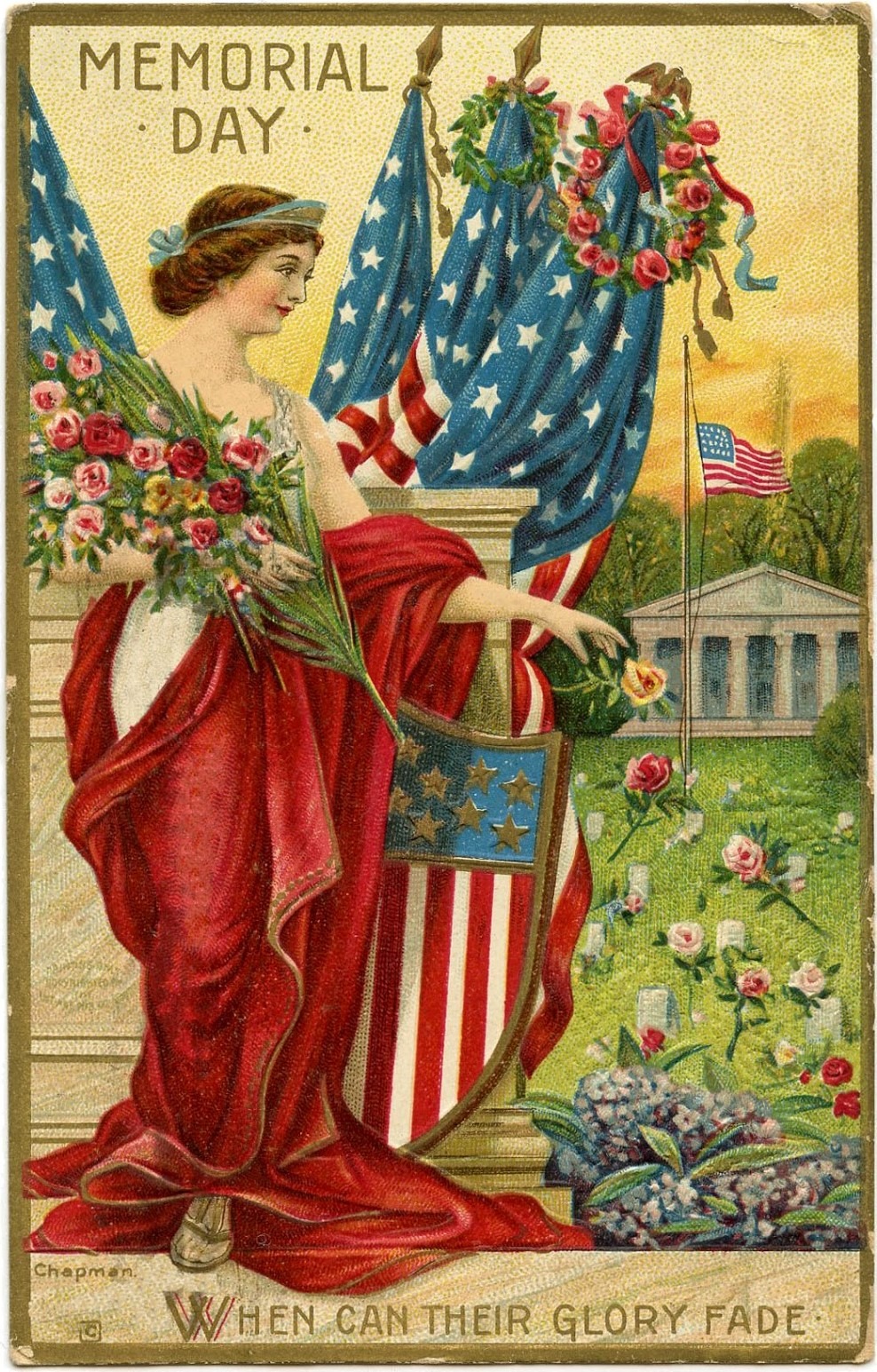
A vintage postcard for Memorial Day.
Memorial Day is one of America’s favorite federal holidays and it is also a very emotional one. It happily marks the start of the summer season, yet the somber purpose of the day is to remember all who have died while serving in the country’s armed forces. To date, close to 1.3 million Americans have died in service, with almost half the fatalities occurring during the Civil War.
The day was officially established in 1868 as Decoration Day, because decorating the graves of fallen soldiers with flowers was an ancient custom. The date was set as May 30, which had no particular significance; it reportedly was chosen to coincide with the blooming of flowers.
In the 1880s, it began to be known as Memorial Day. It was not until 1971 that the federal government implemented a national holiday on the last Monday in May, intentionally to give a three-day week-end at the beginning of summer.
The local Memorial Day Parade is a neighborhood tradition that dates back 90 years. It is one of the oldest Memorial Day events in Chicago. The parade was started by the Beverly Hills Post 407 of the American Legion, which was formed in 1919 for those who served in World War I.
Beginning in 1923, Post 407 paraded to local cemeteries on Memorial Day to decorate graves. Then in 1926, the Legion invited the community to participate. Some of the groups who marched that first year still participate – the Dewalt Mechlin Chapter of the Daughters of the American Revolution, the Reserved Officers Training Corps from Morgan Park High School, and local Boy Scouts and Girl Scouts troops.
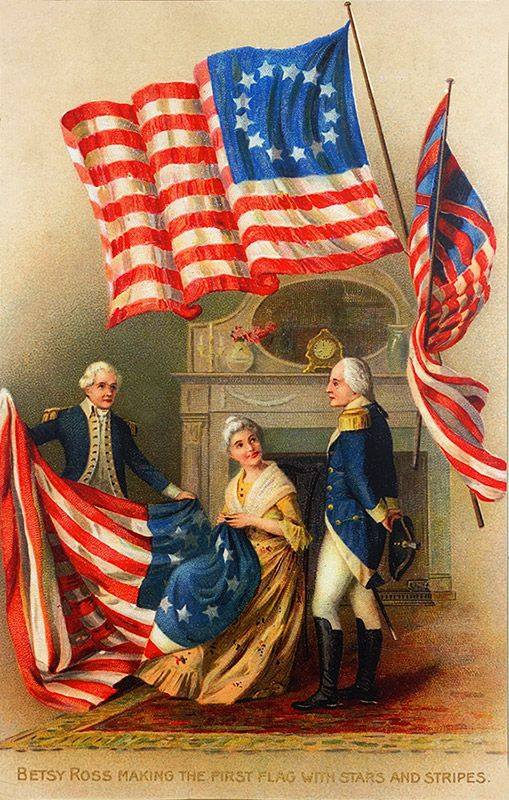
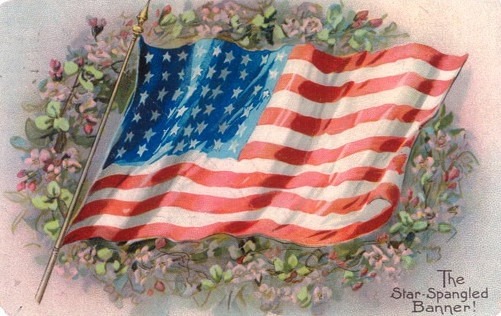
Today is Flag Day in the United States, commemorating the adoption of the U. S. flag on June 14, 1777. President Woodrow Wilson declared this day by proclamation in 1916, and in 1949 an Act of Congress created National Flag Day. Here are some vintage postcards honoring the flag.
Elizabeth Griscom Ross Ashburn Claypoole ("Betsy" to her friends) is credited with making the first American flag, supposedly advising George Washington as to the design. This story is not substantiated by any historical record but comes from the writings of her grandson 100 years after the fact. We do know for certain that Betsy Ross was in the upholstery business, and she did make flags for the Pennsylvania Navy for use on ships during the Revolutionary War. Benjamin Franklin oversaw the committee for this endeavor. Those flags incorporated red and white stripes and blue spaces.
Father’s Day
Here is some trivia about Father's Day that I included in an article several years ago.
Father’s Day is an old concept. It has been celebrated on March 19, St. Joseph’s Day, in Europe since the Middle Ages.
In the U. S., the idea of a day to recognize fathers started to receive attention in the early 1900s. There were attempts made around the country to establish such a day, including one for Chicago proposed by Jane Addams of Hull House in 1911. The city turned her down.
In 1910, a woman in Spokane, WA , began promoting a day of recognition for all that fathers do. She and her siblings had been raised by their father after their mother died. She worked for this day on-and-off for decades. The idea was actually treated with ridicule by the press, law makers and the public. Mother’s Day had come under fire for evolving into a day of crass commercialism. The general belief was that this would be the same fate for Father’s Day. And there was validity to this concern – it was groups like the Associated Men's Wear Retailers that strongly promoted the day.
It took until 1966 for Father’s Day to be proclaimed a national day of recognition, by President Lyndon B. Johnson. It was finally signed into law in 1972. Through the years, other dates were proposed for the day, but the third Sunday in June stuck. By then that day had been promoted for decades by merchants pushing gift ideas. The number one gift on Father’s Day has always been – and curiously still continues to be – a necktie.
Studies and surveys have revealed what men really think of Father’s Day. A lot of men are actually uncomfortable with the day. They believe they are just doing what they should be doing – supporting and providing for their families – and there is no need to call special attention to this or for their children to give gifts in gratitude.
When dads are asked what they would like as a gift, the answer often is, "Nothing, save your money for school." Hence the fallback position to a necktie. But many men would rather see their children act responsibly and respectfully than give them gifts. It means more to many fathers to have their offspring volunteer to help with mowing the lawn than it does to receive those neckties.
However, there is one “gift” men report they would welcome. This is more personal time to pursue their own interests – an uninterrupted afternoon working on a craft project or reading a good history book or watching sports on T.V. The operative word here is “uninterrupted.”
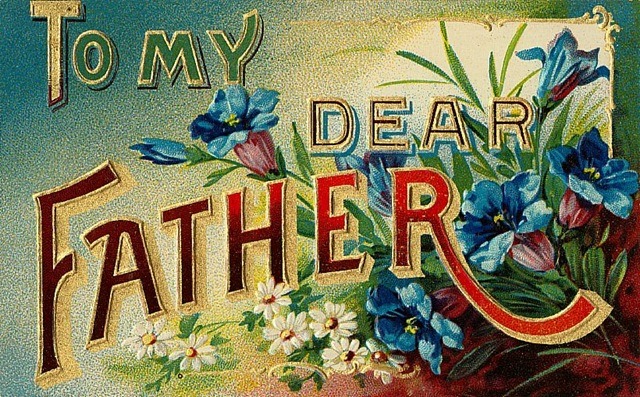
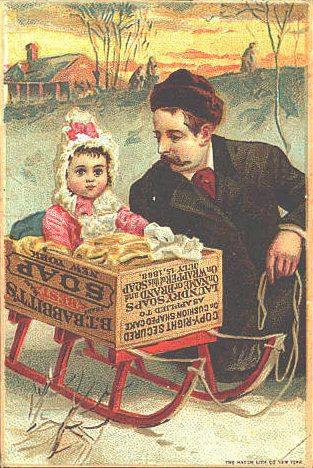
Here are a few vintage postcards celebrating Father’s Day. To anyone who has served or is serving in a fathering role, thank you.
– C. Flynn, RHS Communications
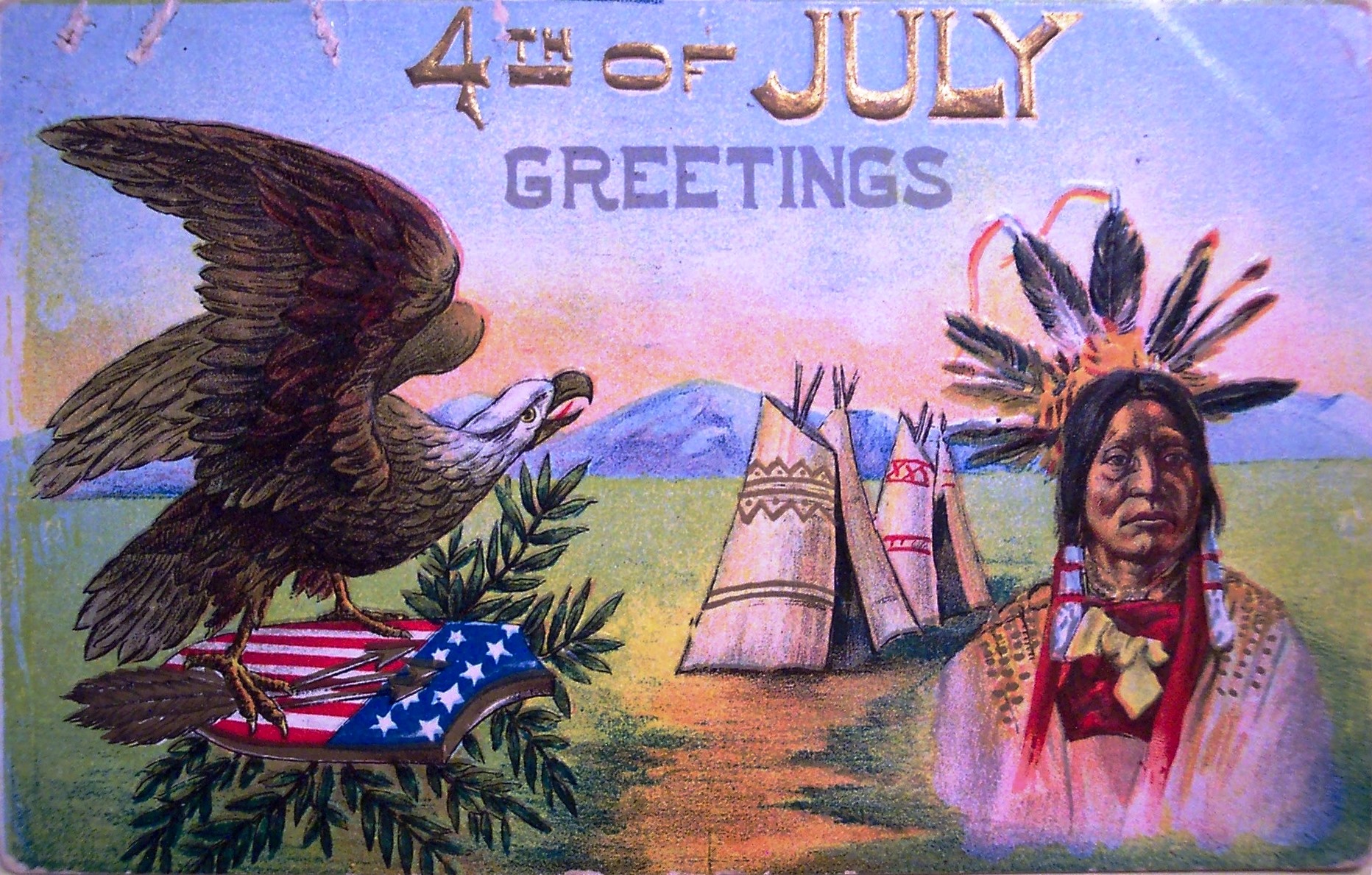
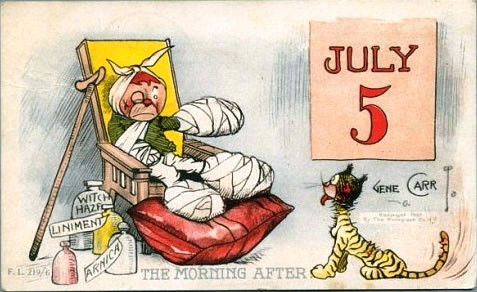
Vintage postcards for the 4th of July. These are a little different so they are of particular interest. The first one uses a depiction of a Native American to celebrate the holiday, which seems curious because Native American issues are rarely considered in discussing the English colonists' rebellion against the crown. The intent seems to be the preservation of the legacy of the original land, but we all know how that turned out for the Native Americans.
As far as the history of the Ridge goes, there was a strong historic presence of Native Americans in the area, especially along the Calumet River. Archaeological excavations are currently going on in local forest preserves. But the Treaty of Chicago in 1833 led to the withdrawal of the remaining Potowatomi to west of the Mississippi River.
The second postcard is actually for July 5, the day after the holiday. It shows a child and pet recovering from fire cracker injuries. While this might have had a humorous intent, it also serves as a warning to be very careful with home fireworks displays.
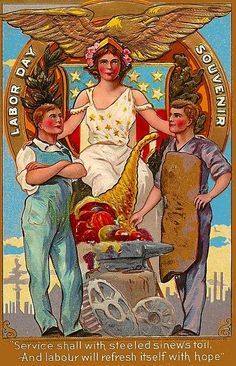
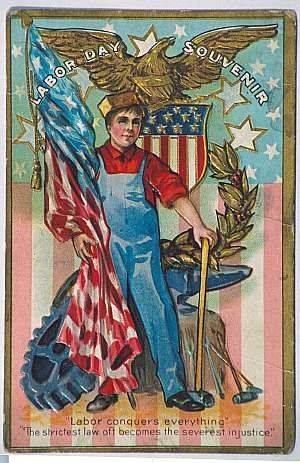
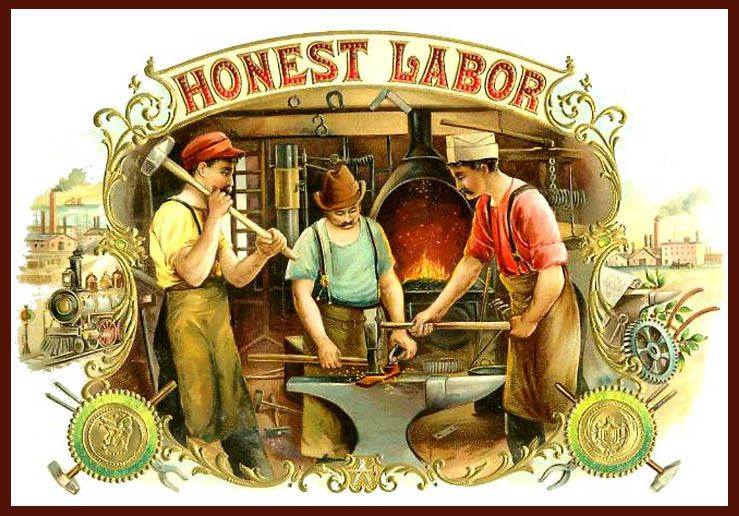
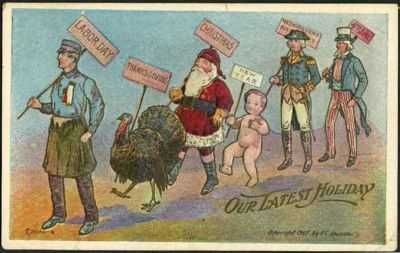
Labor Day is a federal holiday that came about to recognize the labor movement and the power of collective bargaining. By the late 1800s, various trade unions were sponsoring days to recognize their workers, and it made sense to select one day as a "general holiday for the laboring classes."
The first Monday in September was chosen for the day, which became official in 1894. Many other countries were adopting May 1 – May Day – as a day to recognize laborers (later this would become International Workers' Day). President Grover Cleveland, among others, was concerned that adopting May 1 would have socialist and anarchist overtones because of the proximity to and association with the anniversary of the Haymarket Uprising in Chicago (May 4, 1886). The September date was much less radical.
Labor Day is often viewed as "the end of the summer" although summer does not officially end until September 21. Many schools and sports activities start around Labor Day, and many resort areas consider this the end of the tourist season. In fashion, traditionally it was the last day of the year that wearing white or seersucker was acceptable.
Here are some vintage postcards that celebrated Labor Day. Note the one that announces it as the latest holiday to be added to the calendar; there would still be more holidays to come.
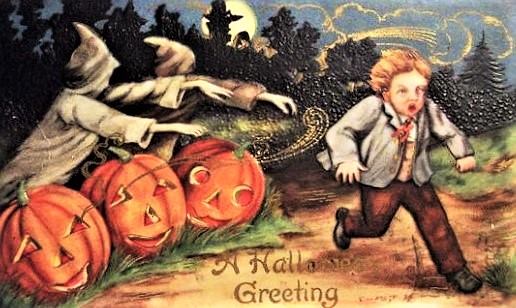
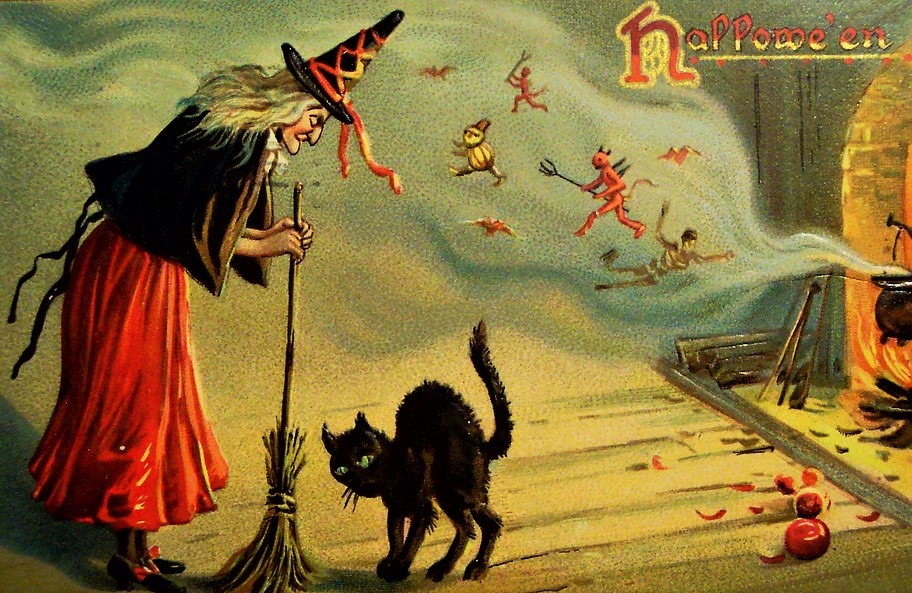
Happy Halloween! Some vintage postcards.
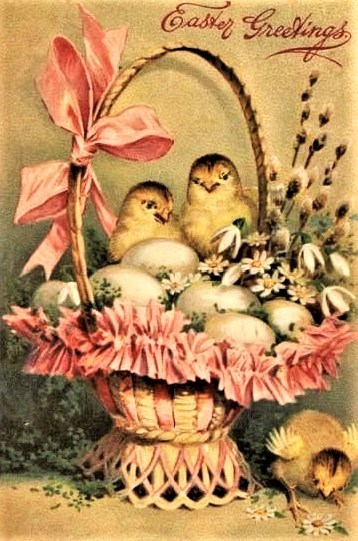
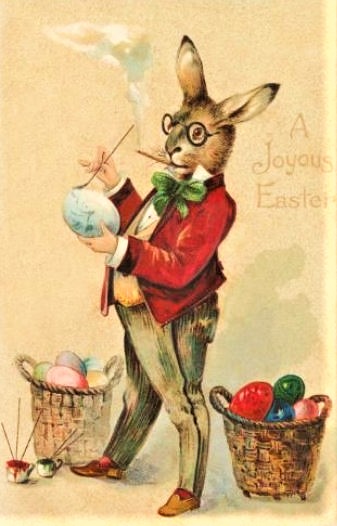
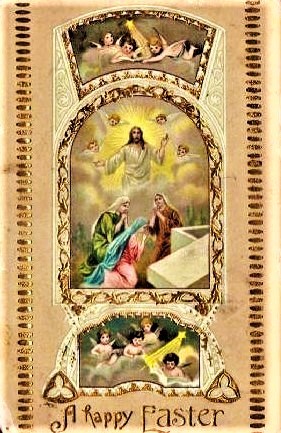
Happy Easter from the Ridge Historical Society with some charming vintage postcards.