
Explore the RHS Facebook Archives, a rich repository of local history written by Carol Flynn. For two decades, Carol brought a deeply dedicated voice to public education at RHS. Her role as Facebook administrator through mid-2025 naturally extended her prolific research into meticulously detailed articles, most notably her multi-part historical series posts. Today, Carol continues her local history writing for The Beverly Review and other outlets.
Excitement on the Ridge in 1921
Excitement on the Ridge 100 Years Ago
By Carol Flynn
It’s fascinating to read through old newspaper accounts of “breaking news” as the details of an event came to light in the past. Continuing our look at happenings on the Ridge from 100 years ago, here is a dramatic story that involved Beverly that unfolded over several months’ time.
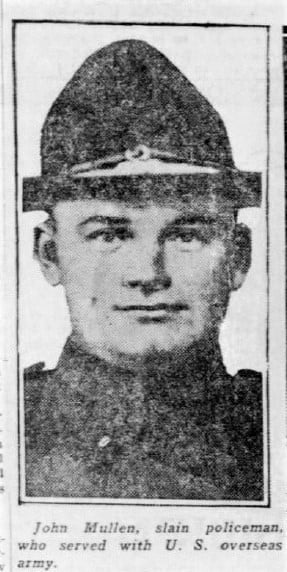
Early on Monday, January 3, 1921, Chicago policeman John Mullen was fatally shot at a restaurant in Lincoln Gardens at Lincoln Avenue and Wells Street on the north side.
The Chicago Tribune reported that day one version of what had happened. At about 12:45 a.m., two men and women were seated at a table and the women got up and left. Right at that time, Mrs. May Roden, a coat-check employee, laughed loudly at a friend’s joke. One of the men pulled a gun on her and threatened her, believing she was laughing at him because the women had “ditched” him.
Roden alerted the restaurant owner, John Ballash, who sent for the police. Mullen was on foot patrol just half a block away and headed for the restaurant. As he entered the restaurant, he encountered a man who was leaving. He told the man to come back inside while he investigated the situation. He entered the restaurant in front of the man. The man pulled a gun and shot Mullen point-blank in the back, then fled out the door.
Another newspaper, the Rock Island Argus, reported a slightly different story. A group of six, three men and three women, were in the restaurant. One of the women laughed at her escort and he pulled a gun on her. The proprietor sent for the police. As Mullen was approaching the gunman, the gunman shot him, then fled.
What happened next with Mullen is outlined in police reports from the time, and other newspaper articles.
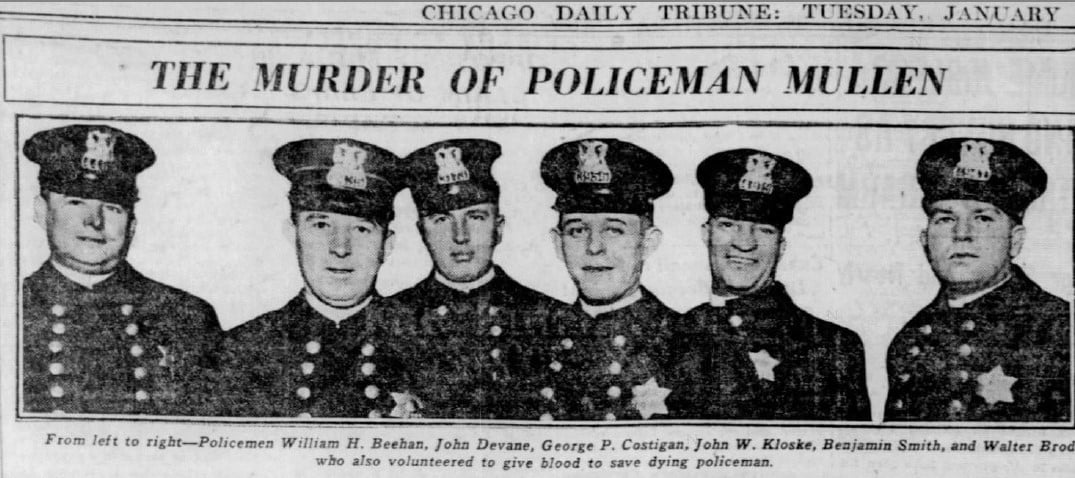
Other police officers arrived on the scene. Mullen was transported to Augustana Hospital where he received blood transfusions donated by fellow officers. He was taken into surgery and he died on the operating table at 3:50 a.m.
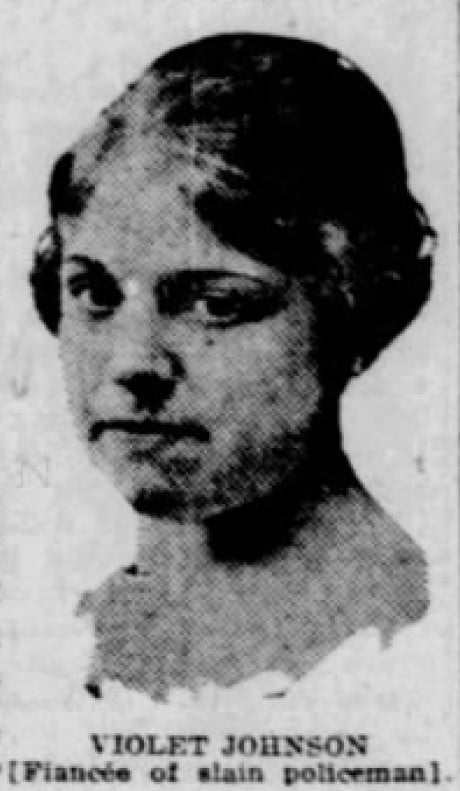
Mullen was 27 years old and still on probationary status, having joined the police force on November 11, less than two months before this fatal day. He was an honorably discharged veteran of World War I; he had served overseas with the U.S. Army Infantry. He lived with his parents at 1430 N. Clybourne Avenue. His father was Edward J. Mullen, a leader of the International Brotherhood of Teamsters. John Mullen left a fiancé, Violet Johnson.
According to the newspapers, the other men and women involved in the incident were held by the police. One man at the table identified himself as John Crosby and his companion who had fled as “Eddie.” The police believed the men had planned on robbing the restaurant.
Next post: The manhunt is on to find “Eddie.”
Excitement on the Ridge in 1921 – Part 2
By Carol Flynn
Chicago Police Officer John Mullen was shot down on January 3, 1921, and the search was on to find “Eddie,” his killer, who fled the scene.
This is a summary of what happened over the next few days, as the events played out and were covered in the newspapers.
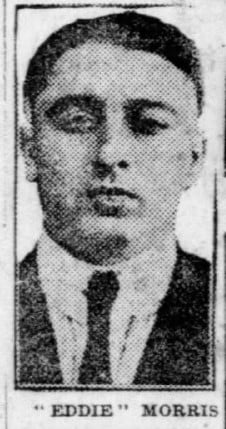
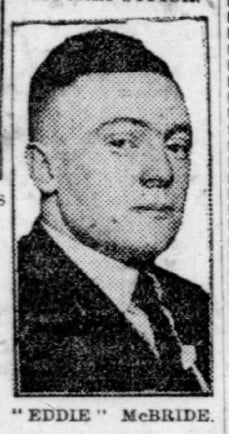
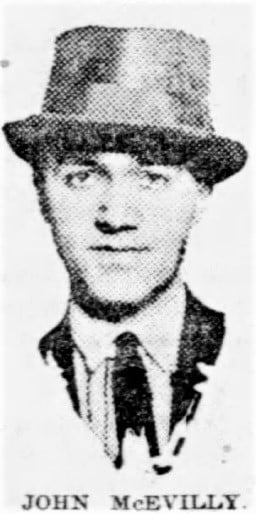
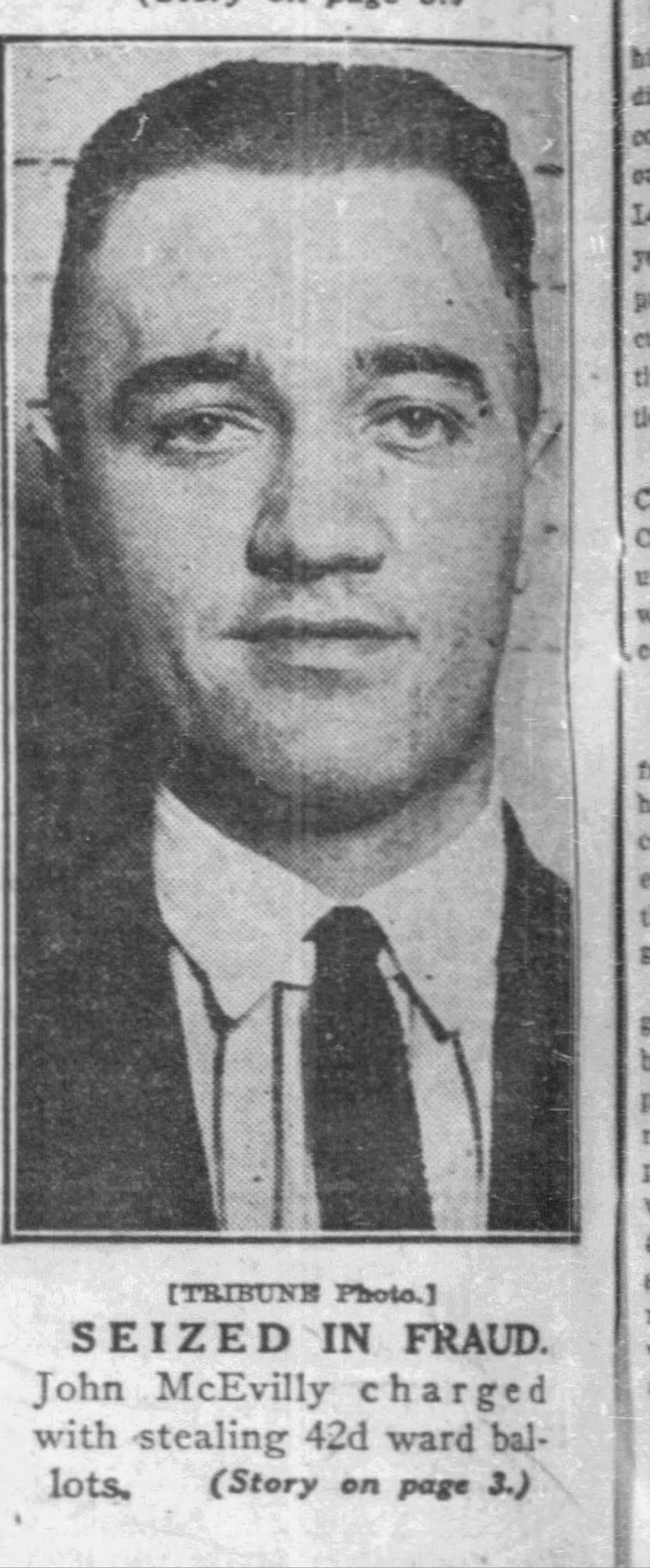
The man who was with Eddie the night Mullen was shot who identified himself as “John” or “James” Crosby had given a false name to the police. His real name was John McEvilly, 24 years old. The two other men involved that night – both named “Eddie” – were identified as Eddie McBride and Eddie Morris. The three men were accompanied at the restaurant by three girls, ages 15 and 16. The girls were taken to the juvenile detention center, where they gave detailed accounts of the shooting.
Initially, it was reported that Eddie McBride shot Mullen. The police started an extensive manhunt to locate McBride and Morris. Rewards were offered for their capture.
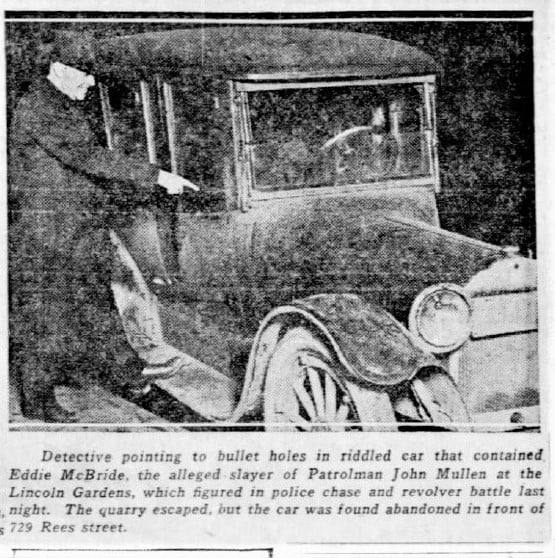
That first night, January 3, a young woman told the police that McBride and an “Edward Hall,” who was really Eddie Morris, were staying in a hotel at 30th and Michigan Avenue. McBride and Morris managed to elude the police, escaping by car. A shoot-out occurred as the police chased them through the south side until the car got away in traffic. A half-hour later, the police spotted McBride and Morris when their bullet-ridden car died and they escaped on foot. Additional gunplay occurred but McBride and Morris got away.
The license of the car that McBride and Morris used that night was registered to Arthur Ahern. The Ahern brothers owned several “cabarets,” or saloons. One was the Jeffrey Tavern at 2021 East 83rd Street, and another was the Beverly Gardens at 91st Street and Western Avenue.
The Aherns owned the land west of Western Avenue that they eventually developed into the Evergreen Country Club. The land is now the strip mall that includes Menard’s and other stores. This is actually Evergreen Park, not Chicago, but the papers referred to it as Beverly.
When questioned, Arthur Ahern denied knowing Eddie McBride and claimed he had no knowledge of how his car license came to be on McBride’s car.
The next day, McEvilly/Crosby identified Eddie Morris, not McBride, as the shooter of Mullen. McBride drove the car in which Morris escaped. McEvilly admitted that they had gone to the restaurant with the intention to rob the place.
Morris, 29, was a known thief and confidence man. He was wanted since 1919 for his involvement in a confidence game. Morris was now looked at for other outstanding crimes. This was the Prohibition era, and there were many criminal activities involving alcohol. Morris was named as the killer of the driver of a “booze laden truck” on December 31, and it was assumed that this was the reason he shot Mullen, to avoid arrest for that crime. [Morris was later exonerated for that crime.]
The police chased down reports on where Morris and McBride could be found. Many tips were from young women who were “discarded companions” of their cabaret visits and illegal schemes. A “definite tip” that Morris was in Bloomington came in, so the manhunt moved there.
This Bloomington “sighting” caused the police to dismiss reports that Morris and McBride were seen on the night of January 4th drinking at the Jeffrey Tavern and the Beverly Gardens.
The Bloomington tip did not pan out. Morris was indeed on the loose on the south side of Chicago.
Next post: A visit to Beverly.
Excitement on the Ridge in 1921 – Part 3
By Carol Flynn
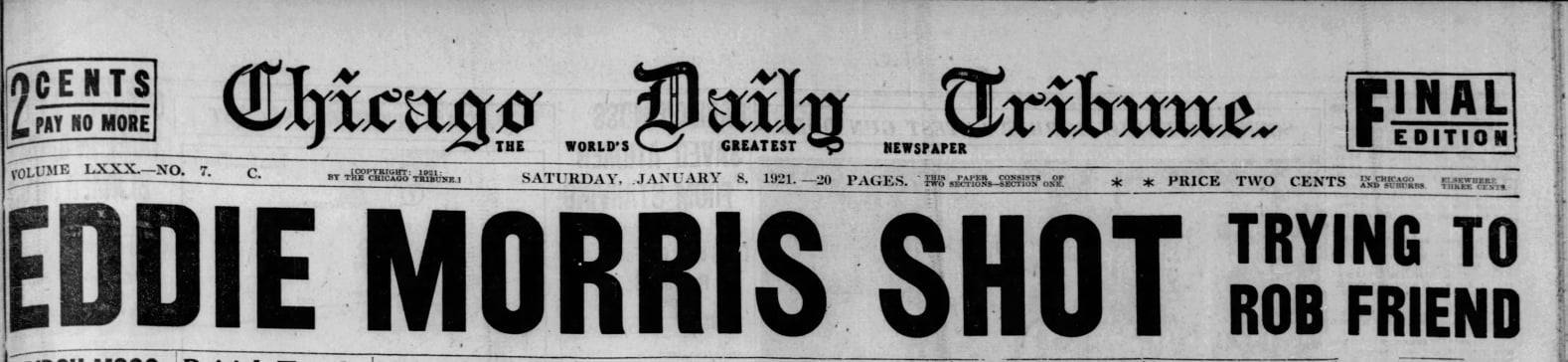
Eddie Morris, wanted for the killing of Chicago patrolman John Mullen on January 3, 1921, continued to elude the police.
He and Eddie McBride were involved in a shoot-out with the police on the evening of January 3, and the car they were driving was traced to Albert Ahern, one of the owners of the Beverly Gardens saloon at 91st and Western Avenue. Morris and McBride were reported drinking at the Beverly Gardens on January 4, while the police searched for them in Bloomington.
On the evening of January 7, Morris had another gun battle with the police and again managed to escape.
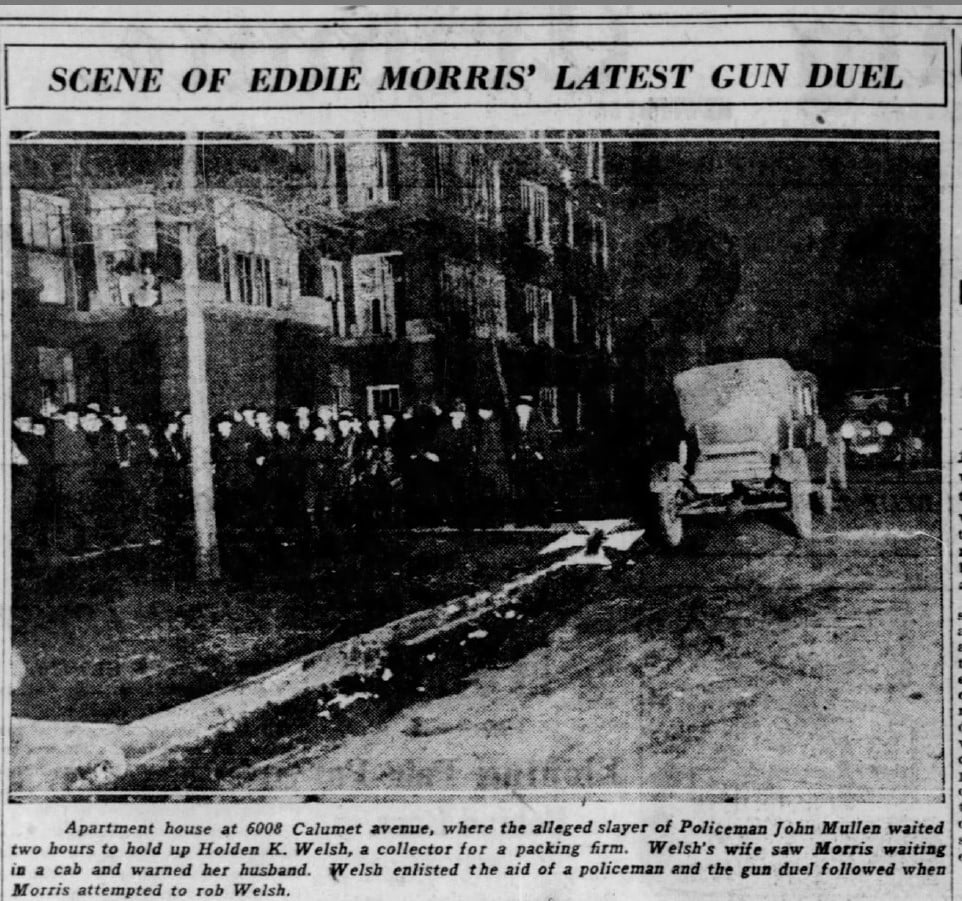
Desperate now for money to leave Chicago, he attempted to rob a man he knew from his days working at Swift and Co. at the Chicago stockyards. The man collected payments from Swift customers and often had a lot of cash on him.
Morris’ plans were thwarted when the wife of the man recognized Morris and called for help. Morris was approached by a police officer, and immediately started shooting at the officer, who returned fire. Morris escaped down an alley.
The search was once again on for Morris, as backyards and alleys were scoured by the police, and all his possible hideouts were searched again. Two hundred men were put on the search.
The driver of the cab Morris had taken to/from the botched robbery told the police that Morris had first ordered him to drive to 91st and Western Avenue, but the driver was hesitant. Morris then had him drive to this man’s house.
The police were keeping an eye on the Beverly Gardens. Detective Michael Grady had been posing there as a bartender for the last few nights.
Note that the Beverly Gardens had quite a history during Prohibition. It was raided not only for alcohol but for illegal gambling. The place would be shut down for a full year in 1923 for violations.
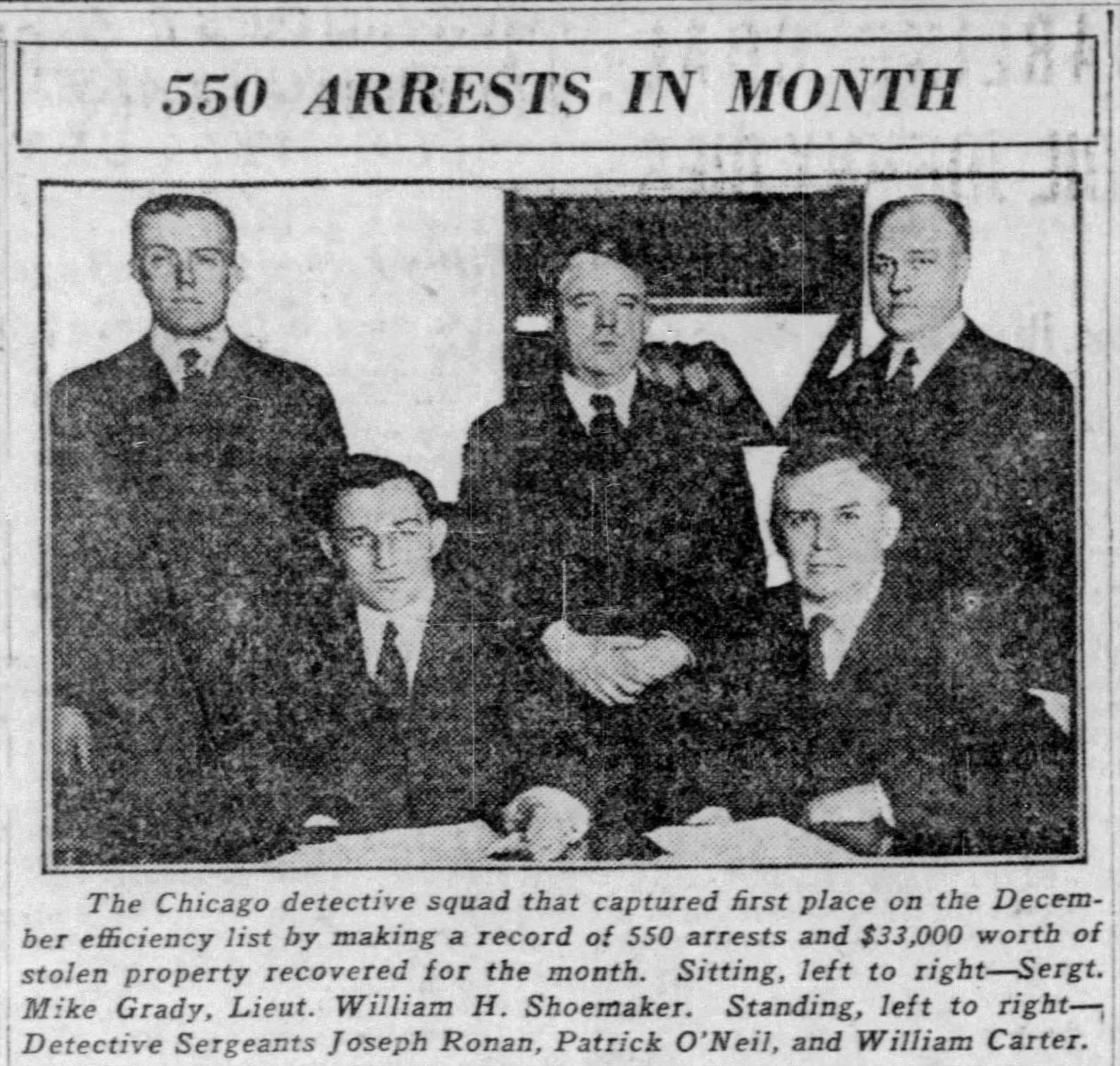
Morris might or might not have been aware that the detective unit that was hunting him had the best record in the city. On January 2, the unit, composed of Lt. Shoemaker, Det. Grady, who was acting as the bartender, and Det. Sgts. Ronan, O’Neill, and Carter, were the champs of the fifteen detective squads for December, with 550 arrests and the recovery of $33,000 in stolen property (about $438,000 today). They had rounded up a notorious band that had robbed a pharmacy and killed a police officer.
The new Chief of Detectives, Michael Hughes, who had just taken the position in October, sent out a New Year’s greeting to the criminal class: “Nineteen twenty-one is going to be the hardest year the crooks ever saw in Chicago.”
Now these detectives were leading the effort to capture Morris and McBride.
RHS did additional research on Edward Foster “Eddie” Morris. He often used Foster as one of his aliases.
Morris was born on December 29, 1891, in Equality, Illinois, a very small town in the far southeast tip of the state. His father, John, a U.S. Civil War veteran, was a farmer. His mother was Jennie E. Abbott. There were eight children in the family, and Eddie was the third child and third son.
Morris worked as a rural mail carrier in Equality until around 1916. His father died that year. He then moved to Evansville, Indiana, and worked as a rural mail clerk. He registered for the World War I draft in 1917 – 1918 while in Evansville. He was listed as married.
By 1920, Morris was in Chicago. On the 1920 U.S. Census, his address was given as 4515 Lake Park Avenue. He is listed as an agent for meat packers. His wife was listed as Ethel, but she went by Essie.
Morris had worked for Swift and Co. but said he had not been with them for about a year when the shooting occurred. He said his wife worked as a typist, and he made some money from gambling.
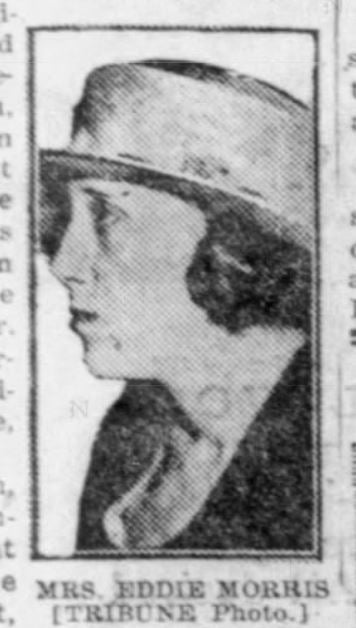
But the police identified Essie Morris as an active member of her husband’s gang, and considered her the brains behind some of their plans. Essie was identified as the woman who rented parlors and rooms in boarding houses, to which she lured men, and then they were robbed by her confederates waiting there.
Next up: Morris is captured.
Excitement on the Ridge in 1921 – Part 4
By Carol Flynn
Eddie Morris, accused of killing Chicago Police Officer John Mullen on January 3, eluded the police and was involved in two shoot-outs with them since that night.
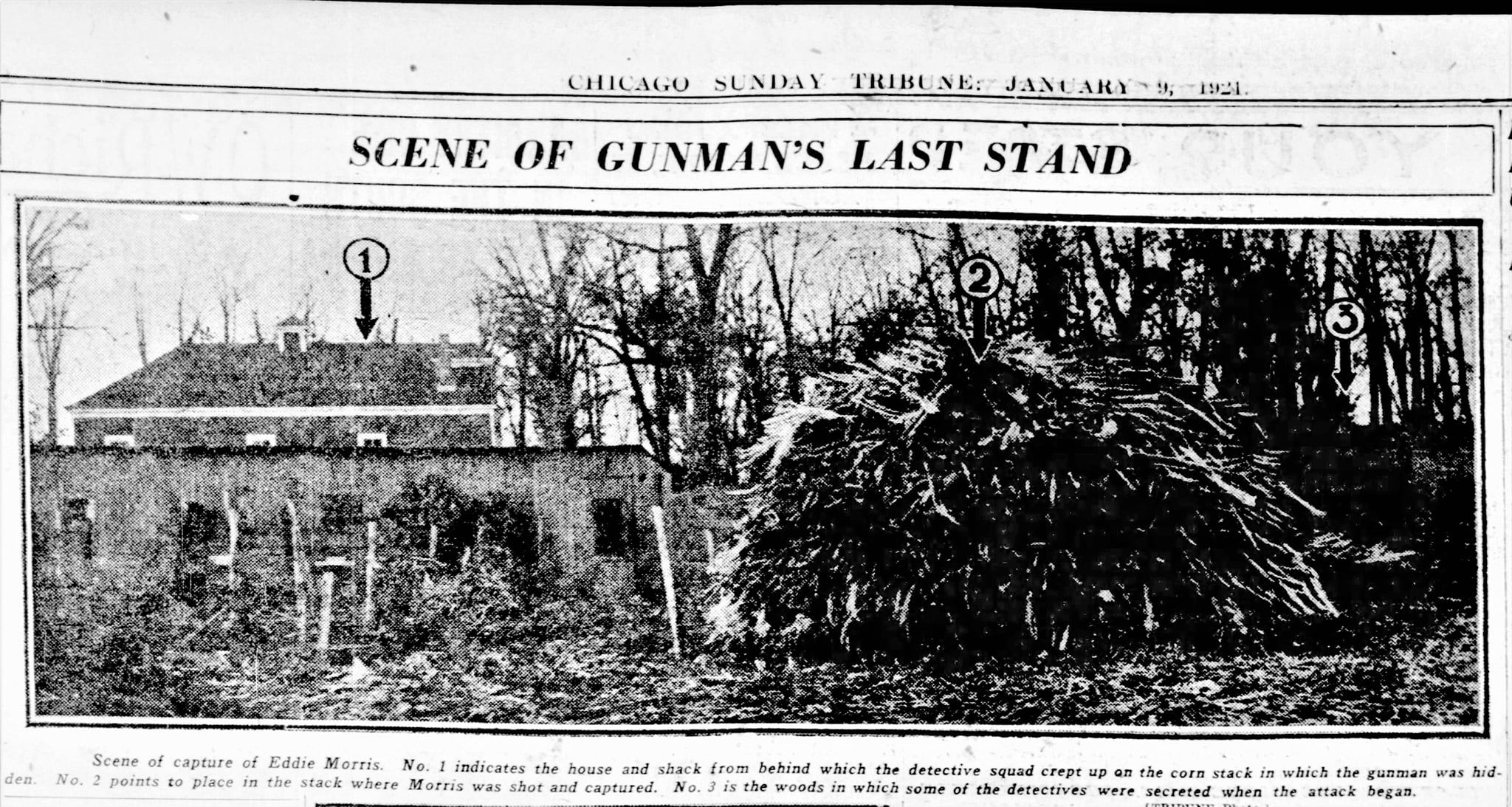
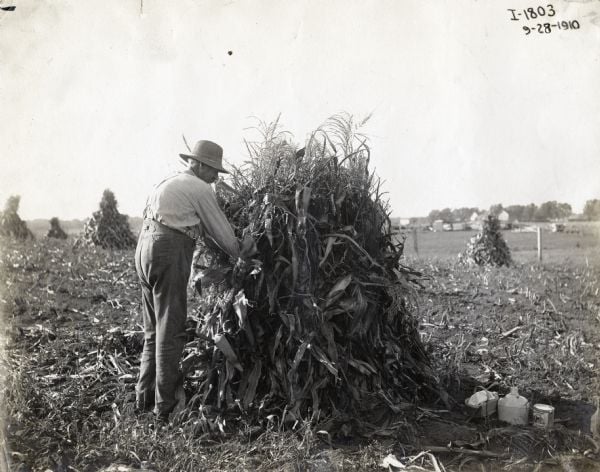
In the early morning of January 8, 1921, Morris was apprehended. He was found hiding in a “corn shock,” or mound of corn stacked for drying, on a “vegetable farm” in Beverly/Evergreen Park.
This farm was reported as about a mile west of 91st Street and Western Avenue. The owners of the farm were not identified, but note that the major farm out there for decades was the Kellogg place. The farm was the home of Kate Starr Kellogg, the educator for whom a school in Beverly is named, and her sister, Alice Kellogg, the artist, and other family members. Kate was alive in 1921; she was 66 years old. The farm is now part of the grounds of Little Company of Mary Hospital.
After his shoot-out with the police on the night of January 7, Morris made his way out to Beverly. He knew the area because he was a frequent patron of the Beverly Gardens, a “cabaret” at 91st Street and Western Ave. Morris was forced to seek a place to hide from the police as they scoured the city for him.
Detective Michael Grady, who had been posing as the bartender at the Beverly Gardens, had been tracking Morris all night. He was first on the scene at the farm, and was then joined by more officers.
The police surrounded the corn shock and ordered Morris to come out. He did not respond so the police fired their guns into the corn. They then uncovered him in the stack, wounded.
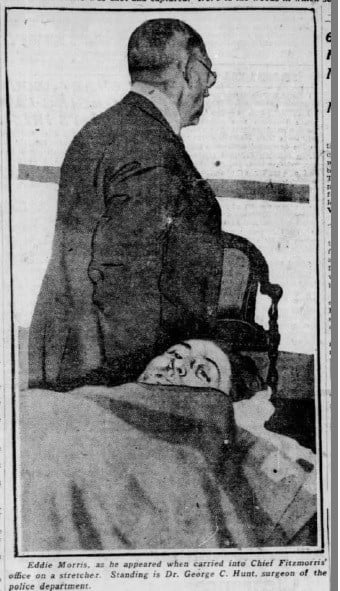
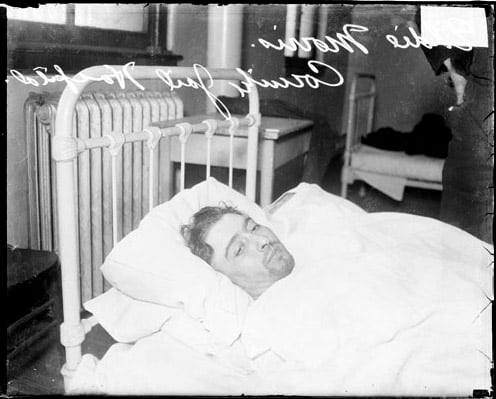
His wounds were dressed by the police department’s doctor, and after being arrested and charged, he was taken to the hospital ward of Cook County jail.
In an interview with the press right after his arrest, Morris gave some details of the capture. Later, Grady gave his version of the events during the trial for Morris.
During that early interview, Morris said he was drunk the night Mullen was killed, and denied any involvement in the shooting. He said he did not know he was wanted for the murder until two days later and he did not turn himself in because he had no friends and no money for a lawyer. He denied knowing McBride and McEvilly, and having tried to rob the Swift collector the night before. He said he had been hiding “in the country,” that is, Beverly, on and off over the last five days, freezing and with little food, and had been in Beverly the last two days.
The interview with Morris (M), as recounted in the Chicago Tribune (T), continued as follows:
T: Did you connect with anyone when you went down in Beverly Hills?
M: No.
T: Tell us what happened when the police got you.
M: I was laying almost asleep when I heard someone holler, “Come out of there.” I just laid still. I heard someone remark, “He’s dead now,” after some shots. Pretty soon some one stepped on me, and one of them put his foot on my head and shot me twice.
T: How do you figure they happened to get you down there?
M: Well, some old man came out to feed the cattle this morning and he saw me in the haystack. He said, “Are you sick?” And I said, “Yes, cover me up again, will you,” and he did. I suppose he notified the police.
T: How did you pick out that place?
M: I was cabareting out that way once and I knew it was a lonely place.
Morris refused to answer any questions throughout the arrest and trial period about the people who helped him during his five days as a fugitive.
Grady’s testimony at the trial, as recounted in the Chicago Tribune, was:
“I located him in a corn shock. After placing eight men around the place where he was hiding, I called to him to come out. I told him I’d fill him full of lead if he refused. We fired about eighteen shots, and then called again. He still refused so we fired again. Later two men climbed on the shock and found him buried in the corn. Morris said he had been in the garden on the night of the murder. He also admitted firing a revolver while in there.”
Det. Michael Grady received several monetary rewards for the capture of Morris. He shared the money with the other policemen involved in the effort.
Of course, the event received coverage in the media.
One publication reported: “The line kept closing in. There was only one avenue of escape for Morris and that was into the prairies of the south. All night the police kept drawing the line tighter and this morning they took their man, who was hiding in a cornfield.”
Another paper reported: “Throughout the night 200 policemen stalked the bad lands in search of Morris. …[H]e was finally cornered … in a cornfield on the outskits of the city. Haggard and worn out from loss of blood received from a wound in the left arm, Morris gave up without protest.”
From a third: “Morris is in the hospital ward at the county jail, desperately wounded. Morris was wounded in a volley of revolver and rifle fire when he disregarded calls to surrender.”
On the Ridge, the event was mentioned by Pauline Palmer, the local reporter for the “Ridge and Morgan Park News” column in the Englewood Times. On January 14, 1921, she wrote “Our quiet Ridge district has been brought into the limelight (again) the past week. A gunman who was in hiding was captured by surprise. The news was indeed exciting.”
Next: The trial of the accused killers.
The history posts from the Ridge Historical Society have been totally lost in recent days because of the continuing turmoil in the country, and understandably so. Still, I feel the need to complete this story that I started. Then I will take a rest from any more posts until the new RHS website is up and running, which will be by February 1. Future stories will be found on the website, not on social media. I will post links to the website stories on Facebook.
Upcoming series will include: The history of the 19th Ward; stories related to the history of integration and race relationships in Ridge communities; case studies on pandemic relief efforts (history in the making); artists on the Ridge; a continuation of the series on people for whom schools on the Ridge are named; the "cult" that called Beverly "home;" more on Dan Ryan Woods; more on Beverly Gardens and Prohibition stories; and many more stories.
Thank you for your support – continue to watch the RHS page for what's next!
Excitement on the Ridge in 1921 – Part 5
By Carol Flynn
Eddie Morris was arrested for the murder of police officer John Mullen on January 8, 1921. The newspapers and his lawyers reported Morris was “fighting for his life” from the bullet wounds inflicted by police but the prison doctor said he would recover.
The State Attorney’s office promised a trial would begin within 30 days. If Morris was too weak to come to court, the trial would take place at his bedside.
Witnesses were brought to his hospital room to identify him as the shooter. The grand jury brought an indictment against him on January 11.
Morris’s mother, wife, and a sister visited him the next day. His mother tearfully insisted Eddie “did not have the heart to kill anyone” and that someone was trying to shift the blame to him.
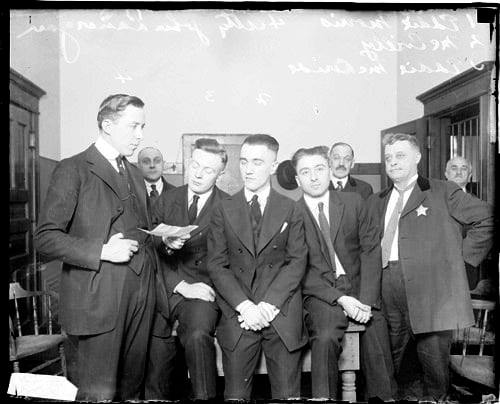
Morris was carried into court in a chair for his arraignment on January 20. John McEvilly was also charged. Both pleaded not guilty.
During all this time, the third man, Eddie McBride, was still a fugitive. He was finally arrested on February 4th at a rooming house on the near west side. After being “grilled” for twelve hours, he confessed that Morris had done the shooting and he had driven the get-away car. His story agreed with that of the other witnesses.
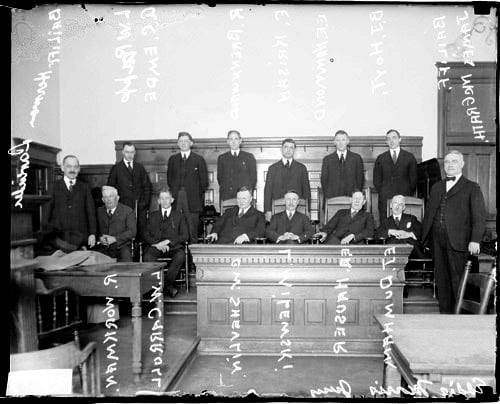
The trial of all three men, Morris, McEvilly, and McBride, began on March 16, 1921, and witness after witness described the shooting.
In summary: The three men, all armed, intended to rob the restaurant. They drank with three 15-16 year old girls for about 45 minutes. McEvilly and Morris stayed inside the restaurant, while McBride and two of the girls went outside to the car. Morris had an altercation with the coat check woman and pulled a gun. The employee alerted the owner. The owner called the police. Officer Mullen was just half a block away and came immediately to the restaurant, apparently fetched by a restaurant employee.
By now, bystanders inside and outside of the restaurant were starting to take notice of the commotion, which increased the number of witnesses who observed what happened next. When Mullen entered the restaurant, Morris came up behind him and stuck a gun in his back, telling him to raise his hands. Morris was reaching for Mullen’s gun when a bystander shouted a warning to Mullen. Mullen began to turn, and Morris shot him at point-blank range. The coroner said the bullet actually entered Mullen from the front, not the back.
Morris then ran out the door, where McBride and the girls were waiting in the car. Morris said he had just shot a “dick,” a long-time slang term for a detective or police officer, and they had to get away fast. They threatened to kill the girls if they talked. They drove away.
McEvilly was discovered hiding in the men’s room, where he tried to stash his gun, but he was taken into custody, along with the third teen-aged girl.
The prosecution called for the death penalty for Morris, and the case went to the jury at 10:00 p.m. on March 26.
On March 27, Morris was found guilty of the crime and sentenced to life in prison. McBride and McEvilly were acquitted of the charges against them.
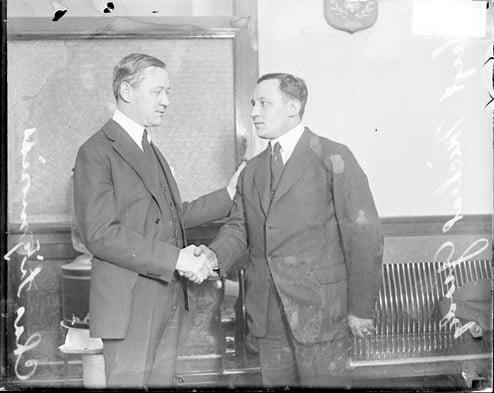
Law enforcement officials were not happy with the sentence that Morris received, or the verdicts for McBride and McEvilly. Chief of Police Charles C. Fitzmorris said in a Tribune article that Morris’ sentence was another “sad fact of nobody cares.” Morris could be released from prison one day to again walk the streets of Chicago and defy the law. McBride and McEvilly were free now to continue their careers of crime.
The same was the sentiment of State’s Attorney Robert E. Crowe, who had stated there was no other sentence possible for this murder but the death penalty. Crowe would go on to fame for prosecuting the infamous Leopold and Loeb murder case in 1924. In that situation, lawyer Clarence Darrow saved the two killers of Bobby Franks from the death penalty. He tried to use the defense of insanity, but the judge let them off because of their youth.
Aftermath
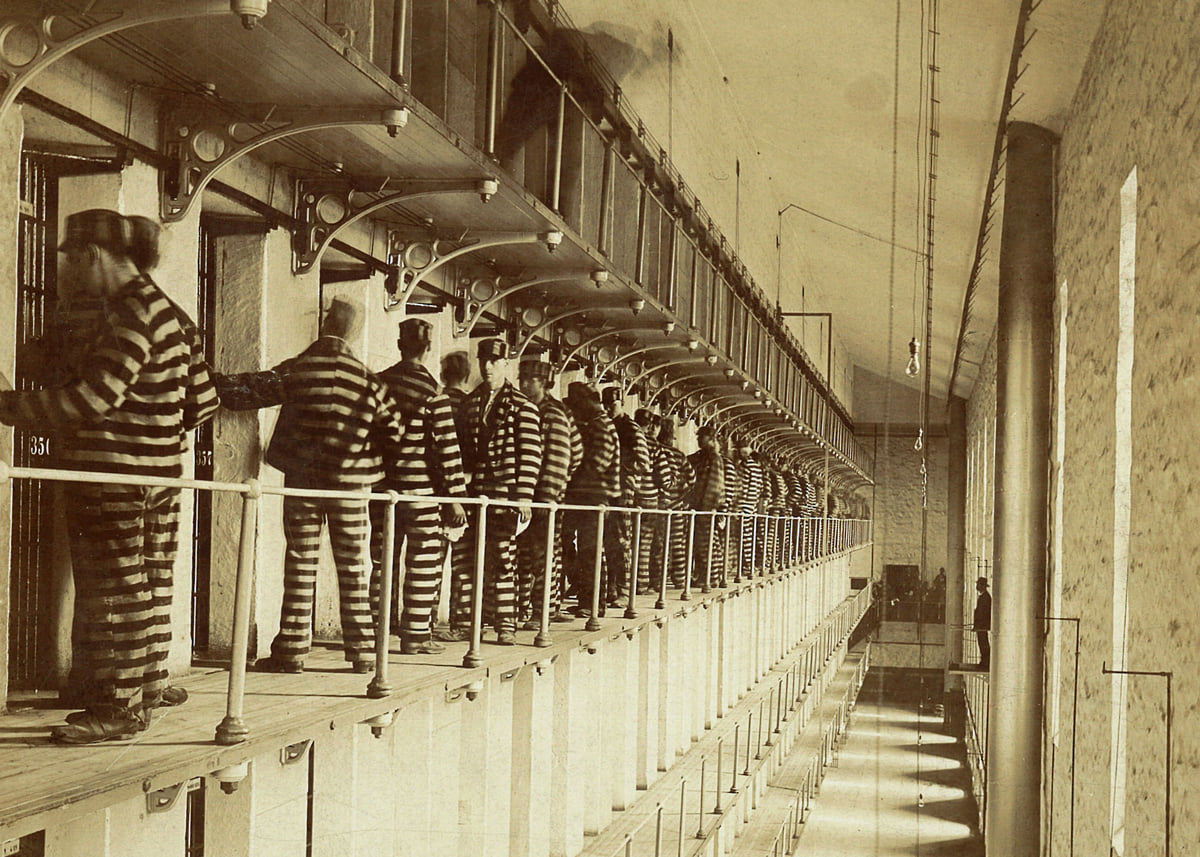
Eddie Morris spent the rest of his life in prison in Joliet. His name still came up in the news. He tried to escape from prison by leaving a stuffed dummy in his cell while he hid in a sewer catch basin. He was found after two days and placed in solitary confinement. The 1940 U.S. Census lists him as an inmate in Joliet, and he had to register with the draft in 1943 for World War II, which he did in Joliet. He died in 1951 at the age of 59, presumably while still in prison. He was buried in Missouri, where his mother was.
Eddie McBride was identified as “Clarence Kelly” who had escaped from San Quentin prison in California early in 1920 while serving time for a San Francisco robbery. He said he would never go back to prison, he would not survive there. While being returned to San Quentin in May 1921, he escaped by jumping out a train car window. In 1923, a mutilated corpse was found near Geneva, Illinois, with its hands and other identifying marks cut off and face burned. One law officer, involved in the Mullen murder case, was sure that was McBride. The theory was that this was retaliation for having turned against Morris. However, physical evidence did not support this being McBride. The body was buried without identification. No other mention of McBride or Kelly is found after that time.
John McEvilly was still showing up in Chicago newspaper stories in 1949 at the age of 52. He was stabbed in the side and taken to the hospital but refused to identify his assailant. When the police investigated, his wife Shirley admitted she was the one who “accidentally” stabbed him. McEvilly was described as the “erstwhile hoodlum and political henchman” of Titus Haffa, an ex-alderman. McEvilly was frequently questioned by the police about jewelry robberies, and was accused of stealing ballot boxes and threatening the candidate running against Haffa in 1928, but he could not be positively identified.