Explore the RHS Facebook Archives, a rich repository of local history written by Carol Flynn. For two decades, Carol brought a deeply dedicated voice to public education at RHS. Her role as Facebook administrator through mid-2025 naturally extended her prolific research into meticulously detailed articles, most notably her multi-part historical series posts. Today, Carol continues her local history writing for The Beverly Review and other outlets.
Easter
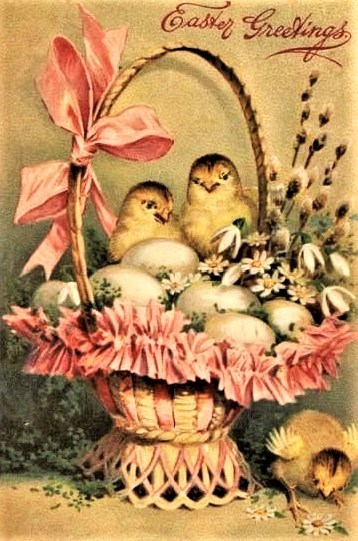
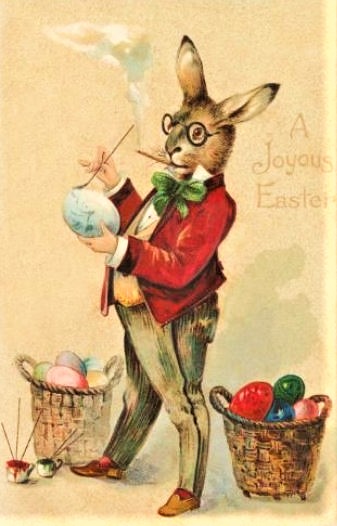
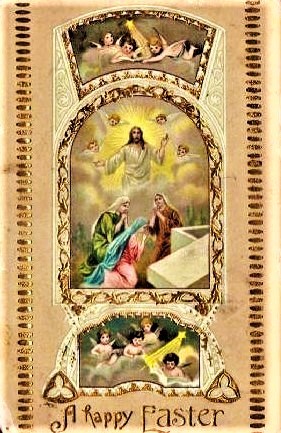
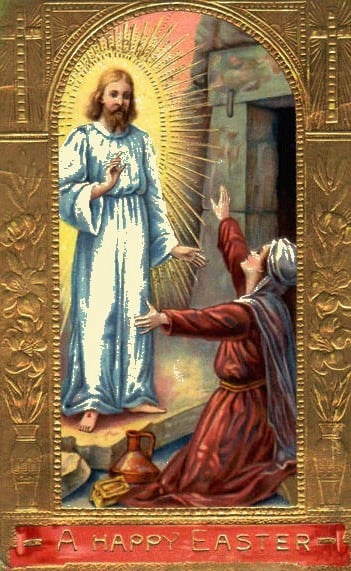
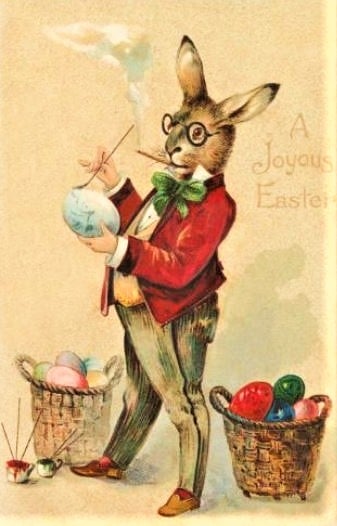
Happy Easter from the Ridge Historical Society with some charming vintage postcards.
The Ridge Historical Society
Easter Sunday 2021
By Carol Flynn
Here are some vintage postcards for Easter.
I always wonder on a day like today as we compare the true meaning of the day, a religious holy day, and the secular, commercial aspect.
Who is the bigger hero on Easter? Jesus Christ or the Easter Bunny?
Happy Easter.
Happy Easter from the Ridge Historical Society
April 9, 2023
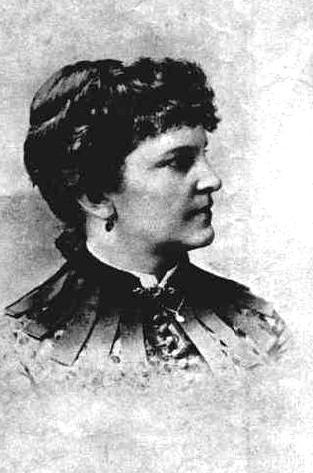
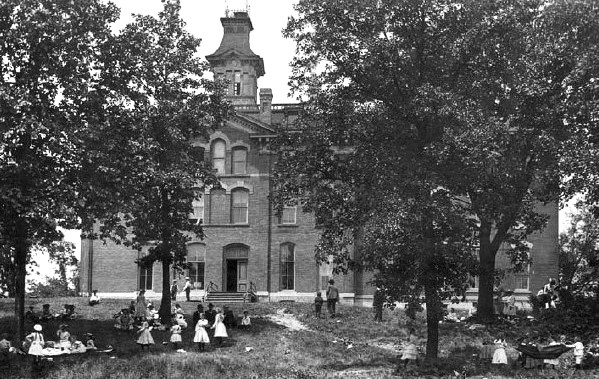
The Chicago Female College was established in 1874-75 on the Ridge, at 114th Street between Longwood Drive and Lothair Avenue. Gilbert Thayer served as its first formal president. In keeping with Morgan Park’s commitment to a strong religious foundation, the Thayer family were dedicated members of the Presbyterian church.
Daughter Julia Thayer was an educator in music, ancient history and literature, and English. She was a teacher at the College, and followed her father as president of the College upon his death in 1892.
Julia’s real love, however, was poetry. Of all her accomplishments, it was her poetry that made her best known in her lifetime.
In 1889, The Magazine of Poetry featured Julia and six of her works. By then she had been publishing her poetry for almost twenty years, but the article revealed that it had taken her some time to feel comfortable sharing her work with others “due to the sensitiveness peculiar to the mind of a poet.”
Julia had started writing poetry as a child. While reading to an invalid grandmother, she would slip in her own work without revealing it was hers. To Julia’s dismay, her grandmother declared the work “silly trash.”
But for Julia, poetry was “inevitable,” and she gradually started offering her work for publication, at first anonymously.
The 1890 “Local and National Poets of America” wrote of Julia that “she is seen at her best in religious poems and simple lyrics,” and “there is a conscientious fidelity in Miss Thayer’s work” that brought her “a laurel wreath that will not fade.” The article reported that she wore a plain gold ring that was a priceless keepsake for her because she received it for one of her poems.
Newspapers back then often included poetry, short stories, and serial works of fiction by authors; in fact, that is how some famous authors and their works first became known to the public. In 1876, the Chicago Herald newspaper published what would become one of Julia’s best-known poems, “The Easter Altar-Cloth.” Other newspapers and literary magazines throughout the country later also carried the piece.
The poem tells the story of a nun who is working hard to finish an altar cloth on the eve of Easter Sunday. She has worked on this cloth a long time and really hopes to have it finished that night. She gets called to her duties and considers not going, but honors her commitment to tend the sick and dying at the local hospital, knowing that now the altar cloth will never be completed in time for Easter services. However, when she returns to her cell as Easter Day breaks, she finds that angels have completed the altar cloth for her.
Here is Julia Thayer’s poem to celebrate Easter.
Easter Altar-Cloth
Julia H. Thayer
Solemn days of Lent are closing, and in soft ethereal light
Earth and sky delay, transfigured, at the sepulchre of night,
While reluctant steal the shadows o’er the smoothly-burnished sea,
Loth to gloom the shining pageant with their purple mystery.
Wonder, where the misty sunlight on that distant city falls,
Stands a convent, dark and stately, rearing high its ancient walls.
Long ago – so runs the story – at this very day and hour,
Wan and pale, a nun was sitting in that topmost gloomy tower.
On her lap were folds of beauty, broidered with the finest art,
Gleaming with the sacred symbols she had wrought so long apart;
And the fabric’s dazzling whiteness, marvelous in leaf and line,
Seemed a snowdrift frosted over with each emblematic sign.
Ah, how many years in secret she had labored, day by day,
That some happy Easter morning she might on the altar lay
There at last her precious treasure, as an offering to her Lord,
With each thread a prayer inwoven answering to His holy word.
Now her task is almost ended; all but finished there it lies!
In and out the needle glances – fast, and faster still it flies –
While the last rich beams of sunset o’er the dusky gloaming come,
Flinging bars of golden glory in the narrow, sombre room.
In those wondrous lights and shadows Rembrandt loved to paint so well
Like a patron-saint of labor there she sits – but list! a bell
Strikes upon the breathless silence, and she starts up cold and white.
“Yet again, and must I leave thee! Oh, I can not go to-night!
“I must stay my dream to finish; someone else can do, I know,
Just as well my every duty if for once I do not go.
Peace! Begone, temptations evil! Longer here I must not stay.”
And she crossed herself and sadly laid the glistening cloth away.
Clad in mournful sable habit, through the doorway see her glide,
Through the corridors, as silent, through the arching portals wide;
Out across the court deserted, till at length she gains the street,
Mingles with the throng, nor pauses till her tired, aching feet
Reach the hospital that rises just outside the city’s wall,
Where its dark, funereal shadow on the landscape throws a pall.
Safe at last within its shelter from the tempter’s dreaded claim,
Dying eyes are watching for her, dying murmurs speak her name.
Here she sits beside a pallet, reading words of cheer, and there
Kneels and wafts a soul to heaven on the faithful wings of prayer.
Thus employed with ceaseless mission, night anon has worn away,
And the starry hosts have vanished through the glowing arch of day.
Like another fleeting shadow, does the gentle sister seem,
As she steals back to the convent in the morning’s early gleam.
And a thousand silver voices ring out on the Easter air
As she enters through the doorway, climbs again the winding stair.
She has reached the cell so dreary, where she sees with saddest heart
Snowy cloth outspread before her – but what means that sudden start?
Lo! in perfect beauty, finished there each vine, each symbol lies –
Who has guessed her guarded secret? Who prepared this strange surprise?
While she stands perplexed with wonder, see, a brightness floods the room,
Greater than the noontide’s splendor, rarer than the dawning’s bloom.
Prostrate low before the vision, thrilled with love, she knows full well
Only pitying hands of angels could have wrought that miracle.
Happy Easter from the Ridge Historical Society!
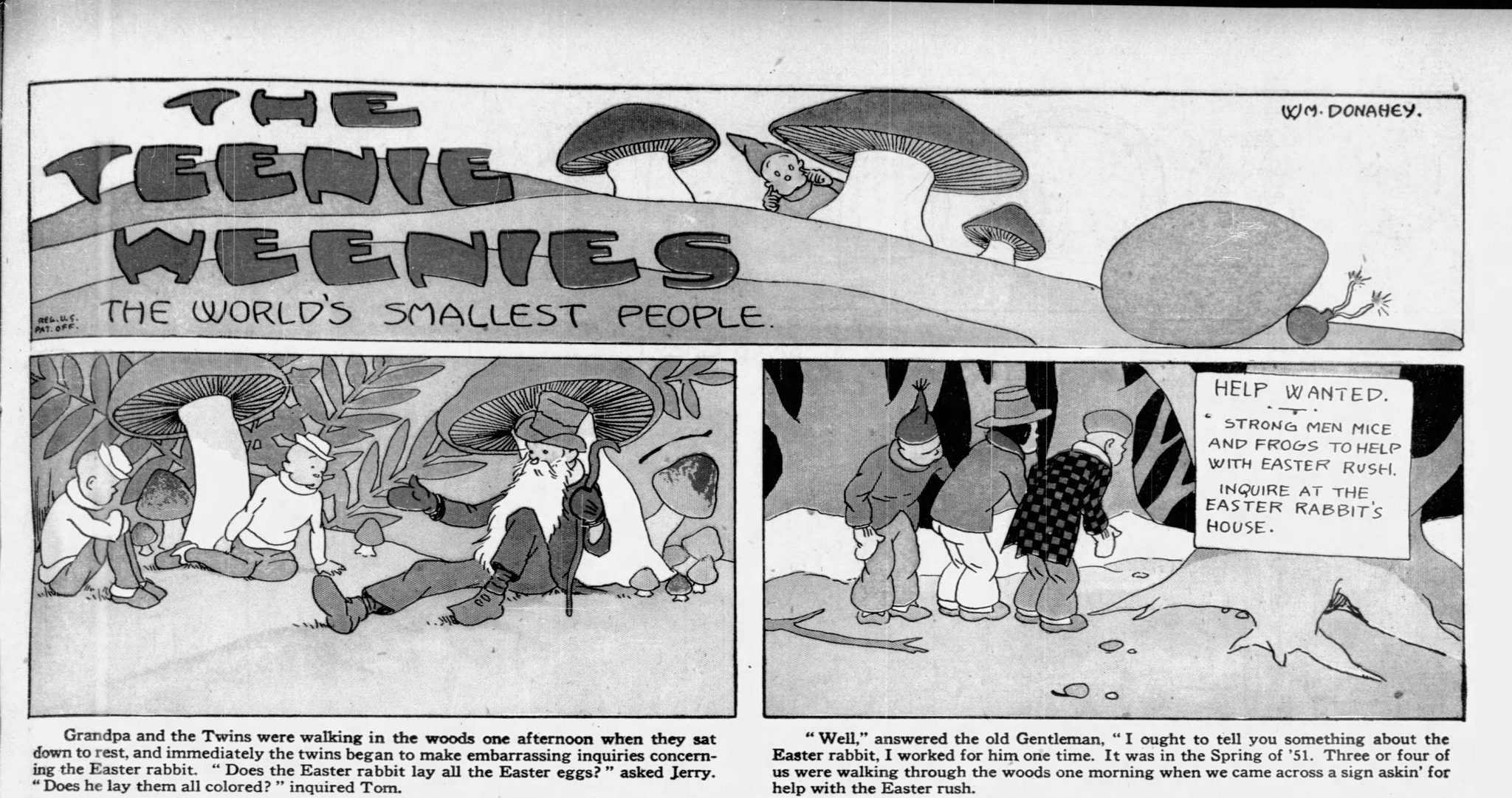
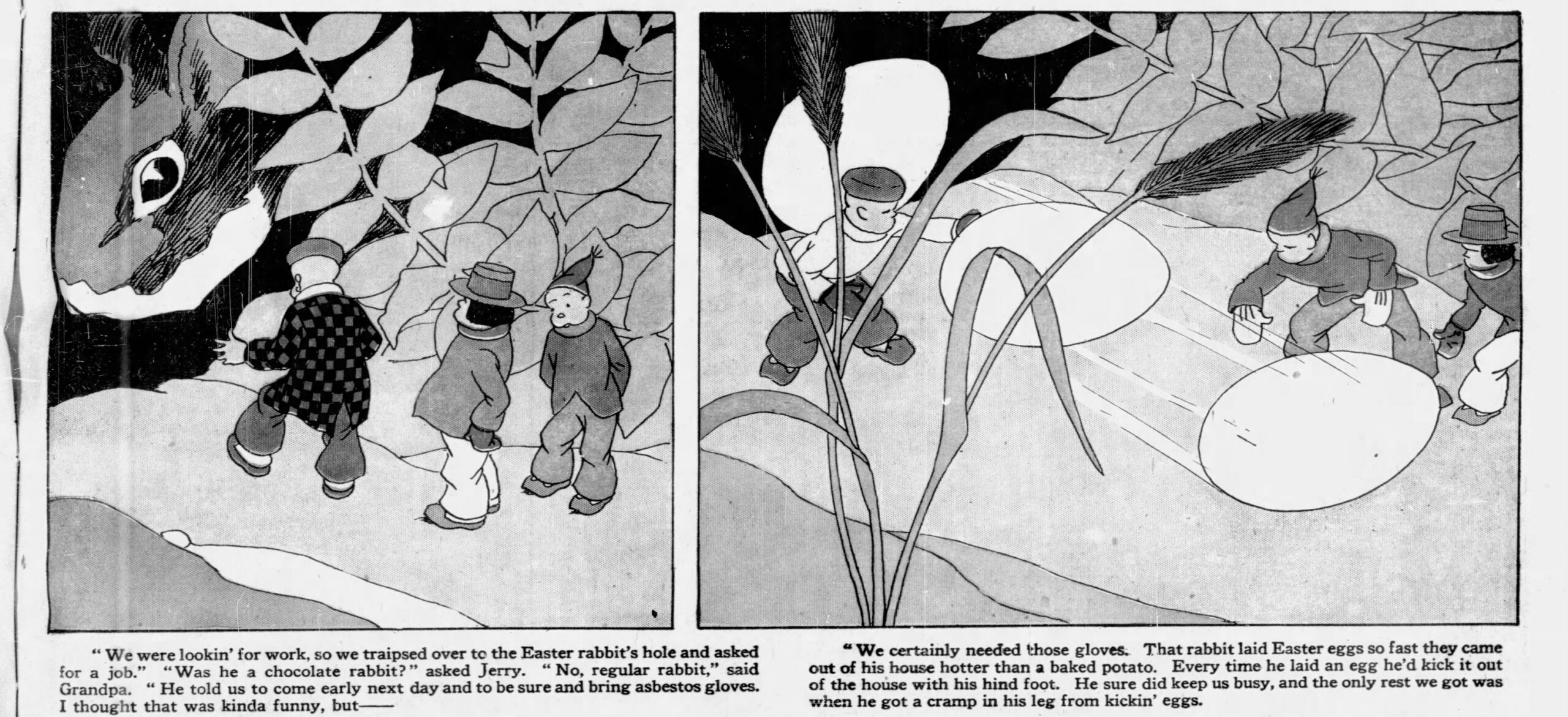
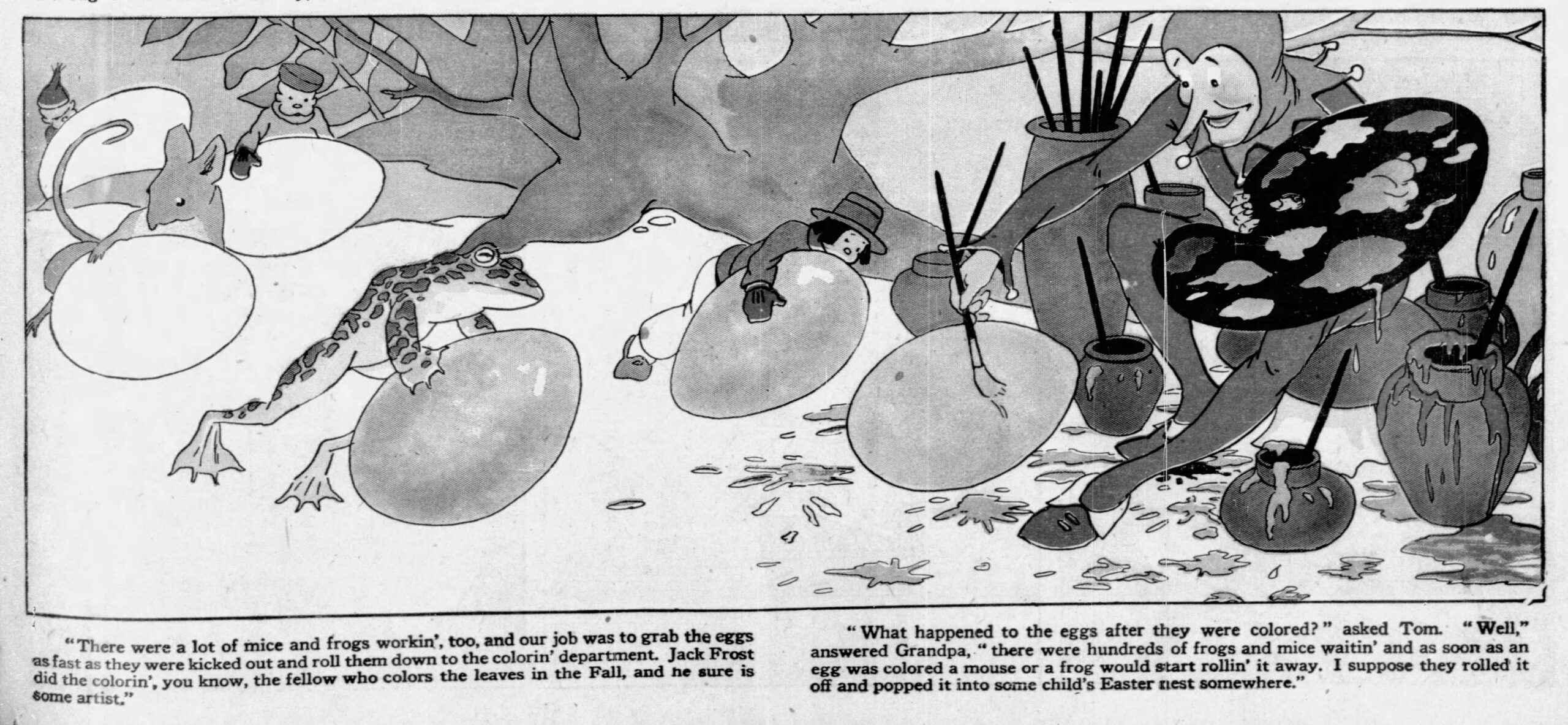
Here's something a little different – a cartoon from Easter 1924 that appeared in the Chicago Tribune. This is how Easter eggs get painted.
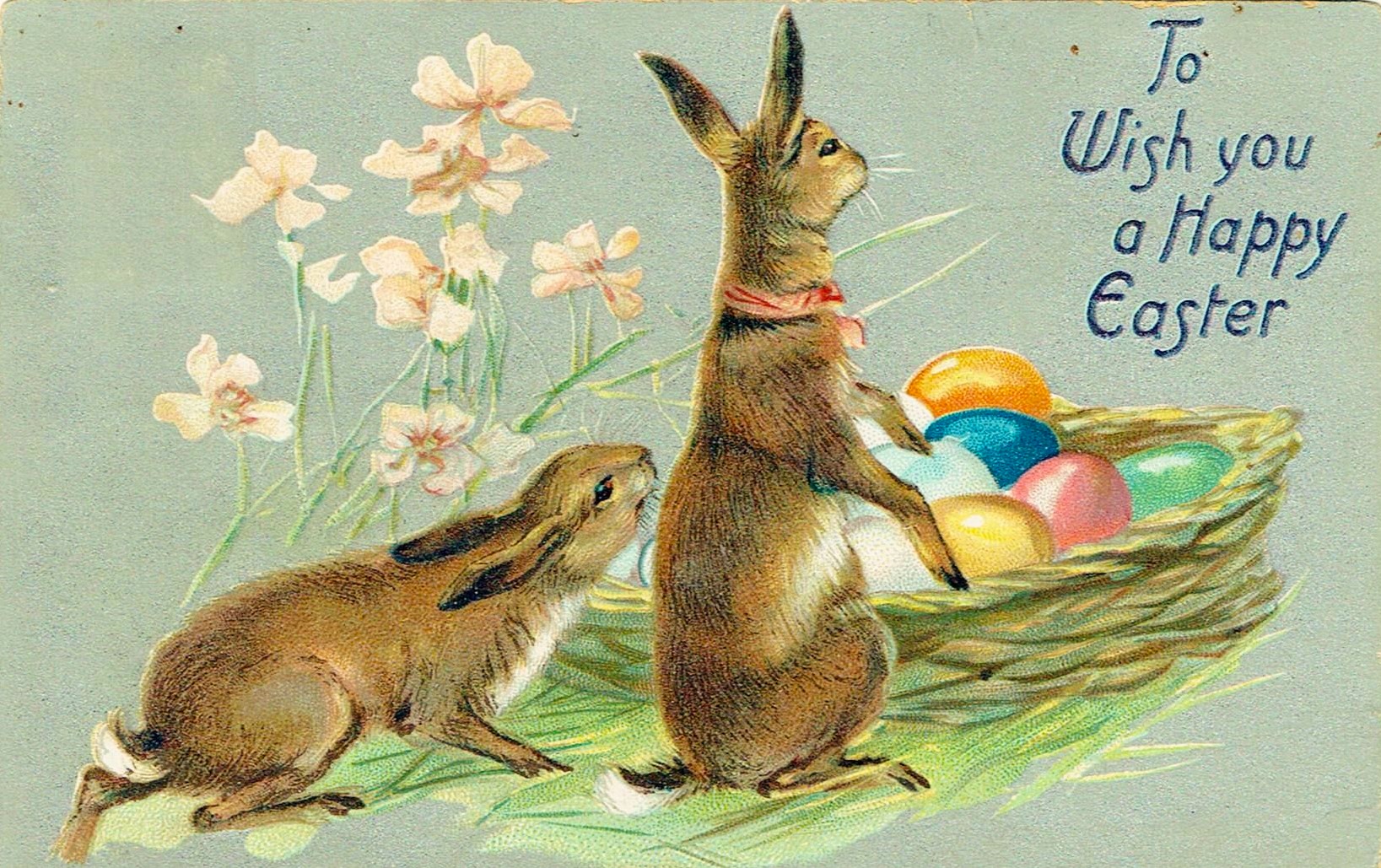
And a vintage postcard greeting.
Happy Easter from the Ridge Historical Society.
RHS will be closed tomorrow, Easter Sunday, April 20, 2025.
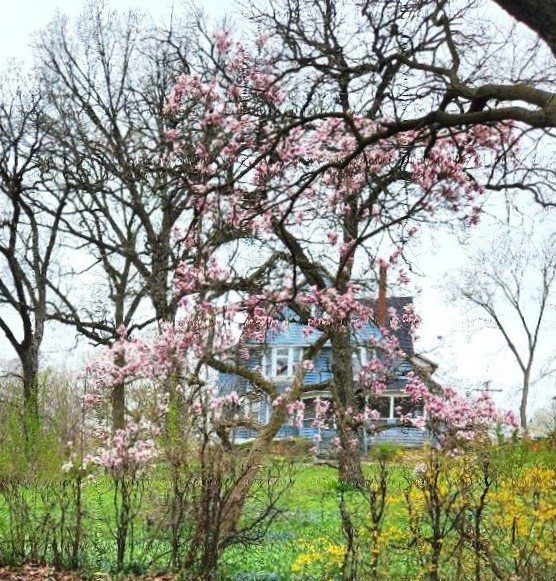
Some lovely springtime views can be found around Beverly and Morgan Park. This is the Reuben P. Layton House at 10324 Longwood Drive, glimpsed through magnolia, forsythia, and Siberian squill.
Siberian squill and forsythia were introduced into the U.S. by English settlers, and both became popular for gardens in the late 1800s.
Magnolias traveled in the opposite direction – the magnolias native to the southern U.S. were introduced into England and Europe by returning explorers and traders.
Edited: There are daffodils here, too – also introduced into the U.S. In fact, most of the gardens we build are full of plants not native to the U.S. They come from tropical areas so they only last through the summer, or they have been hybridized to withstand our northern climate. Too many people still think of our native prairie plants as "weeds."