Explore the RHS Facebook Archives, a rich repository of local history written by Carol Flynn. For two decades, Carol brought a deeply dedicated voice to public education at RHS. Her role as Facebook administrator through mid-2025 naturally extended her prolific research into meticulously detailed articles, most notably her multi-part historical series posts. Today, Carol continues her local history writing for The Beverly Review and other outlets.
Independence Day
The Ridge Historical Society
July 4, 1925 – Fireworks
By Carol Flynn
One hundred years ago on the Ridge, the community held a July 4th festival at Ridge Park at 96th Street and Longwood Drive.
Included were sporting competitions, awards for a house-decorating contest, a historical pageant, and family picnics.
The day started early with the “explosion” of a fireworks “bomb” calling people to the festivities. Fireworks also were displayed in the evening.
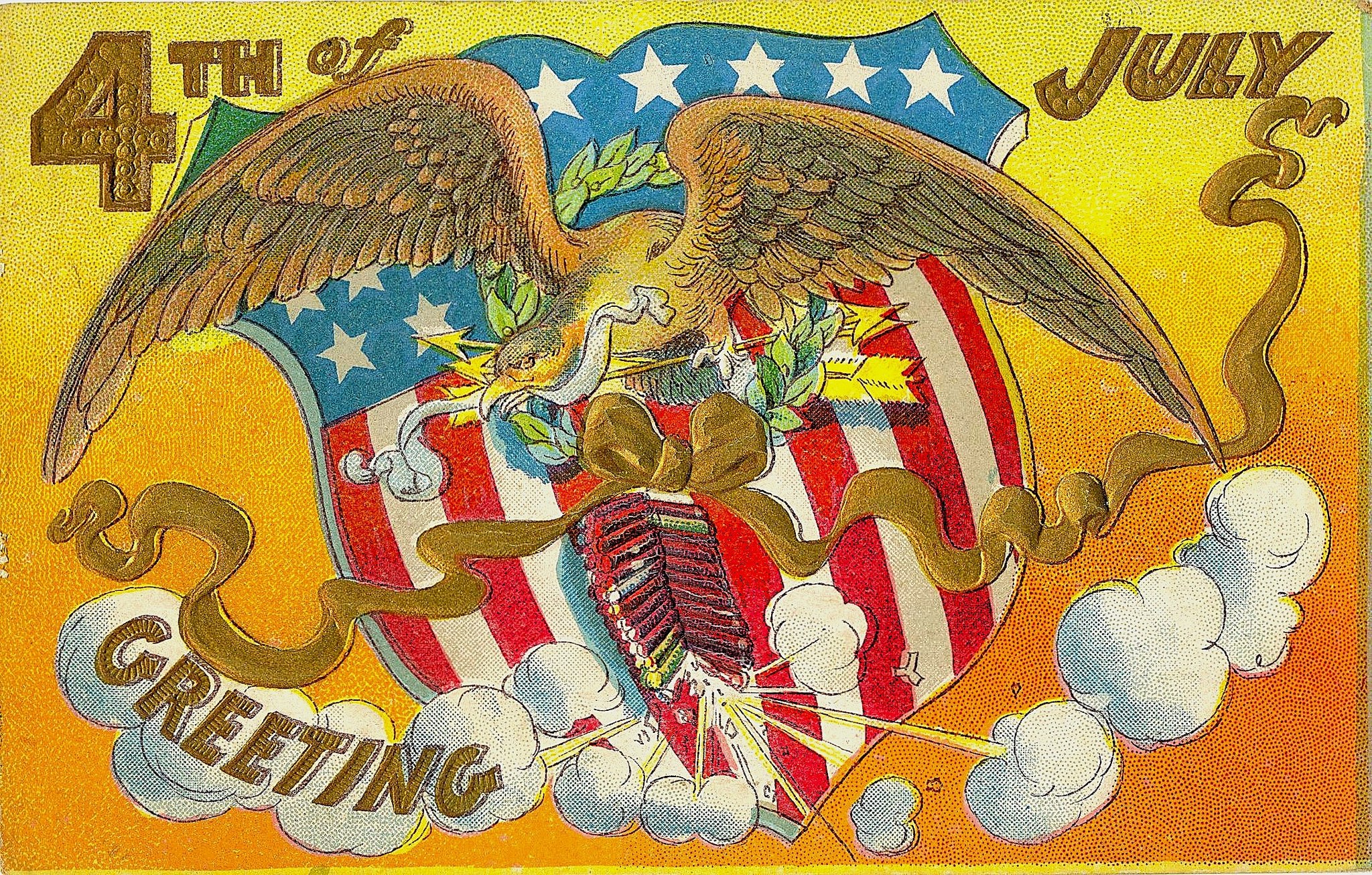
Fireworks are a significant part of the United States Fourth of July holiday – “the rockets’ red glare, the bombs bursting in air…,” and all that.
However, in Chicago and in Illinois, there are strict regulations on the possession and use of fireworks – which largely go unheeded.
Fireworks have created controversy since the earliest days in Chicago. The issues mainly relate to safety and fire prevention, of course.
As early as the 1860s, there were city ordinances banning the storage and use of fireworks without permits in the city. Following the Great Chicago Fire in 1871, the city increased its efforts to establish and enforce controls, but especially at the time of July 4, the ordinances were largely ignored.
And the members of the Chicago City Council themselves did not always support the ordinances.
In 1883, for example, the City Council lifted the ban on fireworks and shooting off firearms just for the 4th of July. They had given way to the demands of their “friends” who were sellers of fireworks.
The result was numerous deaths and injuries. The Chicago Tribune had taken a stance against lifting the ban for even the one day, and after the holiday, challenged Mayor Carter Harrison, Sr., on the decision, given the damage that occurred.
“I don’t think it would have made any difference. Five thousand policemen could not have prevented them from shooting,” said the mayor. “The Lord takes care of the boys. Some of them may get banged up a little, but they will come out all right. I do not believe in taking away the Fourth of July from them. It is a day that they should commemorate and hold sacred.”
The Tribune reported on the people who “got banged up a little.”
They included Thomas Kelly, a railroad man, who was shot in the abdomen by “a wild pistol shooter” and languished for several days before dying in the hospital.
There was also Charles Heradek, killed by a 13-year-old boy, whose mother told him to put the gun away and keep his mouth shut about what he had done.
Nine-year-old Katie Willard was killed by a bullet that lodged in her spine; young sisters Lizzie and Rosa Younk were “maimed” by a large firework; John Anderson was shot in his hand by his little boy; Thomas Garrity, 18, received a “large ragged wound in the face near the left eye” from a “toy pistol in the hands of a friend.”
A court ruling in 1903 caused cities across the U.S. to look at the fireworks situation with a new seriousness.
A fireworks explosion at an election night event in November 1902 in Madison Square Garden, New York City, resulted in a death and other serious injuries. The city’s aldermen had suspended the ordinance banning fireworks to allow the political parties to hold such events.
The court found that the city could be held liable for the deaths, injuries, and damage. New York City was successfully sued by several parties.
This caused cities to renew their commitments to enforcing bans and requiring permits for fireworks.
By 1925, selling and using fireworks and shooting guns within the Chicago city limits were banned by city ordinances. Fireworks could be used at events by experienced handlers with permits.
In late June 1925, the city vowed to “rigidly enforce” the laws on illegal fireworks. There had already been 14 deaths and two major fires from fireworks explosions leading up to the July 4th holiday.
An 8-year-old boy, Daniel Perry, had died from eating a firecracker. Another woman, Sophia Oxstein, walking down the street carrying her baby, had been hit by a charge from a “toy cannon” built by a 17-year-old neighbor.
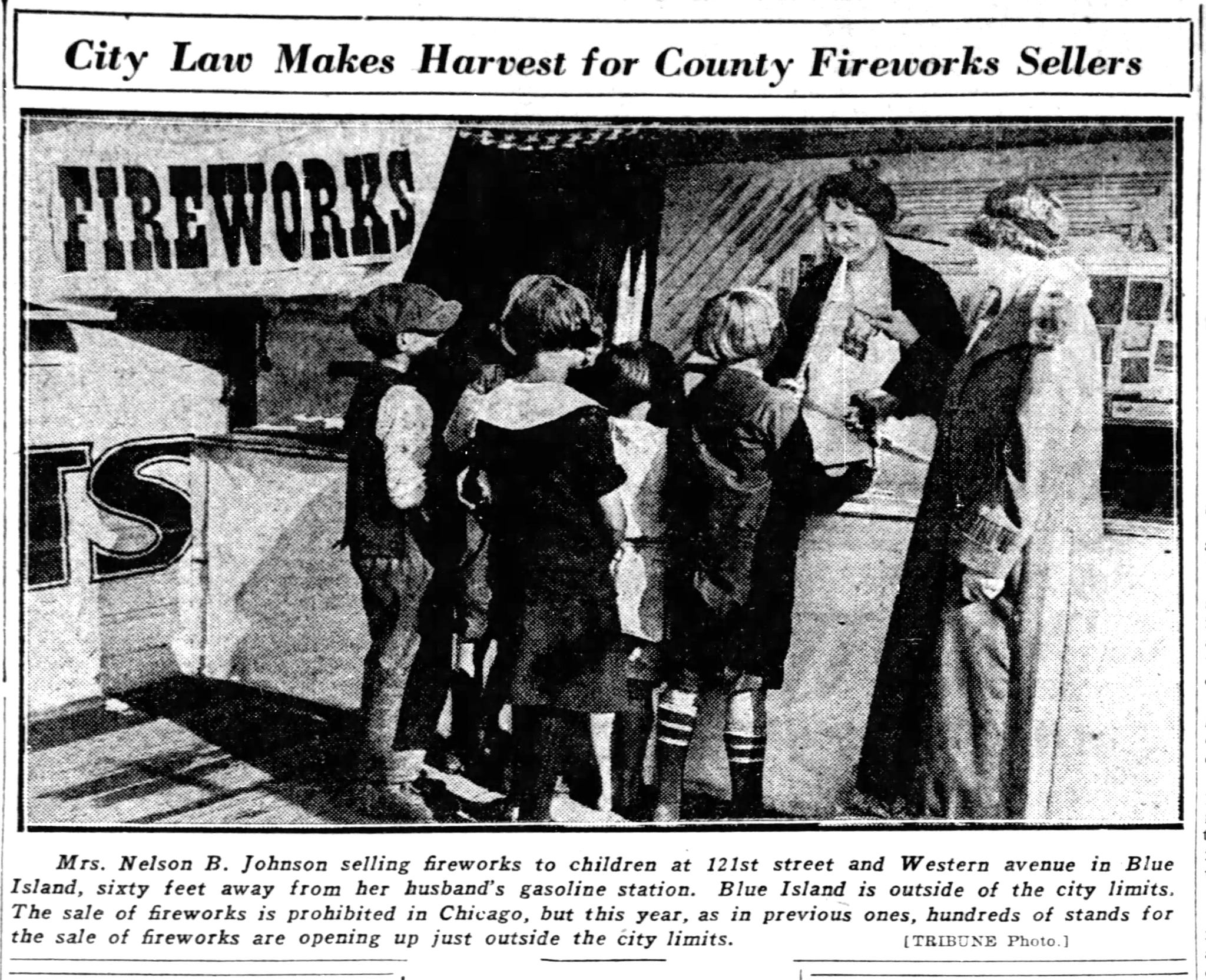
But fireworks could still be legally purchased in the rest of Illinois, and Chicago residents only had to walk across the street into a suburb to find roadside stands.
Ridge residents could cross 119th Street into Blue Island and find a fireworks stand just two blocks away. Chances are they could also find them in Evergreen Park across Western Avenue.
The Chicago Fire Commissioner had contacted 65 nearby municipalities to ask for their help in stopping illegal sales of fireworks, but not all had replied.
The purveyors of illegal fireworks caught in Chicago were given three options: “Put the fireworks in a water barrel, take them outside the city limits, or be arrested.”
On January 1, 1942, Illinois implemented a law to prohibit the sale and use of fireworks within the state. City and county officials would be allowed to grant permits for supervised displays, with a “competent individual” handling the display.
Today, Illinois has one of the most restrictive laws controlling the sale and use of fireworks, and even some of the items the state allows, like sparklers, are prohibited in the City of Chicago. Other states have various restrictions, and a few states have no restrictions at all.
The Ridge Historical Society
Fourth of July 1922
By Carol Flynn
The Ridge was busy with everyday life as the Fourth of July approached one hundred years ago.
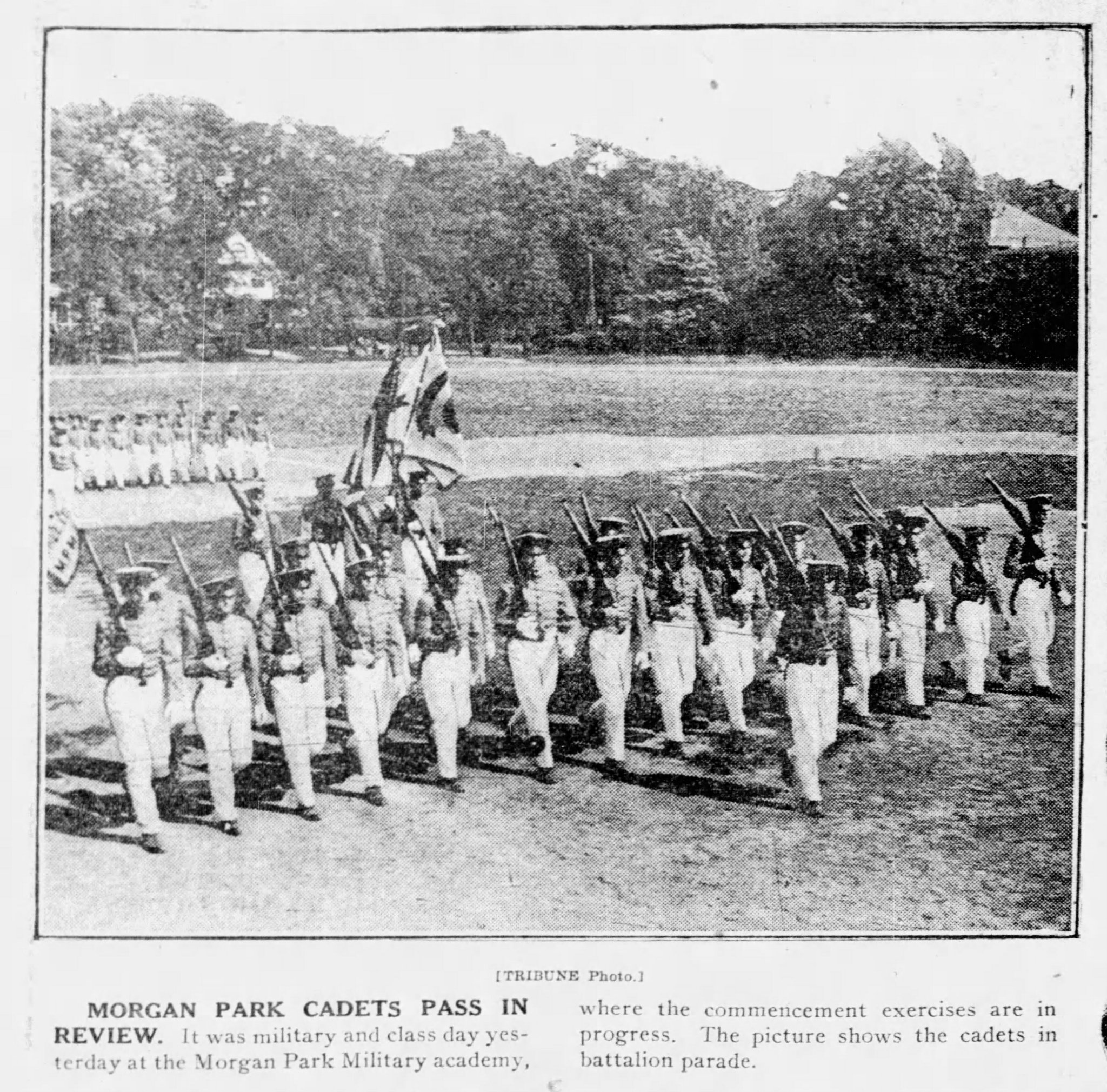
School had come to an end for the summer and graduation exercises had taken place. A picture of the cadets at the Morgan Park Military Academy parading in formation appeared in the Chicago Tribune.
Betty Frances and Irma Permelia Palmer of 96th Street gave a “good-bye before vacation” party for their schoolmates. Their mother was Pauline Palmer, the local correspondent for the Englewood Times newspaper for many years, and it was she who reported the neighborhood news in the 1920s.
Classes from the local schools enjoyed picnics in the Beverly Woods [which hadn’t been renamed the Dan Ryan Woods yet].
Tammie A. Wilcox, a teacher at the Vanderpoel School, received a Master’s degree from the American Conservatory of Music.
Newly ordained priest Father Lester Lyons of 98th and Winston celebrated his first solemn Mass at St. Margaret of Scotland Church. The “beautiful and uplifting service” was followed by “a sweet after-service” enjoyed by his relatives, friends, classmates and admirers.
Graduating college senior William G. “Bud” McCaw of 98th and Longwood was awarded the western conference medal by the Indiana University faculty for his scholarship and athletic record. He maintained a “B” average while earning his college letter “I” in football.
College students returned home for the summer. The Fitch family of 94th and Pleasant traveled to Ohio to collect sons Donald and James from Denison University. Katherine Hodges of 97th and Vanderpoel was home from Rockford College.
There were the usual illnesses and injuries. The little Kennicott son of 113th and Lothair was recovering from diphtheria. Miss Charlotte Slater had an operation for appendicitis at St. Luke’s Hospital. Mrs. Roy Baxter and her sister were badly cut and bruised when their automobile was smashed into at 103rd and Longwood. They were grateful to their neighbors Mr. Heffernon and Mr. Davis for coming to their assistance.
Folks made summer trips. Charles Lacklore of 111th and Longwood was in Seattle to visit his mother. Mr. and Mrs. Harry Mikesell were in Sturgeon Bay, Wisconsin. Dr. J. H. DeLoach went to Georgia on business. Mrs. Bulkley visited St. Louis and upon her return her daughter and son-in-law were planning to stay with her for the summer.
June weddings were popular. Gertrude Kilian and Charles Sikes had their wedding supper at the community center on 103rd Street, followed by a dance at Valentine’s hall at 103rd and Charles St. Marion Grozier married U. S. Navy Ensign Harry Keeler, Jr., of 96th and Longwood Drive, and prepared to move to San Diego, where the groom was assigned duty on a destroyer.
There were public safety concerns. The paper reported that it was “a favorite stunt for moonshine-filled autoists” here for funerals to drive through the local streets at “reckless speed from forty to sixty miles an hour,” and something had to be done to prevent this.
Neighbors were awakened by a “terrific” early morning explosion at the Beverly Hills News Agency at 98th and Wood Street, which resulted in a small fire and some damage. It was wondered if this was intentionally caused by someone with a grudge or if it was just an accident.
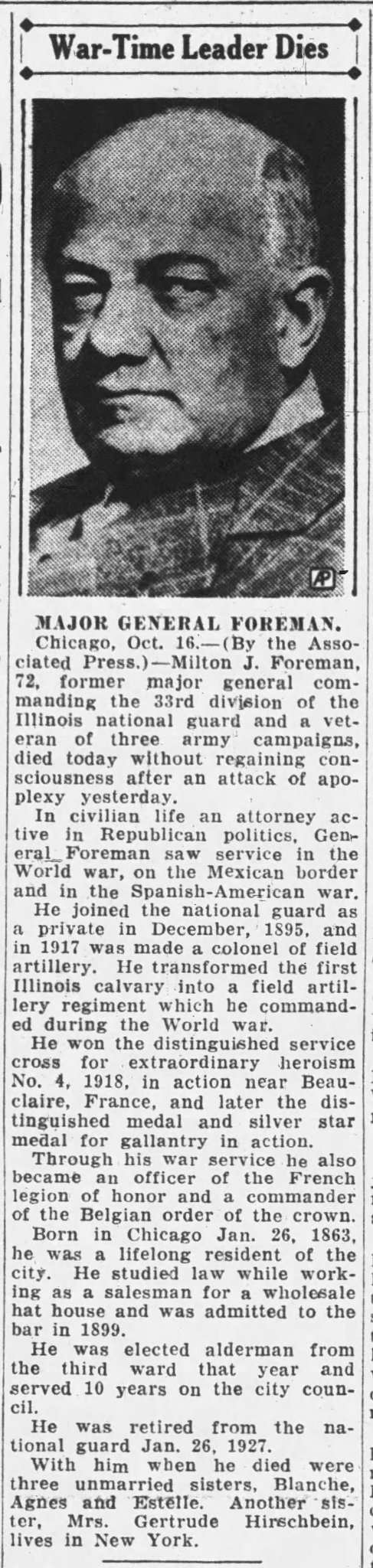
The Fourth of July program for the community was planned to start at 9 a.m. and end with a fireworks show at 9 p.m. – “if the weather man smiles.” Included in the day would be a band concert, community singing, athletic competitions and displays, and a baseball game between Morgan Park and Ridge Park teams. Major General Milton J. Foreman, a distinguished World War I veteran and leader in the Illinois National Guard, was invited to be the speaker.
The Ridge Park swimming pool would be open on the fourth, and “big and little, and grandparents, and all the rest, have their suits and caps and water wings ready for a plunge.”
Summer activities would go on after the holiday. The Vanderpoel School would be open on Sundays from 3:00 to 5:00 p.m. so people could visit the art collection. [The Vanderpoel Art Association would move to the Ridge Park field house when it was built in a few more years.]
St. Margaret’s Church was planning its annual carnival for the week of July 15. Mrs. John Finan of 100th and Prospect was the chair of the event.
Saturday afternoon at Ridge Park at 97th and Longwood was known for its “crackerjack ball games” and enthusiastic crowds.
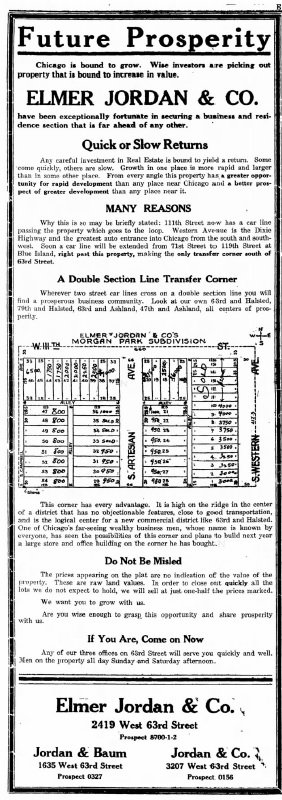
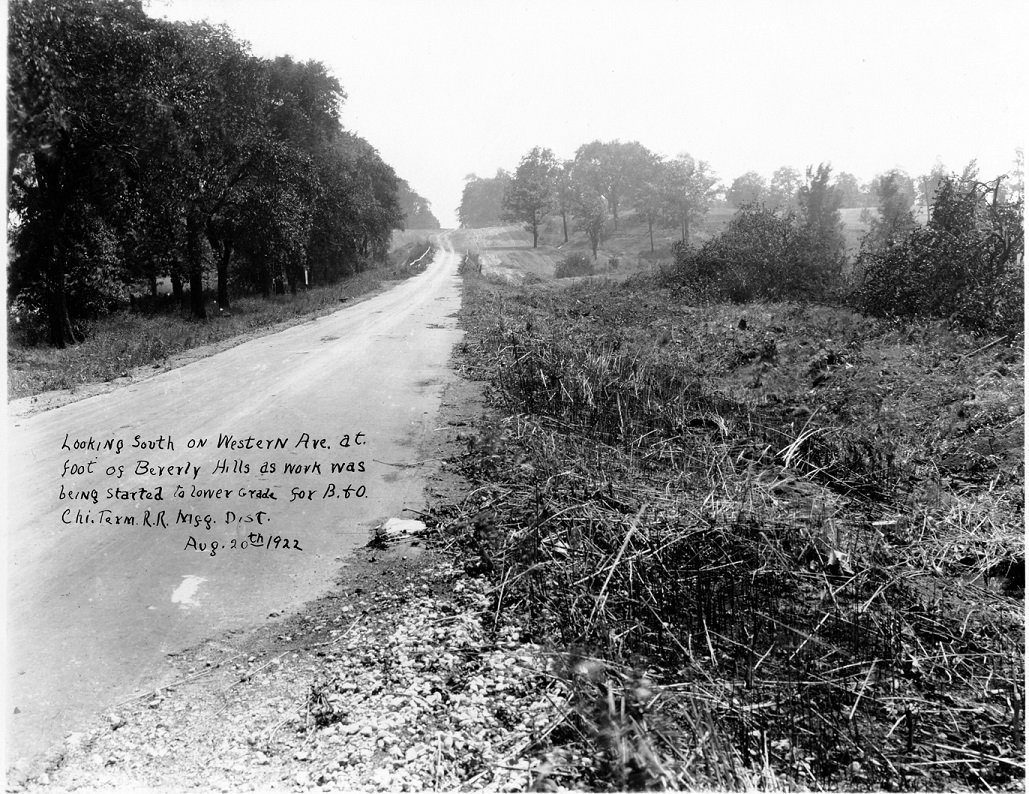
The community kept growing. The southwest corner of 111th Street and Western Ave. [where today the Beverly Arts Center is located] had just been sold to W.J. and Edward Birk for $22,500. There were ads in the local paper from Elmer Jordan and Co. offering real estate plots in this section for sale as the “Morgan Park Sub-Division.” The land was still very rural, and a project to widen, grade, and pave Western Avenue was in the works.
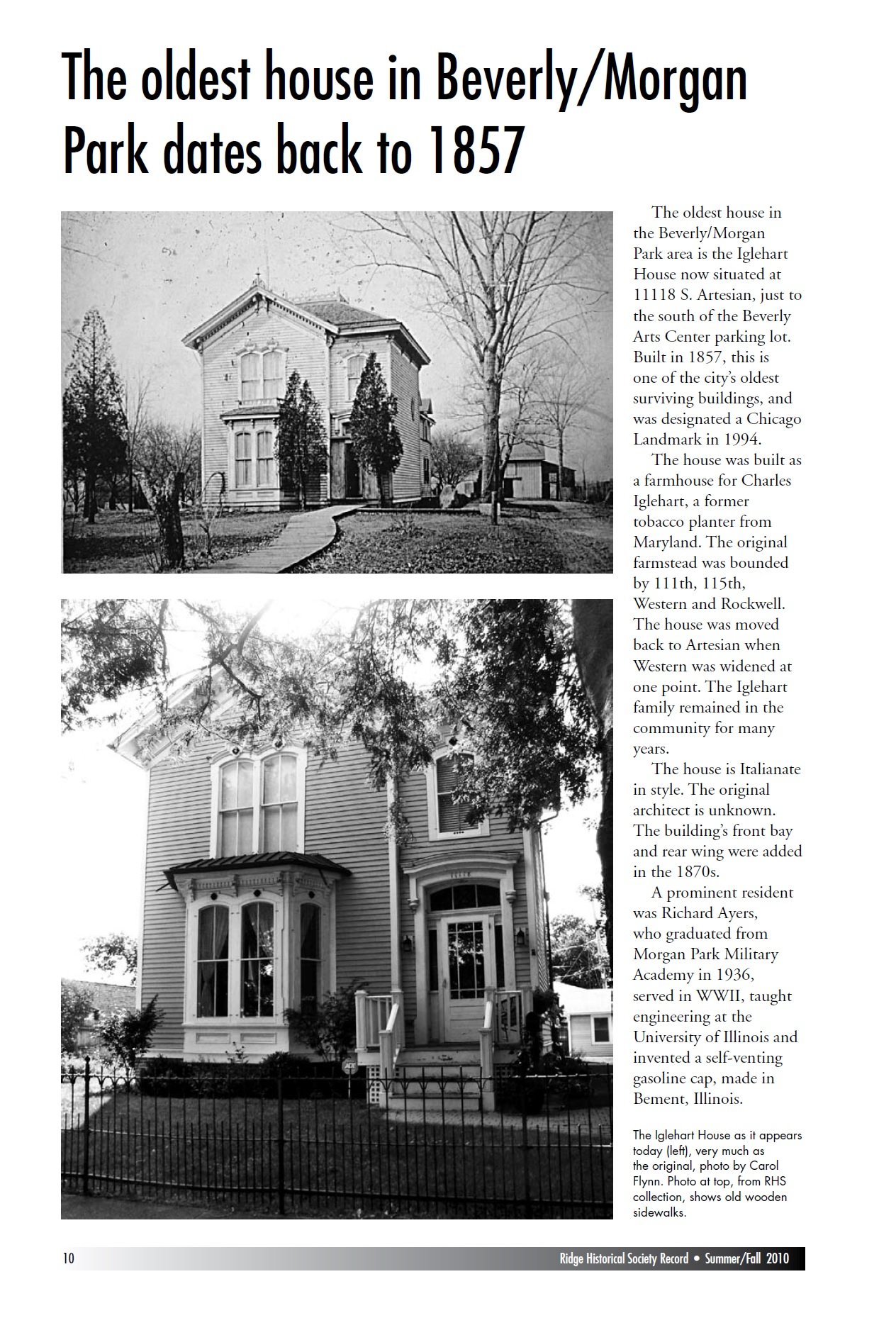
The oldest house in the community, and one of the oldest in the entire City of Chicago, the Iglehart House, is located in this neighborhood at 11118 S. Artesian Ave.
Life went on.
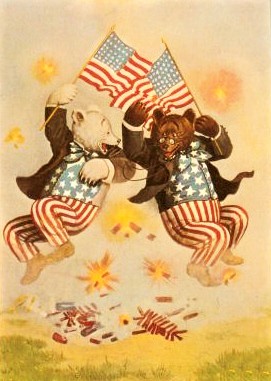
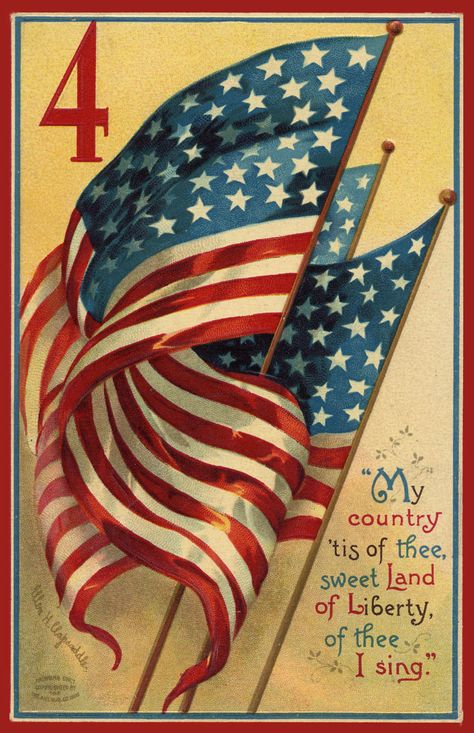
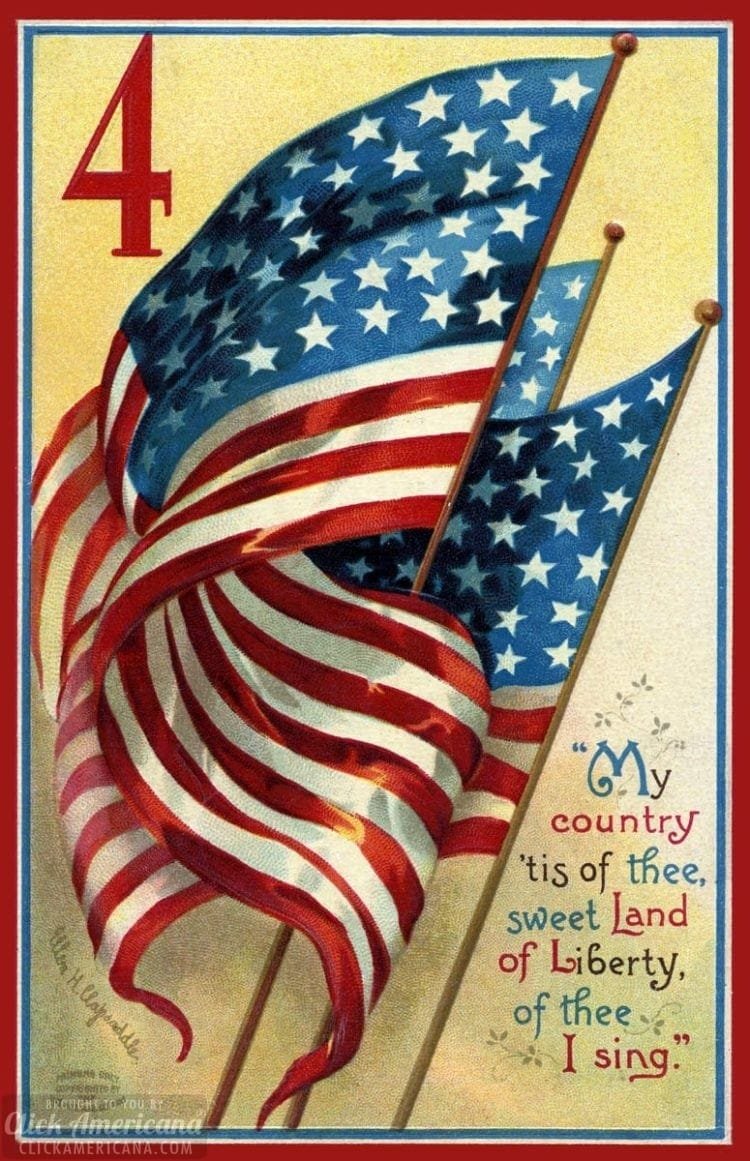
Happy Fourth of July from the Ridge Historical Society! Here are some vintage postcards to celebrate!