
Explore the RHS Facebook Archives, a rich repository of local history written by Carol Flynn. For two decades, Carol brought a deeply dedicated voice to public education at RHS. Her role as Facebook administrator through mid-2025 naturally extended her prolific research into meticulously detailed articles, most notably her multi-part historical series posts. Today, Carol continues her local history writing for The Beverly Review and other outlets.
Juneteenth
The Ridge Historical Society
Beverly/Morgan Park’s “Forgotten House” – Part 2: The Barnard Family and Juneteenth
By Carol Flynn
Today, June 19th, is “Juneteenth,” the day chosen to commemorate the end of slavery in the U.S. On June 19, 1865, the Emancipation Proclamation was enforced in Texas following the end of the U.S. Civil War.
This important date in U.S. history offers a good place to start with the history of Beverly/Morgan Park’s “forgotten house” and the family who built it.
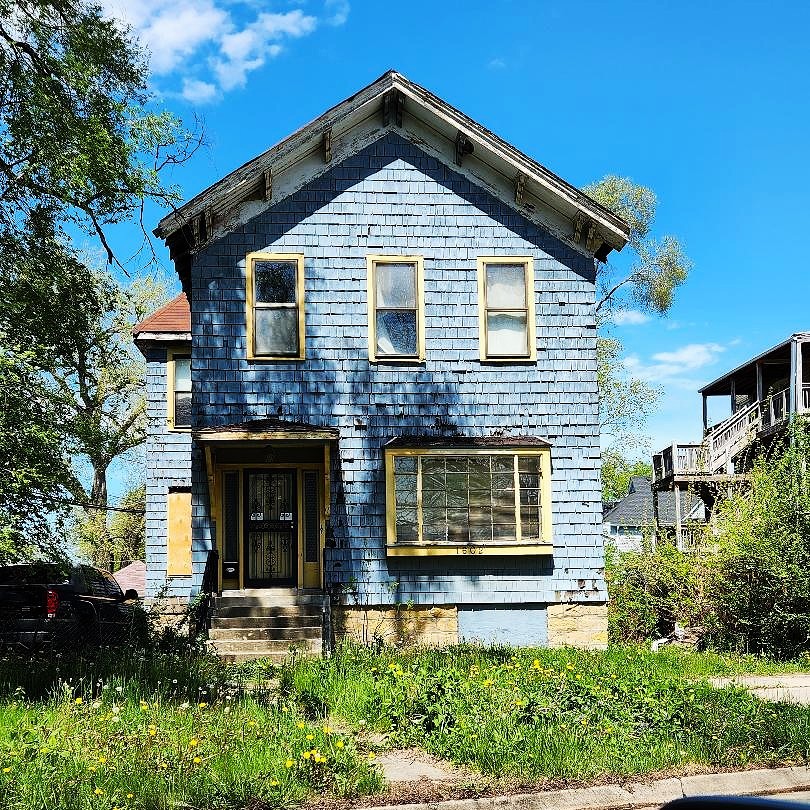
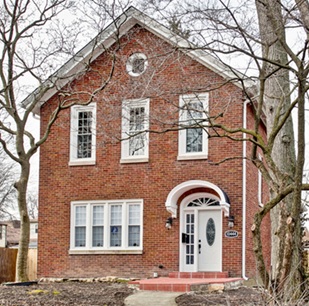
The Erastus A. Barnard I House was introduced in the first post of this series. Recently rediscovered by RHS Board member Tim Blackburn, this house is located at 1602 West 108th Place in Morgan Park. Tim’s research found that the house was built ca. 1865 and moved to its present location in 1924.
The age of the house makes it important – it joins the list of less than 1,000 buildings in the city that pre-date the Great Chicago Fire of 1871. Considering there are around a half million structures in the city, this house is rare indeed.
The history of the Barnard Family that built the house also makes it important. They were among the earliest white settlers on the Blue Island Ridge.
The family story relates that William Barnard graduated from Amherst College in 1845 and decided to head out “west” to Iowa where many settlers were establishing farms.
In Chicago, a chance meeting with Thomas Morgan, the rich Englishman who had purchased around 3,000 acres of land on and around the Ridge, and whose family gave its name to Morgan Park, led William to instead move to the Ridge to become a tutor for the younger Morgan children.
William Barnard boarded with the Wilcox Family, another early family on the Ridge who had purchased land along the Vincennes Road in 1844 that included the Gardner House, a wayside stop for wagons and travelers making their way to and from Chicago, which was about twelve miles to the northeast.
William Barnard’s parents and his brothers and sisters came to Chicago in 1846 and settled around what today is 47th Street and Vincennes Avenue.
William Barnard bought his own property on the Ridge in 1851 and took up farming. He was joined by his brother Erastus, and William sold 80 acres of his land to Erastus in 1852.
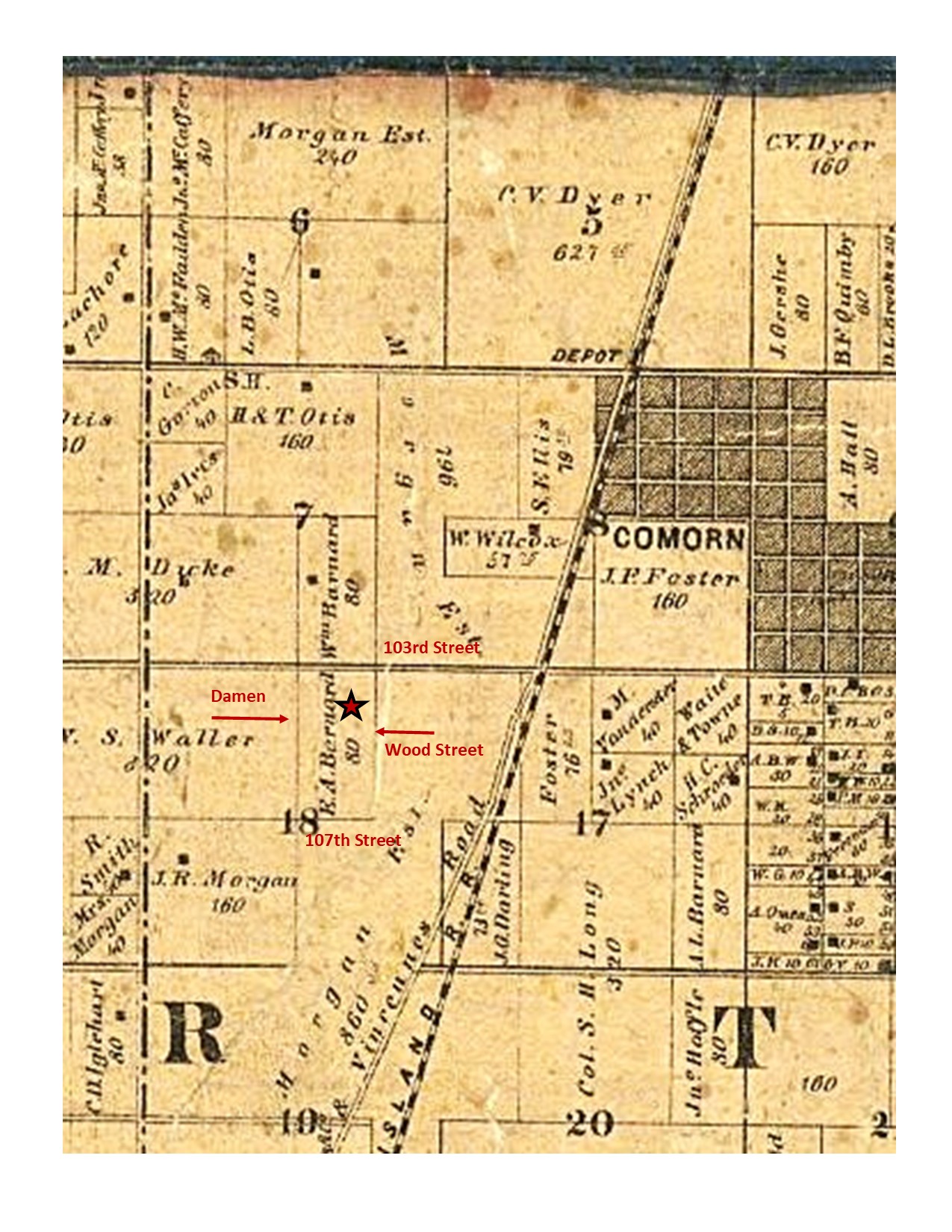
Erastus’s land, adjacent to that of William, ran from what today is Wood Street on the east to Damen Avenue on the west, and from 103rd Street on the north to 107th Street on the south.
William and Erastus Barnard each married a Wilcox sister. William married Miranda Wilcox in 1852, and Erastus married Mary Lavinia Wilcox in 1862.
The Barnard/Wilcox families, fortunately, recorded their history on the Ridge. William and Miranda’s daughter Alice Sarah, born in 1854, was especially prolific in writing down family stories, and it is her retelling of family events in the 1860s that gives us a glimpse of life on the Ridge during the U.S Civil War, and allows us to make the connection to Juneteenth.
Alice’s stories relate to her family harboring fugitive slaves on their properties in the early 1860s, before the Civil War ended in 1865. Their properties were never official stops on the Underground Railroad, the secret network of routes and safe houses established to help slaves escape to freedom, which usually meant leaving the country.
Illinois was a “free state,” that is, slavery was not allowed; however, federal law protected the rights of slave owners in other states.
The Chicago area was a well-established thoroughfare for escaped slaves, often referred to as “freedom seekers” today to emphasize their inherent human right to freedom and not their illegal status as escaped property. The route through Chicago led north to freedom in Canada.
There were severe penalties, including steep fines and imprisonment, for anyone caught helping freedom seekers. As a result, people kept their efforts secret and didn’t even discuss them with neighbors.
Two Barnard/Wilcox family stories were passed down, dating from the early 1860s. The first came from Alice about the Gardner/Wilcox House: “When I was a little girl, standing by my mother, her brother in a tense whisper said something in her ear. With a look of surprise she said ‘Another?’ It was many years after, before I learned what this might mean.”
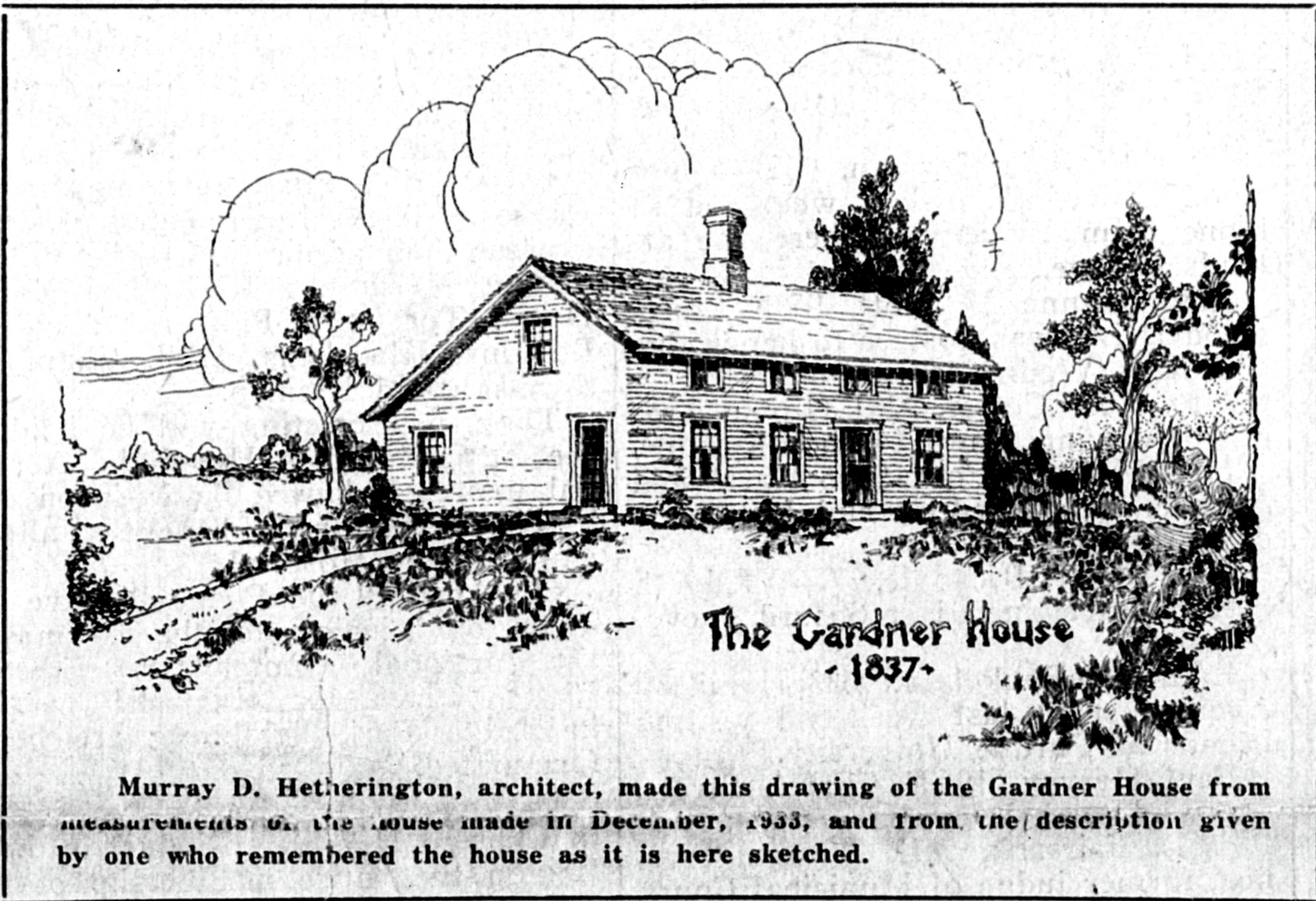
What Alice learned was that her uncle had discovered another escaped slave in an outbuilding of the Gardner-Wilcox House, which was located at what today is 9955 S. Beverly Avenue. That house was torn down in 1934, and a plaque commemorating its history is now part of the RHS collection.
The second story is attributed to Mary Lavinia Wilcox Barnard, Erastus’s wife, and was likely recorded by her niece Alice: “A few times my husband would find a fugitive slave laying in the hay of the manger where he could feel the warm breath of the cattle. We don’t know if the other farmers had similar experiences because we never told. You didn’t know which side they were on.”
The exact location of this early barn on the property of Erastus and Mary Lavinia is not known with complete certainty.
The three Barnard brothers, four of the five Wilcox brothers, and two Morgan brothers went off together to fight on the Union side in the Civil War. The Barnards and Morgans all returned home, but two Wilcox brothers lost their lives.
In the 1850s, Erastus Barnard had initially built a log cabin on his land. After he returned from the war in 1865, they built the house that now stands on 108th Place, that was moved from the corner of 103rd Street and Longwood Drive, but that might not have even been the first location of that house.
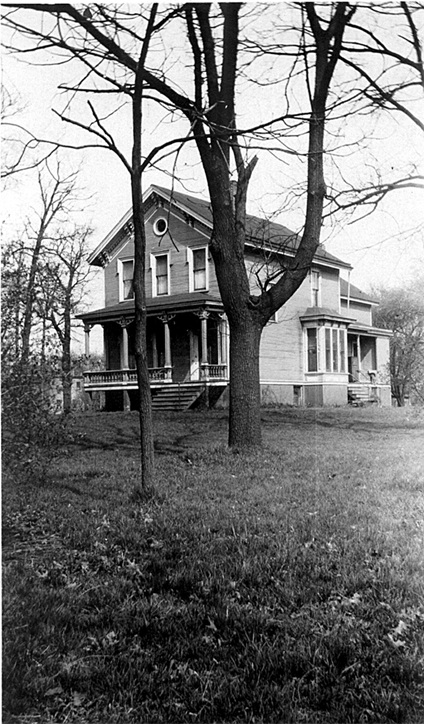
In the 1870s, they sold that house and some of their property, and built another house, the Erastus A. Barnard II House, between 103rd and 104th Streets on Wood Street. That house was moved to 10444 S. Wood Street, where it now stands, and substantially altered from the original.
It's likely that the first log cabin and the barn where the freedom seekers sought refuge were in the vicinity of 103rd – 104th Streets and Wood Street, closer to the Vincennes Road and the Gardner/Wilcox House. We do know that Erastus and Mary Lavinia always lived on that original 80-acre homestead.
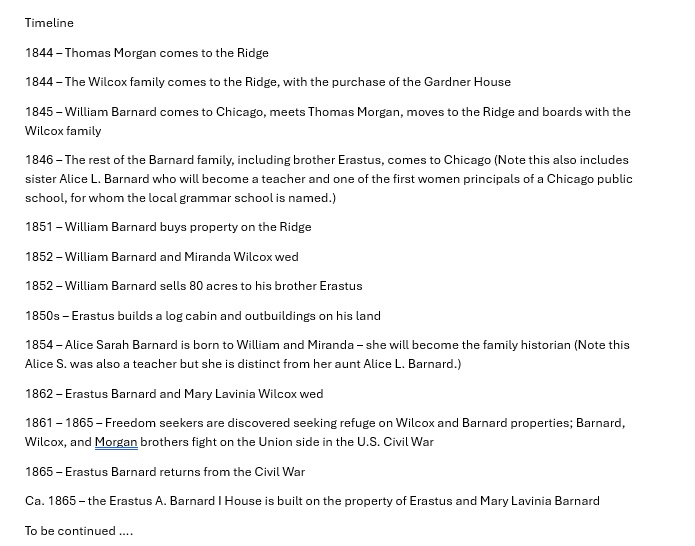
If all of this seems confusing, don’t worry – there are often more questions than answers from some of this research. A timeline clarifying some of this is attached, and will be added to as the story progresses.
The next posts will cover more on the Barnards, and the history of the first Erastus A. Barnard I House, including moving it to its present location.
The Ridge Historical Society
Juneteenth
By Carol Flynn
Juneteenth National Independence Day became a federal holiday just last year. It is celebrated today, June 19th, although tomorrow, June 20, will be the day off from work or school.
The day celebrates the emancipation from slavery for African Americans, based on a proclamation of freedom in Texas on June 19, 1865. In December of that year, the end of slavery became official with the ratification of the Thirteenth Amendment to the U.S. Constitution.
The Ridge’s connection to emancipation is through the many men and women who lived here or moved here later who are documented as serving the Union cause during the U.S. Civil War. Some of these people were connected directly to Abraham Lincoln, and knew him going back to his earliest days practicing law and politics in Illinois.
The Ridge community was the site of the Gardner House, an inn along the Vincennes Road known as a refuge that harbored escaped slaves in the decades before the Civil War.
The Gardner House was located at 9955 S. Beverly Avenue. It was demolished around the early 1930s.
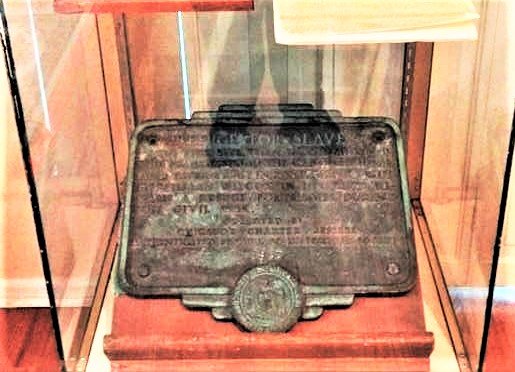
The Ridge Historical Society (RHS) collection includes the plaque that stood at the site for decades but fell into disrepair. The plaque reads:
REFUGE FOR SLAVES
On this site then in the midst of the prairie stood the Gardner
home and tavern built in 1836, it was bought by William
Wilcox in 1844 and became a refuge for slaves during the Civil
War.
Erected by Chicago’s Charter Jubilee
Authenticated by Chicago Historical Society – 1937
According to the History of Cook County by Andreas, Jefferson Gardner built an inn around 99th and Beverly, along the Vincennes Road, in 1836. He didn’t stay long and sold the property to the Wilcox family in 1844. The Wilcox family bought the place sight
unseen and moved here from New York.
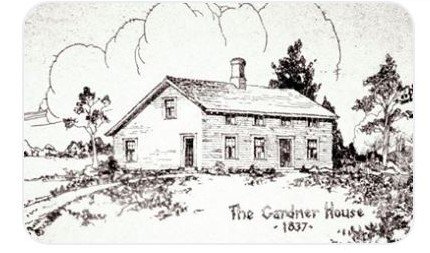
The house was described as a spacious one and a half story house, with land that went from around 95th Street south to 107th Street, and Prospect Avenue east to Racine. Much of the land was left as prairie, but some of the land was farmed, and there was an apple orchard.
It was reported in early histories that although never an official stop on the Underground Railroad, two or three times fugitive slaves were found sleeping in the out buildings. They were fed, and went on their way, likely north to freedom in Canada.
There were five Wilcox brothers, and four served in the Union Army during the Civil War. Two of the four were killed in action. The fifth brother stayed home to run the farm, a common practice of the day.
The image of the Gardner House was drawn by the architect Murray Hetherington in 1936 from descriptions given to him by someone who remembered the house.