
Explore the RHS Facebook Archives, a rich repository of local history written by Carol Flynn. For two decades, Carol brought a deeply dedicated voice to public education at RHS. Her role as Facebook administrator through mid-2025 naturally extended her prolific research into meticulously detailed articles, most notably her multi-part historical series posts. Today, Carol continues her local history writing for The Beverly Review and other outlets.
Memorial Day
Ridge Historical Society
Part II – Memorial Day – More on the Civil War and the Ridge.
Carol Flynn, RHS Communications
Decoration Day, which became Memorial Day, evolved because of the Civil War. This is a continuation of the post started yesterday about the Civil War and the Ridge.
Almost all the soldiers from the Chicago area who fought for the Union in the Civil War were volunteers. Some of these men likely heard Abraham Lincoln speak while he was running for president, at one of the hotels Lincoln frequented, like the Tremont House.
Families started settling around today’s Beverly/Morgan Park area in the 1830s. The entire area was called Blue Island back then. This post will look at four of these families – Rexford, Wilcox, Morgan and Barnard – and their experiences in the Civil War.
The Rexford family came in 1834 and built a large log cabin as a rest stop for travelers around what is now 91st Street, along the Vincennes Road, which they called the Blue Island House. A few years later they moved to the south end of the Ridge, which would become the city of Blue Island. The Wilcox family came in 1844 and took over the Gardner Tavern, another wayside stop which had been built in 1836 at 99th and Beverly Ave. The Morgan family came in 1844 and owned most of the land on top of the Ridge, establishing their estate around 92nd and Pleasant. The Barnard family came about 1846 to join the Morgans; William Barnard was tutor to the Morgan children. They settled around 101st and Longwood Drive. In addition to their other undertakings, the families established farms to grow crops and raise livestock.
The early families of course knew each other well. Two Barnard brothers married two Wilcox sisters. A Morgan and a Rexford married Robinson sisters, from another early family. When the Civil War started, brothers, friends, and neighbors enlisted and went off to war together. They wrote letters home to their families, some of which have been saved. Some of the men from the Ridge did not return.
Alice S. Barnard, whose mother was a Wilcox, wrote in 1924: “The ‘60’s – the decade of the Civil War!
…I was a very little girl. When Lincoln was candidate for president there was held in the North Blue Island school house [likely around 103rd and Vincennes] what was probably the first political meeting of the neighborhood…. Feeling at the meeting ran high….
“The call came for three month enlistments. In the Wilcox family were five sons. The two youngest enlisted. Returning at the end of this term they told the story of the reenlistment. Their company stood in line! The sign of reenlistment was a step forward – one after the other took the step – many hesitated. But finally all but one had taken the decisive step and when he finally came forward, wild cheering rent the air.
“The war went on, the two oldest sons enlisted, leaving the [fifth] brother incapacitated for military service to care for the farm and the aging mother. Of the seven Morgan boys several enlisted and all returned. Erastus A. Barnard marched with Sherman to the sea.”
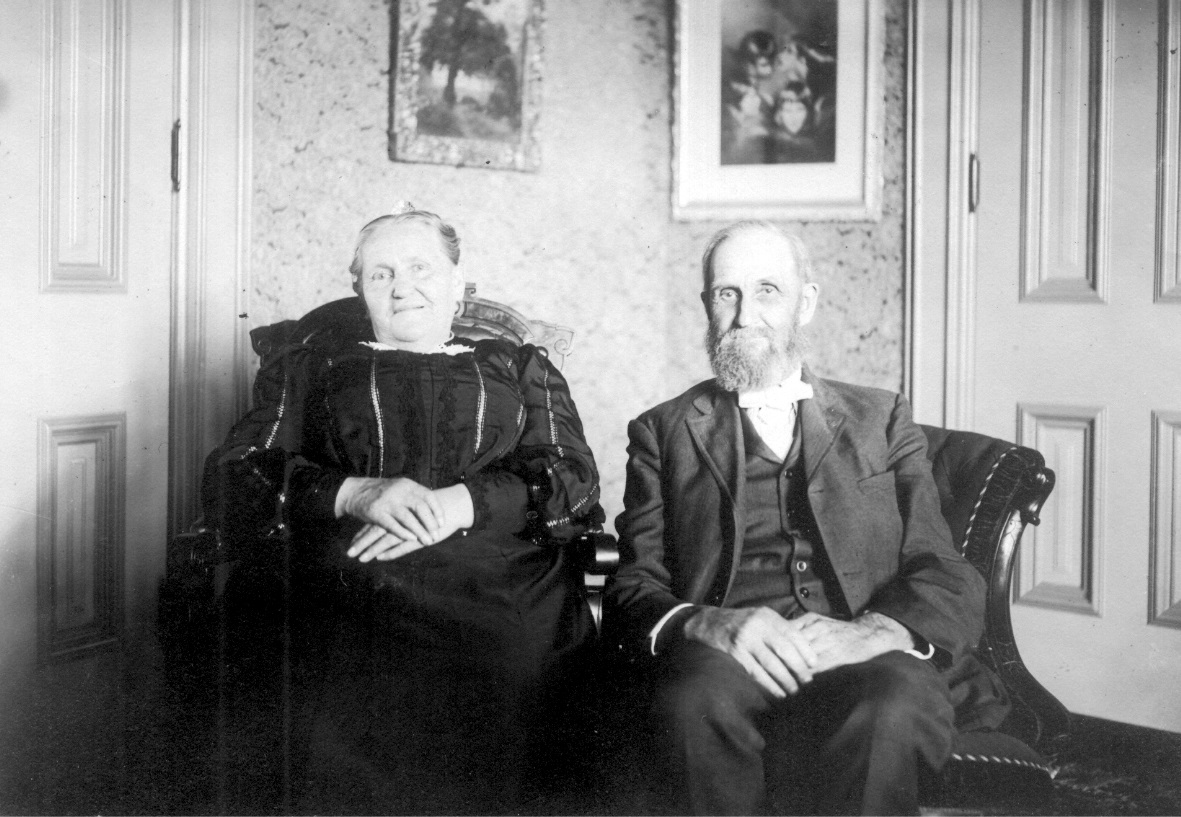
Brothers Erastus, William and Daniel Barnard all fought in the Civil War, all survived, and are all buried at Mt. Greenwood Cemetery. William had married Miranda Wilcox and was the father of William Wilcox Barnard and Alice Sarah Barnard, the authors of the histories we have been sharing. Erastus had married Mary Lavinia Wilcox. Daniel Barnard, who never married, formed his own company in which he served as Captain. Family lore says he fought in many battles and was never sick or wounded.
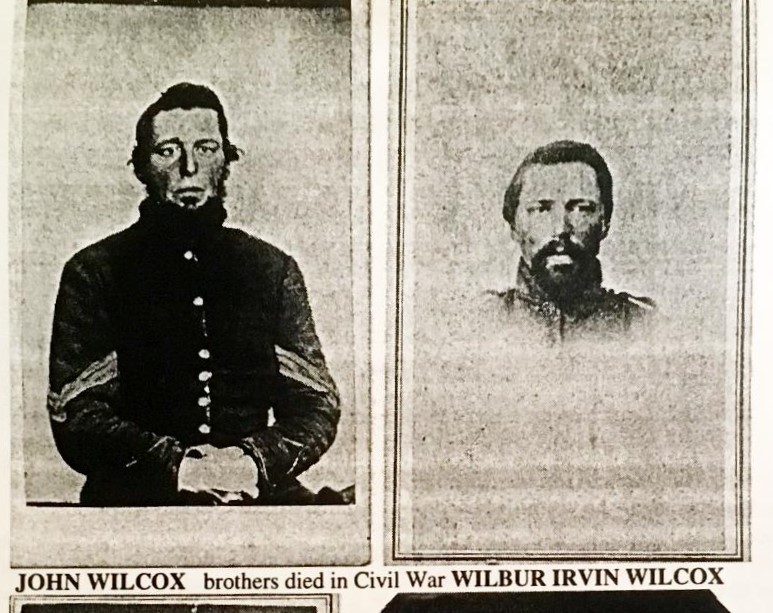
Four Wilcox brothers fought in the war, and the family was not as fortunate as the Barnards. John joined his friend Daniel Barnard’s company as a sergeant, and was killed in 1863 and buried at Chattanooga, Tennessee. He was 37 years old and left a wife and two sons.
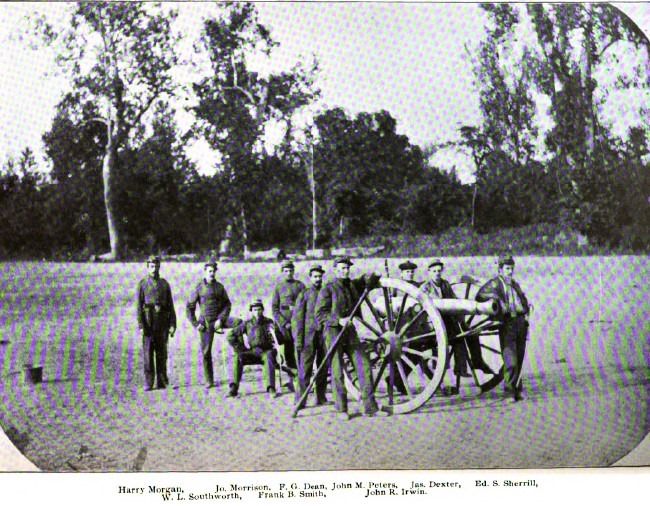
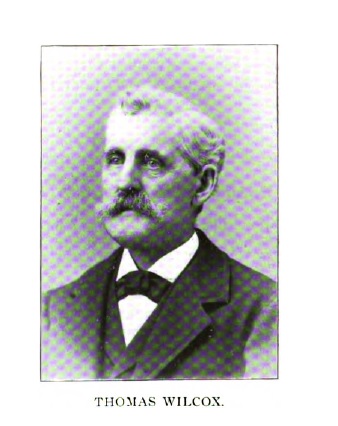
Wilbur, Thomas, and Willard Wilcox joined Company A First Illinois Artillery Volunteers, which the group itself called “Battery A.” Most of the men were from the Chicago area. Friends from the Morgan and Rexford families also enlisted with Battery A.
Thomas wrote home to his sister from Vicksburg, Mississippi, in 1863: “Have to stay at the guns [cannon] most of the time…. [We] opened on them one morning about three o’clock; for hours it seemed like a stream of fire from one end of the line to the other…. They cannot stand it much longer…. I would like to come home when we take Vicksburg. It seems a long time since I came away. Willard is as strong as ever…. I do not like soldiering, no way you can fix it.”
Unfortunately, Thomas was captured and held prisoner in Andersonville, Georgia, for eight months. His health deteriorated and he reportedly never fully recovered. He did return home, and in 1872 he moved his farm to Indiana, where he died in 1895. Willard also returned home and moved away from the Ridge.
Their brother Wilbur was not so fortunate. He was killed in Mississippi in 1863. He was 26 and single.
The fifth brother, William, stayed home to keep the family farm running during the war years. It was a common, and necessary, practice, to designate a family member to remain behind to continue the family business. He is the only Wilcox brother buried in a Ridge cemetery, Mt. Greenwood.
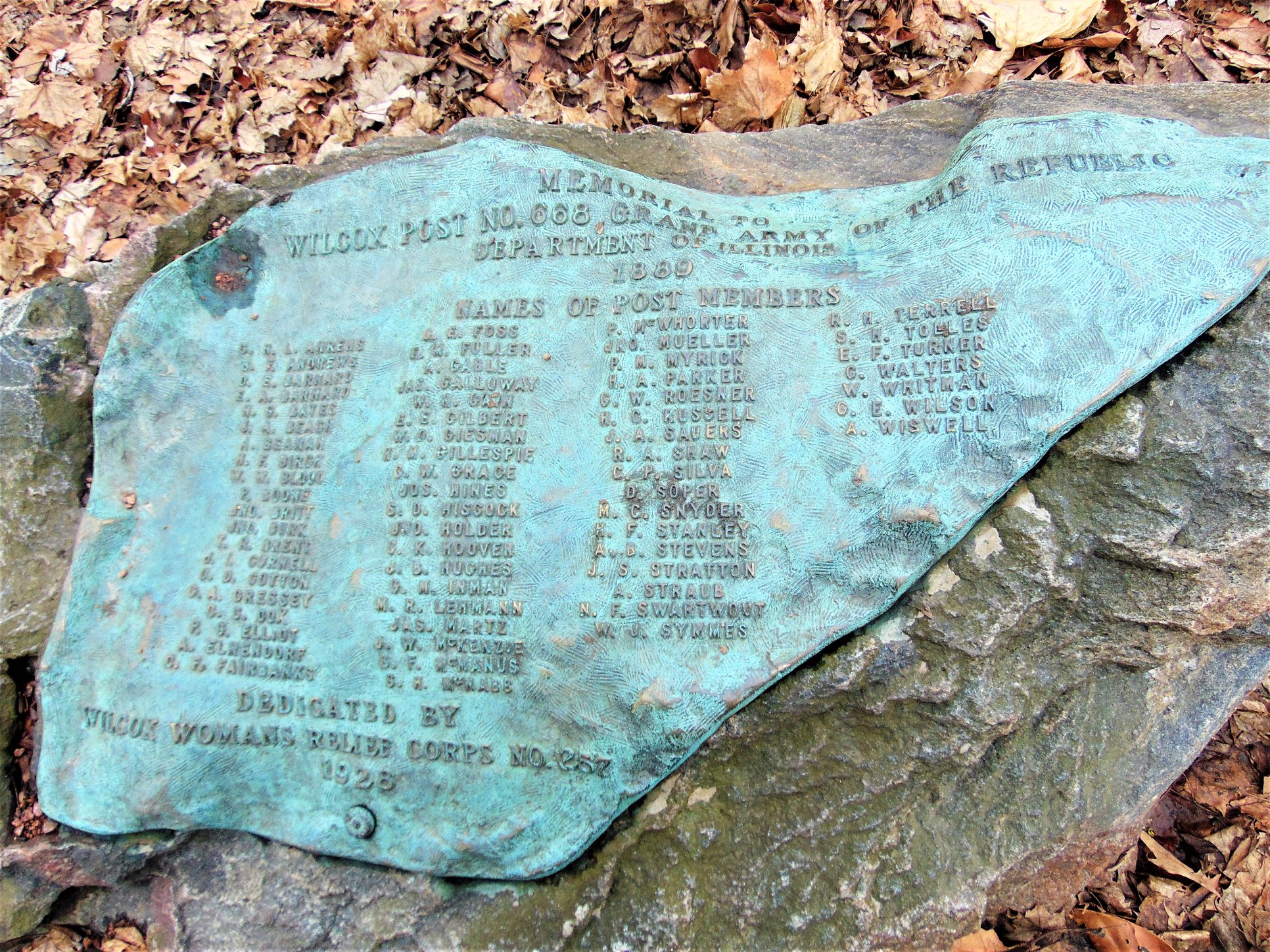
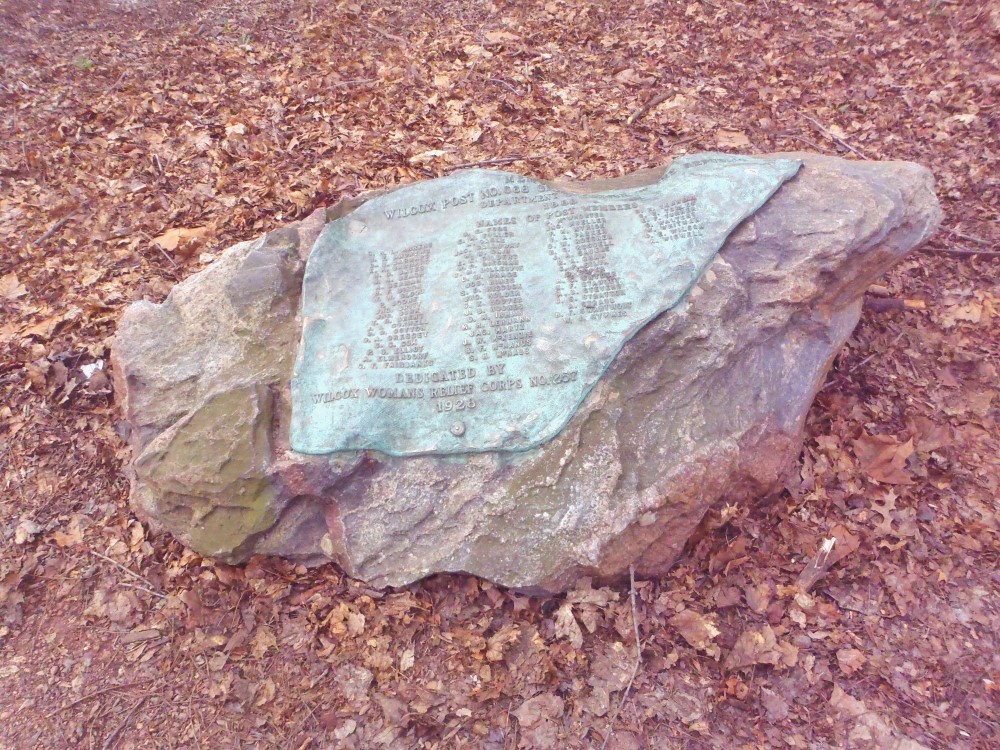
After the Civil War, the Grand Army of the Republic (GAR) was founded in 1866 as a fraternal organization for veterans of the Union military. A local branch, the Wilcox Post, No. 668, was founded in 1889. It was named in honor of the Wilcox brothers who served in the war.
A stone and bronze marker listing the charter members, created in 1928, is installed at Ridge Park at 96th Street and Longwood Drive. Charter members included Daniel and Erastus Barnard. Austin Wiswall, the young officer written about in yesterday’s post, who settled in Morgan Park after the war and is buried in Mt. Hope Cemetery, was also a charter member.
The GAR dissolved in 1956 at the death of its last member. The legal successor of GAR is the Sons of Union Veterans of the Civil War (SUVCW), open to male descendants of Union military veterans.
Next installment: The Rexfords and Morgans in the Civil War.
Ridge Historical Society
Part III – For Memorial Day: The Civil War and the Ridge
Carol Flynn, RHS Communications
Yesterday we posted about the three Wilcox brothers, Wilbur, Thomas, and Willard, who joined Company A First Illinois Artillery Volunteers (“Battery A”) to fight for the Union cause in the Civil War. The Wilcox family was one of the first families on the Ridge, arriving here in 1844.
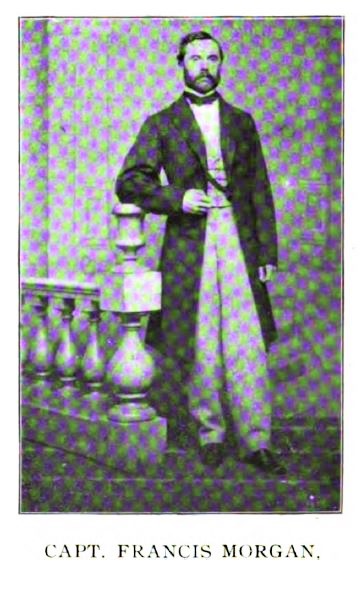
The Rexford brothers, Roscoe Eugene and Everett Heber, were recruited into Battery A by their friend Wilbur Wilcox. The Rexford family had been on the Ridge since the 1830s. Other Ridge friends also joined Battery A – Harry and Francis Morgan, from the Morgan family that gave Morgan Park its name.
According to a history of the Battery published in 1899, the Rexford brothers were “delighted” to join their friends at Camp Smith, Cairo, Illinois, in July of 1861. But soon, youthful visions of camaraderie and glory gave way to the grim reality of war.
After the Battle of Fort Donelson at the Tennessee – Kentucky border early in 1862, Roscoe fell ill. He was sent back to Cairo, where his father met him. He died before they reached home on the Ridge. Two-thirds of Civil War fatalities were due to illnesses such as malaria, typhoid and pneumonia. Roscoe was 21 years old. He is buried in Mt. Greenwood Cemetery
Everett Rexford became the bugler for the Battery. The men had true affection for the bugler but gave him a hard time for early morning wake-up calls by stealing the mouthpiece of the bugle and other tricks.
The bugler played “taps” when a fellow soldier died. Presumably Everett Rexford had to perform this duty when his friend Sgt. Wilbur Wilcox, 26, was killed in an ambush by Confederate soldiers in July 1863 in Mississippi. Wilcox had volunteered to be part of a group that went behind enemy lines to procure food for the horses.
Everett had a faithful horse named Japhet that had been with him since the beginning of the war. He left the horse with his friend Thomas Wilcox and shortly afterwards, in July of 1864, both Wilcox and the horse were captured by the Confederates during a skirmish outside of Atlanta. Wilcox spent the next eight months in the Andersonville prisoner-of-war camp. What happened to Japhet is not known.
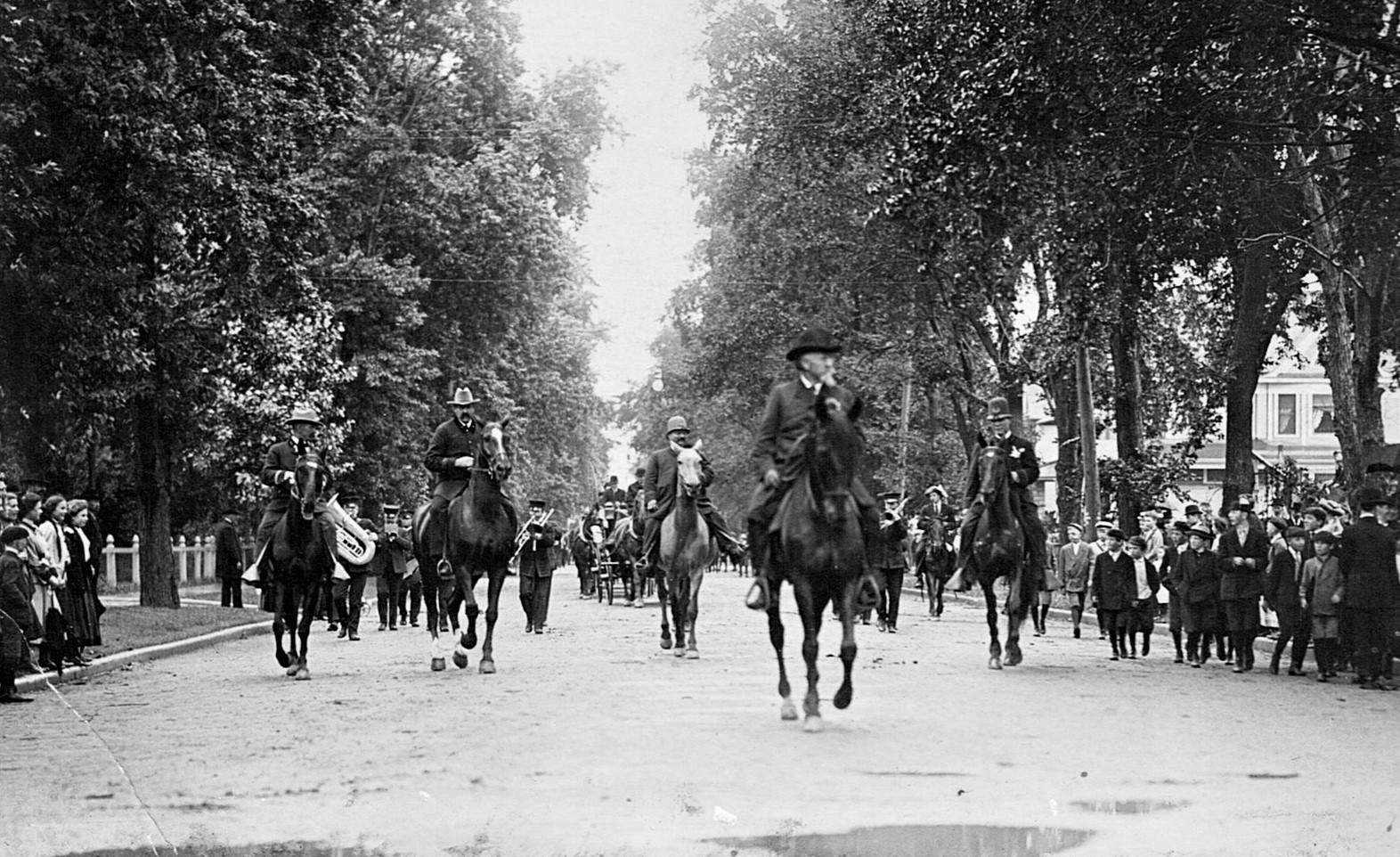
Everett Rexford survived the war, becoming a very prominent citizen of Blue Island. He served as village president and cut a dashing figure for many years leading mounted parades of local Civil War veterans through the streets on Decoration Day, May 30, the forerunner of Memorial Day. He served as musical director of Battery A’s veterans’ association and blew all the old battery calls on his “old war bugle” at their reunions. He was made the National Bugler of the GAR. He died in 1920 at age 78 and was buried in Mount Greenwood Cemetery.
Francis and Harry Morgan were two of the sons of Thomas Morgan, the man who brought his family to the United States from England on his own ship and purchased much of the land on the Ridge.
Francis was educated in a military school in the East and was recognized for his military leadership skills and efficiency. He started as a lieutenant with Battery A and rose to captain. Plagued by health issues, he resigned his commission and returned to Chicago, taking a job on the governor’s staff. He died in 1887 at age 50. The Battery A history noted that Francis was a “thorough gentleman … held in the highest esteem … whose integrity of character and innate honesty has never been questioned.”
Harry Morgan, Francis’s older brother, made it through the war and returned to the Ridge, farming the Morgan lands. He and Everett Rexford became brothers-in-law through marriage when they married sisters Emily and Sarah Robinson, respectively, from another early Ridge family. Harry eventually moved to Blue Island as the family land was sold to developers; some of the land became the Village of Morgan Park. He died in 1893 at age 60.
The Morgan family is buried in Graceland Cemetery on the north side.
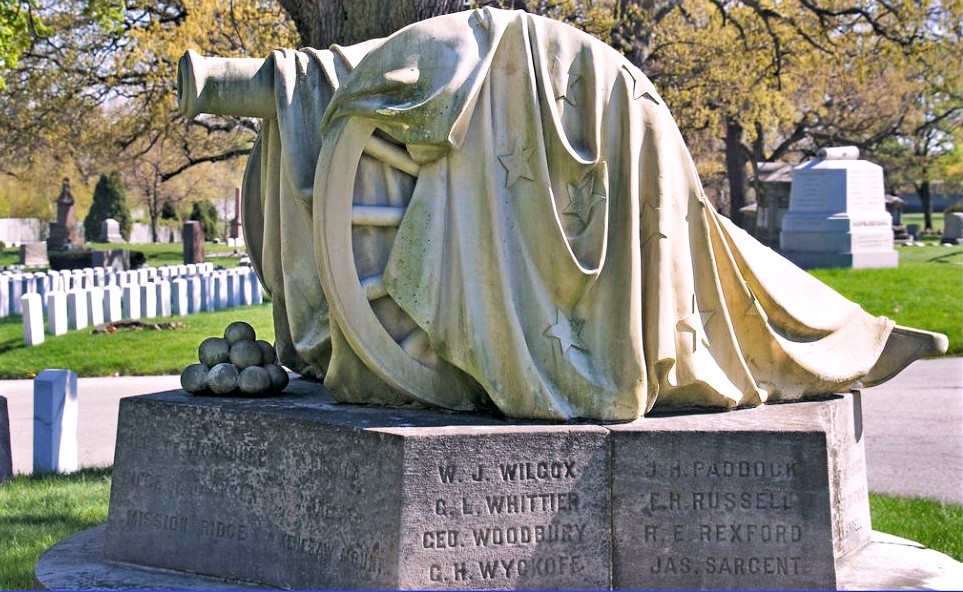
There is a monument to Battery A at Rosehill Cemetery on the north side. The names of those who died in service are inscribed in the base. W. J. Wilcox and R. E. Rexford are listed.
These are just a few of the stories of men from the Ridge who served in the Civil War.
Women joined the war effort, also. At least three U.S. Army Nurses who served during the Civil War have been identified from Blue Island. Tomorrow we will share their stories.
The Ridge Historical Society
National Gold Star Mother’s and Family’s Day
By Carol Flynn
Sunday, September 26, the last Sunday in September, is National Gold Star Mother’s and Family’s Day. On this day, we recognize the women whose sons and daughters died during or because of active service in the U.S. military.
The Gold Star designation started during World War I. Families with members in the service displayed a service flag in their windows. A blue star meant that the person was in active service. The entire community mourned if the star was changed to gold, signifying that person had died. By the time the war ended in November 1918, over 110,000 Americans had lost their lives.
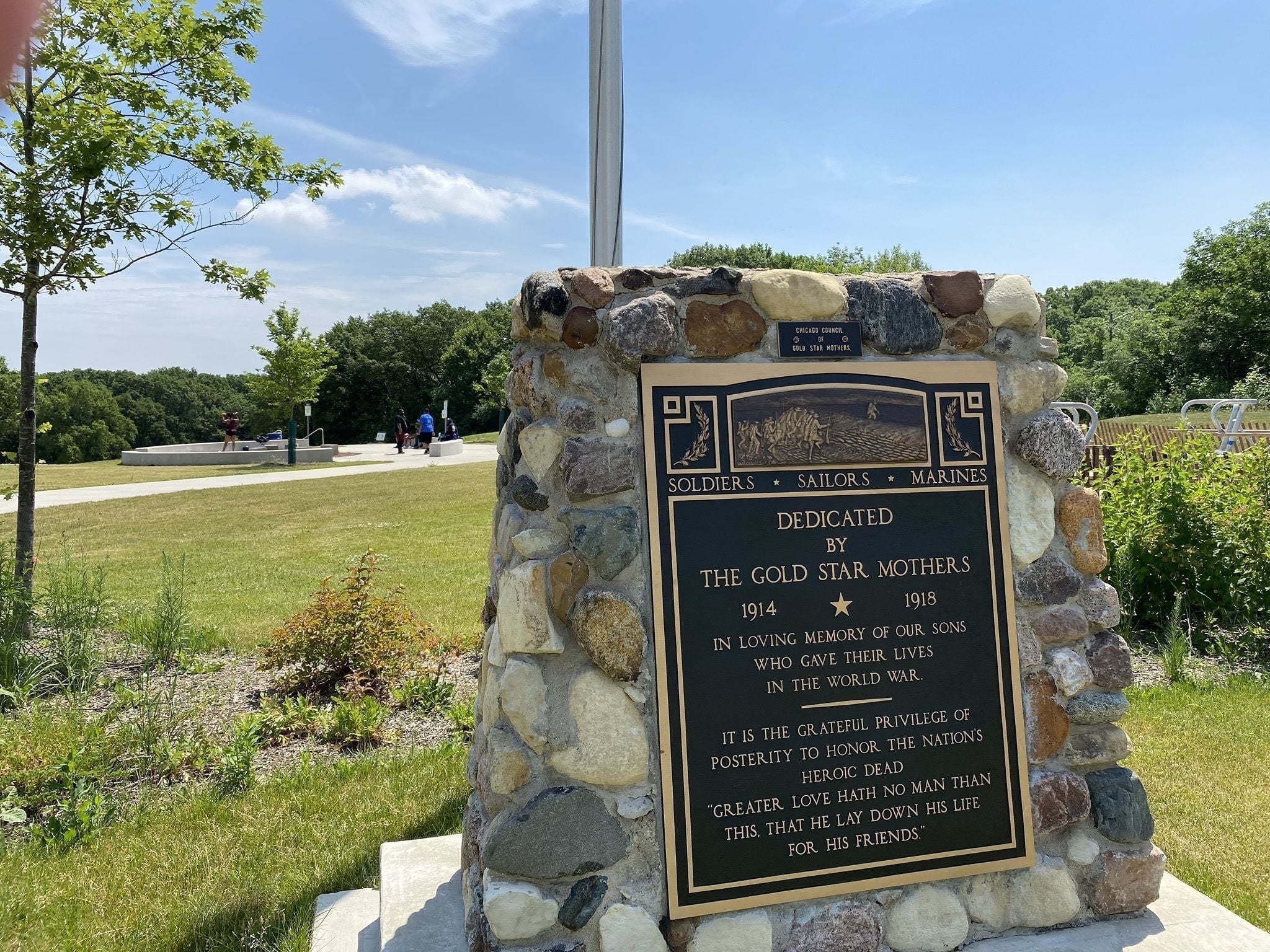
Gold Star Mothers joined together to raise funds to help other Gold Star Mothers, some of whom, dependent upon their sons for their living, were left destitute with their loss. Gold Star Mothers also helped servicemen returning from Europe. The Chicago Council of Gold Star Mothers started in 1918. The grassroots movement led to the formation of the American Gold Star Mothers, a national membership organization, in 1928.
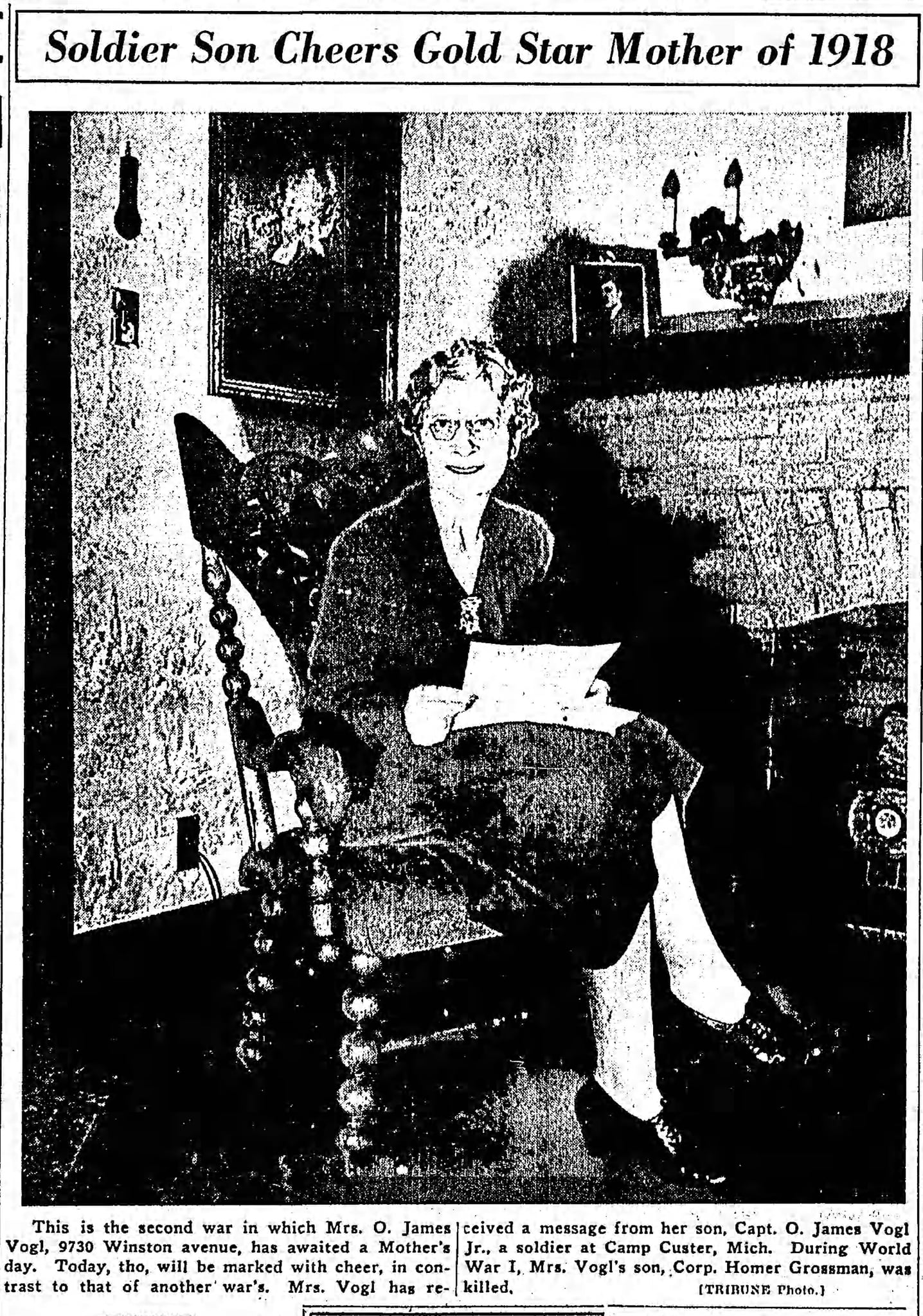
The Ridge has a long affiliation with the Gold Star Mothers movement. The Chicago Council was founded by a woman named Jeannette (Mrs. Oscar J.) Sachs Grossman Vogl, who served as the first president. Her son from her first marriage, Corp. Homer Grossman, 19, was killed and buried in France.
Mrs. Vogl and her family moved from Chicago for her husband’s business career around 1920 and returned in the late 1930s, settling in Beverly, first on 105th Street by Hale Avenue, then on 97th Street and Winston Ave. Their son, Oscar J. Vogl, Jr., graduated from Morgan Park Military Academy and served in and survived World War II. She was written about in the newspapers for having sons who served in both wars. Mrs. Vogl was active in local organizations, and eventually moved to California where her son lived. She died in 1960.
In 1920, the planting of “memorial trees” to honor the WWI dead began, and many were planted in the Forest Preserves of Cook County. Several monuments were also installed in the preserves.
Dan Ryan served as President of the Cook County Board in 1921-22. He had four sons who served in the war. During his tenure, it was proposed to place captured German tanks in the preserves, but Ryan opposed this, stating the preserves should remain “peaceful.” However, he allowed the Gold Star groups to continue to place markers.
Ryan stated in a letter that appeared in the Tribune:
“We have paid tribute to the glorious memory of our men who fell in battle by our actions in authorizing the erection by Gold Star mothers and fathers of bronze tablets and the planting of memorial trees in several of the tracts within the boundaries of the district.”
A monument was installed in the woods that would be renamed for Dan Ryan, at 87th Street and Western Ave. We have not been able to find the exact date that the monument was installed although it was there before August 1932 when it was the site of a picnic mentioned in the Chicago Tribune.
By the mid-2010s, the monument in Dan Ryan Woods had deteriorated into a public eyesore. Beverly resident Tim Noonan, now a member of the RHS Board, led the efforts to restore the monument. The Dan Ryan Woods monument was rededicated in 2018, with the participation of local Gold Star Mothers.
In recent weeks, thanks to introductions by Tim Noonan, four American Gold Star Mothers were interviewed for a feature story in the Daily Southtown newspaper of the Chicago Tribune.
https://www.chicagotribune.com/suburbs/daily-southtown/ct-sta-gold-star-mothers-st-0923-20210924-cdkzfvwbuzh5zlezr3go6g2zd4-story.html
Ridge Historical Society
Post 4: Alec Todd Hetherington for Memorial Day
By Carol Flynn
The Ridge Historical Society (RHS) recognizes Memorial Day with a story from the current exhibit on the Hetherington Dynasty of Architects.
John Todd Hetherington designed the Graver-Driscoll House, RHS’s headquarters, in 1921. Two of his children, Murray and Jean, entered the architecture and drafting professions, and two more generations have followed them. But architecture was not for everyone in the family. Son Alec followed a different path, which included a term of U. S. military service.
While the focus of the RHS exhibit is the contributions to architecture made by the Hetheringtons, “honorable mention” covering what is known about Alec is shared in this post.
Alec Todd Hetherington was born to Jane and John Todd Hetherington on July 13, 1890, in Chicago. Their firstborn, Grace, had died the year before at the age of eight months, so Alec became the oldest child. He was followed by brother Murray in 1891 and sister Jean in 1895.
At the age of 20, he was employed as an electrician with a city railway company. At the time he registered for the draft for World War I, he was a superintendent of building construction in his father’s firm.
Alec also had an interest that varied from architecture and electrical engineering. For a while, he became a fruit farmer and moved to southern Illinois.
But first, the war intervened. Alec served in the U.S. Army in 1918-1919. He shipped out on the Matsonia from Hoboken, New Jersey, as a corporal in the 270th Squadron Air Service, and returned as a sergeant.
The Air Service, or “Aero Squadrons,” were the first aviation units, the forerunners of the U.S. Air Force. The squadrons provided combat flying and ground support, as well as training. The 270th Squadron was sent to northeastern France to serve at the First Air Depot, the largest U.S. facility on the Western Front. The 270th Squadron was part of the Services of Supply Advance Section.
Upon his return to the U.S. after the war, Alec established a farm in New Burnside in Johnson County in far southern Illinois. The area was known for its fruit-growing properties.
In 1924, Alec married Jeanette Ballance. She was from a well-known historic family in New Burnside. Her family owned one of the early newspapers and were founding members of the Burnside Methodist Episcopal Church. Her grandfather was a teacher-turned-lawyer, and her grandmother was a charter member of the women’s club. Her father, Thomas Ballance, was a prominent farmer, a county commissioner, and the town’s federal food administrator during World War I. Her mother Winifred’s family, the Lauderdales, were also early settlers, known for their popular singing quartet that showed up for community events.
A daughter, Elizabeth, was born to Jeanette and Alec on June 1, 1925, in New Burnside. Tragically, Jeanette died a few weeks later on June 26 at the age of 22. The cause of death was given as peritonitis due to childbirth. Peritonitis is an infection of the lining of the abdominal cavity.
Elizabeth was raised by her maternal grandparents on their farm. After high school, she did live in Chicago for a few years in the mid-1940s to attend secretarial school. She returned to New Burnside where she married Robert Mowery in 1948. They had two daughters and lived in Ohio. She died in 2008.
Alec stayed in New Burnside for a few more years after Jeanette’s death. He was listed as attending the Illinois Agricultural Association’s meeting in Urbana in 1926, and being named to the board of the Ozark Growers Association in a nearby town in 1927.
By 1930, however, he was back in Chicago, living in the family home in Beverly, and working as an airplane mechanic in a factory. It’s possible that Alec trained in airplane mechanics while he was in the U.S. Army Air Service.
In 1931, Alec married Winifred M. Toomey in Cook County. She was an Irish Catholic immigrant, born about 1897. In 1934, they had a daughter Winifred, born in Chicago.
Alec’s occupation took them to Cheyenne, Wyoming, where he was listed in 1937 as a foreman for United Air Lines.
And then tragedy struck again. Alec died at the age of 48 on January 6, 1939, in Cheyenne. The cause of death was attributed to an appendectomy. A ruptured appendix often causes peritonitis, the same infection that took his first wife Jeanette’s life.
Alec’s remains were returned to southern Illinois and buried in the New Burnside Cemetery, where Jeanette was buried.
Winifred and their daughter Winifred moved to San Francisco, where mother Winifred died in 1964. Daughter Winifred married William Medin in 1958. They had a daughter and two sons. “Winnie” was an active volunteer who received the First Lady of California Volunteer Award in 1995. She died in 2018.
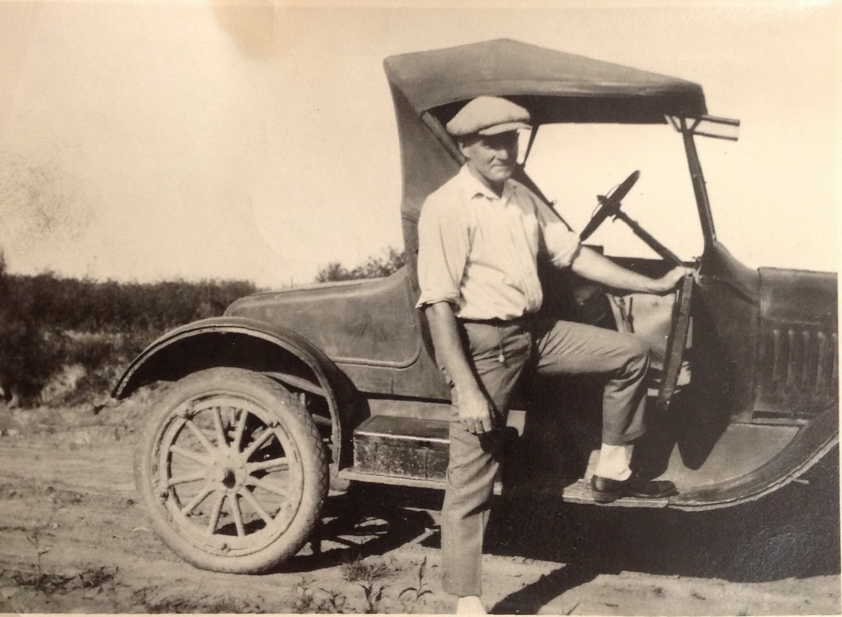
Photo of Alec Todd Hetherington from family submission on Ancestry.com.
The Hetherington exhibit will be on display at RHS through 2022. Arrangements to view the exhibit may be made by contacting RHS at 773/881-1675 or ridgehistory@hotmail.com. RHS is located at 10621 South Seeley Avenue, Chicago.
Next post: Meet the RHS exhibit team.
The Ridge Historical Society
Memorial Day 2023 – Part 1
By Carol Flynn
The purpose of Memorial Day is to remember the people who died while in military service to our country, the United States of America.
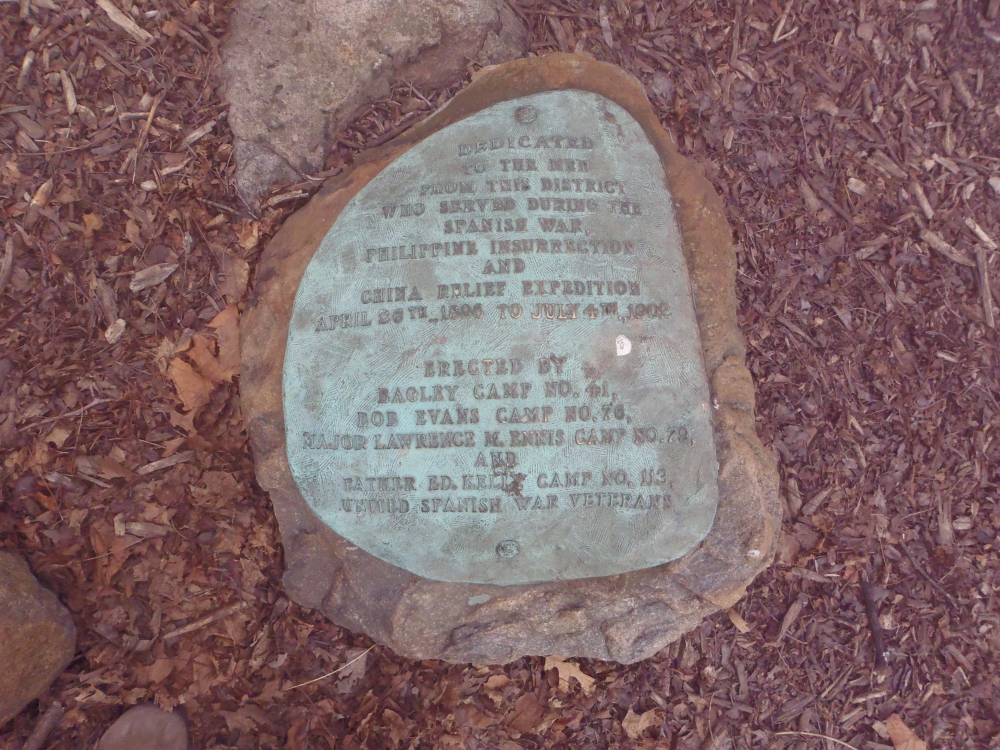
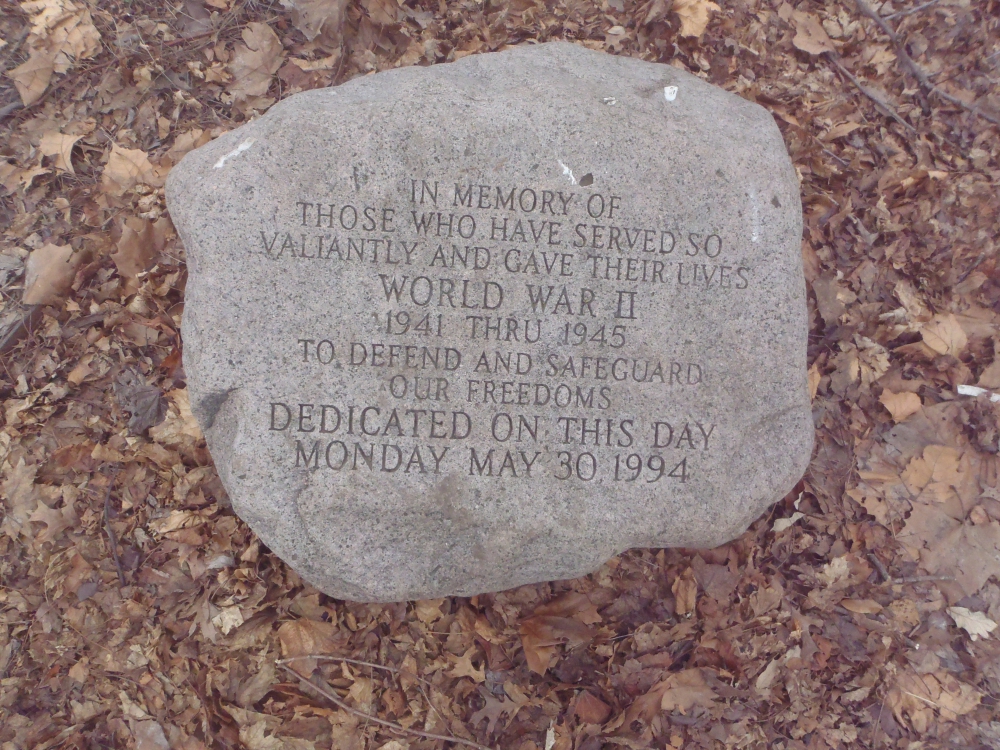
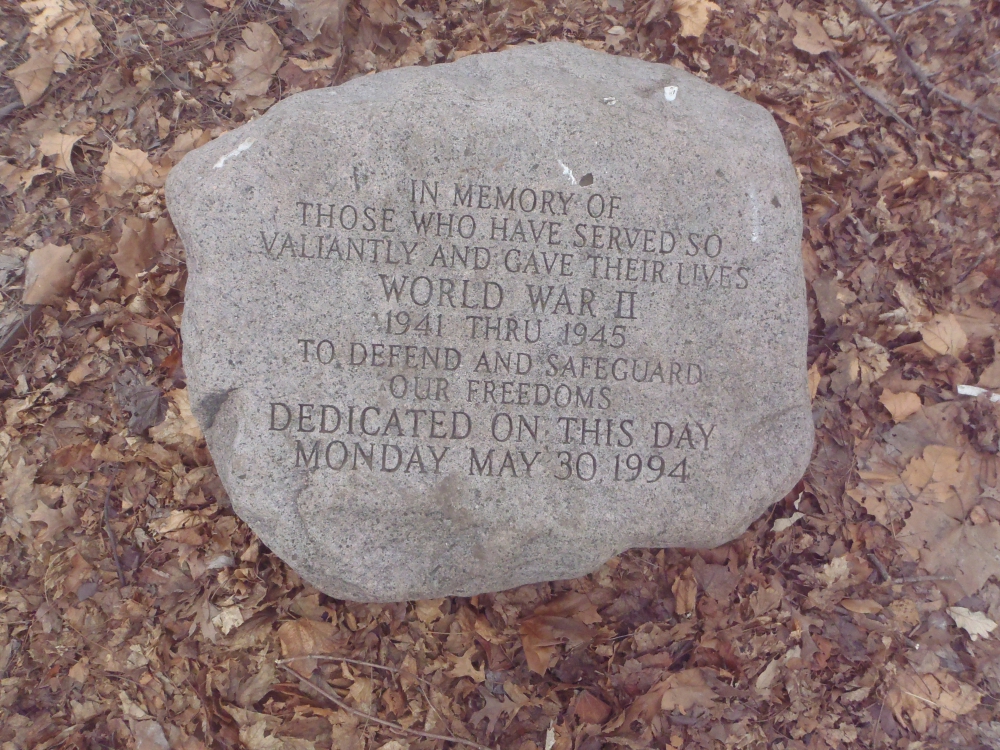
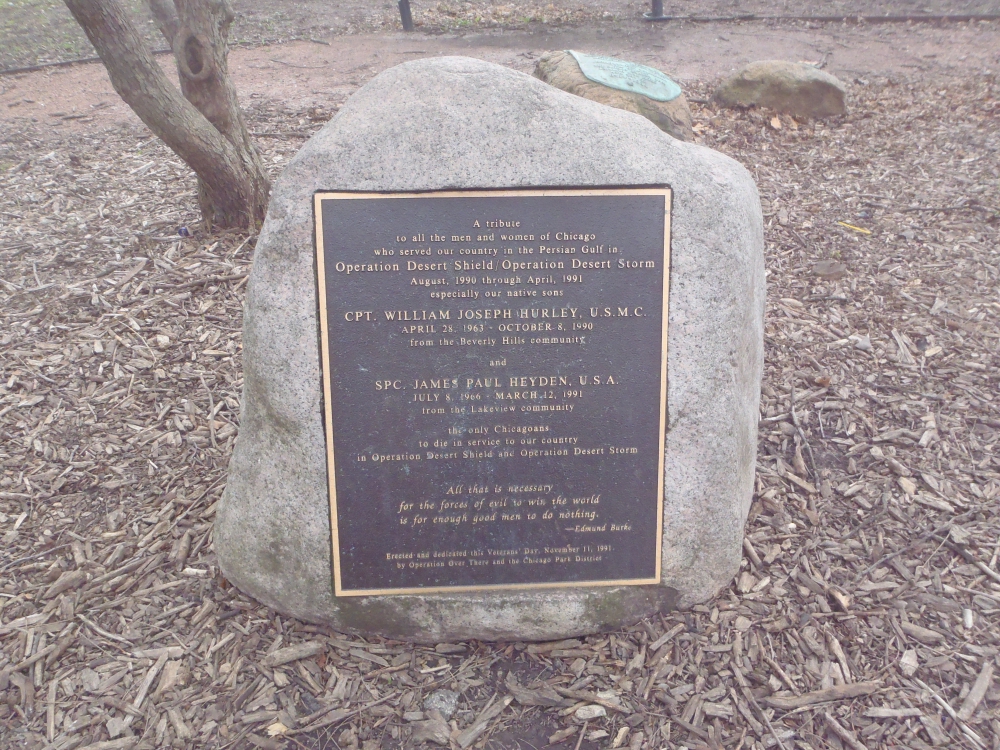
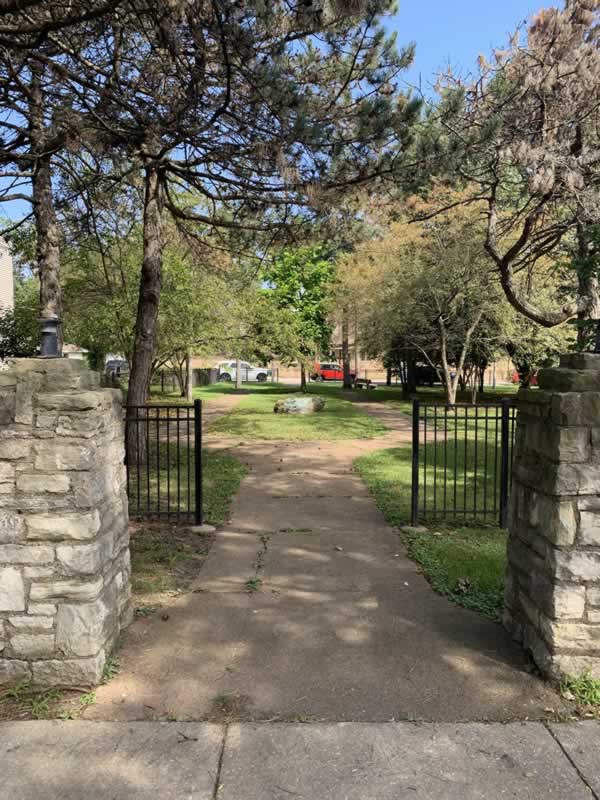
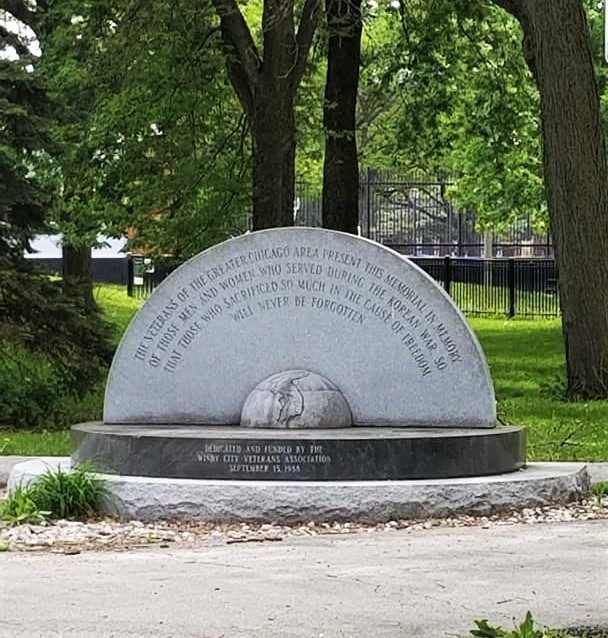
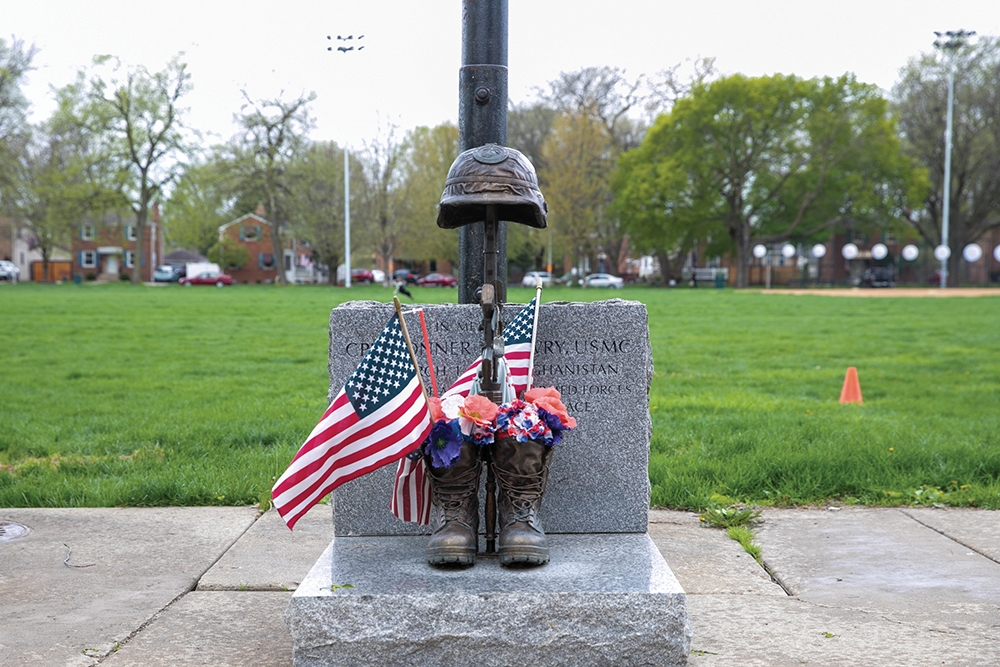
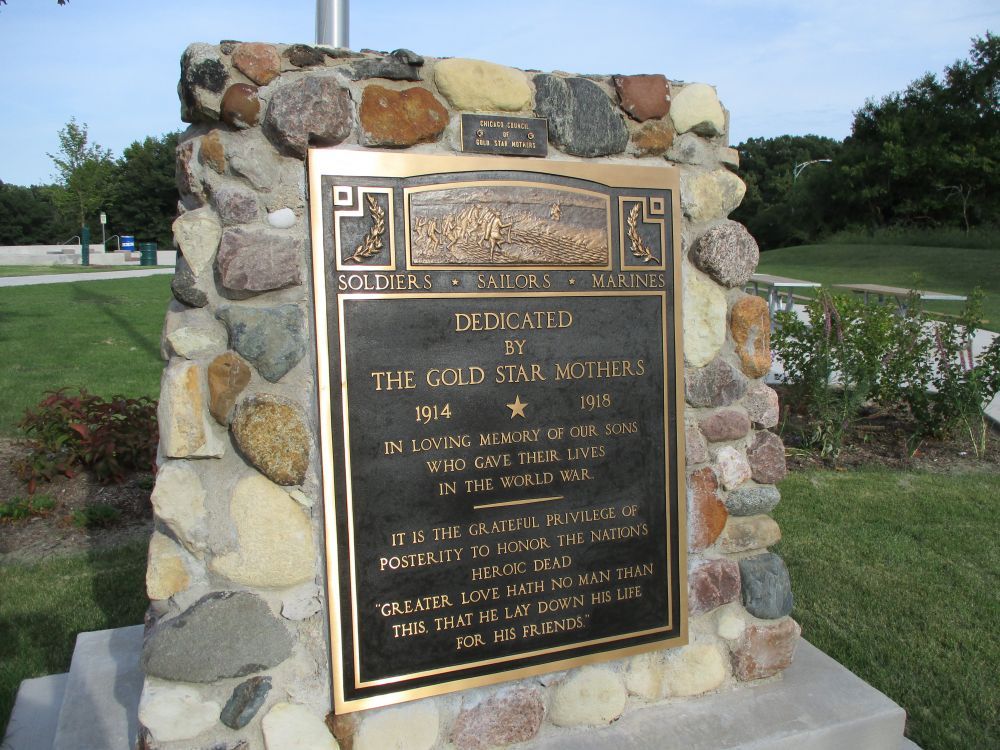
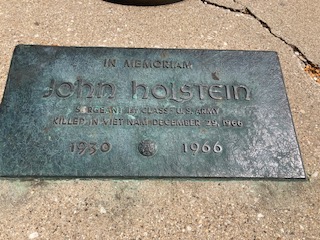
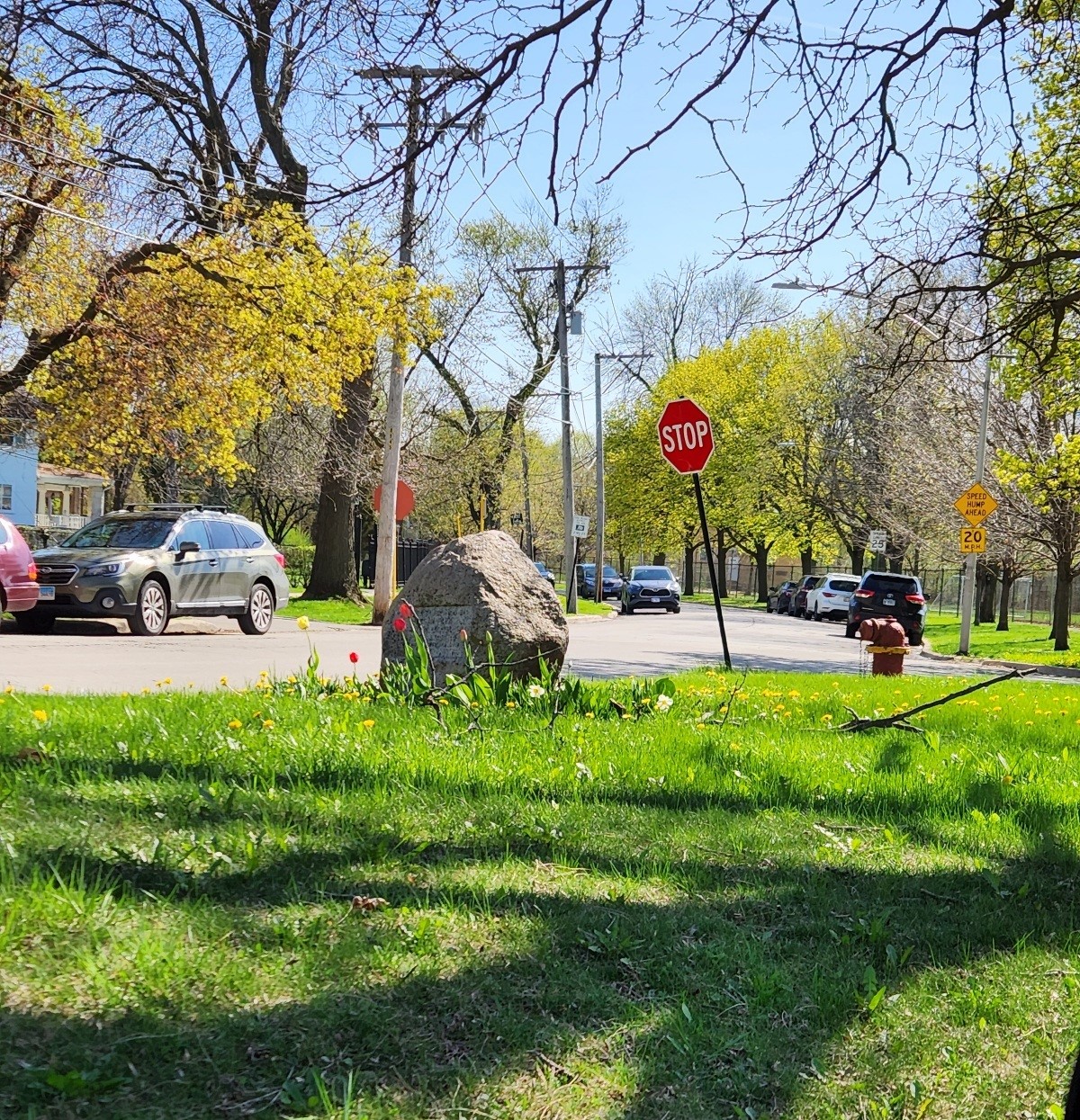
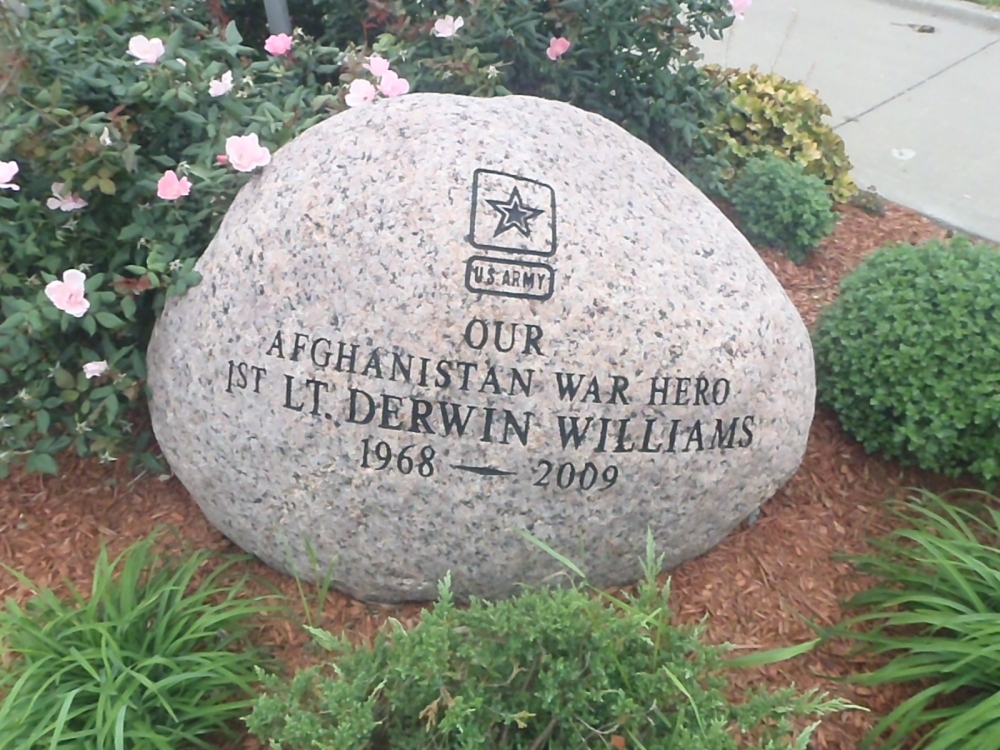
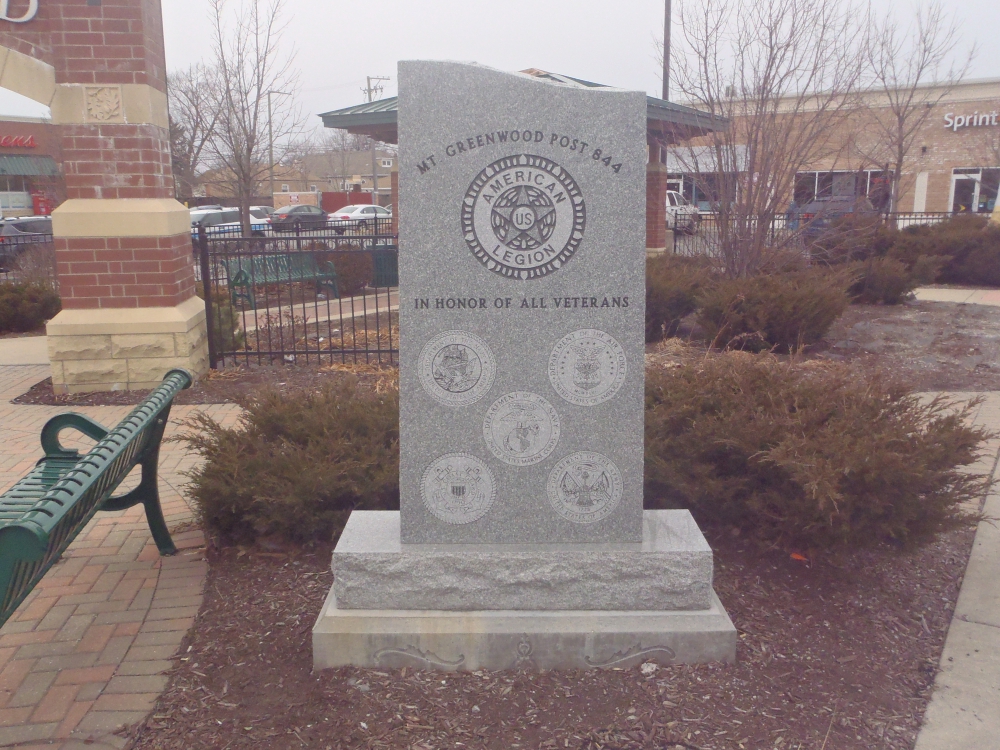
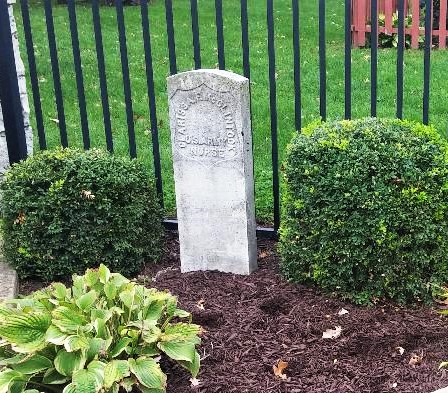
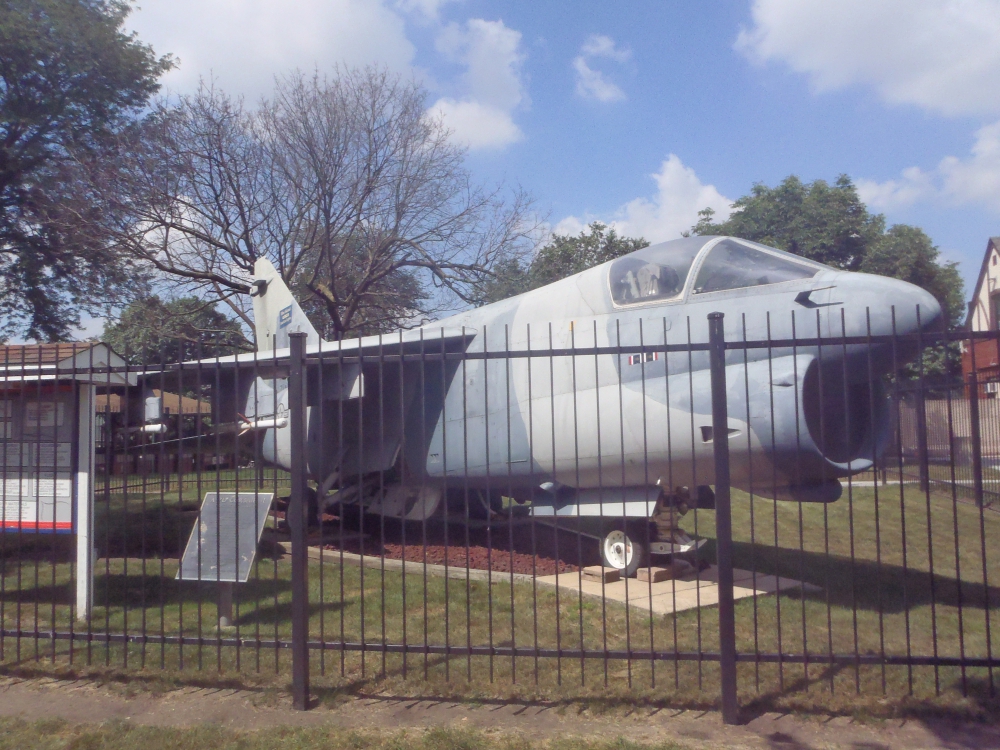
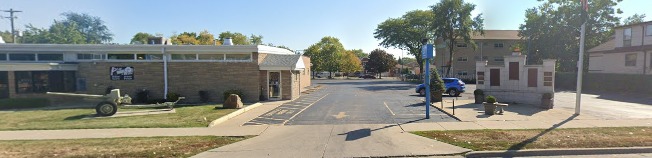
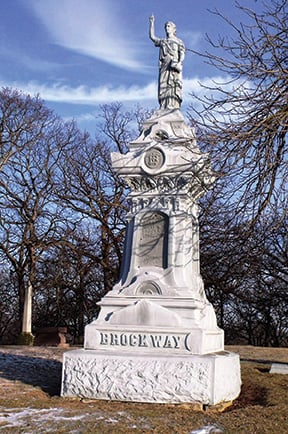
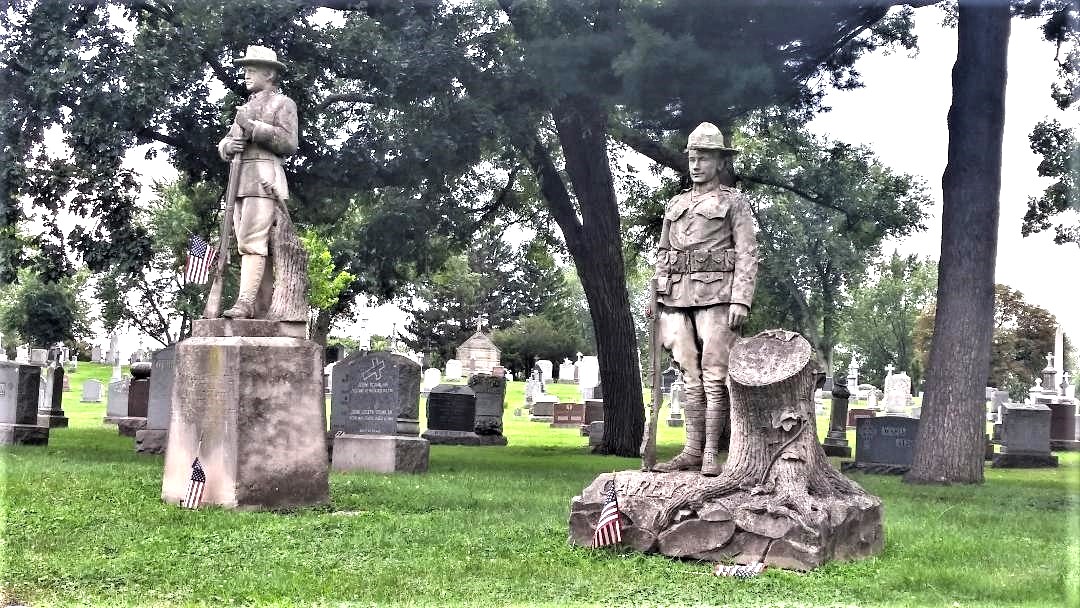
In the Ridge communities, there are many markers and memorials to U.S. service personnel. Here is a list and some pictures of these memorials.
If you know of others in the Ridge area to add to the list, please comment on this post with the locations.
In the next post, we’ll look at the history of military memorials connected to Morgan Park Academy, which started as the Mount Vernon Military Academy in the 1870s. The history was prepared by Barry Kritzberg.
Ridge Park – Six memorial stones, including one of the oldest on the Ridge, installed in 1926.
Graver Park – World War I
Kennedy Park – Korean War
Beverly Park – Connor T. Lowry, Afghanistan
Dan Ryan Woods – Gold Star Mothers
Morgan Park High School flagpole
112th Street and Lothair Ave. – Memorial Triangle
98th Place and Throop Street – Derwin Williams, Afghanistan
111th Street and Kedzie Avenue – American Legion
Memorial Park in Blue Island – Gravestones, memorials, artillery
97th Street and Kedzie Avenue – American Legion Post artillery and eternal flame
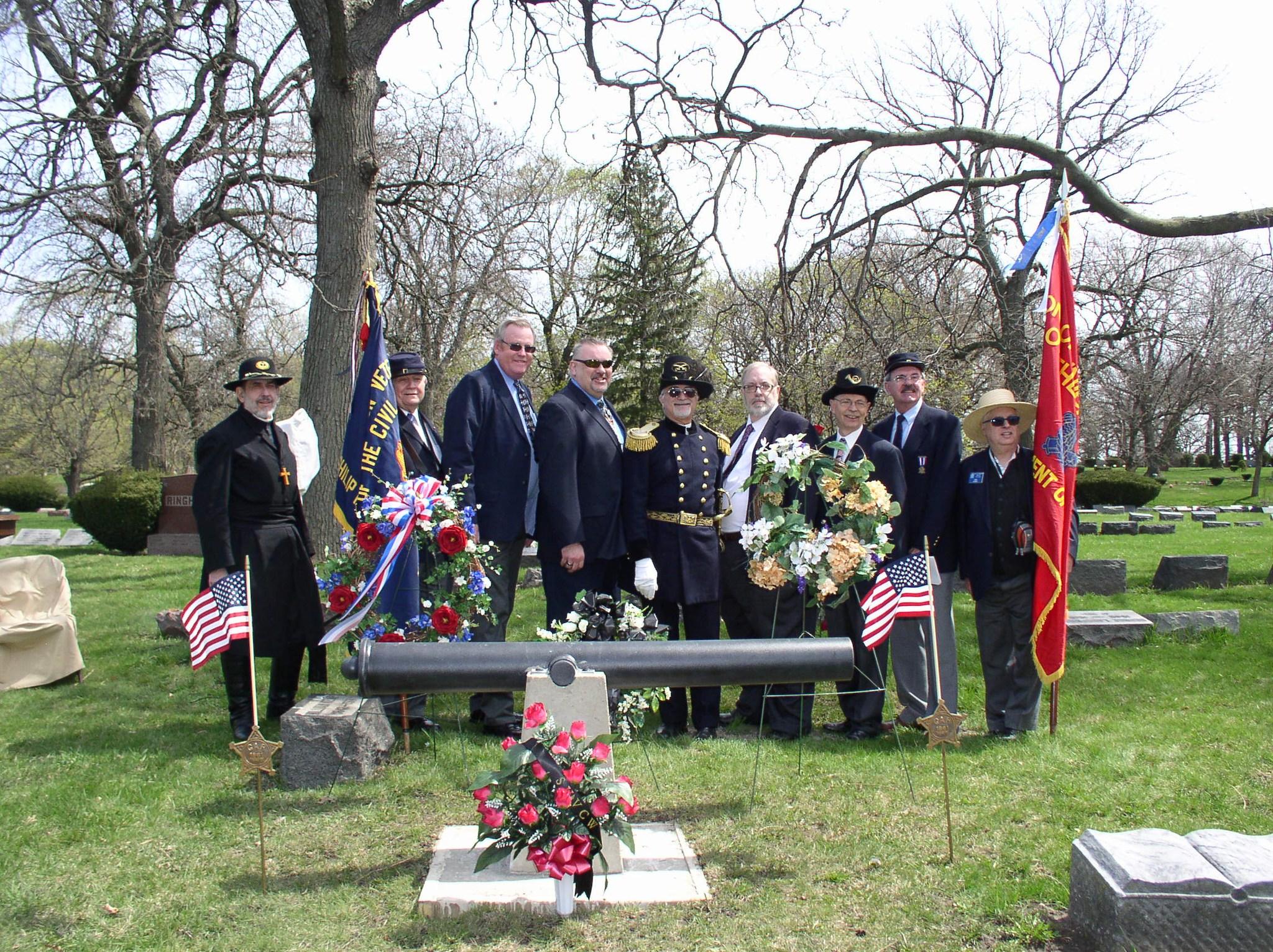
Mount Greenwood Cemetery – Civil War veterans’ graves and cannon replica
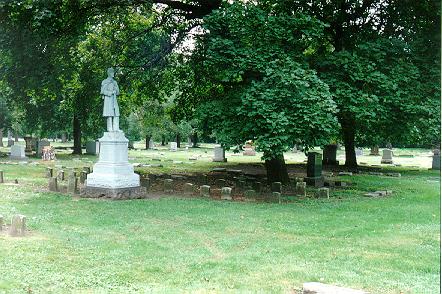
Mount Hope Cemetery – Civil War veterans section
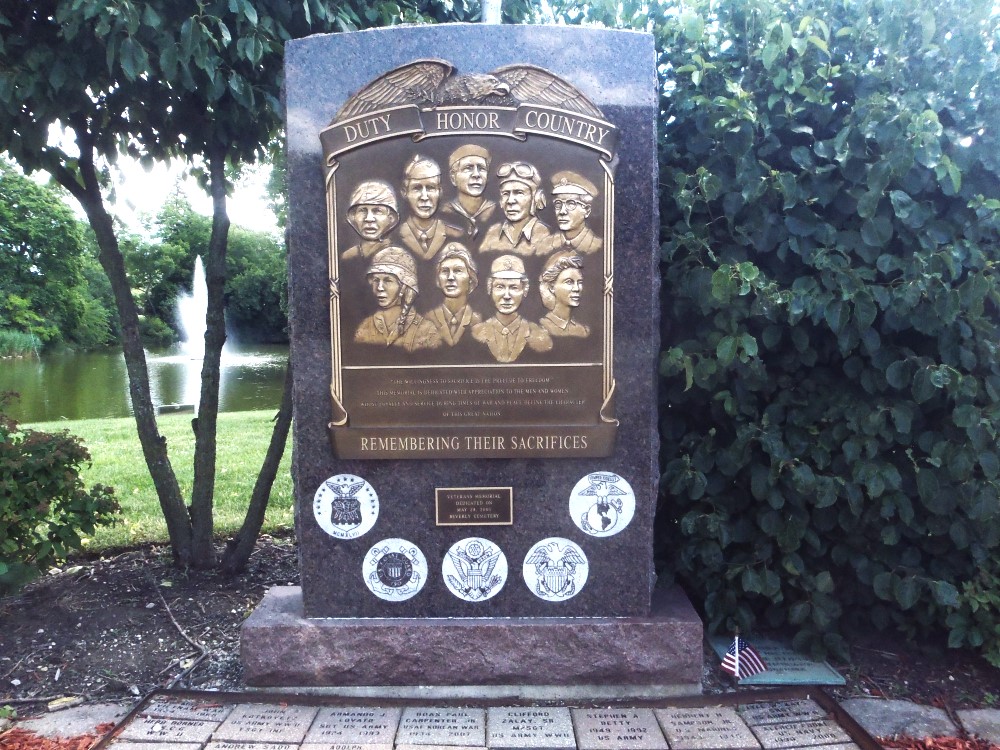
Beverly Cemetery – Veterans monument
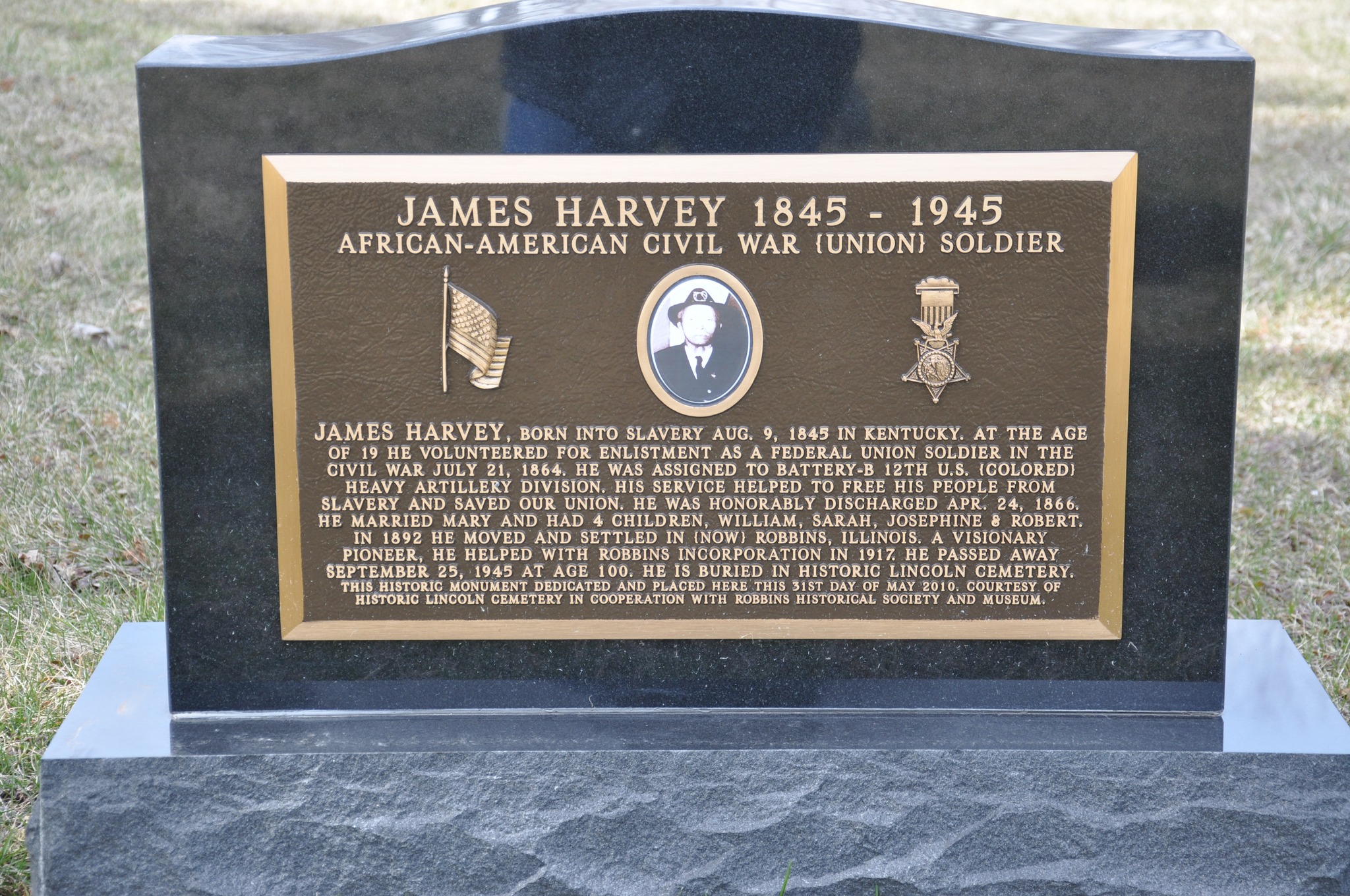
Lincoln Cemetery – James Harvey, U.S. Colored Troops
Mount Olivet Cemetery – “Doughboy” grave statues
The Ridge Historical Society
Memorial Day 2023 – Part 2
By Carol Flynn, with a thank you to Barry Kritzberg for sharing his historical research
Memorial Day – Part 1 listed many of the military-related markers and monuments in the community. While researching these, the only one that could be connected to the Morgan Park Academy (MPA) was the Memorial Triangle, a small piece of land at 112th Street and Lothair Avenue that contains a marker installed by the cadets of MPA in the 1920s in honor of those who fought in World War I.
MPA started as the Mount Vernon English, Classical, and Military Academy for boys in 1873, when the village of Morgan Park was planned and developed by the Blue Island Land and Building Company. In addition to training for military service, the school promised thorough preparation for business and college.
The name of the school was changed to the Morgan Park Military Academy (MPMA) in 1906. Changes beginning in the 1950s led to today’s school, the MPA that is no longer a military training school and is now a co-educational school from pre-kindergarten through 12th grade.
It stood to reason that a military academy would include memorials to alumni who served and died in armed conflicts that involved the United States, but none were in evidence now. RHS reached out to Barry Kritzberg, renowned educator and author who, among many accomplishments, taught at MPA for thirty-six years and authored “Morgan Park Academy: A History (Volume I),” published in 2007.
Kritzberg shared some of his history research and writing with RHS. As expected, there were memorials at MPA at one time.
Records show that 1,389 MPA students served in World War I, World War II, and Korea. There are no records for the numbers who served in the Spanish American War, the first conflict after MPA was founded, or the Viet Nam War, the last conflict before MPA discontinued military training.
Seven MPMA graduates lost their lives during the WWI time period. In 1920, the pictures of these “gold star men” were framed and placed in the chapel of the school’s Blake Hall, a building demolished many years ago.
In 1921, trees were planted in their honor, and plaques were installed on the MPMA campus. This was considered a significant move by MPMA at the time, with the head of the school, Col. Harry D. Abells, stating that this established “new traditions for the guidance of our present and future cadets.”
The loss of MPMA men increased substantially with World War II. A total of forty-five cadets and two faculty members lost their lives in service at that time.
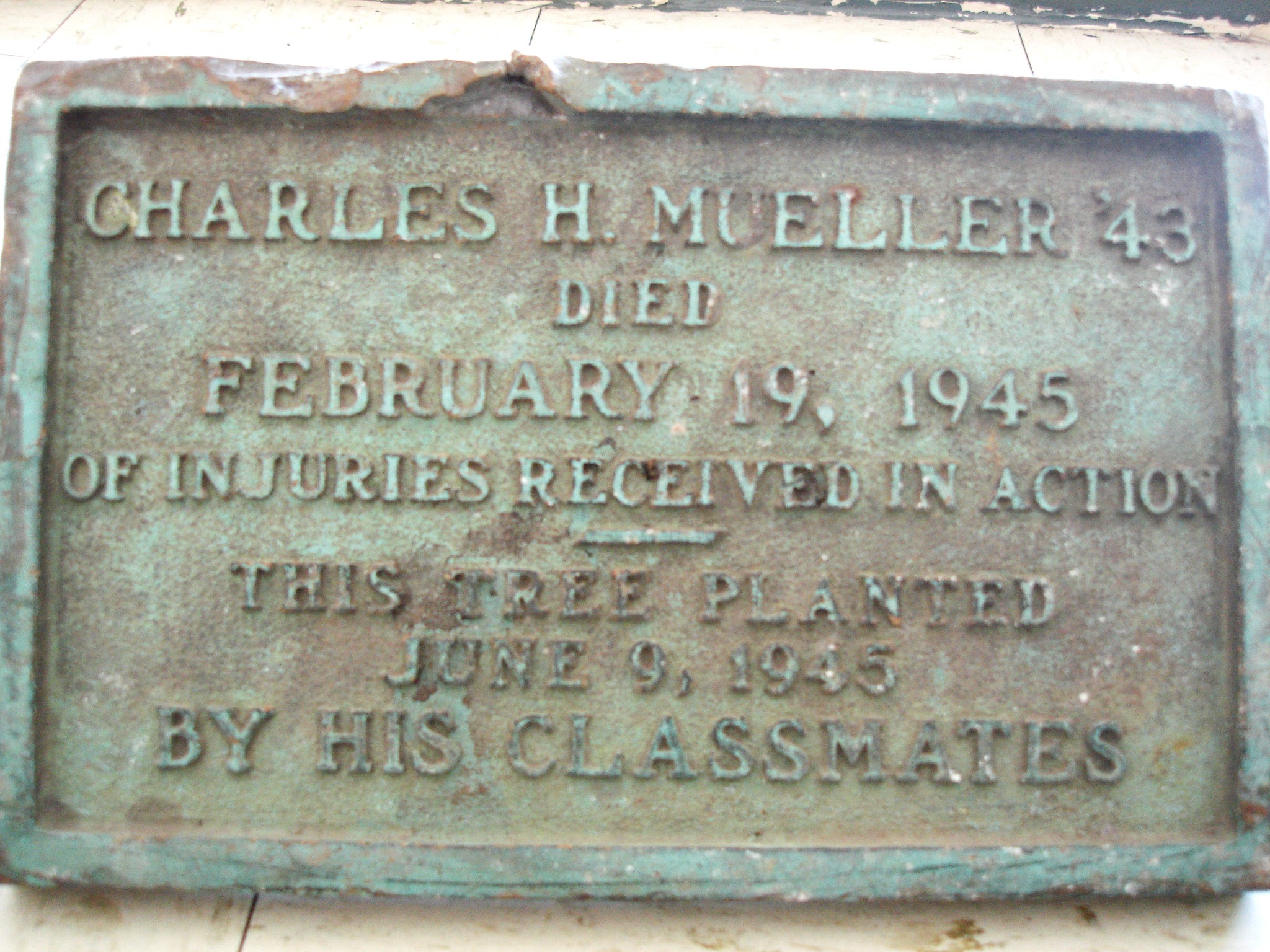
In 1943, the 70th year anniversary of MPMA, seven elm trees with plaques were planted on the campus in memorial to the seven cadets whose war-time deaths had occurred. The Tribune ran this poem at the time (June 17, 1943):
Seven honored decades,
Thru years of peace or dread,
Her sons have served our banner
With seven stripes of red.
Seven stars, new golden,
Shine on her roll today
For seven heroes fallen
In conflict far away.
Seven elms, new planted,
Pay tribute to each name,
And in our arch of triumph
Shall hold their endless fame.
Those first seven deaths were just the beginning. In the next few years, forty more U.S. servicemen connected to MPMA died.
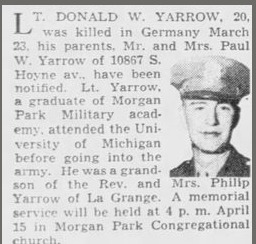
Many of them also had connections to the local community. One case study, that of Lt. Donald W. Yarrow, puts a real face on what would otherwise just be a statistic.
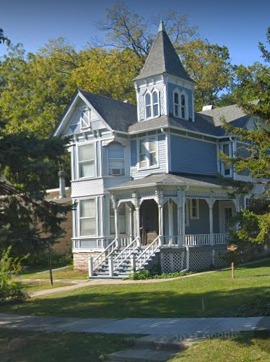
RHS research shows that Donald W. Yarrow was born on December 2, 1924, to Paul and Edna Brown Yarrow. He was the grandson of a well-known minister in the community, Rev. Dr. Phillip Walter Yarrow. The Rev. Yarrow family lived at 11156 S. Longwood Drive, in one of the most picturesque Queen Anne houses in Morgan Park.
Rev. Yarrow was from London, educated at Princeton and Harvard, and the pastor of the Morgan Park Congregational Church. He was described as a “militant anti-vice crusader” who ran the Illinois Vigilance Association for twenty years. He staged hundreds of raids on speakeasies and brothels. He was fearless against Al Capone as well as corrupt government officials. Rev. Yarrow was a trustee of MPMA.
Paul Yarrow was a stockbroker, and Edna Yarrow was an active clubwoman and volunteer. During WWII, she was chair of the Morgan Park Red Cross Unit. She served as chair of the Morgan Park Woman’s Club American Home Committee.
At the age of 18, Donald Yarrow was a lieutenant in the U.S. Army. He graduated from MPMA in 1942, where he had been on the honor roll and had received promotions. He attended the University of Michigan, but one month after his eighteenth birthday, he entered the U.S. Army, and became the second youngest officer to complete the officer program at Fort Benning, Georgia.
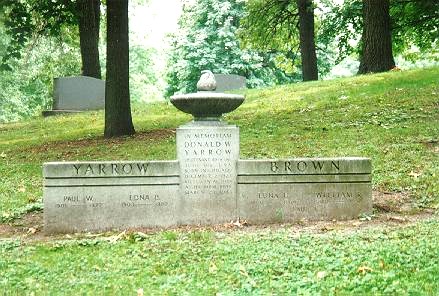
According to Kritzberg’s research, Donald was wounded in 1944, returned to combat, and then was killed on March 23, 1945, when crossing the Rhine for “the great drive deep into Germany.” He was twenty years old. His funeral service was held at his grandfather’s church at 112th and Hoyne Avenue and he was buried in Mount Hope Cemetery, where his grave is prominently marked (see images).
In October of 1945, Paul and Edna Yarrow received a bronze star medal awarded posthumously to Donald. The ceremony took place at MPMA. According to the Chicago Tribune, he won the medal for heroic action on February 23 of that year in Germany, a month before he was killed. In establishing an observation post, he and two comrades had to move through heavy enemy fire, and they captured sixteen German soldiers, four mortars, and ammunition.
Also according to Kritzberg, more information on that event had been included in his obituary in the Chicago American newspaper on March 31, 1945. They captured the German soldiers without firing a shot. Donald, however, could not have fired a shot anyway because he was out of ammunition. It was only after taking the prisoners to the stockade that he realized that he had no bullets in his carbine.
Forty-seven elm trees were planted on the MPMA campus during those years in the 1940s. Unfortunately, Dutch elm disease, which ravaged Chicago in the 1960s, destroyed these memorial trees.
MPA records, according to Kritzberg, also list twelve MPMA alumni who were killed in Korea and Viet Nam.
However, it seems that not all MPA graduates who were killed during active service are on the MPMA lists, only those killed during “war years.” One man who is missing from the list, for example, is Grant Fenn, whose family owned the Graver-Driscoll House that is RHS Headquarters, from 1940 to 1946.
Grant Fenn graduated from MPMA in June 1942. The day after he received his diploma, he was appointed second lieutenant, infantry, U.S. Army, and started active duty. He graduated from the United States Military Academy, West Point, New York, in 1945 and was commissioned in the U.S. Air Force.
Fenn served in Italy, and for two years as an assistant attaché in Athens, Greece. He was killed in 1951 when the B-36 bomber he and twenty-two others were flying in crashed in New Mexico. He was 26 years old. He was buried in Mount Greenwood Cemetery.
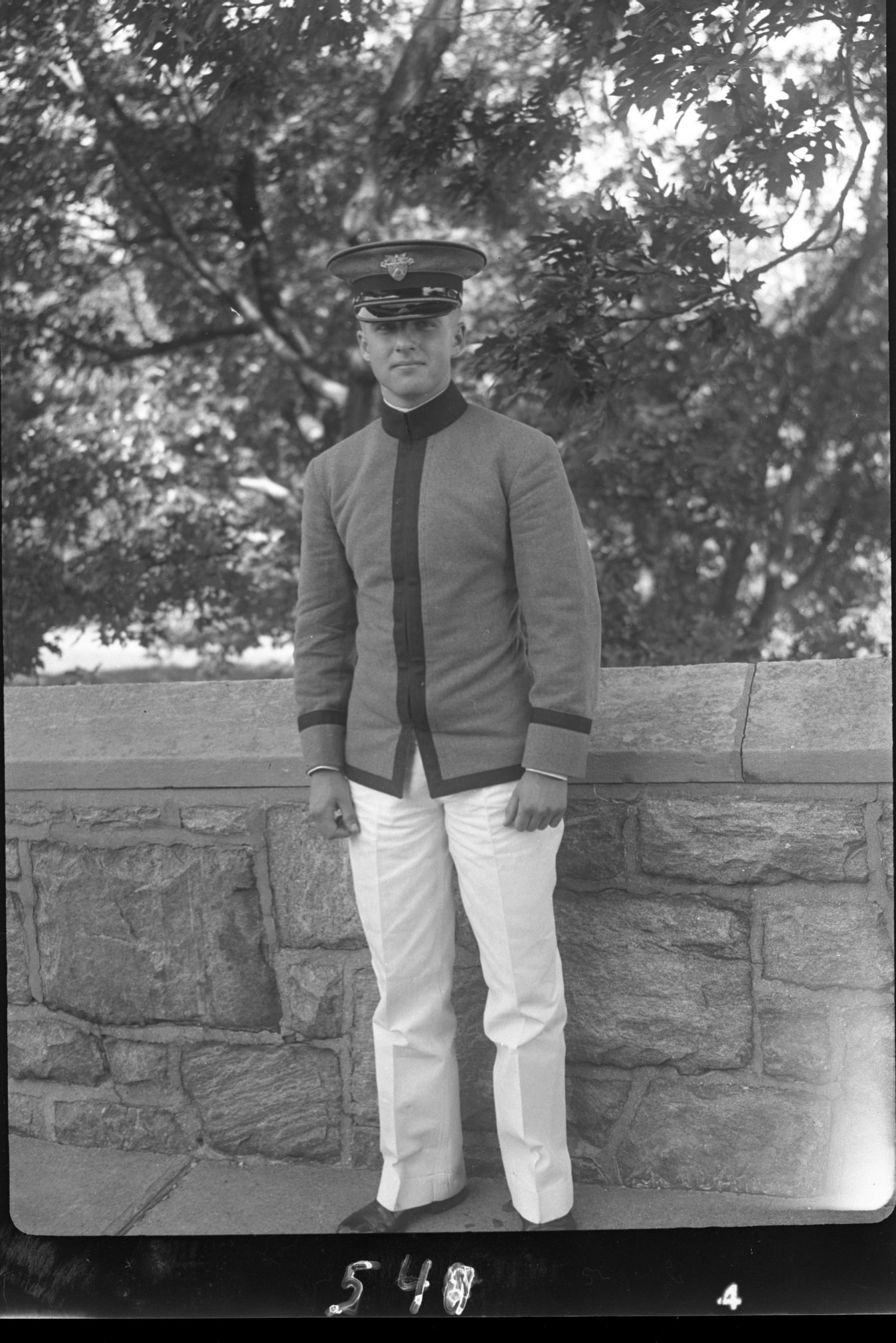
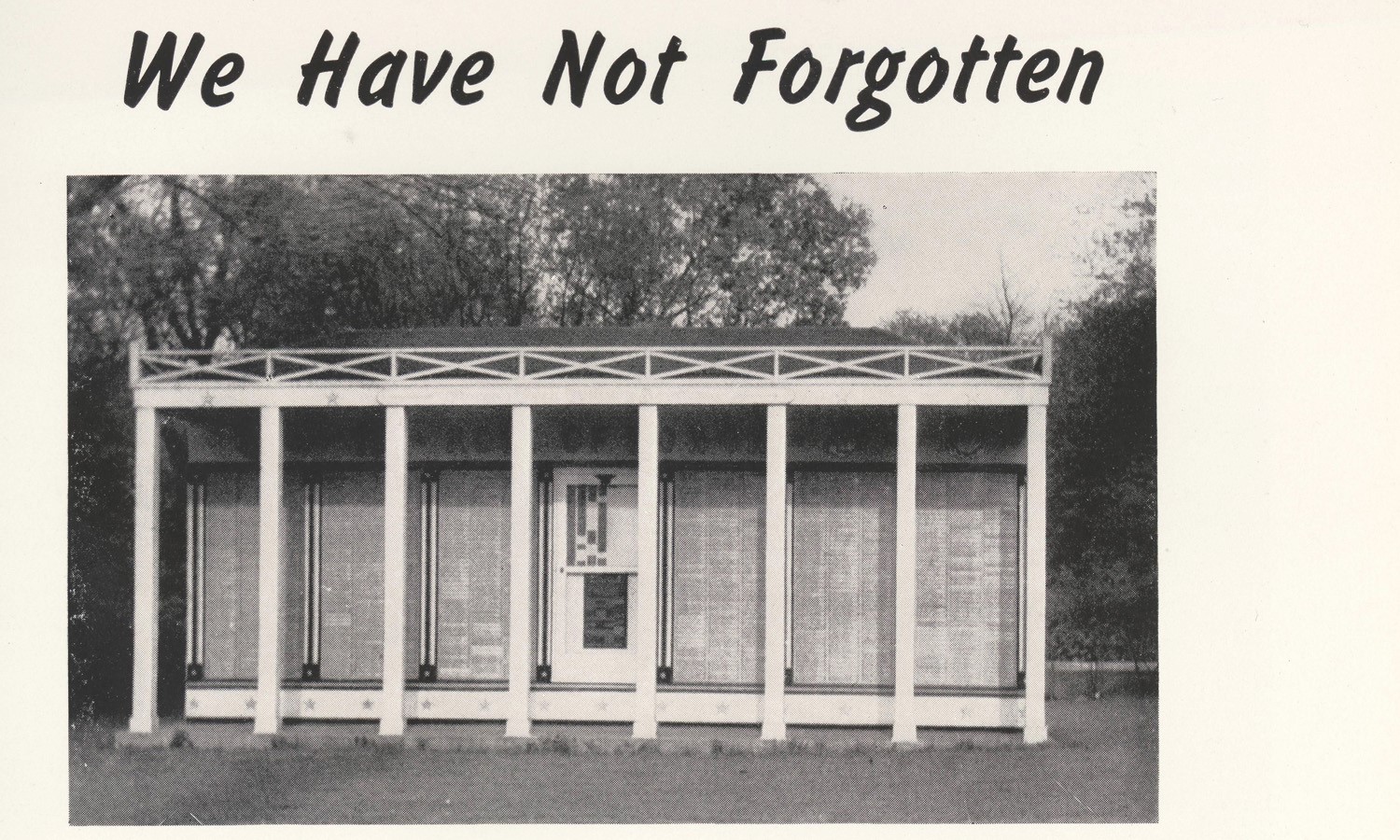
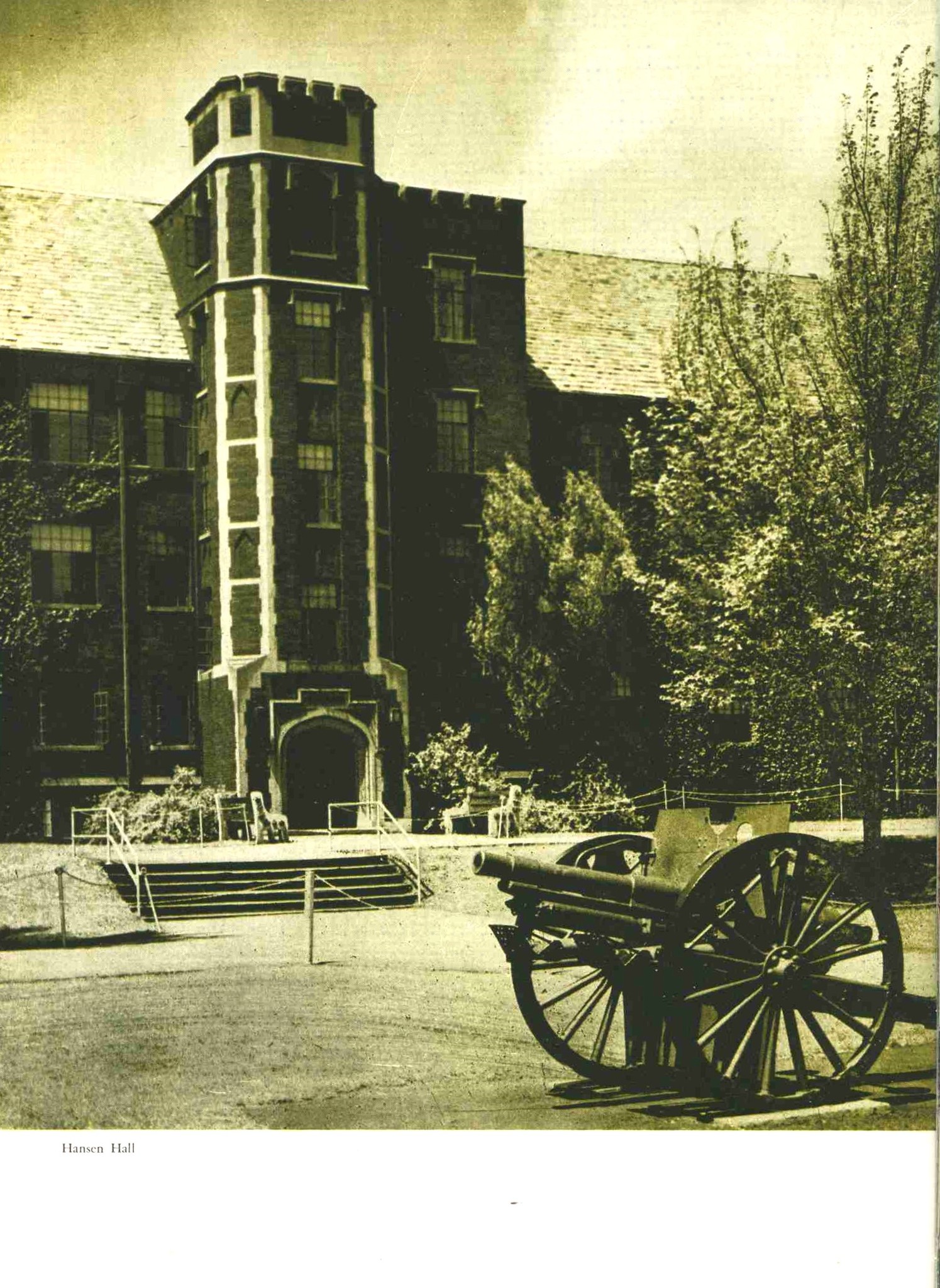
There were other memorials at MPMA that were identified by Kritzberg and several are shared in the attached images.