
Explore the RHS Facebook Archives, a rich repository of local history written by Carol Flynn. For two decades, Carol brought a deeply dedicated voice to public education at RHS. Her role as Facebook administrator through mid-2025 naturally extended her prolific research into meticulously detailed articles, most notably her multi-part historical series posts. Today, Carol continues her local history writing for The Beverly Review and other outlets.
Mother's Day
Happy Mother's Day from the Ridge Historical Society!
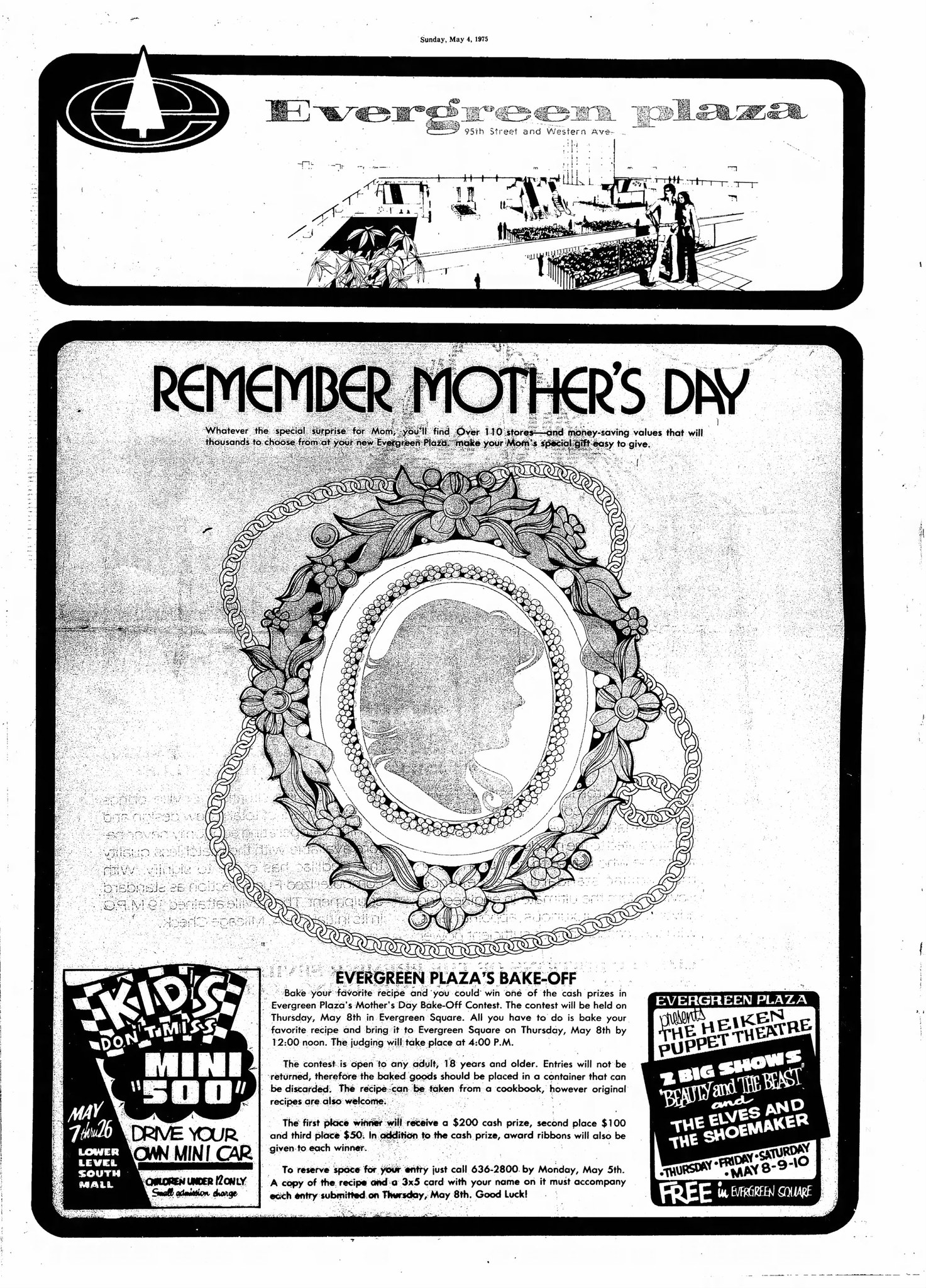
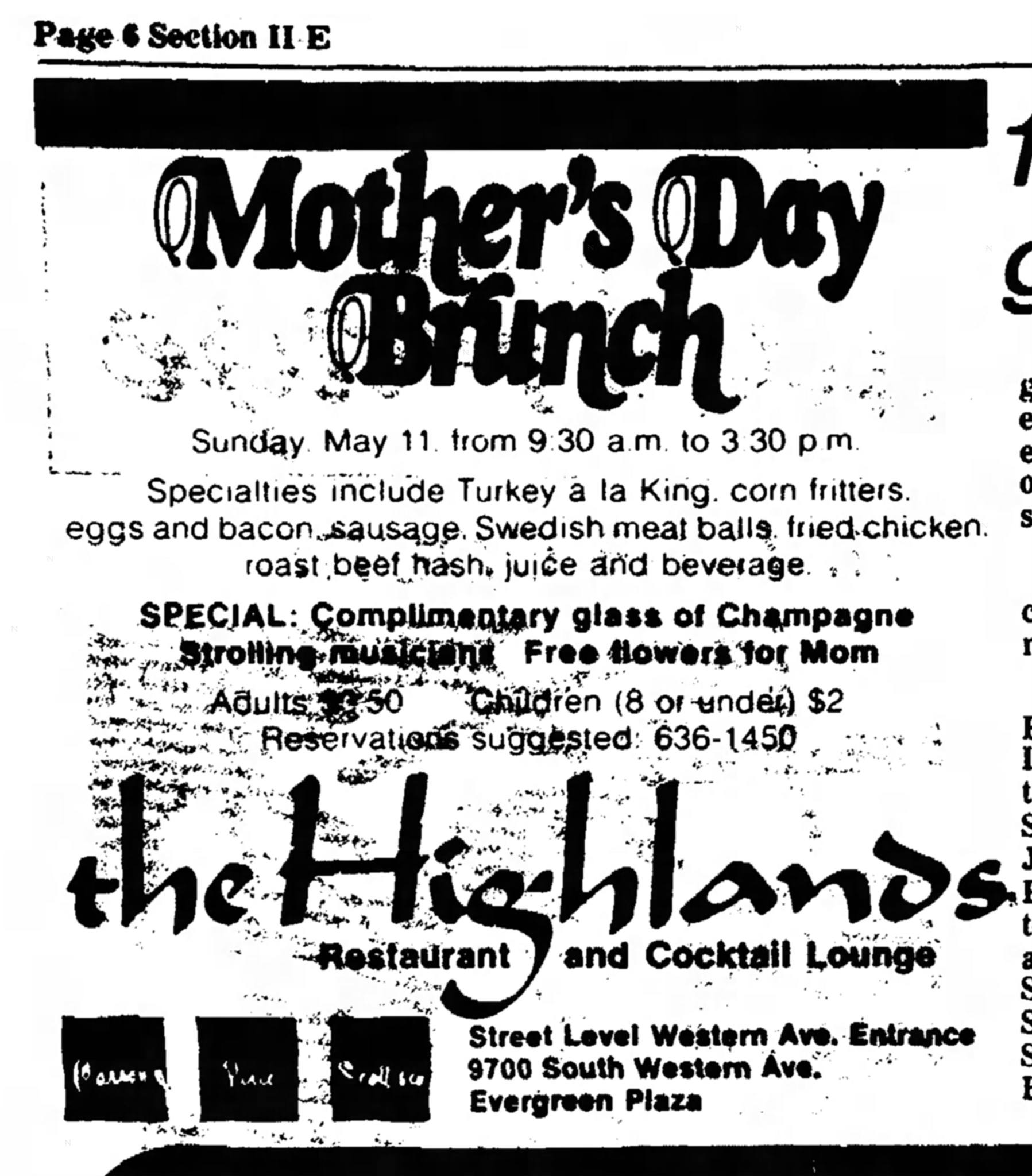
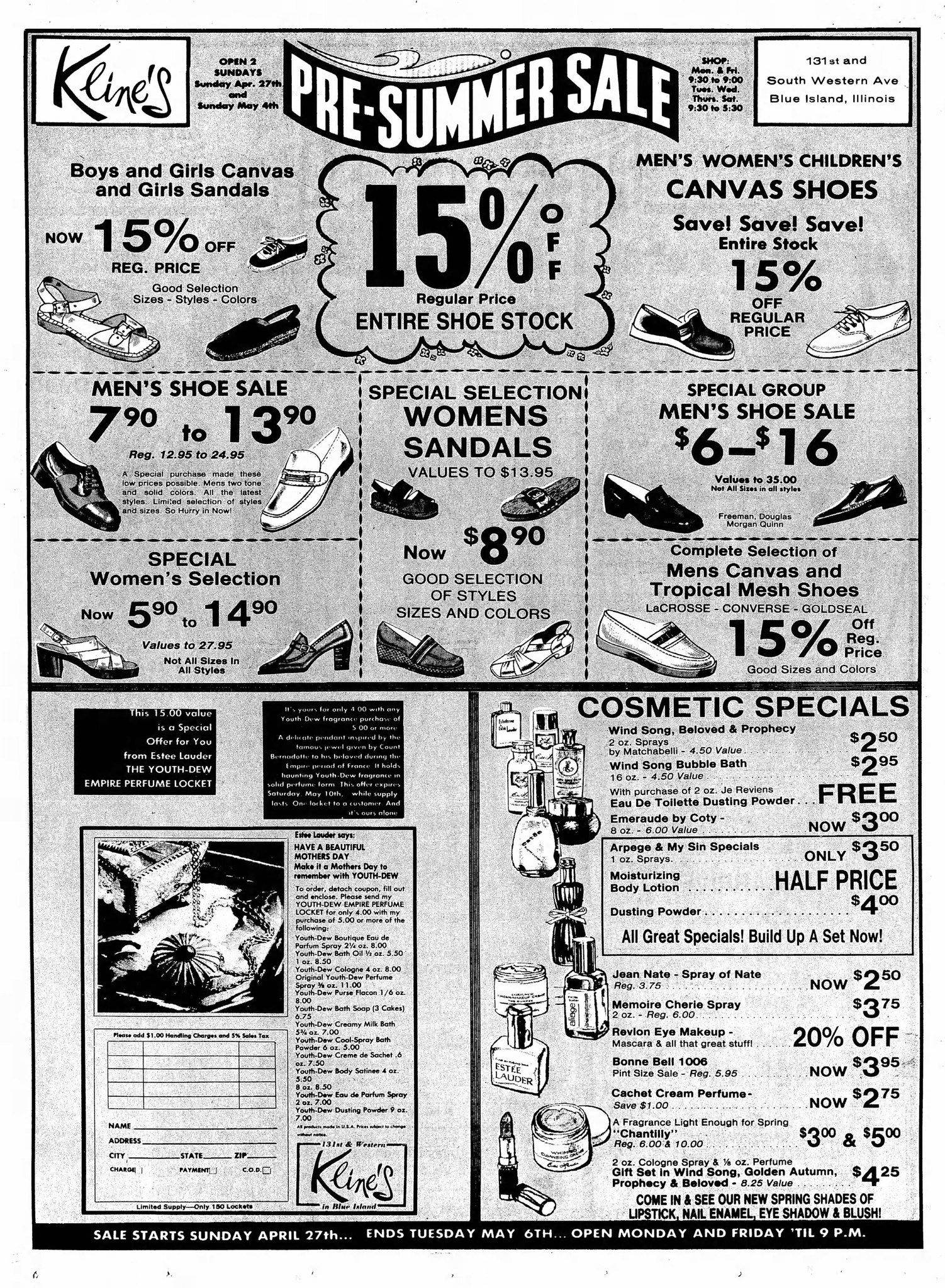
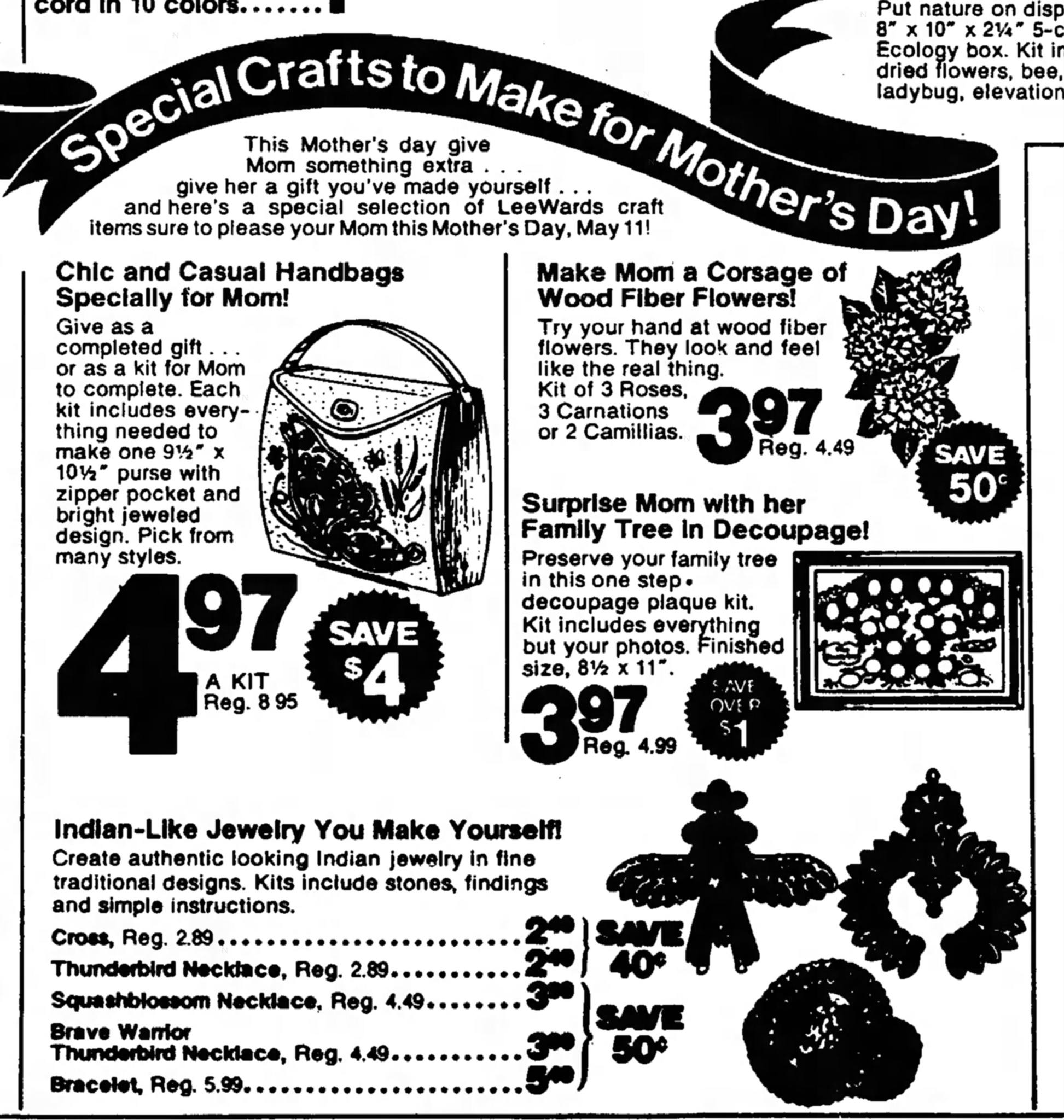
Here is some history nostalgia from the Ridge from fifty years ago.
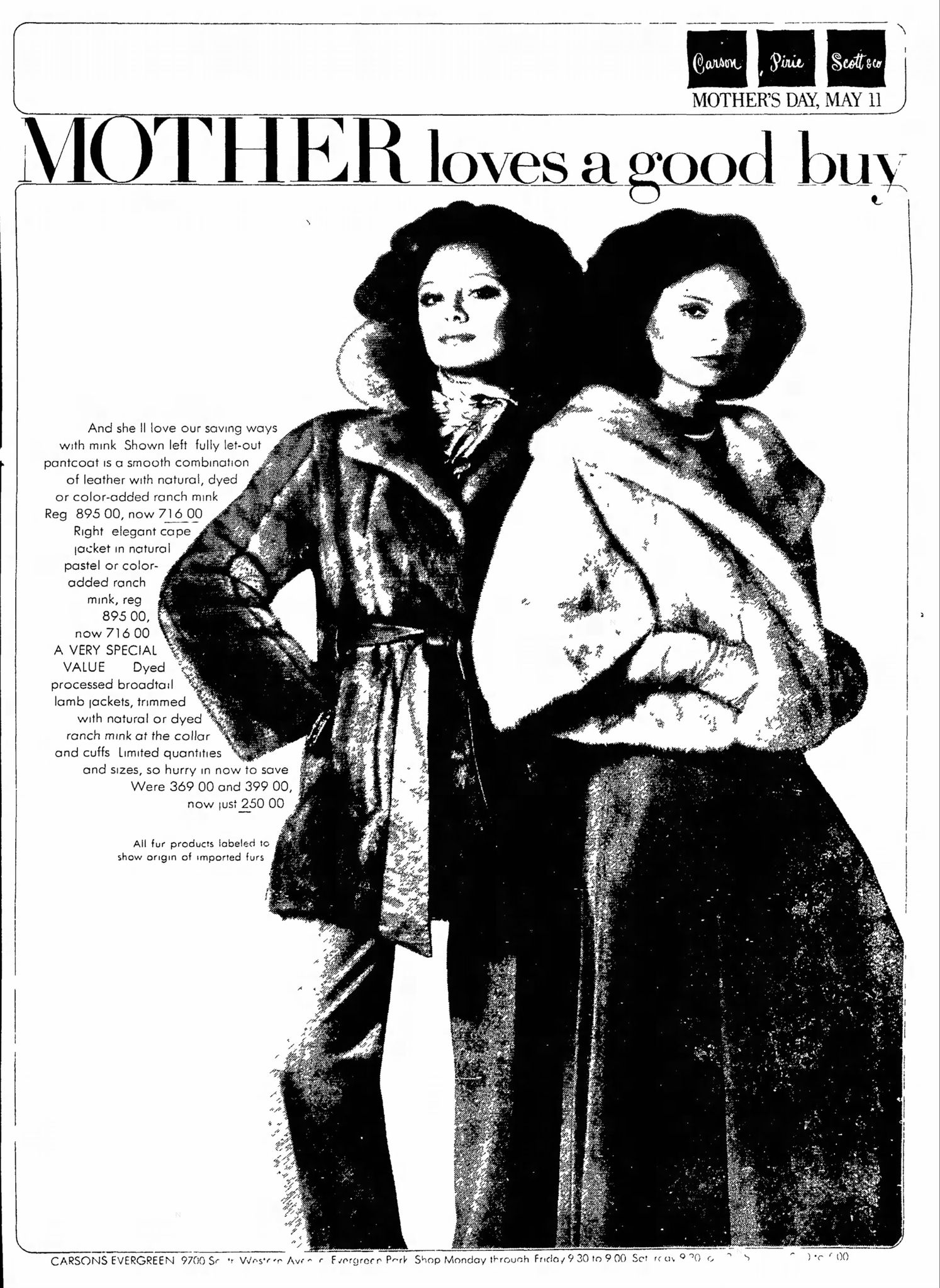
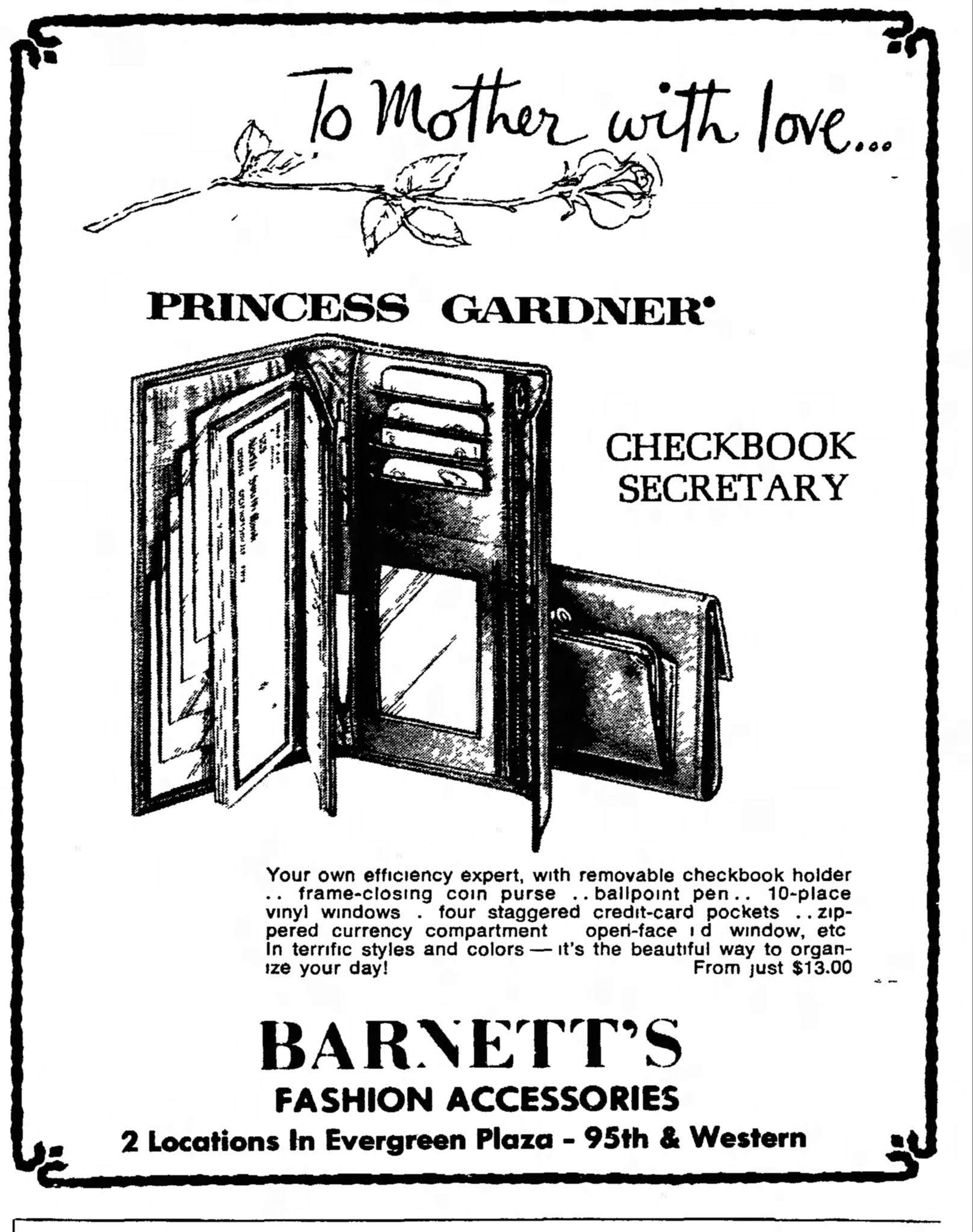
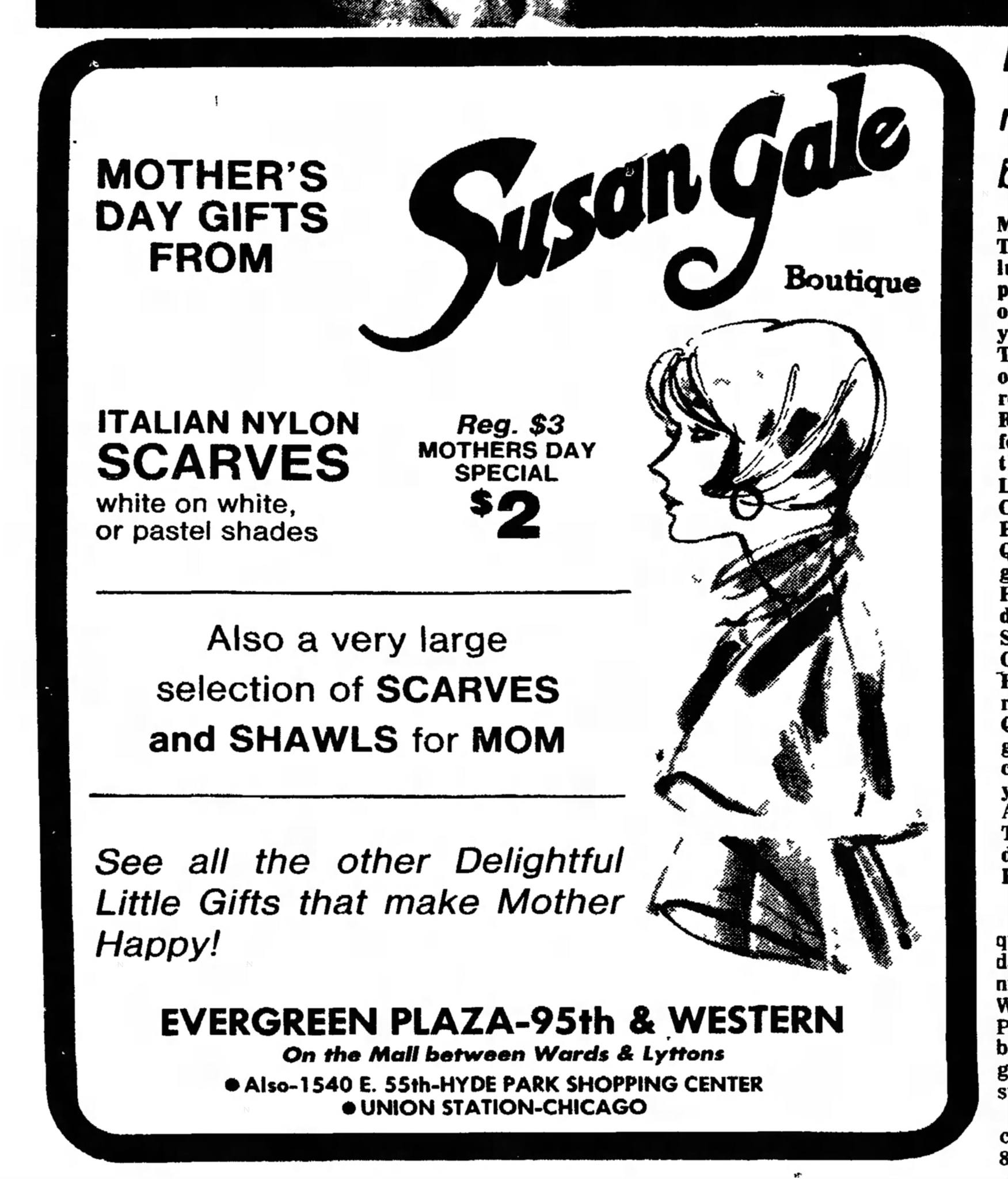
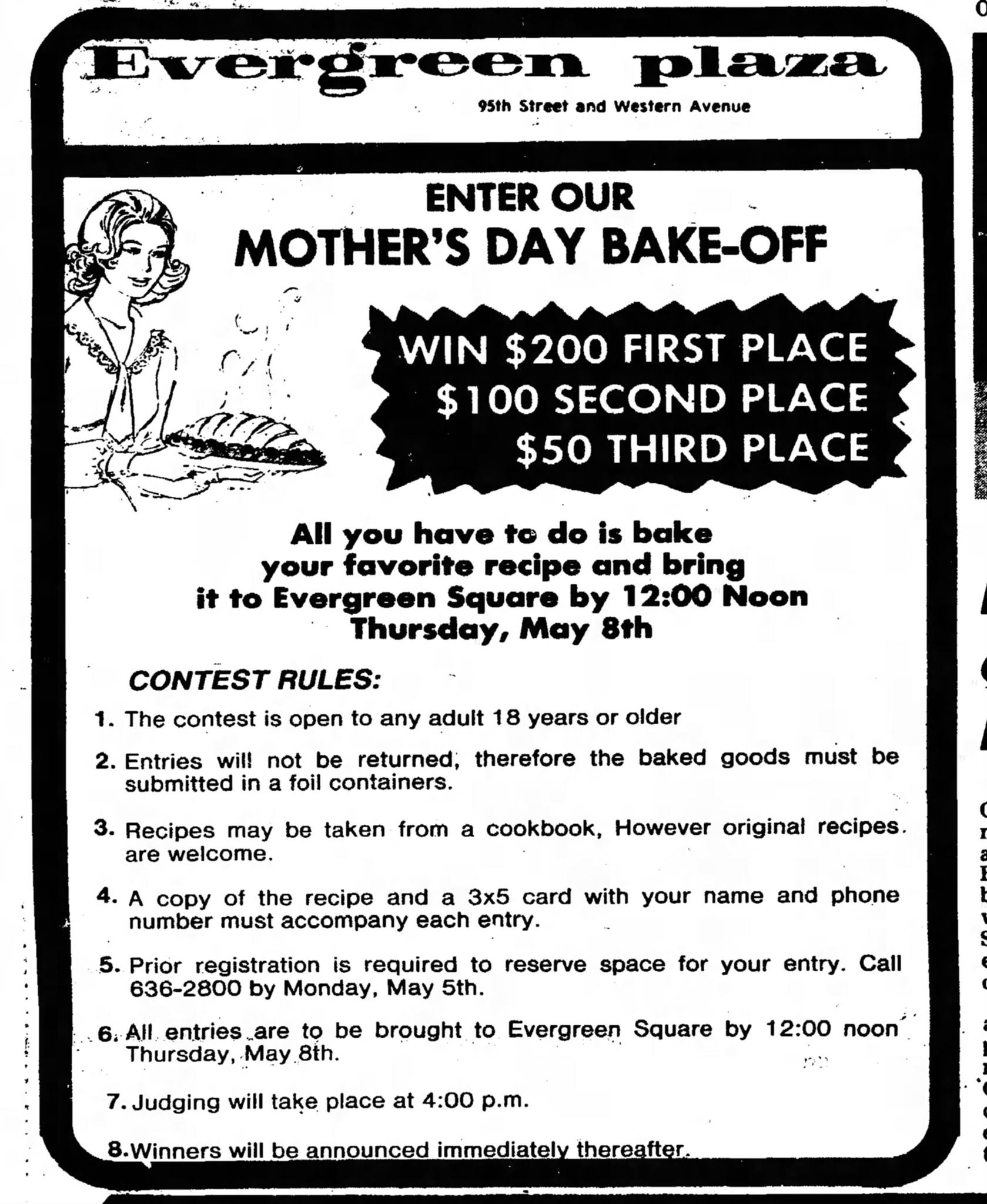
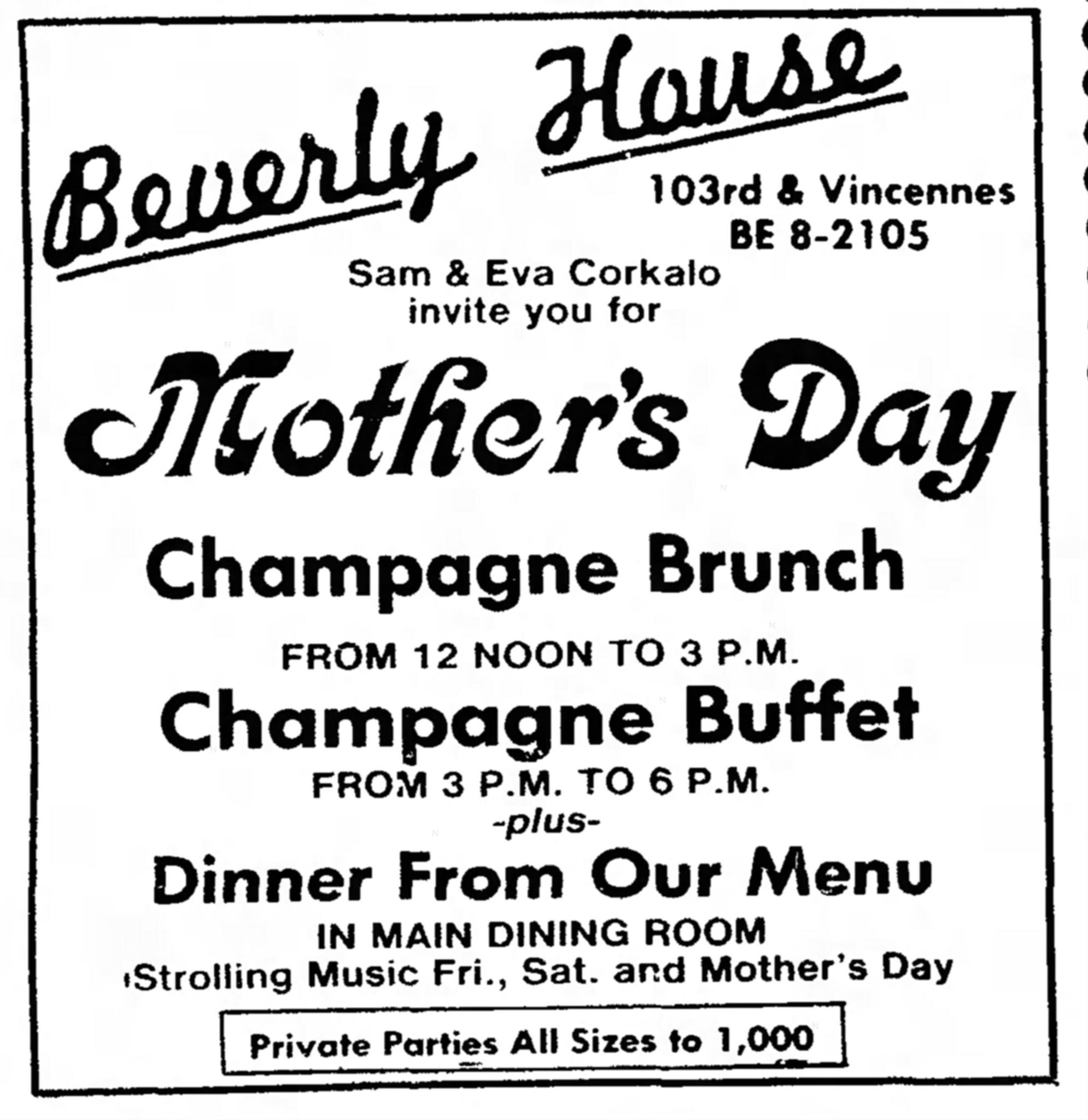
1975 newspaper ads are like a walk down Memory Lane:
Shopping for Mother's Day gifts at Evergreen Plaza or Klein's Department Store in Blue Island. Evergreen Plaza even had a baking contest that year. And of course, you could also eat at the restaurants in the Plaza.
Making your own hand-crafted gift for Mom.
Perhaps dinner at the Beverly House, a popular place on Vincennes for many years. .
The Ridge Historical Society
Mother’s Day One Hundred Years Ago
By Carol Flynn
The modern Mother’s Day in the U.S. grew out of the peace movement following the U.S. Civil War. Peace activists Ann Reeves Jarvis and Julia Ward Howe called for a “Mother’s Day for Peace” when mothers collectively would advocate that their children not be sacrificed as soldiers in wars.
When Ann Reeves Jarvis died in 1905, her daughter Anna Jarvis wanted to honor her and all mothers, and started a liturgical service in West Virginia. She proposed a national Mother’s Day, and President Woodrow Wilson declared the first officially recognized Mother’s Day in the U.S. in 1914.
Anna Jarvis always wanted the day to be one of prayer, thanks, honor, and personal reflection, and was opposed to the commercialism that crept into the holiday. She protested at a candy makers convention in 1923 and against the sale of carnations for Mother’s Day in 1925, where she was arrested for disturbing the peace.
At this time on the Ridge and nearby areas, the church influence was still very strong, but the commercialism that would come to own Mother’s Day was in evidence.
The Protestant community spent most of their Sundays in church back in those days, and in 1924, the local churches led the way in recognizing Mother’s Day. Everyone was encouraged to attend services “for mother’s sake.”
Church started with Sunday School and one topic that year was “What We Owe Our Mothers.”
The first service of the day offered sermons on topics like “Mother’s Unfeigned Faith” and “A Mother’s Heart.” Printed copies of the sermon “A Godly Mother” were distributed to the congregants at one church.
Choir programs included “Songs Mother Used to Sing.” Duets and solos included “My Mother’s Bible” and “Wear a Flower for Mother.”
Special christening services for children were held.
After Sunday dinner at home, people returned to church for evening services.
Evening services contained entertainment/educational programs as well as liturgical services. At one church, a large men’s chorus sang Mother’s Day songs, followed by a testimony meeting honoring mothers. Another church gave every mother who attended evening service a rose or a tribute booklet. A third church showed a stereopticon on “A Child and His Mother.”
Other social events also went on, usually on weekdays, not on Sunday, because Sunday was for church. Sororities and other groups gave annual Mother’s Day parties, luncheons, and teas that included music and drama programs. At one event. the local paper reported that “Miss Sadie Minrath danced the ‘frisco’ with Miss Anne Green at the piano.” The “frisco” was a popular contemporary dance, the first one set to jazz music.
At the same time, commercial gifts and services were beginning to take hold in the community, and advertisements were appearing in the newspapers.
Greenhouses and florist shops promoted blooming plants and flowers as good gifts for Mother’s Day. Novelty shops promoted commercially made cards, started by the Hallmark Company, and items like stationery. Candy stores promoted special boxes for the day.
Photography studios promoted their services for portraits. Dance studios promoted dancing lessons.
Frank’s Department Store at 63rd Street and Ashland, a popular shopping spot, used the day to advertise women’s shoes, handbags, gloves, and “dotted voile and tissue gingham dresses, trimmed with lace and organdies,” on sale for $2.98, down from $3.50.
As one advertiser put it, the question wasn’t whether or not to recognize your mother on this day, the question was how to do it.
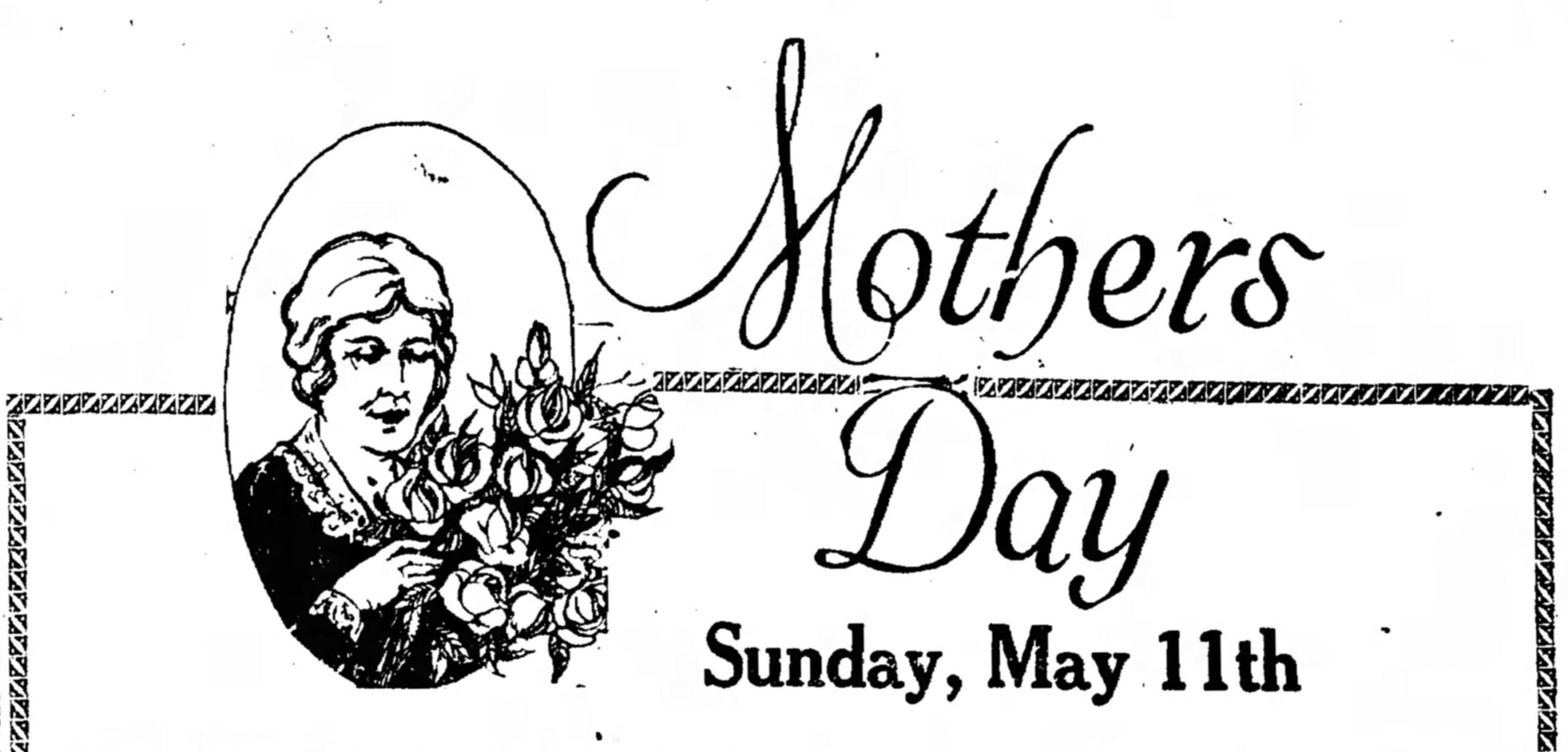
Image from a flower ad, May, 1924.
The Ridge Historical Society
Happy Mother’s Day!
By Carol Flynn
“All that I am, or ever hope to be, I owe to my angel mother.” —Abraham Lincoln
For thousands of years, societies have honored motherhood. The ancient Greeks and Romans paid homage to the mother goddess Cybele. In Rome, she was known as Magna Mater, the Great Mother.
In the United States, modern Mother’s Day has its origins in the pacifist movement and concern for veterans.
Mother’s Day was founded to honor peace activist Ann Jarvis, by her daughter Anna. Jarvis cared for wounded soldiers on both sides during the Civil War. She created Mother’s Day Work Clubs to address public health needs. Her daughter wanted to continue the work her mother started and to honor mothers for all they do.
In 1908, the U.S. Congress rejected the proposal to officially establish Mother’s Day. The men joked they would have to create a “Mother-in-Law’s Day” also. But by 1911, all the states had adopted the day, and in 1914, President Wilson proclaimed it a national holiday.
Anna Jarvis came to regret she ever came up with the idea when the holiday became excessively commercialized. Hallmark Cards began selling pre-made cards in the early 1920s, and this exploitation of the day for profit infuriated Jarvis. She wanted people to really think about their mothers, to honor their mothers with hand-written testimonials, not to resort to just buying gifts and pre-made cards. She wound up organizing boycotts of Mother’s Day, and was even arrested for disturbing the peace.
Now, the moral of this story is not to stop buying gifts for Mom! It is to sincerely and personally reflect upon her importance in one’s life, and to acknowledge this to her.
Today Mother's Day is one of the most recognized and celebrated days of the year. It not only honors the mothers of our families; it honors maternal bonds and the influence of mothers in society.
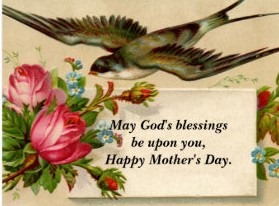
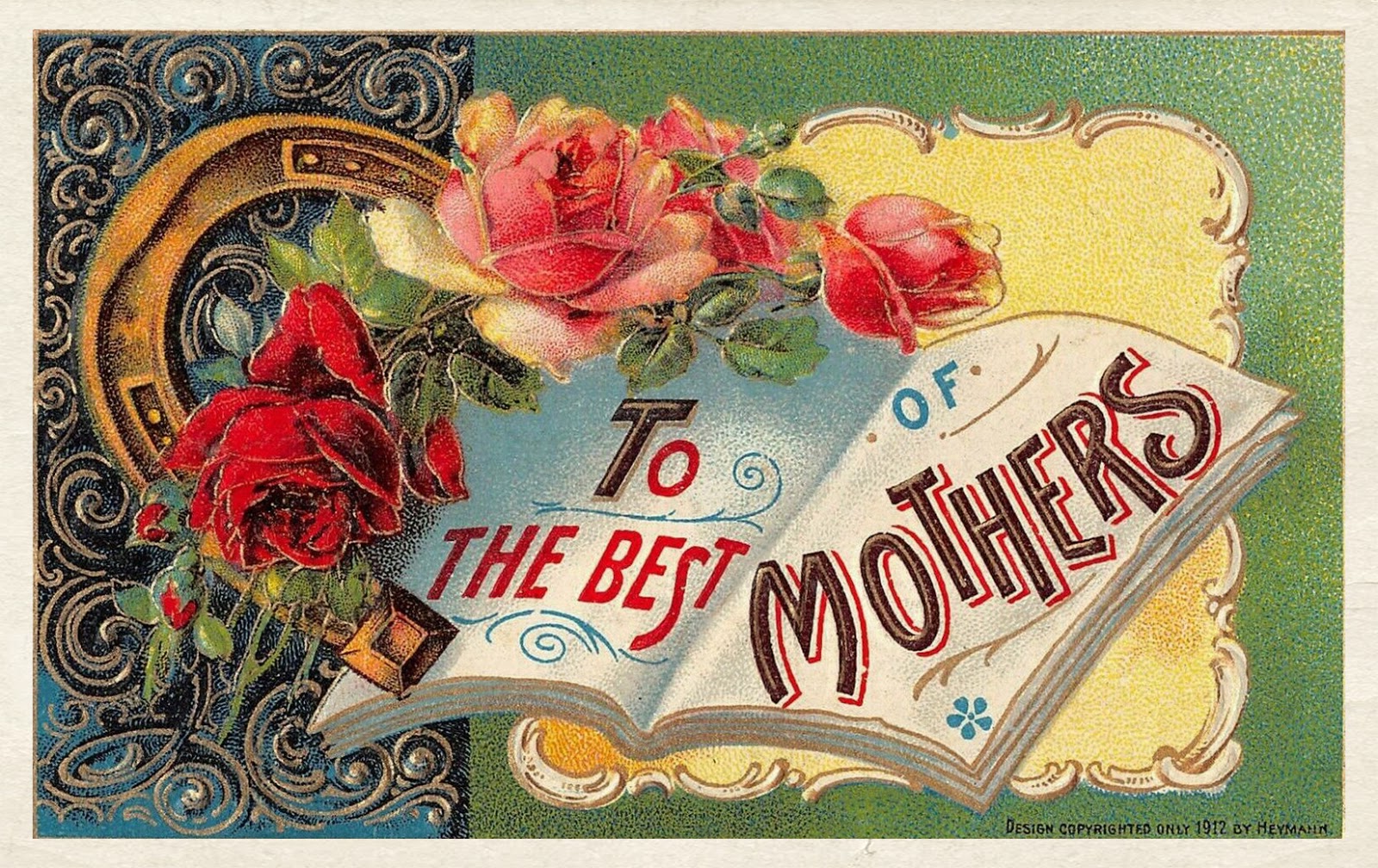
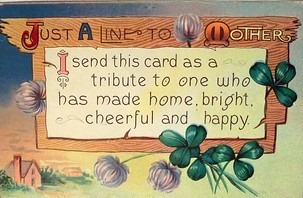
From the Ridge Historical Society
“All that I am, or ever hope to be, I owe to my angel mother.” —Abraham Lincoln
For thousands of years, societies have honored motherhood. The ancient Greeks and Romans paid homage to the mother goddess Cybele. In Rome, she was known as Magna Mater, the Great Mother.
In the United States, modern Mother’s Day actually has its origins in the pacifist movement and concern for Veterans.
Mother’s Day was founded to honor peace activist Ann Jarvis, by her daughter Anna. Jarvis cared for wounded soldiers on both sides during the Civil War. She created Mother’s Day Work Clubs to address public health needs. Her daughter wanted to continue the work her mother started and to honor mothers for all they do.
In 1908, the U.S. Congress rejected the proposal to officially establish Mother’s Day. The men joked they would have to create a “Mother-in-Law’s Day” also. But by 1911, all of the states had adopted the day, and in 1914, President Wilson proclaimed it a national holiday.
Anna Jarvis came to regret she ever came up with the idea when the holiday became excessively commercialized. Hallmark Cards began selling pre-made cards in the early 1920s, and this exploitation of the day for profit infuriated Jarvis. She wanted people to really think about their mothers, to honor their mothers with hand-written testimonials, not to resort to just buying gifts and pre-made cards. She wound up organizing boycotts of Mother’s Day, and was even arrested for disturbing the peace.
Now, the moral of this story is not to stop buying gifts for Mom! It is to sincerely and personally reflect upon her importance in your life, and to acknowledge this to her.
Today Mother's Day is one of the most recognized and celebrated days of the year. It not only honors the mothers of our families; it honors maternal bonds and the influence of mothers in society.
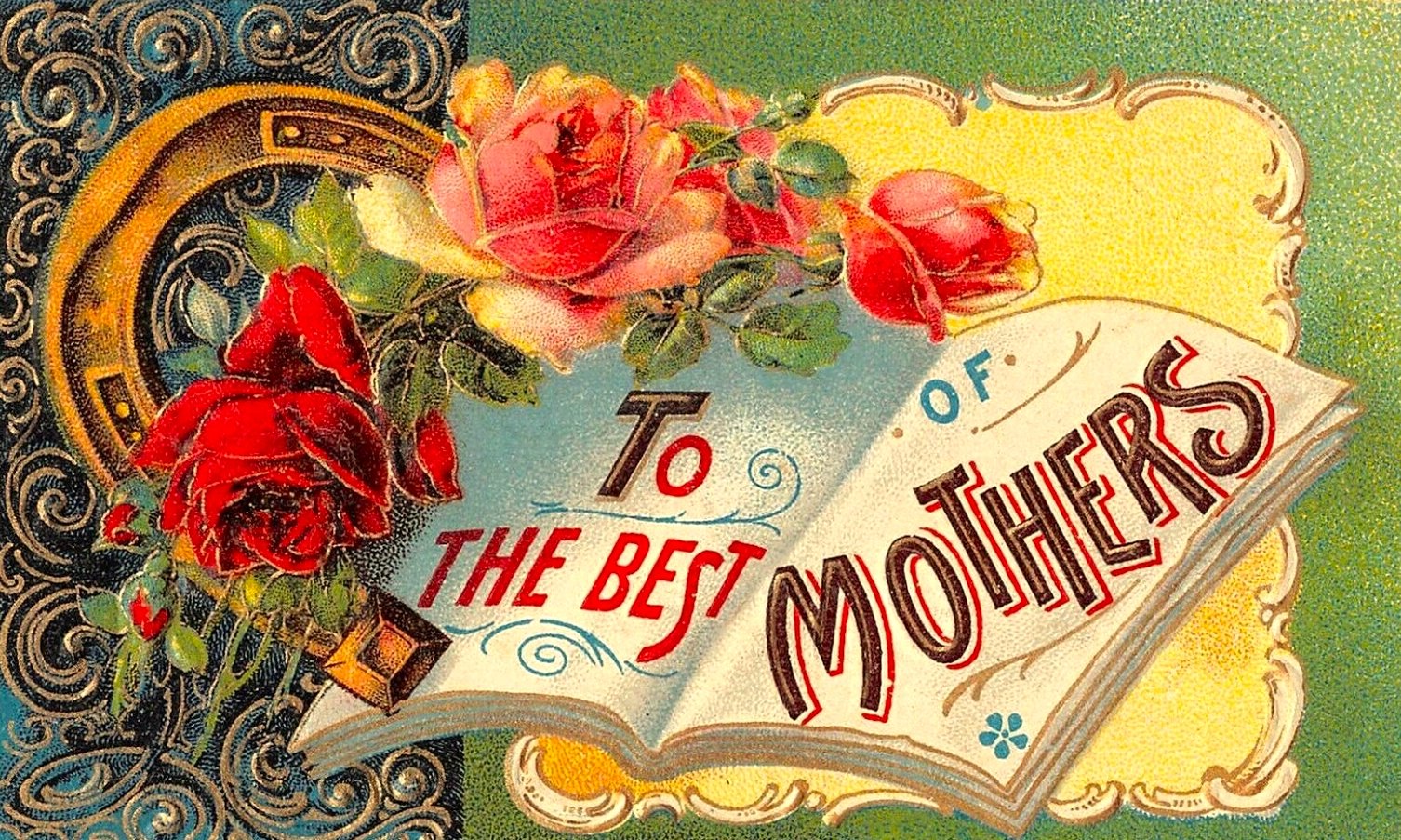
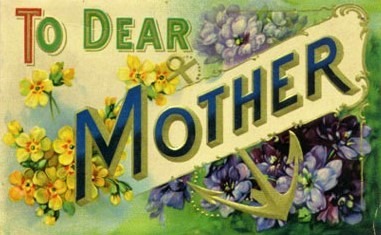
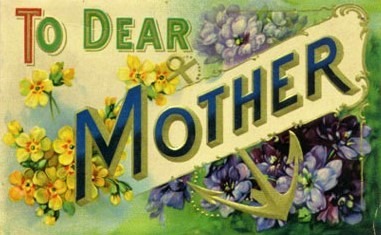
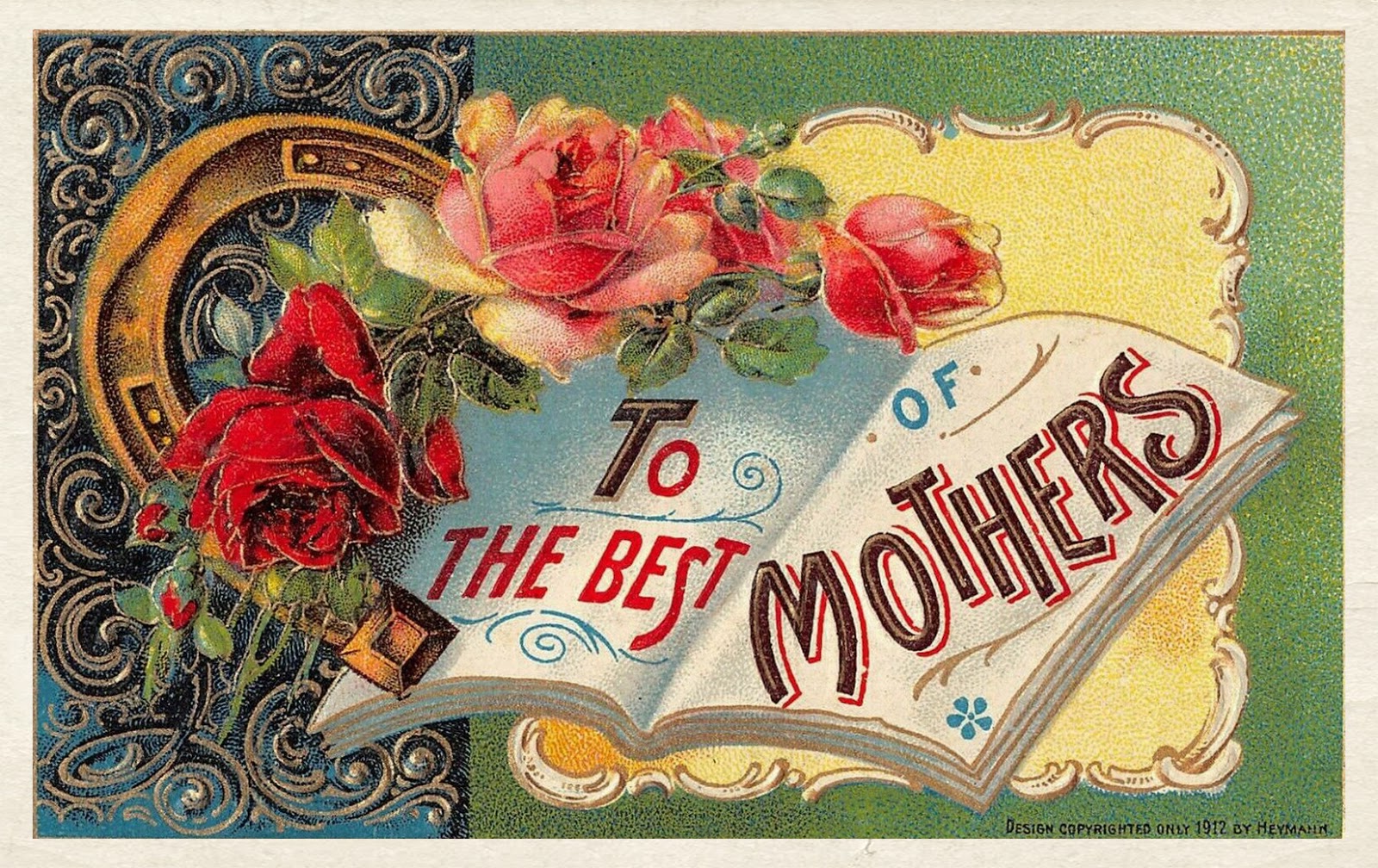
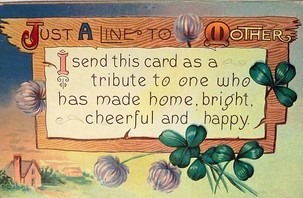
We're sharing some vintage postcards for Mother's Day. The symbol of the anchor is particularly interesting here, not something you often find on a card for a mother. But it is so appropriate – the anchor is a symbol of strength, stability, safety, security. These are certainly the traits associated with motherhood.
Happy Mother's Day!
From the Ridge Historical Society
“All that I am, or ever hope to be, I owe to my angel mother.” —Abraham Lincoln
For thousands of years, societies have honored motherhood. The ancient Greeks and Romans paid homage to the mother goddess Cybele. In Rome, she was known as Magna Mater, the Great Mother.
In the United States, modern Mother’s Day actually has its origins in the pacifist movement and concern for Veterans.
Mother’s Day was founded to honor peace activist Ann Jarvis, by her daughter Anna. Jarvis cared for wounded soldiers on both sides during the Civil War. She created Mother’s Day Work Clubs to address public health needs. Her daughter wanted to continue the work her mother started and to honor mothers for all they do.
In 1908, the U.S. Congress rejected the proposal to officially establish Mother’s Day. The men joked they would have to create a “Mother-in-Law’s Day” also. But by 1911, all of the states had adopted the day, and in 1914, President Wilson proclaimed it a national holiday.
Anna Jarvis came to regret she ever came up with the idea when the holiday became excessively commercialized. Hallmark Cards began selling pre-made cards in the early 1920s, and this exploitation of the day for profit infuriated Jarvis. She wanted people to really think about their mothers, to honor their mothers with hand-written testimonials, not to resort to just buying gifts and pre-made cards. She wound up organizing boycotts of Mother’s Day, and was even arrested for disturbing the peace.
Now, the moral of this story is not to stop buying gifts for Mom! It is to sincerely and personally reflect upon her importance in your life, and to acknowledge this to her.
Today Mother's Day is one of the most recognized and celebrated days of the year. It not only honors the mothers of our families; it honors maternal bonds and the influence of mothers in society.
We're sharing some vintage postcards for Mother's Day. The symbol of the anchor is particularly interesting here, not something you often find on a card for a mother. But it is so appropriate – the anchor is a symbol of strength, stability, safety, security. These are certainly the traits associated with motherhood.
Happy Mother's Day!
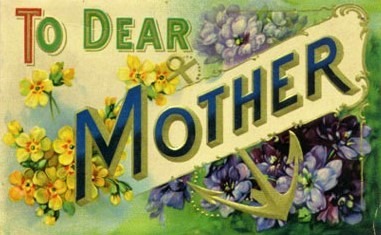
A vintage postcard for Mother's Day. The symbol of the anchor is particularly interesting here, not something you often find on a card for a mother. But it is so appropriate – the anchor is a symbol of strength, stability, safety, security. These are certainly the traits associated with motherhood.
Did you know Mother’s Day actually has its origins in the pacifist movement and concern for Veterans?
Mother’s Day was founded to honor peace activist Ann Jarvis, by her daughter Anna. Jarvis cared for wounded soldiers on both sides during the Civil War. She created Mother’s Day Work Clubs to address public health needs. Her daughter wanted to continue the work her mother started and to honor mothers for all they do.
This was 1908. The U.S. Congress rejected the proposal. They joked they would have to create a “Mother-in-Law’s Day” also. By 1911, all of the states had adopted the day, and in 1914, President Wilson proclaimed it a national holiday.
Anna Jarvis came to regret she ever came up with the idea when the holiday became so commercialized. Hallmark Cards began selling pre-made cards in the early 1920s, and this exploitation of the day for profit infuriated Jarvis. She wanted people to really think about their mothers, to honor their mothers with hand-written testimonials, not to resort to just buying gifts and pre-made cards. She wound up organizing boycotts of Mother’s Day, and was even arrested for disturbing the peace.
This “Mother’s Day” was not the first. Julia Ward Howe called for a “Mother’s Day for Peace” in 1872. Her intent was for mothers to protest against war.