Explore the RHS Facebook Archives, a rich repository of local history written by Carol Flynn. For two decades, Carol brought a deeply dedicated voice to public education at RHS. Her role as Facebook administrator through mid-2025 naturally extended her prolific research into meticulously detailed articles, most notably her multi-part historical series posts. Today, Carol continues her local history writing for The Beverly Review and other outlets.
St. Patrick's


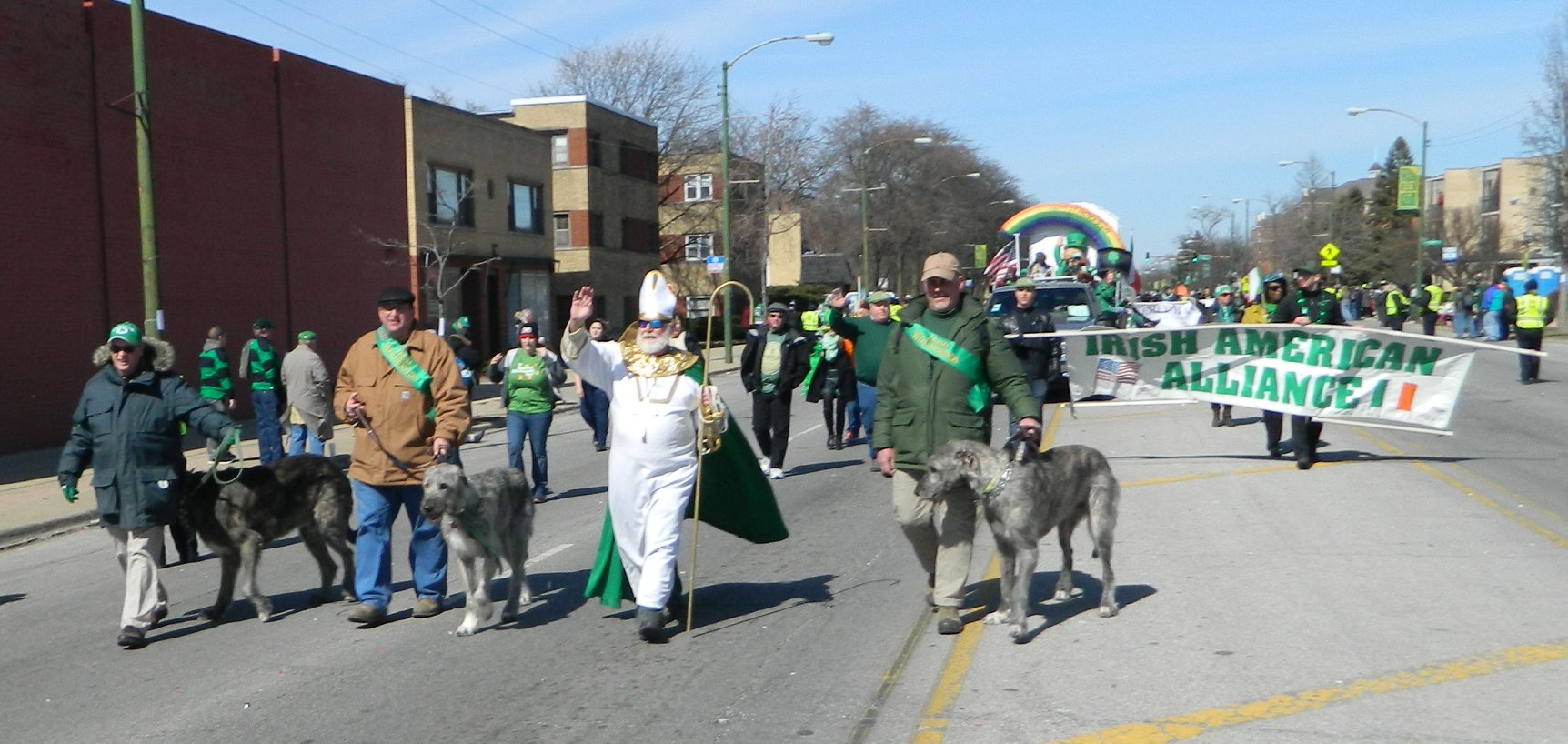
Another article in the Beverly Review special section for the now-canceled South Side Irish Parade is on Irish Wolfhounds. The link to the actual newspaper is at the bottom of the post.
Irish Wolfhounds often appear as symbols for Ireland. They represent loyalty, bravery and steadfastness.
Irish Wolfhounds go back 2000 years. These "Great Hounds of Ireland" were bred to take down large prey and mounted adversaries in war time. In the Middle Ages, wolves became such a problem for growing European settlements that the dogs were used to hunt down wolves. The dogs did such a good job at eradicating wolves that the breed almost went extinct itself, but was saved in the mid-1800s, leading to the dogs we have today.
The American Kennel Club (AKC) considers this the tallest breed of dog, with a minimum standard height of 32 inches at the shoulder for males. They hunt by sight, not smell, which necessitates great speed. Their size and strength is legendary.
The temperament of an Irish Wolfhound, though, is anything but fierce. The AKC describes these gentle giants as "kindly."
Joe and Madeleine Mahoney are from the South Side and have been keeping Irish Wolfhounds for forty years. Their current dogs are Casey, 5, and Nora, 3. These dogs are huge. And the most fun thing is that these dogs consider themselves lapdogs. Some of the best pictures are of them trying to fit on Madeleine's lap.
The Mahoneys are involved with the Great Lakes Irish Wolfhound Association. This group marches with the Irish American Alliance in the parade. Joe is on the far left with Casey (open the picture for the complete picture).
Please see the actual article for the complete story on all of this. Go to page 03B at:
http://www.beverlyreview.net/special/page_456a7e38-9cc6-5709-a99e-e915e18e71f9.html
Right now the South Side Irish Parade would ordinarily be marching along Western Avenue, but this year it was cancelled as we all work together to contain the coronavirus. Just wait until next year.
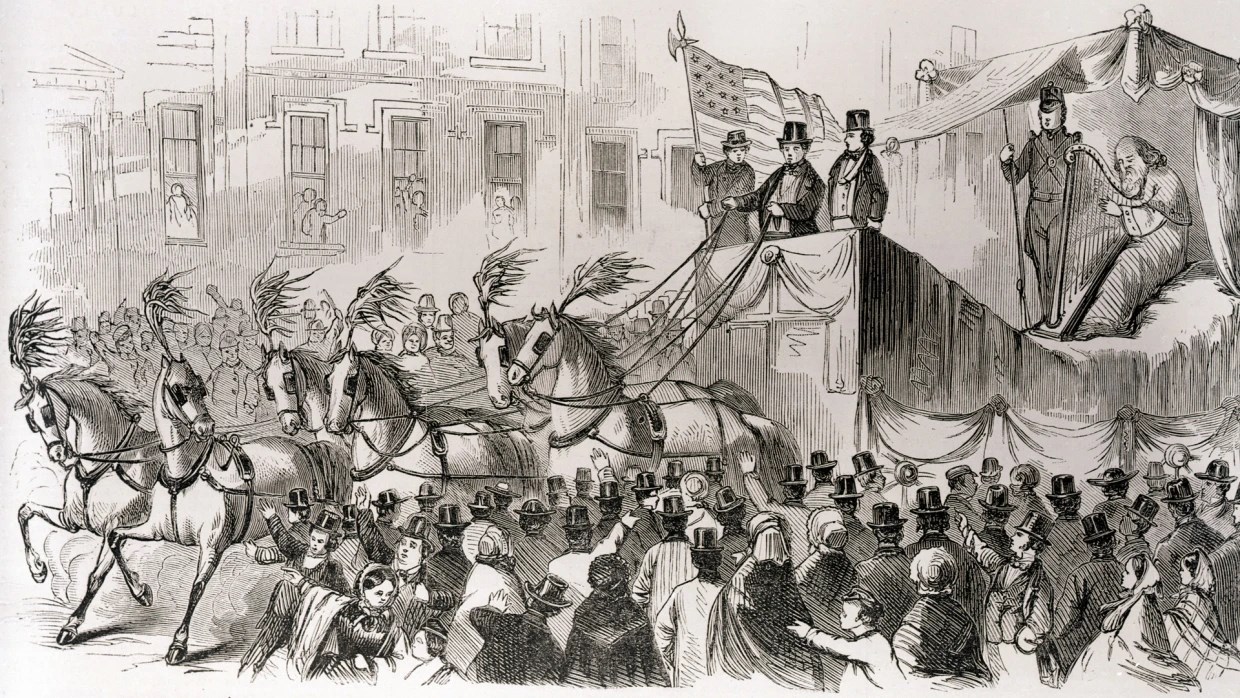
One last article in the Beverly Review special section is on the early history of St. Patrick's Day celebrations in Chicago.
The first recorded St. Patrick’s Day parade in Chicago took place on Friday, March 17, 1843. The Chicago [Brass] Band and the Montgomery Guards turned out in full uniform for the procession and there was a Mass at the Catholic church [St. Mary’s].
The Montgomery Guards was a volunteer militia group named for Irish-born American Revolutionary War General Richard Montgomery. There were numerous voluntary militia groups in the country, formed by local citizens to fill the gap left by a small U. S. Army. These units were the forerunners of the United States National Guard.
By 1843, the population of Chicago had grown to 7,580 residents. Of these, almost 800 were Irish, mostly Catholics. Many of these were laborers who came to work on the Illinois-Michigan Canal. The mid to late 1840s saw hundreds of thousands of Irish Catholic immigrants come to the U.S., and thousands made their way to Chicago.
St. Patrick’s Day celebrations became a regular occurrence. The militia groups were joined by the charitable organizations that were founded to help the destitute Irish both in their native country and in their adopted United States.
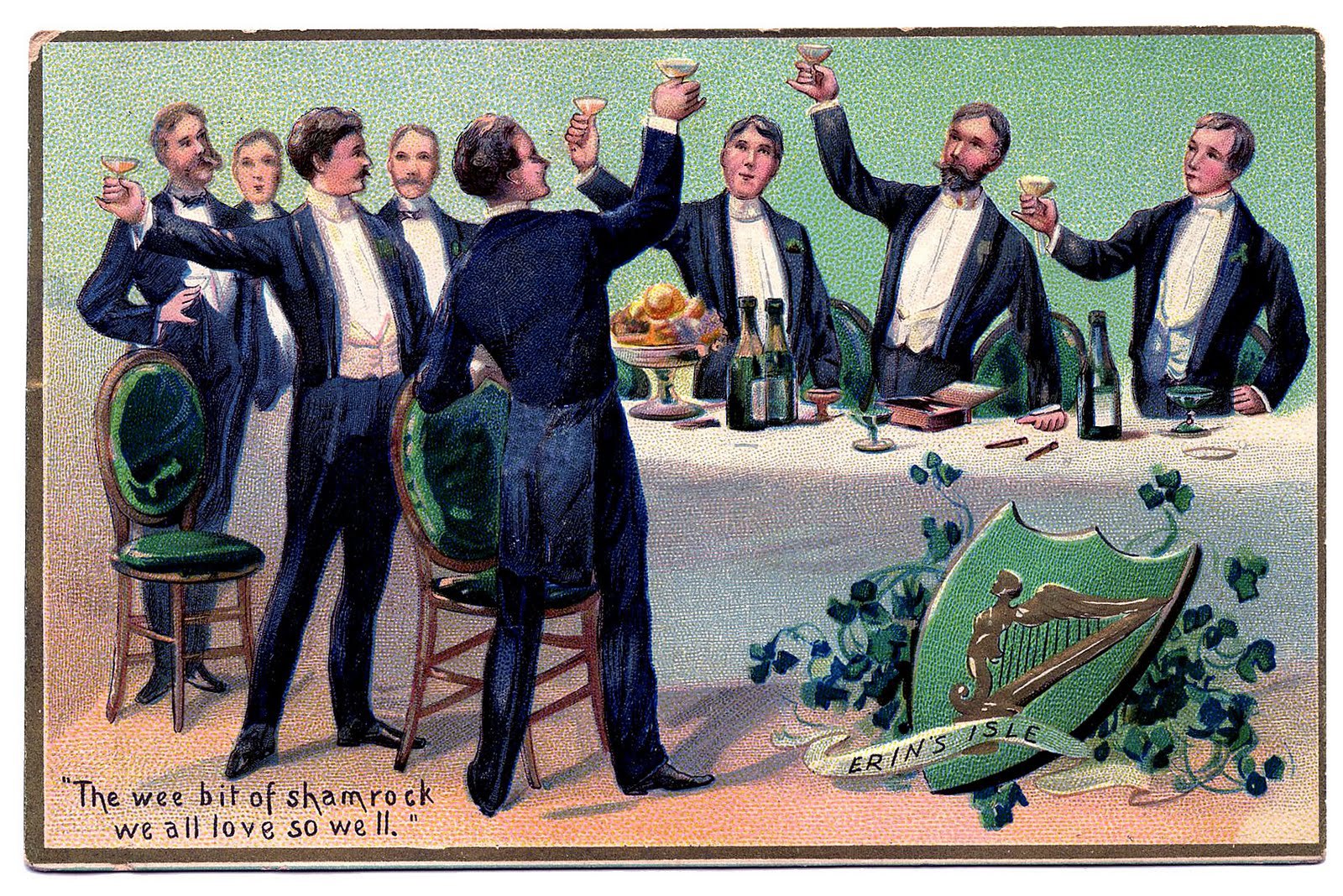
In 1854, the Chicago Tribune reported on the “sumptuous dinner” at the Tremont House put on by the Chicago Hibernian Benevolent Emigrant Society to celebrate St. Patrick’s Day and raise money. After dinner, there were a series of toasts, or speeches, accompanied by musical airs performed by the Chicago Brass Band.
The toasts covered everything from St. Patrick to the U. S. President, and patriotic U.S. tunes like the “Star Spangled Banner” alternated with Irish ballads like “St. Patrick’s Day in the Morning.”
By the 1860s, the Chicago Irish were forming religious, fraternal and political organizations, and with the start of the U. S. Civil War, new volunteer militias were formed.
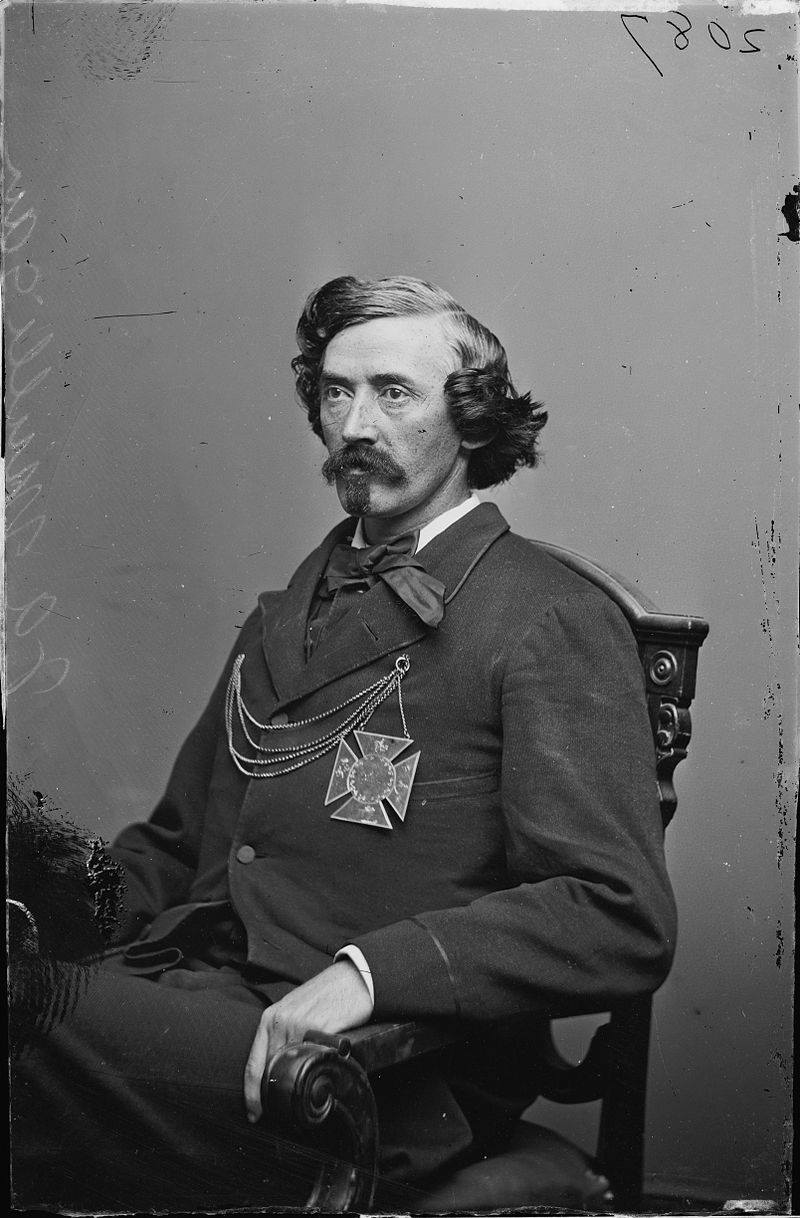
In Chicago, the 23rd Illinois Volunteer Infantry Regiment of the Union Army, referred to as the Irish Brigade, was mustered into federal service in June of 1861, commanded by Col. James A. Mulligan, a popular lawyer and politician known for his gallantry.
From February to June 1862, Col. Mulligan and the Irish Brigade staffed Camp Douglas in Chicago. The camp had started as a training camp for Union soldiers, but that month had been converted to a prisoner of war camp for captured Confederate soldiers.
The Irish Brigade led the St. Patrick’s Day parade on March 17, 1862, and what a parade that was. There were aldermen, civic leaders and military officers; four brass bands; and at least ten organizations joining in. Thousands marched and many thousands more lined the streets to cheer.
That evening, the Benevolent Society held its now-annual banquet at the Tremont House, followed by toasts and dancing.
During the years, the parades have waxed and waned. The South Side Irish started a neighborhood parade along 79th Street that Mayor Richard J. Daley moved downtown in 1960. Residents of Morgan Park started what today is the very successful South Side Irish Parade in 1979.
These parades have kept alive the tradition that dates to Chicago’s earliest days.
See page 04B at:
http://www.beverlyreview.net/special/page_456a7e38-9cc6-5709-a99e-e915e18e71f9.html
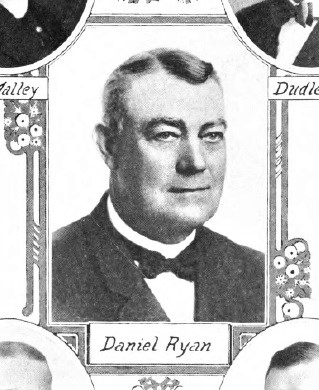
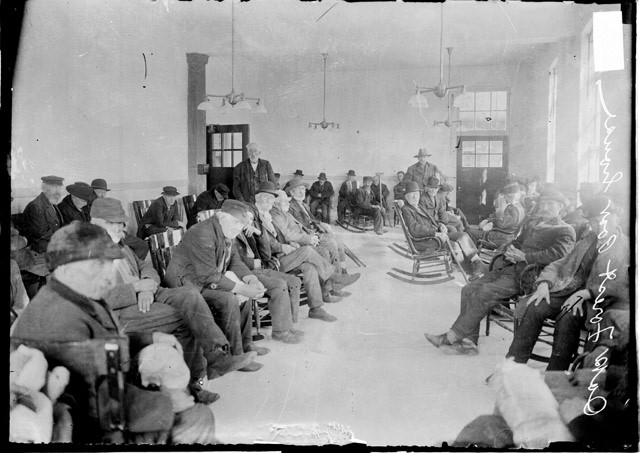
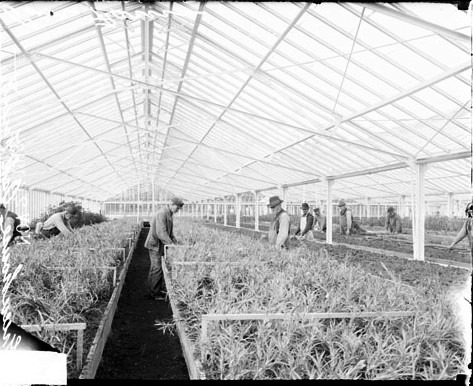
The history of Dan Ryan Woods – Part 7: Dan Ryan and his contributions
By Carol Flynn
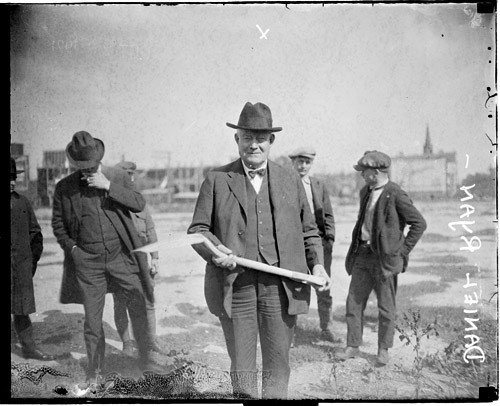
According to user-submitted information on Ancestry.com, and U.S. and Irish census records, Daniel Ryan was born at Carhue House, Dundrum, County Tipperary, Ireland, in 1860. He immigrated to the U.S. in 1880 and became a naturalized citizen.
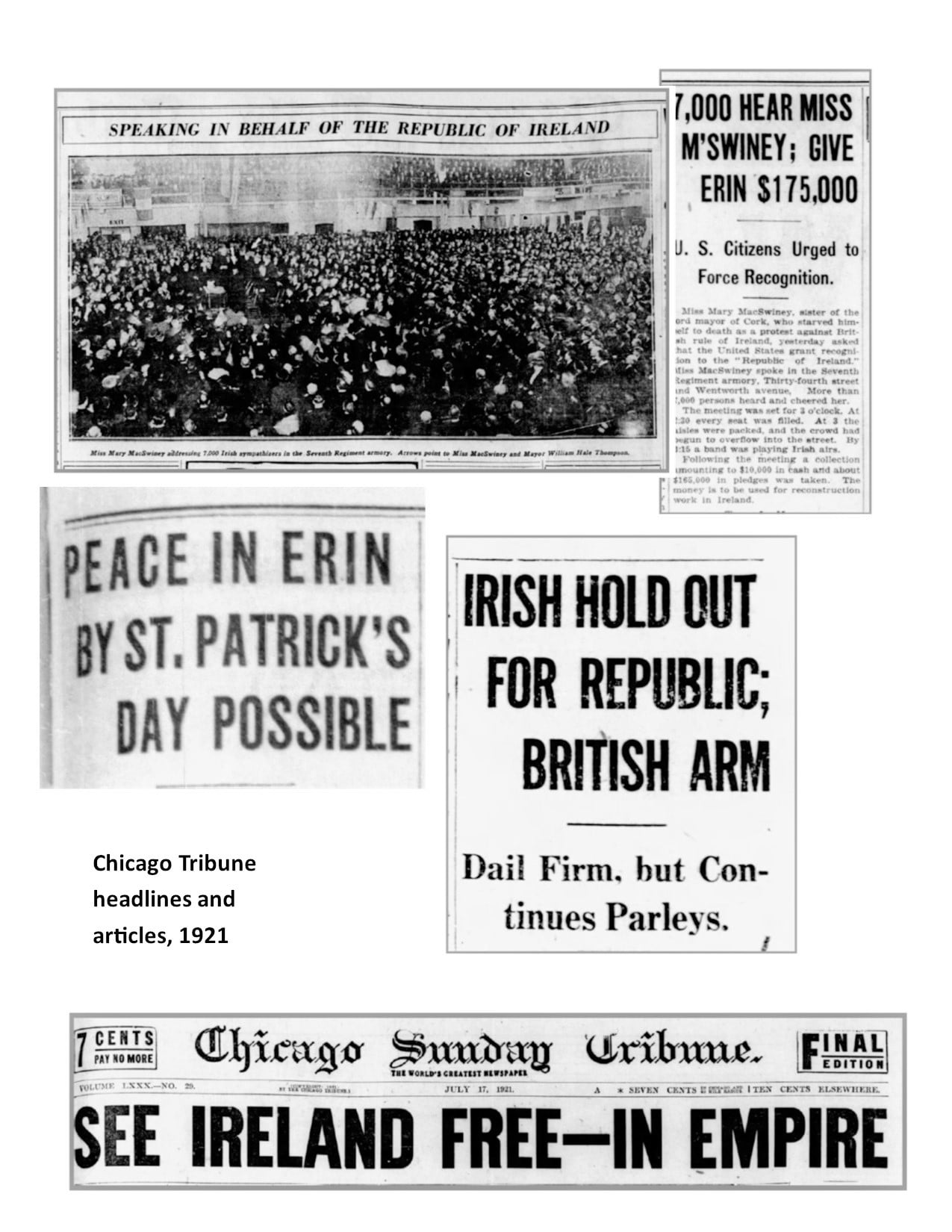
A man named John C. Ryan of Carhue House, Dundrum, born in 1892, active in the Irish independence movement of the early 1920s, submitted his history in 1956 to the Irish Bureau of Military History. He stated that his uncle, Dan Ryan, was a member of the “Fenian Movement” and subsequently emigrated to the U. S.
“Fenians” was the common name for members of the Irish Republican Brotherhood (IRB), a secret organization dedicated to establishing an independent Irish republic, started in 1858. The name came from the Fianna, a band of warriors in Irish folklore. The IRB engaged in campaigns to end British rule in Ireland. John Ryan reported that a cache of old Fenian rifles was kept in a dump by their home, and he took these into his possession and was able to use them in 1920-21. The IRB staged the Easter Rising in 1916, which led to the Irish war for independence, and ultimately the 1921 treaty that brought about the Irish free state.
Involvement with the Fenians was illegal in British-controlled Ireland. In the U.S., the brother organization to the IRB was called the Fenian Brotherhood and later, Clan na Gael. It was not unusual for a young Irishman to have to hightail it out of his native country due to his nationalist activities, and then continue to support the cause from his adopted land.
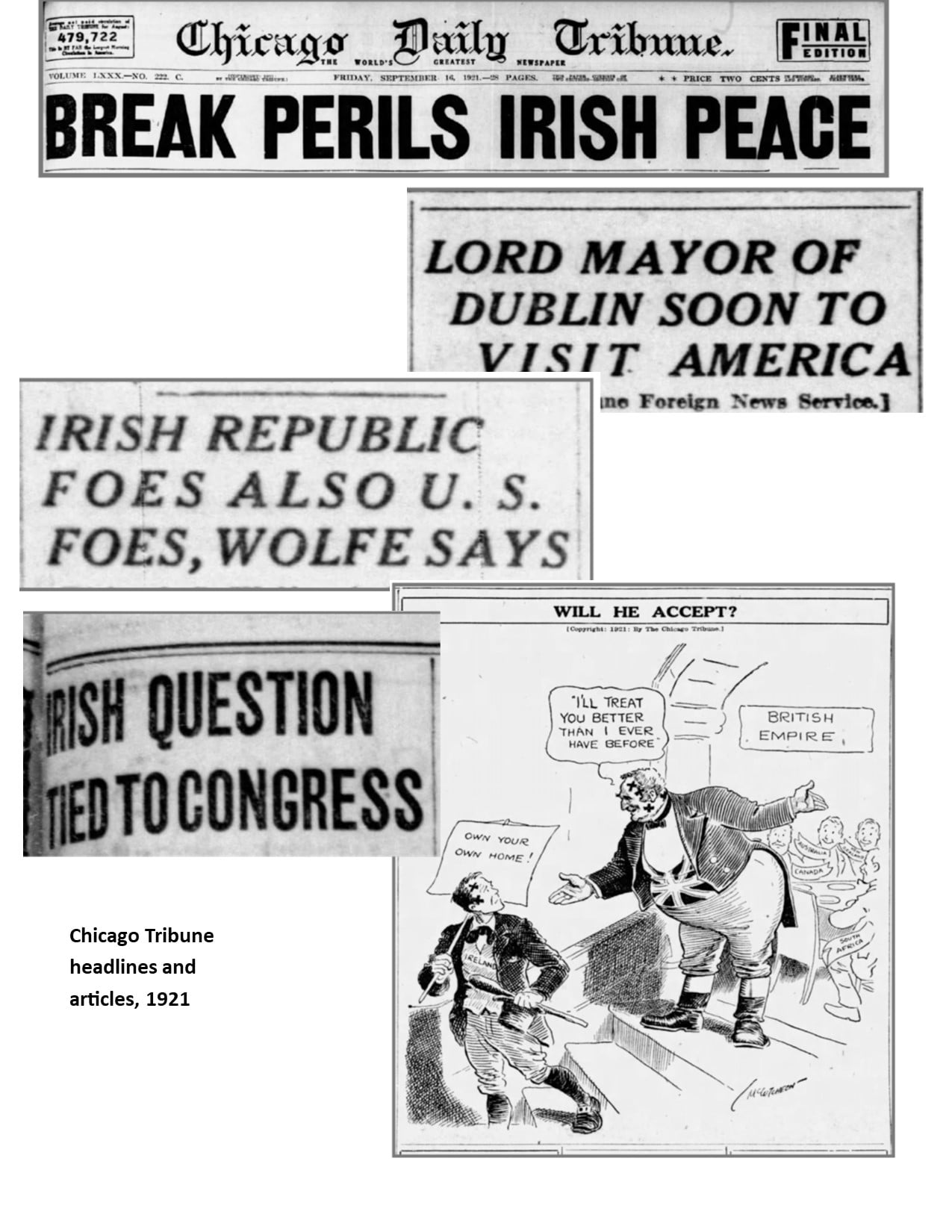
Now, the surname “Ryan” was very common around that area of Ireland, and there is no verification that this is our Dan Ryan. In Chicago, Dan Ryan’s attendance at events supporting Irish independence was noted in the papers. He was an honorary pallbearer at the funeral of Richard Burke, a well-known Fenian. Even if he had not been a revolutionary in Ireland, like many Irish Catholic immigrants in America, he continued to support the causes of his old country at the same time he fully embraced American citizenship and loyalty.
When Ryan came to the U. S., his first job was at the Union stockyards, under John B. Sherman, whose farm would become the Dan Ryan Woods. Ryan soon became a successful livestock buyer. He then moved into the building trades.
He married Alice Carroll, also from Tipperary, and they became the parents of seven children. By 1910, they were well settled in Englewood, the owners of a concrete contracting company.
Ryan became involved in local politics, where, according to the Chicago Tribune, his “political genius” became evident. He was a Democratic leader in the 32nd ward, which included Morgan Park when it annexed to the city in 1914. Ryan was elected to the Cook County Board of Commissioners that year, and within a year, he was Chairman of the Finance Committee.
In early 1921, Peter Reinberg, Cook County Board President, died while in office. Ryan was unanimously elected by the Board to fill Reinberg’s unexpired term, which lasted until December 1922. The Cook County Board oversaw a wide variety of facilities and services, including hospitals, roads, jails, courts, schools, tax collections, records, and the forest preserves.
Ryan championed a number of causes. Although he barred “busy-body women” from budget meetings so they would not “bother” the committee, he did support women’s issues. One example is that he called for revising the state code to make wife and child abandonment a criminal offense.
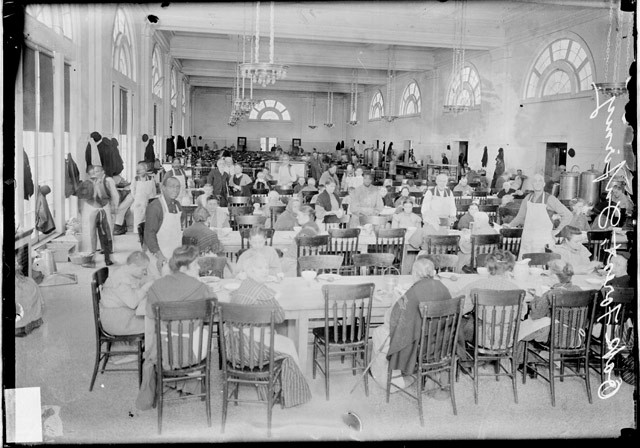
He was also concerned about the Oak Forest facilities run by the county, which included a poor farm, infirmary, and tuberculosis hospital. He had first-hand experience with poor farms in Ireland. In August 1921, a writer from the Englewood Economist observed Ryan inspecting the facilities. Wrote the reporter, “Mr. Ryan’s interest and attention toward the inmates and their kindly feelings toward him indicate that the welfare of this institution occupies no small place in the president’s thoughts.”
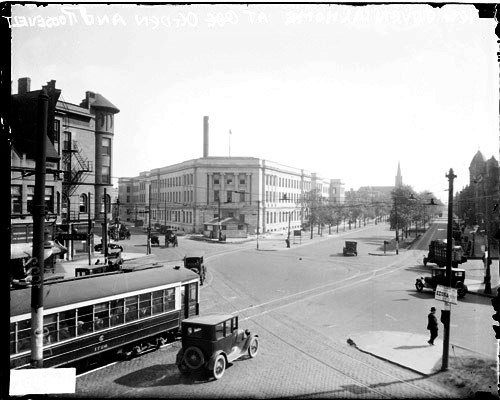
During Ryan’s term as President, work began on the Cook County Juvenile Home and Court, at Roosevelt Road and Ogden Avenue. Although the city tried to block it, the county built the first-ever facility for dependent and delinquent children that included living quarters, classrooms, playgrounds, and courtrooms. The building was renamed the Arthur J. Audy Home in 1950 for a former superintendent and now it is called the Juvenile Temporary Detention Center. Although it came to be plagued with problems, the juvenile home was established with good intentions.
Another cause important to Ryan was improving roads. In 1922 he wrote in a Chicago Tribune newspaper article, “Cook county is fast becoming a paradise for the automobilist. The forest preserve is a natural adjunct to our system of good roads. More than 4,000,000 persons there found rest and relaxation in 1921. So the forest preserve district is a promoter of the automobile, and the motor car, in turn, is a populizer of the preserves. Cook county intends to continue extension of its paved highways, as well as its forest preserves,” wrote Ryan.
Many sources consider the forest preserves and improved roads to be Ryan’s most lasting legacy.
The next installment will look at his role with the forest preserves.
The Ridge Historical Society
The Month of March
By Carol Flynn
March is here. This is a busy time for “tribute months.” We have National Women’s History Month, National Irish American Heritage Month, National Nutrition Month, National Craft Month, and a few others.
Daylight savings returns in March – we gain an hour of daylight; Spring begins in March. Passover and the Easter Holy Week both begin in March.
Our first story this month is a look at an Irish American Catholic family on the Ridge one hundred years ago, the George Francis Egan family. This is pieced together from newspaper accounts and Ancestry files, although it is not a full profile by any means. There may even be people reading this who knew the Egans – we’d love to hear from you.
Mrs. Kate Egan was an interesting person; she brought together the Irish, women, crafts, and food/nutrition themes for the month.
Like all families, the Egans had their good times and their tough times. They suffered several tragedies with the early deaths of loved ones. They were “typical” of many Irish Catholics in Chicago – until we get to their house. That sets them apart, and we’ll cover that in part 2.
George Francis Egan was born on October 25, 1857, in Chicago. His parents, Michael and Bridget, were both from Ireland.
Katherine Theresa Murnane was born on March 1, 1864, also in Chicago, and her parents, John and Anne were born in Ireland. Kate came from a large family.
On May 26, 1883, George, 25, and Kate, 19, were married.
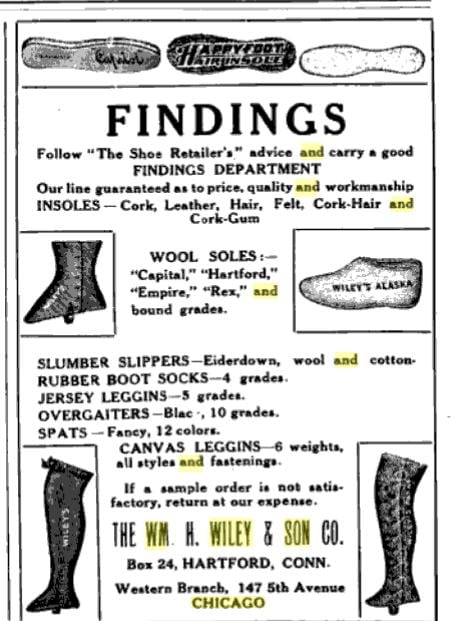
George’s occupation was listed as “department superintendent of a clothing company” for many years. He was with the W. M. Wiley and Son Company for thirty years, in charge of the factory in which over-gaiters and leggings were made. These went out of fashion, and the factory relocated out east. He became a self-taught carpenter. Later, he worked as a watchman.
Kate and George had seven children, with four living to adulthood. These were George F., Jr., Florence, Bernard, and Marie.
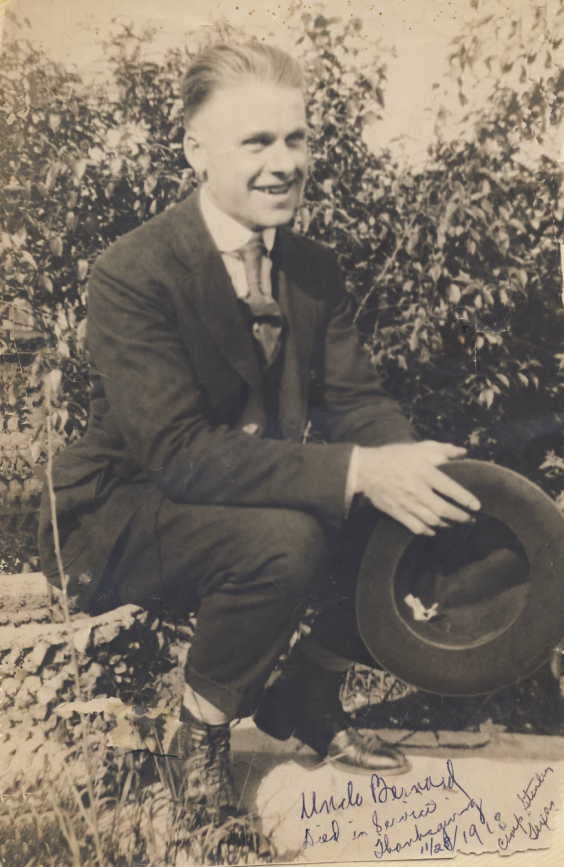
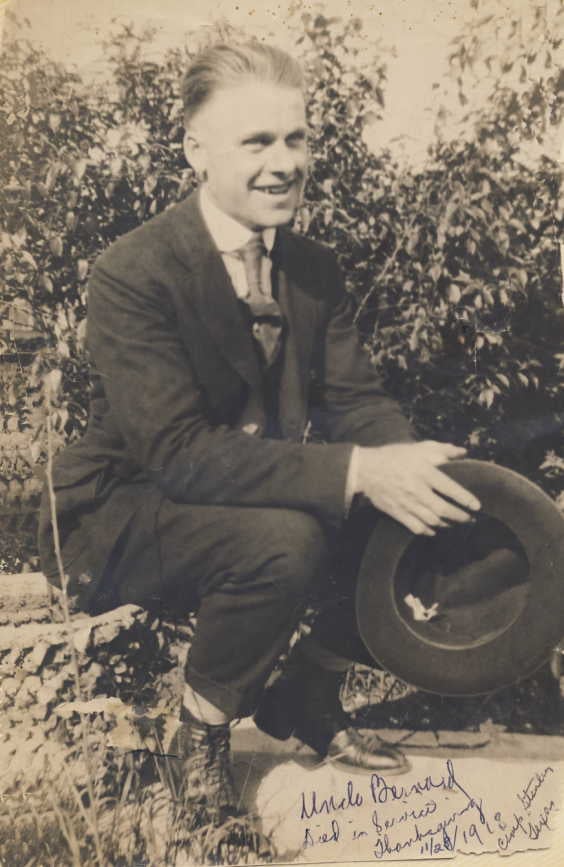
Unfortunately, Bernard died as a soldier during World War I, in a Texas military camp hospital in 1918 at the age of 24. The cause of death was pneumonia, a complication of influenza. Mrs. Egan and daughter Florence traveled down to San Antonio to arrange to have Bernard returned home, and he was buried in Mount Olivet Cemetery.
George, Jr., became an electrician with the city of Chicago, married Emily Biggs from England, and lived up north in the Irving Park area. They had seven children.
In 1920, Marie Egan, who had been working as a bookkeeper at a publishing company, was married to George DuMais in a “beautiful double ring ceremony” at St. Margaret of Scotland Church which was the only Catholic parish then serving the entire Ridge. Her sister was maid of honor and her brother’s daughter the flower girl. A wedding breakfast was served at the Del Prado Hotel, and the couple left for their new home in Portland, Oregon, where her husband’s job temporarily took them, although they came back to the Ridge shortly thereafter.
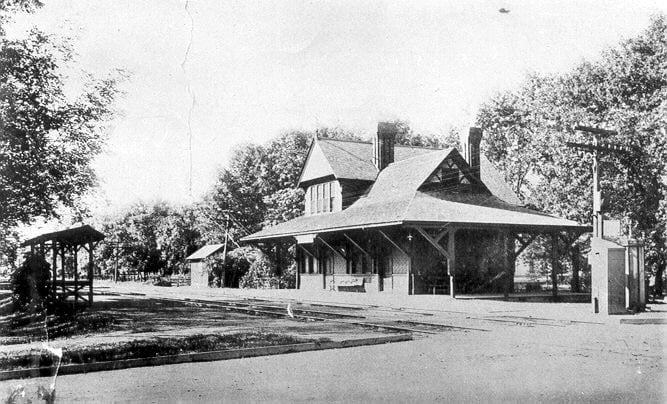
Her husband was a World War I veteran and a switchman with the railroad. He was killed in October of 1924 at the age of 32 in an accident at the Rock Island switching yard in Blue Island. This left Marie with three small children, and she went to work as the agent at the 103rd Street Rock Island (Metra) station. She lived at 10301 S. Walden Parkway, which might have been the train station. Often agents lived on the second floor.
Florence graduated from Englewood High School in millinery work in 1921. She married Benjamin McGovern of Buffalo, New York, in 1924. She had one son. Her sister held both her wedding and baby showers. That marriage ended in divorce.
Both Mr. and Mrs. Egan were reported in the newspapers as being involved in the American efforts for Irish independence. This was an ongoing issue of extreme importance for the Irish who had settled in America, and their descendants, and the newspapers of the day covered the topic in great detail.
In 1921, George was reported as the point person on the Ridge for a bond drive for the Irish Republic, and Kate was reported as being on the membership committee for a group working for the recognition of the Irish Republic. From 1919 to 1921, over $5 million was raised in the U.S.to keep alive the political and revolutionary efforts in Ireland during the country’s struggle for independence, through the Sinn Fein political organization.
They were active in the community in other ways also. At Christmas time, in 1920, “Grandfather” Egan played Santa Claus for the Catholic Order of Foresters on Christmas Eve. The Catholic Order of Foresters is a fraternal benefit society. It was formed to offer insurance to its members – death claims, and funeral and sick benefits.
In 1926, George worked with the election commissioner’s office on the recount of ballots.
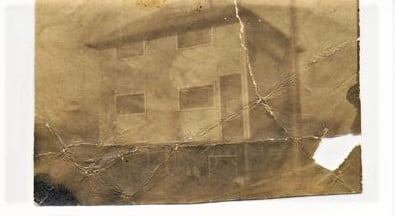
One of the most fascinating parts of the Egan family’s story was their house at 1414 West 95th Street, unfortunately, now an empty lot. This is where they separate from “typical” families on the Ridge. This also brings in National Craft Month.
Next installment: The George F. Egan House
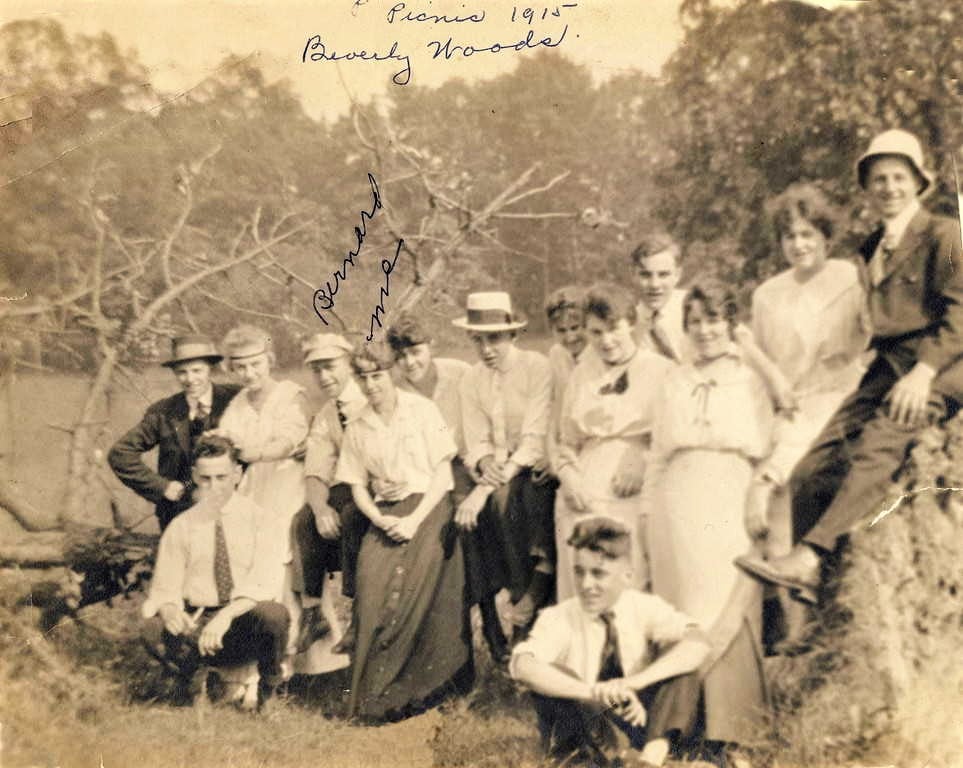
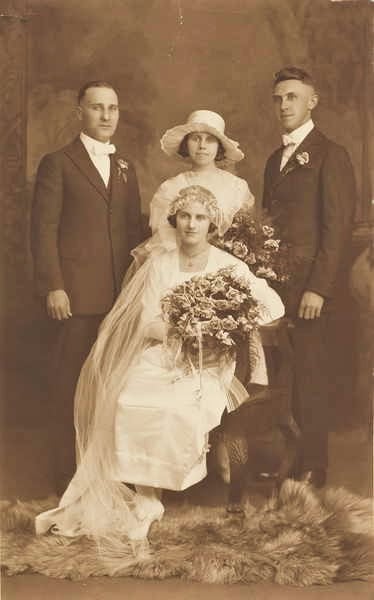
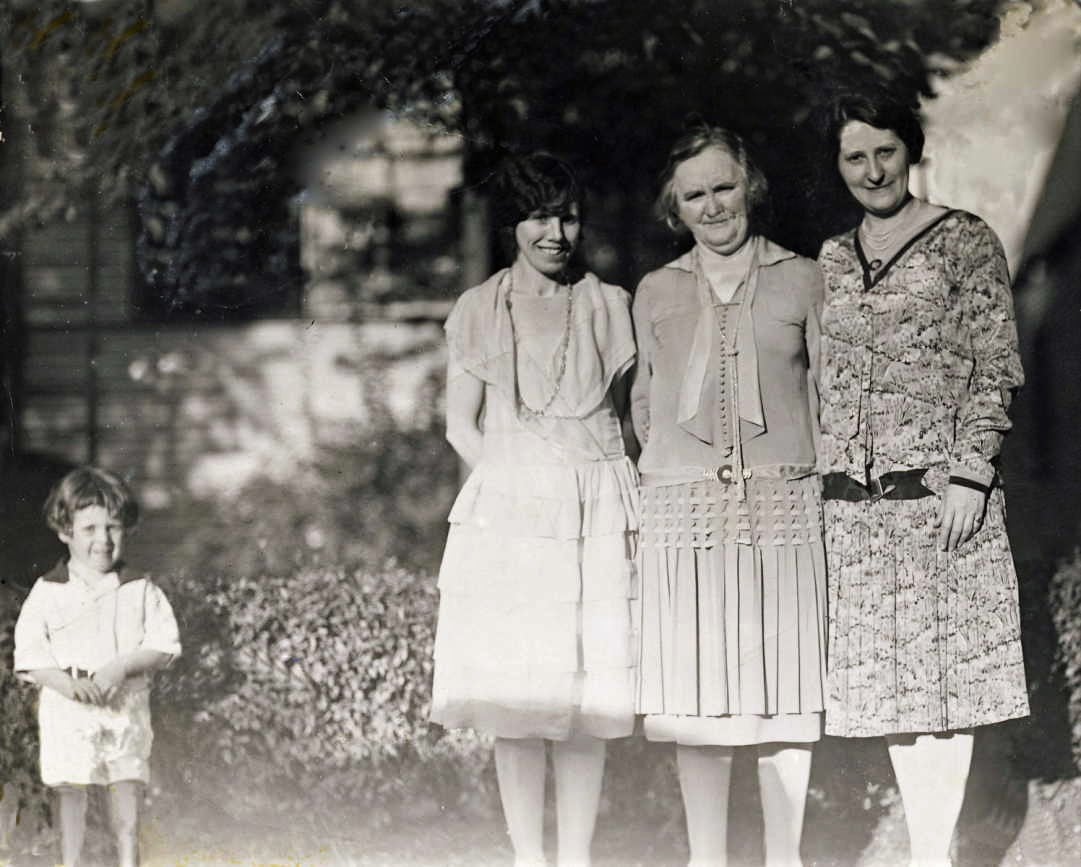
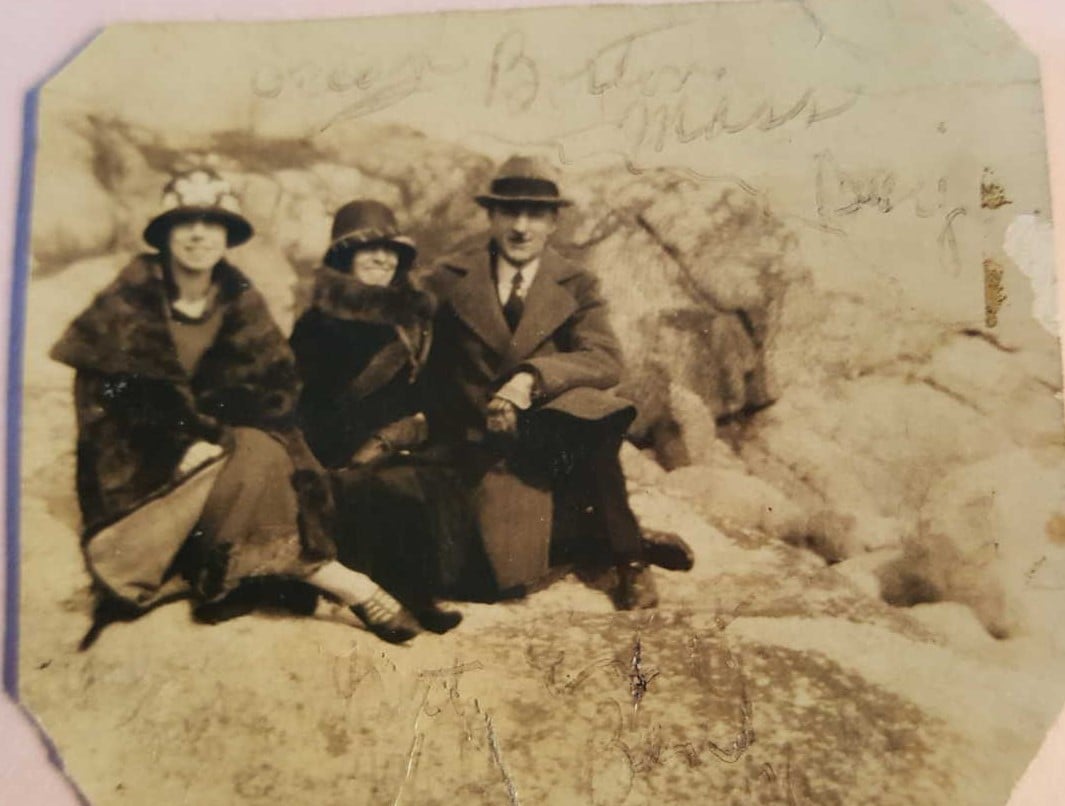
The Ridge Historical Society
The Month of March – Part 2 on the George F. Egan Family
By Carol Flynn
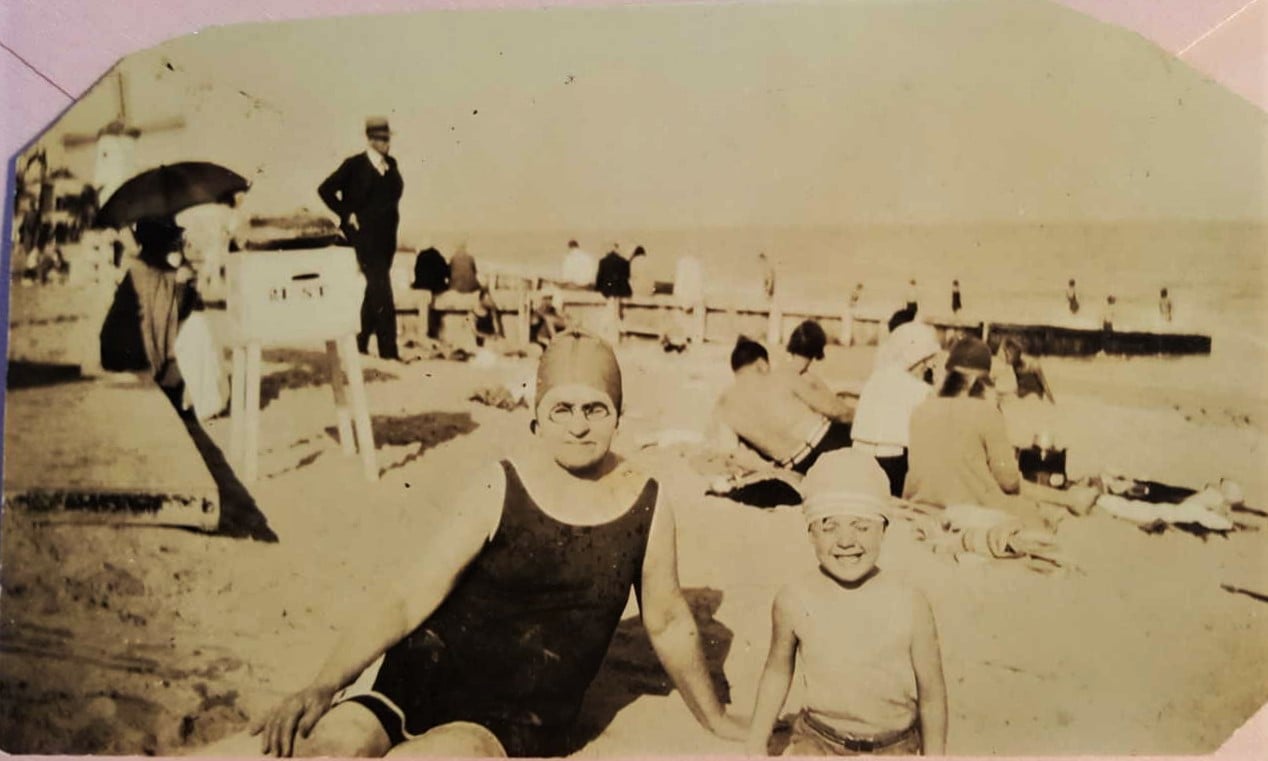
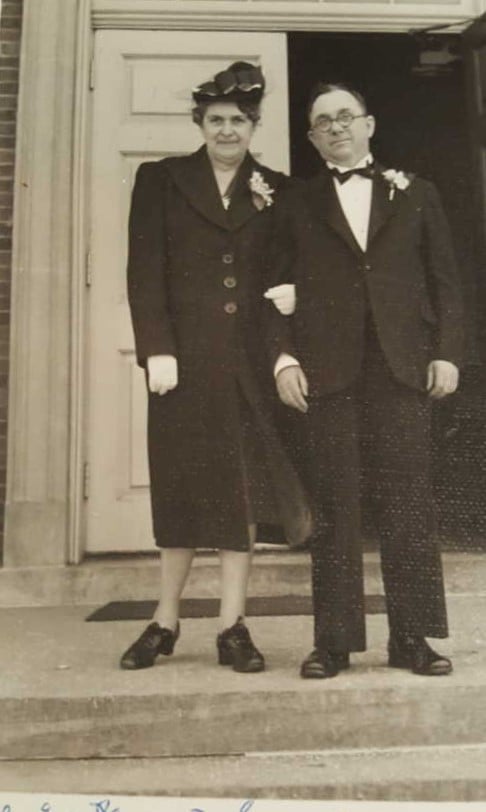
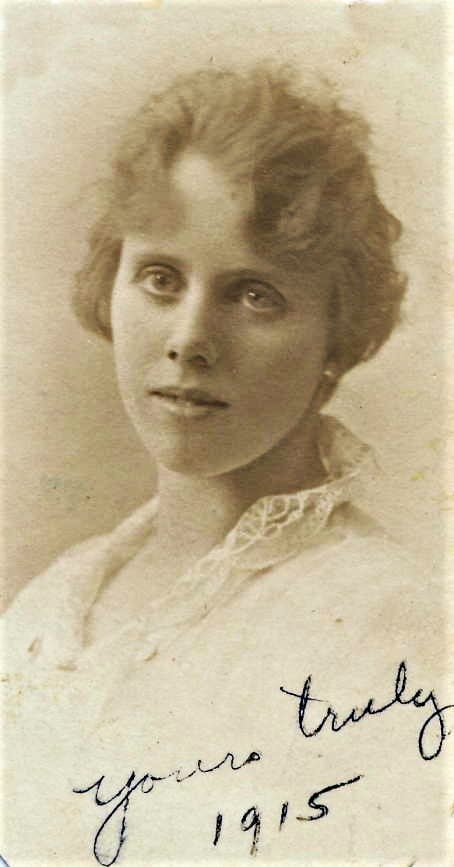
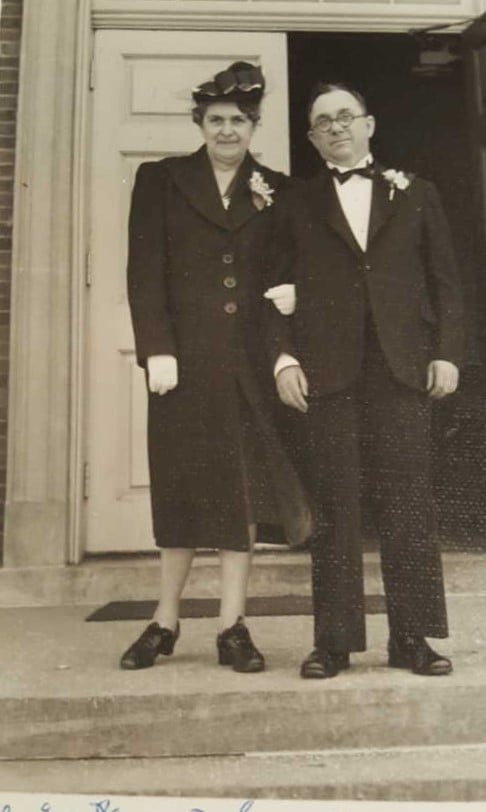
An interesting development has occurred since the first post on the George F. Egan family a few days ago. Through Ancestry, we were able to connect with the great-granddaughter of George and Katherine Egan, and she has graciously given us permission to share some pictures and additional information from the family.
George Francis “Frank” and Katherine Theresa “Kate” Murnan Egan and their descendants were a pretty typical Irish American family living on the Ridge one hundred years ago – typical, that is, except for the house they built at 1414 West 95th Street, which received a lot of media attention. As March is National Irish American Heritage Month, National Women’s History Month, and National Craft Month, the story of their house ties all three themes together, and we will get to that in the next post.
Some additional information we have on the family itself is that George Francis Egan always went by “Frank,” and he was a trustee for the Village of Fernwood in the 1880s. Fernwood was a small area to the east of Washington Heights that annexed to the city of Chicago in 1891.
According to the family, Frank and Kate were small in stature. Frank stood only 4 feet eleven inches tall, and Kate was only 4 feet 10 inches.
Frank worked as a tailor with the Singer Sewing Machine Company during World War I, and made puttees, or leggings, for the soldiers. A newspaper article reported that Frank also worked for years before that with the W. H. Wiley and Son Company, based in Connecticut, where he was in charge of the Chicago factory in which over-gaiters and leggings were made. These eventually went out of fashion, and the factory closed. A copy of an ad for this company is attached, showing the products made there.
The U.S. Census records list that Kate and Frank had seven children, but only four lived to adulthood. These four were identified in the first post and are included in the pictures here. Two sons and a daughter died young; one son was only five years old and the other two are assumed to have died as infants. This type of mortality rate was only too prevalent back then.
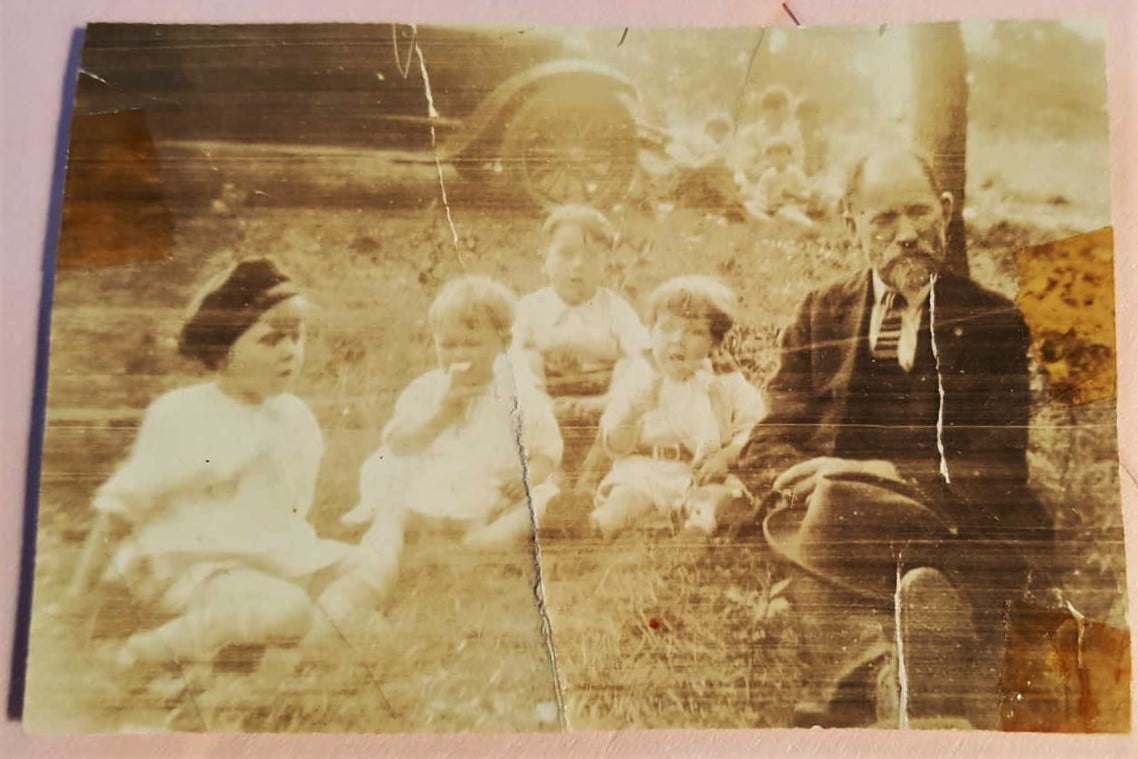
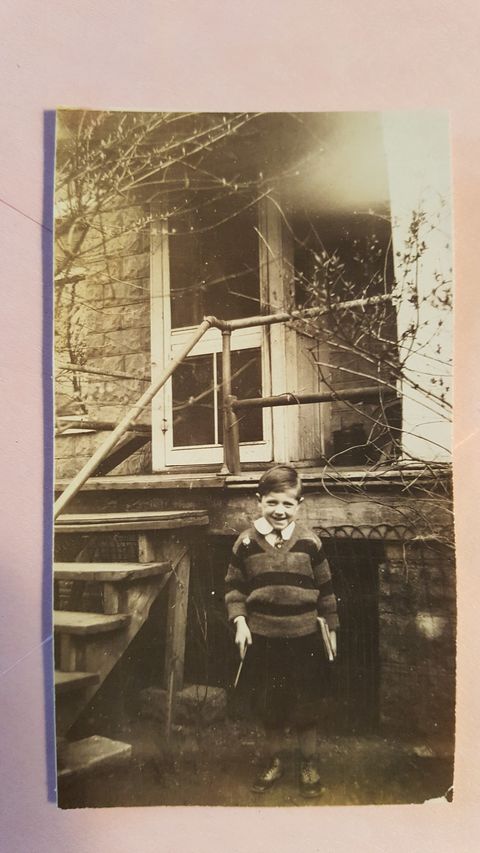
Pictures of the family are attached, from user submissions on Ancestry. Each picture is explained in its caption.
Next: The house at 1414 West 95th Street.
The Ridge Historical Society
The Month of March – Part 4, Wrap up on the Egan Family – Sons George and Bernard
By Carol Flynn
This post continues our story on the Frank and Kate Egan family, an Irish American family who lived on the Ridge one hundred years ago.
The Egans became famous for building a concrete-block house on 95th Street in the 1910s, doing all the work themselves. They lived in the house for almost four decades.
They often shared information about their activities with Pauline Palmer, the reporter for the “Ridge and Morgan Park News” section of the Englewood Times, so this gives us a glimpse into the social lives of a Ridge family. Mrs. Palmer only lived a few blocks away from the Egans and surely they were acquaintances.
Also, through Ancestry.com, RHS connected with the great-granddaughter of Frank and Kate Eagan, and she generously shared photos and family information with us. We are very grateful for that.
Here are some “moments in time” from the Egans.
A lot of Irish Catholic families, especially “older” generations, will relate to this story. The one thing many Irish Catholic mothers set their hearts on was that one son would become a priest. Denied the right to practice their faith in their own country for so many years by the British government, and experiencing a great deal of anti-Irish Catholic sentiment in the U.S. by the established Anglo-Protestant leadership, Irish Catholics tenaciously clung to the Church in the U.S. Priests were not only spiritual leaders, they were social and political leaders, also. They were local celebrities.
According to Egan family folklore, oldest son George, Jr., was apparently slated for the priesthood, at least in his mother Kate’s viewpoint, until he met and married Emily Biggs. George became an electrician, and in 1919, they moved to the north side in the Irving Park area, and eventually had seven children.
Undoubtedly, Kate was disappointed that George did not become a priest. But there are entries in the social notices that George and Emily were guests of his parents, and their children were also entertained at their grandmother’s house.
In addition, Kate stayed with George and Emily for two weeks in 1918 when Emily was ill with influenza and pneumonia. At least one of the children was also ill with bronchitis.
In 1920, there was an entry that Emily Biggs Egan received notice that she and her descendants were beneficiaries in a large estate left by a deceased aunt and uncle. Surely that was welcome news.
In previous posts, we’ve shared that the Egans’ second son, Bernard, died from influenza and pneumonia at the age of 24 in a military hospital in Texas. According to the newspaper, he died on Thanksgiving Day, 1918. His mother Kate and sister Florence traveled down to Texas to arrange to have his body returned to Chicago.
The solemn high Mass, at St Margaret of Scotland Church, and burial in Mount Olivet Cemetery took place in February 1919, likely delayed by weather and the ground too frozen for the burial.
In 1917, the newspaper carried several stories about Bernard. We posted before that it was Bernard who made the first cement bricks that were used to cover the garage and begin the house, and he did most of the building of the foundation and first floor. Now he was traveling throughout the East Coast and Canada as a representative of the Bates Valve Bag Company, which produced machines for packing cement and like substances.
He came home for Easter, and that summer, it was reported he was home for a brief visit before he left for a long trip through South America.
Pauline Palmer reported, “Mr. Egan has been very successful and the neighborhood is proud of him.”
Whether any of that trip took place before Bernard enlisted in the Army isn’t reported. It also isn’t reported what kind of service action Bernard saw once he did enlist. Eighteen months later he died in Texas.
Losing Bernard was a tragic blow to the family. For several years, on Thanksgiving Day, Bernard was remembered at St. Margaret’s Church with services in his honor.
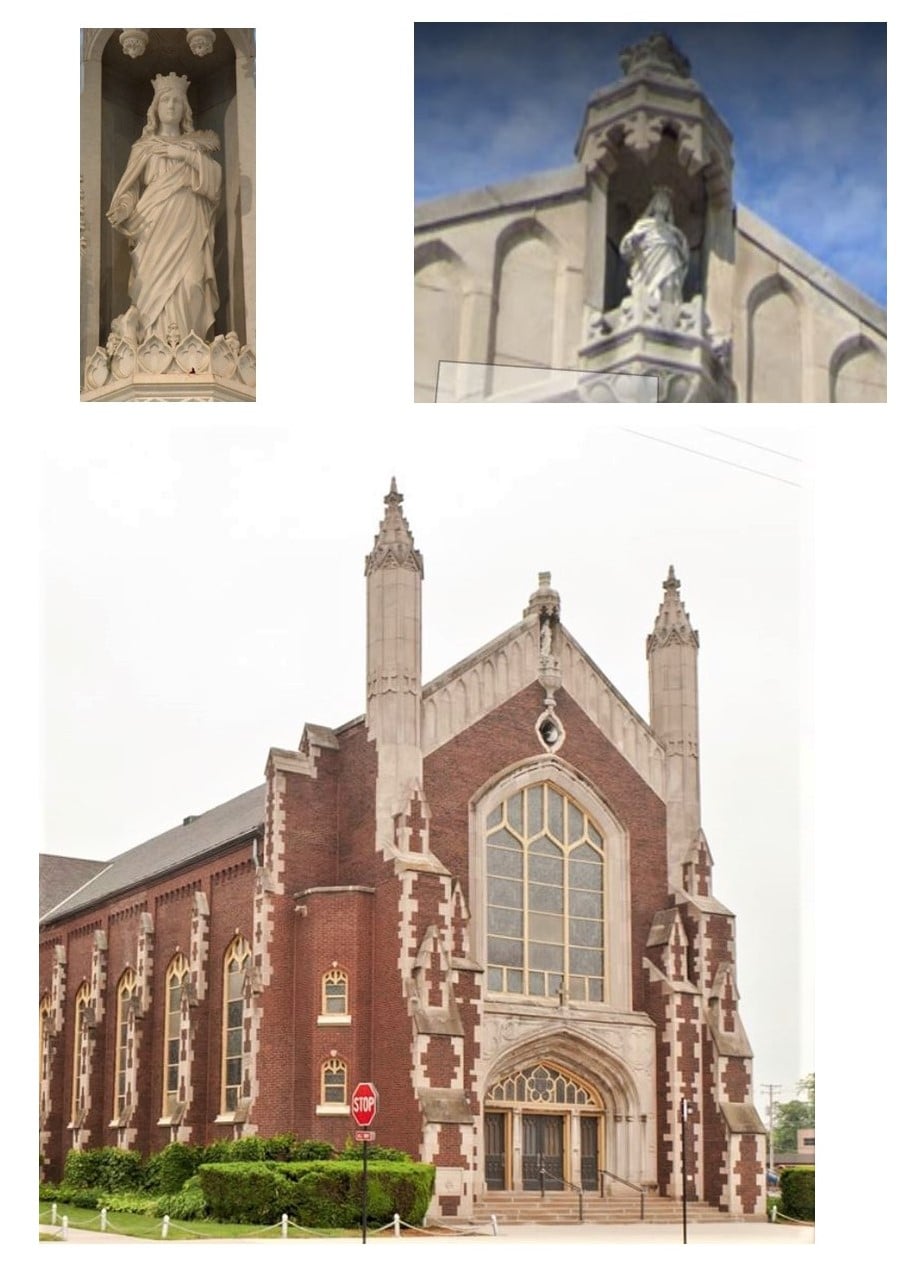
In 1927, St. Margaret of Scotland Parish began the construction of a new church. The paper reported that Frank and Kate Egan were donating a statue of St. Margaret to the new church in memorial to Bernard and to their son-in-law George Dumais who was killed in 1924.
Bernard lost his life in the Influenza Pandemic of 1918-19. Other family members were also very sick that year. Kate was ill in October. Daughter-in-law Emily was ill in November and daughter Florence in December. Frank, the father, was very ill with influenza in the spring of 1919. Fortunately, they all survived.
Next post: Egan daughters Florence and Marie.
The Ridge Historical Society
The Month of March – Part 6, Conclusion with Frank and Kate Egan
By Carol Flynn
This post will bring to a conclusion our stories about the Frank and Kate Egan family, an Irish American Catholic family that lived on the Ridge one hundred years ago. Their frequent mention in the local newspapers gave us a glimpse into their lives that we don’t often find.
Through Ancestry, we connected with a great-granddaughter who shared some wonderful family pictures and history with us. Another distant relative supplied information via comments on one of the posts. We love connecting with family members of the historical people we profile, and we thank them for their contributions.
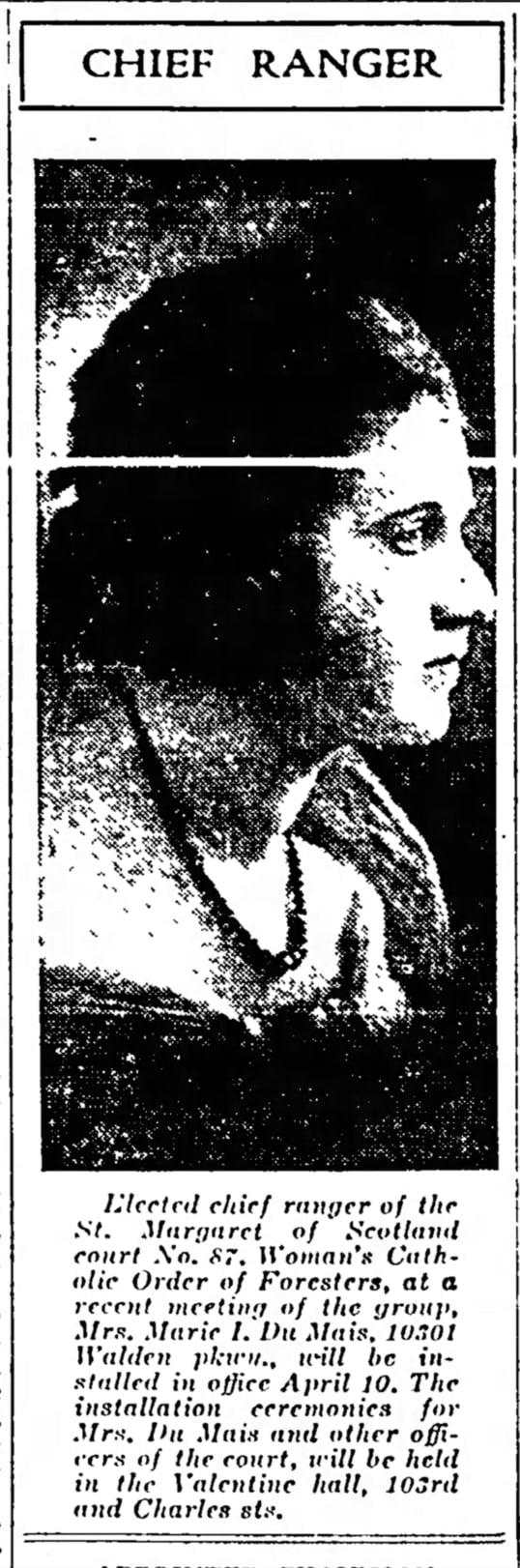
We’ll start out with one addendum to Part 5 on the Egan daughters. We found a newspaper picture of Marie Egan DuMais from 1931 that we are including here. She was installed as the chief ranger of the St. Margaret’s chapter of the Women’s Catholic Order of the Foresters. Her sister Florence was named treasurer.
March is National Women’s History Month, National Irish American Heritage Month, National Nutrition Month, and National Craft Month, and the Egans brought all four themes together for us.
The cement block house that the Egan family built at 1414 West 95th Street has to be the ultimate craft project. Mother Kate Egan was much of the creative force behind the project. The house became the center for family activities. There were many newspaper mentions of them entertaining there. Kate came from a large family and out-of-town relatives – from Denver, Austin, Seattle, Los Angeles, New Mexico – stayed at Kate’s house.
At one time, assuming during the Great Depression and World War II years in the 1930s – 40s, when families looked for new ways to bring in income, the Egan family ran the house as a “tourist lodge,” and advertised permanent rooms for men. This was the time that “motels” were beginning – “MO-tor” and “ho-TEL” combined – indoor rooms to stay in conveniently located along major autoroutes, replacing earlier motor camps.
It was mentioned in the papers several times that Kate suffered from severe flare-ups of “rheumatism,” which back then encompassed osteoarthritis, rheumatoid arthritis, gout, and any other illnesses that affected the joints. Rheumatology was just coming into its own as a medical specialty.
Kate stayed active with her grandchildren. One article had her going to two First Communions, the Lane Tech High School prom at the Medinah Temple, and graduation for the grandson who had the prom, all in a space of two weeks. Her grandchildren, and nieces and nephews, were frequent guests at the big house.
In 1927, Frank and Kate Egan and Phillip DuMais donated the statue of St. Margaret of Scotland for the new church the parish was constructing. The statue was in memory of Bernard Egan, the son who died of influenza in the army during WWI, and George DuMais, the husband of Marie Egan, killed in an accident at the Blue Island train yard. The statue can be seen in a niche high above the outside front doors of the church, right below the roofline.
Frank and Kate celebrated their golden wedding anniversary in 1933 with a Mass at St. Margaret of Scotland Church, a breakfast, and an open house for friends during the day. One article brought up some reminiscences by the couple.
During the Great Chicago Fire, when he would have been just 14 years old, Frank hitched up his father’s express team to help people rescue their household goods. Apparently, the frightened horses ran away and there was an accident; the chaos and danger in the streets at the time can only be imagined.
Their 50th anniversary coincided with the beginning of the Century of Progress, and Frank recollected he managed an exhibit in the Machinery Hall during the 1893 World’s Fair. It could have related to sewing machines, as his expertise was in that area.
Frank died on December 1, 1939, at the age of 82, and was waked at their home, then buried from St. Margaret of Scotland in Mt. Olivet Cemetery.
In 1941, daughter Marie held a surprise 77th birthday party for her mother Kate.
Kate died on January 22, 1947, at the age of 82. Her last story involves her funeral procession from St. Margaret of Scotland Church and burial in Mount Olivet Cemetery.
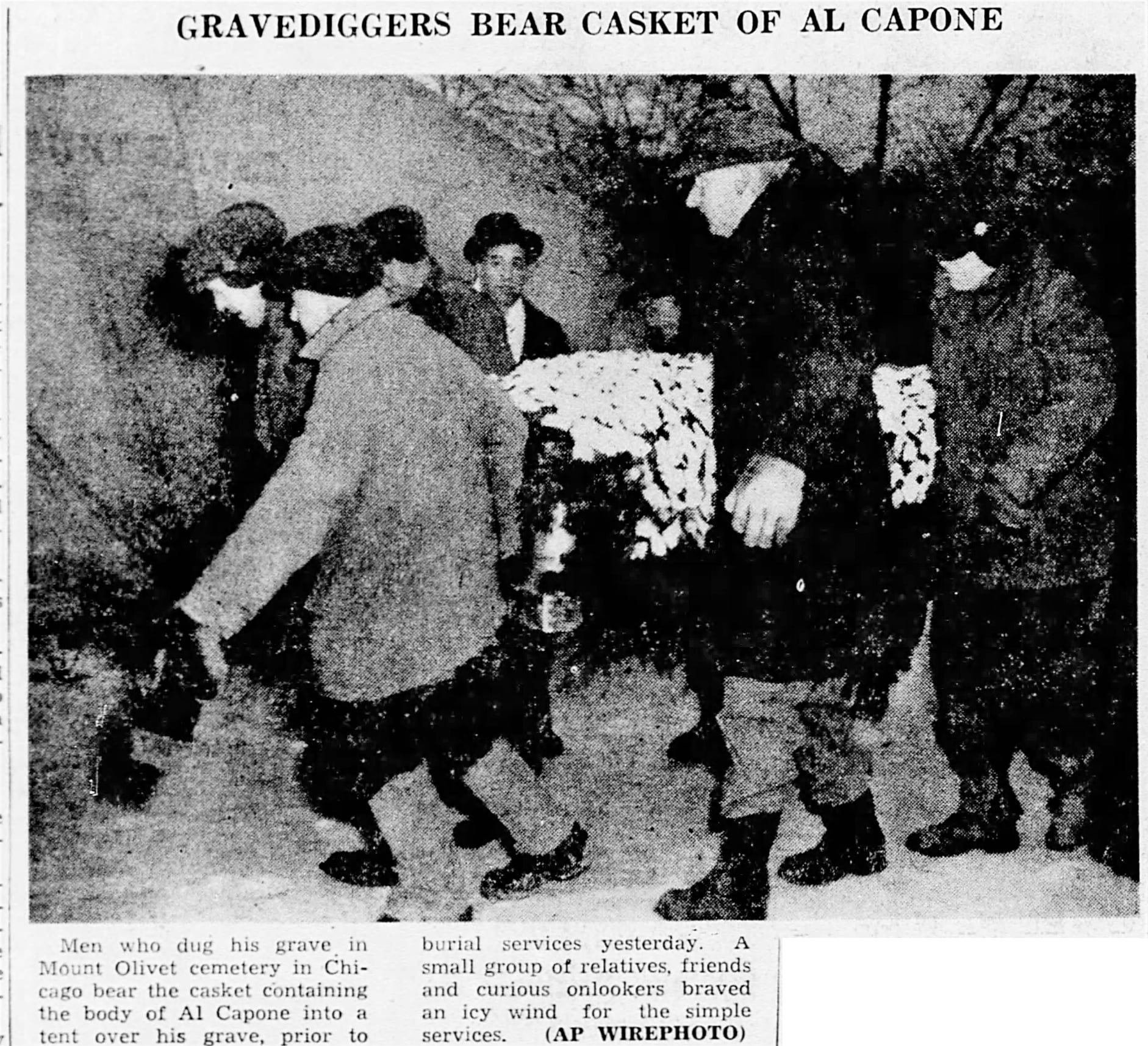
Kate was buried the same day in the same cemetery as was Al Capone, the infamous bootlegger from the days of Prohibition. Capone, aged 48, died in his home in Florida, and his remains were brought up to Chicago for burial. At that time, Capone’s father and one brother were already buried in Mount Olivet Cemetery.
It was a freezing cold, windy day, February 5, 1947, when the funeral cortege for Capone arrived at the cemetery at the same time as that of Kate Egan and her family. Fifteen limousines conveyed Capone’s mother, wife and son, brothers, and other family members and friends. A few “gawkers” and media people braved the cold to watch. There were about forty people in attendance, very small by standards set during the 1920s for gangsters. The service was said by Monsignor William Gorman, the chaplain of the Chicago Fire Department, who had been Capone’s mother’s parish priest at one time. The ceremony was brief, and the family did not linger.
According to Egan family folklore, the family was scandalized that famous people turned out for Capone’s funeral and it was conducted by Monsignor Gorman, while a good Catholic mother like Kate got only a small cortege and a local priest.
Of course, a good Catholic mother like Kate was the expected norm, and Kate couldn’t possibly have competed for public attention with a notorious bootlegger and alleged murderer who dominated Chicago and the newspapers for over a decade.
One paper reported that Msgr. Gorman did say at Capone’s gravesite that the ceremony was “to recognize his penitence and the fact he died fortified by the sacraments of the church. The church never condones evil, nor the evil in any man’s life.”
The Capone graves were later relocated to Mount Carmel Cemetery, but the Capone gravestone still stands in Mount Olivet Cemetery.
However, this was not a story about Al Capone. This was a story about a typical Irish American Catholic family who lived on the Ridge one hundred years ago and contributed to the rich history of the community.
This concludes the series on the George F. Egan family.

The Ridge Historical Society
March 2021 – Oscar Wilde’s visit to Chicago – part 1
By Carol Flynn
St. Patrick’s Day is over but it’s still National Irish American Heritage Month, so we can fit in one more Irish story.
Oscar Fingal O'Flahertie Wills Wilde was born in Dublin, Ireland, in 1854. He is considered one of the greatest Irish writers. He wrote poetry, essays, and articles. His plays, such as The Importance of Being Earnest, considered his masterpiece, continue to be performed today. He also wrote fiction, mainly short stories, and his novel, The Picture of Dorian Gray, is a classic.
Many people know him for his epigrams, or brief statements that are memorable and interesting. There are hundreds of great Wilde quotes, and some good ones include:
“Always forgive your enemies; nothing annoys them so much.”
“The truth is rarely pure and never simple.”
“Some cause happiness wherever they go; others whenever they go.”
“The nicest feeling in the world is to do a good deed anonymously – and have somebody find out.”
“They've promised that dreams can come true – but forgot to mention that nightmares are dreams, too.”
“No man is rich enough to buy back his past.”
“I can resist anything except temptation.”
“A man who does not think for himself does not think at all.”
This could go on for pages.
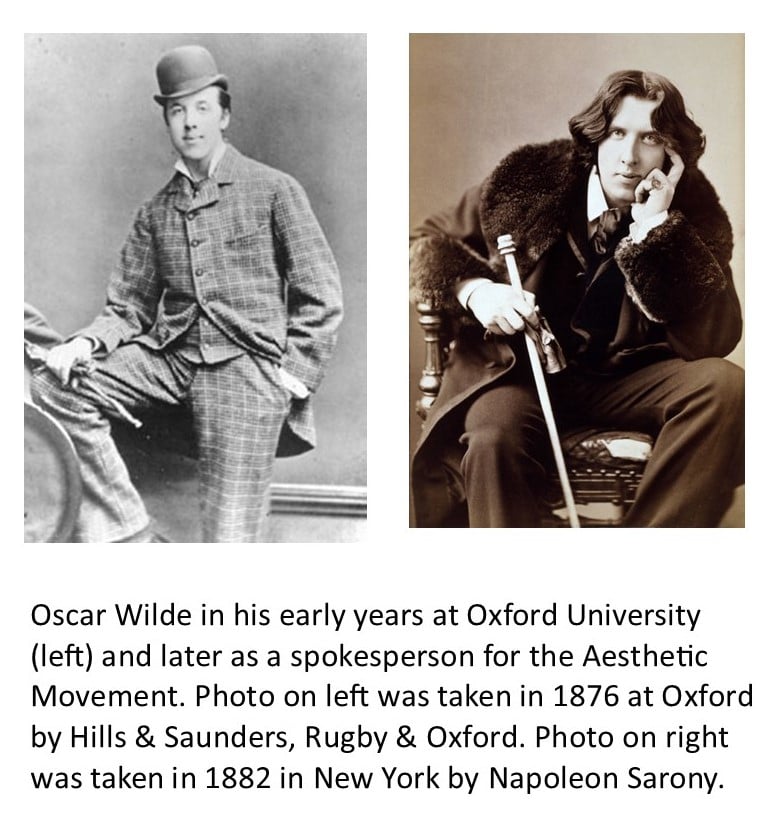
Before Wilde became famous for his literary career, however, he was already a celebrity and media sensation. As a young man, only in his 20s, he became the embodiment of, and spokesperson for, the Aesthetic Movement.
Aestheticism as a philosophy emphasized pleasing the senses and emotions through beauty and good taste as more important than moral, political, or societal concerns. It was primarily an art movement although it influenced other phases of life. It grew out of the Pre-Raphaelite Brotherhood of the mid-1800s through people like artist/poet Dante Gabriel Rosetti, and influenced such artists and designers as William Morris and Edward Burne-Jones. Aestheticism advocated “art for art’s sake” rather than art for any other purpose such as a moral lesson or political statement.
Oscar Wilde was raised by parents who were considered intellectuals. His father was Ireland’s top eye-and-ear surgeon, running his own hospital. He was knighted in 1864. Sir William Wilde also wrote on Irish archeology and folklore. He was known for his philanthropy, treating the poor for free at the back of Trinity College in Dublin.
Wilde’s mother was an Irish nationalist, strongly supporting freedom from English rule. Lady Jane Wilde was an early advocate for women’s rights and education for women. She spoke ten languages fluently. She was a poet, she wrote for fashionable magazines, and she collected and wrote about Irish folklore.
Oscar had an older brother, and a younger sister who died at age 9 from meningitis. Oscar and his brother were baptized in both the Church of Ireland (Protestant) and the Roman Catholic Church, according to his biographers. He had a lifelong fascination with Catholicism, and even traveled to Italy as a young man to meet the Pope, but he did not really practice in either church.
When Oscar was young, the Wilde home was a site for cultural and social life in Dublin, and he met many of the leading writers, artists, politicians, scientists, and “influencers” of the day. He learned to speak German and French fluently. He excelled as a student at Trinity College and Oxford University in England.
When Sir Wilde died in 1876, it was discovered he was practically bankrupt. Lady Wilde lived with her older son Willie and relied upon her writing to make a living. Willie studied law but never practiced. He earned a meager income as a journalist, drama critic, lead newspaper writer, and editor. Willie was considered witty and humorous, but he was plagued by alcoholism and living in his younger brother’s shadow. The brothers lived together during college years, but were estranged for most of their adult lives.
While a student at Oxford University from 1874 to 1878, Oscar Wilde became an advocate of the Aesthetic Movement, influenced by writers/mentors Walter Pater and John Ruskin. Wilde adopted aesthetic mannerisms. He grew his hair long, wore showy outfits, and affected languid dramatic poses. He scorned sports but he occasionally boxed, a sport the Irish love, and famously drove off four fellow students who attacked him.
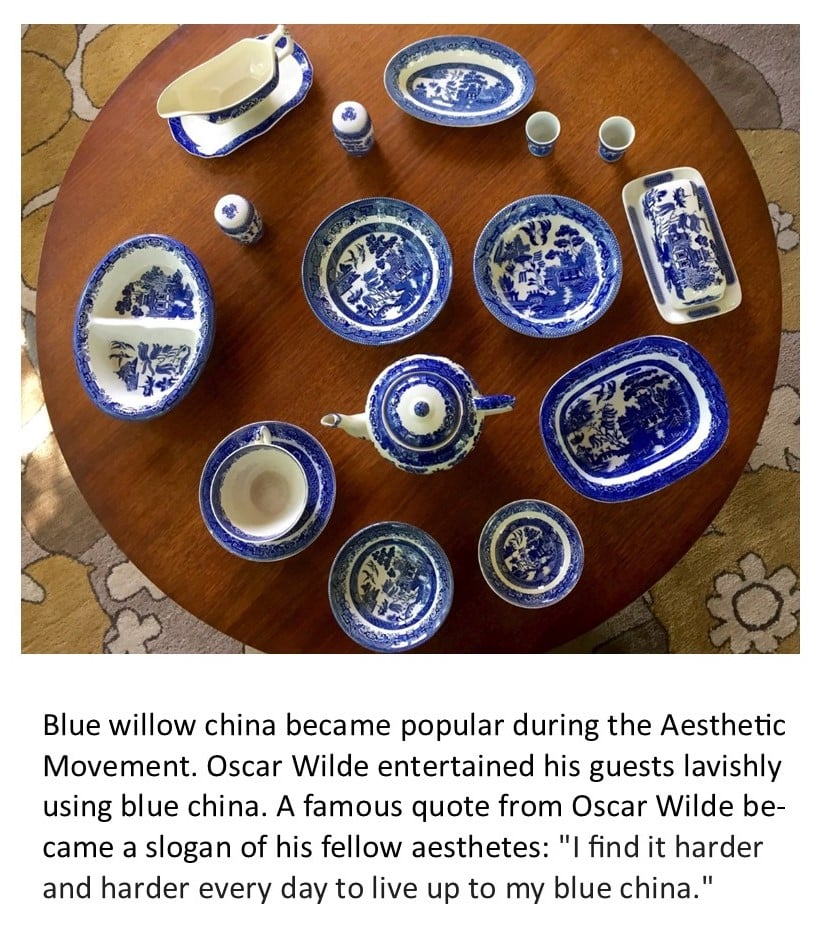
He decorated his room with symbols of the movement like peacock feathers, lilies, sunflowers, and art objects. Wilde entertained guests extravagantly, serving them on popular blue china. He famously said, "I find it harder and harder every day to live up to my blue china." This became a slogan for his fellow aesthetes.
Next post: Oscar Wilde moved to London and entered society, which led to a trip to the U.S., including Chicago.

The Ridge Historical Society
March – Irish American Heritage Month – Post 2
By Carol Flynn
Happy St. Patrick’s Day!
Today we present part 2 of how Beverly became an Irish Catholic community.
Although founded by Protestants from England and other northern European countries, from the earliest days on, there was always an Irish Catholic presence on the Ridge.
One person was John Lynch (1825-1890), who came in 1844 to work for Thomas Morgan, the wealthy English Protestant who bought thousands of acres on and around the Ridge, and for whom Morgan Park is named.
Lynch, born in Ireland, worked for Morgan for seven years before buying his own farmland around 105th and Loomis Streets.
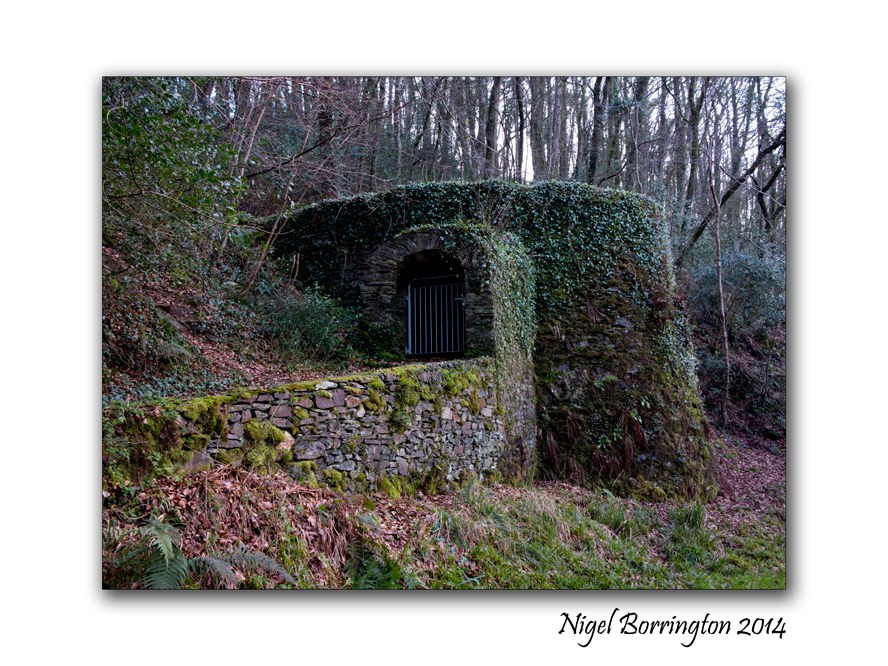
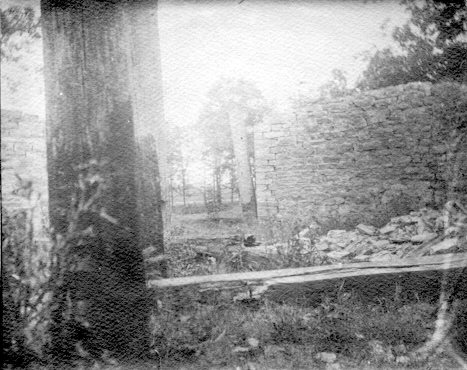
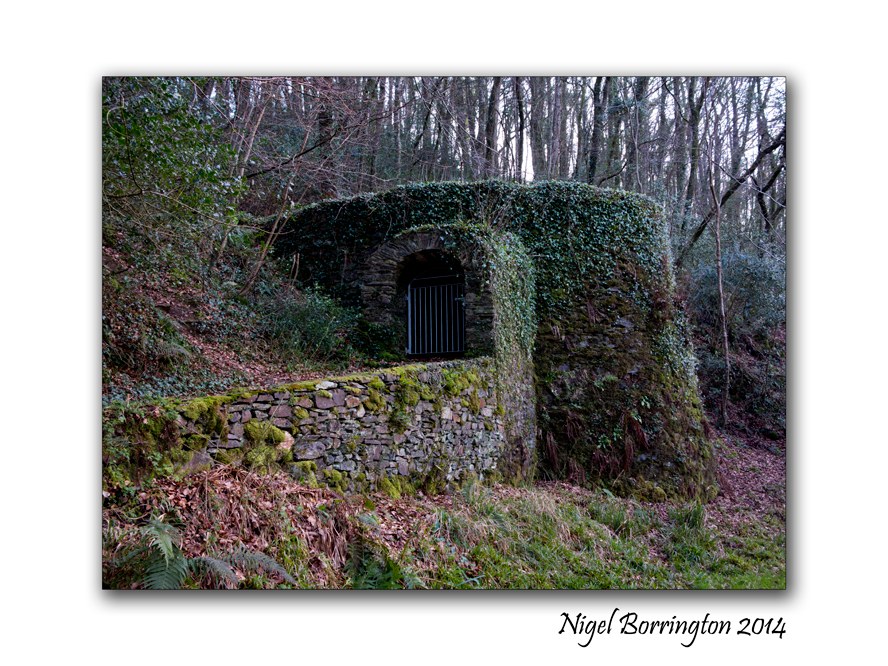
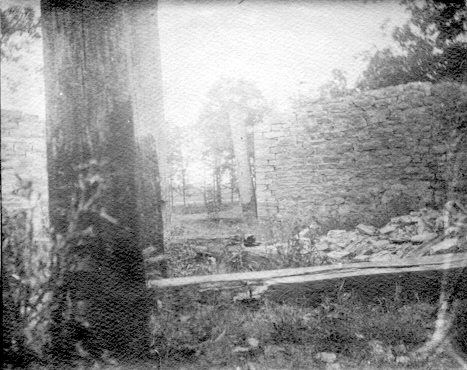
The young Lynch helped Morgan build and manage his estate. In true Irish style, Lynch built a substantial sheep cote and subterranean icehouse from limestone he quarried and dragged from Blue Island. Nestled into the Ridge, the structure opened onto what is now Longwood Drive between 91st and 92nd Streets.
Lynch married Margaret Martin (?-1874) from Ireland, and they had three children. Their descendants have lived on the Ridge for many generations.
More than a million Irish people emigrated from their homeland during and after the Irish Famine years of the 1840s. The Irish Catholic population grew in the Chicago area.
There were also German and French Catholics in the area. The first Catholic parish serving the northern part of the Ridge, Saint Margaret of Scotland, began as a mission church operated by St. Benedict Church of Blue Island sometime around 1861. St. Benedict Church was founded for the German Catholic population working on the canal. Sacred Heart Mission Church moved from Alsip to its present location at 117th and Church Streets to serve the French Catholics working in the local brickyards.
As part of Washington Heights, Beverly was annexed to the City of Chicago in 1890. West Beverly and Morgan Park followed in 1914 and Mount Greenwood joined the city in 1927.
The next post will cover the founding of St. Barnabas Parish.

The Ridge Historical Society
March – Irish American Heritage Month – Post 3: More on the Sheepfold/Icehouse
By Carol Flynn
The post on St. Patrick’s Day about the sheepfold and icehouse built on Thomas Morgan’s estate in North Beverly by John Lynch was well received – almost 4,000 people have been reached so far. However, that post only covered part of the story. Since the topic proved to be a hit, here are more details about that structure.
John Lynch was seventeen years old when he arrived in New York from Ireland in 1842. Although his individual story is not known, it’s likely that he joined the many thousands of his fellow Catholic countrymen driven by hardship to leave their native country and seek out new opportunities.
Lynch encountered wealthy English Protestant Thomas Morgan who had purchased thousands of acres of land on and surrounding the Ridge. In 1844, according to Andreas’ History of Cook County (1884), Lynch arrived on the Ridge, and worked for Morgan for seven years, until Morgan’s death in 1851. Lynch then bought his own land around 105th and Throop Streets, which he farmed.
It appears that young Lynch helped Morgan build and manage his estate. Morgan brought some livestock with him from England on his private ship, and probably purchased more once in the U.S. Enclosures to protect the livestock from wolves and the harsh Chicago winters were necessities. Also, ice cut in winter could be stored in subterranean rooms for a supply in summer. This helped with food preservation.
The Andreas book includes the following information on the sheepfold and icehouse that Lynch built, in true Irish fashion, on the Morgan estate. The information was shared by Isaiah T. Greenacre, an attorney who grew up in Washington Heights.
“Directly in front of the dwelling [the remains of Morgan’s house, Upwood] and on the slope of the hill is a stone structure, or rather a large pit, lined with a stone wall, which wall extends, or once did, far above the top of the hill, but of late years, time has reduced it nearly to a parallel with the hillside. At the east side of the wall and at the base of the hill, is an immense opening, once composed of two tremendous oak doors (now broken and probably used for kindling wood) fastened to the wall by enormous iron hinges that reached across each door. The walls are built of very rough stone. Mr. J. Lynch, Sr., the contractor of this wall, quarried the stone of Blue Island, and did the hauling of the stone and all; he alone having to play the part of stone quarrier, teamster and stone mason. It must have been a very tedious job. On entering this pit, which seems to have answered the purpose of a sheepfold, you find its floors to be composed of bits of stones, in all probability fragments of the wall, and other rubbish, likely the accumulation of years. On the west side and leading in toward the hill is an opening in the wall. On crossing the threshold of what was once a doorway, you imagine yourself about to descend into the depths of darkness by a subterranean passage. But ‘ere you have walked within the distance of about thirty-six inches, you presently find yourself in a round turret shaped cell, with an oval ceiling. In the ceiling is an opening which leads to the surface of the ground. This opening is covered by an immense stone placed over the hole where it makes its appearance on the hill. This cell is built of brick, and unlike the sheep-fold it has a good stone floor. It seems that at one time there was a door dividing the cell from the fold. It seems the cell answered the purpose of an icehouse, and the opening a mere ventilator. The place seems to have stamped on its surface everywhere antiquity.”
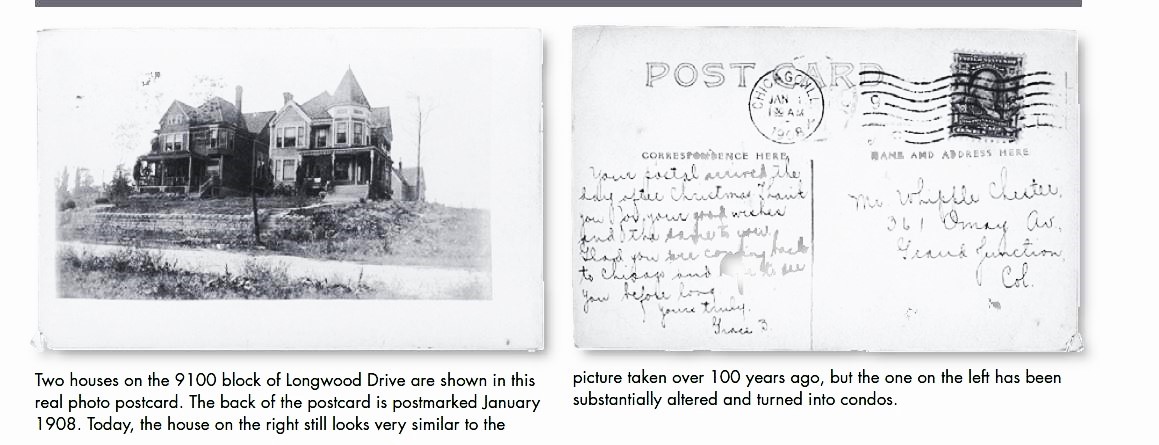
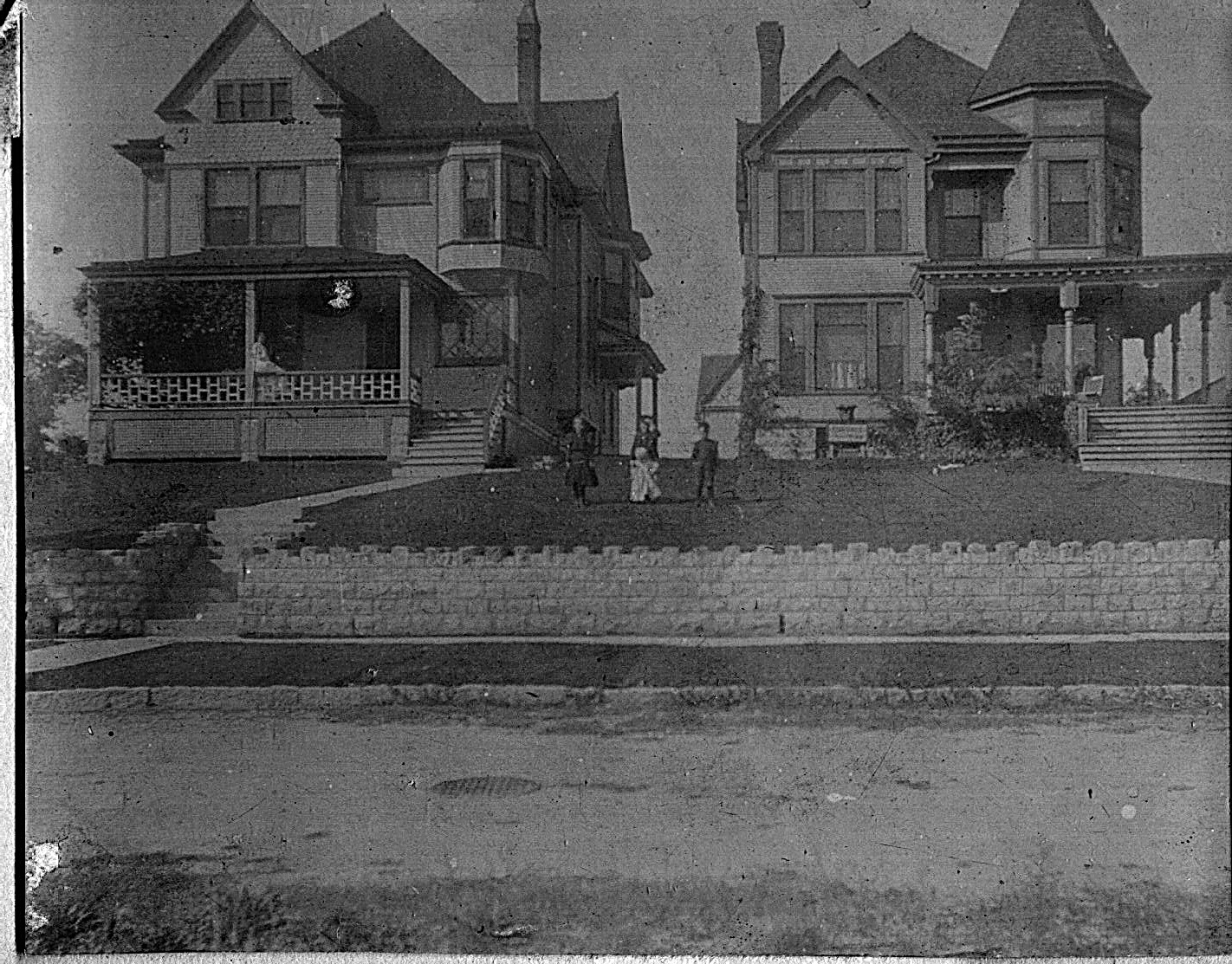
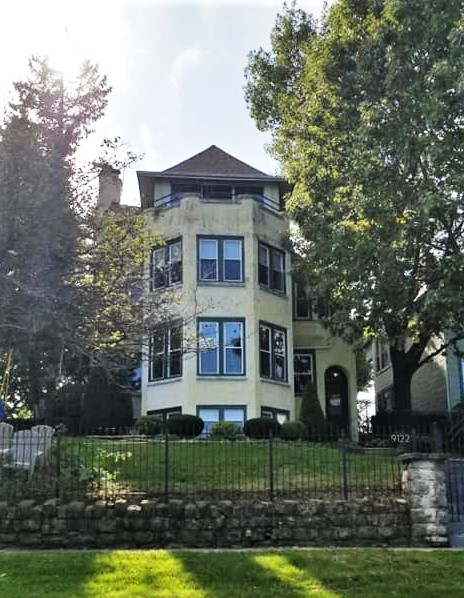
The sheepfold/icehouse opened onto what is now Longwood Drive between 91st and 92nd Streets. There is nothing left of the building today, but pieces of limestone from the structure appear to have been used for other purposes in the area.
The current houses on this site have a limestone wall in front of them that possibly is made from the remains of the sheepfold/icehouse. The house at 9122 S. Longwood Drive was owned and turned into an apartment building by architect John Todd Hetherington in the 1920s.