
Explore the RHS Facebook Archives, a rich repository of local history written by Carol Flynn. For two decades, Carol brought a deeply dedicated voice to public education at RHS. Her role as Facebook administrator through mid-2025 naturally extended her prolific research into meticulously detailed articles, most notably her multi-part historical series posts. Today, Carol continues her local history writing for The Beverly Review and other outlets.
St. Patrick's
The Ridge Historical Society
The Month of March
By Carol Flynn
March is here. This is a busy time for “tribute months.” We have National Women’s History Month, National Irish American Heritage Month, National Nutrition Month, National Craft Month, and a few others.
Daylight savings returns in March – we gain an hour of daylight; Spring begins in March. Passover and the Easter Holy Week both begin in March.
Our first story this month is a look at an Irish American Catholic family on the Ridge one hundred years ago, the George Francis Egan family. This is pieced together from newspaper accounts and Ancestry files, although it is not a full profile by any means. There may even be people reading this who knew the Egans – we’d love to hear from you.
Mrs. Kate Egan was an interesting person; she brought together the Irish, women, crafts, and food/nutrition themes for the month.
Like all families, the Egans had their good times and their tough times. They suffered several tragedies with the early deaths of loved ones. They were “typical” of many Irish Catholics in Chicago – until we get to their house. That sets them apart, and we’ll cover that in part 2.
George Francis Egan was born on October 25, 1857, in Chicago. His parents, Michael and Bridget, were both from Ireland.
Katherine Theresa Murnane was born on March 1, 1864, also in Chicago, and her parents, John and Anne were born in Ireland. Kate came from a large family.
On May 26, 1883, George, 25, and Kate, 19, were married.
George’s occupation was listed as “department superintendent of a clothing company” for many years. He was with the W. M. Wiley and Son Company for thirty years, in charge of the factory in which over-gaiters and leggings were made. These went out of fashion, and the factory relocated out east. He became a self-taught carpenter. Later, he worked as a watchman.
Kate and George had seven children, with four living to adulthood. These were George F., Jr., Florence, Bernard, and Marie.
Unfortunately, Bernard died as a soldier during World War I, in a Texas military camp hospital in 1918 at the age of 24. The cause of death was pneumonia, a complication of influenza. Mrs. Egan and daughter Florence traveled down to San Antonio to arrange to have Bernard returned home, and he was buried in Mount Olivet Cemetery.
George, Jr., became an electrician with the city of Chicago, married Emily Biggs from England, and lived up north in the Irving Park area. They had seven children.
In 1920, Marie Egan, who had been working as a bookkeeper at a publishing company, was married to George DuMais in a “beautiful double ring ceremony” at St. Margaret of Scotland Church which was the only Catholic parish then serving the entire Ridge. Her sister was maid of honor and her brother’s daughter the flower girl. A wedding breakfast was served at the Del Prado Hotel, and the couple left for their new home in Portland, Oregon, where her husband’s job temporarily took them, although they came back to the Ridge shortly thereafter.
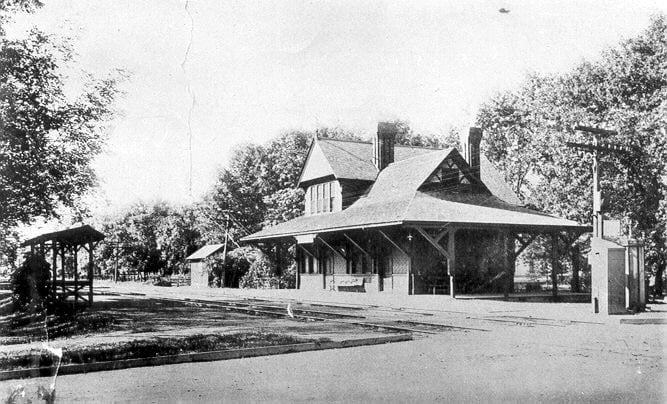
Her husband was a World War I veteran and a switchman with the railroad. He was killed in October of 1924 at the age of 32 in an accident at the Rock Island switching yard in Blue Island. This left Marie with three small children, and she went to work as the agent at the 103rd Street Rock Island (Metra) station. She lived at 10301 S. Walden Parkway, which might have been the train station. Often agents lived on the second floor.
Florence graduated from Englewood High School in millinery work in 1921. She married Benjamin McGovern of Buffalo, New York, in 1924. She had one son. Her sister held both her wedding and baby showers. That marriage ended in divorce.
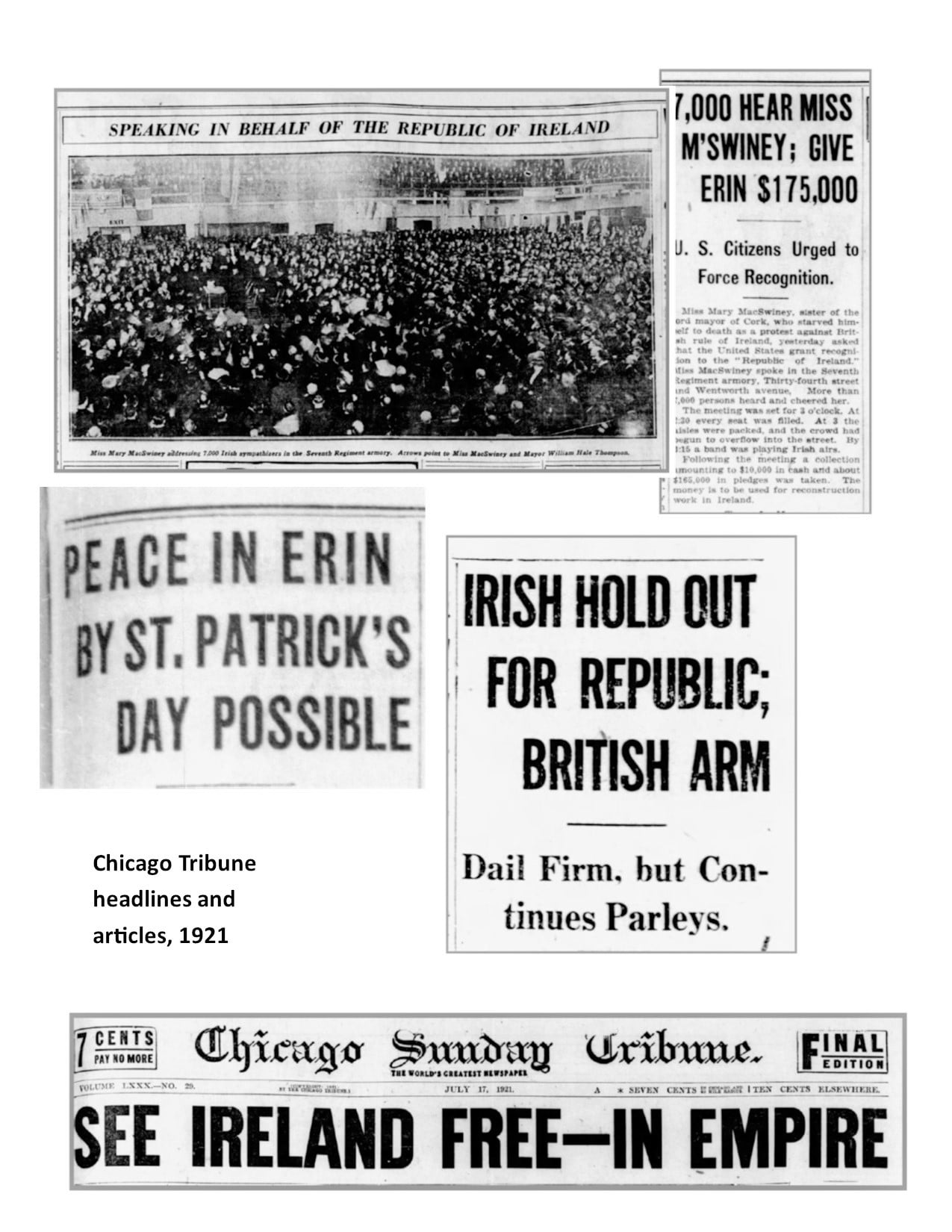
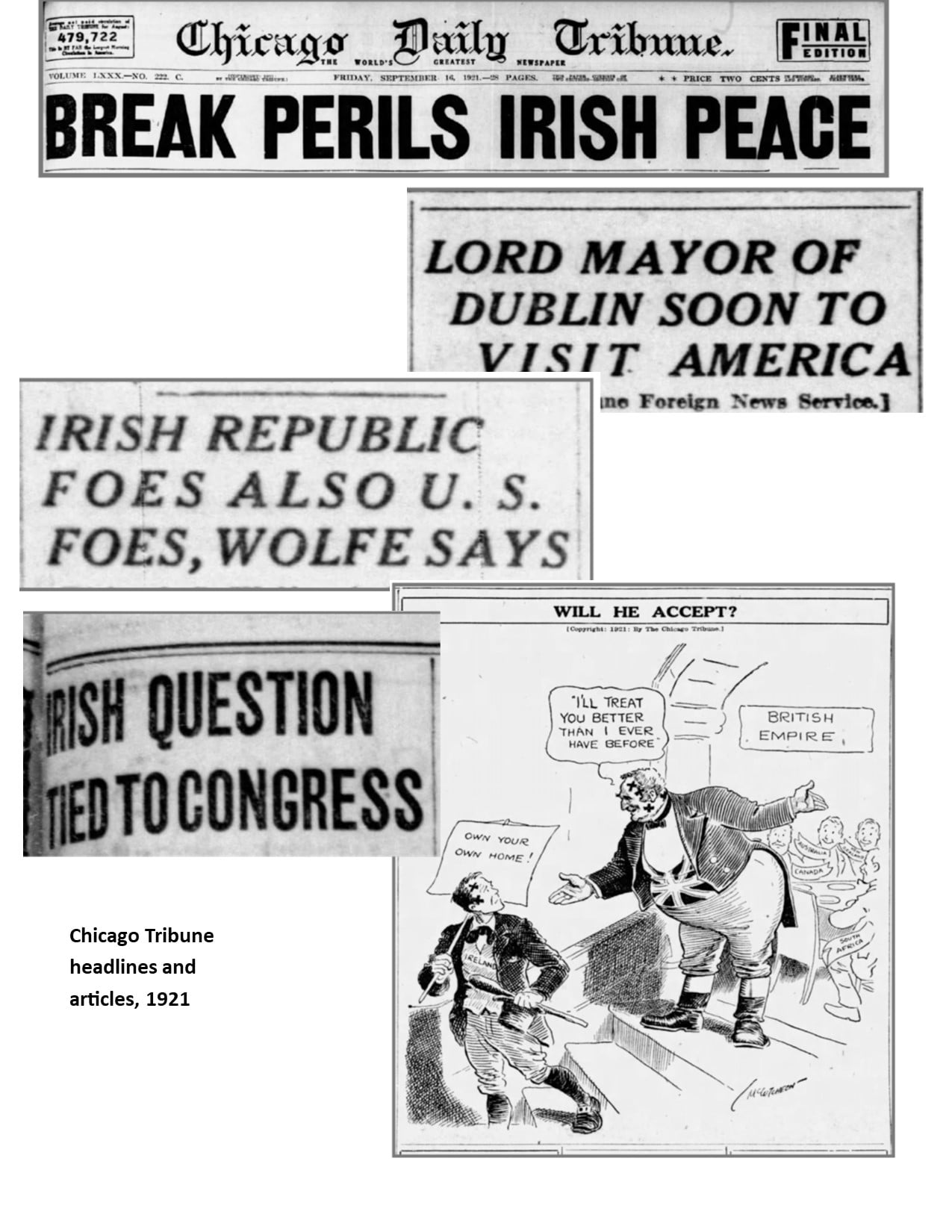
Both Mr. and Mrs. Egan were reported in the newspapers as being involved in the American efforts for Irish independence. This was an ongoing issue of extreme importance for the Irish who had settled in America, and their descendants, and the newspapers of the day covered the topic in great detail.
In 1921, George was reported as the point person on the Ridge for a bond drive for the Irish Republic, and Kate was reported as being on the membership committee for a group working for the recognition of the Irish Republic. From 1919 to 1921, over $5 million was raised in the U.S.to keep alive the political and revolutionary efforts in Ireland during the country’s struggle for independence, through the Sinn Fein political organization.
They were active in the community in other ways also. At Christmas time, in 1920, “Grandfather” Egan played Santa Claus for the Catholic Order of Foresters on Christmas Eve. The Catholic Order of Foresters is a fraternal benefit society. It was formed to offer insurance to its members – death claims, and funeral and sick benefits.
In 1926, George worked with the election commissioner’s office on the recount of ballots.
One of the most fascinating parts of the Egan family’s story was their house at 1414 West 95th Street, unfortunately, now an empty lot. This is where they separate from “typical” families on the Ridge. This also brings in National Craft Month.
Next installment: The George F. Egan House
The history of Dan Ryan Woods – Part 7: Dan Ryan and his contributions
By Carol Flynn
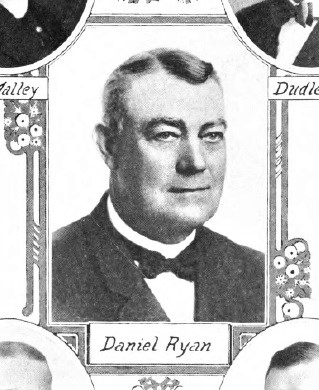
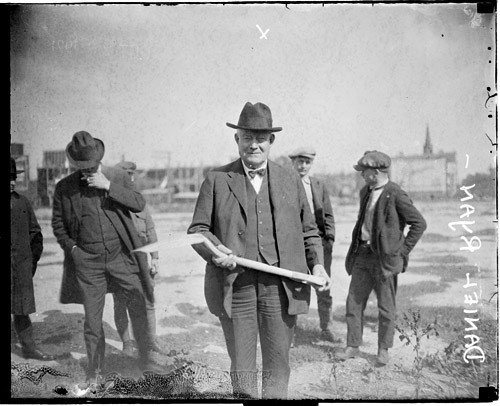
According to user-submitted information on Ancestry.com, and U.S. and Irish census records, Daniel Ryan was born at Carhue House, Dundrum, County Tipperary, Ireland, in 1860. He immigrated to the U.S. in 1880 and became a naturalized citizen.
A man named John C. Ryan of Carhue House, Dundrum, born in 1892, active in the Irish independence movement of the early 1920s, submitted his history in 1956 to the Irish Bureau of Military History. He stated that his uncle, Dan Ryan, was a member of the “Fenian Movement” and subsequently emigrated to the U. S.
“Fenians” was the common name for members of the Irish Republican Brotherhood (IRB), a secret organization dedicated to establishing an independent Irish republic, started in 1858. The name came from the Fianna, a band of warriors in Irish folklore. The IRB engaged in campaigns to end British rule in Ireland. John Ryan reported that a cache of old Fenian rifles was kept in a dump by their home, and he took these into his possession and was able to use them in 1920-21. The IRB staged the Easter Rising in 1916, which led to the Irish war for independence, and ultimately the 1921 treaty that brought about the Irish free state.
Involvement with the Fenians was illegal in British-controlled Ireland. In the U.S., the brother organization to the IRB was called the Fenian Brotherhood and later, Clan na Gael. It was not unusual for a young Irishman to have to hightail it out of his native country due to his nationalist activities, and then continue to support the cause from his adopted land.
Now, the surname “Ryan” was very common around that area of Ireland, and there is no verification that this is our Dan Ryan. In Chicago, Dan Ryan’s attendance at events supporting Irish independence was noted in the papers. He was an honorary pallbearer at the funeral of Richard Burke, a well-known Fenian. Even if he had not been a revolutionary in Ireland, like many Irish Catholic immigrants in America, he continued to support the causes of his old country at the same time he fully embraced American citizenship and loyalty.
When Ryan came to the U. S., his first job was at the Union stockyards, under John B. Sherman, whose farm would become the Dan Ryan Woods. Ryan soon became a successful livestock buyer. He then moved into the building trades.
He married Alice Carroll, also from Tipperary, and they became the parents of seven children. By 1910, they were well settled in Englewood, the owners of a concrete contracting company.
Ryan became involved in local politics, where, according to the Chicago Tribune, his “political genius” became evident. He was a Democratic leader in the 32nd ward, which included Morgan Park when it annexed to the city in 1914. Ryan was elected to the Cook County Board of Commissioners that year, and within a year, he was Chairman of the Finance Committee.
In early 1921, Peter Reinberg, Cook County Board President, died while in office. Ryan was unanimously elected by the Board to fill Reinberg’s unexpired term, which lasted until December 1922. The Cook County Board oversaw a wide variety of facilities and services, including hospitals, roads, jails, courts, schools, tax collections, records, and the forest preserves.
Ryan championed a number of causes. Although he barred “busy-body women” from budget meetings so they would not “bother” the committee, he did support women’s issues. One example is that he called for revising the state code to make wife and child abandonment a criminal offense.
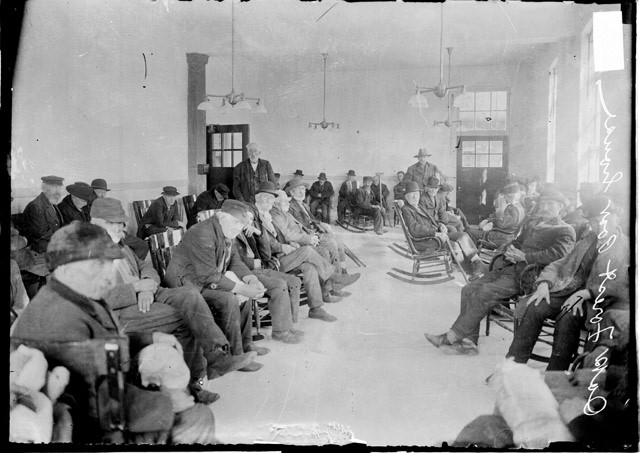
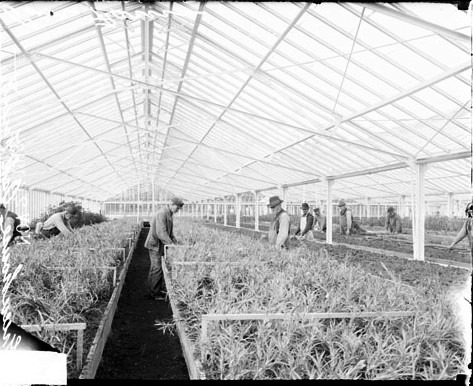
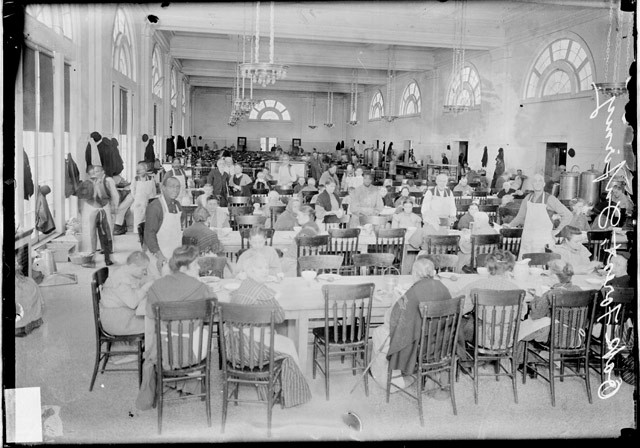
He was also concerned about the Oak Forest facilities run by the county, which included a poor farm, infirmary, and tuberculosis hospital. He had first-hand experience with poor farms in Ireland. In August 1921, a writer from the Englewood Economist observed Ryan inspecting the facilities. Wrote the reporter, “Mr. Ryan’s interest and attention toward the inmates and their kindly feelings toward him indicate that the welfare of this institution occupies no small place in the president’s thoughts.”
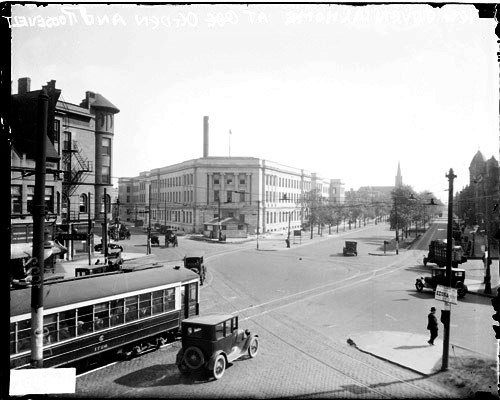
During Ryan’s term as President, work began on the Cook County Juvenile Home and Court, at Roosevelt Road and Ogden Avenue. Although the city tried to block it, the county built the first-ever facility for dependent and delinquent children that included living quarters, classrooms, playgrounds, and courtrooms. The building was renamed the Arthur J. Audy Home in 1950 for a former superintendent and now it is called the Juvenile Temporary Detention Center. Although it came to be plagued with problems, the juvenile home was established with good intentions.
Another cause important to Ryan was improving roads. In 1922 he wrote in a Chicago Tribune newspaper article, “Cook county is fast becoming a paradise for the automobilist. The forest preserve is a natural adjunct to our system of good roads. More than 4,000,000 persons there found rest and relaxation in 1921. So the forest preserve district is a promoter of the automobile, and the motor car, in turn, is a populizer of the preserves. Cook county intends to continue extension of its paved highways, as well as its forest preserves,” wrote Ryan.
Many sources consider the forest preserves and improved roads to be Ryan’s most lasting legacy.
The next installment will look at his role with the forest preserves.
Right now the South Side Irish Parade would ordinarily be marching along Western Avenue, but this year it was cancelled as we all work together to contain the coronavirus. Just wait until next year.
One last article in the Beverly Review special section is on the early history of St. Patrick's Day celebrations in Chicago.
The first recorded St. Patrick’s Day parade in Chicago took place on Friday, March 17, 1843. The Chicago [Brass] Band and the Montgomery Guards turned out in full uniform for the procession and there was a Mass at the Catholic church [St. Mary’s].
The Montgomery Guards was a volunteer militia group named for Irish-born American Revolutionary War General Richard Montgomery. There were numerous voluntary militia groups in the country, formed by local citizens to fill the gap left by a small U. S. Army. These units were the forerunners of the United States National Guard.
By 1843, the population of Chicago had grown to 7,580 residents. Of these, almost 800 were Irish, mostly Catholics. Many of these were laborers who came to work on the Illinois-Michigan Canal. The mid to late 1840s saw hundreds of thousands of Irish Catholic immigrants come to the U.S., and thousands made their way to Chicago.
St. Patrick’s Day celebrations became a regular occurrence. The militia groups were joined by the charitable organizations that were founded to help the destitute Irish both in their native country and in their adopted United States.
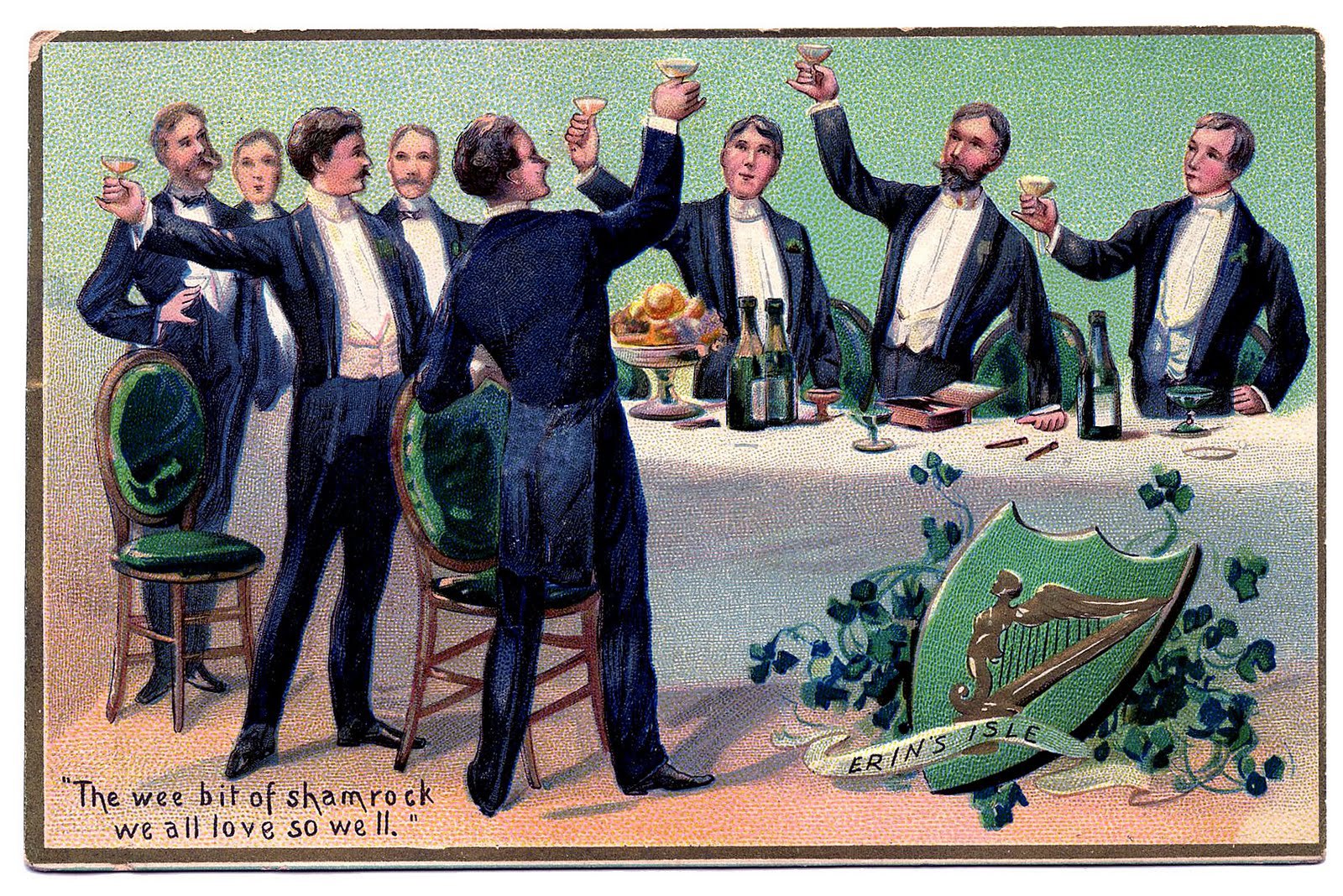
In 1854, the Chicago Tribune reported on the “sumptuous dinner” at the Tremont House put on by the Chicago Hibernian Benevolent Emigrant Society to celebrate St. Patrick’s Day and raise money. After dinner, there were a series of toasts, or speeches, accompanied by musical airs performed by the Chicago Brass Band.
The toasts covered everything from St. Patrick to the U. S. President, and patriotic U.S. tunes like the “Star Spangled Banner” alternated with Irish ballads like “St. Patrick’s Day in the Morning.”
By the 1860s, the Chicago Irish were forming religious, fraternal and political organizations, and with the start of the U. S. Civil War, new volunteer militias were formed.
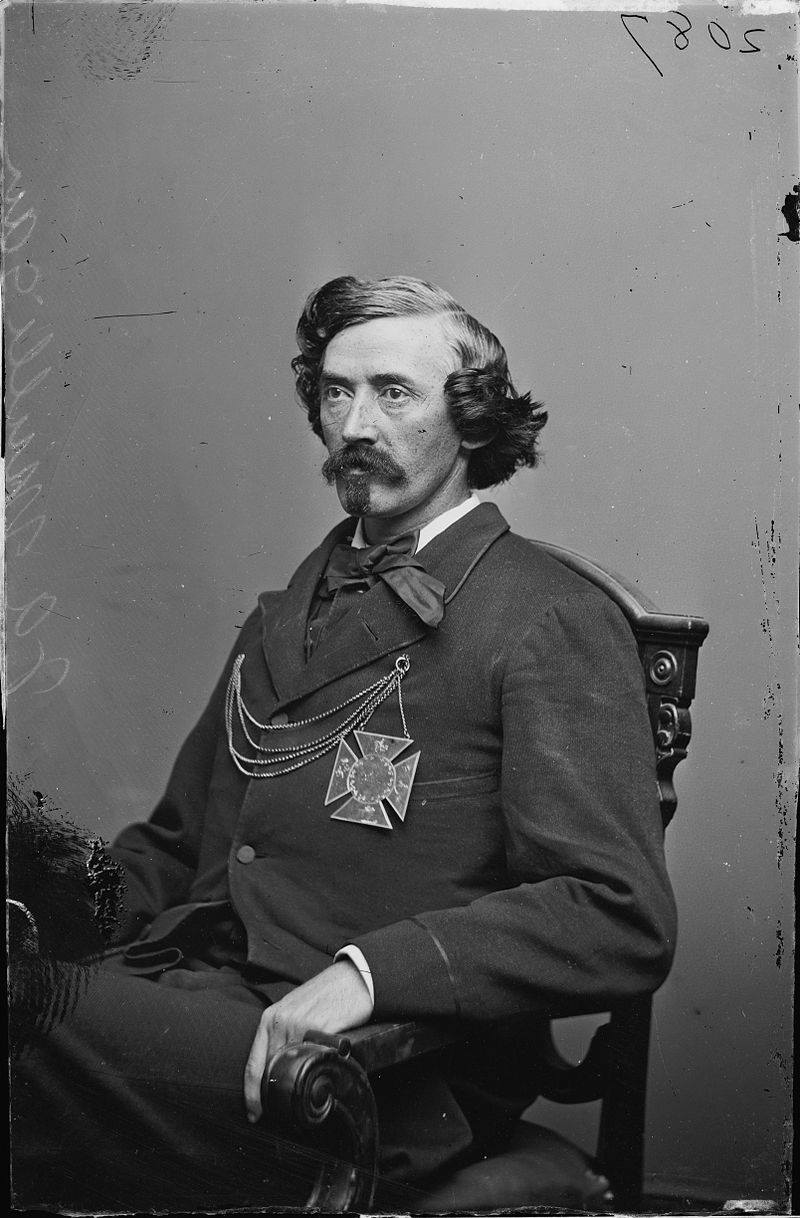
In Chicago, the 23rd Illinois Volunteer Infantry Regiment of the Union Army, referred to as the Irish Brigade, was mustered into federal service in June of 1861, commanded by Col. James A. Mulligan, a popular lawyer and politician known for his gallantry.
From February to June 1862, Col. Mulligan and the Irish Brigade staffed Camp Douglas in Chicago. The camp had started as a training camp for Union soldiers, but that month had been converted to a prisoner of war camp for captured Confederate soldiers.
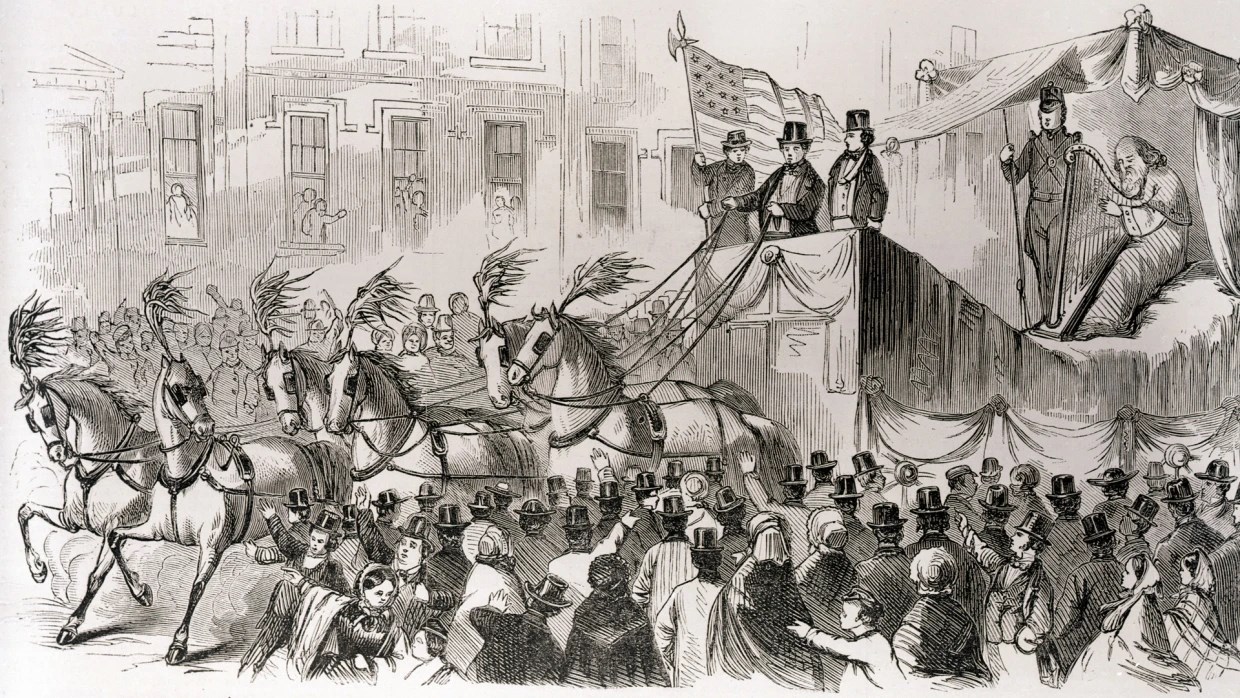
The Irish Brigade led the St. Patrick’s Day parade on March 17, 1862, and what a parade that was. There were aldermen, civic leaders and military officers; four brass bands; and at least ten organizations joining in. Thousands marched and many thousands more lined the streets to cheer.
That evening, the Benevolent Society held its now-annual banquet at the Tremont House, followed by toasts and dancing.
During the years, the parades have waxed and waned. The South Side Irish started a neighborhood parade along 79th Street that Mayor Richard J. Daley moved downtown in 1960. Residents of Morgan Park started what today is the very successful South Side Irish Parade in 1979.
These parades have kept alive the tradition that dates to Chicago’s earliest days.
See page 04B at:
http://www.beverlyreview.net/special/page_456a7e38-9cc6-5709-a99e-e915e18e71f9.html
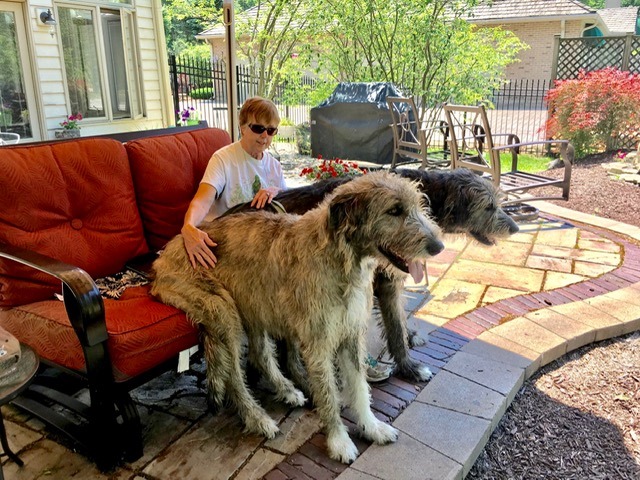
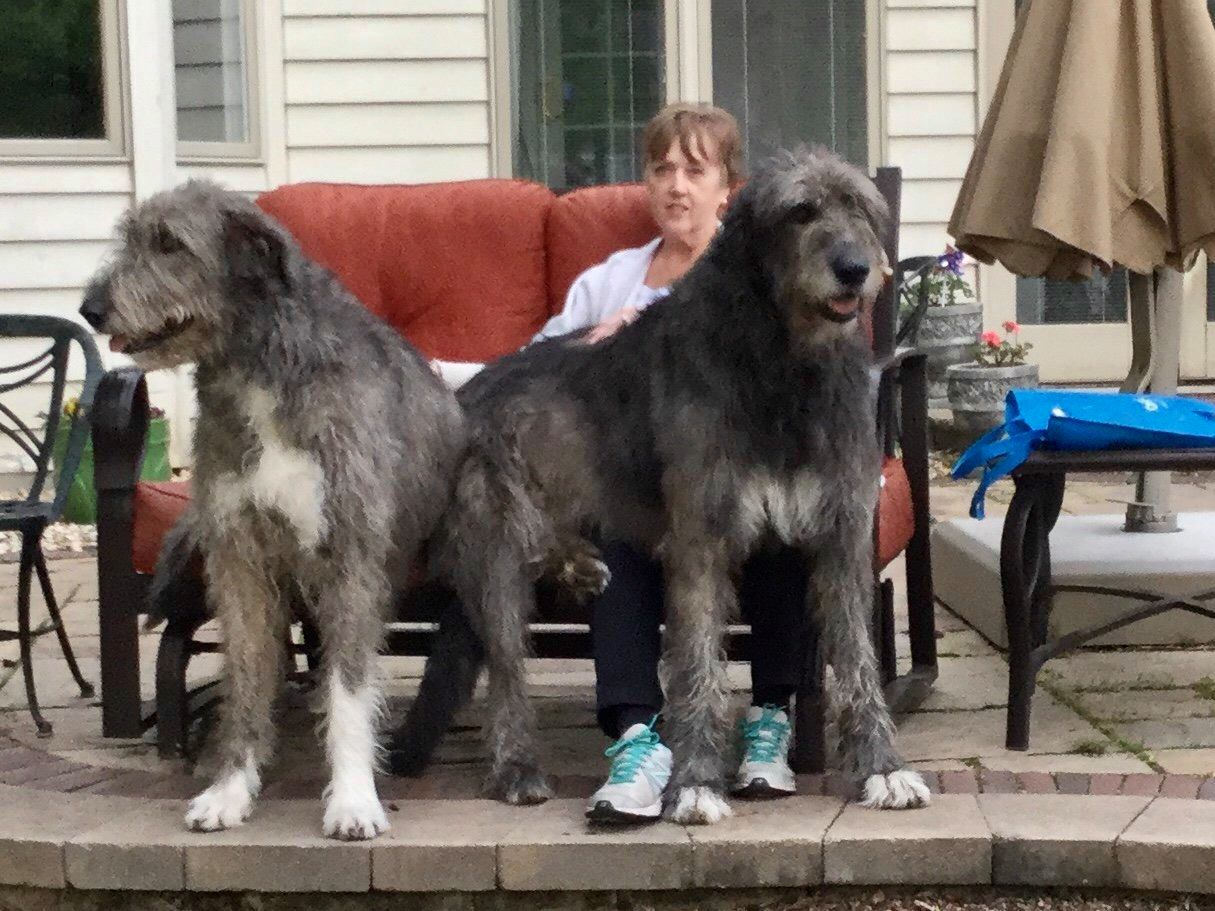
Another article in the Beverly Review special section for the now-canceled South Side Irish Parade is on Irish Wolfhounds. The link to the actual newspaper is at the bottom of the post.
Irish Wolfhounds often appear as symbols for Ireland. They represent loyalty, bravery and steadfastness.
Irish Wolfhounds go back 2000 years. These "Great Hounds of Ireland" were bred to take down large prey and mounted adversaries in war time. In the Middle Ages, wolves became such a problem for growing European settlements that the dogs were used to hunt down wolves. The dogs did such a good job at eradicating wolves that the breed almost went extinct itself, but was saved in the mid-1800s, leading to the dogs we have today.
The American Kennel Club (AKC) considers this the tallest breed of dog, with a minimum standard height of 32 inches at the shoulder for males. They hunt by sight, not smell, which necessitates great speed. Their size and strength is legendary.
The temperament of an Irish Wolfhound, though, is anything but fierce. The AKC describes these gentle giants as "kindly."
Joe and Madeleine Mahoney are from the South Side and have been keeping Irish Wolfhounds for forty years. Their current dogs are Casey, 5, and Nora, 3. These dogs are huge. And the most fun thing is that these dogs consider themselves lapdogs. Some of the best pictures are of them trying to fit on Madeleine's lap.
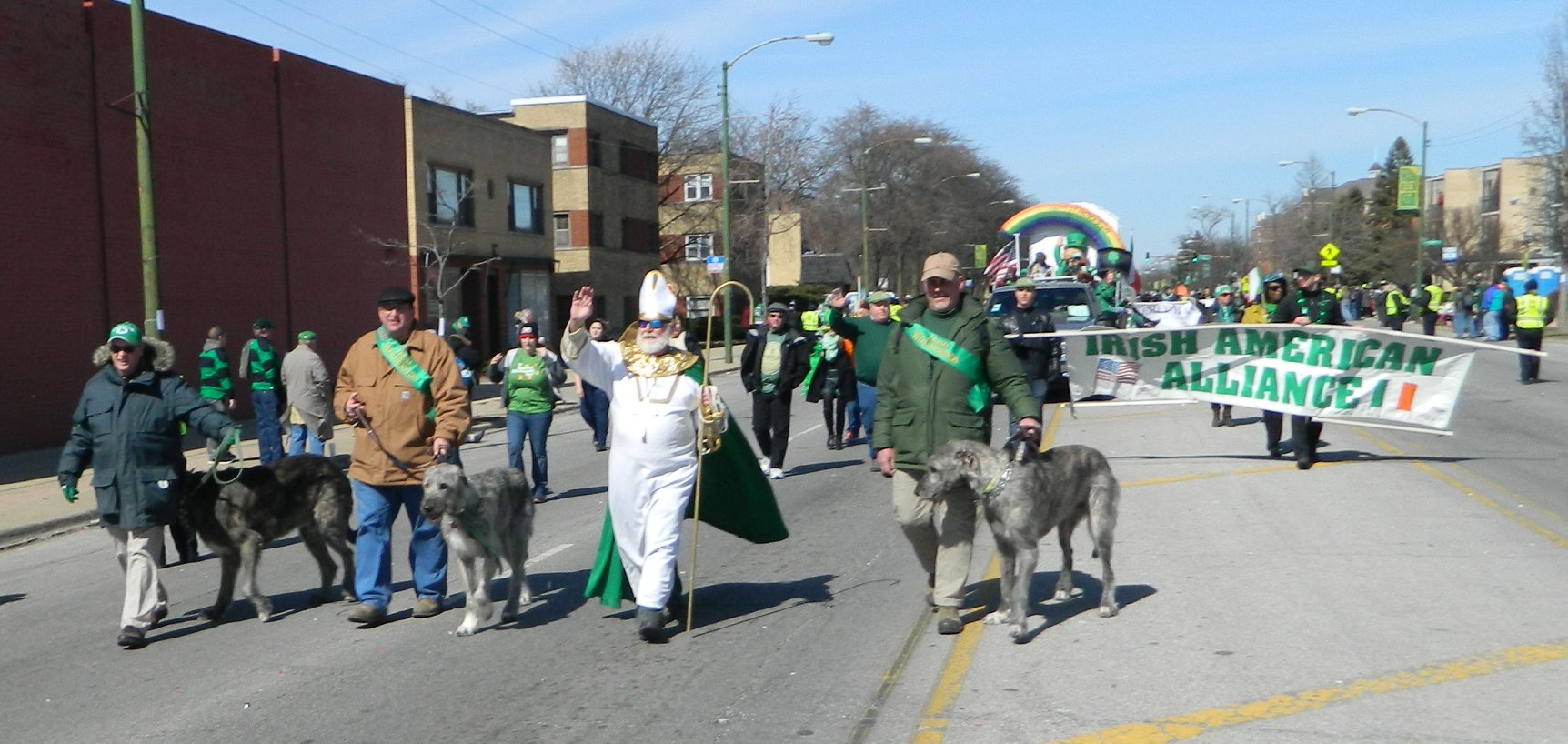
The Mahoneys are involved with the Great Lakes Irish Wolfhound Association. This group marches with the Irish American Alliance in the parade. Joe is on the far left with Casey (open the picture for the complete picture).
Please see the actual article for the complete story on all of this. Go to page 03B at:
http://www.beverlyreview.net/special/page_456a7e38-9cc6-5709-a99e-e915e18e71f9.html