Explore the RHS Facebook Archives, a rich repository of local history written by Carol Flynn. For two decades, Carol brought a deeply dedicated voice to public education at RHS. Her role as Facebook administrator through mid-2025 naturally extended her prolific research into meticulously detailed articles, most notably her multi-part historical series posts. Today, Carol continues her local history writing for The Beverly Review and other outlets.
Women's History Month
The Ridge Historical Society
The Month of March – Part 5, the Egan Daughters
By Carol Flynn
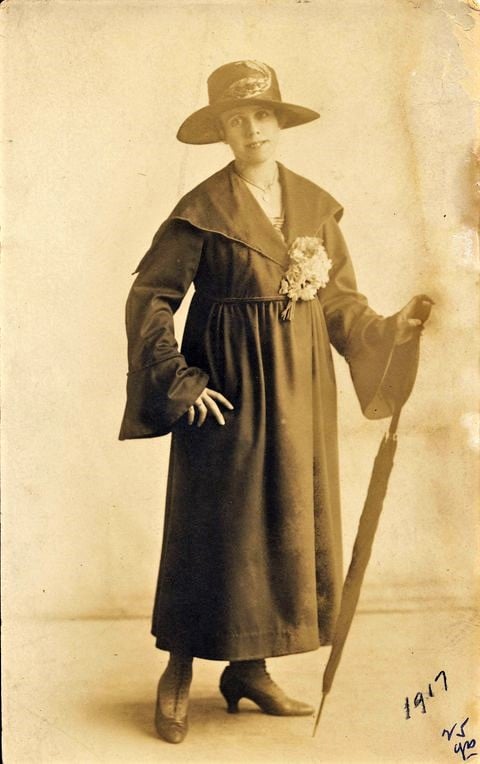
We’ve been looking at the George Francis (Frank) and Kate Egan family, an Irish American family that lived on the Ridge one hundred years ago. We shared some information on the sons, George, Jr., and Bernard, in the last post. This post will look at the daughters, Florence, born in 1892, and Marie, born in 1898.
Like most Irish American Catholic families at the time, activities centered around family, the Church, and Irish organizations. We see this with the Egan daughters. The family belonged to St. Margaret of Scotland Parish at 99th and South Throop Street. Florence and Marie were both involved in multiple activities and organizations, often following in their parents’ footsteps.
In 1919, the local paper reported Florence and Marie spent the Fourth of July in Indiana and both came home with “a nice sunburned complexion.” They were members of the One-Two-Three Club, and they entertained the club at their house; the Egan house was a stop for the club’s progressive hiking party, where refreshments were served at the stops.
After their brother Bernard died in 1918 from influenza while he was in the army, the family became involved with the Gold Star Mothers. Florence and Marie were mentioned in the local paper for assisting at the candy booth for the Gold Star Mothers’ bazaar held at the Coliseum.
Florence served as an officer with the St. Margaret’s chapter of the Women’s Catholic Order of the Foresters, which formed following the men’s organization, to offer sick, funeral and death benefits. She was also a member of the Daughters of Isabella, the women’s auxiliary of the Knights of Columbus.
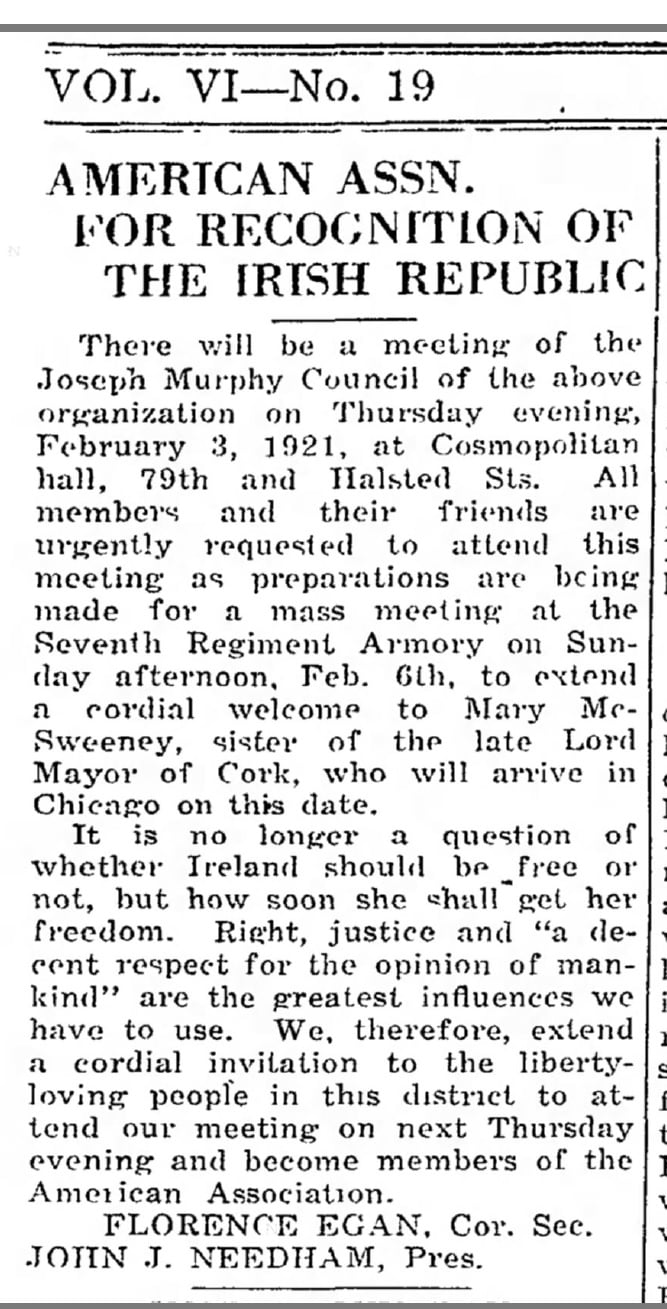
Like her parents and many Irish American Catholics, Florence was very active in efforts to secure Ireland’s freedom. She became the recording secretary for the Joseph Murphy Council of the American Association for the Recognition of the Irish Republic.
In 1921, she and the president posted an open invitation in the newspaper for people to attend a meeting of the group. She attended an outing with the group at Riverview Park that fall. Most impressive, she led the grand march at the Council’s benefit dance that summer.
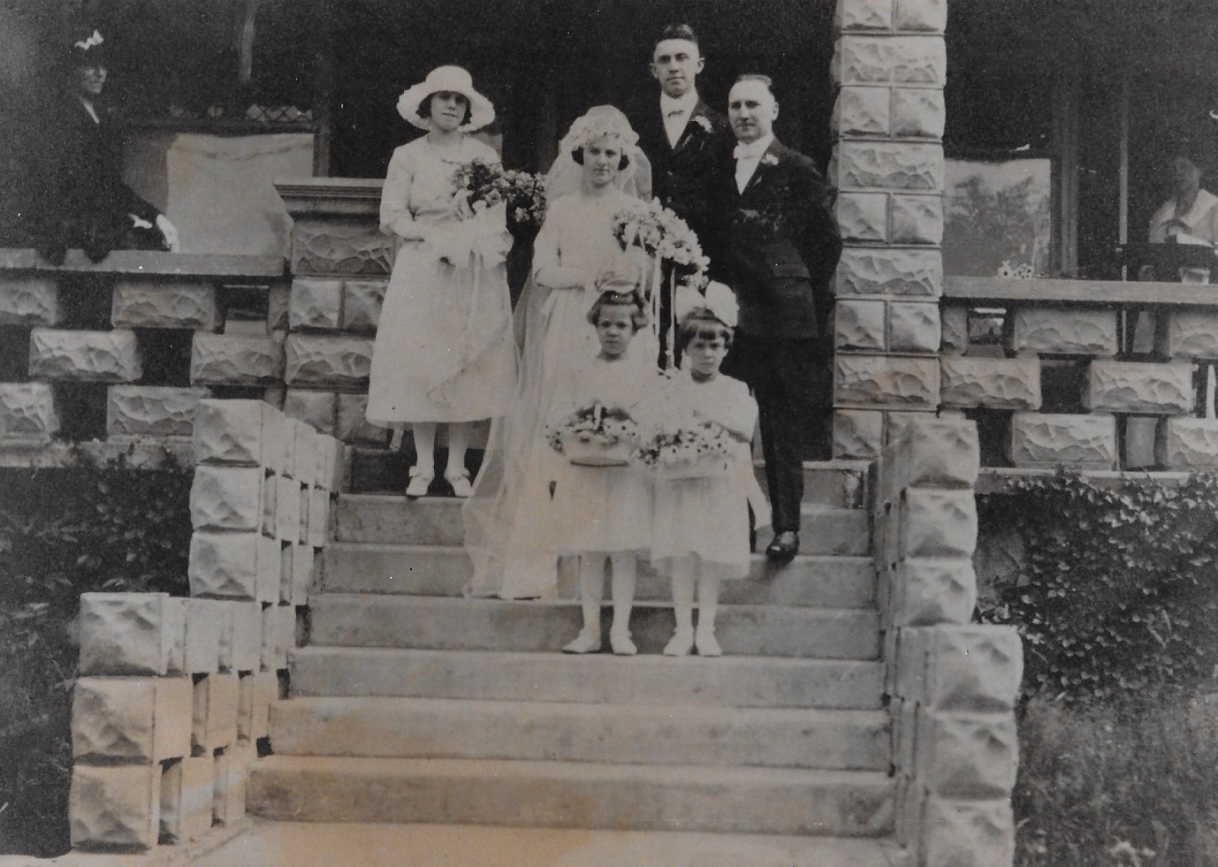
That year, she and a friend hosted a Halloween party at the family home at 1414 W. 95th Street, which also served as the housewarming party for the house, which the family had famously built themselves from cement blocks. Reported the local paper: “Spooks, witches and brownies … all enjoyed themselves in the pretty new home … at the genuine old-fashioned Halloween party.”
Florence enjoyed travelling. She liked day trips to visit family and friends in outlying areas, and she also visited local resorts and places like Starved Rock.
In the fall of 1922, she visited Buffalo, New York, and she decided to move to New York and make it her home. The paper gave her location as Herkimer, a town south of Utica. But she was back home on the Ridge by spring 1923.
In 1924, she married Benjamin McGovern from Buffalo, New York. The newspapers noted she was treated to many showers and parties. She had one son. The marriage ended in divorce and Florence and her son moved into the large family house with her parents.
Florence continued her social activities. In the 1930s she was active with the Catholic Daughters of America, and the women’s auxiliary of the American Legion, where she served as president of a local unit and attended conventions in Springfield.
She had a summer home in McHenry where she entertained guests. Florence eventually moved to Arizona.
Marie, the younger sister, married George DuMais in 1920. Friends from all the clubs, and relatives, feted Marie with showers and parties.
DuMais worked for the Rock Island railroad. They moved to Portland, Oregon, for a brief time. Kate, Marie’s mother, spent a winter out there with her daughter. They moved back to the Ridge, and they bought a summer home in Wisconsin, along with a cousin from Kate’s side, the Murnans.
In October of 1924, George DuMais was crushed between two train cars in the Blue Island switching yards and died in the hospital a few hours later. His funeral was from St. Margaret of Scotland Church and he was buried in Mount Olivet Cemetery. This left a devastated Marie a widow at the age of 27 with three small children; the third was born about a month after George died.
A descendent of the DuMais family responded to the RHS Facebook posts about the Egan family and reported this about Marie: “Marie Egan (later Marie Egan DuMais) was my great aunt.
“As I recall family history retelling the story, George DuMais worked for the Rock Island, and he was killed in a workplace accident. Marie was offered a cash settlement, or a promise of a lifetime job. Her son was only 5 or 6 at the time and she was pregnant with [another child]. She took the job.
“She worked as the ticket agent at multiple stations between 91st and 119th streets on the suburban line, ultimately ending up at 95th and Wood. The station included an apartment where she lived for many years, and where we would occasionally spend a night when her grandchildren, my cousins, would come to visit. Her son was a career Air Force officer and lived
in many places around the country.
“The Rock Island lived up to their commitment, and she worked long past the normal retirement age.
“When she finally retired, she was the longest tenured employee of the Rock Island.”
Her address for many years was listed as 10301 Walden Parkway, the 103rd Street station. All of the stations had second floors that were often lived in by the agents. This station no longer exists, it was replaced in the 1960s.
Marie also participated in clubs and activities.
Florence and she were both members of a cards club, the Beverly Five Hundred Club.
In 1943, the Ridge Court members of the Catholic Daughters of America (CDOA) held a supper followed by cards and games at the Food Research Institute downtown at Jackson and State Streets. The Food Research Institute fostered “better homemaking,” and developed new food formulas, tested and developed recipes, and staged food photography. It put on lunch and dinner events and was a popular venue for women’s clubs. This connects us to National Nutrition Month, which is also celebrated in March.
Florence was the chairman of the event. A few weeks before, the CDOA selected committee chairs for the year. Marie was appointed chair of the committee on caring for the sick, and Florence was appointed chair for “Americanism and national defense.”
Neither Florence nor Marie remarried.
Next post: Conclusion on Frank and Kate Egan.
Ridge Historical Society
Teacher Appreciation Week – May 3-9, 2021 – Part 4
School Series – Profile 11: Kate Starr Kellogg
By Carol Flynn
Kate Starr Kellogg (1854-1925) was an influential educator who lived on the Ridge. We’ve briefly profiled her family and education career in the three previous posts.
Kate’s contributions to the education field went beyond just teaching issues. She also left a lasting impression on political and social issues concerning Chicago’s education system.
First, she supported employing married women as teachers. The Chicago Board of Education policy was that a female teacher who got married automatically lost her job, but married male teachers not only stayed employed, they were preferred. Kate strongly believed that school, home, and society were all inter-connected and reinforced each other. Not only did she believe married women could still have a teaching career, she supported parents having a stronger role in the education process and believed that what children learned in school should be relevant to their homes and social lives. She supported the establishment of parent-teacher associations.
Kate also supported the right of teachers to come together to achieve common goals such as protecting the integrity and standards of the profession and dealing with employment issues – in other words, to unionize. She was an active member of the National Education Association, founded in 1857, and now the largest union in the U.S., representing education professionals and students.
As a founding member of the Chicago Teachers Federation which formed in 1897, Kate personally tackled local issues, including going after corporations that were delinquent in paying their taxes that supported the public schools. The Federation publicly “outed” not only these companies, but their prominent stockholders, some of whom were businessmen claiming praise as “reformers” and philanthropists.
Kate also was a leader in advocating for the formation of a Chicago teachers’ pension system, and sat on the board of trustees for the fund once it was established. She helped wrest away control of the fund from the Board of Education and put it in the hands of the teachers themselves.
In 1909, Ella Flagg Young was named the first woman superintendent of Chicago public schools, the first woman in the U.S. to reach this level in the education field. As expected, her critics and enemies were numerous.
For 3 years, Flagg was unanimously re-elected to her position by the Chicago Board of Education. Then in 1913, without warning, school board directors who were against Young managed to gather enough votes to remove her from the superintendent position. They accused her of mismanagement of funds and making the school system inefficient. They called into question her integrity and competence. Realizing she did not have the support to continue, Young resigned.
Young’s supporters were outraged by the Board’s decision and treatment of Young. Her support was largely concentrated in the powerful women’s clubs of the day but also reached much farther than that – former students, including many men, and parents of current students supported Young. Their call for Young’s reinstatement was supported by Mayor Carter Harrison, Jr., Jane Addams of Hull House, and many other leaders. The teachers of the city strongly supported Young and “hinted” they would strike if she were not reinstated.
A committee was established to write a resolution to have Flagg reinstated. Kate was one of the eight committee members. On Christmas Eve, 1913, the Board of Education voted Young back in as superintendent.
Kate, not surprisingly, was a suffragist, supporting women’s right to vote. It was particularly jarring to teachers, overwhelmingly a female occupation, when it was announced they would be charged an income tax on their earnings, without any representation in any governmental decision-making processes.
Mary Kellogg, Kate’s older sister, and Kate were both members of the Chicago Peace Society. This group was the local branch of the American Peace Society, founded in 1828, to promote good will between nations and the use of arbitration and other peaceful means to settle disputes and avoid armed conflict. There were many prominent members in this association, including past and current mayors and governors of Illinois, judges, clergy and religious leaders, notable women organizers, and professional women such as Jane Addams and Ella Flagg Young.
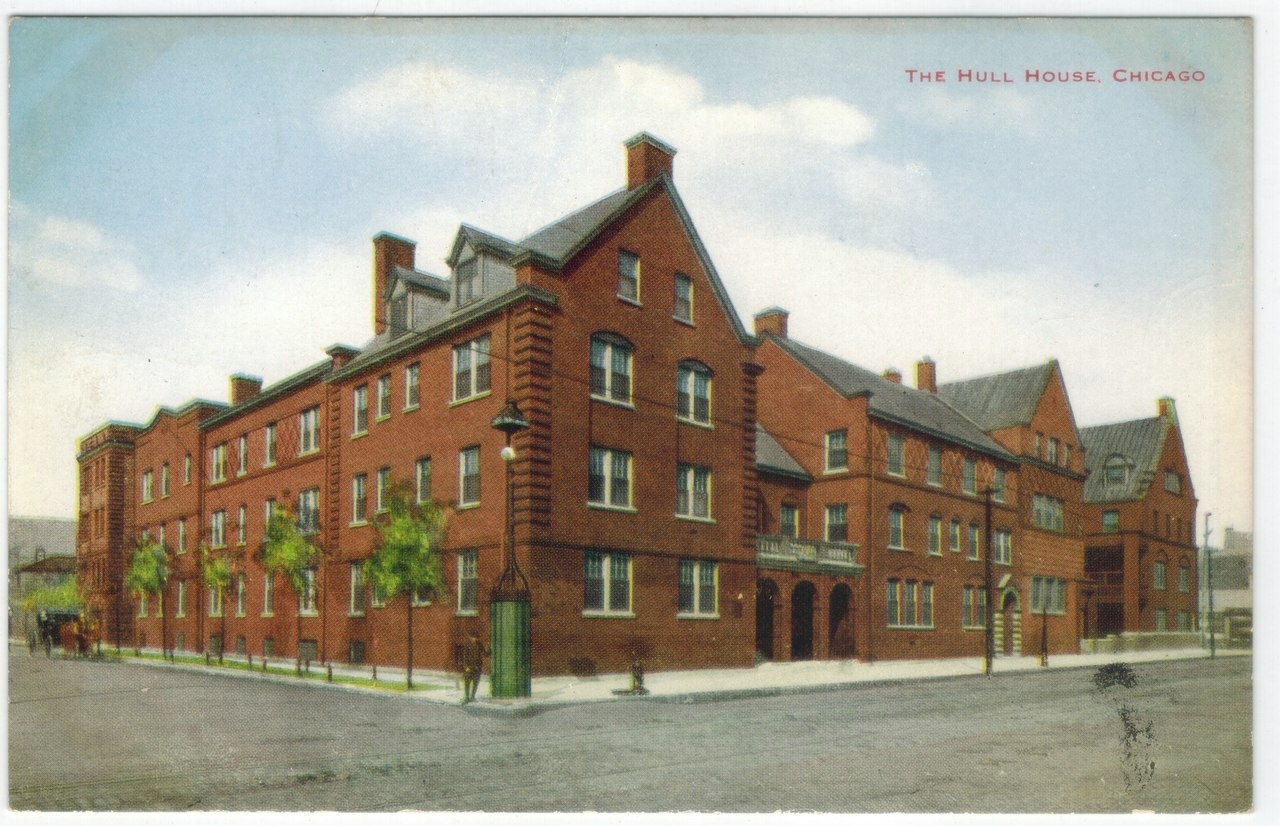
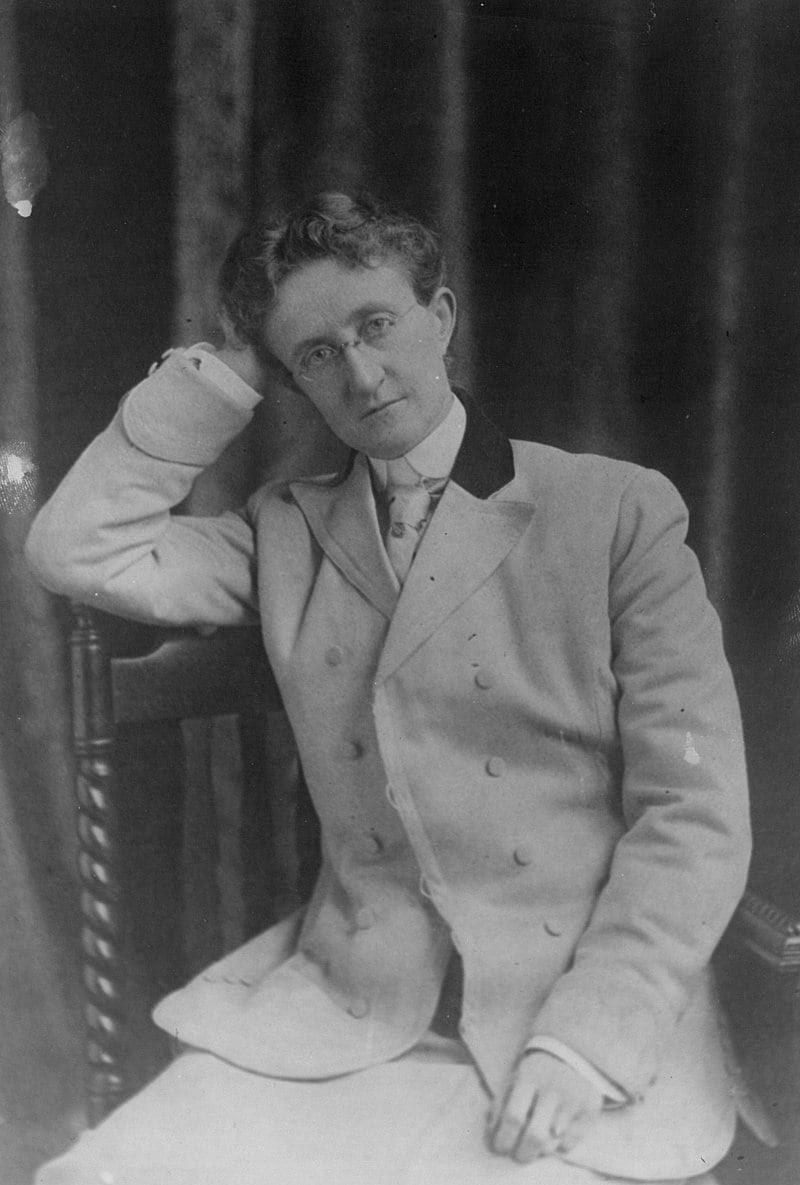
Kate and her sisters had personal as well as professional relationships with leaders such as Addams and Flagg. That friendships would develop between like-minded women is expected. Several Kellogg sisters were involved in Hull House activities, and in an earlier post, we showed the portrait that Alice Kellogg painted of Addams.
They were all involved in various women’s clubs, and the state federation of women’s clubs, as well as professional and reform groups. Other women from the Ridge were also involved, including Gertrude Blackwelder. Kate was a speaker at meetings during Blackwelder’s term as president of the Chicago Woman’s Club, so they obviously knew and respected each other.
Kate had a personal relationship with Dr. Cornelia De Bey, a homeopathic physician from the medical school Kate’s father taught at, and the attending physician for her chronically ill sister, Alice. De Bey, a well-known reformer, suffragist, labor advocate, and pacifist, had been named to the Chicago Board of Education, along with Jane Addams. De Bey worked with Addams’ Hull House community.
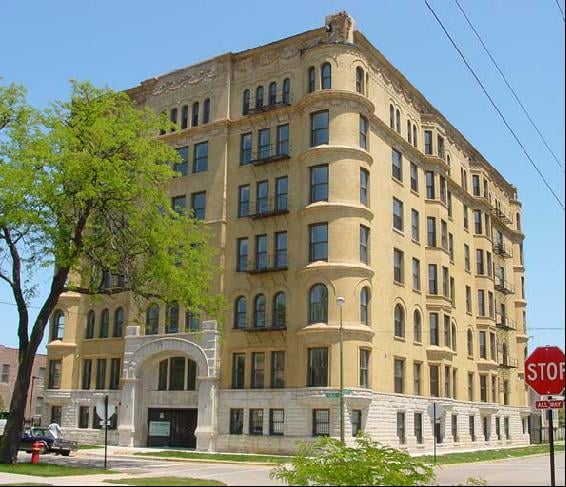
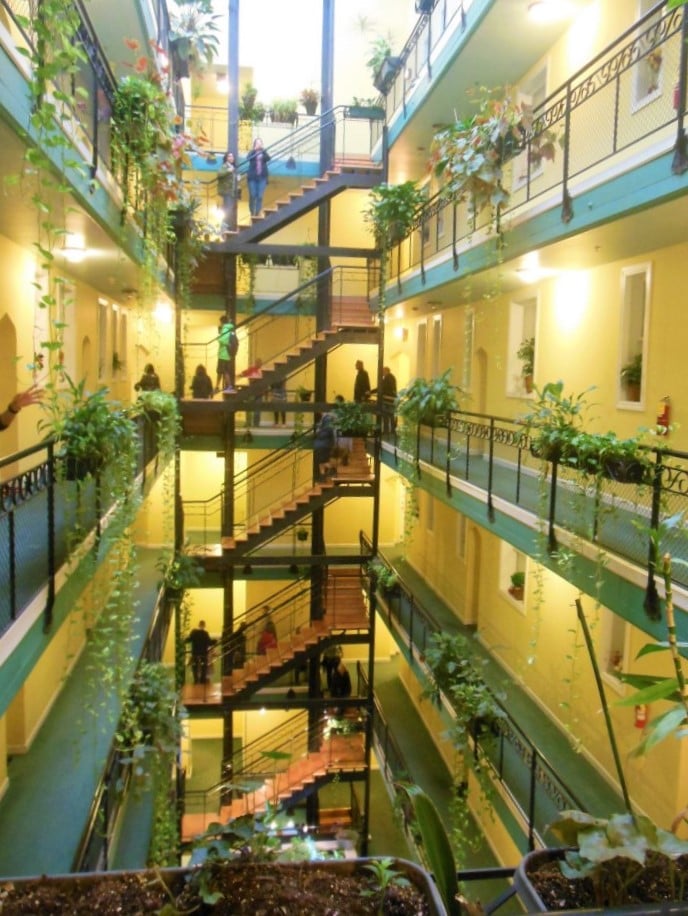
De Bey shared living arrangements with Kate at 6565 S. Yale Avenue. “The Yale Apartments” or “The Yale” was designed by architect John T. Long in 1892 and offered luxury apartments to visitors for the 1893 World’s Fair. Today “The Yale” is a Chicago landmark. (Incidentally, John T. Long also designed the 111th Street Metra train station in Morgan Park, and perhaps the 115th Street station that burned down a few years ago, both Chicago landmarks.)
Next post – Kate Starr Kellogg – some personal interests.
The Ridge Historical Society
The First Chicago Christmas Tree and the Ridge –
Part 3 – Amalie Hofer Jerome and the Civic Music Association
By Carol Flynn
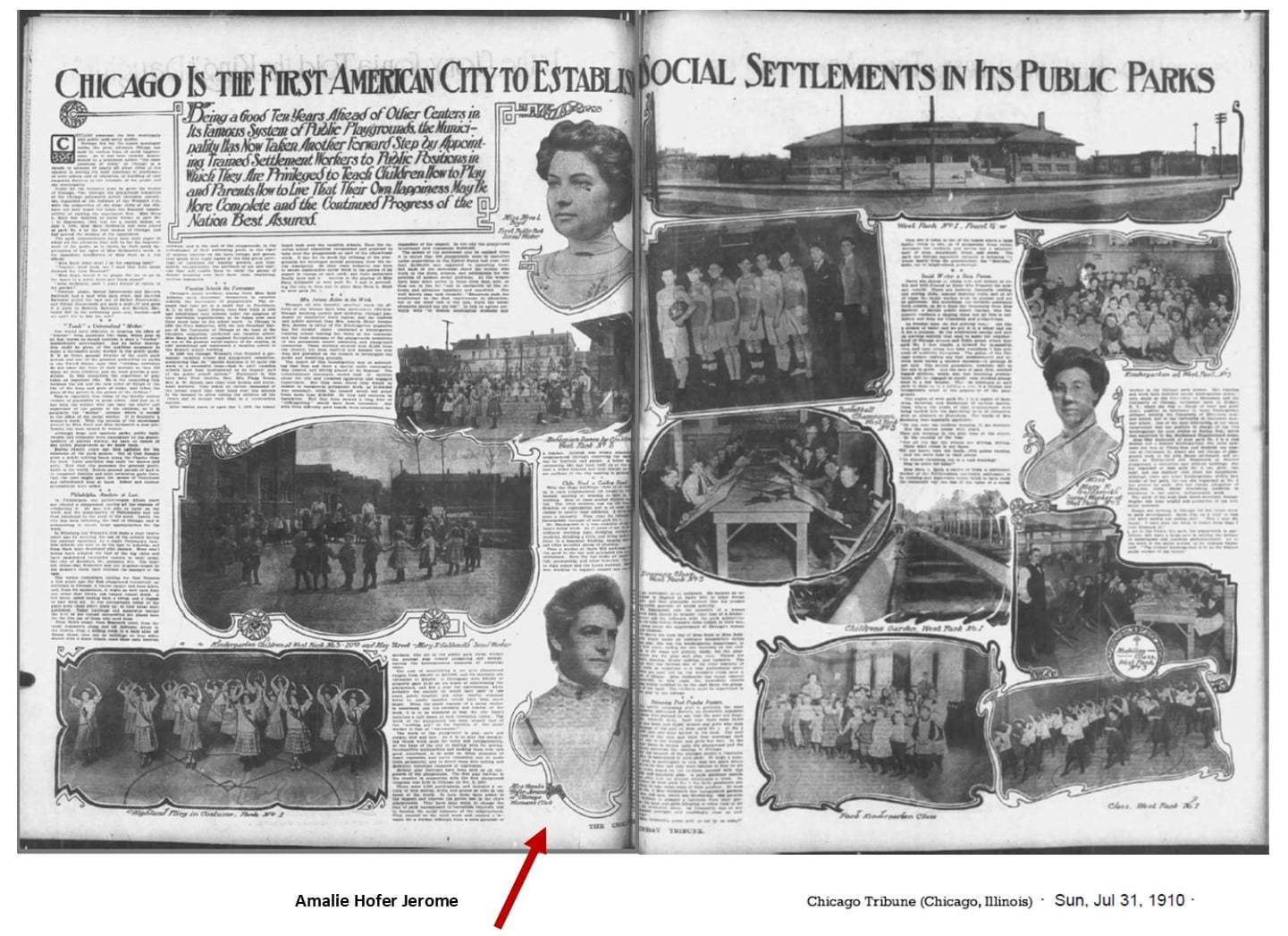
Amalie Hofer Jerome came from a distinguished family of educators, writers, musicians, and publishers that lived and ran a school on the Ridge. She was an honorary vice-president for the lighting of the first Chicago Christmas tree.
Amalie was born in 1863, the sixth of the eight Hofer children, the third of the five girls who all went into education and social reform. She was raised in McGregor, Iowa, and attended McGregor High School. Amalie had training as a kindergarten teacher with Elizabeth Harrison, a pioneer in early childhood education who established programs in Iowa and Chicago.
Amalie and her sisters became leaders in the kindergarten movement, which was covered in the previous post. She was the editor and publisher of the Kindergarten Magazine, the leading publication of the movement, and other related publications.
Moving to Chicago, she was involved in the kindergarten-training schools her sisters established, including serving as principal.
Her work with the kindergartens led her to become involved with many more causes.
This was the era of “settlement houses,” made most famous by Jane Addams’ Hull House in Chicago. These were institutions of the “Progressive reform era” in which social workers, clergy, educators, and other concerned people came together, often living together in the institution, to offer services to the poor, new immigrants, and others in need. They usually started with outreach to mothers and children, and established day care services, kindergartens, and playgrounds; English lessons; household training; and arts and crafts.
Amalie married Frank Jerome, a furniture merchant, in 1909. For several years, she was head resident of Fellowship House Social Settlement at 831 West 33rd Street, established in 1895. She resigned in 1916, but still stayed on the board, managing the settlement house activities.
Amalie was a founder of the International Kindergarten Union and the Playground Association of America. She traveled the world studying kindergartens and childhood education, and wrote articles and gave talks on the topics around the country.
In 1913, Amalie was a founder of the Civic Music Association in Chicago. For several years, free concerts had been given in the field houses of the city’s parks by notable musicians, and the time had come to organize the activities. As a leader of the Playground Association and also of the Chicago Woman’s Club, Amalie had been instrumental in arranging the concerts. She now took on the role of chairman of the executive committee of the new organization. Numerous groups, such as the Northwestern University choir and the Illinois Theater orchestra, provided free concerts in the parks.
Although she was recognized throughout Chicago for her many accomplishments, it was in her role as a leader of the Civic Music Association that Amalie was named one of the fifty-plus honorary vice-presidents for the lighting ceremony for Chicago’s first municipal Christmas tree.
Next post: Chicago’s First Christmas Tree
The Ridge Historical Society
International Women’s Day
By Carol Flynn
Tuesday, March 8, is International Women’s Day, and March is Women’s History Month. The Ridge Historical Society has shared many stories in the past about significant women from the Ridge and their contributions.
One of the favorite heroines of the community is Gertrude Blackwelder and her story really can’t be over-told.
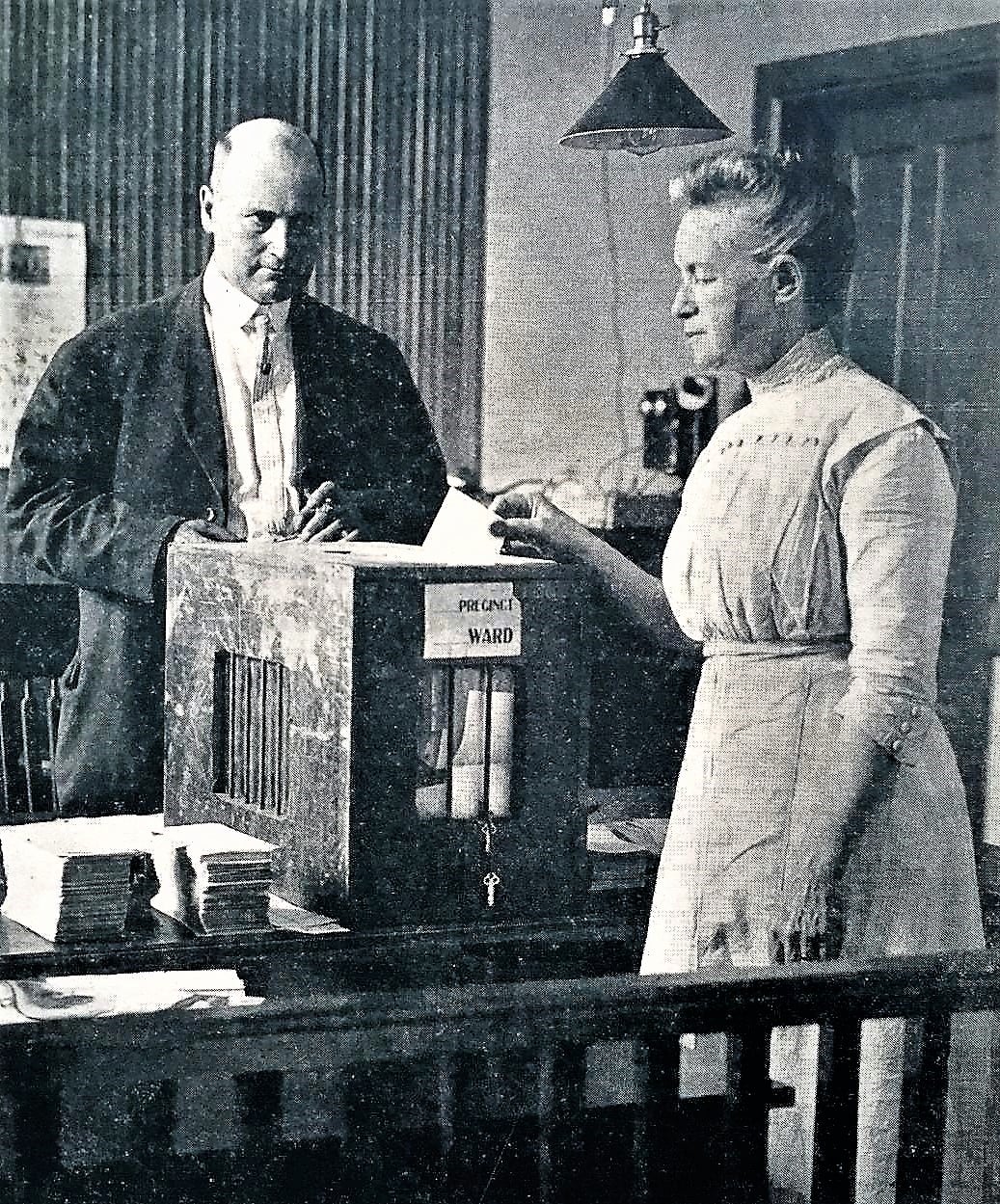
Gertrude Blackwelder made history on Saturday, July 26, 1913, when she cast her ballot in Morgan Park’s special election on building a new high school.
Reported Town Talk, a local paper, “As this was the first opportunity given women of Cook County by virtue of the recently enacted Women’s Suffrage law to vote upon questions other than candidates for school boards, nothing could have been more fitting than that Mrs. I. S. Blackwelder, former president of the Chicago Woman’s Club, and consistent worker for the betterment of women and children, as well as mankind as a whole, should cast the first woman’s vote in Morgan Park and Cook County.”
A photo of Mrs. Blackwelder casting that vote appeared in numerous papers. The Illinois law was the final push that led to the U. S. Constitution’s Nineteenth Amendment in 1919, granting women the right to vote.
The Progressive Era of 1890-1920 was a time of great reform and advancements, particularly in government and social areas. Gertrude Blackwelder embodied the spirit of that Era, working for women’s suffrage and other causes.
Alice Gertrude Boughton was born in 1853 in New York. Her father, a Baptist minister, valued education. In 1869, she joined her sister in Kansas to attend the newly established university there. Following graduation in 1875, she was the first female graduate to be appointed to the faculty and, in 1890, she became the first woman to give a commencement speech. Improving education opportunities for women and other disadvantaged groups became another important cause for Gertrude.
In 1877, Gertrude married Isaac Simeon (I. S.) Blackwelder, and moved to Chicago. Blackwelder (1840-1926) rose to top management in the insurance industry, starting as an adjustor handling claims from the Great Chicago Fire of 1871.
The Blackwelders settled in Morgan Park, where I. S. served as president of the Village Board. Sons Paul and Eliot were born. The family acquired the Ingersoll house at 10910 S. Prospect Ave., adding a Queen Anne-style front to the existing Italianate-style structure.
At that time, the wives of wealthy men did not “work” outside the home. They applied their intelligence, skills, and wealth to projects through volunteer organizations. Gertrude was elected to membership in the prestigious Chicago Woman’s Club (CWC), where she worked alongside Jane Addams of Hull House and Bertha Honore Palmer.
Gertrude’s special interest was vacation schools, summer programs offering nature, arts, music, and outdoor play activities for impoverished city children. For several years, she chaired the Vacation School Board, overseeing schools set up by the Chicago Permanent Vacation School and Playground Committee of Women’s Clubs. This coalition, with 212 delegates representing 50 clubs, worked closely with the Chicago Board of Education. Gertrude wrote several articles on vacation schools for college publications.
Due to her leadership abilities, Gertrude was chosen for higher office in the CWC. She served as Second and then First Vice President, and as President from 1906 to 1908. During those years, issues CWC addressed included children’s healthcare and daycare, the juvenile court system, crimes against children, working rights and conditions for women and children, sanitation and disease prevention in Chicago neighborhoods, pure food laws, and programs for the blind.
Even as an executive officer, Gertrude made time to chair the Story Telling Committee, organizing and conducting story hours at schools, libraries, and recreation centers.
At home, the Blackwelders were involved in “all things Morgan Park.” At the request of local women, Gertrude co-founded the Morgan Park Woman’s Club in 1889. Pre-COVID, this was the oldest women’s club still existing in Chicago.
The Blackwelders supported the annexation of Morgan Park to Chicago, and the building of the high school. Both sat on local school boards, and Gertrude headed the Public School Art League which obtained artwork to decorate the school. A proposal in 1923 to rename the high school for the Blackwelders resulted in naming the auditorium Blackwelder Hall.
Later, the Blackwelders moved to Stanford, California, where son Eliot was a college professor. Gertrude died there in 1938.
“When I entered the University, in January, 1869,” wrote Gertrude in the 1908 Graduate Magazine of the University of Kansas, “Such was my delight at the opportunity for higher education, then largely denied to girls, that no thought of our limitations disturbed the serenity of my youthful mind.”
That attitude prevailed throughout Gertrude Blackwelder’s life: she gave no thought to limitations. Her influence and accomplishments reached far beyond Morgan Park. Women’s History Month is a fitting time to give her recognition.
This photo is of Gertrude Blackwelder casting the first ballot, and it appeared in the Chicago Tribune, July 27, 1913. With her is Henry Heizer, local lawyer who served as Clerk of Election. Some people comment that Heizer looks disapproving, but that was not the case – he was totally supportive of the effort.
Linda Lamberty, Ridge Historical Society Historian, and Carol Flynn, Ridge Historical Society researcher/writer, are honored to be part of “Invisible Labors,” a collaborative project with Susannah Papish, artist, educator and Director of boundary, the arts project space in Morgan Park; and Melissa Potter, feminist interdisciplinary artist and writer, and Professor at Columbia College Chicago.
“Invisible Labors” began as a project at boundary last year that included Melissa’s garden of native plants and an exhibition of papermaking, an artistic medium at which she excels. This led Susannah to start thinking about how the land was used in the Ridge area before it was just about all claimed by “development.”
Susannah reached out to Linda and Carol from RHS, with whom she worked previously on other projects, and rich discussions started about the history of the land from the time of the Native Americans to the arrival of the European settlers to the Great Migration of African Americans from the Southern United States.
This led to the idea for an artistic publication on the role that women played in the use of the land, as farmers and gardeners, and as artists. Carol will be a primary author with stories about the women of the Ridge and their connections to the land, based on research conducted with Linda. There will be additional writing from Melissa, as well as artwork related to the topic. We’re still thinking about formatting options for the publication.
March is Women’s History Month, so we are announcing this project at this time.
Susannah has put together a description of the project as well as a campaign to raise some funding to help with the cost of developing this project, which can be accessed at the website https://3arts.org/projects/invisible-labors/.
Thank you for your interest in the project. The publication will be out this summer. Please let us know if you have any questions or comments.
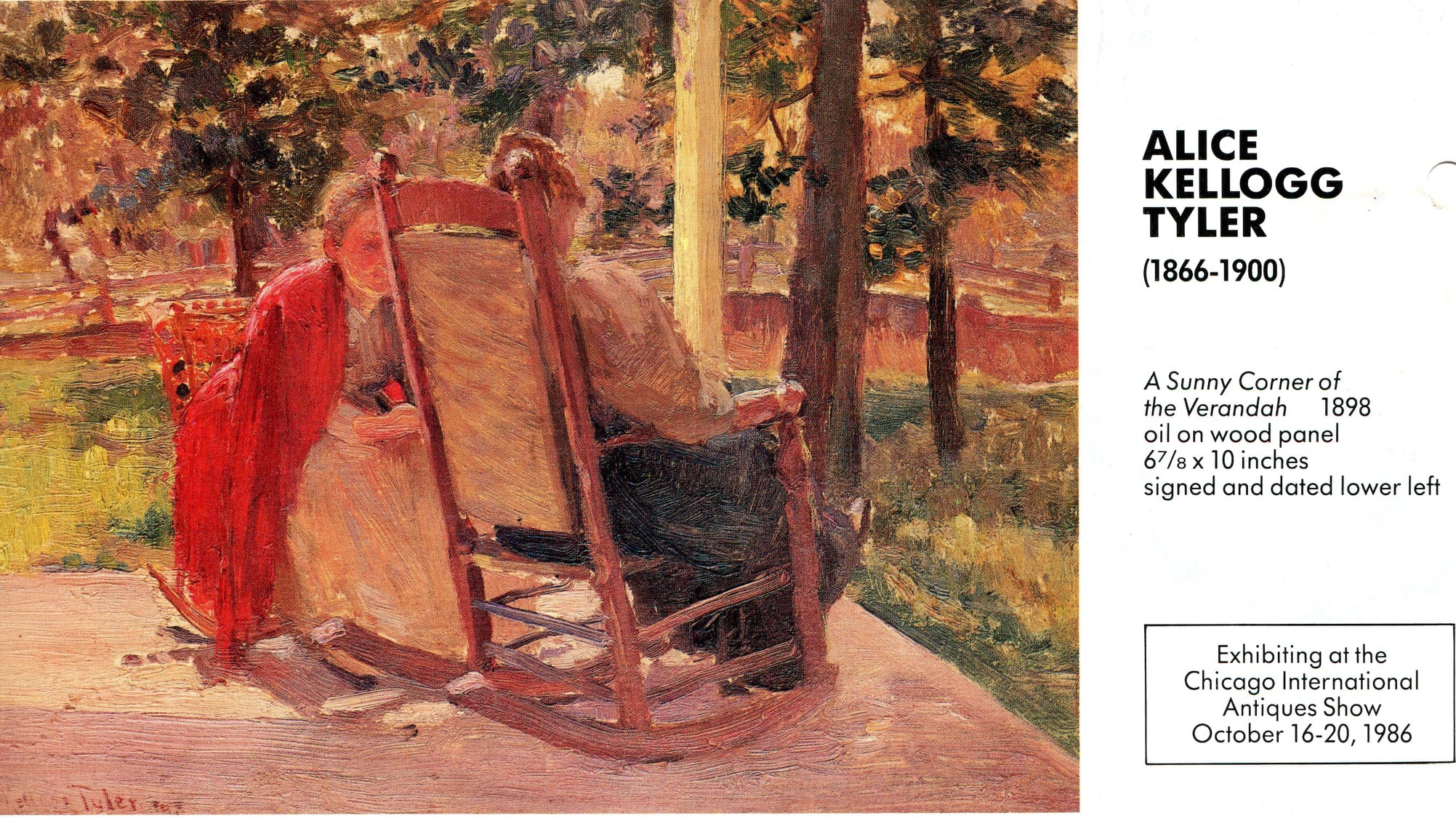
Image is of a painting by Alice Kellogg Tyler of the verandah of their farmhouse on the Ridge.
“Invisible Labors” is a collaborative project to explore the role that women played in the use of the land, as gatherers, farmers, gardeners, and artists, in the history of the Ridge communities of Beverly and Morgan Park. It is one of five projects currently supported by 3Arts, a nonprofit organization that supports Chicago’s women artists, artists of color, and Deaf and disabled artists who work in the performing, teaching, and visual arts. 3Arts includes a built-in match that helps Chicago artists finance new creative work.
“Invisible labors,” curated by Susannah Papish, the Director of boundary, the art project space in Morgan Park, has several components. It started last fall with a garden of native plants and a paper-making exhibition at boundary by artist and educator Melissa Potter, a professor at Columbia College Chicago.
The next component will be a publication featuring the research and writing of the Ridge Historical Society’s experts on local history. With research assistance form RHS Historian Linda Lamberty, RHS researcher/writer Carol Flynn, who develops all the stories that appear on the RHS Facebook page as well as stories for the local newspapers and other sources, will write about the pre-history days of Native Americans and their use of the land; the coming of the white European settlers and their development of the land; and the history of the early community of Black Americans who settled here after the U.S. Civil War. For the record, Carol Flynn is legally disabled.
The publication, which is still in the planning stages, will include artwork and other contributions from Susannah and Melissa, in addition to the written stories.
Susannah Papish has started a fund-raising campaign to offset some of the expenses of the project through this link: https://3arts.org/projects/invisible-labors/
We hope that if you truly support the arts in the Beverly/Morgan Park community, and/or appreciate the historical stories shared by the Ridge Historical Society, that you will consider putting a few dollars towards this project. We will be very grateful for the contributions.
The RHS page will share some of the highlights of the stories in the coming days.
Artist Louise Barwick lived in one of Beverly’s oldest and most charming houses on 103rd and Seeley. She painted beautiful local scenes in water color, as well as made a name for herself in the academic field with geographic modeling techniques. Her story is one that will be told in “Invisible Labors.”
The Ridge Historical Society
Women’s History Month: Real American Girls of the Ridge
By Carol Flynn
As we wrap up March, Women’s History Month, this is a last call to see the current exhibit at the Ridge Historical Society – Real American Girls of the Ridge.
This exhibit started right when the COVID pandemic started, in 2020, and unfortunately, it never got the attention – and visitors – it deserved because RHS, like other historical and cultural institutions, had to close its doors for a long time. And now it has to come down because RHS has to get ready for the big event in May – the Beverly Area Planning Association (BAPA) house walk, which will feature Hetherington-designed homes. More on the Hetherington project will be announced in coming weeks.
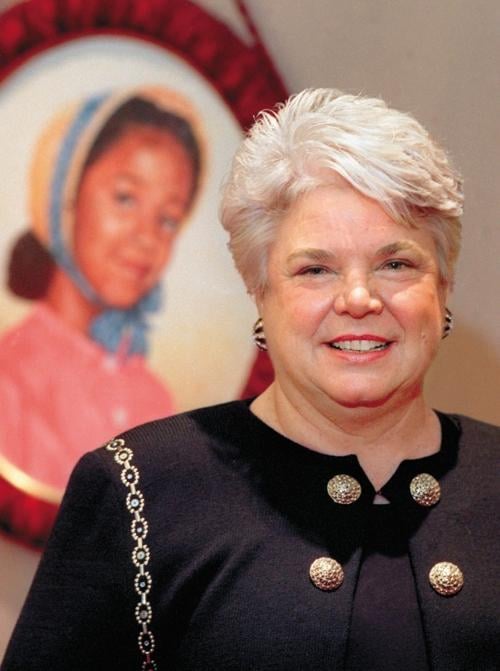
Real American Girls on the Ridge takes a historic doll from the American Girl collection and pairs it with a real woman from the history of the Ridge who had a similar life experience.
Five of the original American Girl (AG) dolls and a collection of their furniture, clothes, books, and other items were donated to RHS by a member of the community, Joan Regnier O’Connor. As children, Joan’s daughters became interested in the dolls through their grandmother, a librarian who held tea parties and other events for the dolls and their young owners, to foster reading, history – and fun. Joan wanted to see the dolls used for like purposes and donated them to RHS.
The inventor of the dolls, Pleasant Rowland, lived in the Beverly/Morgan Park community as a young girl. RHS did a post on this several years ago. Her grandparents lived here, and it was through her grandmother that Pleasant became interested in history and antiques. Information on Pleasant is included in the exhibit.
The first five dolls in the series and their Ridge counterparts are:
• Felicity and Abigail Shipman Wilcox (Colonial era)
• Kirsten and Anna Lovisa Larson (Pioneer era)
• Addy and Cornelia “Mother” Reeves (U.S. Civil War Era)
• Samantha and Margaret Gear Lawrence (late Victorian Era)
• Molly and Elaine Spencer (World War II Era).
RHS will summarize the real American Girl stories over the next few days. The exhibit will be up until mid-April and anyone who wants to view it, including school, Scouts, or other groups, can contact RHS through this Facebook page, and arrangements will be made.
(Photo of Pleasant Rowland)
The Ridge Historical Society
Jean Hetherington – Part 1
By Carol Flynn
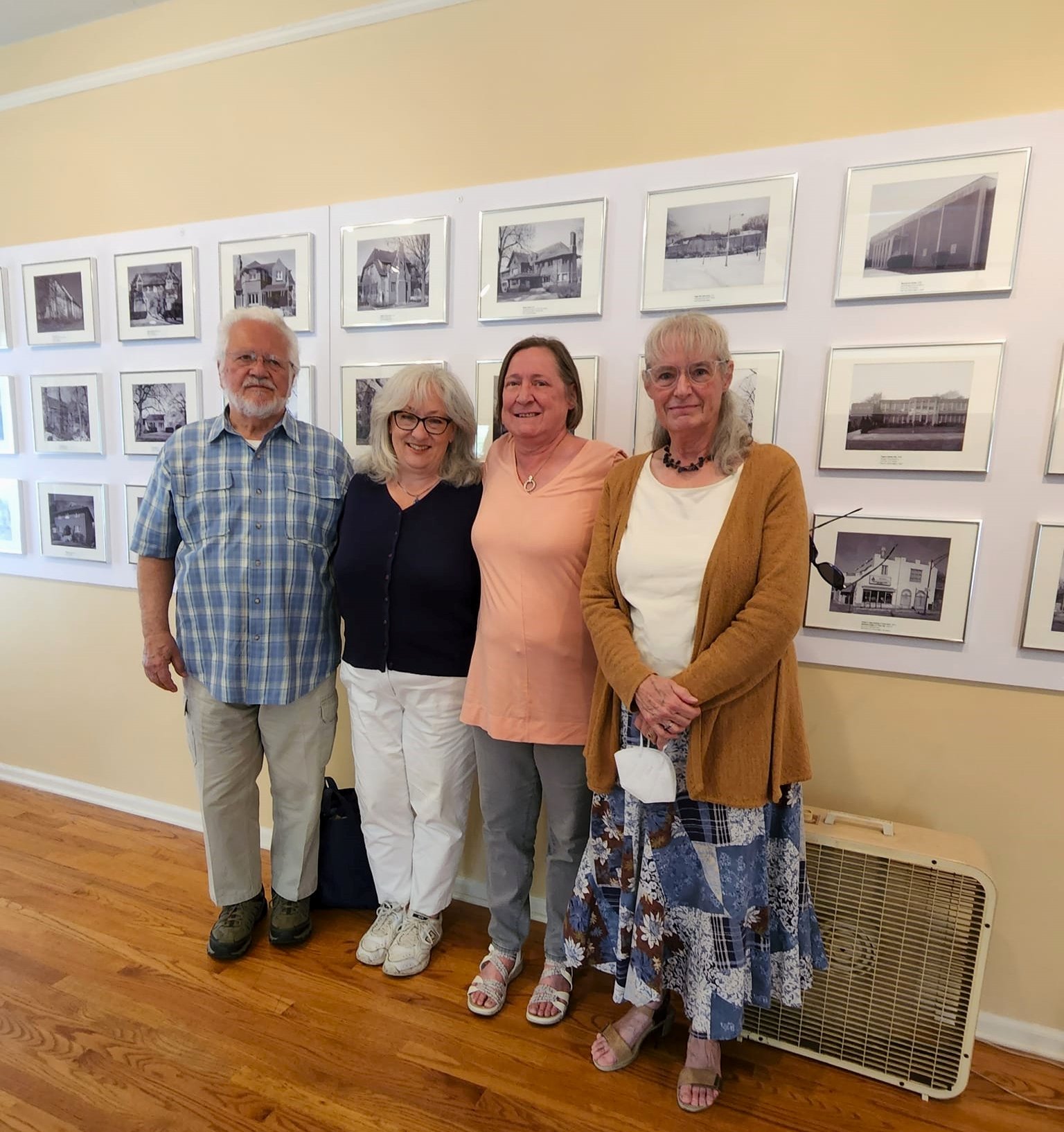
The Ridge Historical Society (RHS) premiered a new exhibit on the Hetherington family of architects at the Beverly House Walk last Sunday. This post begins a series of stories that augment the exhibit.
John Todd Hetherington (1858 – 1936) and his family moved to Beverly around 1901. He, his son Murray Douglas Hetherington, and his grandson John Murray Hetherington are credited with designing upwards of a hundred buildings in the Ridge communities, including the Graver-Driscoll House that is owned by RHS. Upcoming posts will cover the stories of these men.
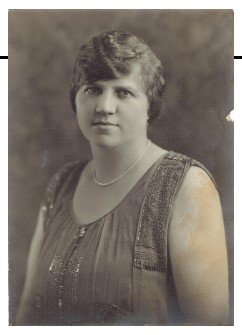
Today, however, the story will start with the Hetherington whose contributions largely go unnoticed – Jean Hetherington, John Todd and Jane Hetherington’s youngest child and only daughter who lived to adulthood.
Jean was born in 1895, which made her about six years old when the family moved to the Ridge, and about eleven when the family built their home at 9326 South Winchester Avenue in 1906. Jean spent her life in Beverly.
In 1917, Jean graduated with first honors from the three-year School of Normal Instruction of the Art Institute of Chicago. A “normal” program trained teachers – the word “normal” came from the “norms” or standards established for subjects to be taught in school. The Normal program at the Art Institute included courses in the history and philosophy of art, the masterpieces, drawing, composition and design, color, and manual training, which included modeling in clay and other materials.
Teaching was a traditional career route encouraged for women. Jean’s older brother Murray had graduated from the Chicago School of Architecture, a joint program of the Art Institute and the Armour Institute, in 1914, but there were few women pursuing architecture as a career option back then. For the Art Institute’s summer program in 1916, for example, forty-six women and three men attended the Normal program, while fifteen men and one woman attended the Architecture program.
There were only two licensed woman architects in Chicago at the time. One was Marion Mahony Griffin, the first employee to be hired by Frank Lloyd Wright. She married Walter Burley Griffin, the architect who designed the houses in Beverly’s Walter Burley Griffin Place District, a Chicago landmark site on 104th Place. It is well known that Wright took credit for much of Marion’s work. The Griffins left Chicago in 1914 for Australia.
That left Elisabeth A. Martini as the only woman architect. She shared the story that to keep her job as an architect, she also had to take on tasks such as helping the boss’s wife clean out their pantry.
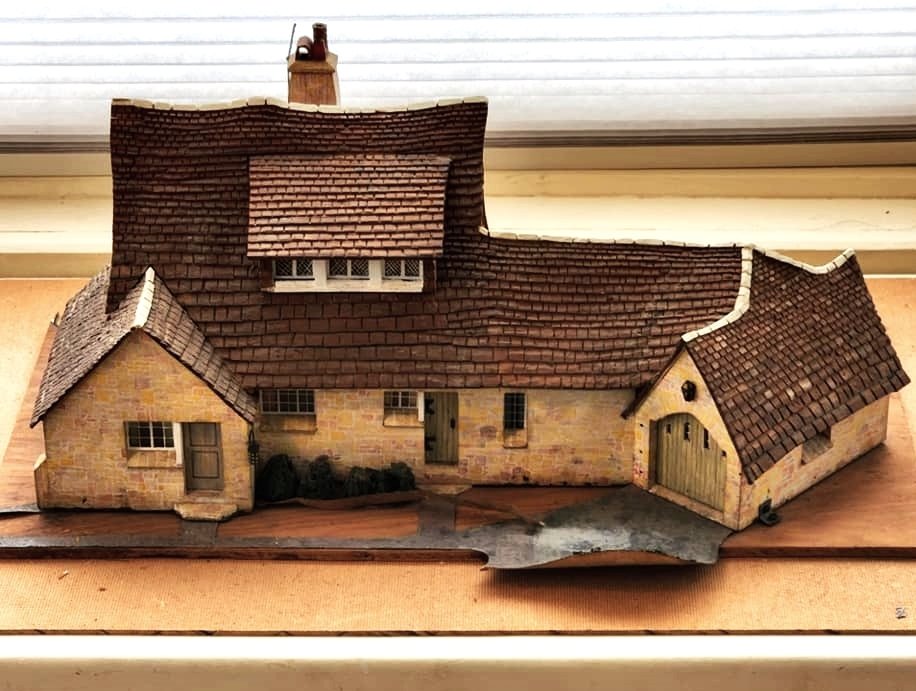
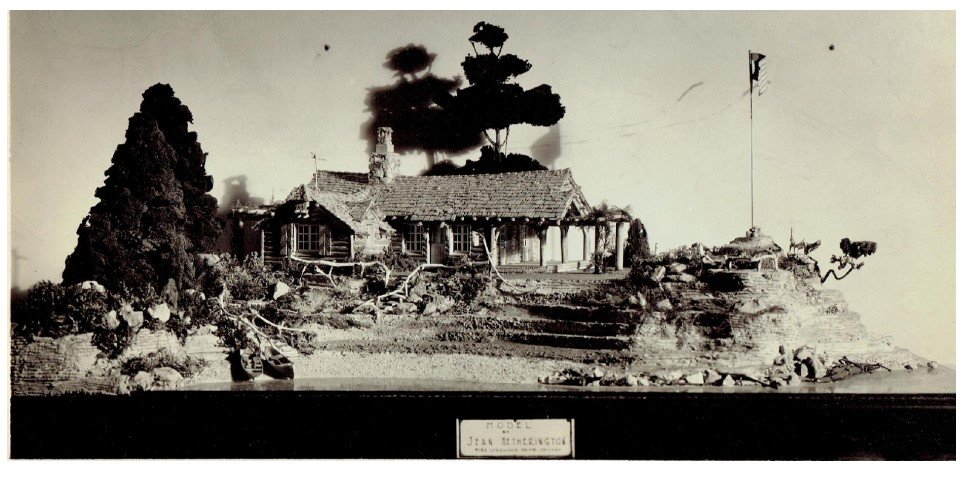
Jean Hetherington became known for the architecture models she created, and this will be explored further in the next post.
On the day of the Beverly House Walk, RHS was fortunate to have members of the Hetherington family as visitors. They loaned to RHS for that day one of Jean’s models that was a family heirloom. The model is of a charming cottage-style house, but the family does not know what house this model might depict.
Arrangements may be made to view the exhibit by contacting RHS at 773/881-1675, or ridgehistory@hotmail.com.
Next post: Jean Hetherington’s career and life.
The Ridge Historical Society
Jean Hetherington – Part 3
By Carol Flynn
This continues the series of posts related to the Ridge Historical Society’s exhibit on the Hetherington family of architects.
Jean Hetherington was the youngest of the Hetherington children. She worked as a draftswoman and became known for her skills in making architectural models.
In 1922, the Englewood Times newspaper reported that Jean, “one of the Ridge’s enterprising young women,” made miniature homes for Chicago real estate dealers. Her picture and one of her “perfect” models had been covered in the Herald-Examiner, one of Chicago’s daily newspapers. The article reported she used cockle burrs from the fields near her home, which was with her parents at 9236 Winchester, to create the hedges for her models.
By 1922, the Hetheringtons had moved to 9122 Longwood Drive. Jean remained with her parents. On the 1930 U.S. Census, Jean’s occupation was listed as architectural drafting in an architect office. This was the business of her father, John Todd Hetherington, and her brother, Murray Hetherington. Likely, Jean’s models were an asset in promoting their designs.
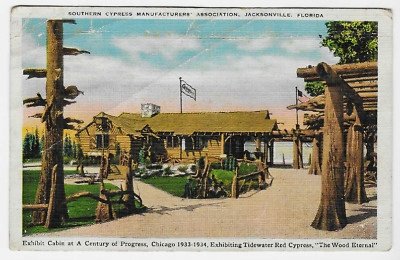
Murray Hetherington designed one of the “Homes of Tomorrow” for the exhibition at the 1933 Century of Progress at the World’s Fair in Chicago. This exhibit, considered one of the most noteworthy of the Fair, featured twelve full-size houses that showcased innovations in architecture and building materials.
Murray’s contribution was the Cypress Log Cabin, which actually was made of traditional materials rather than experimental materials like those used in the other houses. The house was eventually moved to Beverly Shores, Indiana, where it is part of the Indiana Dunes National Park. More on this house will be covered in a future post.
Jean created a model of the Cypress Log Cabin, which was displayed at the Fair. She had other models on display, also.
John Todd Hetherington died in 1936, leaving Jean and her mother Jane living in the home on Longwood. Son Alec had also lived with the parents on and off, but he died in 1939 in Wyoming. There will be more on Alec in the next post.
Then in 1948, at the age of 53, Jean married William Geanopolos.
Geanopolos was born in Greece in 1888 and immigrated to the U.S. in 1905. He married Clara Cooper in 1914. He became a naturalized U.S. citizen in 1925.
The Geanopoloses took up residence in Rockford, where he worked in various capacities in the restaurant and food business. In different records, he is listed as the merchant in the confectionary industry, a clerk in a fruit store, a grocer, and a soda dispenser in an ice cream parlor.
Clara died in 1936. In 1942, on his World War II draft registration, Geanopolos is listed as working in a restaurant at 70th and South State Street.
William and Jean Geanopolos lived with her mother, Jane Hetherington, at 9540 S. Prospect Avenue. In 1950, his occupation is listed as chef in a restaurant, and Jean is listed as a draftsman for an architect.
Jane Hetherington died in December 1950, and Jean Hetherington Geanopolos died in August 1956, at the age of 61. Jean spent her life, from the age of 5 or 6 on, in Beverly.
Next post: Alec Todd Hetherington
Ridge Historical Society
Woman’s Equality Day
By Carol Flynn
Woman’s Equality Day has been an annual event in the U.S. on August 26 since President Richard Nixon issued a proclamation in 1972. The day started as “Women’s Rights Day.”
August 26 was chosen as the date because the Nineteenth Amendment to the U.S. Constitution, which states that “The right of citizens of the United States to vote shall not be denied or abridged by the United States or by any State on account of sex,” was signed into law that day in 1920.
Tennessee’s ratification of the Amendment a few days before had secured the required support from the states to finally grant the right to vote to the twenty-seven million women in the country. The official letter from Tennessee certifying ratification was sent by train to Washington, D.C.
The train was due to arrive shortly after midnight, and Secretary of State Bainbridge Colby promised to stay up late to receive the letter and officially proclaim the amendment as law. However, the train was delayed, and when the letter had not been delivered by 3:00 a.m., Colby went to bed. Even the women suffragists who had been on watch all night finally turned in.
Later that day, the proclamation was made. President Woodrow Wilson declared it the day that “the men and women of America are on an equal footing, citizens all.”
The ratification of the Nineteenth Amendment was somewhat anti-climactic for the women of Chicago, who had won limited voting rights in Illinois in 1913. It did give new purpose to those working for election of women to Chicago’s City Council.
In 1922, the Illinois League of Woman Voters advocated for a “fifty-fifty” rule, that is, half the Chicago aldermen should be women. One hundred years later, that goal has still not been met. Today, seventeen of the fifty aldermen are women.
The first women candidates for Chicago aldermen were on the ballot in 1914. Four were from the Socialist Party and three from the Progressive Party. Two others from the Democratic party had lost in the primaries. None of the women were elected.
The first women aldermen, Anna Langford and Marilou McCarthy Hedlund, were not elected to the Chicago City Council until 1971. Langford was an African American attorney and civil rights activist from Englewood; Hedlund was a white newspaper reporter from Edgewater. Both were Democrats.
In the nineteenth ward, which includes Beverly, Mount Greenwood, and some of Morgan Park, the first woman to be nominated for alderman from a major party was Margaret Norman White, who ran as the Republican candidate in 1959. She lost to the Democratic incumbent, Thomas Fitzpatrick.
It would be another twenty years before the nineteenth ward saw a second woman candidate, Mary Quinn Olsson, who ran in 1979. Although a strong Democrat, Olsson ran as an Independent because the official Democratic Party backed Michael Sheahan that year. Sheahan won the election.
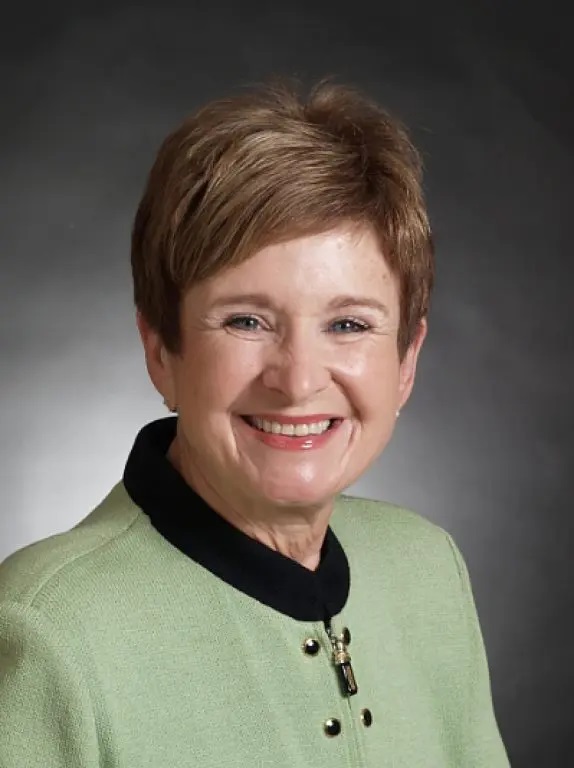
Sheahan served from 1979 to 1990, when he was elected to the position of Cook County Sheriff. Richard M. Daley, who had won election as Mayor in 1989, appointed Virginia “Ginger” Meares Rugai to fill the nineteenth ward alderman vacancy, making Rugai the first woman to represent any portion of the Ridge on the City Council. She won re-election in 1991, and served as alderman until 2011.
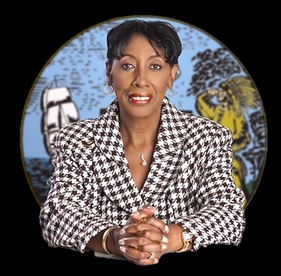
Since that time, other women have also represented parts of the Ridge on the City Council. These are Lona Lane in the eighteenth ward, and Carrie Austin in the thirty-fourth ward. Both were appointed to their positions by Mayor Daley and went on to be re-elected.
Lane served from 2006 to 2015. Austin has served since 1994 and has announced her retirement at the end of this term.