Explore the RHS Facebook Archives, a rich repository of local history written by Carol Flynn. For two decades, Carol brought a deeply dedicated voice to public education at RHS. Her role as Facebook administrator through mid-2025 naturally extended her prolific research into meticulously detailed articles, most notably her multi-part historical series posts. Today, Carol continues her local history writing for The Beverly Review and other outlets.
Women's History Month
The Ridge Historical Society
Part 11 – The Hofer Sisters and Politics Continued
By Carol Flynn
During the Progressive Era of the late 1800s-early 1900s, women began to come into their own as political activists. Much of their work was done through women’s clubs. Long denied membership in traditional men’s clubs, women formed their own civic organizations which became powerful forces for reform and change.
The Chicago Woman’s Club (CWC) was one of the most influential of these organizations, with members including Jane Addams of Hull House and Bertha Palmer of Palmer House hotel money and fame, who chaired the women’s events for the 1893 World’s Fair in Chicago. Women from the Ridge actively participated in the CWC, and Gertrude Blackwelder from Morgan Park served as president from 1906 to 1908.
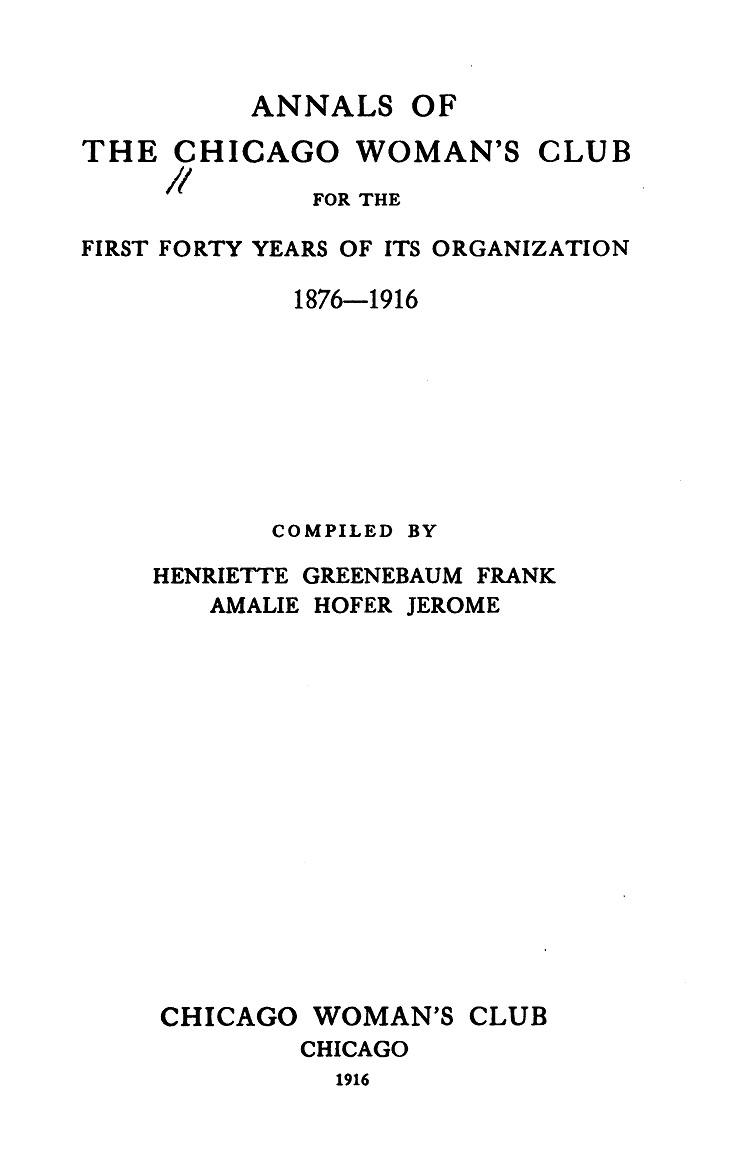
The Hofer sisters were members of the CWC. Bertha Hofer Hegner was prominent in the club’s education endeavors. In 1916, Amalie Hofer Jerome co-authored the Annals of the Chicago Woman’s Club for 1876 to 1916, a compilation of the Club’s first forty years of business.
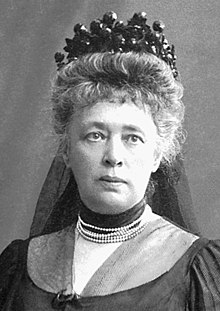
In 1912, through their CWC involvement, the Hofer sisters brought about an internationally significant event, a country-wide tour by pacifist Baroness Bertha Von Suttner of Vienna, Austria.
Andrea Hofer Proudfoot spent increasing amounts of time living in Europe in the early 1900s with her children. She and her husband regularly traveled back and forth between Chicago and Vienna, where her daughter Helen attended the Leschetizky School.
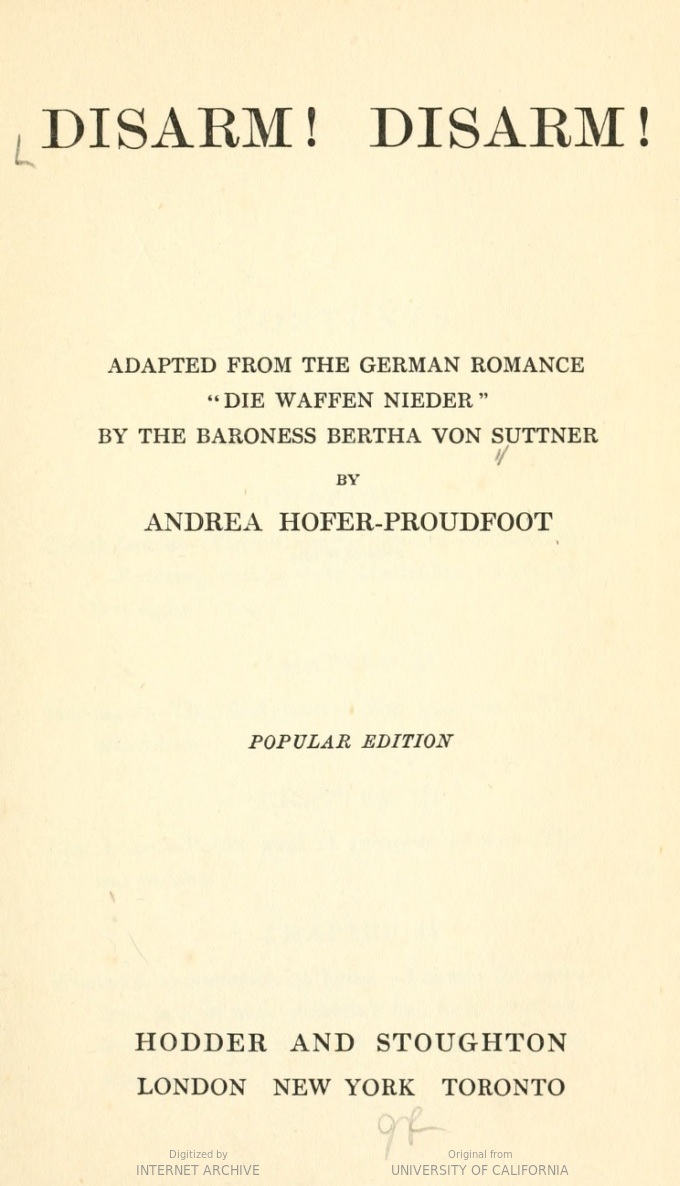
The international kindergarten movement, in which the Hofer sisters were leaders, shared many ideals with the international peace movement, and Andrea became acquainted with Baroness Von Suttner, who won the Nobel Peace Prize in 1905.
Mounting social unrest leading to increased militarism had many fearing a European war was imminent, and indeed, World War I was just around the corner. Peace organizations were established in Europe and the U.S., and women like Jane Addams were active participants.
Suttner was a leader in the international pacifist movement of the time, and was emerging as a leader of the growing feminist movement. She was an influential pro-disarmament writer, believing that world peace was inevitable due to technological advancements, and that more powerful weapons would increasingly deter war.
In February 1912, Mari Hofer presented a motion to the Chicago Woman’s Club recommending that they arrange an address by the Baroness during the coming year. This was approved, and the Club reached out to the General Federation of Women’s Clubs (GFWC), the “mother” organization that all the local clubs belonged to, and other groups for involvement. A joint Peace Committee with the GFWC and groups like the Chicago Peace Society was formed, with Mari and Amalie doing the work.
While male international pacifists had been making speeches in the U.S. for years, this was the first initiative by women to include pacifism and international affairs as part of the women’s clubs’ agenda, and have a woman address the American people. Suttner was invited to address the GFWC national convention in San Francisco in late June of 1912. She accepted the offer.
The Hofer sisters procured funding from the World Peace Foundation, which supported peace education, to cover all the expenses for the Baroness to visit the U.S. Leaving for the U.S., Suttner stopped in Paris to address the Carnegie Peace Foundation. She stated, “I shall try to put in motion a new and great force in the uplifting to good all mankind, and that force is found in the federated American women.”
Standing next to her on the platform was the personification of those women, Andrea Hofer Proudfoot, from the Chicago Woman’s Club, who served as Suttner’s full-time manager, secretary, and companion for her trip to the U.S.
They travelled by ship to New York, then across country to San Francisco by train, picking up GFWC delegates along the way. The GFWC event, with 5,000 attendees, became the first of 1,220 engagements, with the Baroness speaking at universities, churches, and organizations including peace, labor, business, and suffrage groups. Major American newspapers and journals carried the Baroness’s speeches in full, allowing her a widespread reach to the public. Although this visit is rarely mentioned now, it was very big news at the time.
The Baroness’s primary goal was to advocate for universal peace, but she saw the connection to women’s rights for education and employment, and particularly to suffrage. She encouraged women to be active in the peace movement and she encouraged peace activists to support suffrage to increase their efforts in promoting peace.
The Baroness and Andrea came to Chicago in July, where the Baroness made presentations at the 50th annual convention of the National Education Association and other meetings, and visited Jane Addams and Hull House. From there, they went on to meet with President William Howard Taft.
They returned to Chicago in November, and Suttner addressed the Chicago Woman’s Club. Women like Mrs. George Pullman held receptions for them in their homes. Suttner also addressed other groups like the Chicago Federation of Labor.
The Inter Ocean newspaper quoted part of one of Suttner’s Chicago speeches: “We must come to realize that our present, modern times have outgrown the system of war, of violence. Now we all live under the law of violence. I hope that the tool of war will be laid down, and that the workers will lay down their tools against the preparation of the implements of war. Instead of the outstretched fist, we want the outstretched hand of friendship.”
Charles Beals, the Secretary of the Chicago Peace Society, noted although the U.S. visit was “a laborious task,” that “the peace workers of the United States have been greatly strengthened by the visit of the foremost woman pacifist of the world.” This group also had great praise for Mari Hofer’s role in the endeavor, stating that “Miss Hofer served entirely without pay, gave up her summer vacation in order to make the undertaking a success, and for months, in no small measure, bore the responsibilities and did the clerical work.”
As Suttner returned to Vienna in December, accompanied by Andrea, she declared that the U.S. was ahead of other countries in the suffrage movement, and she was sure American women would get the vote franchise. That took eight more years.
The Baroness was 69 years old when she made this trip. She died of cancer eighteen months later in 1914, right before the start of World War I.
Andrea went on to more prominence in the peace movement, which will be covered in the next post.
The Ridge Historical Society
Part 12 – The Hofer Sisters and Politics Continued
By Carol Flynn
The Hofer sisters became recognized as international peace workers with the successful visit of Baroness Bertha Von Suttner to the U.S. in 1912. Andrea Hofer Proudfoot stood by the Baroness’s side as her personal manager and secretary. Mari Hofer worked tirelessly behind the scenes, making the arrangements for over 1,200 presentations in sixteen states. Amalie Hofer Jerome also helped.
The Hofer sisters were known for their organizational skills. All were active in the Chicago Woman’s Club. In 1892, Mari, Bertha, Amalie, and Andrea were instrumental in starting the International Kindergarten Union, and all were charter members and served as officers or in other leadership roles.
Through her education programs at the settlement house, Bertha was involved in a number of groups. Amalie and Mari were founding members of the Playground Association of America, which included President Teddy Roosevelt. Amalie was a founder of the Civic Music Association of Chicago. Andrea and Elsa started the League of American Mothers. In 1913, Andrea founded the League for International Amity to continue the suffrage and disarmament education efforts started by the Baroness.
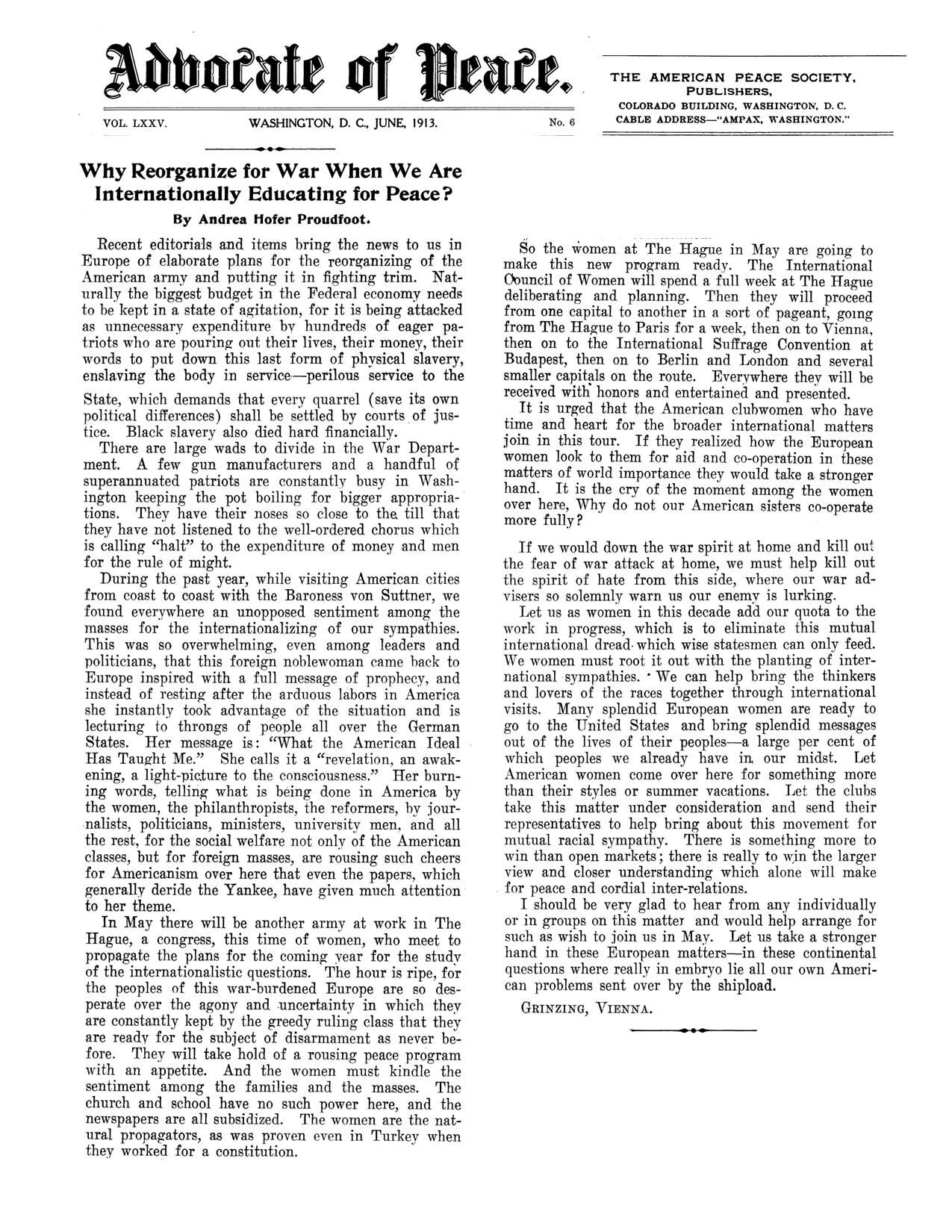
The Hofer sisters were also accomplished writers and speakers. Using Andrea as our continuing example, one of her calls for action in the peace movement is attached to this post. She became a sought-after speaker at international meetings of women. She was prominently featured at the International Council of Women meeting at the Hague in the Netherlands in 1913. The theme adopted by women’s groups throughout this time was: “In time of war prepare for peace; in time of peace prepare for its continuance.”
Andrea lived in Vienna for a few years, where her children went to school. They returned to Chicago when World War I started in 1914.
That year, Mari and Andrea were part of a national undertaking to raise funds for suffrage and peace causes in honor of Belva A. Lockwood. Working with Illinois women’s clubs, a pageant, totally under the direction of Mari, along with dancing and card games, was held at the Hotel LaSalle. The pageant included “dances of the nations,” that is, folk dances, one of Mari’s specialties, performed by young people of various organizations. Members of the Chicago Woman’s Club portrayed the queens of the world, including Queen Elizabeth and Marie Antoinette. They easily met their goal to raise $3,000 to contribute to the total goal of $20,000.
Mrs. Lockwood was the featured guest of the pageant, sitting in the center box. She was a very famous woman whose story has been mostly lost to history. She was active in women’s rights and women’s suffrage, and became one of the first women lawyers in the U.S. She was the first woman to practice before the U.S. Supreme Court. She ran for president in 1884 and 1888 and was the first woman to appear on official ballots. She supported the world peace movement and the temperance movement.
In 1915, Andrea was a leader of the International Conference of Women Workers to Promote Permanent Peace, known as the Women’s Peace Conference, held in San Francisco as part of the World’s Fair. She was joined on the planning committee by fellow Chicagoan Jane Addams. Miss Addams oversaw the programs on Social Service and War, and Andrea oversaw the section on International Amity and War.
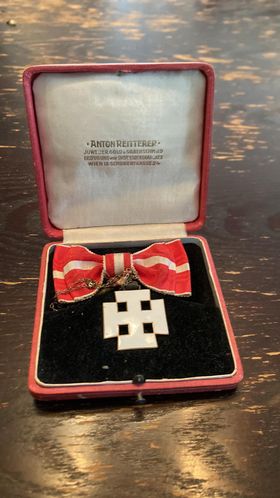
After World War I, Andrea served as Secretary of the American Committee for Vienna Relief in Chicago. She was awarded the “Eiserne Salvator-Medaille” (Iron Salvator Medal) from the City
of Vienna in 1921, and the “Silbernes Ehrenzeichen” (Silver Insignia of Honor) from the Republic of Austria. Andrea’s great-granddaughter shared a picture of one of the medals with RHS.
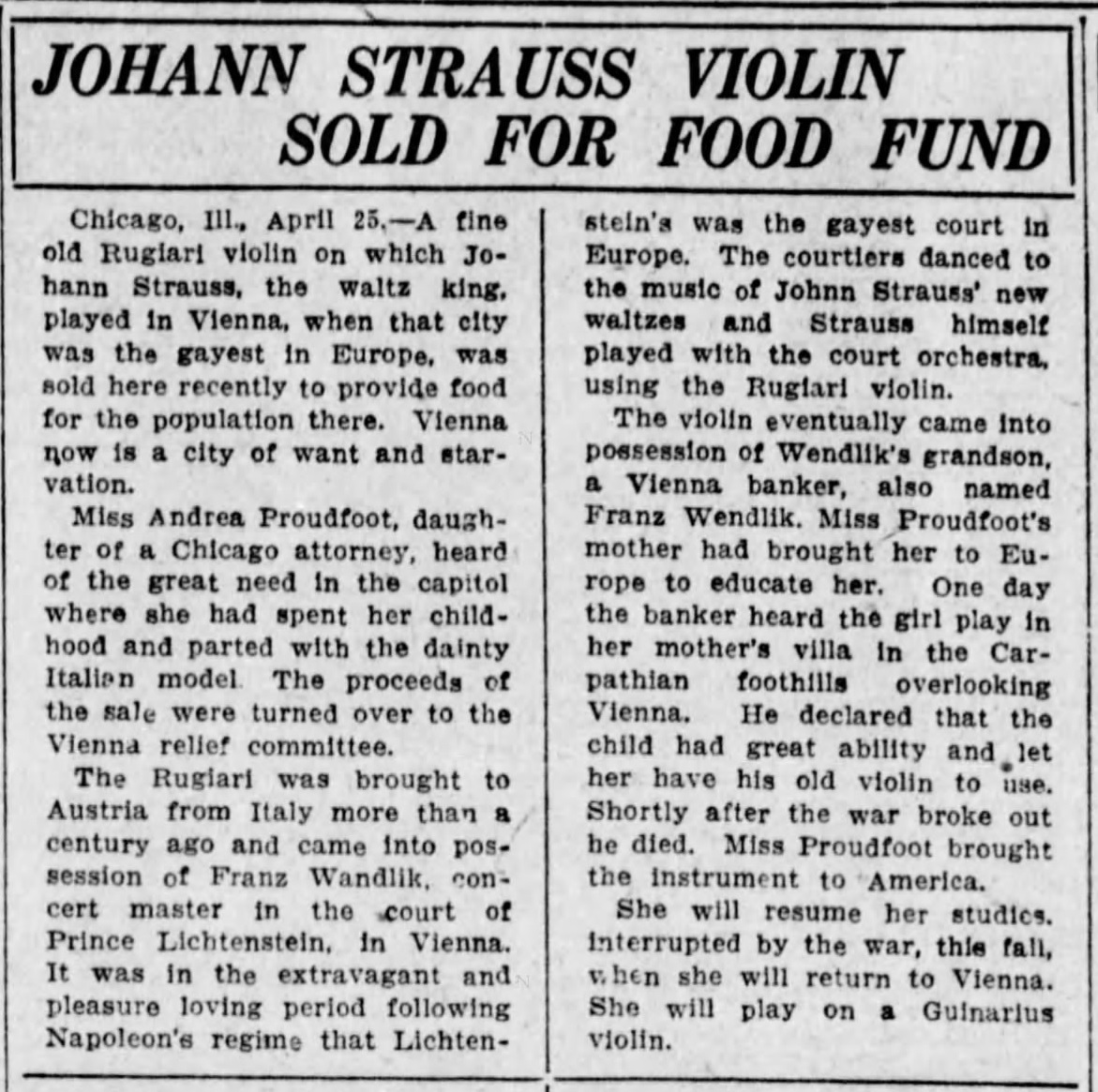
Altruism was passed down to the next generation of Hofer descendants, as evidenced by a 1920 newspaper article about one of Andrea’s daughters donating a valuable violin that she acquired in Vienna for the Vienna relief effort.
In the next post, the later years of the Hofer sisters will be explored.

The Ridge Historical Society
National Women’s History Month: Dorothea Rudnick
By Carol Flynn
March would not be complete without acknowledging National Women’s History Month.
There is no shortage of accomplished women in the Ridge’s past, and most of those we have profiled have filled the traditional women’s roles of educators, artists, and “club women” social activists.
This year’s subject, Dorothea Rudnick (1907-1990), takes us in another direction, the sciences. Her “historical” and analytical brain, as she described it herself in 1964, led her to become a noted embryologist.
Dorothea grew up in Beverly. Her family lived at 10640 S. Seeley Avenue, then later moved to 10407 S. Leavitt Street. Her father Paul was head chemist for Armour & Co. and both of her brothers became physicists.
Dorothea, however, did not start out interested in the sciences – her interests were in history, journalism, and languages.
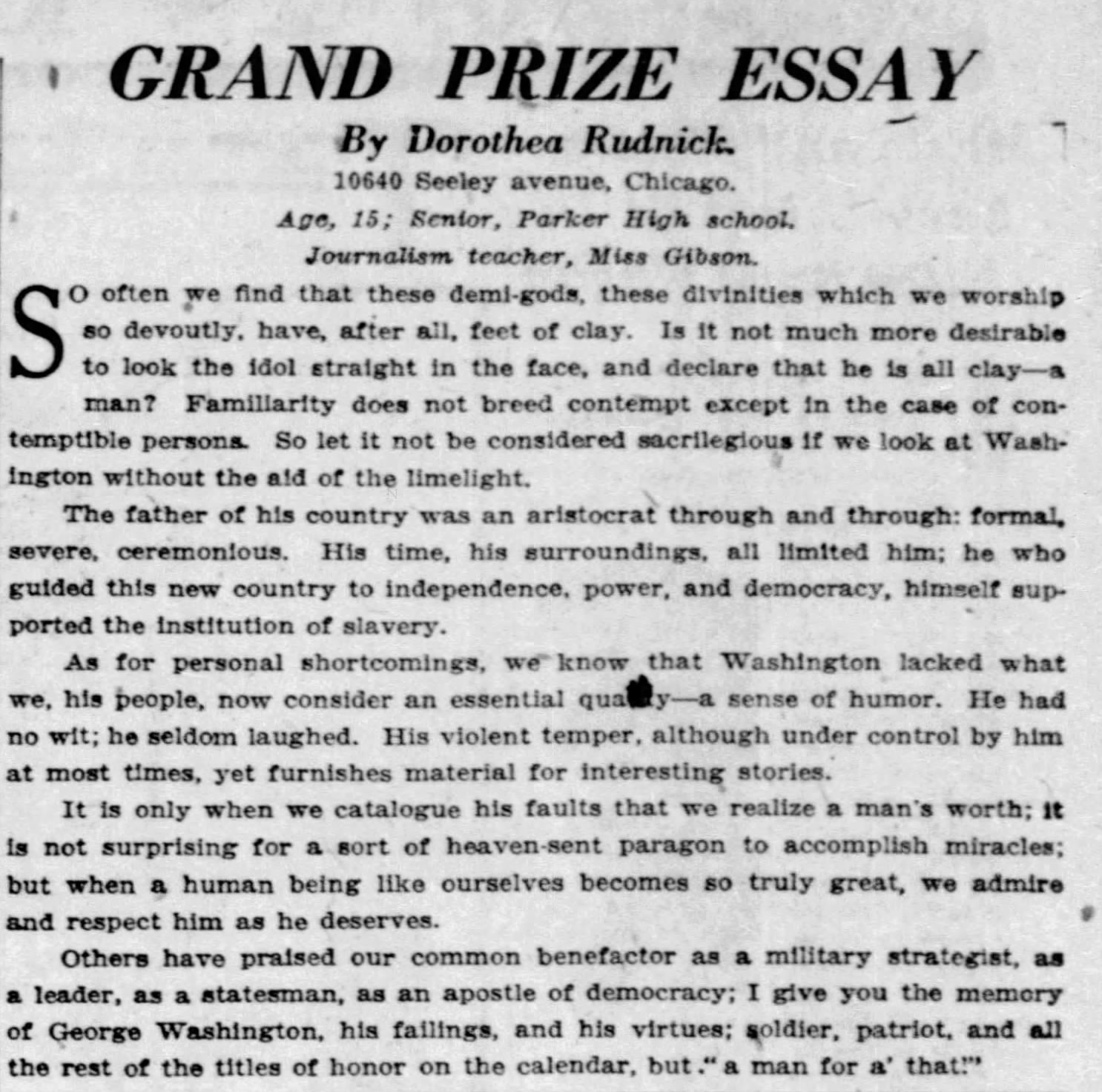
As a high school student at the age of 15, she won a Chicago Tribune essay contest on George Washington. Her essay is attached. It was a different take on George Washington: he was a flawed man, like all of us, making it that more notable that he rose to greatness.
Dorothea enrolled at the University of Chicago to study languages, but she really wanted to take some time to travel in Europe. She quit school and took a job downtown as a bookkeeper to earn money for a trip.
At the age of 18, she took off on her own with her own money to travel abroad. She enjoyed experiences like climbing mountains and living in Paris.
When she returned home, she realized she had to consider her future, and decided her best course of action was to go into the sciences.
Re-enrolling in the U. of Chicago, a course in zoology fascinated her, and she became interested in embryology, studying differentiation – why did certain cells develop into certain body parts – a lung, an ear, a feather.
With a Ph.D., completed in 1931, advanced scholarships and fellowships took her to Yale University, the University of Rochester, the University of Connecticut, and Wellesley College.
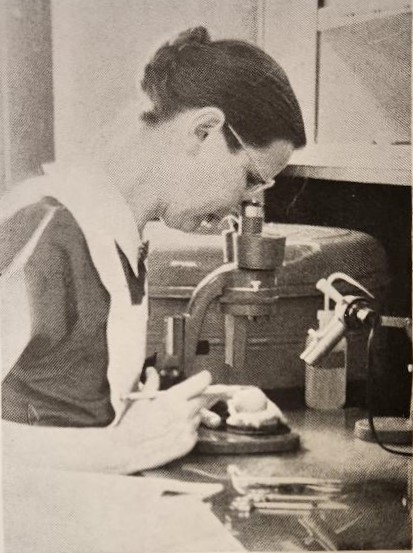
During these years, Dorothea perfected the delicate techniques for transplanting parts of one embryo into another that brought her distinction in the field. This was in the 1930s, and experiments were done by hand. She used tiny saws and forceps, glass needles, and binocular dissecting microscopes.
In 1940, Dorothea joined the teaching faculty at Albertus Magnus College, a Catholic women’s college in New Haven, Connecticut, near Yale, and spent the rest of her career there. She continued to have laboratory privileges at Yale, where she spent evenings, weekends, school breaks, and summers.
Dorothea enjoyed teaching and mentoring students as much as she did research.
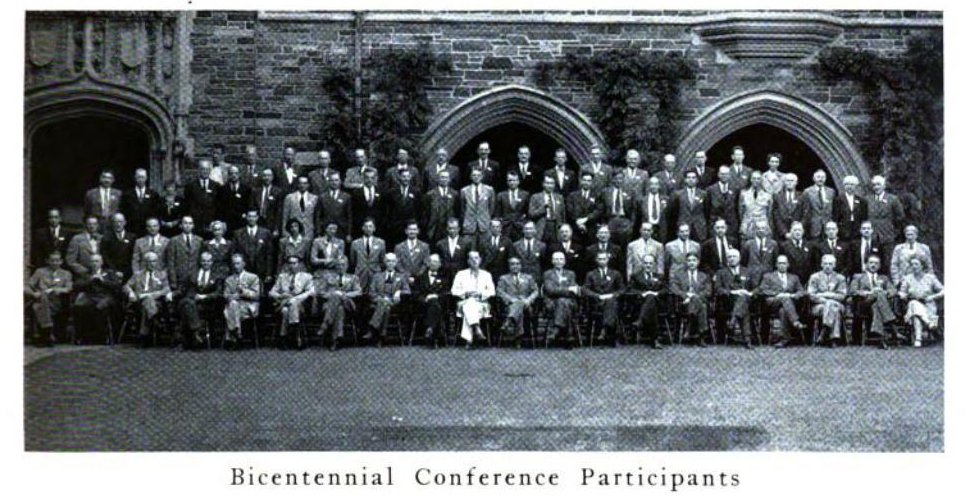
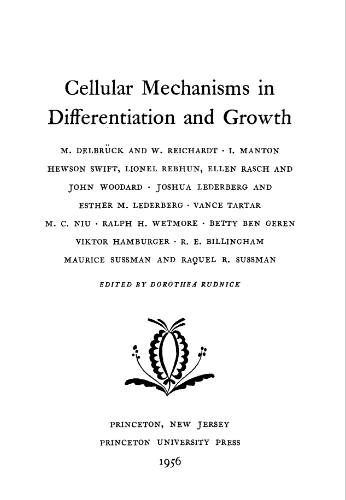
She also made time to continue her love for writing and languages. She published her own studies, of course, and translated research articles from other languages into English. For many years she served as editor of the proceedings of symposia conducted by the Society for the Study of Development and Growth.
Not much is known about Dorothea's private life, which was described as “reclusive.” One fact, though, is that in 1956 – 58, she had King-lui Wu, an architect from China who was on the faculty at Yale, build a house for her. The modern-style "Dorothea Rudnick House," described by one architecture historian as “an open-plan house tucked into the side of a hill in Hamden” is considered architecturally significant of Wu’s work.
Dorothea retired in 1978, after many years of teaching, conducting experiments on chicken and rat embryos, and publishing. She joined her brother in Los Alamos, New Mexico, where she died at the age of 83.
Great strides have been made in sciences like embryology in the last thirty years, and some opportunities have become available for women. However, the Society of Women Engineers reports that in 2023, only 16.7% of the science and engineering work force was made up of women.
This year the theme of Women’s History Month is recognizing women who advocate for equity, diversity, and inclusion.
Some women become advocates through example because their accomplishments show the contributions women can make if given opportunities to let their knowledge and skills develop and thrive.
Dorothea Rudnick, a Beverly native who became a noted
embryologist, is an example of a woman whose career “speaks” for inclusion of women as equals in the sciences.
A more thorough article on her can be found at: https://www.beverlyreview.net/news/community_news/article_11eec2de-eb8c-11ee-8773-fbfc415430c4.html
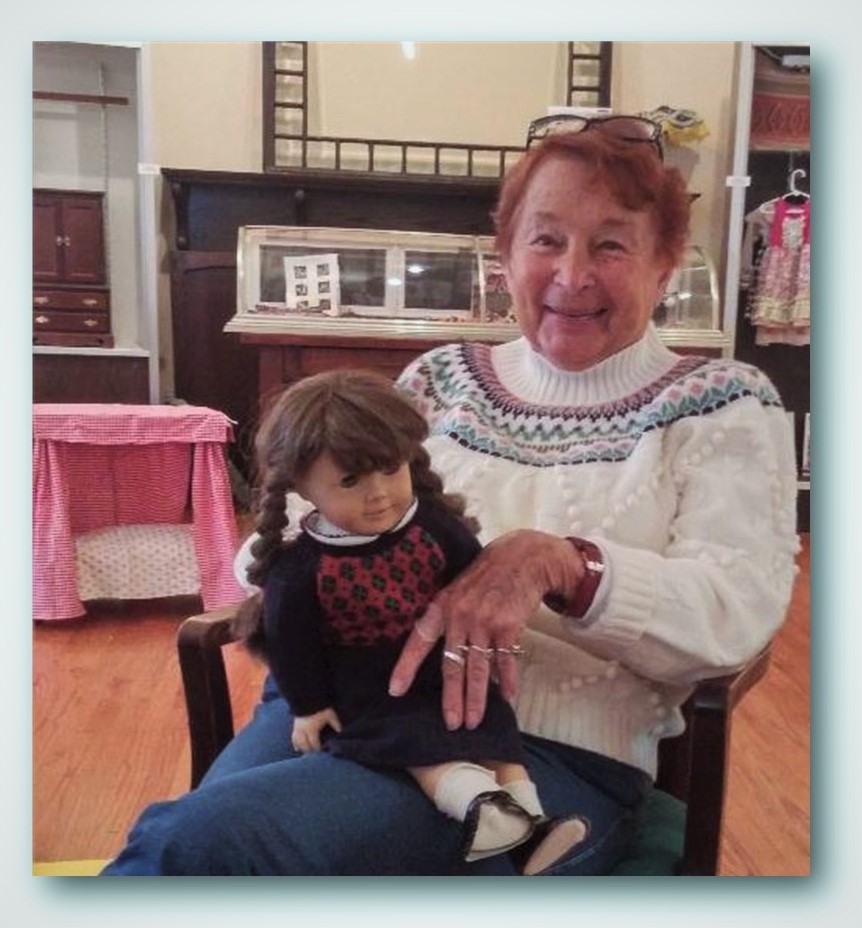
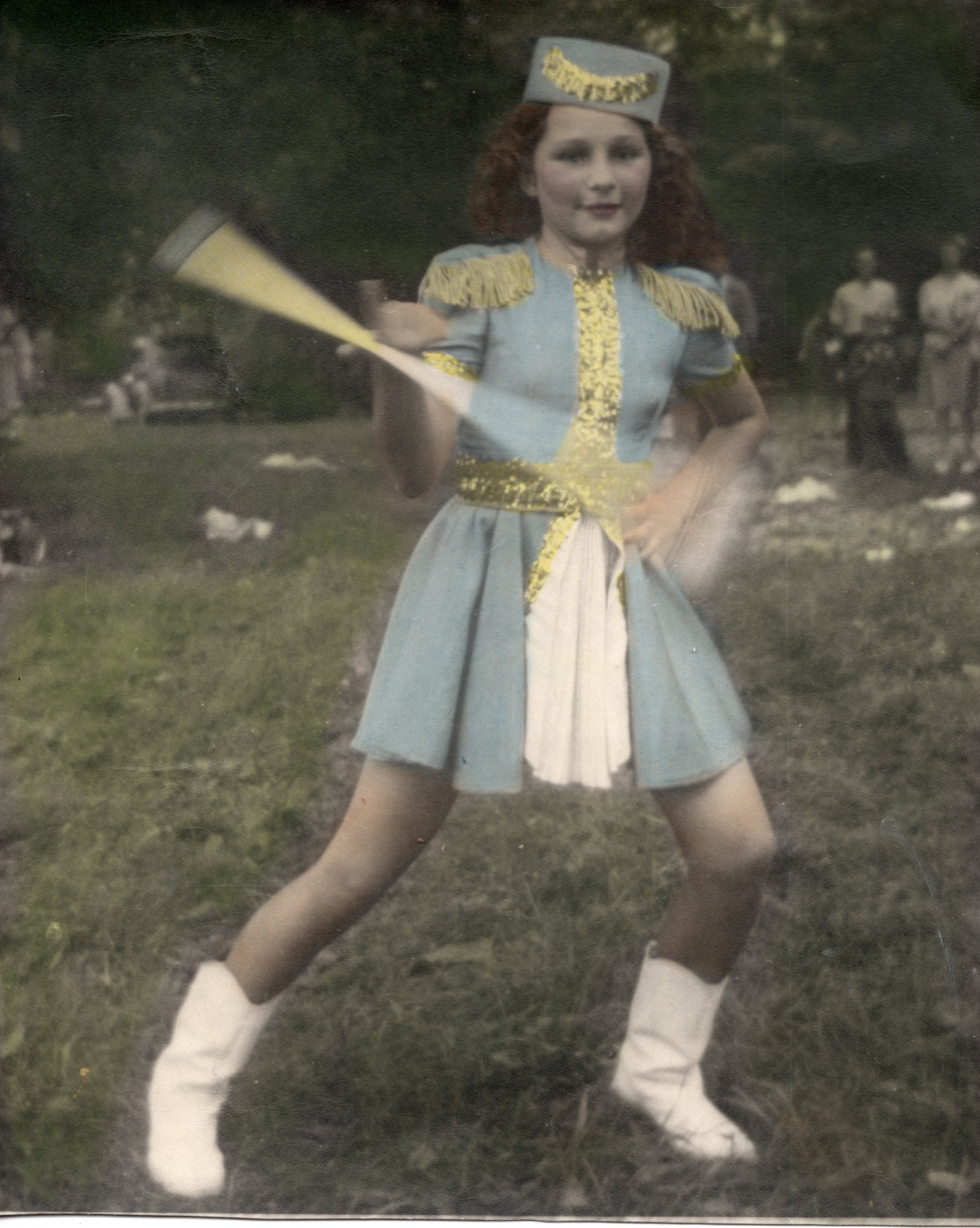
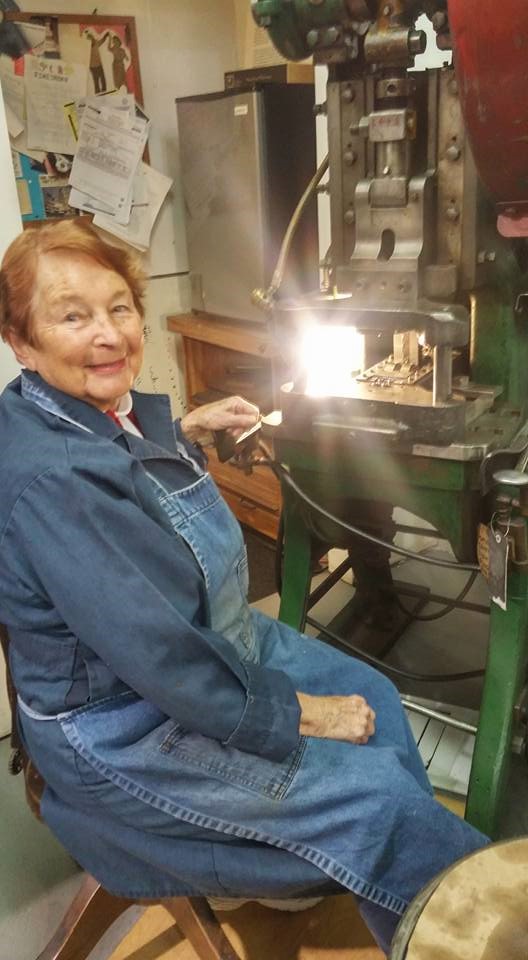
The Ridge Historical Society (RHS) is saddened to report the death of Elaine Spencer, RHS Board member and past RHS President.
Elaine had deep ties to the Ridge communities, having lived here for her 92 years of life, attending Barnard elementary school and Morgan Park High School, marrying (the late) Carl Spencer, and raising four sons here.
She was active in the Beverly Hills Junior Woman’s Club for many years, and loved performing on stage in their drama endeavors to raise money for nursing scholarships.
As RHS President, she supported restoring the RHS Facebook page to its original intent to increase communication and share more local history with the public. She led the society through the COVID pandemic. Elaine could always be counted on to volunteer her time to help at RHS events.
At 92, she was still taking trips around the world (most recently to the Panama Canal and Iceland) and spending time on the family’s island where she kayaked and painted docks and used an outhouse and outdoor shower. She was an avid book reader and a whiz at Scrabble.
Elaine had a favorite saying, “If you’ve made it this long, you’ve already won all the marbles.” She was a vibrant and alive person, and her presence will be missed.
Elaine Spencer’s story is the history of this community.
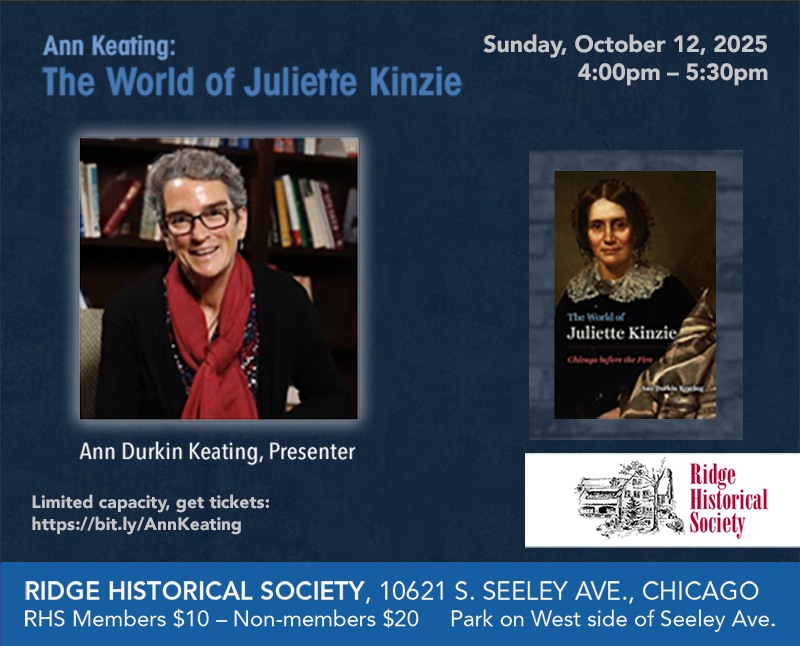
Ann Keating: The World of Juliette Kinzie
Date: October 12, 2025 4pm
Join us for author Ann Durkin Keating discussing her book,
The World of Juliette Kinzie: Chicago before the Fire.
Juliette Kinzie was also a writer and an important figure in documenting the history of early Chicago. Juliette, one of Chicago’s forgotten founders, and other women worked to create an urban and urbane world, often within their own parlors.
When Juliette Kinzie first visited Chicago in 1831, it was anything but a city. An outpost in the shadow of Fort Dearborn, it had no streets, no sidewalks, no schools, no river-spanning bridges. And with two hundred disconnected residents, it lacked any sense of community. In the decades that followed, not only did Juliette witness the city’s transition from Indian country to industrial center, but she was instrumental in its development.
About the Presenter: Ann Durkin Keating holds the C. Frederick Toenniges Professorship at North Central College in Naperville, Illinois. She is a history professor and chair of the History Department. She has taught at the college since 1991. She spearheaded publication of the book, ''Encyclopedia of Chicago'', and appears regularly as a public speaker and is often quoted as an expert source about Chicago-area history.
Keating was born in Evanston. She earned a bachelor of arts degree from the University of Illinois, and master of arts and doctorate degrees from the University of Chicago. She has written numerous books on the Chicagoland area including “Chicagoland: City and Suburbs in the Railroad Age” and “Chicago Neighborhoods and Suburbs: A Historical Guide”.
Members: $10 | Non-members: $20 | Students under 18: $5
Ridge Historical Society
10621 S. Seeley Ave., Chicago, IL 60643
Limited Capacity. Get tickets here: https://bit.ly/AnnKeating
RSVP: ridgehistory@hotmail.com 773.881.1675